






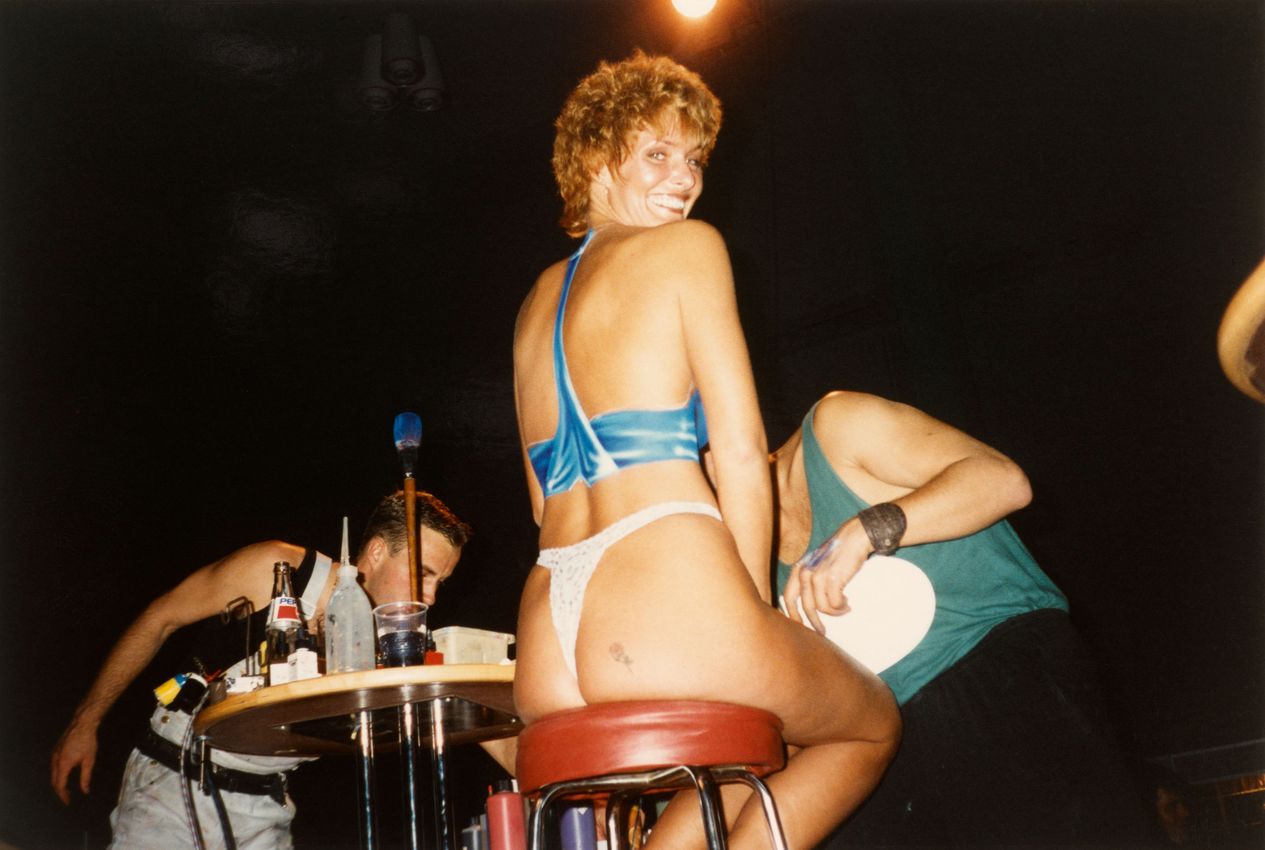
MICHELLA BREDAHL
b. 1988, DenmarkDanish photographer and filmmaker Michella Bredahl creates intimately observed portraits that explore vulnerability, domestic space, and the empowering dimensions of femininity, transforming her lived experiences of childhood instability into a powerful artistic practice.
Background and Early Years
Bredahl was raised in the Høje Gladsaxe vulnerable residential area outside Copenhagen by her single mother, an experience that fundamentally shaped her artistic sensibility. Her mother, Maria Bredahl, was herself a photographer who documented their daily life before Michella was born. From childhood, the two photographed each other together, establishing a collaborative relationship with the camera that would become central to Bredahl’s practice.
At a young age, Bredahl and her sister were confronted with their mother’s substance addiction, an experience that instilled in her a lasting curiosity about safety, intimacy, and the meaning of home. Rather than diminishing her artistic vision, this difficult childhood deepened her capacity to witness others with compassion and presence. She inherited from her mother an innate curiosity about people and the impulse to capture moments through photography. The artist was also scouted as a model during her teenage years, an experience that prompted her to reclaim agency through the act of photographing rather than being photographed.
Michella Bredahl’s Artistic Practice
Bredahl’s work centres on tender, unguarded portraiture that locates strength within vulnerability. The artist creates spaces for feminine energy and autonomy through an auteur-driven documentary approach rooted in deep relationships with her subjects, predominantly friends, acquaintances, and fellow artists. Her photographs arise from a place of introspection and self-scrutiny, finding the missing parts of herself reflected in the gazes, poses, and intimate domestic spaces of others.
Colour functions as a synesthetic element throughout Bredahl’s imagery, intrinsically linked to her childhood memories. Her mother painted each room of their Copenhagen apartment in different hues—blue, yellow, green, peach—and these chromatic associations remain bound to her emotional recollection of home. Bredahl’s subjects are typically photographed at ease within domestic interiors, seated in kitchens or near bookshelves and mirrors, their bodies powerful yet relaxed, embodying femininity as presence rather than performance.
Early Photographic Works
Bredahl’s photographic impulse matured throughout the 2010s as she developed her distinctive visual language. Her early body of work centred on intimate portraiture of friends in sun-dappled Parisian apartments, establishing the tender observational style for which she became known. These images demonstrate her capacity to create an environment of safety and empathy around the camera lens, allowing her subjects to reveal themselves without artifice.
Chassé and the Exploration of Dance
A significant turning point emerged with the film Chassé (2019), which documented a group of pole dancers and marked a new chapter in Bredahl’s investigation of feminine strength and vulnerability. The work was selected for the International Rotterdam Film Festival and sparked a sustained artistic engagement with dance as a form of bodily expression and self-determination. Through her friendship with a pole dancer, Bredahl began to photograph this practice as intimate and expressive rather than exotic, capturing it within domestic environments and exploring how dance, movement, and vulnerability intertwine.
Her exploration of dance and embodied femininity expanded through collaborations with renowned fashion stylist Lotta Volkova, including a series created for Miu Miu that brought together dance, fashion, and the captured moment in unexpected ways
Love Me Again
Love Me Again (2023), published by Loose Joints, compiles a decade of intimate portraiture and marks Bredahl’s first monograph. The publication gathers her most seminal works and establishes her position within a lineage of important female photographic portraitists including Nan Goldin, Imogen Cunningham, and Sarfati. The book was recognised with the Un/Fund Award, acknowledging its artistic merit and contribution to contemporary photography. Through Love Me Again, Bredahl articulates her practice as an act of reclamation—transforming the objectifying gaze she experienced as a young model into an empowering space where femininity expresses itself entirely for its own needs and reasons, without shame.
Rooms We Made Safe
Rooms We Made Safe, presented at Huis Marseille, Museum for Photography, Amsterdam (2025–2026), is Bredahl’s first major museum solo exhibition. The exhibition represents a culmination of her artistic investigation and includes a striking intervention: the integration of her mother’s archival photographs alongside her own contemporary work. Two of the museum’s rooms are dedicated to Maria Bredahl’s self-portraits from the 1970s and 80s, made before Michella was born, forging an unprecedented dialogue across generations.
The exhibition is structured as a personal archive unfolded across the museum’s rooms, each dedicated to a distinct period in Bredahl’s photographic practice. Works range from analogue portraits to collaborative photographs with her mother documenting their shared domestic life. Rather than functioning as straightforward autobiography, Rooms We Made Safe proposes a broader emotional vocabulary for intimacy, resilience, and the spaces of protection we create. Bredahl’s photographs ask what it means to feel at home in one’s skin and how painful memory becomes a catalyst for artistic creation.
Select Awards and Accolades
- Un/Fund Award for Love Me Again (2023)
- Grant from the New Carlsberg Foundation
- Grant from Statens Kunstfond of Denmark
- International Rotterdam Film Festival selection, Chassé (2019)
Michella Bredahl Exhibitions
Michella Bredahl has been the subject of solo and group exhibitions at significant contemporary art spaces and museums internationally. Below is a selection of important exhibitions.
To be kept up to date with upcoming exhibitions featuring Michella Bredahl, follow her on Ocula.
Select Solo Exhibitions
- Rooms We Made Safe, Huis Marseille, Museum for Photography, Amsterdam (2025–2026)
- Love Me Again, Loose Joints Publishing; accompanying exhibitions
- Unmade Beds, Shoot the Lobster, New York (2023)
Select Group Exhibitions
- ALL-IN, group exhibition (2023)
Ocula also features works by Michella Bredahl available through represented galleries. Sign up to follow Michella Bredahl on Ocula to learn more about her work, find out about art for sale, and keep up to date with upcoming exhibitions and news.
Website and Instagram
Michella Bredahl’s work can be followed on Instagram.
More Reading
Michella Bredahl’s practice has been featured in leading publications including Another Man, 032c Magazine, Office Magazine, Interview Magazine, Metal Magazine, and Dazed Digital. You can follow Michella Bredahl on Ocula to learn more about her work and be updated when new articles and exhibitions are published.
Michella Bredahl FAQs
Who is Michella Bredahl?
Michella Bredahl is a Danish photographer and filmmaker known for intimate portraiture that explores vulnerability, femininity, and the creation of safe domestic spaces. Born in 1988 in Greve, Denmark, she studied at the Danish Photography School and the National Danish Film School. Her artistic practice, rooted in lived experience, transforms personal narratives of childhood instability into profound investigations of human connection, memory, and the meanings of home. You can follow Michella Bredahl on Ocula to learn more about her work, find out about art for sale, contact her gallery, and keep up to date with upcoming exhibitions.
Where can I see work by Michella Bredahl?
Michella Bredahl’s major museum exhibition Rooms We Made Safe is on view at Huis Marseille, Museum for Photography, in Amsterdam until February 8, 2026, and will subsequently travel to Kunstmuseum Brandts and the Museum of National History at Frederiksborg Castle in Denmark. Her work has been exhibited at Shoot the Lobster in New York and in group exhibitions internationally. You can follow Michella Bredahl on Ocula to receive alerts on upcoming exhibitions by the artist.
What is Michella Bredahl’s artistic practice primarily concerned with?
Michella Bredahl’s artistic practice centres on intimate portraiture that explores feminine strength, vulnerability, and the creation of emotionally and physically safe spaces. Her work is distinguished by tender observation, an auteur-driven documentary approach, and deep collaborative relationships with her subjects. She investigates how domestic space, memory, colour, and the body communicate vulnerability and resilience. Her photographs propose that femininity is best understood as a shared energy expressed through presence rather than performance. You can follow Michella Bredahl on Ocula to receive alerts on news and articles about the artist.
How did Michella Bredahl’s childhood influence her artistic practice?
Raised in the vulnerable residential area of Høje Gladsaxe outside Copenhagen by her single mother, Bredahl experienced significant instability during childhood due to her mother’s substance addiction. Rather than diminishing her practice, these experiences deepened her curiosity about safety, intimacy, and what it means to feel at home. Her mother was also a photographer, and the two documented their daily lives together from Bredahl’s infancy, establishing the collaborative and observational relationship with the camera that remains central to her work today. Memory, resilience, and the transformation of difficult experiences into artistic expression continue to inform all of Bredahl’s artistic investigations.
What is Michella Bredahl’s monograph ‘Love Me Again’?
Love Me Again (2023), published by Loose Joints, is Michella Bredahl’s first monograph, gathering a decade of intimate portraiture. The publication reclaims the photographic act as an empowering space for feminine energy and autonomy, presenting a direct response to the artist’s earlier experience of objectification as a teenage model. Love Me Again was recognised with the Un/Fund Award. The work positions Bredahl within an important lineage of female photographic portraitists including Nan Goldin and others who use the medium as a form of introspection and self-knowledge.
Where does Michella Bredahl live and work?
Michella Bredahl is based in Paris, where she continues her photographic and filmmaking practice.
How is Michella Bredahl’s name pronounced?
Michella Bredahl is pronounced mee-KELL-ah BRAY-dahl.
Where can I buy work by Michella Bredahl?
Michella Bredahl is represented by leading contemporary art galleries and institutions. You can explore Ocula to find out which galleries represent the artist and enquire directly about purchasing artwork by Michella Bredahl. You can also follow Michella Bredahl and her gallery on Ocula to keep up to date. For further information about acquiring work by Michella Bredahl, you can get in touch with Ocula’s art advisory team.
Ocula | 2026

Representative Artworks

View story

View story
View story
View story

Explore and Follow Artists Shaping Contemporary Art
A respected voice in contemporary art discourse.
Focusing on ambitious storytelling and insightful art-world commentary. Ocula Magazine publishes in-depth interviews, critical essays and timely analysis on the artists, exhibitions and ideas driving the global art world.
Learn more about Ocula Magazine
Showcasing the best of the art world.
Ocula partners with galleries from around the world to highlight their artists, artworks and exhibitions. Gallery membership is by application and invitation, with each member vetted by an independent panel.
Learn more about Ocula Membership
Specialises in the sale of major artworks.
Led by a team with deep ties to the world’s leading auction houses, galleries and collectors. Ocula’s advisory team offers bespoke services to high-net-worth clients from around the world who are looking to acquire the best of contemporary and modern art.
Learn more about our team and services