





NANCY HOLT
1938-2014, United StatesNancy Holt was a pioneering American artist whose site-specific installations, earthworks, and explorations of perception helped redefine contemporary sculpture across five decades.
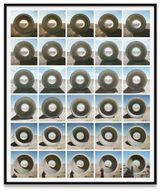
In January 2026, the Solomon R. Guggenheim Museum announced the acquisition of works by Holt as part of its 2025 acquisitions, further cementing her legacy within major institutional collections. Among the newly acquired works are Holt’s series ‘Trail Markers’ (1969), a grid of 20 photographs documenting orange markers spotted on boulders along a walking route in southwest England taken with her husband, the artist Robert Smithson. A second work by Holt, the 35 mm slide installation Stone Ruin Tour (1967) was also acquired.
Early Years
Nancy Holt was born on 5 April 1938 in Worcester, Massachusetts. Her father was a chemical engineer and her mother a homemaker; when Holt was three, the family relocated to New Jersey. As an only child, she observed ‘many overlooked or unacknowledged things’ that would later inform her artistic practice.
Holt graduated with a degree in biology from Tufts University in 1960, where her passion for ‘unusual plants and animals and the systems that kept them alive’ shaped her scientific approach to art. Later that year, she moved to New York City, where she reconnected with former high school classmate Robert Smithson; the two married on 8 June 1963. In the mid-1960s, she worked as assistant literary editor at Harper’s Bazaar and began creating concrete poems and text-based works.
Nancy Holt Artworks
Nancy Holt’s rich artistic output spans concrete poetry, audio-works, film and video, photography, earthworks, room-sized installations, and public sculpture commissions. Her work investigates perception, systems, and place, often using framing devices to draw attention to visual observation. Across five decades, Holt asked questions about how we might understand our place in the world—an inquiry that evolved from intimate photographic studies to monumental earthworks and systems-based sculptures.
Early Explorations: Photography and Language (1966–1972)
Holt’s practice began with language. In the mid-1960s, while working as assistant literary editor at Harper’s Bazaar, she created concrete poems and text-based works that treated language as a system structuring perception. This interest in systems—how we organise and understand information—would remain central throughout her career.
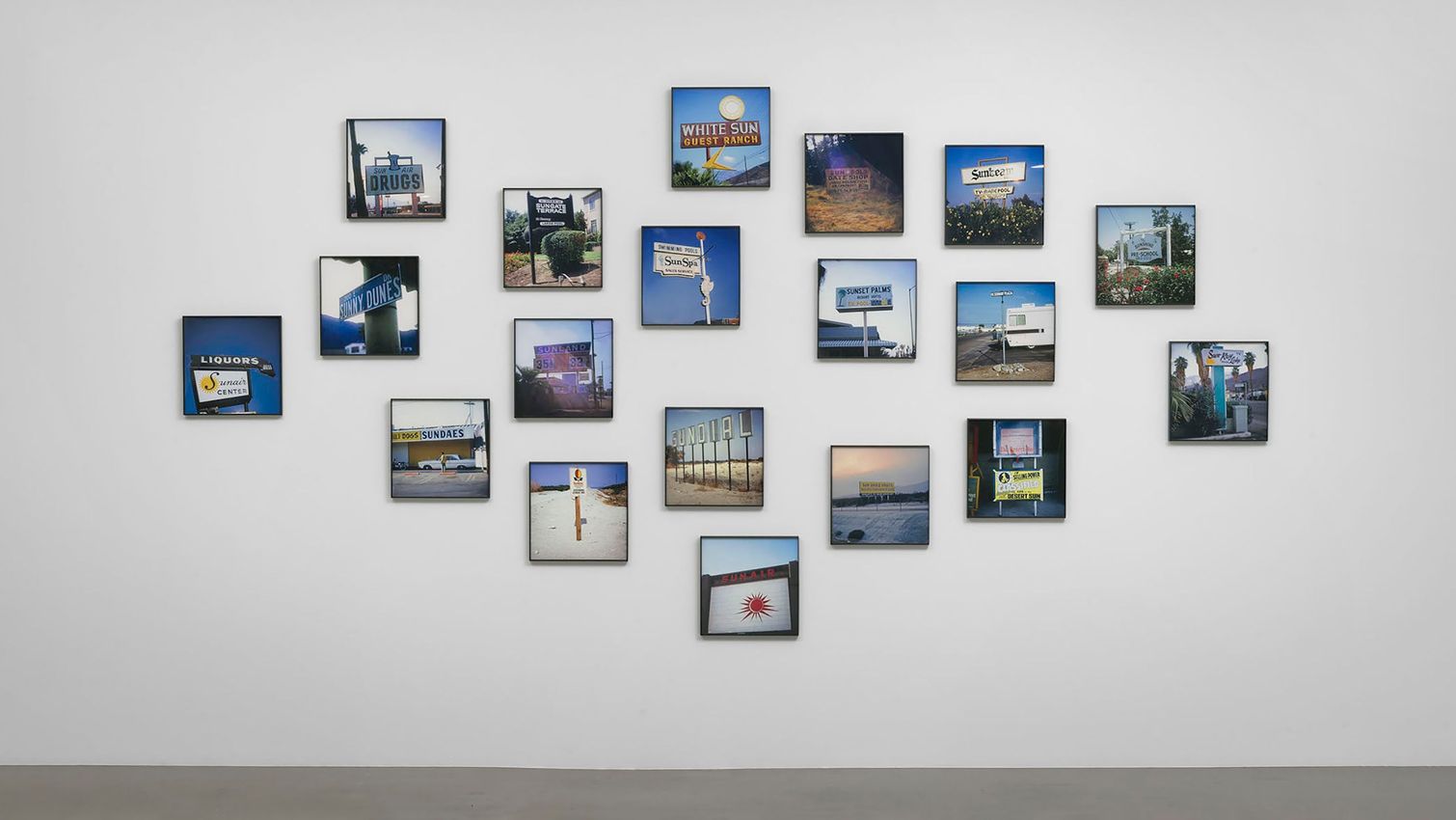
Photography became essential to Holt’s early development, enabling ‘vision to be fixed’ and visual perception to be focused. Her photoworks Trail Markers (1969) and California Sun Signs (1972) used seriality to create visual poems, establishing photography as a foundational medium. These sequential images rejected single-point perspective, offering multiple viewpoints that comprise a whole—an approach that prefigured her later sculptural ‘seeing devices’.
Framing Perception: The Locators (1972)
Holt’s transition from photography to sculpture occurred through her Locators—T-shaped industrial pipes designed to be looked through with one eye. Missoula Ranch Locators: Vision Encompassed (1972) comprised eight steel viewfinders distributed across a field in Montana, designed to restrict and focus the viewer’s experience of vast open space. By limiting what could be seen, Holt paradoxically heightened awareness of landscape and one’s position within it. In 2012, Holt recreated the work at the University of Avignon in France, where it remains a permanent installation.
Bringing the Stars Down to Earth (1973–1976)
The Locators led Holt to develop her concept of ‘seeing devices’ on an increasingly ambitious scale. Hydra’s Head (1974), inspired by the Seneca Indian saying that ‘pools of water are the eyes of the earth’, comprises six sunken cylinders holding water, arranged in the same configuration as the Hydra constellation along the Niagara River in Lewiston, New York. At night, each pool becomes a tiny mirror for a single star—the sky appearing to fall at one’s feet.
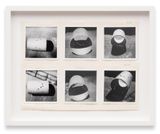
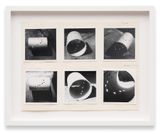
This celestial interest reached its fullest expression in Sun Tunnels (1973–1976), Holt’s most celebrated work. Consisting of four concrete tubes in the Great Basin Desert, Utah, each measuring nine feet high by 18 feet long, the tunnels align with sunrise and sunset during the summer and winter solstices. Holes in each tube project the constellations Draco, Perseus, Columba, and Capricorn inside, connecting earth and sky. Holt purchased the 40-acre site in 1973 and later recalled: ‘I had the sense that I was perhaps walking on a piece of land that nobody had ever walked on before’. Her aim was to ‘bring the vast space of the desert back down to human scale’ whilst indicating the ‘cyclical time’ of the solar year.
Light and the Body in Space (1973–1974)
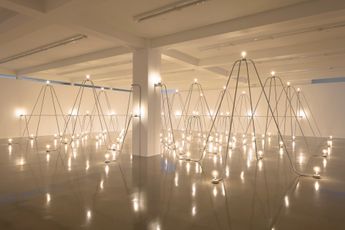
Parallel to her earthworks, Holt explored perception within interior spaces. The room-sized installation Holes of Light (1973) used switching electrical light, whilst Mirrors of Light (1974) employed a theatre spotlight and mirrors to materialise light reflections and bring awareness to the body in space. Whether emanating from the stars or plugged into electrical grids, the perceptual qualities of light fascinated Holt equally in natural and built environments.
The Built Environment: Public Art and System Works (1979–1986)
In the late 1970s, Holt’s practice expanded into public art, applying her investigations of perception, time, and place to urban contexts. Dark Star Park (1979–1984), commissioned by Arlington County, Virginia, features five large concrete spheres, four black metal poles, two reflecting pools, and two concrete tunnels. Every year on 1 August at 9:32 a.m., the shadows align precisely to commemorate the date in 1860 when William Ross purchased the land—‘merging historical time with the cyclical time of the sun’. The work advanced the then nascent field of public art and its impact on the transformation of cities.
During the 1980s, Holt’s exploration of systems moved to the fabric of the built environment with functional sculptural installations she termed System Works. Using standard industrial materials designed for heating, ventilation, lighting, and drainage, these works connected to internal architectural organs. As Holt explained: ‘The electrical systems light, the heating systems heat. The drainage systems drain, the ventilation systems circulate air... the sculptures are exposed fragments of vast hidden systems, they are part of open-ended systems, part of the world’.
Environmental Activism Through Art (1980s)
Environmental concerns entered directly into Holt’s work during this period. Pipeline, created during a residency in Anchorage, used industrial materials identical to the Alaskan oil pipeline, snaking into the gallery and leaking oil onto the floor to highlight environmental concerns. Unlike many early Land artworks that actively damaged the land, Holt was among the first artists to use outdoor art as a platform for environmental activism. She introduced ideas central to environmental protection, conservation, and stewardship that were not initially central to the art movement.
Select Public Commissions by Nancy Holt
- Stone Enclosure: Rock Rings (1977–1984), Western Washington University
- 30 Below (1979), 1980 Winter Olympics, Lake Placid
- Dark Star Park (1979–1984), Rosslyn, Virginia
- Astral Grating (1986), New York Subway
- Sky Mound (1984–), New Jersey
Select Awards and Accolades
- Chevalier of the Ordre des Arts et des Lettres, French Government (2012)
- Lifetime Achievement Award, International Sculpture Center (2013)
- Guggenheim Fellowship
- Five National Endowment for the Arts Fellowships
- Two New York Creative Artist Fellowships
- Honorary Doctorate, University of South Florida, Tampa
To be kept up to date with news relating to Nancy Holt, follow her on Ocula.
Nancy Holt Exhibitions
Nancy Holt has been the subject of solo exhibitions and group exhibitions at important institutions and galleries worldwide. Below is a selection of important exhibitions.
Select Solo Exhibitions
- Echoes & Evolutions: Nancy Holt’s Sun Tunnels, Sprüth Magers, New York (2025
- Nancy Holt, Wexner Center for the Arts, Columbus, Ohio (2025)
- Nancy Holt, Gropius Bau, Berlin (2024)
- Nancy Holt, MACBA, Barcelona (2023)
- Nancy Holt, Bildmuseet, Umeå, Sweden (2022)
- Locating Perception, Sprüth Magers, Los Angeles (2022)
- Mirrors of Light, Sprüth Magers, Berlin (2021)
- Nancy Holt: Sightlines, Dia: Chelsea, New York (2019)
- Nancy Holt: Sightlines (retrospective, 2010–2012), Columbia University and touring venue
Select Group Exhibitions
- Remain in Light, Kunsthalle Bielefeld, Germany (through March 2026)
- Minimal, Bourse de Commerce, Paris (through February 2026)
- Shifting Landscapes, Whitney Museum of American Art, New York (current)
- Joan Jonas: An Island Departure, with Nancy Holt and Robert Smithson, Farnsworth Art Museum, Maine (through March 2026)
- Groundswell, Nasher Sculpture Center, Dallas (2023)
- Ecstatic Land, Ballroom Marfa, Texas (2022)
- Sound as Sculpture, The Warehouse, Dallas (2022)
Website and Instagram
Nancy Holt’s work is managed by the Holt/Smithson Foundation; the Foundation’s website can be found here.
More Reading
Nancy Holt’s practice has been featured in leading publications. The monograph Nancy Holt: Sightlines, edited by Alena J. Williams and published by University of California Press, accompanied the artist’s 2010–2012 retrospective
Nancy Holt FAQs
Who is Nancy Holt?
Nancy Holt (1938–2014) was an American artist and pioneer of the Land Art, Earth Art, and Conceptual Art movements. Holt created site-specific installations, earthworks, photography, video, and public sculptures that investigate perception and humanity’s relationship with the natural and built environment. She was married to the artist Robert Smithson.
Where can I see work by Nancy Holt?
Nancy Holt’s Sun Tunnels (1973–1976) is located in the Great Basin Desert, Utah, and is accessible to the public. Dark Star Park (1979–1984) is in Rosslyn, Virginia, near Washington, D.C.. Her work is also held in major museum collections including the Museum of Modern Art, New York; Whitney Museum of American Art, New York; Dia Art Foundation; Art Institute of Chicago; and the Utah Museum of Fine Arts.
Where did Nancy Holt live?
Nancy Holt was born in Worcester, Massachusetts, and grew up in New Jersey. She lived in New York City from 1960 and, in 1995, made Galisteo, New Mexico her home. Nancy Holt passed away in New York City on 8 February 2014.
Where can I buy Nancy Holt work?
Nancy Holt is represented by Sprüth Magers. You can explore sites like Ocula to find out which galleries represent the artist and enquire directly about buying art by Nancy Holt.
What is Nancy Holt’s Sun Tunnels?
Nancy Holt’s Sun Tunnels (1973–1976) is a major Land Art installation in the Great Basin Desert near Lucin, Utah, consisting of four large concrete tubes arranged in an X-formation, each 18 feet long and nine feet in diameter, precisely aligned with sunrise and sunset at the summer and winter solstices so that the sun appears framed within the tunnels, while holes drilled into each tube trace the constellations Draco, Perseus, Columba, and Capricorn, projecting patterns of light inside and, as Holt described, ‘bringing the sky down to the earth’, transforming the vast desert into an intimate perceptual experience and now maintained as a publicly accessible site by Dia Art Foundation.
Was Nancy Holt married to Robert Smithson?
Yes, Nancy Holt was married to fellow Land Art pioneer Robert Smithson: they first met as high school classmates in New Jersey, reconnected after Holt moved to New York City in 1960, married on 8 June 1963, influenced each other’s work and collaborated on projects such as the film Swamp (1971), until Smithson’s death in a plane crash in 1973 while surveying a site for Amarillo Ramp in Texas, after which Holt remained unmarried, managed his estate, edited The Writings of Robert Smithson, and ultimately established the Holt/Smithson Foundation to steward both artists’ legacies.
Ocula | 2026

Works at Sprüth Magers






Recently Exhibited








Explore and Follow Artists Shaping Contemporary Art
A respected voice in contemporary art discourse.
Focusing on ambitious storytelling and insightful art-world commentary. Ocula Magazine publishes in-depth interviews, critical essays and timely analysis on the artists, exhibitions and ideas driving the global art world.
Learn more about Ocula Magazine
Showcasing the best of the art world.
Ocula partners with galleries from around the world to highlight their artists, artworks and exhibitions. Gallery membership is by application and invitation, with each member vetted by an independent panel.
Learn more about Ocula Membership
Specialises in the sale of major artworks.
Led by a team with deep ties to the world’s leading auction houses, galleries and collectors. Ocula’s advisory team offers bespoke services to high-net-worth clients from around the world who are looking to acquire the best of contemporary and modern art.
Learn more about our team and services