






RICHARD ARTSCHWAGER
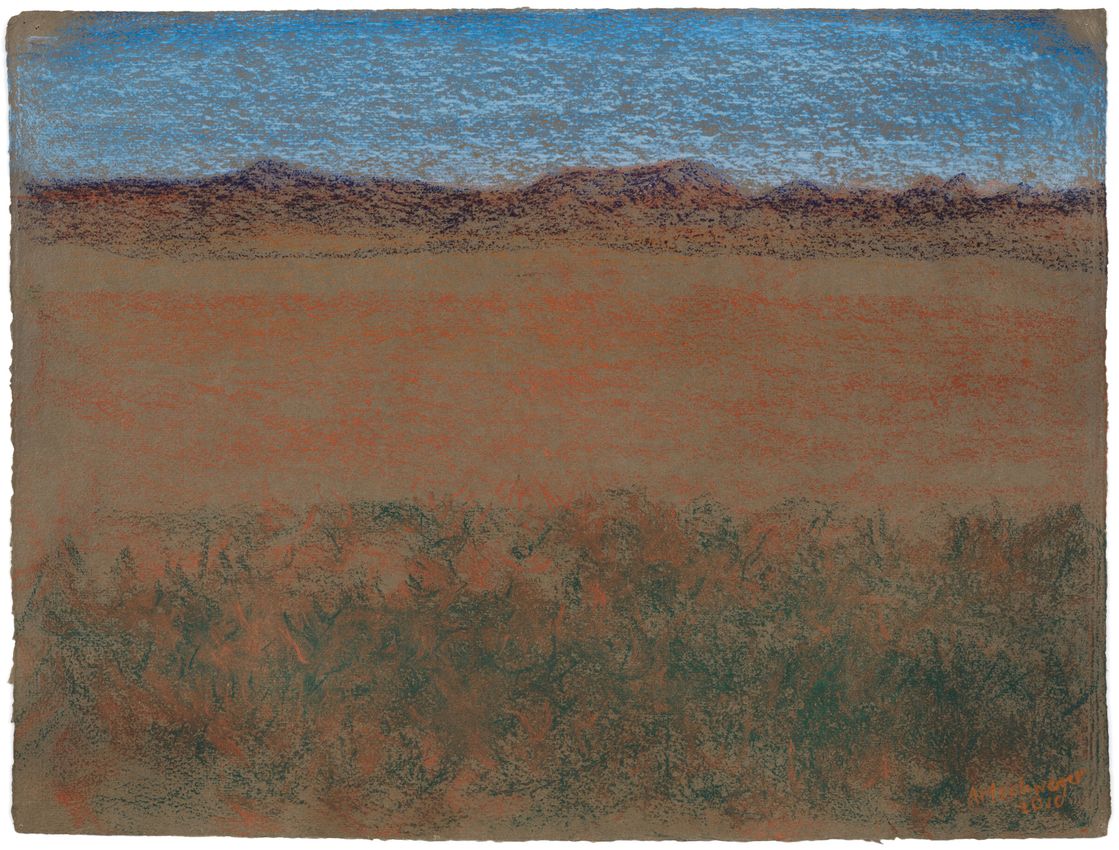
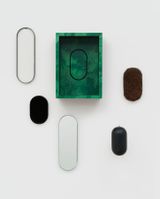
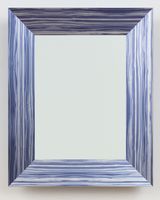
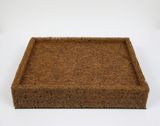
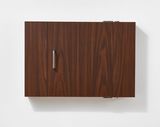
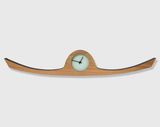
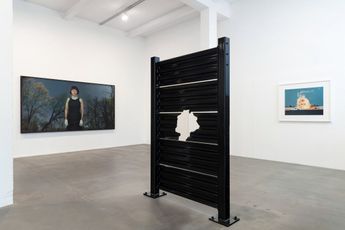
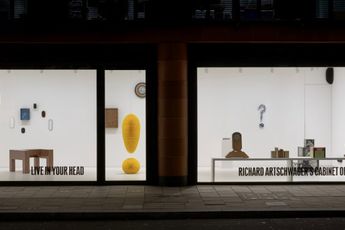
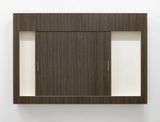
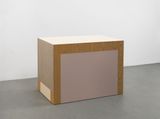
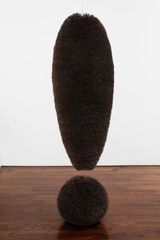
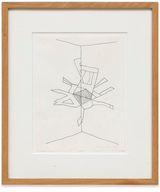
1923-2013, United StatesRichard Artschwager forged a unique path in art from the early 1950s through the early twenty-first century, making the visual comprehension of space and the everyday objects that occupy it strangely unfamiliar. His work has been variously described as Pop art, because of its derivation from utilitarian objects and incorporation of commercial and industrial materials; as Minimal art, because of its geometric forms and solid presence; and as conceptual art, because of its cool and cerebral detachment. But none of these classifications adequately define the aims of an artist who specialised in categorical confusion and worked to reveal the levels of deception involved in pictorial illusionism. In his work, an anonymous sheet of walnut-pattern Formica is both itself and a depiction of a wooden plane; a table or chair is furniture, sculpture, and image all at once; and a painting or sculpture can be a ‘multi-picture’ or ‘three-dimensional still life.’ Artschwager foregrounded the structures of perception, striving to conflate the world of images—which can be apprehended but not physically grasped—and the world of objects, the same space that we ourselves occupy. His last body of work marked a departure from his previous series, in that the images he composed from sources in popular culture communicated overt, if deadpan, allusions to contemporary political issues.
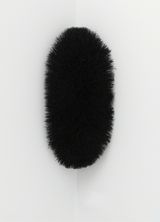
Artschwager was born in 1923 in Washington, DC, and died in 2013 in Albany, New York. After receiving a BA in 1948 from Cornell University, New York, he studied under Amédée Ozenfant, one of the pioneers of abstraction. In the early 1950s Artschwager became involved in cabinetmaking, producing simple pieces of furniture. After a ruinous workshop fire at the end of the decade, he began making sculpture using leftover industrial materials, then expanded into painting, drawing, site-specific installation, and photo-based work. Artschwager’s first exhibition took place at the Art Directions Gallery, New York, in 1959, and was followed by the first of many solo exhibitions with Leo Castelli in 1965. Solo exhibitions include Up and Across, Neues Museum, Nuremberg, Germany (2001, traveled to Serpentine Gallery, London); Museum für angewandte Kunst (MAK), Vienna (2002); Kunstmuseum Winterthur, Switzerland (2003, traveled to Kaiser Wilhelm Museum, Krefeld, Germany, and Staatliche Graphische Sammlung, Munich); Painting Then and Now, Museum of Contemporary Art, Miami (2003); Up and Down/Back and Forth, Deutsche Guggenheim Berlin (2003); Hair, Contemporary Art Museum, Saint Louis (2010); Richard Artschwager!, Whitney Museum of American Art, New York (2012, traveled to Hammer Museum, Los Angeles, Haus der Kunst, Munich, and Nouveau Musée National de Monaco); and Punctuating Space: The Prints and Multiples of Richard Artschwager, Frances Lehman Loeb Art Center, Vassar College, Poughkeepsie, New York (2015).
Courtesy Gagosian

Works at Gagosian








Recently Exhibited



Works Elsewhere









Explore and Follow Artists Shaping Contemporary Art
A respected voice in contemporary art discourse.
Focusing on ambitious storytelling and insightful art-world commentary. Ocula Magazine publishes in-depth interviews, critical essays and timely analysis on the artists, exhibitions and ideas driving the global art world.
Learn more about Ocula Magazine
Showcasing the best of the art world.
Ocula partners with galleries from around the world to highlight their artists, artworks and exhibitions. Gallery membership is by application and invitation, with each member vetted by an independent panel.
Learn more about Ocula Membership
Specialises in the sale of major artworks.
Led by a team with deep ties to the world’s leading auction houses, galleries and collectors. Ocula’s advisory team offers bespoke services to high-net-worth clients from around the world who are looking to acquire the best of contemporary and modern art.
Learn more about our team and services