

SOL LEWITT
1928-2007, United StatesSol LeWitt, a key figure in the Conceptual Art movement, pared back the idea of creating art to its essentials, making artworks characterised by repetition, serialisation and progression across a practice spanning drawing, painting, sculpture, printmaking and photography.
Early Years
Sol LeWitt was born in 1928 in Hartford, Connecticut and as a child, he attended art classes at the Wadsworth Atheneum. He gained his BFA from Syracuse University in 1949 before serving in the US Army during the Korean War. In 1953 he moved to New York City, taking classes at the Cartoonists and Illustrators school and working on Seventeen magazine. In the mid-1950s he worked for the architect IM Pei, and during the early 1960s he was a receptionist at MoMA, where he met the artists Dan Flavin and Robert Ryman, and the critic Lucy Lippard.
Sol LeWitt: Artworks
A cornerstone of Sol LeWitt’s artistic practice was that the thought process and ideas behind a piece of art were more important than the artwork itself—a concept notably put into action in his wall drawings, the first of which was created in 1968. His early works were paintings and reliefs, before he began to investigate squares and cubes during the mid-1960s using mathematical, systematic methods. His work explored abstraction, repetition and the geometric simplicity, often using bold colours to create feelings of movement and energy. During the 1980s he introduced concrete block into his work.
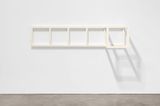
- Cubes were a fascination of LeWitt’s: his major 1974 work Variations of Incomplete Open Cubes began with the question “How many variations can be created by systematically subtracting parts from an open cube? Each frame structure (there were 122) had a corresponding diagram, and each one was the projection of a three-dimensional cube with some of the edges removed in a way that the structure remained 3D and all the edges stayed connected.
- Wall Drawing #769 (1994, 1996, 2020) is a great example of temporary yet also site-specific nature of the genre, having been created three times, in Paris, Madrid and Tokyo (it is now on display in the National Museum of Modern Art in the city) by artists following LeWitt’s instructions. It is made of a grid of 120 squares, each measuring roughly 90cm x 90cm. In each square there is a two-part combination containing 16 types of arcs, as well as straight and non-straight lines. The Tokyo iteration was drawn by Cho Sachiko, with assistance from Ishimura Masmi and Hirakawa Toshiko.
- Autobiography (1980) consisted of more than 1,000 photographs of LeWitt’s Manhattan loft, from empty jars to plug sockets, alongside documentation of what had happened to him while taking the pictures. However, LeWitt himself only appeared in one small, out-of-focus image.
Sol LeWitt: Select Public Commissions
- 123454321, Yorkshire Sculpture Park (1993)
- Consequence, the United States Holocaust Memorial Museum, Washington DC (1993)
- 54 Columns, North Highland Avenue, Atlanta (1999)
- Wall Drawing #1073: Bars of Colour, The New School, New York City (2003)
- Circle with Towers, University of Texas, Austin (2005, installed 2012)
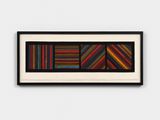
- Bars of Colour within Squares, MIT Building 6C, Cambridge (2007)
- Whirls and Twirls, 59th Street–Columbus Circle Subway Station, New York City (2009) (approved before LeWitt’s death)
Sol LeWitt: Select Posthumous Exhibitions
Select Posthumous Solo Exhibitions
- Sol LeWitt: Works from the 1960s, Paula Cooper Gallery, New York City (2026)
- Sol LeWitt: Open Structure, Museum of Contemporary Art Tokyo, Japan_ (2025) (and touring)
- Sol LeWitt: Works on Paper, 1972–1999, James Barron Art, Kent (2022)
- Sol LeWitt, Wall Drawing #991 and Wall Drawing #992, Catskill Art Space, Livingston Manor (2022)
- Artist Rooms: Sol LeWitt, Tate St Ives (2021)
- Sol LeWitt: Lines in All Directions, Mignoni Gallery, New York City (2018)
- Sol LeWitt, Galeriá Elvira González, Madrid (2015)
- Sol LeWitt: The Artist and His Artists, Museo d’Arte Contemporanea Donna Regina, Naples (2012) (and touring)
- Sol LeWitt: Hartford’s Native Son, Wadsworth Atheneum Museum of Art, Hartford (2010)
- Focus: Sol LeWitt, MoMA, New York City (2008)
Select Posthumous Group Exhibitions
- Calder, Kelly, LeWitt: Fundamentals of Form, San Francisco Museum of Modern Art (2026)
- Warhol, Pollock and Other American Spaces, Museo Nacional Thyssen-Bornemisza, Madrid (2025)
- Beyond Numbers: Mathematical Patterns, Shapes and Flow, Castellani Museum, Niagara (2024)
- Rules and Repetition: Conceptual Art at the Wadsworth Atheneum, Hartford (2023)
- ”Lines and Lines” Sol LeWitt and Konrad Fischer. Traces of a Collaboration, Kunstsammlung Nordrhein-Westfalen, Düsseldorf (2021)
- What You See is What You See, McNay Art Museum, San Antonio (2019)
- Being Modern: MoMA in Paris, Fondation Louis Vuitton, Paris (2017)
- The Xerox Book, Paula Cooper Gallery, New York City (2015)
- Xerography, Firstsite, Colchester (2013)
- Accrochage: Donald Judd, Louise Lawler, Sol LeWitt and Robert Mangold, Galerie Greta Meert, Brussels (2010)
- A Year of Drawing 2007–2008, Galerie Lelong, New York City (2008)
Further Reading
- Obituary in The New York Times
- Sol LeWitt prints catalogue raisonné
- Artist profile page at Pace Gallery
- Paragraphs on Conceptual Art (reproduced by Robert Spahr)
Sol Lewitt FAQs
Was Sol LeWitt one of the founding fathers of Conceptual Art?
“The idea becomes a machine that makes the art,” Sol LeWitt wrote in 1967, in his essay Paragraphs on Conceptual Art. While Marcel Duchamp is considered a forefather of Conceptual Art, Sol LeWitt is heavily associated with the global movement that emerged during the 1960s, which emphasised the thought process behind an artwork and the methods of production as being the value of the work.
What is a wall drawing?
Sol LeWitt made his first wall drawing in 1968 at the Paula Cooper Gallery in New York City and made more than 1,000 during his lifetime. Each wall drawing was made according to a set of instructions, and each work was site-specific. LeWitt eventually engaged assistants to complete the wall drawings—in 1971, he wrote: “The artist conceives and plans the wall drawing. It is realised by draughtsmen (the artist can act as his own draughtsman); the plan is interpreted by the draughtsman. There are decisions that the draughtsman makes, within the plan, as part of the plan. Each individual, being unique, if given the same instructions would understand them differently and would carry them out differently.”
Did Sol LeWitt collect art?
LeWitt and his wife Carol Androccio amassed almost 9,000 pieces of art in their collection, initially acquired via trades with other artists when LeWitt was starting his career. ’‘They were mostly one-to-one trades with whomever I knew,’’ he said, ’‘and weren’t done for monetary value at all. Besides, the works weren’t expensive back then, he told The New York Times in 2004. He also collected furniture and art books, and loaned out many pieces to institutions.
Ocula

Works at Galerie Greta Meert

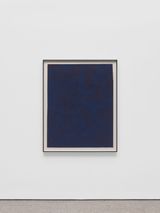

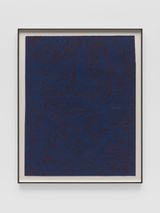

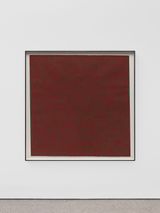

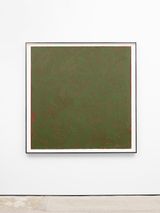
Recently Exhibited


Exhibiting Elsewhere


Works Elsewhere















Sol Lewitt in Ocula Magazine






Explore and Follow Artists Shaping Contemporary Art
A respected voice in contemporary art discourse.
Focusing on ambitious storytelling and insightful art-world commentary. Ocula Magazine publishes in-depth interviews, critical essays and timely analysis on the artists, exhibitions and ideas driving the global art world.
Learn more about Ocula Magazine
Showcasing the best of the art world.
Ocula partners with galleries from around the world to highlight their artists, artworks and exhibitions. Gallery membership is by application and invitation, with each member vetted by an independent panel.
Learn more about Ocula Membership
Specialises in the sale of major artworks.
Led by a team with deep ties to the world’s leading auction houses, galleries and collectors. Ocula’s advisory team offers bespoke services to high-net-worth clients from around the world who are looking to acquire the best of contemporary and modern art.
Learn more about our team and services