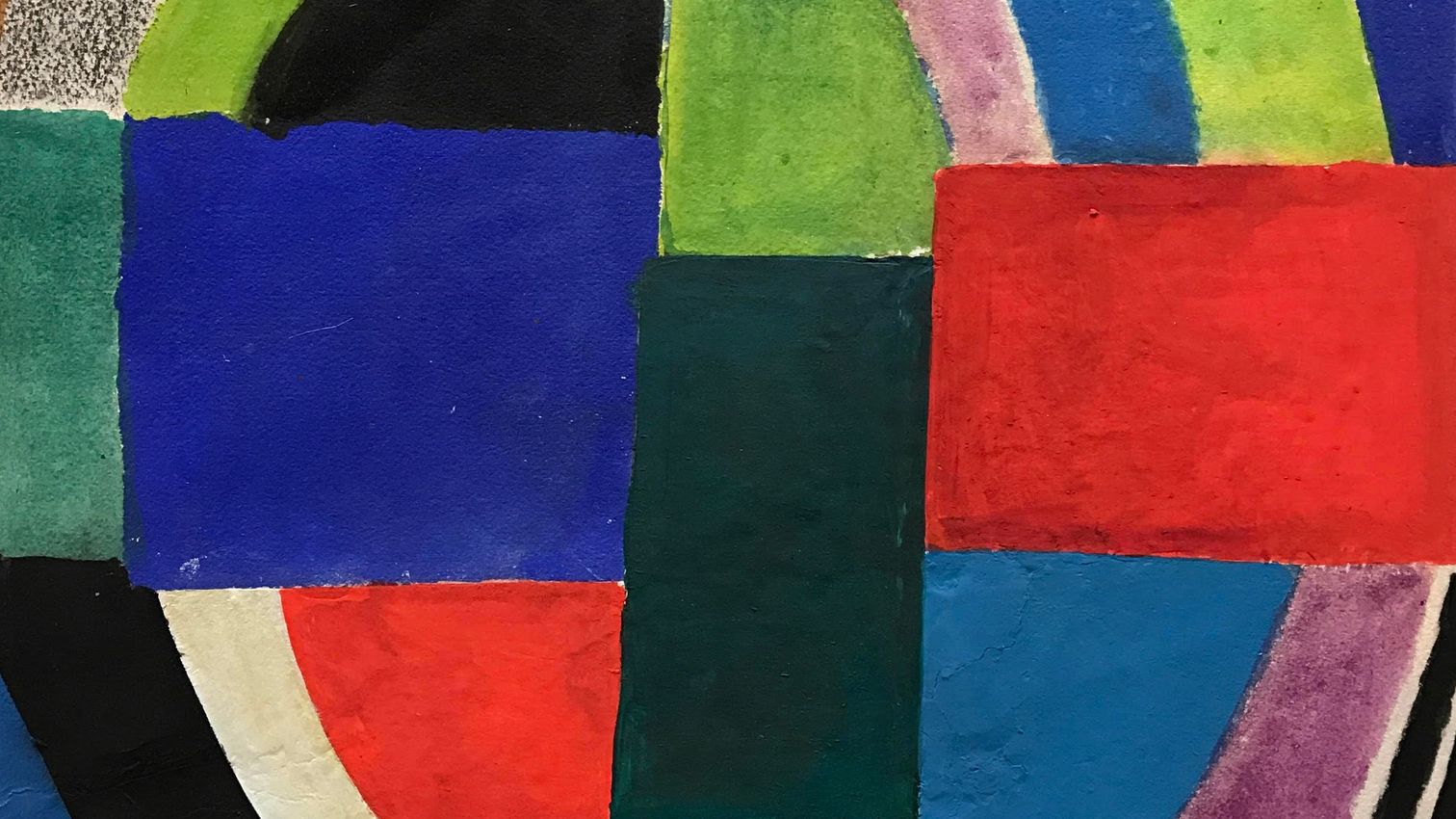
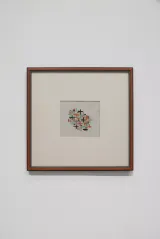
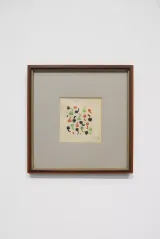
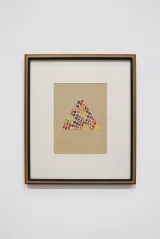
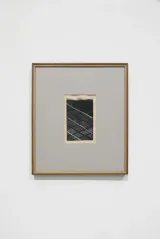
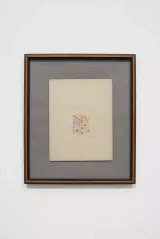
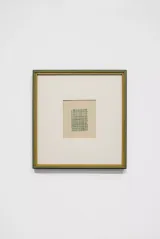
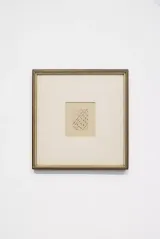
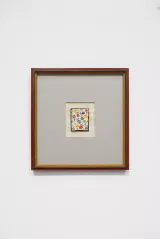
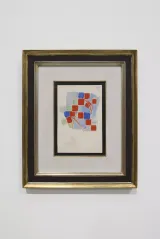
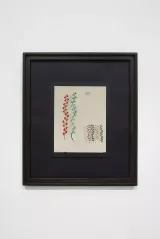
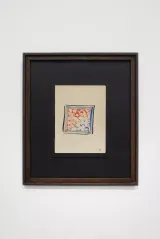
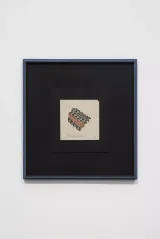
Sonia Delaunay’s early work was greatly influenced by the vibrant colour palette and energy of the Fauvist movement. Initially uninspired by the academic nature of the Paris art scene, she went on to explore the nature of colour and its poetic qualities. During her life, Delaunay often compared colour to poetry, understanding that different combinations of colour could evoke different and simultaneous meanings, previously saying that, ‘colors are words, their relations rhythms.’
Prior to developing her renowned style of abstraction and composition, Delaunay’s work was inspired by the Cubist tradition. Her figurative works such as Yellow Nude (1908) play with impressionistic features and multiple perspectives. In this painting, Delaunay illustrates a reclining nude figure with graphic lines that point at the woman’s prominent features, rather than painting an entirely realistic representation.
After the birth of her and Robert Delaunay’s son, Sonia Delaunay stitched a patchwork quilt, which then became the basis of her turn to abstraction. This quilt, constructed in 1911, was a spontaneous composition that involved pinks, maroons, creams, greens, and blacks and was made through Russian folk-art techniques that she had learned growing up.
Simultanéisme
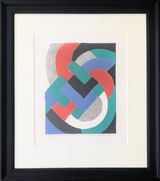
Influenced by her quilt, the Sonia and Robert Delaunay developed a unique visual language that put importance on the relationship between colour and form and on the multiplicity of meanings that can come from these partnerships. They coined this style simultanéisme (simultaneity), which later was renamed to Orphic Cubism or Orphism by French poet and art critic Guillaume Apollinaire.
Sonia then turned to creating colour-blocked paintings that feature geometric forms with nearly indistinguishable subjects. In 1913, she painted Bal Bullier (1913), an 11-foot-wide canvas full of vibrant colours and rectangular forms coupled with more organic and curved shapes. This painting referenced the dance hall that the Delaunays frequented, and, upon closer inspection, a viewer might begin to see the work littered with couples dancing across the scene.
Textiles
Aside from painting, Delaunay also explored textile design. She designed costumes for the Ballets Russes’ Cléopâtre in 1917. These garments integrated her painting’s geometric style with gold detailing and textured fabrics. By the 1920s, she established a studio named Sonia and created clothing for private clients, which included garments such as work attire, swimming costumes, and driving caps.
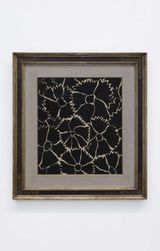
Delaunay experimented with different patterns in her designs, such as integrating floral motifs and text. These included her poem dresses, inspired by the Paris avantgarde, which she made by embroidering Surrealist text onto her clothes.