






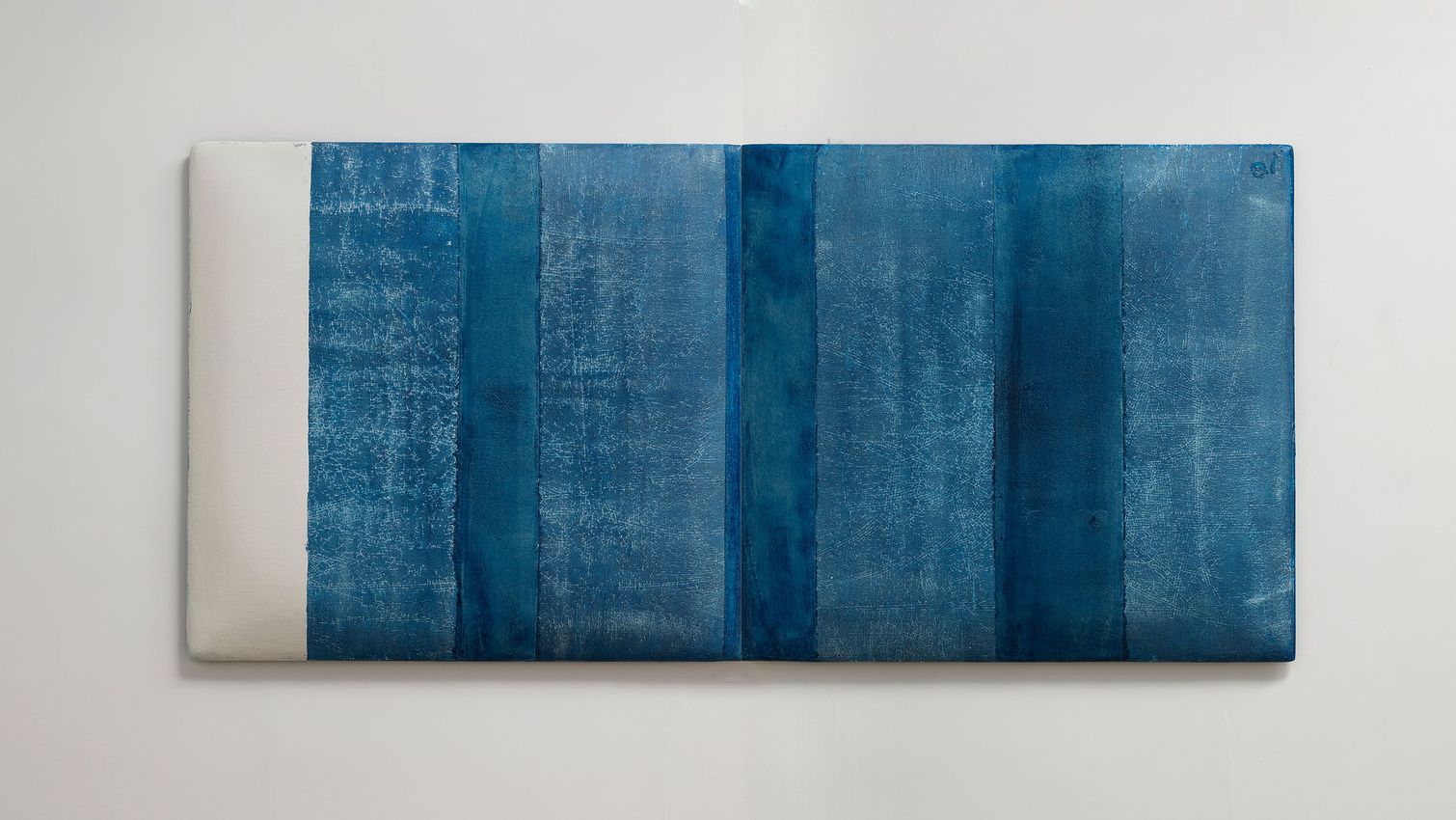
Su Xiaobai
b. 1949, ChinaSu Xiaobai is one of China’s most distinctive artists—his pieces don’t depict other objects or people and his visual language blends painting and sculpture. His chosen medium, lacquer, comes from Chinese history yet the way he uses it is modern and experimental.
Early Years
Su Xiaobai was born in Wuhan in 1949. He studied at Wuhan Arts and Crafts School between 1965 and 1969, and at the Central Academy of Fine Arts in Beijing between 1985 and 1987. During the 1980s he moved to Germany, working and studying in Düsseldorf and Weidingen. He now divides his time between Shanghai and Düsseldorf.
Su Xiaobai: Artworks
Su Xiaobai’s artwork has evolved its distinctive style through his exposure to both Western and Chinese art. Before moving to Germany, his work was considered social realism, but then became less figurative. However, it was his return to China during the early 2000s that focused his practice on shape, colour and surface through his adoption of traditional dàqī lacquer. During his early career, Su used traditional painting techniques, but his works became progressively more abstract, considering the idea that they are art itself rather than an interpretation of an existing object.
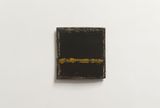
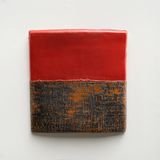
- Su Xiaobai’s first lacquer painting was A Piece of Lacquered Burlap (2003), which he created when he was living in Fujian province. Layers of red and black lacquer were painted on to sackcloth, and tears in the piece reveal glimpses of the fabric below. The work introduces a theme seen in other of Su’s pieces: the idea of aspects of life being partially or completely hidden.
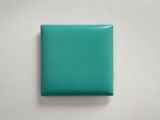
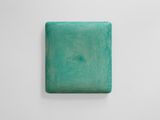
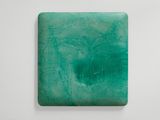
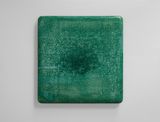
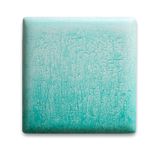
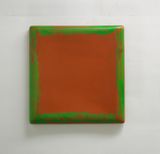
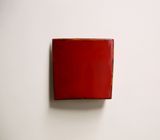
- For Generous Green (2015), Su Xiaobai was inspired by the shapes of roof tiles he collected in 2003 in Fujian province from demolished Qing dynasty houses. The curved edges remove sharpness, creating a form harmonious with the human body. Speaking on Instagram, Su Xiaobai’s wife Zhang Jun said: “Xiaobai is crazy about the intense green colours of Burmese fei cui jade”.
- The Niao Niao series (2025) was influenced by Chinese tradition and European modernism and inspired by classical ink painting. Lacquer and pigments created tactile artworks that examined ideas of change and the passage of time.
Su Xiaobai: Select Exhibitions
Select Solo Exhibitions
- Su Xiaobai’s Alchemical Universe, Venice Biennale Collateral Event (2026)
- Su Xiaobai: Glimmer, Tina Keng Gallery, Taipei (2025)
- Niao Niao, Pearl Lam Galleries, Hong Kong (2025)
- Su Xiaobai: Blue, Tina Keng Gallery, Taipei (2022)
- Beneath a descending moon, breathing: The Paintings of Su Xiaobai, Tina Keng Gallery, Taipei (2019)
- And There’s Nothing I Can Do, Hyogo Prefectural Museum of Art, Kobe City (2018)
- Su Xiaobai, Tina Keng Gallery, Taipei (2016)
- Su Xiaobai, Almine Rech Gallery, Paris (2014)
- Su Xiaobai: Painting and Being, Pearl Lam Galleries, Hong Kong (2014)
- Grand Immensity—The Art of Xiaobai Su, National Taiwan Museum of Fine Arts, Taichung (2013)
- Black on Red—The Artworks of Xiaobai Su, Tina Keng Gallery, Taipei (2010)
- The Dynasty of Colours—Xiaobai Su Solo Exhibition, Langen Foundation, Neuss (2010)
- Kao Gong Ji—Xiaobai Su Solo Exhibition, Today Art Museum, Beijing (2008)
- Clarify My Mind to View the World: A Solo Exhibition of Xiaobai Su, Lin & Keng Gallery, Taipei (2008) (and touring)
- Intangible Greats, Shanghai Art Museum (2007)
Select Group Exhibitions
- In the Ordinary, Tina Keng Galllery, Taipei (2025)
- Fubon Collection-Resonance: Symphony of Light, Love and Colour, Fubon Art Museum, Taipei (2025)
- Art Basel (2024)
- Art Basel Hong Kong (2021)
- Abstract By Nature, Sean Kelly Gallery, New York City (2019)
- Art Düsseldorf (2018)
- Armory Show, New York City (2018)
- Infinite Blue, Brooklyn Museum, New York City (2017)
- The world is yours, as well as ours, White Cube Mason’s Yard, London (2016)
- Jing Shen—The Act of Painting in Contemporary China, Pac Padiglione D’arte Contemporanea, Milan (2015)
- First Look: Collecting Contemporary at the Asian, Asian Art Museum, San Francisco (2015)
- Art Basel (2013)
- Yi Pai: Thirty Years of Chinese Abstraction, Wall Museum, Beijing (2008) (and touring)
Further Reading
- The Su Xiaobai Foundation
- Su Xiaobai Foundation’s Instagram
- Artist profile page at Tina Keng Gallery
- Artist profile page at Pearl Lam Projects
Su Xiaobai FAQs
Why did Su Xiaobai start to use lacquer? How does Su Xiaobai use lacquer?
When he returned to China from Germany in 2002, he became inspired by lacquer and its symbolism in Oriental culture. He started to experiment with traditional dàqī lacquer, swapping oil on canvas for lacquer on linen, clay, wood, bricks, sackcloth and vine and reimagining the medium as more than a coating. He mixes pigments, mineral powders into lacquer, creating a soupy medium and paints in layers which dry at different rates to create three-dimensional compositions.
What is Su Xiaobai’s Alchemical Universe?
Su Xiobai’s Alchemical Universe was an official collateral event for the 61st Venice Biennale in 2026 featuring 35 works and focusing on Su Xiaobai’s use of natural lacquer as a medium for contemporary abstraction. Organised by the Su Xiaobai Foundation and the Los Angeles County Museum of Art, it took place at the Palazzo Soranzo Van Axel.
How does Su Xiaobai name his artworks?
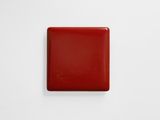
Some of Su Xaiobai’s artworks are named after their colour (Poppy Red (2024), or Green–2 (2014), for example). Other names come from literature, history and spiritual traditions. The Niao Niao series (2025) takes its title from a Chinese poetic phrase that considers transience and evanescence.
Ocula

View Su Xiaobai's Artworks




















Explore Su Xiaobai's Exhibitions








Explore and Follow Artists Shaping Contemporary Art
A respected voice in contemporary art discourse.
Focusing on ambitious storytelling and insightful art-world commentary. Ocula Magazine publishes in-depth interviews, critical essays and timely analysis on the artists, exhibitions and ideas driving the global art world.
Learn more about Ocula Magazine
Showcasing the best of the art world.
Ocula partners with galleries from around the world to highlight their artists, artworks and exhibitions. Gallery membership is by application and invitation, with each member vetted by an independent panel.
Learn more about Ocula Membership
Specialises in the sale of major artworks.
Led by a team with deep ties to the world’s leading auction houses, galleries and collectors. Ocula’s advisory team offers bespoke services to high-net-worth clients from around the world who are looking to acquire the best of contemporary and modern art.
Learn more about our team and services