






TADASHI SUGIMATA
1914-1996, JapanRegarded as one of the most significant artists of the postwar Japanese avant-garde, Tadashi Sugimata (杉全 直) is named in Japanese art history as one of the country’s leading abstract painters of the postwar era.
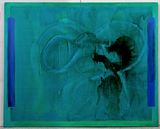
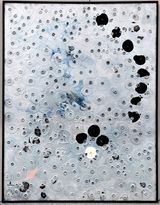
Born in 1914, Tokyo, the artist grew up in Himeji, Hyogo. He began oil painting in middle school and continued his studies further at the Tokyo Fine Arts School (current Tokyo University of the Arts). Although Sugimata began his career creating surrealist works, the Informel movement influenced his oeuvre, creating an aesthetic shift towards abstract expression. His most notable series, which began in the 1960s, was his Kikko (lit: Tortoiseshell) series, which resulted in him winning the Bridgestone Museum of Art Award.
He exhibited his works at numerous domestic and international exhibitions, i.e. the Venice and Sao Paulo Biennales, and is a recipient of numerous awards throughout his career. Respected for his many contributions to Japanese art, and he was further awarded the 31st Minister of Education Award for Fine Arts in 1981, and Orders of the Sacred Treasure in 1986. As a professor of Tama Art University and Tokyo University of the Arts, he was also a highly influential figure in the education of young artists. Throughout his career, Sugimata challenged and traversed the vast possibilities of art and used both, two-dimensional and three-dimensional mediums.
Courtesy √K Contemporary









Explore and Follow Artists Shaping Contemporary Art
A respected voice in contemporary art discourse.
Focusing on ambitious storytelling and insightful art-world commentary. Ocula Magazine publishes in-depth interviews, critical essays and timely analysis on the artists, exhibitions and ideas driving the global art world.
Learn more about Ocula Magazine
Showcasing the best of the art world.
Ocula partners with galleries from around the world to highlight their artists, artworks and exhibitions. Gallery membership is by application and invitation, with each member vetted by an independent panel.
Learn more about Ocula Membership
Specialises in the sale of major artworks.
Led by a team with deep ties to the world’s leading auction houses, galleries and collectors. Ocula’s advisory team offers bespoke services to high-net-worth clients from around the world who are looking to acquire the best of contemporary and modern art.
Learn more about our team and services