





WEI GUANGQING
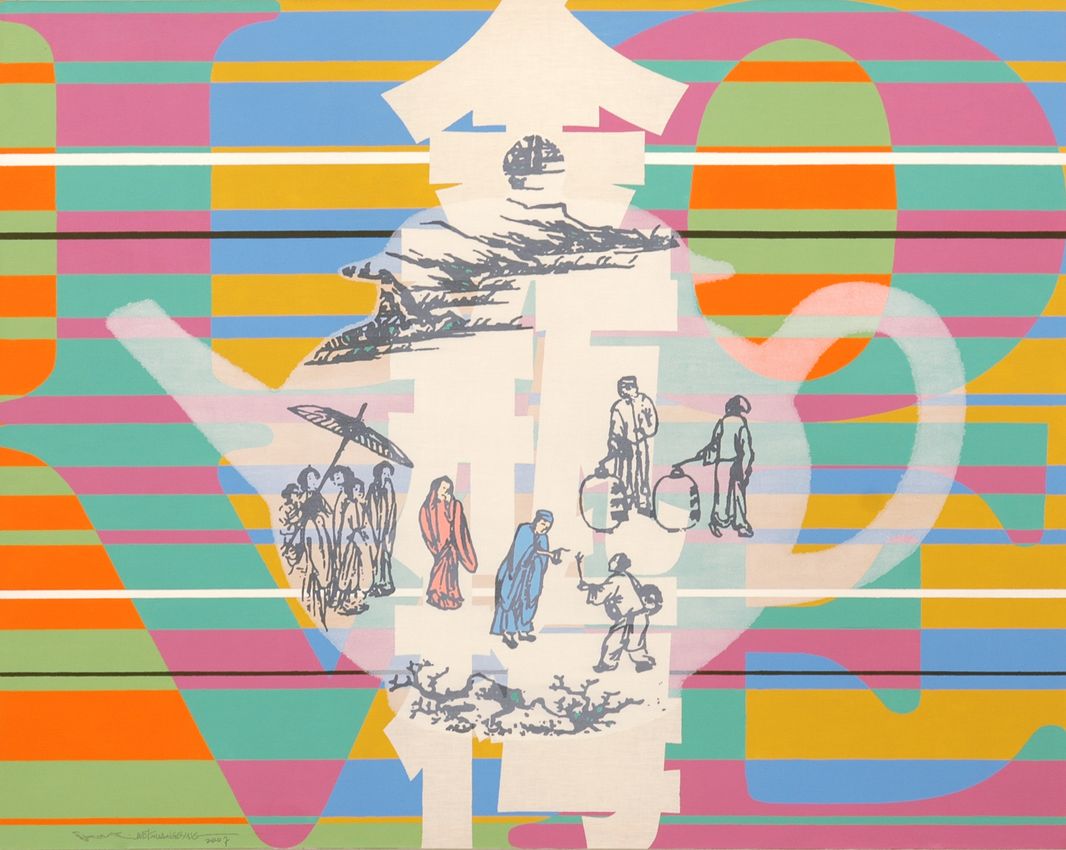
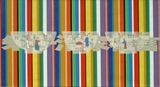
ChinaThe red wall is a visual motif that has appeared throughout Wei Guangqing’s work since the 80’s. Here, he extends the practice of the double take by encouraging the viewer to look again or reconsider familiar narratives and styles of images. The series Red Wall takes as its point of departure the Chinese moral classics The Virtuous Words with feudal maxims of ethical morals and doctrines.
Appropriating this ancient illustrated book, he replaces the original text with the dominant visual symbol of a red wall, maintaining only the original illustrations and manipulating them with the flat pastiche technique of pop art. The red wall becomes the commanding feature in the basic composition and serves as a new projection screen for a new social order and new moral standards. The representation of the wall plays on the various connotations that this symbol embraces: a border, inclusion and exclusion and as protection from foreign intruders and influence. The deceivingly simple work draws on ancient philosophy while borrowing Western pop-aesthetics. The wall becomes an ambiguous symbol because it is distanced from the nation it purportedly serves. In subverting the ancient classics, Wei Guangqing does not fully abandon tradition, but reminds viewers to recognise their entwined meaning in mainstream contemporary culture—in consumerism, politics and religion.
By combining opposing concepts such as past and present, the figurative and the abstract, he represents these as fluid, heterogeneous concepts that cannot be viewed in isolation. Wei Guangqing employs references to historical philosophy and post-modern pastiche of different visual images. With no immediate way to decode these cultural compilations, Wei Guangqing’s paintings work like informative fragments with no easy way out.
Wei Guangqing was born in Huanshi, Hubei province in 1963. He graduated from Zhejiang Academy of Fine Arts, Department of oil painting of in 1985. He resides and works in Wuhan. Selected exhibitions include Old Scriptures, Wei Guangqing Solo Exhibition, ShanghART H-Space, Shanghai(2008); Zuo Tu You Shi, Wei Guangqing’s Art Exhibition, He Xiangning Art Museum, Shenzhen(2007); 85 New Wave—The Birth of Chinese Contemporary Art, Ullens Center for Contemporary Art, Beijing(2007); Made in China—the Paintings of Wei Guangqing, ShanghART Gallery, Shanghai (2005), China—Contemporary Painting, Fondazioni Cassa di Risparmio, Bologna(2005), Mahjong, Kunstmuseum Bern (2005) and First Triennale of Chinese Art, Guangzhou Art Museum, Guangzhou(2002).
Courtesy ShanghART







Explore and Follow Artists Shaping Contemporary Art
A respected voice in contemporary art discourse.
Focusing on ambitious storytelling and insightful art-world commentary. Ocula Magazine publishes in-depth interviews, critical essays and timely analysis on the artists, exhibitions and ideas driving the global art world.
Learn more about Ocula Magazine
Showcasing the best of the art world.
Ocula partners with galleries from around the world to highlight their artists, artworks and exhibitions. Gallery membership is by application and invitation, with each member vetted by an independent panel.
Learn more about Ocula Membership
Specialises in the sale of major artworks.
Led by a team with deep ties to the world’s leading auction houses, galleries and collectors. Ocula’s advisory team offers bespoke services to high-net-worth clients from around the world who are looking to acquire the best of contemporary and modern art.
Learn more about our team and services