






YUNIZAR
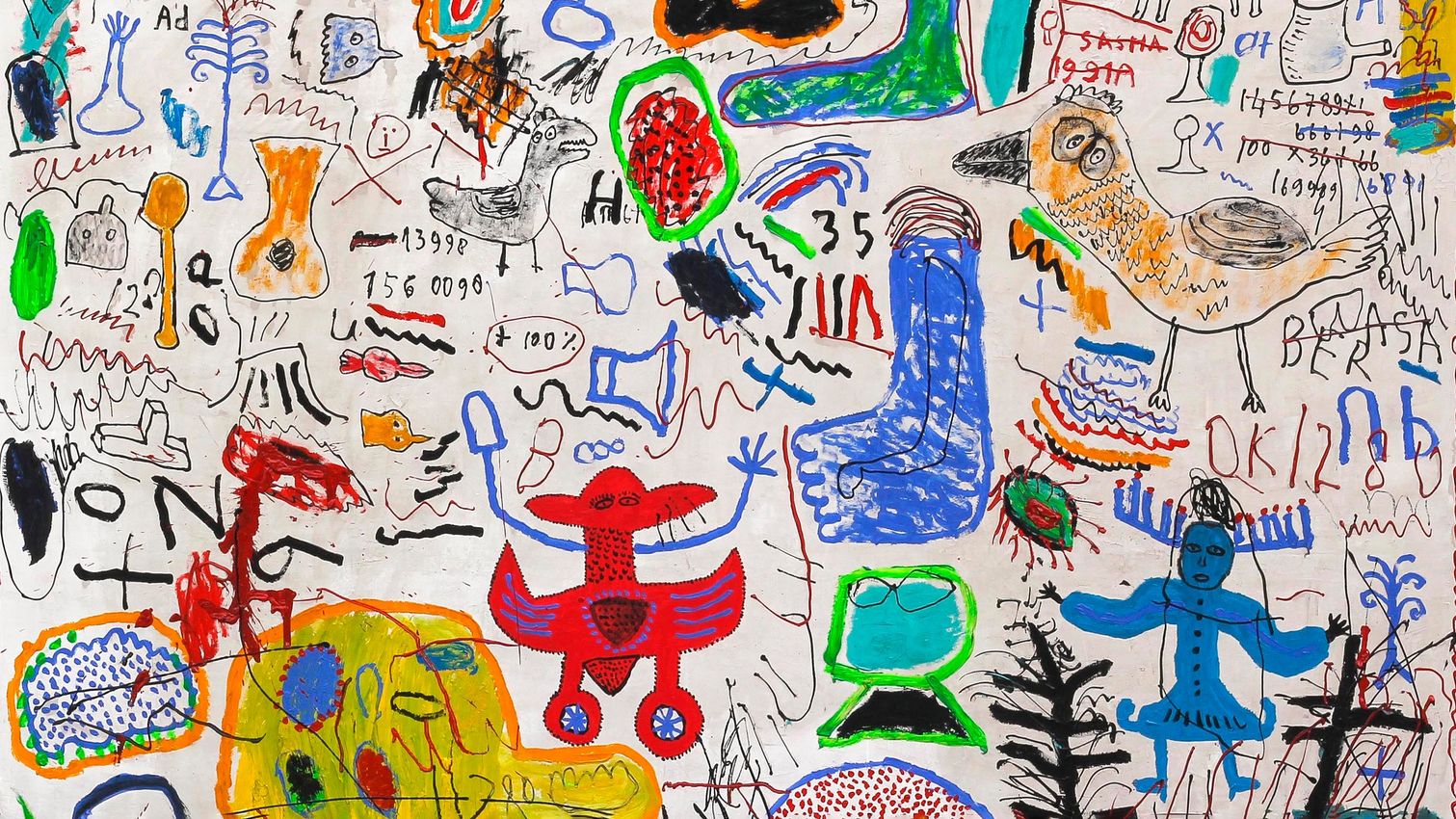
b. 1971, IndonesiaYunizar’s childlike paintings and sculptures are anchored in both the everyday and his imagination. Inspired by the oral traditions of the Minangkabau culture, Yunizar uses figurative language to tell visual stories and imbue his subjects with energy, while his working and reworking of his large-scale canvases creates tactile paintings.
Early Years
Born in 1971 in Talawi, West Sumatra, Yunizar studied for his fine arts degree at the Institut Seni Indonesia (ISI), which he gained in 1993. During this period, he co-founded the art collective Kelompok Seni Rupa Jendela with five other Minangkabau students. Following the fall of President Suharto in 1998, KSR Jendela did not get involved with political statements, instead operating as a creative sanctuary where experimentation and exchange could occur.
In 2012 Yunizar and Gajah Gallery director Jasdeep Sandhu founded Yogka Art Lab, conceived as a space where local artists could experiment with new materials and processes, initially focusing on aluminium casting and papermaking but now a foundry specialising in bronze.
Yunizar: Artworks
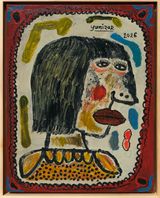
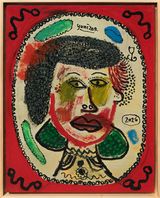
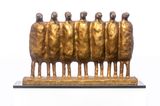
Encapsulating the essence of the everyday, rather than making a political statement, Yunizar’s early works from the late 1990s and early 2000s were deceptively simple, featuring enigmatic human figures in dark colours and smudged paint. By the mid-2000s he was taking inspiration from graffiti, adding impressionistic scribbles into his paintings. These became the Coretan (unreadable letters) series, blurring the boundaries between the imaginary and real life. In 2012, he started to bring his surreal subjects to life in bronze—everything from mythical creatures to gangsters.
Natural elements are a key element of Yunizar’s practice, coming from the holistic concept of “rasa” (the act of perceiving the whole at once, including feelings, sensations and perceptions). As traditional Indonesian culture transforms around him, Yunizar has created his own world.
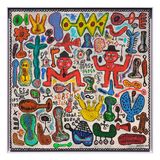
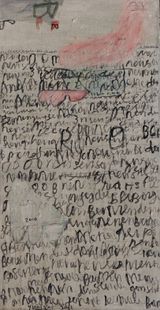
- 2019’s Untitled centres words and language, yet breaks out of the familiar structures of the way language is presented. Bright marks, half-familiar scribbles and words fill the canvas.
- Yunizar’s warmth and playfulness come to the fore in Putri Duyung dan Ikan Merah (Mermaid & Red Fish) (2023), a doodle-like drawing of a mermaid in a brilliant palette.
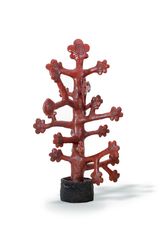
- Teko II (Teapot 2) (2025) was displayed at the 2026 edition of Art Basel Hong Kong. Blending human toes and trousers, and an animal/functional tank, the large-scale sculpture is cast in bronze.
Yunizar: Select Exhibitions
Select Solo Exhibitions
- Perspektif Baru, Gajah Gallery, Jakarta (2024)
- New Perspectives, Gajah Gallery, Singapore (2022)
- The Original Story, Sin Sin Fine Art, Hong Kong (2019)
- The Garden in Eden, Gajah Gallery, Singapore (2016)
- Yunizar Solo Exhibition, Gajah Gallery, Singapore (2014)
- Yunizar: Story, Ben Brown Fine Arts, Hong Kong (2012)
- Jogja Psychedelia, Galeri Soemardja, Bandung/Sangkring Art Space, Yogyakarta/Gajah Gallery, Singapore (2010)
- Coretan, National University of Singapore Museum, Singapore (2007)
- Coretan Rasa, Emmitan Fine Art Gallery, Indonesia (2006)
- Reborn, Sin Sin Fine Art Gallery, Hong Kong (2005)
Select Group Exhibitions
- 30 Years of Gajah: A Retrospective, Gajah Gallery, Singapore (2026)
- Big Bang: A Myth of Origins, Gajah Gallery, Singapore (2025)
- Beyond Borders, Gajah Gallery Yogyakarta (2023)
- -Forging Ahead: 10 Years of Yogya Art Lab_, Gajah Gallery Yogyakarta (2023
- New Beginnings, Gajah Gallery Jakarta (2022)
- Navigating Entropy: Artists in Residence, Gajah Gallery, Singapore (2020)
- Monumenta: In Lightness, Gajah Gallery, Singapore (2019)
- Archaeology of the Present, Gajah Gallery, Singapore (2016)
- Trajectories, Galeria Habana, Havana (2014)
- Contemporary Indonesia, Ben Brown, London (2012)
- Back to The Future, Sangkring Art Space, Yogyakarta (2011)
- Jogja Biennale X, Jogja (2009)
- Manifesto, The National Gallery of Indonesia, Jakarta (2008)
- Cilukba, Valentine Willie Fine Art, Kuala Lumpur (2007)
- Grand Opening Exhibition, Galeri Jogja, Yogyakarta (2006)
- Indonesian Contemporary, iPreciation, Singapore (2005)
- Merahnya Merah (How Red is Red), Nadi Gallery, Jakarta (2004)
Further Reading
- Yunizar’s Instagram
- Yunizar’s artist profile page at Gajah Gallery
- Profile at The Artling
Yunizar FAQs
What materials and techniques does Yunizar use?
Yunizar’s paintings are playful but with a subtle colour palette (yellows, browns, greens), which he smudges as he reworks the canvas, resulting in a tactile piece of art. In his sculpture practice, Yunizar uses a wide selection of materials, beginning with clay modelling and then moulding three-dimensional works for fibreglass resin, brass, aluminium and bronze
What is the Mingangkabau culture?
Minangkabau culture is a native Sumatran culture and adheres to a matrilineal system (in terms of marriage and inheritance). There’s a deep oral tradition with the Minangkabau culture, which Yunizar referenced in his Coretan series, in which prose was added to the lines and scribbles on the canvas, coming from a need to release the self from what has previously been constructed.
Does Yunizar create his work spontaneously?
Yunizar’s painting process for his expressive, large-scale canvases involves an element of spontaneity, which creates the fluid openness of his artworks. In a 2014 article he said that sculpture required him to “work in a more structured, methodical way.”
Ocula

Recently Exhibited



Works Elsewhere













Explore and Follow Artists Shaping Contemporary Art
A respected voice in contemporary art discourse.
Focusing on ambitious storytelling and insightful art-world commentary. Ocula Magazine publishes in-depth interviews, critical essays and timely analysis on the artists, exhibitions and ideas driving the global art world.
Learn more about Ocula Magazine
Showcasing the best of the art world.
Ocula partners with galleries from around the world to highlight their artists, artworks and exhibitions. Gallery membership is by application and invitation, with each member vetted by an independent panel.
Learn more about Ocula Membership
Specialises in the sale of major artworks.
Led by a team with deep ties to the world’s leading auction houses, galleries and collectors. Ocula’s advisory team offers bespoke services to high-net-worth clients from around the world who are looking to acquire the best of contemporary and modern art.
Learn more about our team and services