





Jasdeep Sandhu on Southeast Asian Art
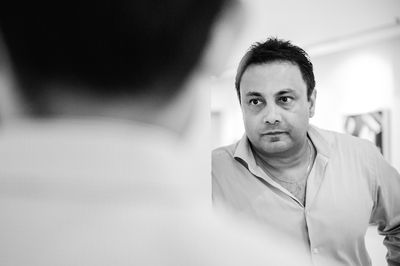
Jasdeep Sandhu. Image courtesy Gajah Gallery. Photo: Aron Teo Photography
Nearly three decades after its founding in Singapore in 1996, Gajah Gallery has become a key conduit for contemporary art in Southeast Asia, with a sustained commitment to Indonesian practice at its core. Under the direction of Jasdeep Sandhu, the gallery has expanded its footprint across the region, operating spaces in Singapore and Yogyakarta while fostering cross-cultural dialogue through exhibitions, research initiatives, and artist-led production.
This regional emphasis is matched by an investment in infrastructure. In Singapore, Gajah Gallery was among the early tenants of Tanjong Pagar Distripark, a former port warehouse complex that has since developed into one of the city’s most significant contemporary art hubs. In Yogyakarta—long recognised as Indonesia’s artistic heart—the gallery’s Yogya Art Lab (YAL), founded in 2012, functions as a hybrid workshop and residency, pairing artists with highly skilled artisans to produce ambitious works across sculpture, paper, and mixed media.
Through initiatives such as YAL and a programme of exhibitions that situate Southeast Asian art within broader global conversations, Sandhu has positioned Gajah Gallery as both a commercial and intellectual platform. We spoke with him on the occasion of Bazaar Art Jakarta about the evolving Indonesian art scene, the practices of Ashley Bickerton and Yunizar, and the collaborative model underpinning Yogya Art Lab.
AD: Gajah Gallery is participating in Bazaar Art Jakarta for the second time. What role do art fairs like this play in the development of Indonesia’s contemporary art ecosystem?
JS: This is Gajah Gallery’s second year exhibiting at Bazaar Art Jakarta; before joining, I spoke with the fair’s organisers and encouraged them to take a firmer stance in supporting fine art. BAJ has been instrumental in developing Jakarta’s buzzing arts scene. The fair contributes to building support for artists not just in the metropolis of Jakarta but for the rest of the arts community in wider Indonesia.
AD: Have you got high expectations this year?
JS: We have a very strong collection this year and we are confident it will be well received. However, we must, of course, take into consideration the current financial turmoil in North Asia. Surprisingly enough, even despite the relative strain across the markets, we have had considerable interest in our artworks; this has led to my finding that sometimes, when all the financial markets are down, collectors devote their attention to the art market. The next few days will certainly be an interesting barometer on the vitality of the art world in South East Asia.
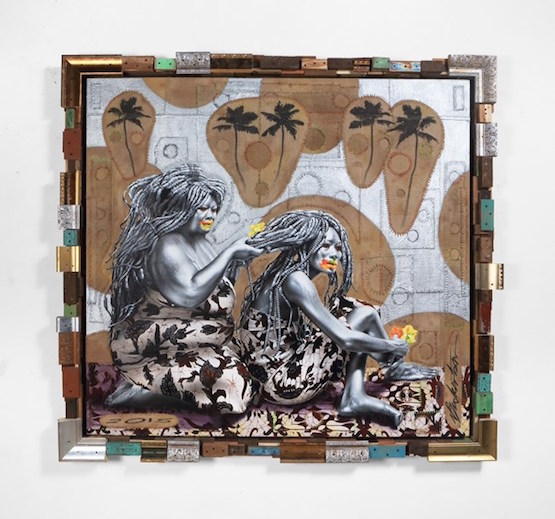
AD: You are debuting a major new sculptural work by Ashley Bickerton at the fair. We you please discuss it?
JS: Yogya Art Lab has been working with Ashley Bickerton for the past four years. Living in Bali these past 22 years, but coming from a background as a central figure in the New York’s vital East Village scene of the 1980’s, grants him a unique position in the art world today. This background further includes a peripatetic childhood never living in one country more than two years until the family finally settled in Hawaii when he was 12. Where most other artists focus on subject matter or ideas intentionally limited from their local environments, Bickerton comes armed with an entire arsenal of global references and experiences to pull on at will. His father Derek Bickerton is an acclaimed anthropological linguist and the reason for the family’s gypsy lifestyle. Years later the son follows the father’s muse and develops what his own twisted post-modern version of the elder’s earnest pursuits. In this ongoing series he calls Junk Anthropologies, Bickerton plays havoc with so many received and canonical ideas of cross-cultural understanding. He does not shy away from issues of gender and race and their inherent exoticisation and misappropriation in the supposedly empirical fields of the human sciences or the high arts. Having been a student of the legendary conceptual artist John Baldessari at CalArts, Bickerton still shares a strong kinship with the whimsical and humorous, but conceptually driven questioning inherent to that West Coast movement. A true post-modernist, he feels equally at home in the languages of Pop art, Conceptualism, and both high and low culture with an ability to focus clearly outside the narrow scope of western contemporary thinking. The sculpture that will debut in Bazaar Art Jakarta very simply epitomises the idea of ‘Junk Anthropology’, Bickerton’s ongoing dialogue with a multiplicity of often-contradictory aesthetics, playing with everything from Gauguin and Levi Strauss, to Warholian Pop and Instagram’s instant-gratificatory culture of narcissism. Wahine Pa’Ina, which roughly translates from Hawaiian to ‘Party Girl’ is a defining work in this series that has for years enjoyed riding double edges and playing turmoil with interpretation.
AD: And you will also be showing some new works by Indonesian star, Yunizar. What work will he be showing?
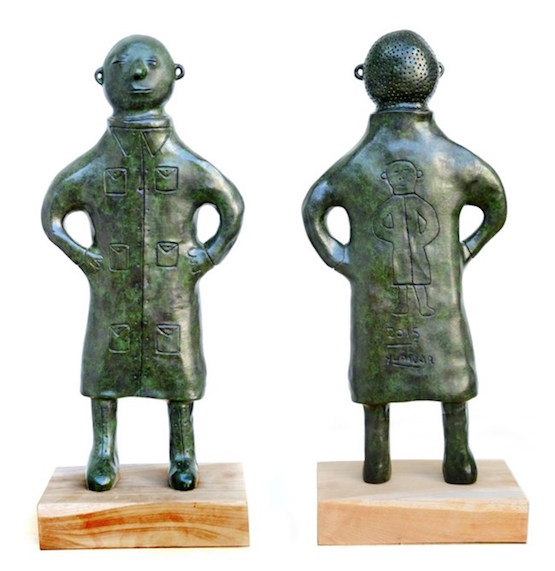
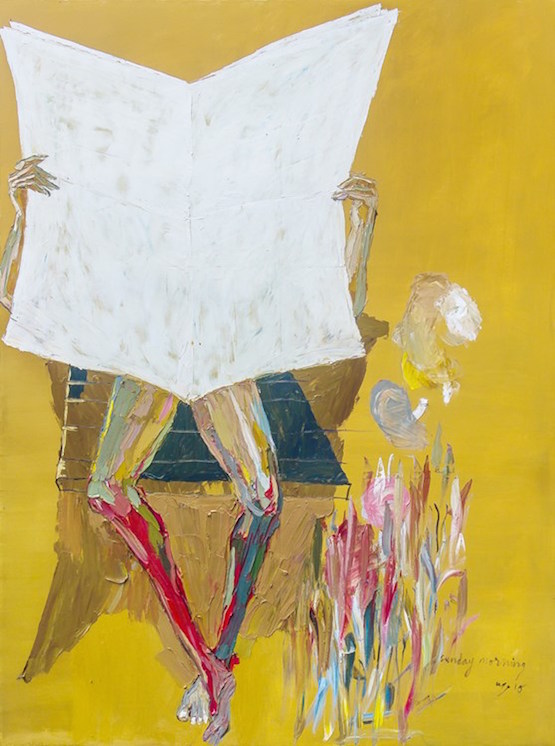
JS: We will be showcasing a selection of Yunizar’s paintings and sculptures. Yunizar’s three-dimensional work has been a surprise for all of us over the past three years. He has produced bronze sculptures crafted in his distinct aesthetic, consistent with that of his already well-established paintings. These latest sculptures depict the average Indonesian person, expressed though the artist’s signature wit and quirk. For his paintings, Yunizar will be showing two works depicting the Indonesian Garuda, engaging this symbolism playfully in his realm of apolitical art.
Currently, Yunizar is preparing for his joint show with fellow Indonesian artist Ugo Untoro, which will take place at the recently established Gajah Gallery in Yogyakarta. The new space aims to provide the artistic audience in Yogya with a fresh, engaging exhibition.
AD: Both artists created their sculptures at Gajah Gallery’s Yogya Art Lab? This initiative, which you helped to found, has been in operation for more than 3 years now. Tell us a bit about it and how things are going?
JS: The idea of YAL was conceived three years ago, and it was a very natural decision for us. We found that Yogyakarta had an abundance of artists and artisans working in the art-making field, primarily with sculpture and paper. However, up until 2007, the art market in Yogya was—in my opinion—acutely underfunded. There was a surplus of artistic ability and craftsmanship, but a lack of quality in production methods and materials. When the art market picked up in 2007, it allowed for a vast improvement in art-making capabilities with regards to resources. That was the foundation of our work when we opened in 2012. Since then, Yogya Art Lab has vastly improved the quality of work coming from Yogyakarta by raising the standards of production. We have brought local sculpture-making to an international standard, where one can expect no difference in the quality of the work we produce, compared to those made in America or Europe. We’ve had international experts come into YAL to work alongside the artisans in tweaking their processes, adding a knowledge base of contemporary techniques to the traditional practices they implement. We’ve been able to give the artisans top quality imported materials to work with; it has very much been an organic, collaborative process with the artists and the artisans. To be honest, we initially stumbled into this without much thought as to the difficulties we would face from bureaucracy to technical issues. Those aside, however, we have been extremely lucky to work with artists like Yunizar and Ashley Bickerton who have each produced amazing artwork that gives everyone involved in the process, from the artists and artisans to the collectors and critics, a sense of pride and joy.
AD: What else are you showing at the fair?
JS: In addition to Ashley Bickerton and Yunizar, our line-up includes new work from Ahmad Zakii Anwar, Li Jin, Sabri Idrus, Yusra Martunus, and Rudi Hendriatno. Young artist R. Yuki Agriardi will be debuting at Bazaar Art Jakarta with us for the first time. We are also showing two works of Ugo Untoro’s, which will be included in his solo exhibition at Gajah Gallery in Singapore this November.
AD: What else does Gajah Gallery have coming up for the end of 2015?
JS: For the past few months Gajah Gallery has been actively engaged in preparing for the opening of our new 6000 square foot space at Tanjong Pagar Distripark in Singapore. The new exhibition space holds exciting potential for us, and the location invites a unique juxtaposition of atmospheres rarely seen in Singapore. We will be opening our inaugural exhibition in the first few weeks of October.
In November, Ugo Untoro will present his latest paintings in a solo exhibition at our new gallery.—[O]
Main image: Jasdeep Sandhu. Image courtesy Gajah Gallery. Photo: Aron Teo Photography









A respected voice in contemporary art discourse.
Focusing on ambitious storytelling and insightful art-world commentary. Ocula Magazine publishes in-depth interviews, critical essays and timely analysis on the artists, exhibitions and ideas driving the global art world.
Learn more about Ocula Magazine
Showcasing the best of the art world.
Ocula partners with galleries from around the world to highlight their artists, artworks and exhibitions. Gallery membership is by application and invitation, with each member vetted by an independent panel.
Learn more about Ocula Membership
Specialises in the sale of major artworks.
Led by a team with deep ties to the world’s leading auction houses, galleries and collectors. Ocula’s advisory team offers bespoke services to high-net-worth clients from around the world who are looking to acquire the best of contemporary and modern art.
Learn more about our team and services