The art world in focus
Subscribe to our newsletter for news and insights on artists, galleries and exhibitions.
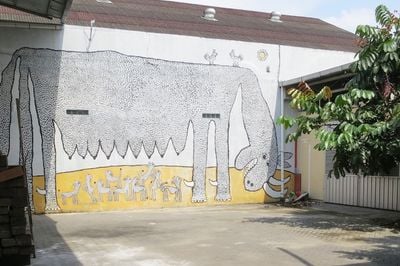
Yogyakarta Art Lab. Courtesy Gajah Gallery, Singapore.
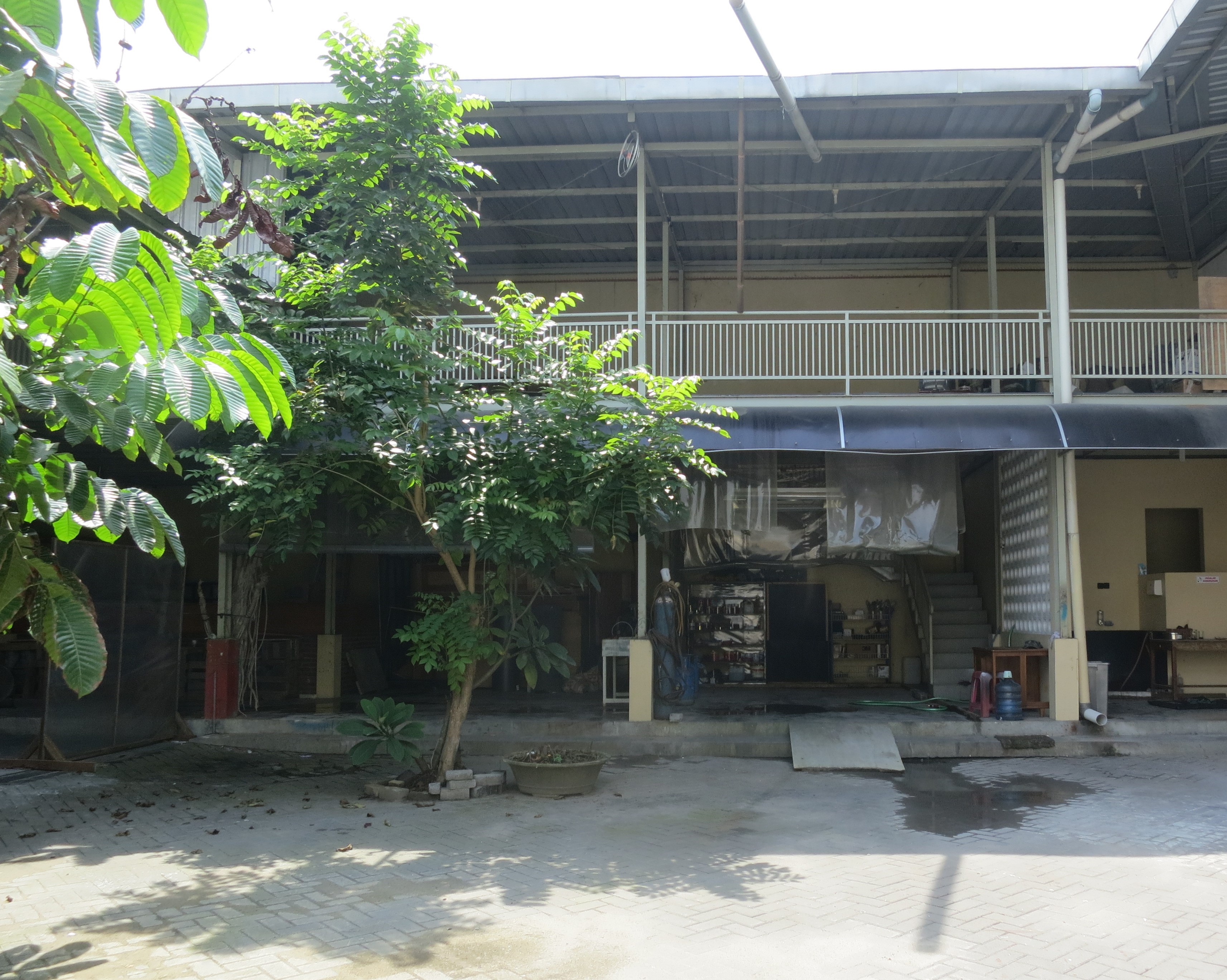
Jasdeep Sandhu, the owner of Gajah Gallery, founded the lab in 2012. Originally, they were exploring pulp and paper manufacture, and then they began to work with bronze. It was after about six months of very serious experimentation that they realised it wasn’t quite going the way they wanted. I came on board in early 2015. We realised that there are a lot of places to cast bronze in Indonesia, but it’s not necessarily the quality of bronze that you would expect from a top-rate foundry. The impetus at YAL from the start was to control the quality and to offer the local artists—and anyone in Southeast Asia—the ability to cast in a place where they know we weren’t just taking brass taps and copper pipes and throwing everything in the pot and hoping that it came out. Originally we were outsourcing the bronze we were using, but the reality was that we just couldn’t control its purity. You can’t be there all the time, so you don’t know what else is going in the pot. In some cases, when a sculpture got to the patina stage, a little bit of brass contaminated it, and problems would emerge where the colour changed due to the alien metal. It’s like having a white canvas but someone patched in a little bit of off-white. It was through that experience that we realised the only way to do it is to bring everything in-house. All our sculptures are silicone bronze; it’s all straight from ingot that comes from America. We try our best to limit problems on every angle. We’re also the only ones who do sandblasting.
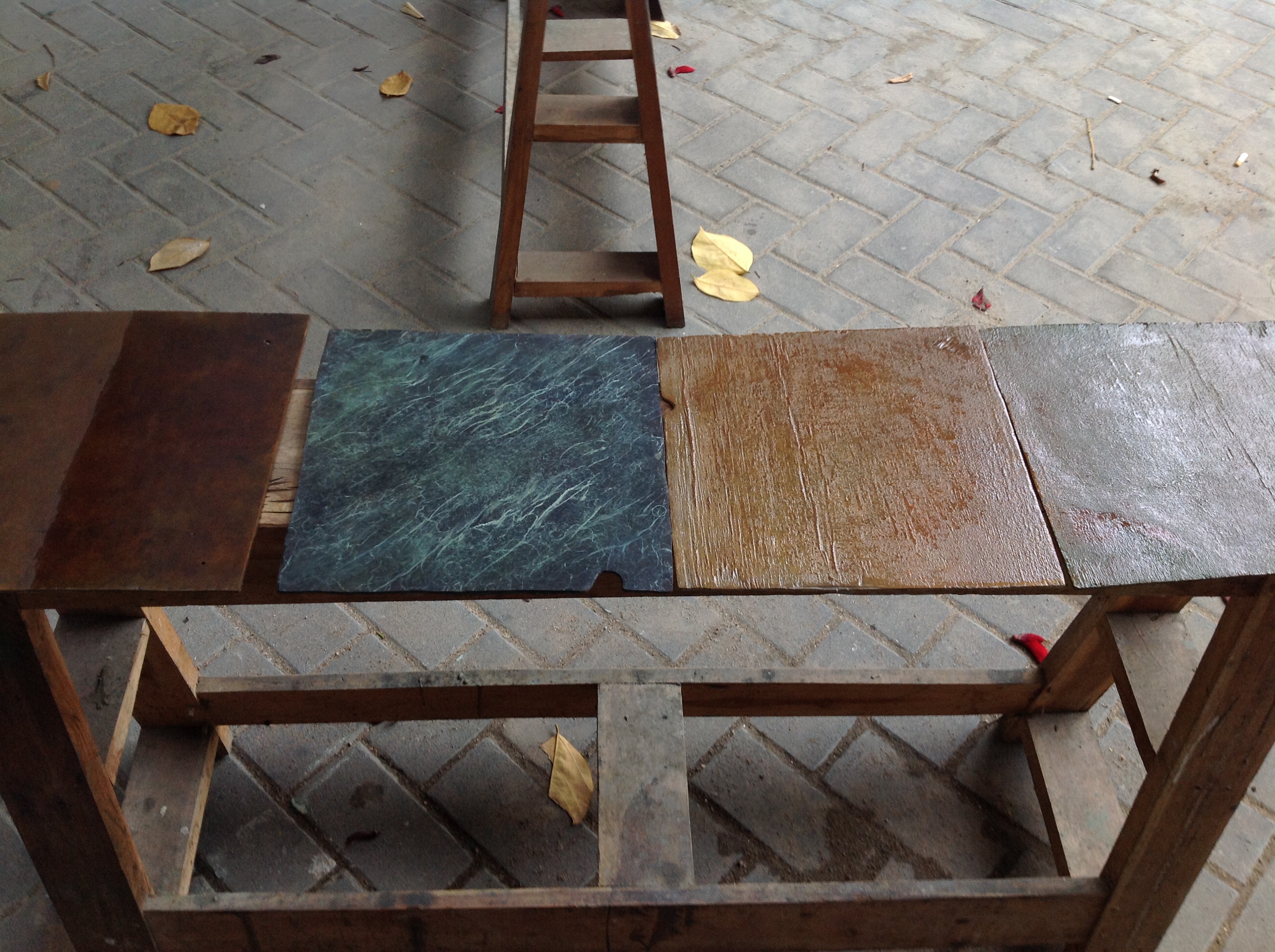
Sandblasting is the preparation just before the patina. Normally you would hand-sand, but in such a humid climate as Indonesia, by the time you’ve finished hand-sanding the top and get to the bottom, you need to go back to the top again. There are many problems which can make doing the patina very difficult. We also realised that the pre-existing patina expertise in Yogyakarta wasn’t great. They could do browns and greens, but there wasn’t much exploration beyond that. So we invited Patrick Kipper, who’s one of the world’s leading experts in silicone bronze patina, to come to the lab. He’s written books in America and has worked with the material for 30 over years. He did a course with our team.
Interestingly, my background is in film. In Singapore, I’m a production designer for a lot of the local indie films. Singapore had two films that went to Cannes last year and I worked on both. Part of my time is spent on that, but slowly I do more of this and less with film.
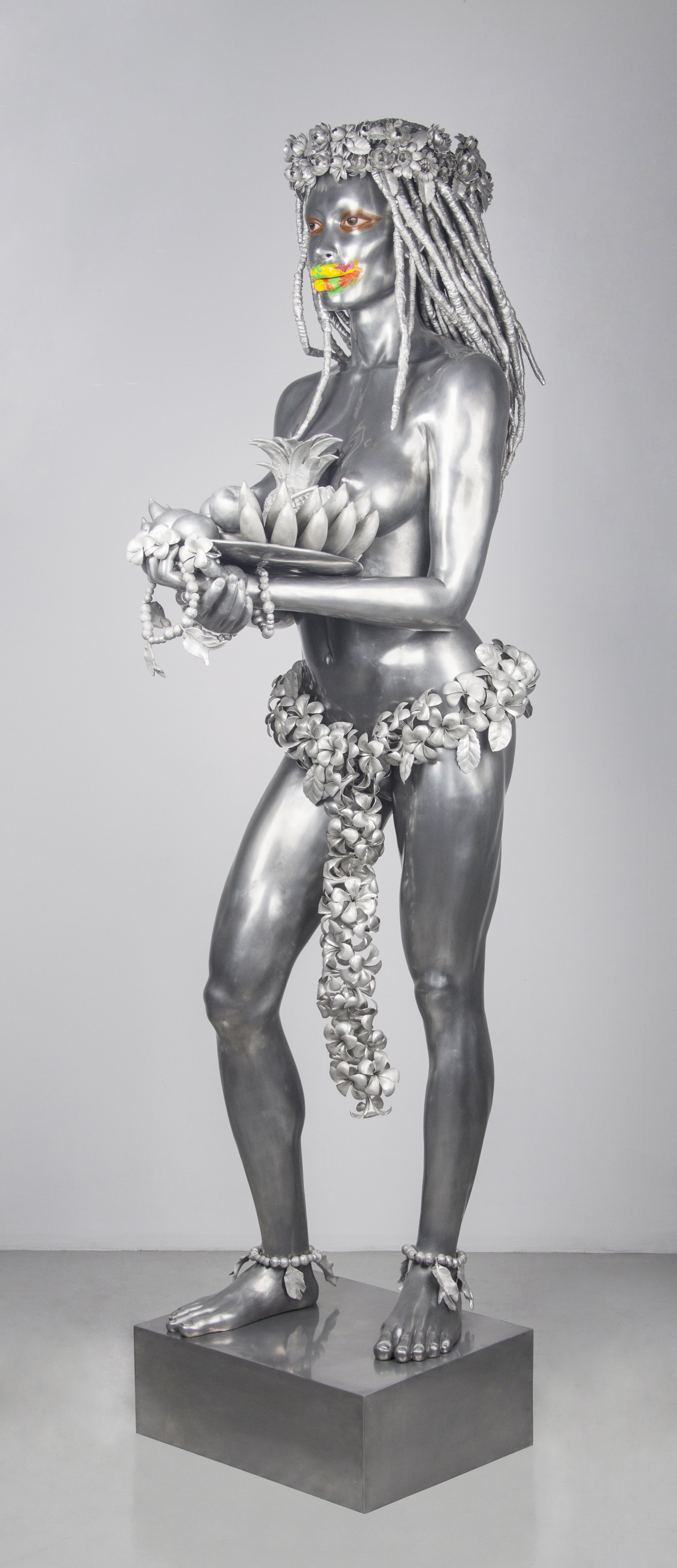
The great thing about YAL is that we have a very dedicated team. We realised that there is more that we can offer for an artist to work with, whether it be with bronze, or aluminium, or resin, or even in the case of Suzann Victor, crushed glass. We work closely with Ashley Bickerton. A version of his aluminium girl with dreadlock hair has been bought by Damien Hirst; we’ve done a version of that in a traditional Indonesian boat, carrying a dead hammerhead shark. This has been ongoing for about a year and it will go to London to be shown. Hirst is doing a solo show for Ashley at the Newport Gallery, but he’s actually already purchased the work.
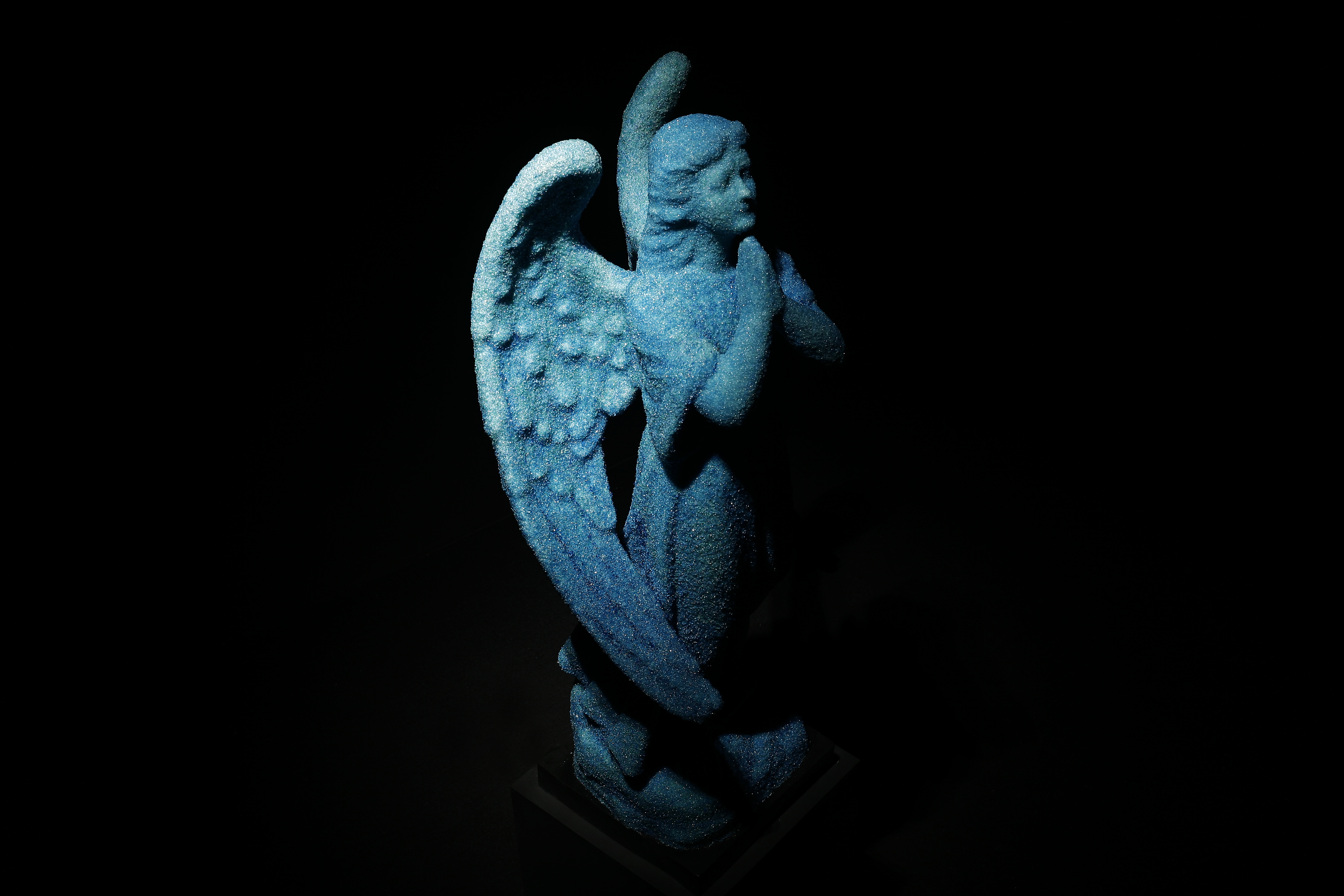
If an artist goes to say a big Thai foundry, there will be 150 staff and the artist is one of a million. With YAL, it’s very exclusive. We have full-time workers on projects by, say Jason Lim and Ashley. Occasionally we will bring in a project by an artist who is maybe not represented by the gallery. But the key thing is that YAL is almost like a boutique foundry in that we don’t mass-produce anything; we’re not doing Buddhas for the tourist market or anything like that. There’s a lot of time and we give a lot of effort through all the stages. It’s a mix going on at YAL which is great because it keeps the staff’s skills diverse: the people who do the patina are also the ones who experiment with the fragmented glass and so on.
What we offer artists is the understanding that we’re prepared to really explore, and if it doesn’t work, then we start again. All the staff are so used to this ‘one step forward, two steps back’ way of working. Now we are enabling the facilities for Singapore artists, we have American and Bali-based artists, and we have artists from Southeast Asia who can explore the option of working at YAL.
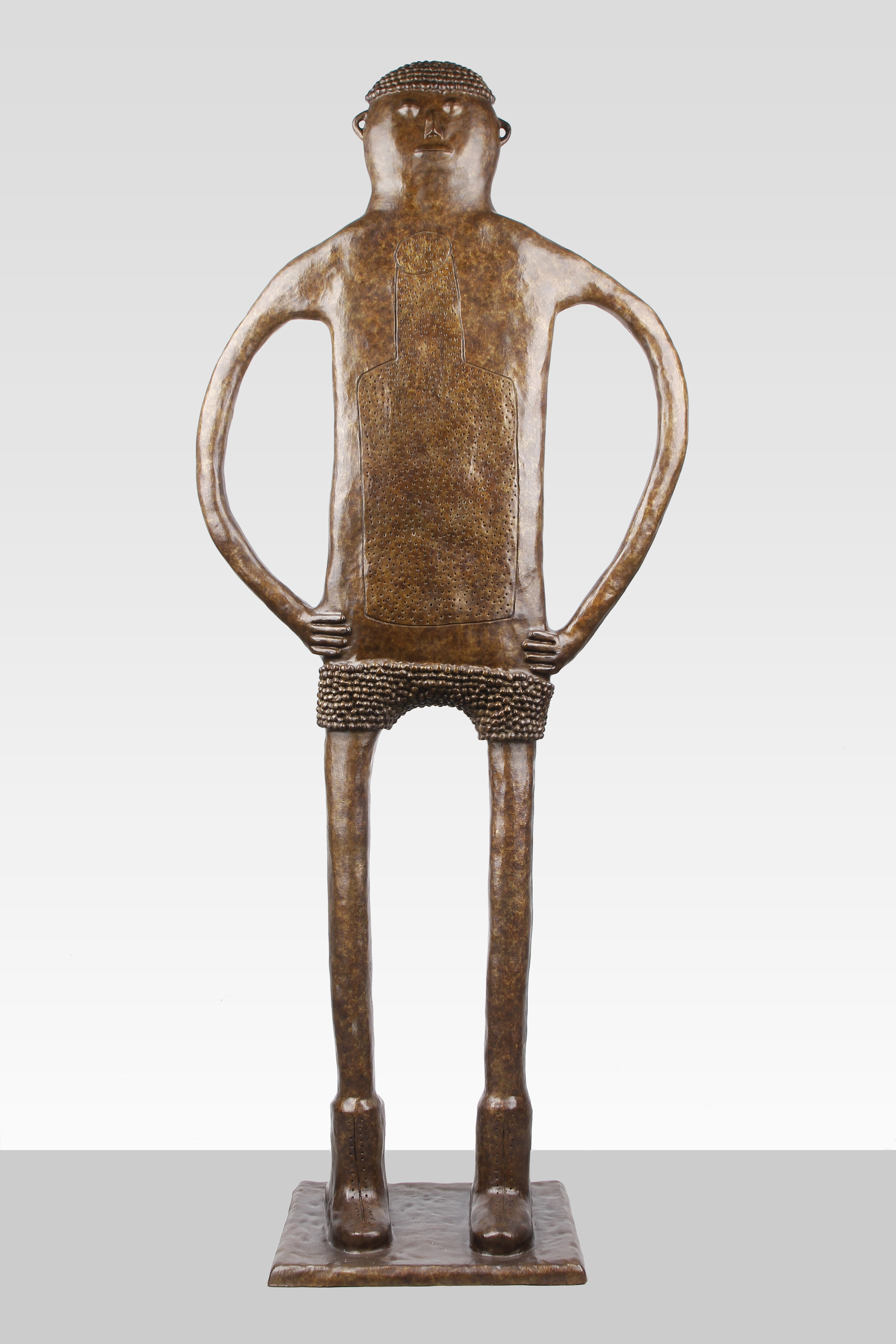
It’s pretty amazing. Historically and culturally, Yogyakarta was the city for artists in Indonesia, so it’s very, very strong. What I find impressive there is that the older artists who have done very well and who are making quite a lot of money aren’t moving out and leaving everyone behind. They still stay very connected to their community and to the younger artists. We have one artist, Yunizar, who’s one of the most successful, and one of the founding members of the Jendela Group. He still stays in the area, about a ten-minute motorbike ride from the foundry.
You may not get this in other places, but if you sit down and have a drink with the guy that’s doing your welding and ask him to show you some of his paintings, he’ll pull out his phone and suddenly you see paintings which aren’t brilliant, but they’re a darn sight better than graduate students coming out of university. Technically and decoratively lovely; they’re fantastic and that’s not even his job. There’s a raw talent there that I think is very hard to find in other cities where you can hire a welder, but he won’t understand anything to do with the art; or you can hire a carpenter, but he won’t understand what he’s carving.
It’s a combination. Originally the idea was that only artists represented by Gajah would work there, which is still predominantly the case, to be honest, but we also realise that in order to function, and in order to increase the span of expertise, it would be useful to open up the doors. We are quite often in discussion with artists who have no representation by Gajah, but if we feel that we can do the project and that we can do it in the timeframe, we’re normally very open. It’s good for Indonesian artists as well who want a certain sculpture done with a certain quality.
Not as much as Europe, but I think it’s growing. We have commissioned pieces—we have collectors from Europe, Hong Kong, Thailand and China—so I suppose the market’s there.
I think also we have to remember the context of Singapore and that a lot of people need space for certain sculptures. It’s also about understanding how to keep a sculpture. You may have an instance where a sculpture worth a million and a half dollars hasn’t been waxed or maintained for five years. It’s like buying a new car and then never washing it. You know it’s mad, even buying a painting and just never cleaning it, always letting the dust drop and the birds shit on it and then not doing anything.
The problem with a lot of sculptures in Singapore is that they’re not maintained. I really don’t understand why, when a lot of them are worth a hell of a lot of money. That’s the one thing that I find interesting in Asia: the sense that you buy and miraculously it will maintain. With sun, rain, and the humidity, it’s tough. That’s what I find intriguing: we maintain everything else, we have cleaners, cutters cutting trees and hedges, everything else is maintained amazingly, but for some reason we never mind the arts. —[O]
A respected voice in contemporary art discourse.
Focusing on ambitious storytelling and insightful art-world commentary. Ocula Magazine publishes in-depth interviews, critical essays and timely analysis on the artists, exhibitions and ideas driving the global art world.
Learn more about Ocula Magazine
Showcasing the best of the art world.
Ocula partners with galleries from around the world to highlight their artists, artworks and exhibitions. Gallery membership is by application and invitation, with each member vetted by an independent panel.
Learn more about Ocula Membership
Specialises in the sale of major artworks.
Led by a team with deep ties to the world’s leading auction houses, galleries and collectors. Ocula’s advisory team offers bespoke services to high-net-worth clients from around the world who are looking to acquire the best of contemporary and modern art.
Learn more about our team and services