Spanning the Fire Station’s Gallery 3 and the Tower, Everything was, is and always will be is the first institutional solo presentation of Haroon Mirza in the GCC.
Haroon Mirza (b. 1977) is a multidisciplinary artist celebrated for his ability to transform invisible energetic currents into immersive physical encounters. Treating electricity as a fundamental sculptural material, he reconfigures electronics, solar panels, and circuitry into autonomous systems that generate their own rhythmic soundscapes and light patterns. Mirza’s approach recasts the vast context of which his prime material is found and used—from natural cycles to futurist imagination—forging a metaphysical inquiry that cut across different spiritual and cultural systems.
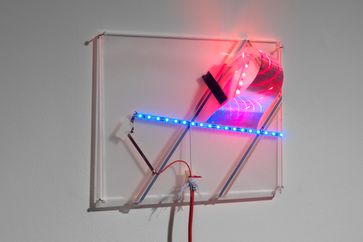
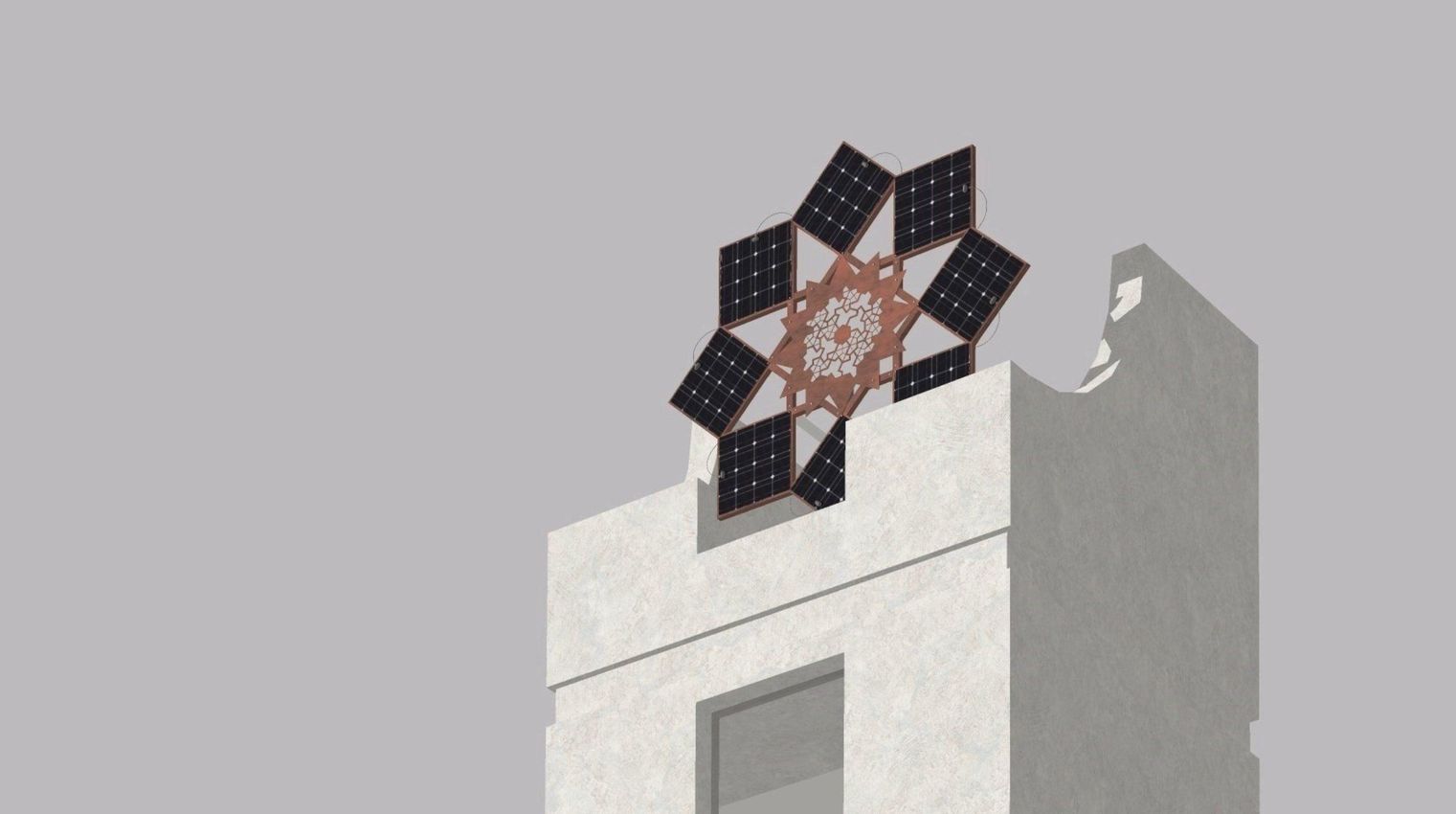
Spanning the Fire Station’s Gallery 3 and the Tower, Everything was, is and always will be is the first institutional solo presentation of Haroon Mirza in the GCC. The exhibition features two installations and a performance newly realized in response to the site’s architectural and daily landscape. At Gallery 3, the multimedia installation Musica Universalis (Dyson Sphere 03) (2026) references physicist Freeman Dyson’s (1923-2020) hypothetical megasphere designed to harvest a star’s energy; instead, Mirza utilizes a photovoltaic structure to draw power from an artificial light source, animating a sonic ecosystem. The synthetic energy conversion shifts back to the celestial in the Tower with Miraj Al Shams (2026), a public installation where choreographed light and sound are transduced from solar energy captured atop the building. The work activates daily at sunset to precede the Maghrib Adhan, bridging modern circuitry with cycles of prayer and cosmology. On February 4, 2026, Mirza intensifies the tension between the technological and mystical in a live context with Adam, Eve, Others and UFO in the Age of LLM’s, a performance that translates electronic signals from his original 2013 work into 111 Hz—a frequency associated with ancient spiritual resonance and neurophysiological response—realized by a live ensemble of eight singers, a soprano, and four actors and performers enacting a script centered on narratives of origin.
Underlying various visual components of all three works, such as the star-shaped solar array on top of the Tower, the light fixture in Gallery 3, and images on the screen during the performance, is the recently discovered Einstein Tile: a single aperiodic shape that can tessellate a surface infinitely without ever repeating. The pattern is embedded in an octagram, a symbol of divinity across cultures. Through these intersecting geometries, Mirza questions the distinction between human perception and natural law, mirroring his stance in that music is “organized noise.” Through this lens, Mirza suggests invention not as a modern disruption, but as a perceptual shift within a continuous thread in a reality that always was, is, and will be.
British artist Haroon Mirza works with video, objects, light and sound to form large-scale installations, kinetic sculptures and performances. His work explores tensions between sound waves, light waves and electrical currents, often blurring the line between noise and music. In what he refers to as ‘self-governing systems’, Mirza combines rewired electronics such as turntables, speakers, radios and household items including lamps and chests of drawers to create three-dimensional collages that are in many ways reminiscent of Dadaist principles. Take for example his mixed-media sound installation, Cross section of a revolution (2011): footage of African drummers at a Muslim wedding ceremony plays on loop on three screens while a student participating in a speech competition in Lahore is seen on another. The work acts as a remixing of two distinct Islamic populations. A light hangs from a constructed metal frame, illuminating a turntable that spins clockwise.

Fire Station: Artist in Residence is a leading contemporary art centre and residency hub in central Doha, Qatar. A flagship Qatar Museums initiative, Fire Station functions as a platform for residency-led artistic production, mentorship, and community engagement, drawing emerging, mid-career, and international artists to Qatar’s evolving contemporary art scene in the Gulf region. Highly acclaimed artist Wael Shawky was appointed artistic director in 2024.

A respected voice in contemporary art discourse.
Focusing on ambitious storytelling and insightful art-world commentary. Ocula Magazine publishes in-depth interviews, critical essays and timely analysis on the artists, exhibitions and ideas driving the global art world.
Learn more about Ocula Magazine
Showcasing the best of the art world.
Ocula partners with galleries from around the world to highlight their artists, artworks and exhibitions. Gallery membership is by application and invitation, with each member vetted by an independent panel.
Learn more about Ocula Membership

Specialises in the sale of major artworks.
Led by a team with deep ties to the world’s leading auction houses, galleries and collectors. Ocula’s advisory team offers bespoke services to high-net-worth clients from around the world who are looking to acquire the best of contemporary and modern art.
Learn more about our team and services