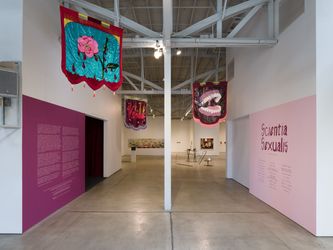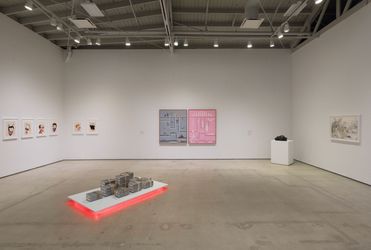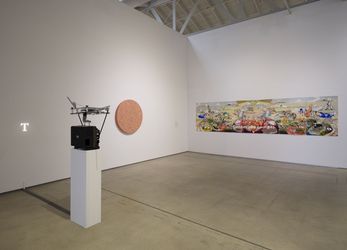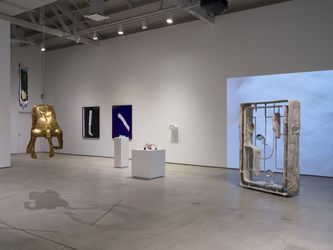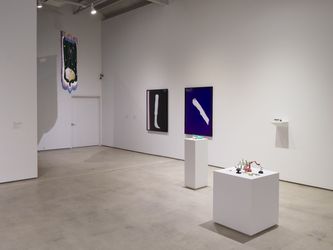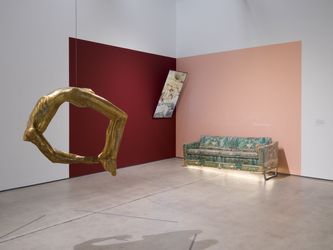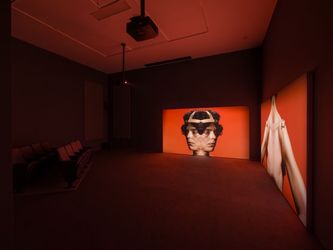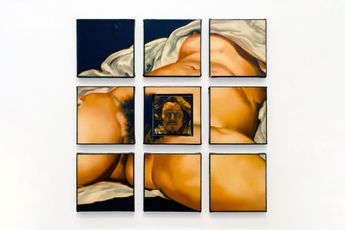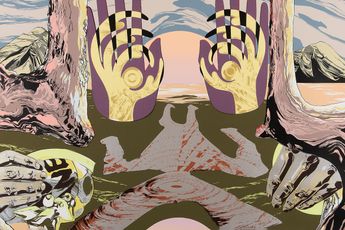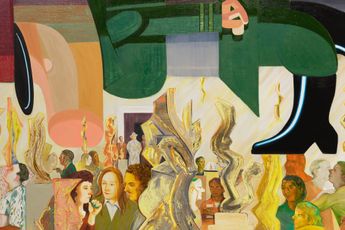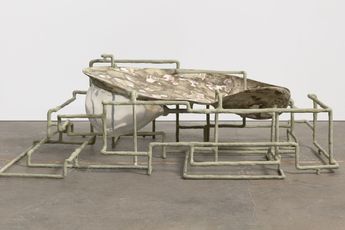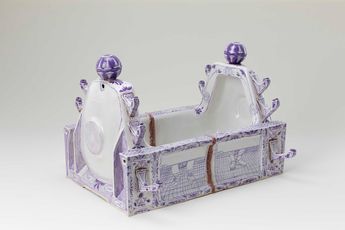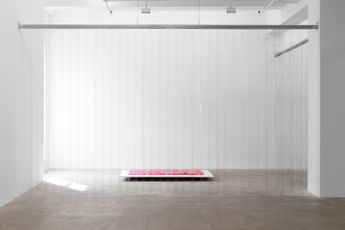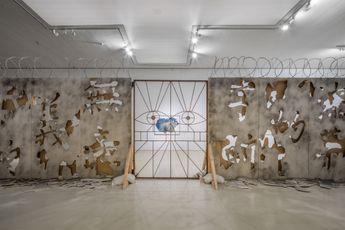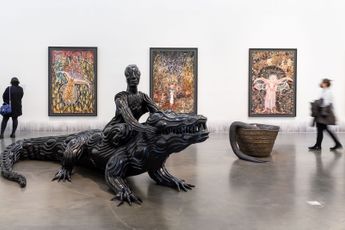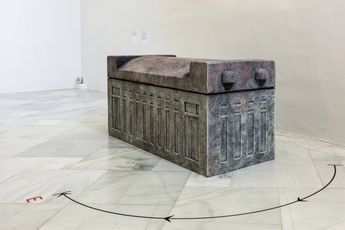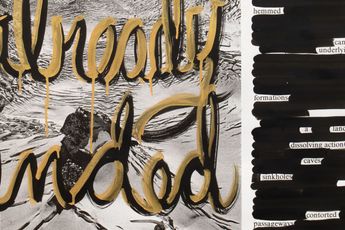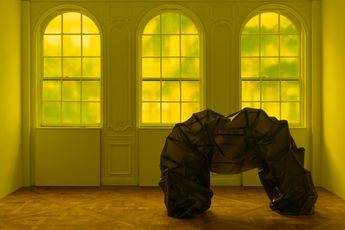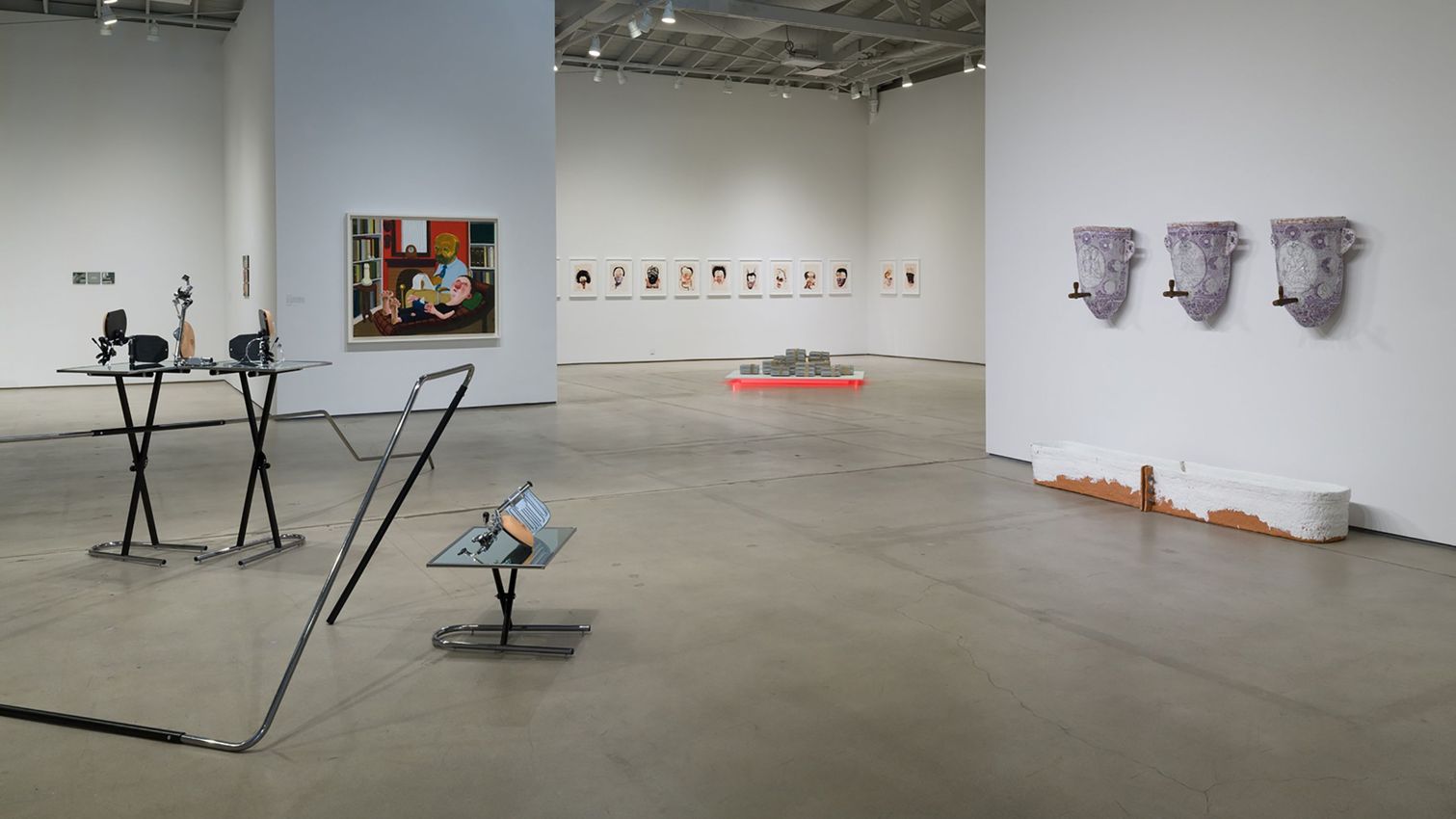
Scientia Sexualis is an ambitious group survey of contemporary artists whose works take up the fraught relationship between sex, gender, and science. Organized by Jennifer Doyle (Professor of English, University of California, Riverside) and Jeanne Vaccaro (Assistant Professor of Transgender Studies and Museum Studies, University of Kansas), the exhibition is realized as part of the ambitious collaboration across arts institutions throughout Southern California known as PST ART: Art & Science Collide led by the Getty.
Featured artists include: Panteha Abareshi, Dotty Attie, Louise Bourgeois, Nao Bustamante, Andrea Carlson, Demian DinéYazhi’, Nicole Eisenman, El Palomar, dean erdmann, Jes Fan, Nicki Green, Oliver Husain & Kerstin Schroedinger, Xandra Ibarra, KING COBRA (documented as Doreen Lynette Garner), Joseph Liatela, Candice Lin, Carlos Motta, Wangechi Mutu, Young Joon Kwak & Gala Porras-Kim, Cauleen Smith, P. Staff, Joey Terrill, Chris E. Vargas, Millie Wilson, and Geo Wyex.
Scientia Sexualis centers research-driven interventions into raced and gendered assumptions that structure scientific disciplines governing our sense of the sexual body. The artists in this exhibition bring attention to the material, conceptual, and psychic forms of the lab and the clinic as aesthetics that operate across scientific and artistic discourses. Together with the catalogue and related programming, Scientia Sexualis aims to examine and reconfigure the relationship between art and science and, in turn, to create an alternative access point to the history of science where sex, gender, and pleasure are concerned.
Scientia Sexualis takes its title from Michel Foucault’s landmark text, The History of Sexuality, Vol. 1 (1976), in which Foucault describes the nineteenth-century development of a “scientia sexualis”—the clinical pursuit of a “uniform truth of sex” as evidenced by an endless scanning of the body and a relentless cataloging of sexual types and deviations. In contrast, over the past 35 years, feminist and queer artists have approached sex and gender as sources of experimentation, knowledge production, medical management, and biotechnical information, resulting in a wide range of works that address difficult subjects such as the origins of modern gynecology and its ties to the torture of enslaved women; the pathologizing of the sexual body; the entanglement of colonization with sexual violence; and the nonconsensual gendering of trans and intersex people. The artists featured in Scientia Sexualis not only explore these painful histories through their artistic output, but they also work from its wake, reclaiming and redeploying scientific discourses to produce speculative technologies of transformation, map embodied forms of knowledge, and radicalize practices of healing and care.
While several major museum exhibitions have addressed issues of gender, sexuality, and representation, Scientia Sexualis is distinct for the coalitional possibilities it generates between Black, feminist, trans and decolonial approaches to these subjects. The project is intentionally heterogenous, situating Black feminist work that confronts the abuse of Black women’s bodies alongside decolonial interrogations of a settler colonial anthropology, trans reclamation of medical practices, and intersectional feminist interventions in reproductive medicine. As a whole, the exhibition addresses the aftermath of our encounters with scientific discourses and institutions as the featured artists surface the contradictory energies that circulate through the lab and the clinic, the library and the archive, exploring and re-constructing frameworks that tell us not only what sex and gender are, but what a body is and can be.


The Institute of Contemporary Art, Los Angeles (ICA LA) is a contemporary art museum in the Arts District of Downtown Los Angeles, United States, known for cutting-edge exhibitions, artist residencies, and a rigorous public program. Housed in a 12,700-square-foot renovated industrial building designed by wHY Architecture under the leadership of Kulapat Yantrasast, the museum was founded in 1988 as the Santa Monica Museum of Art and reestablished in 2017 with its current identity and location.
A respected voice in contemporary art discourse.
Focusing on ambitious storytelling and insightful art-world commentary. Ocula Magazine publishes in-depth interviews, critical essays and timely analysis on the artists, exhibitions and ideas driving the global art world.
Learn more about Ocula Magazine
Showcasing the best of the art world.
Ocula partners with galleries from around the world to highlight their artists, artworks and exhibitions. Gallery membership is by application and invitation, with each member vetted by an independent panel.
Learn more about Ocula Membership

Specialises in the sale of major artworks.
Led by a team with deep ties to the world’s leading auction houses, galleries and collectors. Ocula’s advisory team offers bespoke services to high-net-worth clients from around the world who are looking to acquire the best of contemporary and modern art.
Learn more about our team and services