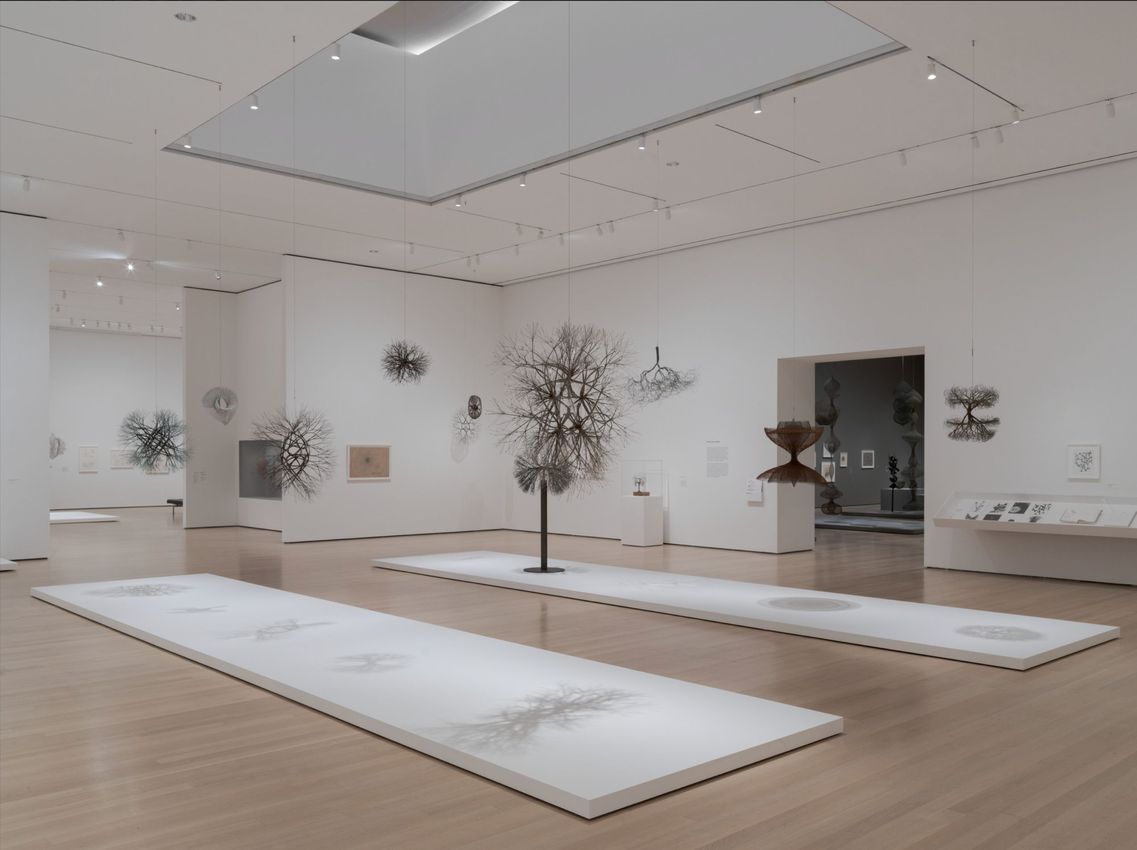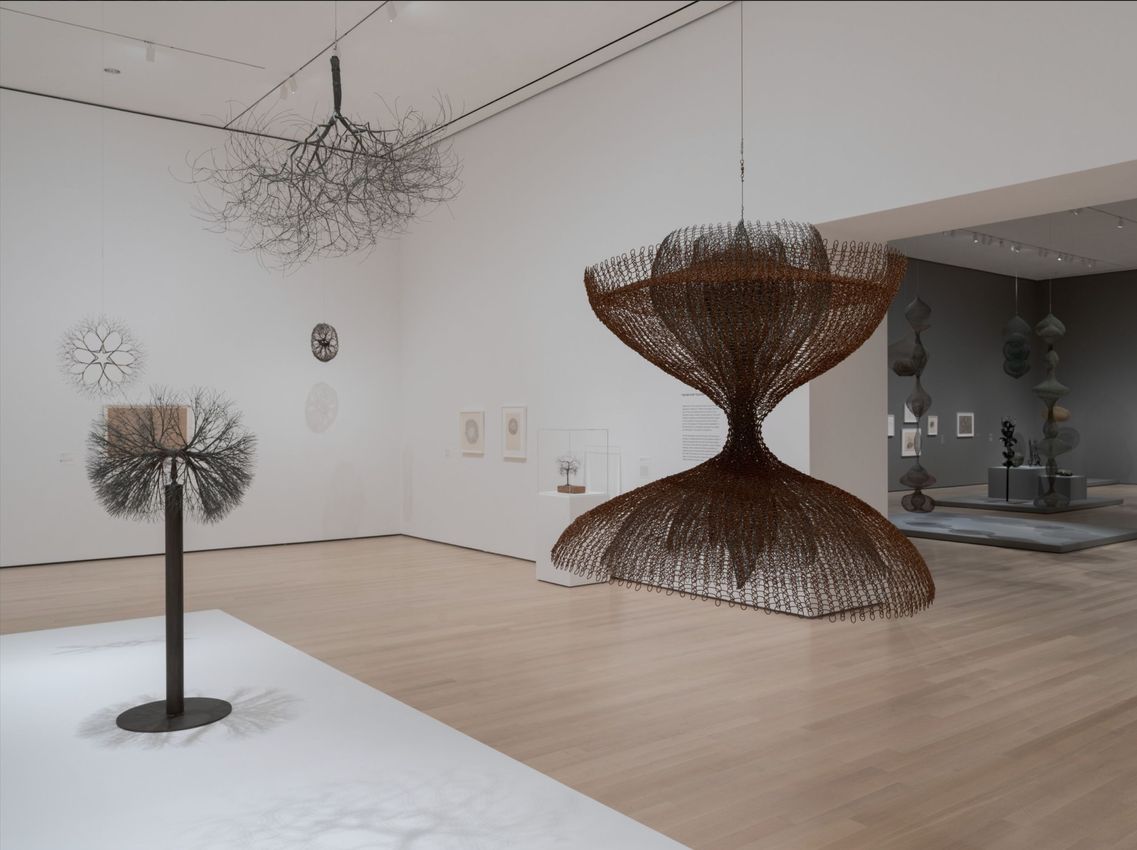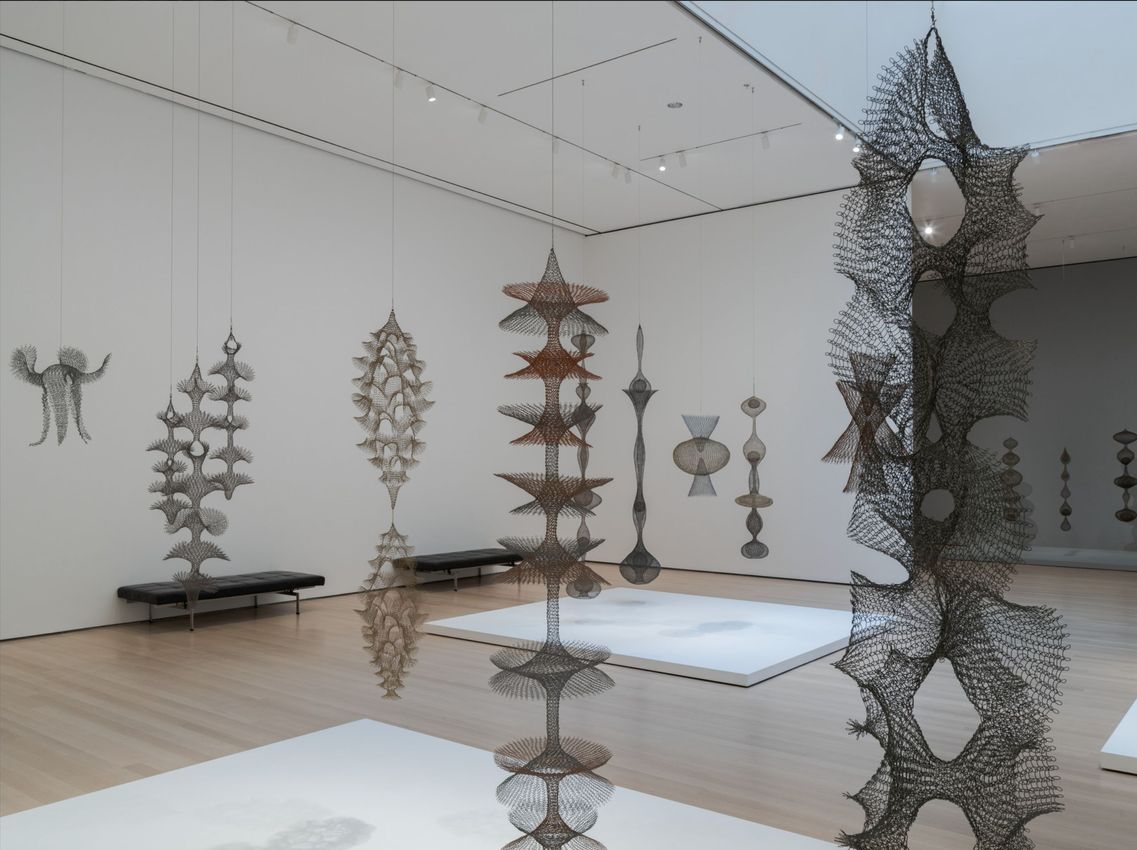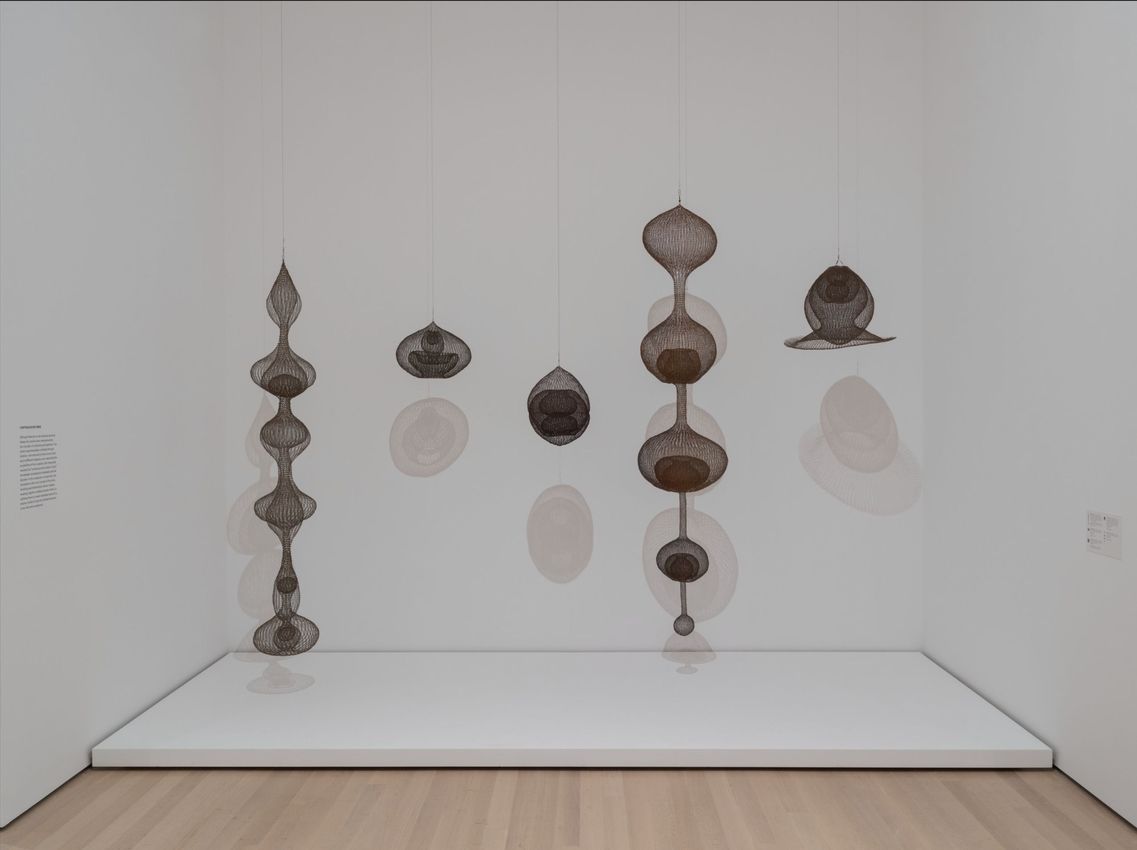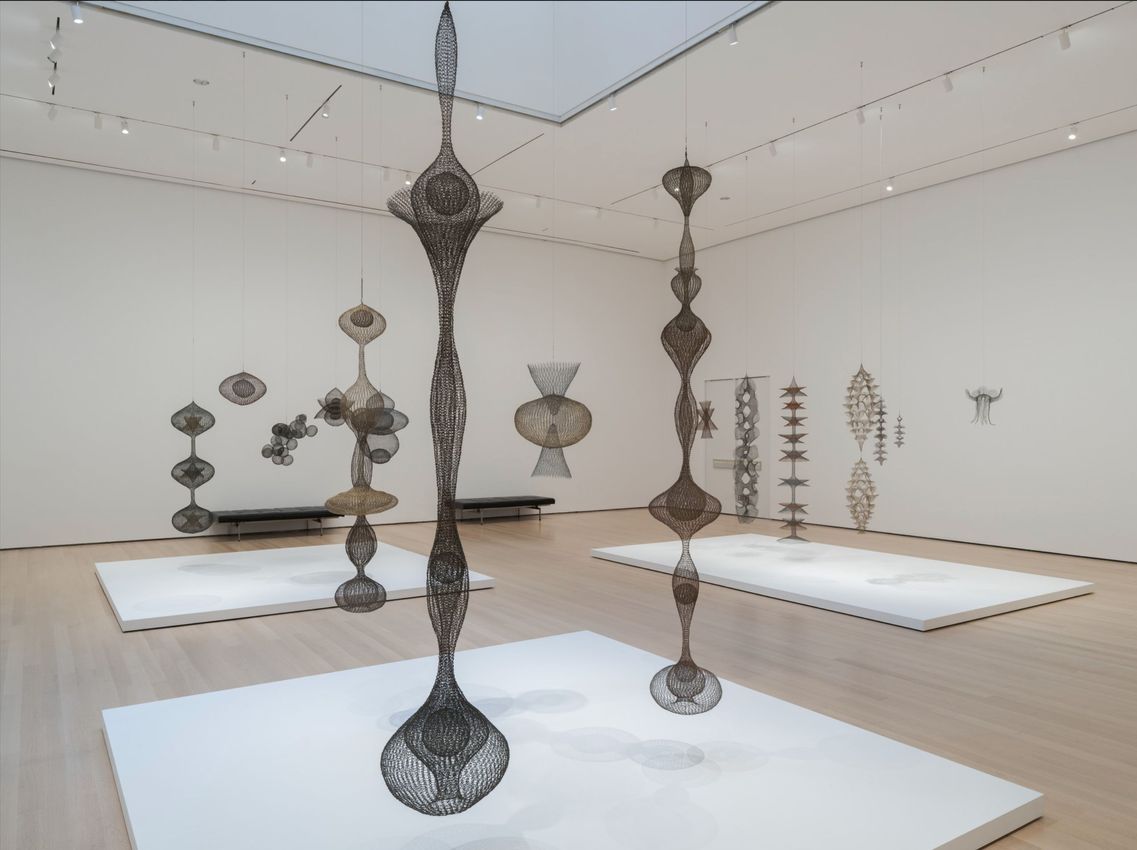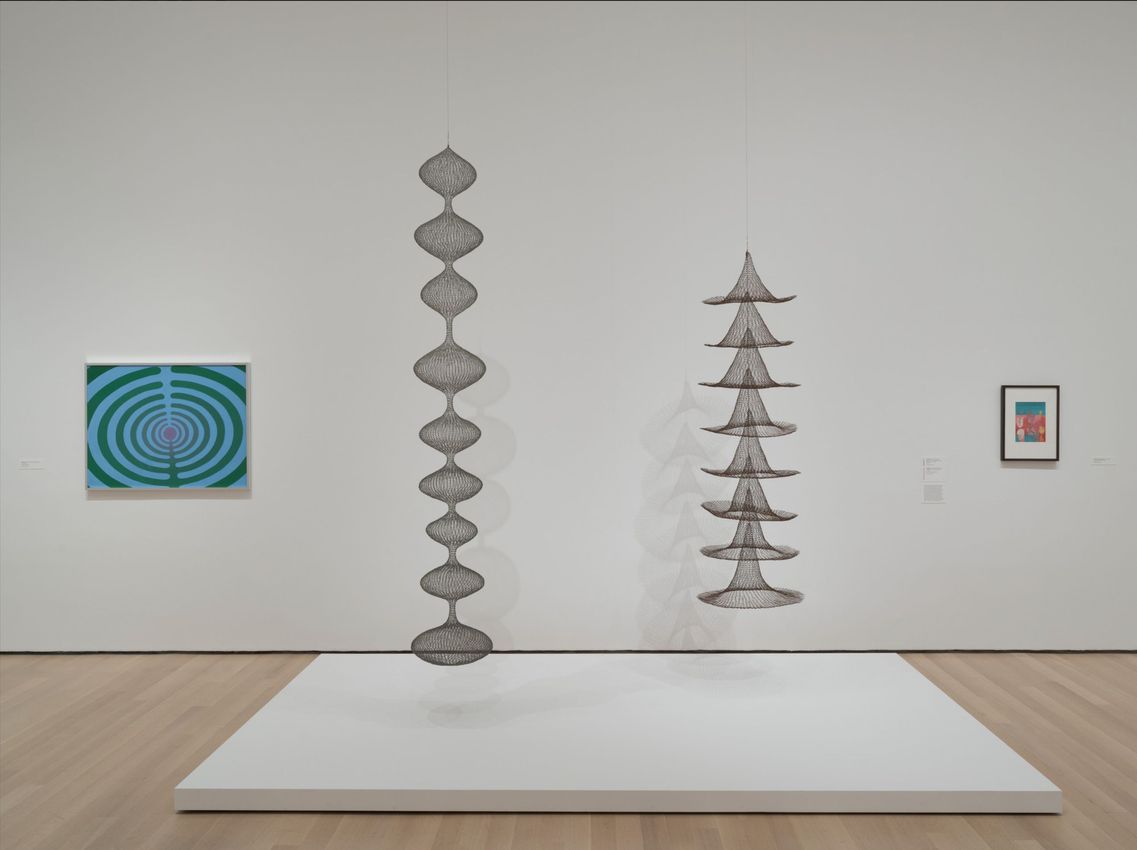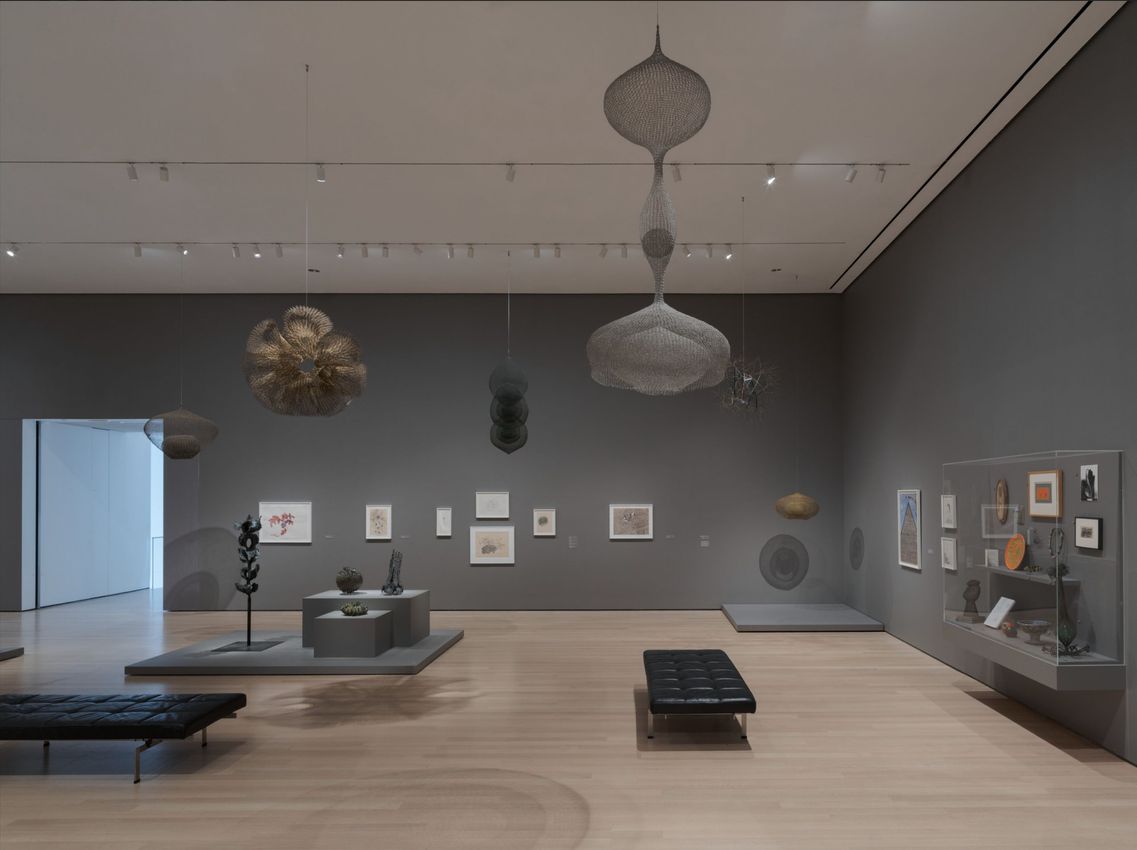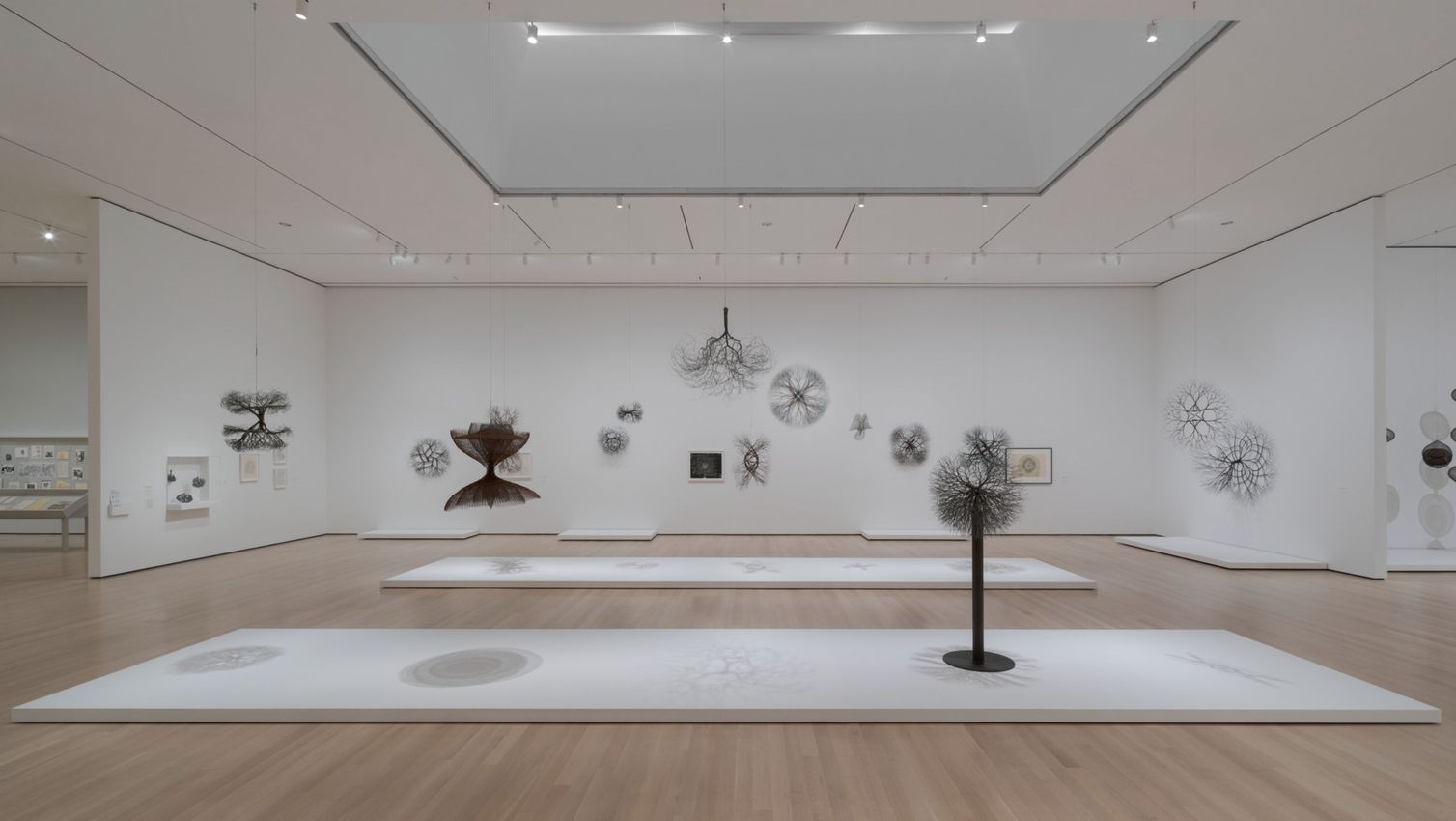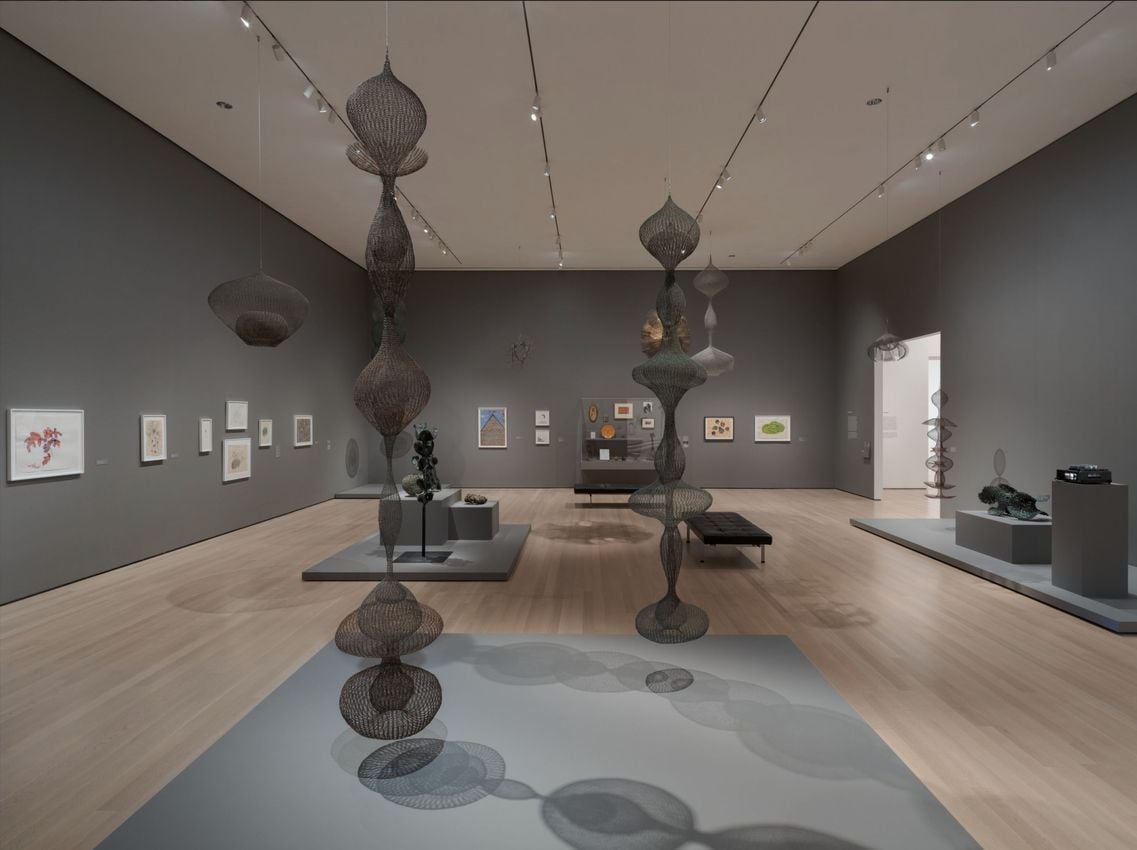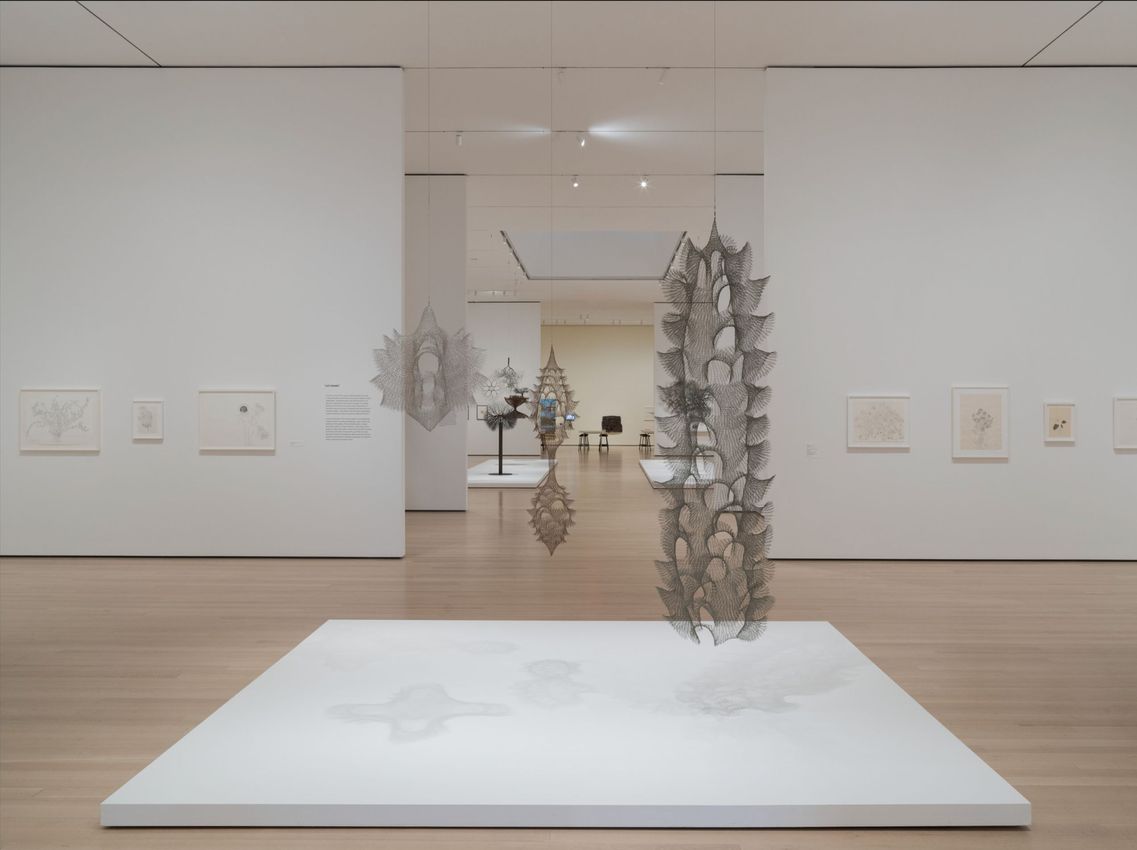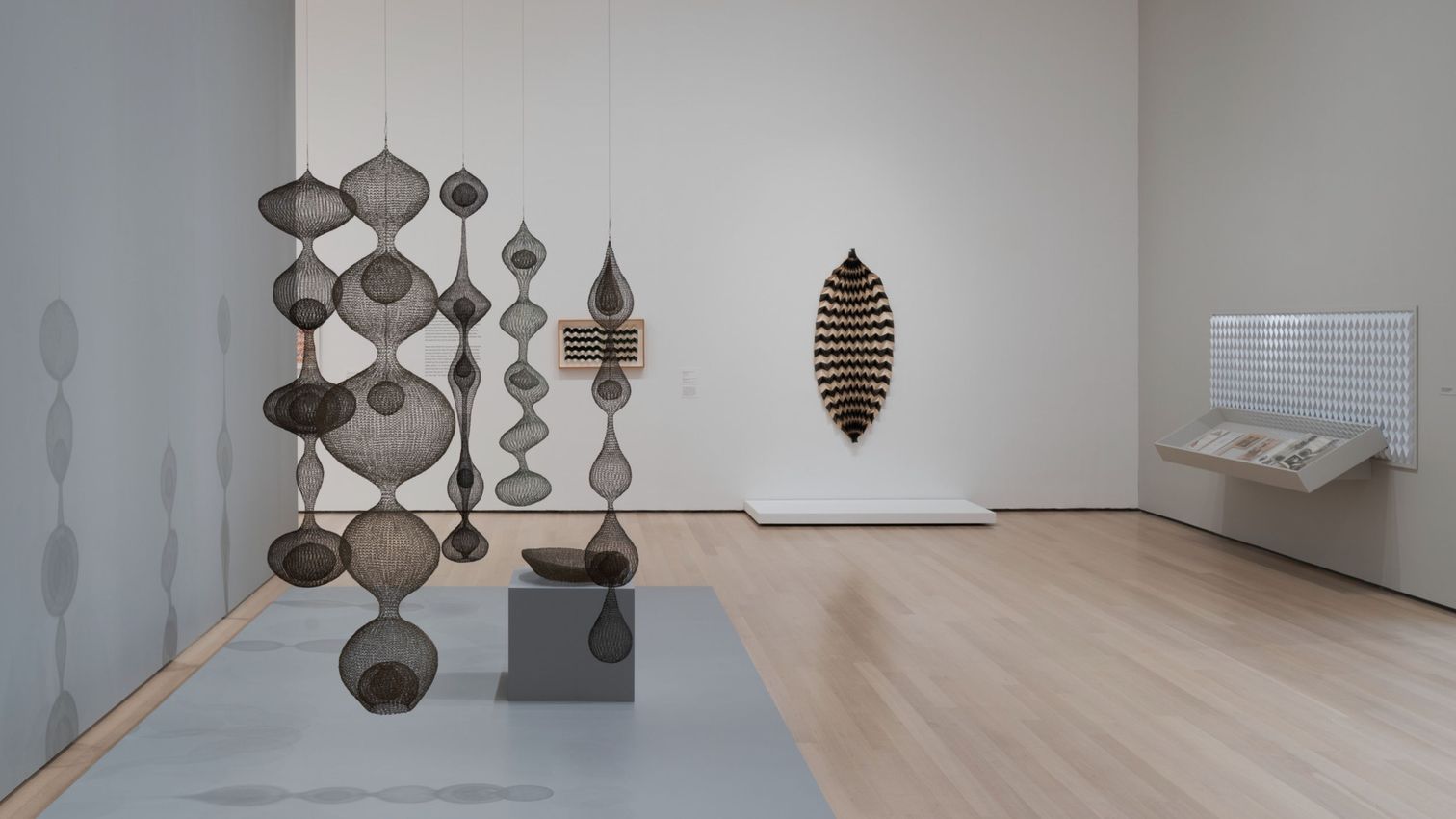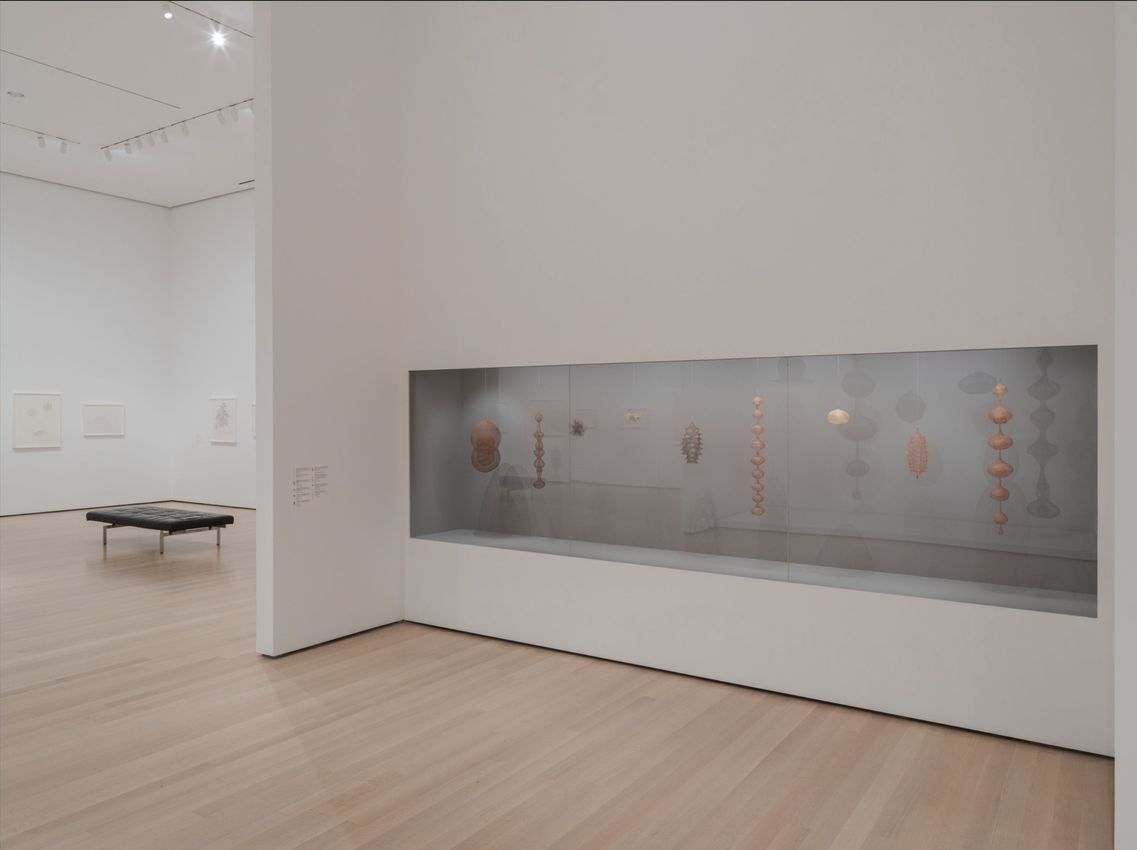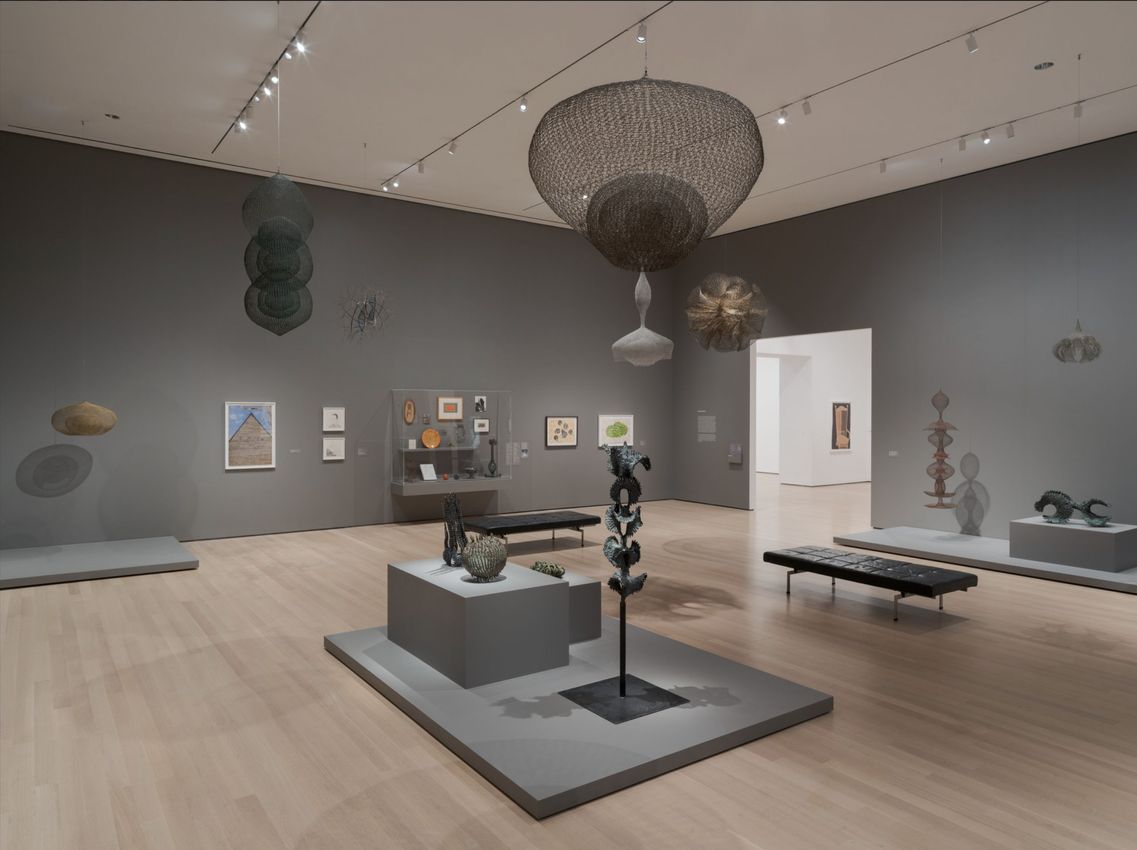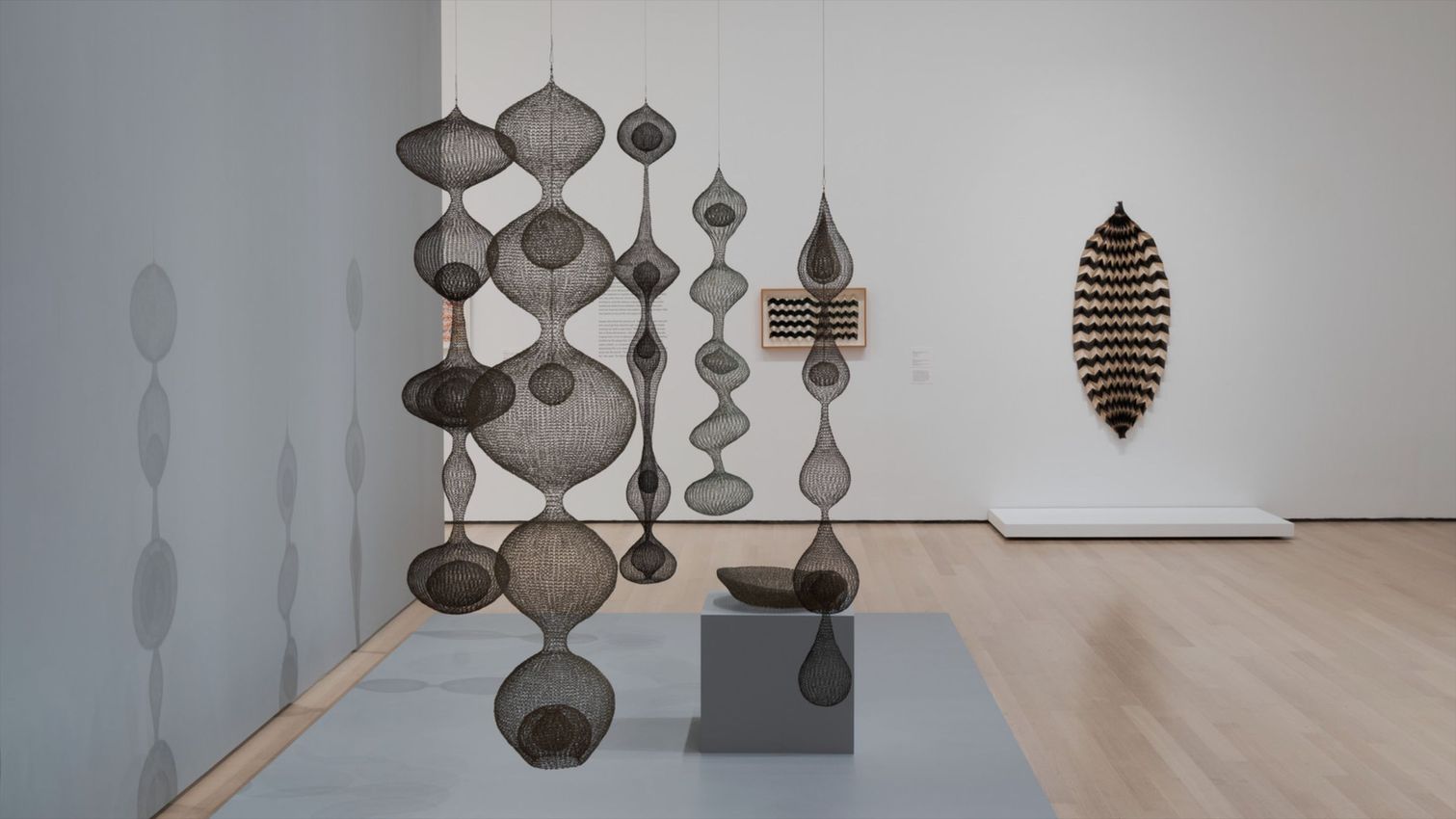
“I’m not so interested in the expression of something. I’m more interested in what the material can do. So that’s why I keep exploring,” said artist, educator, and civic leader Ruth Asawa, reflecting on a six-decade-long career. Featuring some 300 artworks, Ruth Asawa: A Retrospective charts the artist’s lifelong explorations of materials and forms in a variety of mediums, including wire sculpture, bronze casts, drawings, paintings, prints, and public works. This first posthumous survey celebrates the ways in which Asawa continuously transformed materials and objects into subjects of contemplation, unsettling distinctions between abstraction and figuration, figure and ground, and negative and positive space.
Asawa made art every day, pursuing the inexhaustible possibilities offered by simple materials such as paper and wire since her days at Black Mountain College, where she studied in the late 1940s. Following a move to San Francisco in 1949, her practice grew exponentially as she produced a body of work ranging from endless variations of abstract looped-wire sculptures to calligraphic ink paintings.
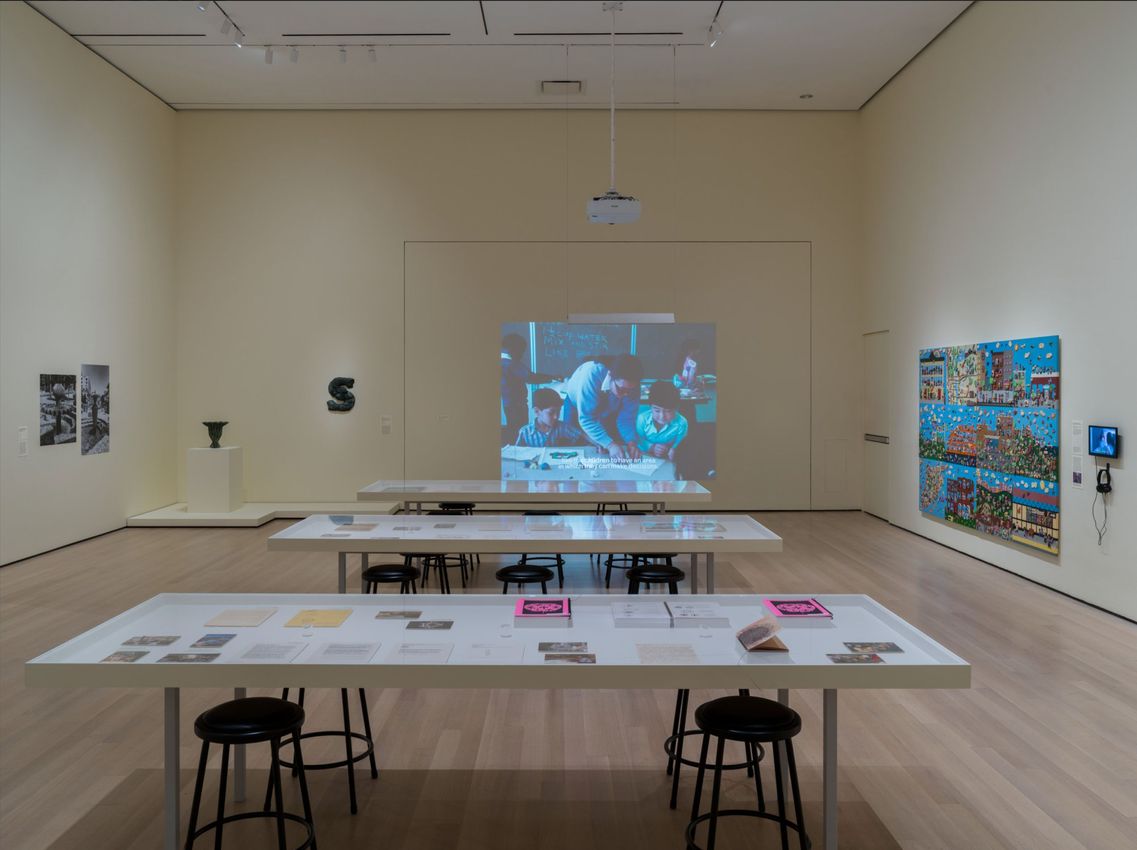
Community was crucial to Asawa, who realized numerous public commissions—fountains, murals, and memorials—from the late 1960s onward, and stood at the forefront of arts education in the Bay Area and beyond. Taking a cue from her own work, Ruth Asawa: A Retrospective offers numerous points of entry into her art, encouraging close looking. It also reveals the model of integrated art practice cultivated by Asawa, for whom all acts held a creative potential and for whom there was no separation between living and making art.
Ruth Asawa: A Retrospective is an exhibition partnership between the San Francisco Museum of Modern Art (SFMOMA) and The Museum of Modern Art, New York (MoMA). The exhibition is organized by Cara Manes, Associate Curator, Department of Painting and Sculpture, MoMA, and Janet Bishop, Thomas Weisel Family Chief Curator and Curator of Painting and Sculpture, SFMOMA; with Dominika Tylcz, Curatorial Assistant, Department of Painting and Sculpture, MoMA; and Marin Sarvé-Tarr, Assistant Curator, and William Hernández Luege, Curatorial Associate, Painting and Sculpture, SFMOMA.
Ruth Asawa’s origami-inspired fantastical woven wire sculptures focused on transparency and lightness, challenging conventional ideas of form and material. The artist (1926–2013) created several public commissions in her adopted city of San Francsico, many of which are still on display.


The Museum of Modern Art (MoMA) is an iconic institution located in Midtown Manhattan, New York City, celebrated for its pioneering collection and innovative architecture. Renowned for housing one of the world’s most significant collections of modern and contemporary art, MoMA is a must-visit destination for art enthusiasts.

A respected voice in contemporary art discourse.
Focusing on ambitious storytelling and insightful art-world commentary. Ocula Magazine publishes in-depth interviews, critical essays and timely analysis on the artists, exhibitions and ideas driving the global art world.
Learn more about Ocula Magazine
Showcasing the best of the art world.
Ocula partners with galleries from around the world to highlight their artists, artworks and exhibitions. Gallery membership is by application and invitation, with each member vetted by an independent panel.
Learn more about Ocula Membership

Specialises in the sale of major artworks.
Led by a team with deep ties to the world’s leading auction houses, galleries and collectors. Ocula’s advisory team offers bespoke services to high-net-worth clients from around the world who are looking to acquire the best of contemporary and modern art.
Learn more about our team and services