




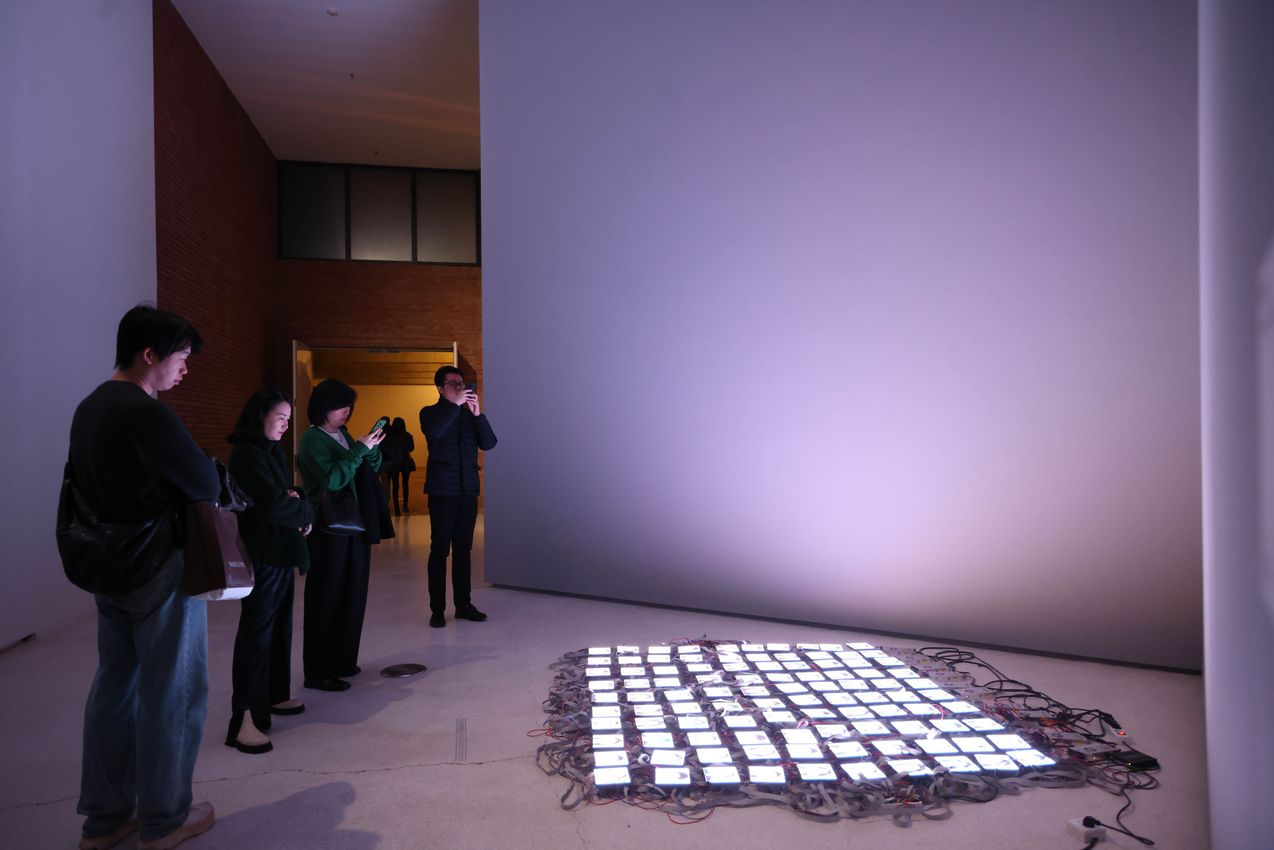
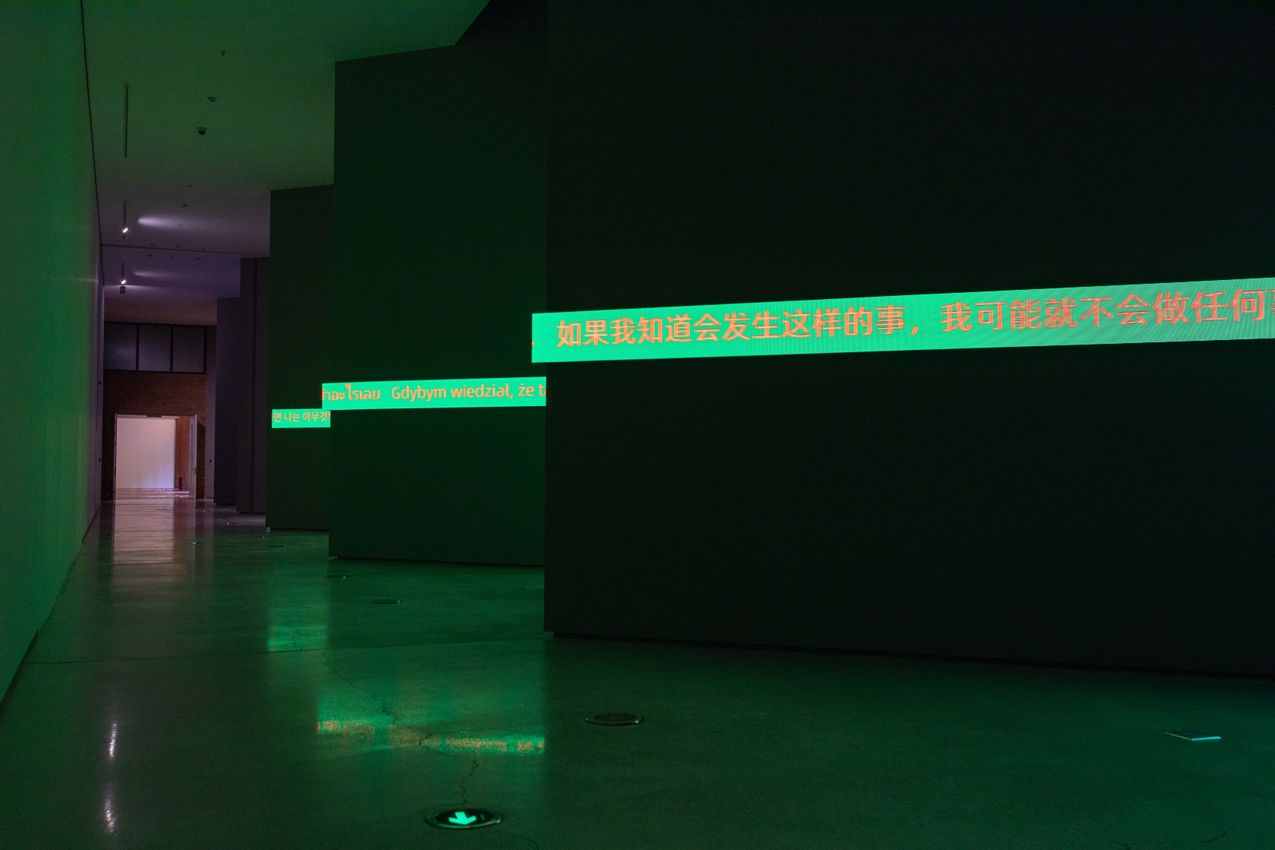
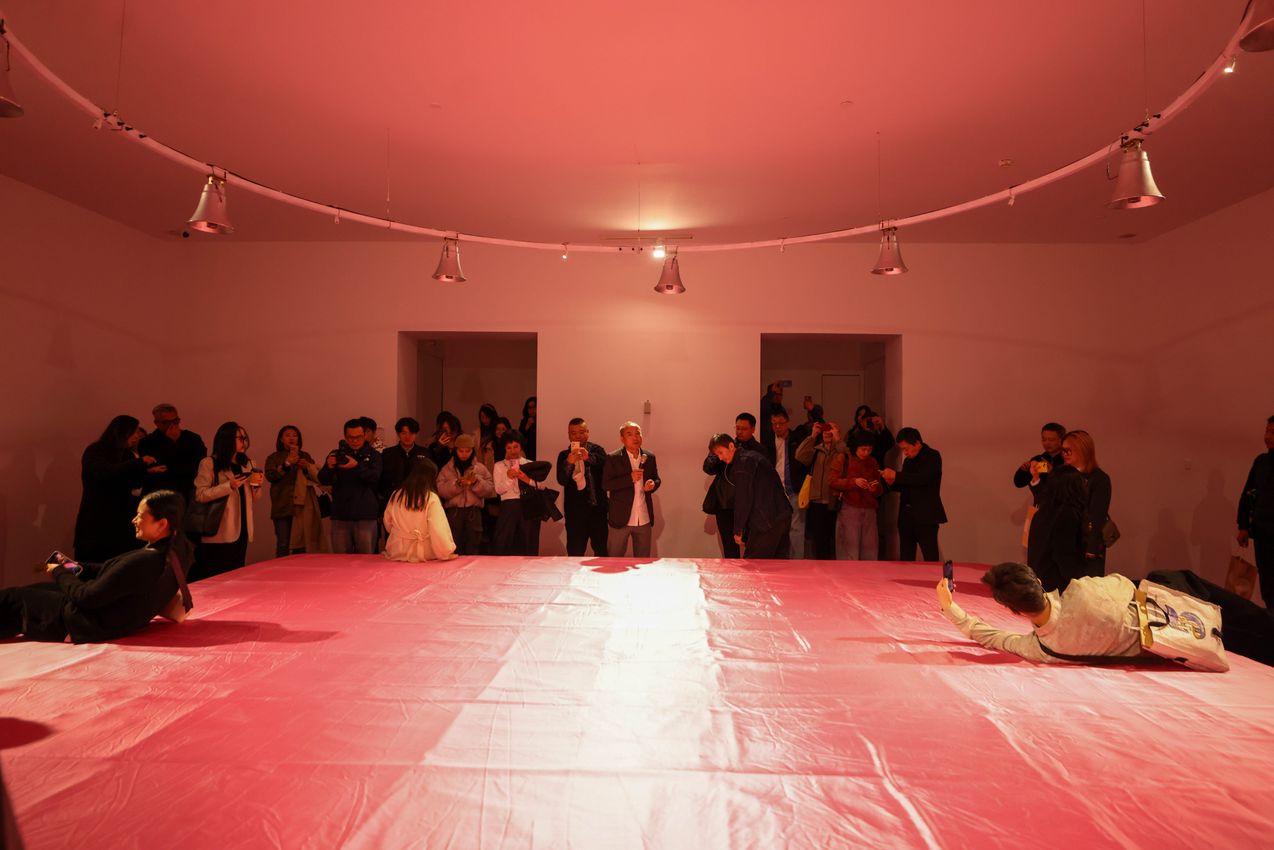
Red Brick Art Museum will present the recent works of artist Zhang Peili on October 30. Curated by ZHANG Ga, ZHANG Peili marks the largest-ever staging to date by the artist, a pivotal figure in Chinese contemporary art, and features kinetic, video, and interactive installations ranging from monumental structures to vernacular objects created in recent years.
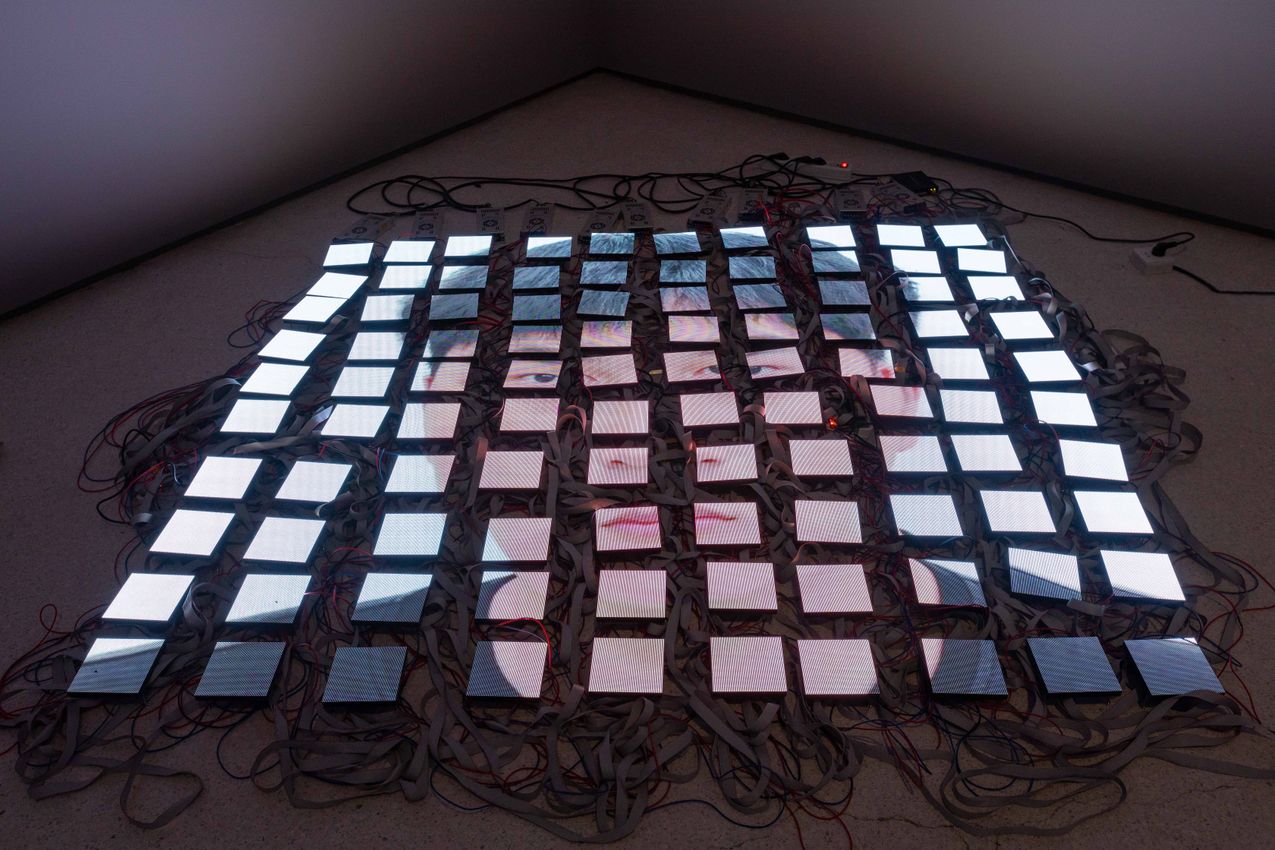
Across his 40-year career, ZHANG Peili’s work has been anchored by a recurring motif: repetition, often executed with ritualistic precision and imbued with unique ambiguity. Implicit in the dynamics of repetition and variation, as evidenced in his pioneering video work 30 x 30 from the late 1980s, was already the artist’s foresight of the grid to evoke temporal seriality. Such formal strategies further evolved in works like Landscape with Spherical Architecture, in which the artist filmed an array of thirty-six equidistant photographs, generating both spatial and temporal progression systematically through human intervention.
Exacting in its execution yet multivalent in its signification, ZHANG Peili’s repetition is further complicated by the notions of redundancy and recursion. Beneath this trinity of formal apparatus lies the mobilization of the grid—sometimes expressed as a singular reticulation, other times manifested as a network of matrices, or articulated through architectonic, sonic, or somatic iterations that diverge from conventional grid.
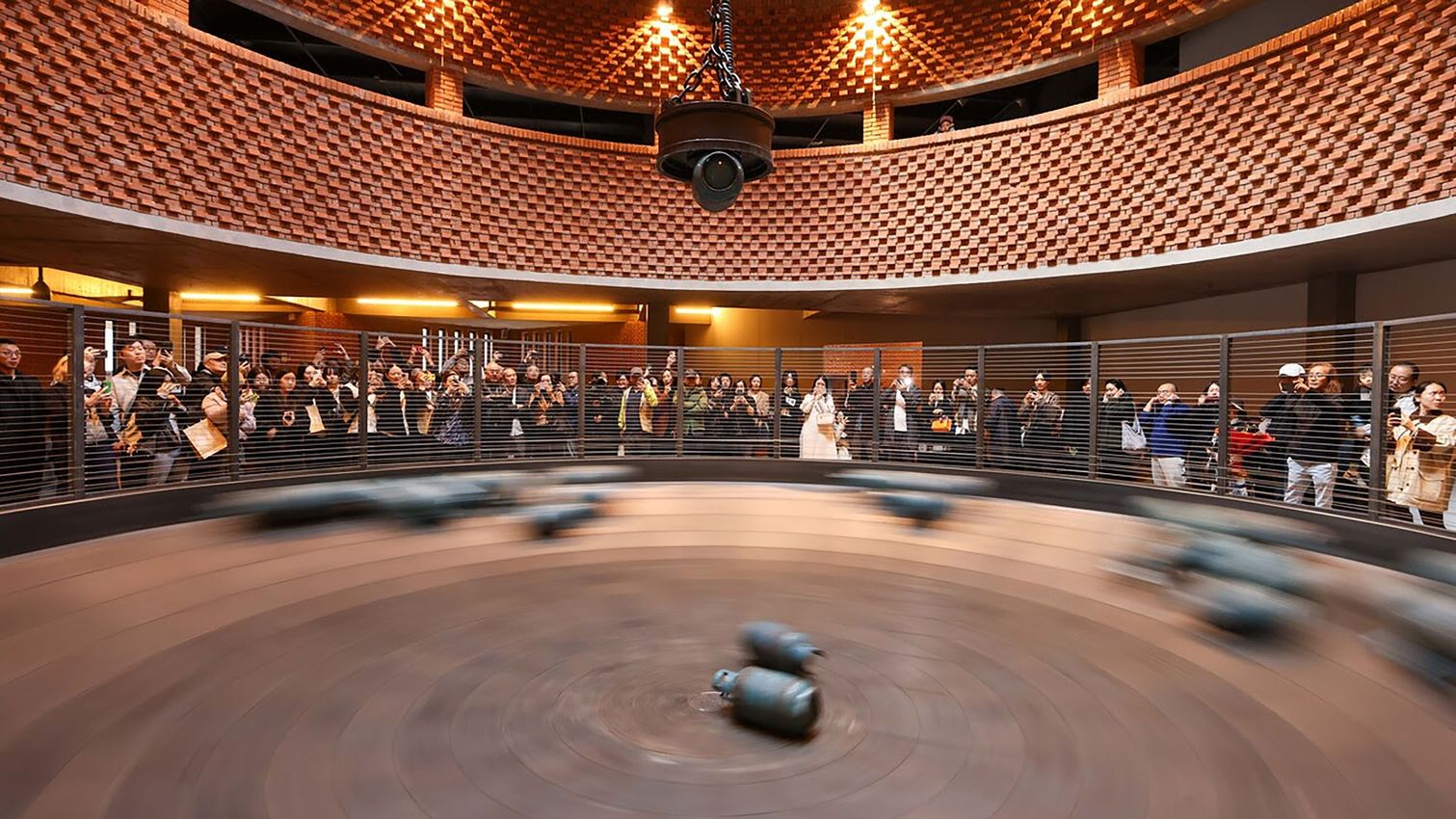
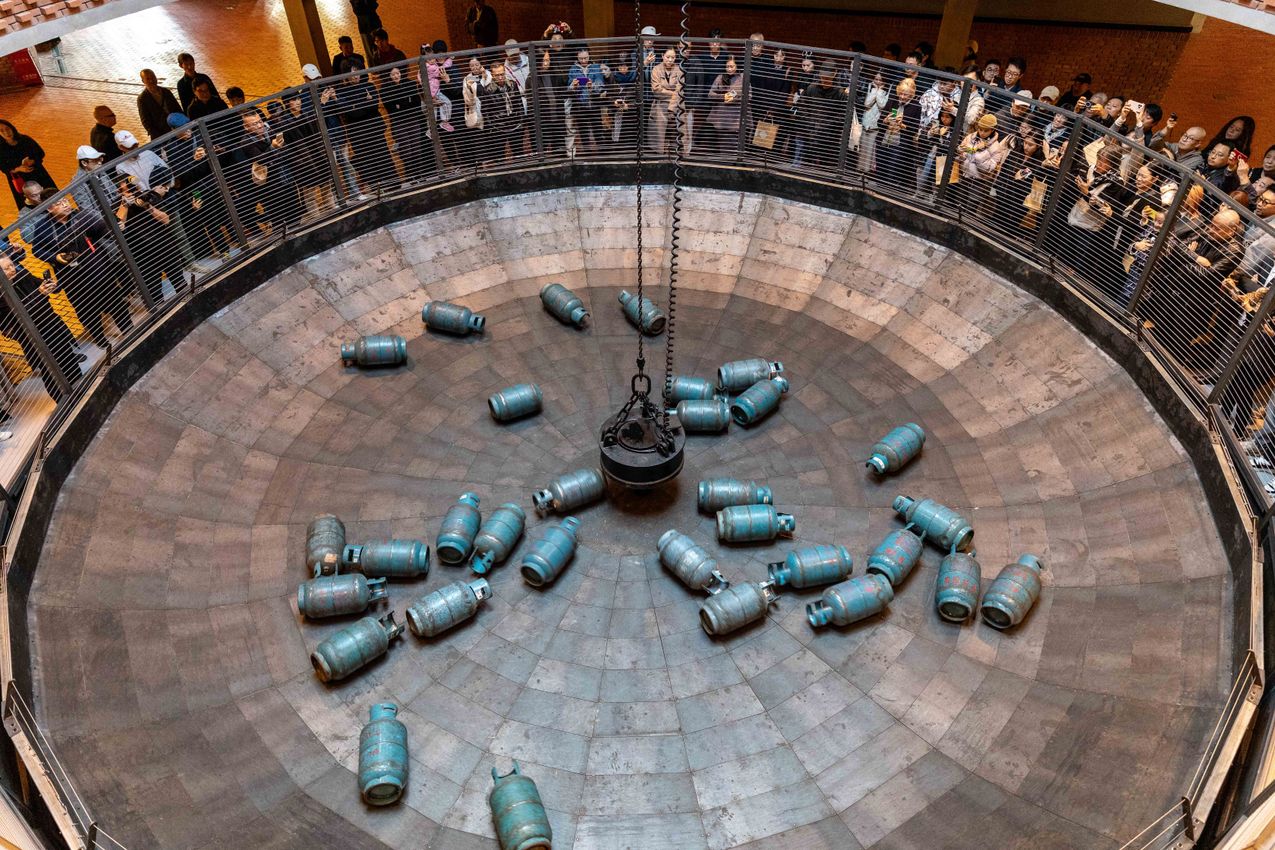
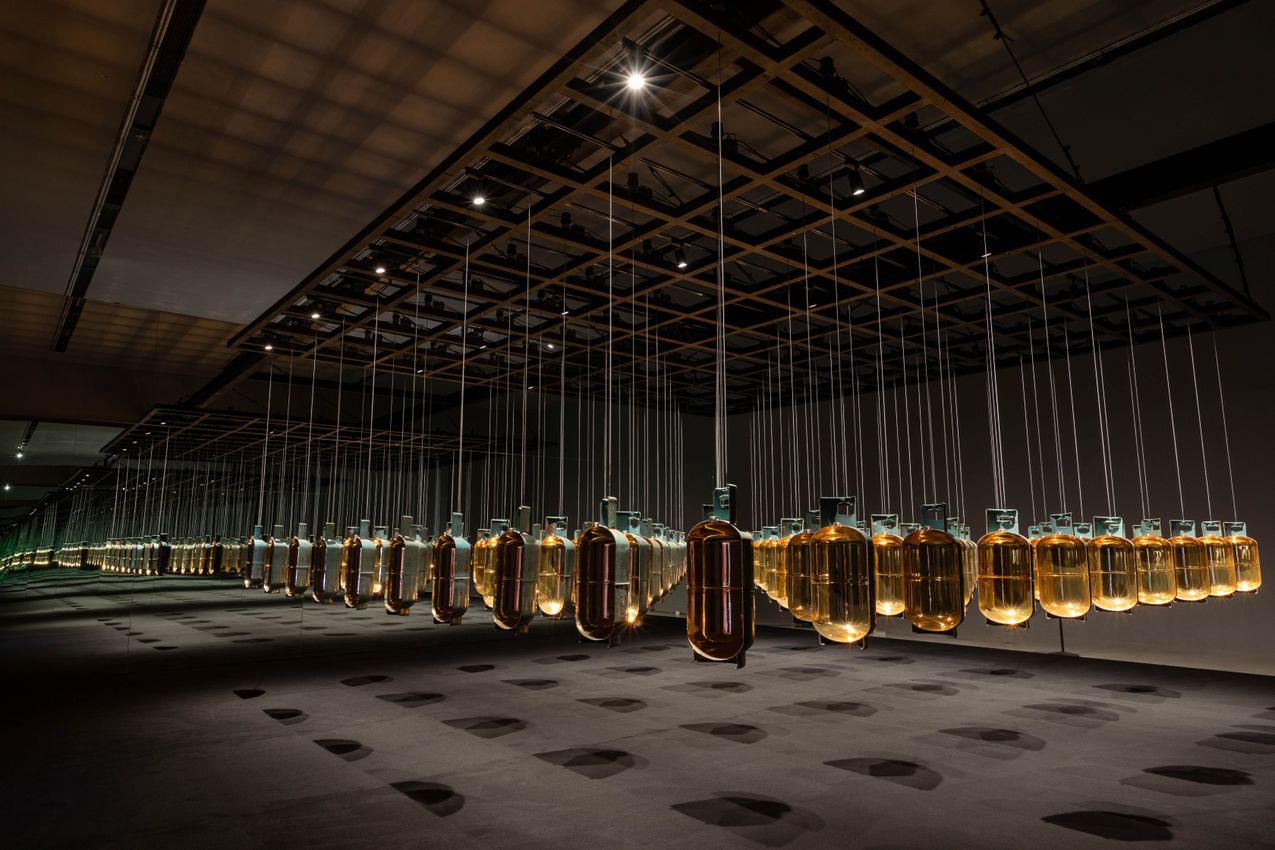
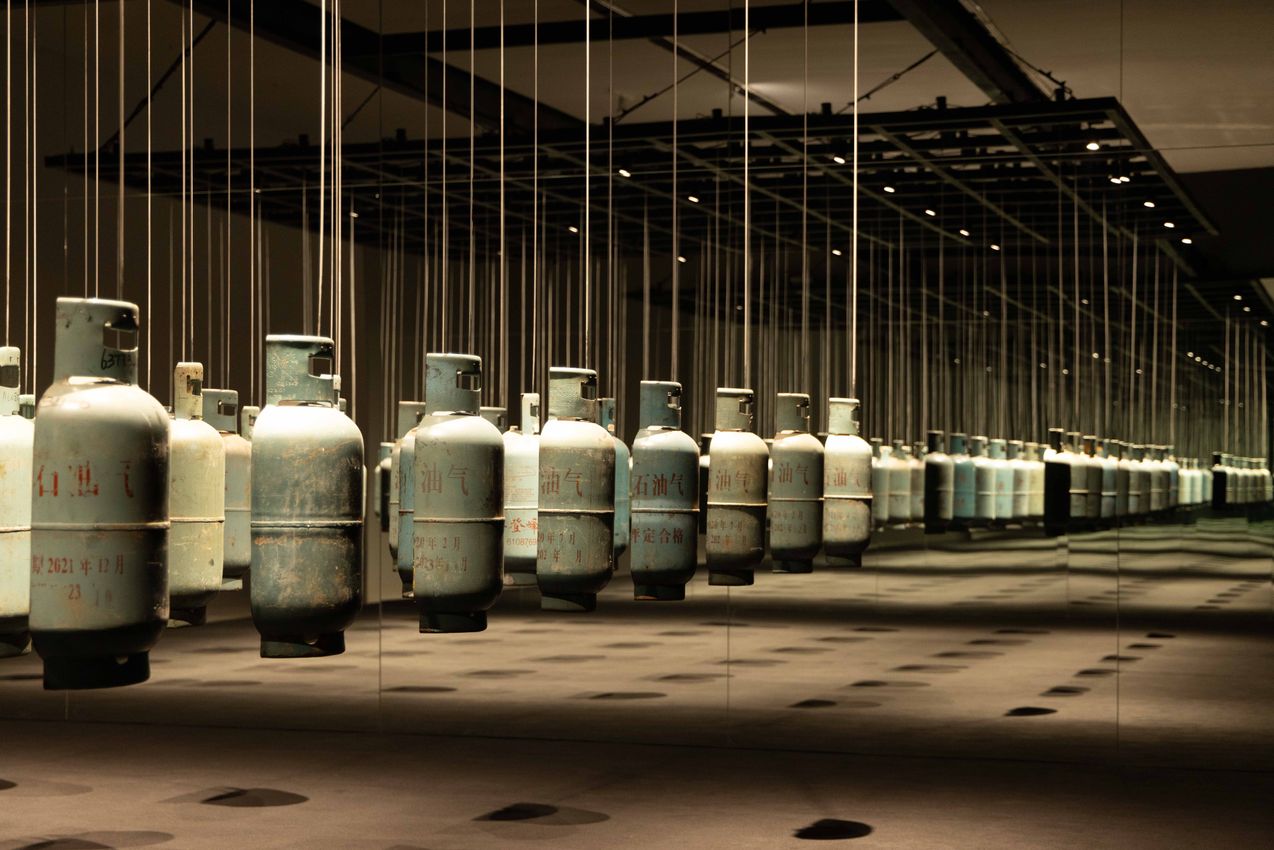
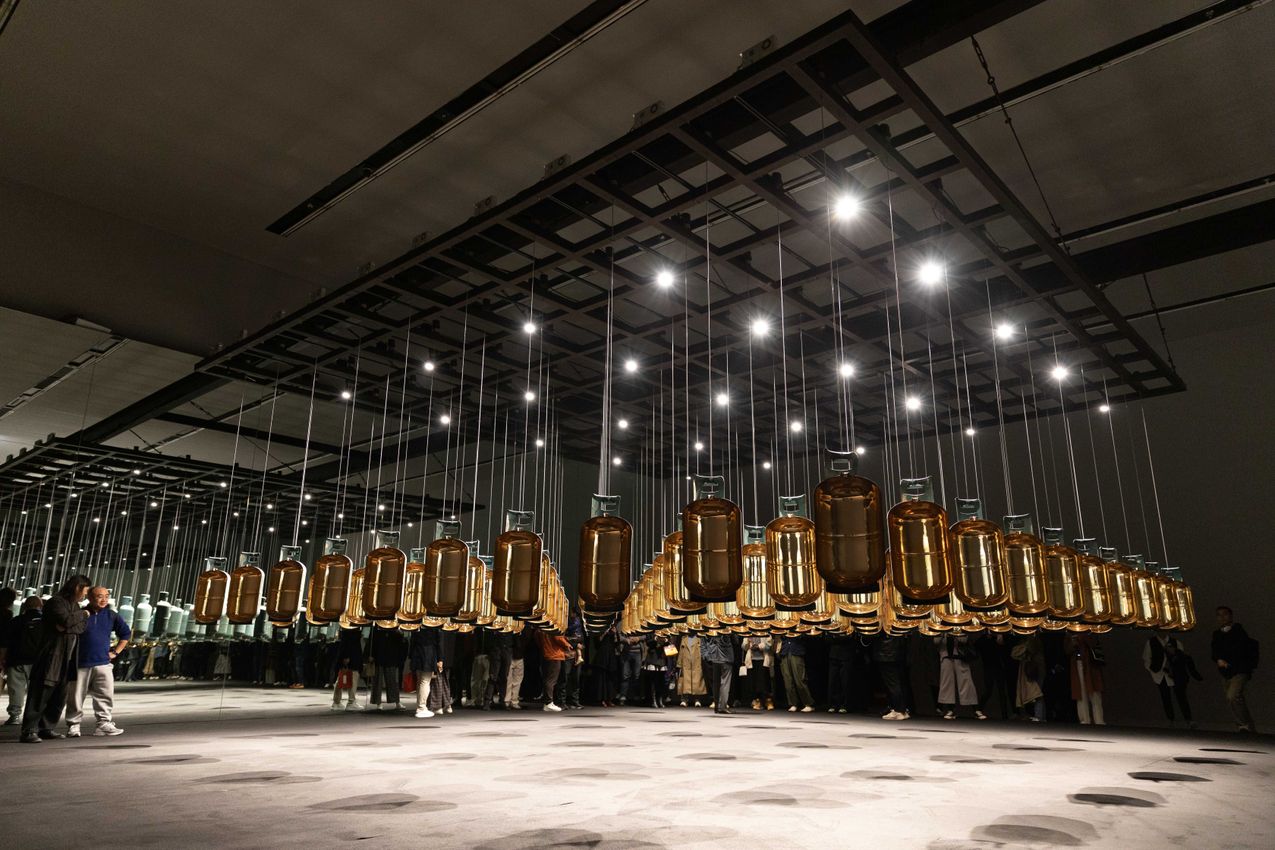
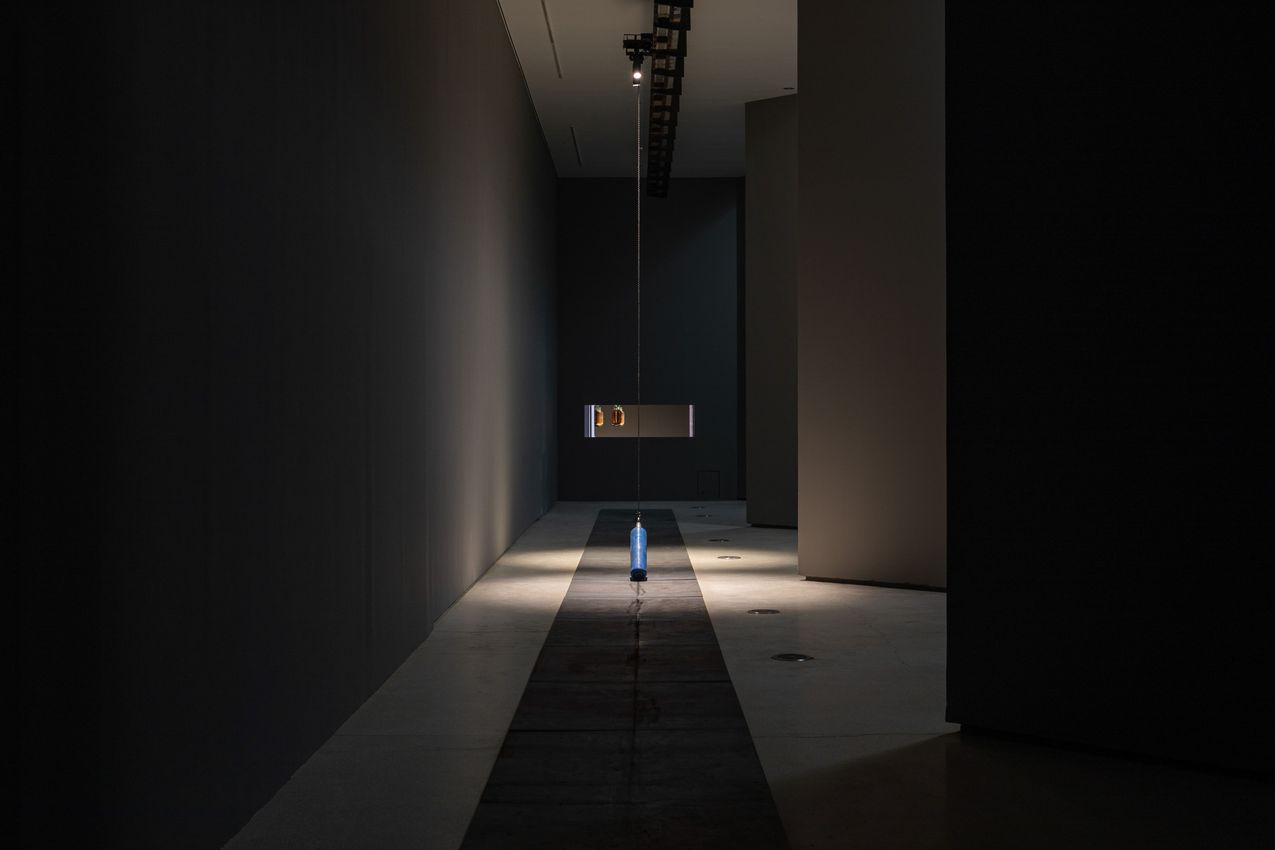
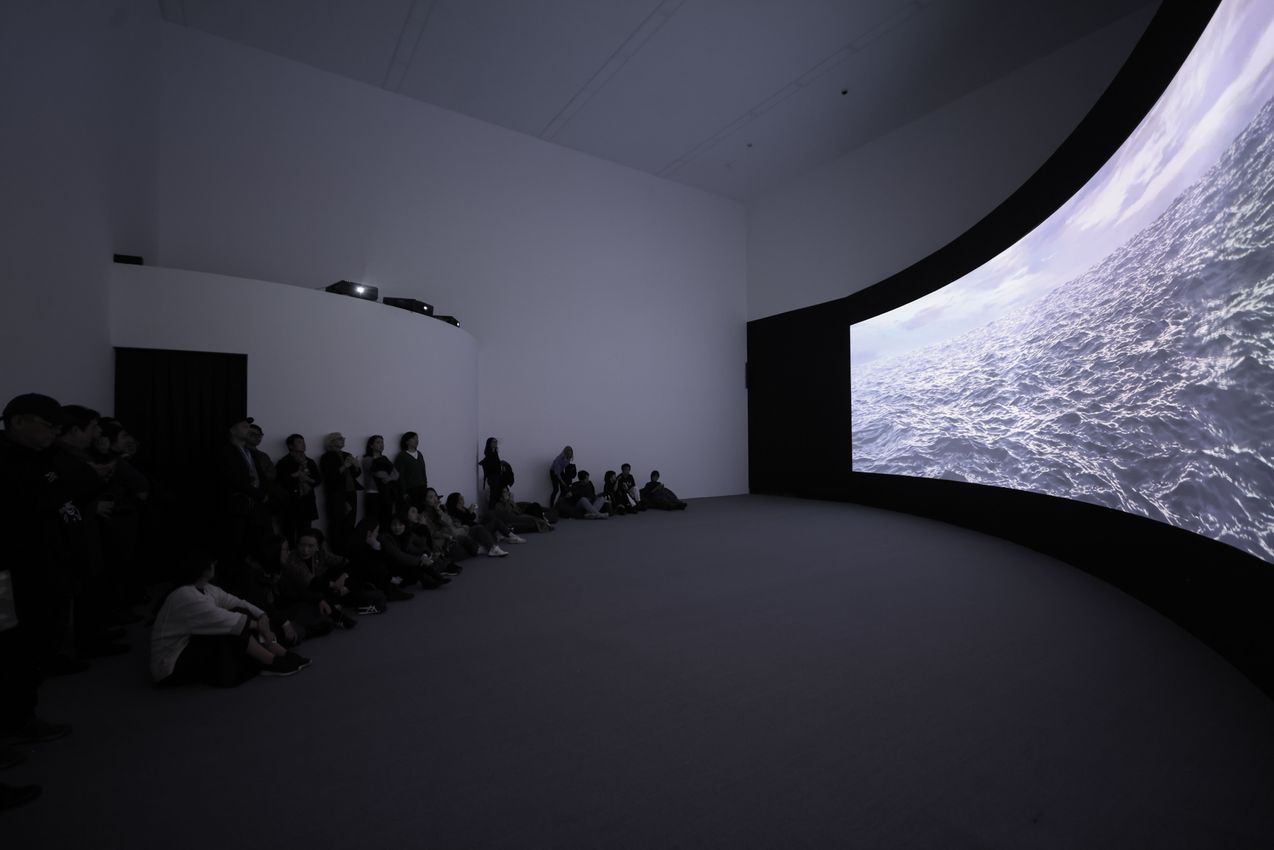
In ZHANG Peili, we encounter propane tanks hurled by a formidable velocity of rotation and vertical force, suggesting a heightened temporal grid of repetition. In another piece, a matrix of tanks swerves in rhythmic redundancy, morphing into infinite rippling through reflections in the flanking mirror panes. A colossal assemblage of nested lattices provokes a recursive escalation of involution, while a vast sounding mattress, activated by constant audience participation, reverberates through underlaid grids of actuators. We are awe-stricken by towering projections of human faces, and bemused by the truncated characters that confound wisdom and common sense.
Grid is an accretion of interlocking lines both horizontal and vertical, as well as a serial undulation of events, forming a framework that organizes, segments, and defines both space and time and their psychic repercussions. The grid embodies a complex network of relations, in which each intersection signifies a point of potential interaction or conflict, a moment when new departures crystallize within an otherwise undifferentiated continuum.
ZHANG Peili’s grid—akin to his emergence as one of the pioneers of the Chinese avant-garde—is also an immanent necessity rooted in the anti-representational imperative of the modernist tradition, which, as art critic Rosalind Krauss argued, is rubricated by an underlying grid system fundamental to the inner logic of the historical avant-garde. Grids in ZHANG Peili’s artworks serve both as a formal device for de-pictorialization, and as an expression of psychic impulse and reactive frameworks.
ZHANG Peili’s grid systems are thus part of a larger-than-life megastructure——In repetition, it intensifies; through redundancy, it permutates; with recursion, it reconstructs. The grid both ensnares and sets free his artistic whims, engendering in the viewer, whether consciously or unconsciously, somatic responses and psychological reciprocities.
Credited by some as the father of video art in China, Zhang Peili also works with digital media, as well as painting, sculpture, and installation, often exploring image construction in the media and our perceptions of reality.
Red Brick Art Museum is located in No.1 International Art District in the northeast of Beijing. As the landmark of this region, the facilities of Red Brick cover a total area of 20,000 square meters, with nearly 10,000 square meters exhibition space. Red Brick Art Museum was founded by the couple YAN Shijie and CAO Mei. It ‘s opened on May 23rd, 2014. The architectural design of the museum was conducted in person by Professor DONG Yugan of Architecture Research Center of Peking University. Employing red bricks as the basic architectural element, Professor Dong maintained the integrity of each brick, created a suburban-based, garden-owning contemporary art museum.

A respected voice in contemporary art discourse.
Focusing on ambitious storytelling and insightful art-world commentary. Ocula Magazine publishes in-depth interviews, critical essays and timely analysis on the artists, exhibitions and ideas driving the global art world.
Learn more about Ocula Magazine
Showcasing the best of the art world.
Ocula partners with galleries from around the world to highlight their artists, artworks and exhibitions. Gallery membership is by application and invitation, with each member vetted by an independent panel.
Learn more about Ocula Membership

Specialises in the sale of major artworks.
Led by a team with deep ties to the world’s leading auction houses, galleries and collectors. Ocula’s advisory team offers bespoke services to high-net-worth clients from around the world who are looking to acquire the best of contemporary and modern art.
Learn more about our team and services
