



Press Release

UCCA Center for Contemporary Art presents “Pipilotti Rist: Your Palm is My Universe”, a sensually immersive solo by the pioneering Swiss spatial video artist. The exhibition is anchored by 掌心宇宙 Your Palm is My Universe (2025), a newly conceived, site-specific video installation commissioned by UCCA and layered with a specially-created sound composition of the same title by experimental multi-instrumentalist Surma (Débora Umbelino), alongside iconic works that transform UCCA’s Great Hall into a sensorial cosmos of flowing image and layered soundscapes. Interweaving perspectives of female empowerment with ecological philosophy and Taoist ethos, this landmark presentation brings forth Rist’s radiant universe of whimsical defiance.

From July 19, 2025, to October 19, 2025, UCCA Center for Contemporary Art presents “Pipilotti Rist: Your Palm is My Universe,” an immersive solo exhibition by pioneering artist Pipilotti Rist (b. 1962, Grabs, Switzerland), who has been celebrated across decades for her radical approach to spatial video installations. Since the mid-1980s, Rist has challenged the boundaries between video, sculpture, installation, and performance, drawing on multimedia and ecological philosophies to create immersive spaces and images that encourage wonder, contemplation, and playful connection, spiritually and logically. Curated by UCCA Curator Yan Fang, this exhibition offers a sweeping encounter with Rist’s evolving practice—one that critically engages with contemporary image culture while proposing poetic alternatives to its algorithmic logic. Rooted in feminist thought and Taoist philosophy, her work envisions a more inclusive, non-anthropocentric world.

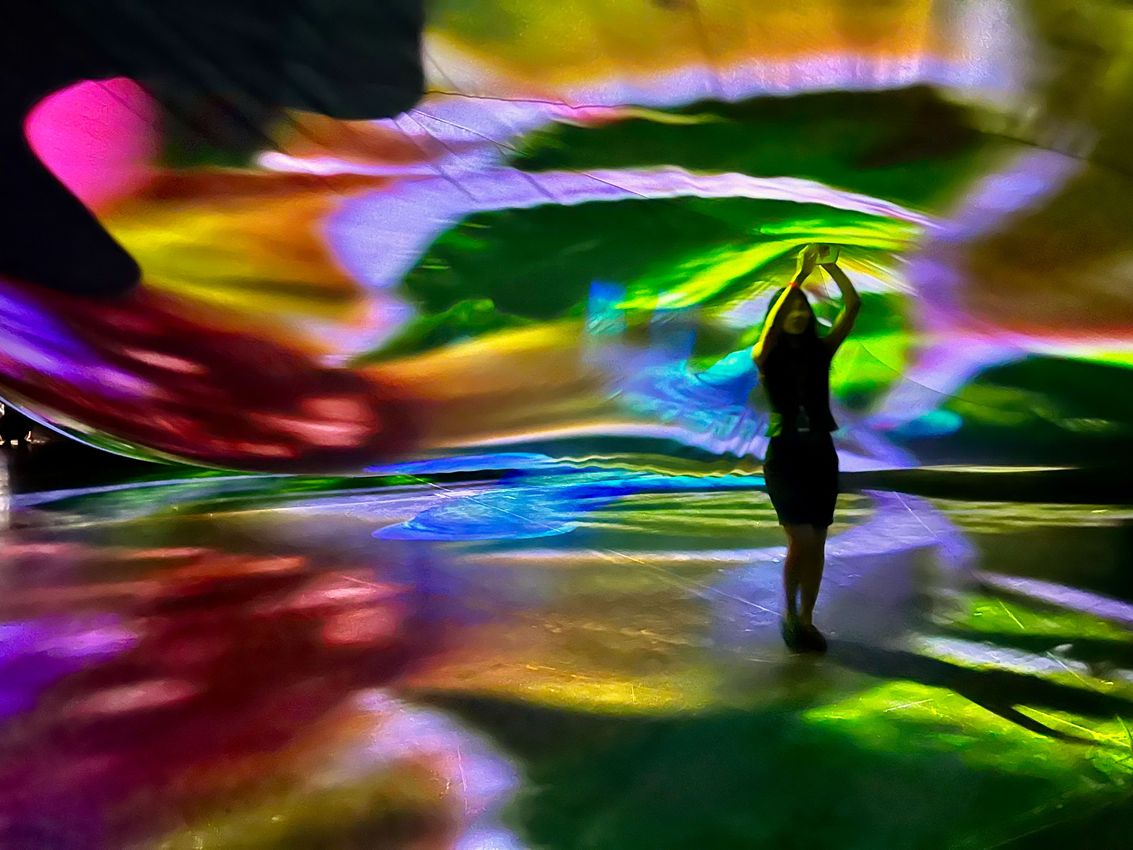
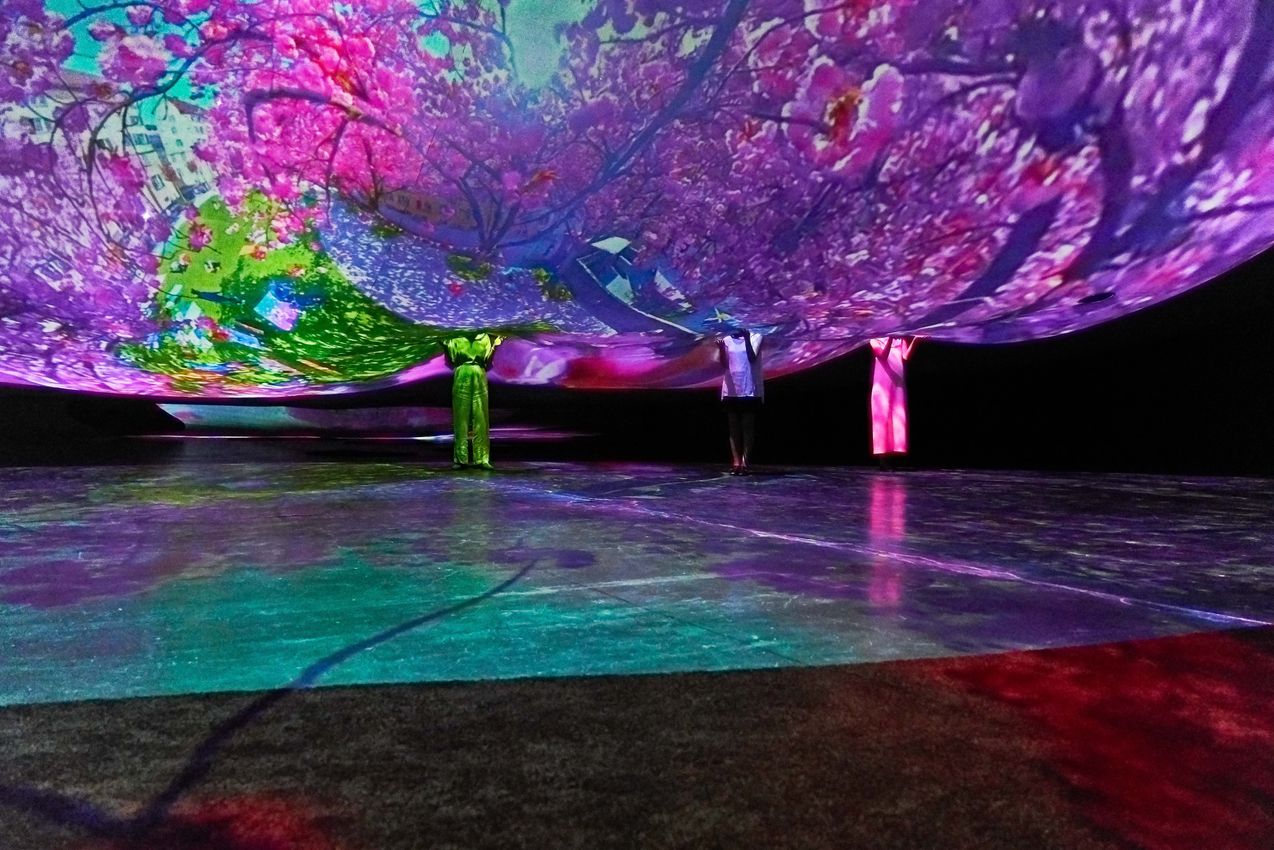
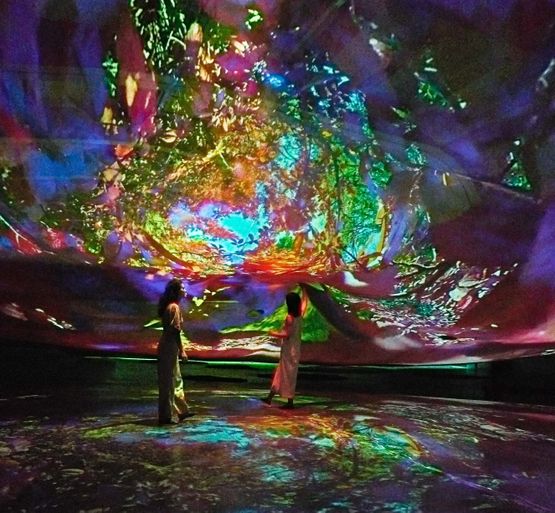
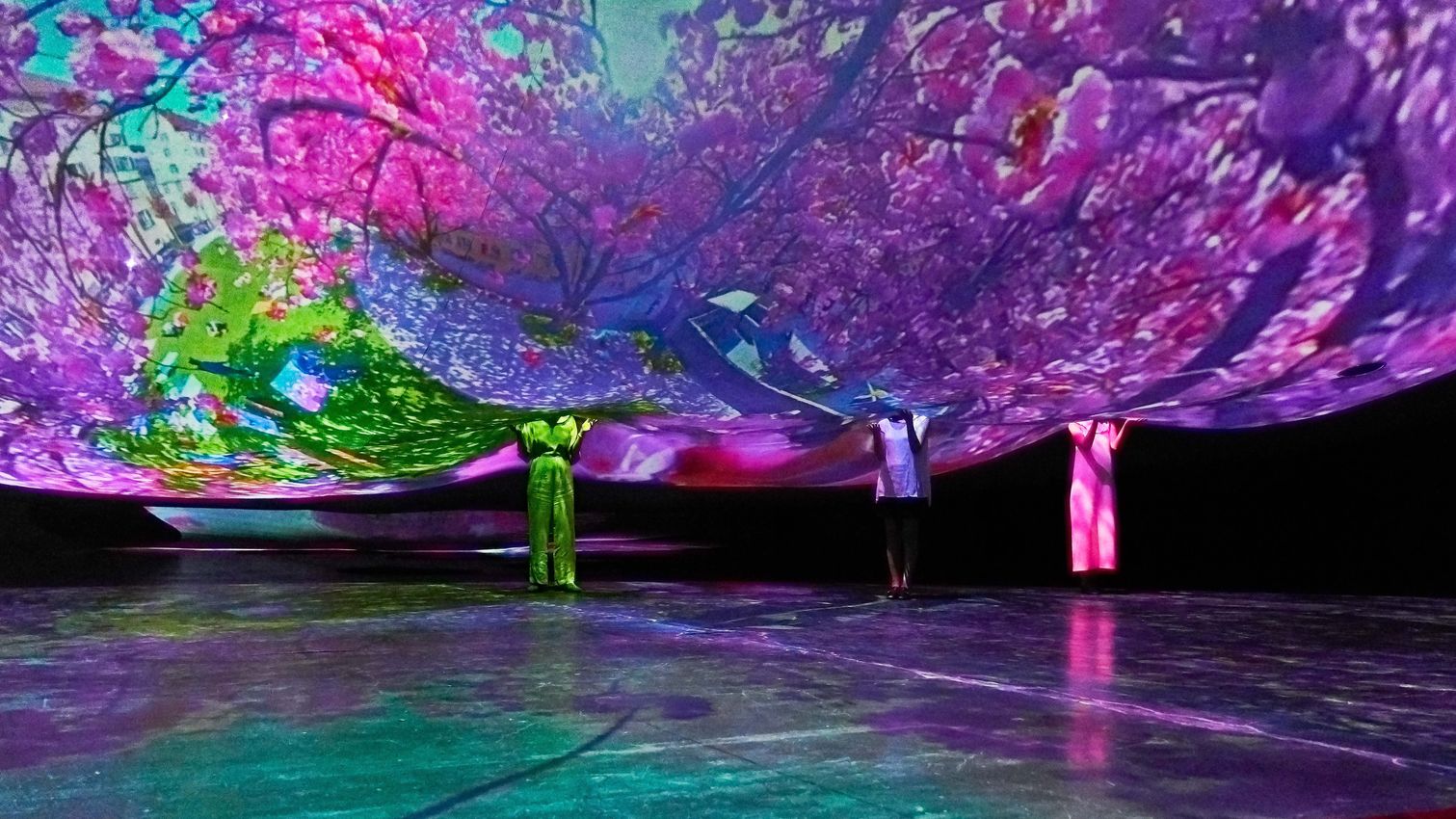
Commissioned by UCCA Center for Contemporary Art, monumental video installation 掌心宇宙 Your Palm is My Universe (2025) transforms the Great Hall into a colorfully charged micro-universe—a space where themes of touch, perception, and expression unfold at their fullest. Spanning 1,800 square meters, it is the largest artwork in physical dimensions the museum has commissioned since its establishment in 2007. The work features delicate, “skin”-like fabrics draped throughout the space, on which a series of looped videos play with a layered soundscape composed by musician Surma (Débora Umbelino) for Rist’s work. Visitors are encouraged to touch and engage, emphasizing the deeply experiential approach of the work and dissolving the perceived distance between the installation and viewer. As the videos are projected onto the fabrics, they also become living, breathing elements of the expansive, somatic artwork. The site-specific nature of the installation adds another layer of experience. Rist imagines the Great Hall as a symbolic body—a collective organism housing the manifestation of her artistic vision for the museum and its audience. Foundational elements of her creative ethos—the human form and sensation—guide the visitor’s eye, humanizing warped visuals and normalizing bodily realities. Here, hands, feet, and faces appear throughout the moving images, extending beyond their frames in gestures inviting engagement rather than passive viewing.

Reinforcing corporeal themes, delicate “skin”-like fabrics and connective tissues stretched over the immense “ribcage” of the Great Hall’s ceiling. Projected visuals play across these unevenly draped surfaces, upending notions of orientation and recalling how eyes invert images before the brain processes them. Visitors are encouraged to lift and shift these layers, actively shaping their experience and those of others around them, underscoring the communal nature of perception.

The piece also fluidly bridges inner and outer realms. While evoking the sensation of being enveloped within a colossal body, the projected imagery features pastoral landscapes—fields, mountains, gardens—sometimes transformed through vibrant color shifts. These views reflect both a connection to nature and an acknowledgment of human impact on the environment. Extreme close-ups morph plants into vast terrains, emphasizing the reciprocal relationship between organism and habitat. Visible palm lines on screen evoke borders or topographic maps, symbolically linking the minute and the monumental, and illustrating the deep interdependence of bodies, places, and ecological cycles.

Another recurring thread in Rist’s practice is the playful subversion of norms and merging the private with the public. Hanging in the Open Gallery is Spring Chaoyang Chandelier (2025), a “chandelier” of swimsuits dyed pink incorporated with a fountain. This installation extends Rist’s approach of bringing intimacy into the public: a fountain-like structure composed of pink-dyed swimwear, transforming the museum into something between a water park in an oneiric space, inviting viewers to a world where the usual social codes are undone with a whimsical naturalness.

Adding to the fun-saturated environment is Heaven on Earth (2025), a wallpaper mural conceived in radiant splashes of yellow, pink, and blue, designed by Rist specially for the UCCA Open Gallery. Layered atop this vibrant visual field are a poem by the artist and curator’s preface, presented bilingually, which introduce a reflective literary undercurrent that deepens the emotional and conceptual resonance of the exhibition space and the works presented within.

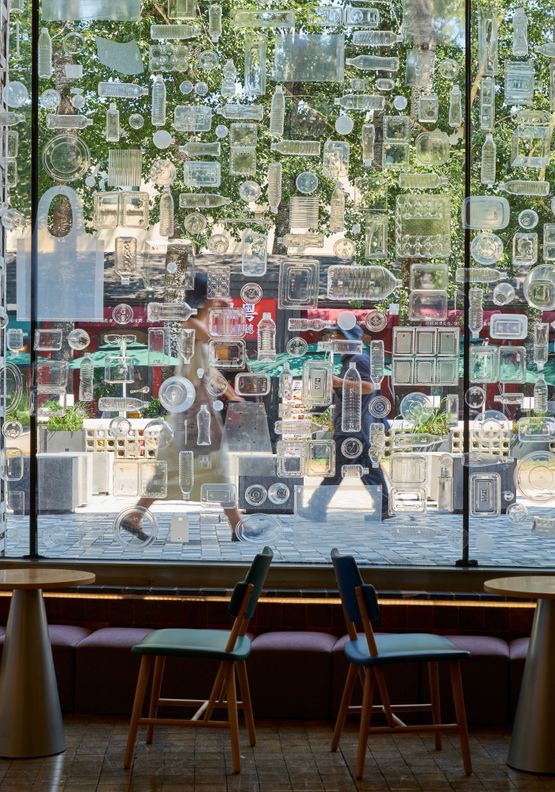
Facing the street along UCCA’s signature irregular glass facade,The Innocent Collection (1985-c.2054) presents a Beijing iteration of Rist’s long-term project of collecting unmarked, mass-produced packaging—translucent plastic materials referred to as “instant diamonds.” These castoffs are reassembled into a delicate sculptural installation that, in keeping with the exhibition’s focus on reawakening perception and softening fixed boundaries, invites viewers to reconsider what is deemed worthy of attention or care. Though these objects were initially designed to preserve and protect, they would later become waste; here, they are redeemed—made “innocent” once more—reminding us that beauty and meaning can be found in even the most ephemeral forms.

Flanking and complementing the conceptual and emotional ground for 掌心宇宙Your Palm is My Universe are a selection of Rist’s early single-channel videos. Part of the exhibition’s Public Programs, these works are scheduled to screen in the UCCA Auditorium every Friday and Saturday throughout its run, free of charge. From the fragmented chant of I’m Not the Girl Who Misses Much (1986) to the glitching confessions of (Entlastungen) Pipilottis Fehler ([Absolutions] Pipilotti’s Mistakes) (1988), these pieces dismantle fixed identities and conventional media narratives. Through feminist critique and pop culture remix, Rist distorts sound and image to reveal how emotion and selfhood are shaped, unsettled, and reformed by the screen’s flicker and rhythm. This sensibility evolves in works like You Called Me Jacky (1990) and I’m a Victim of This Song_ (1995), where music becomes a fragile vessel for humor, longing, and vulnerability. Raw, playful, and fiercely intimate, these early videos reclaim mass media’s tools—camera, frame, sound—dissolving the barrier between “screen” and “viewer” to reconfigure perception.

Cheekily grandiose, “Pipilotti Rist: Your Palm is My Universe” is a luminous exploration of bodily perception, collective experience, and reconnecting with the quiet, or even misunderstood, beauty of the everyday. In this saturated and immersive environment, through layered visuals and sound, Rist blurs boundaries between the perception and reality to reimagine connection and presence in an age shaped by technology and rapid change. This exhibition is a hypnotically vivid reflection of Rist’s enduring vision of art as a space for empathy, renewal, and imagination to come alive for embodied existence.

Read More

Installation Views

About the Artist

Pipilotti Rist is a Swiss moving image, sculpture and installation artist born in Grabs, Switzerland. In the early- to mid-1980s she studied commercial art, illustration and photography at the University of Applied Arts Vienna, and then video at The Basel School of Design. From 1988 to 1994 she was also a member of the pop music/performance group Les Reines Prochaines.

View Artist Profile

Also Exhibiting at UCCA

About the Gallery

UCCA Center for Contemporary Art is China’s leading contemporary art institution. Committed to the belief that art can deepen lives and transcend boundaries, UCCA presents a wide range of exhibitions, public programs, and research initiatives to a public of more than one million visitors each year. UCCA Beijing sits at the heart of the 798 Art District, occupying 10,000 square meters of factory chambers built in 1957 and regenerated in 2019 by OMA. UCCA Dune, designed by Open Architecture, lies beneath the sand in the seaside enclave of Aranya in Beidaihe.

View Gallery Profile
Address
798 Art District
No 4 Jiuxianqiao Lu
Chaoyang District
Beijing
China
Opening Hours
Tuesday – Sunday
10am – 7pm

Closed Monday
(1)
Beijing 798 Art District, No 4 Jiuxianqiao Lu
UCCA
798 Art District, No 4 Jiuxianqiao Lu, Chaoyang District, Beijing, China
+86 10 5780 0200
http://www.ucca.org.cn/en

Opening hours
Tuesday – Sunday
10am – 7pm

Closed Monday
The art world in focus