

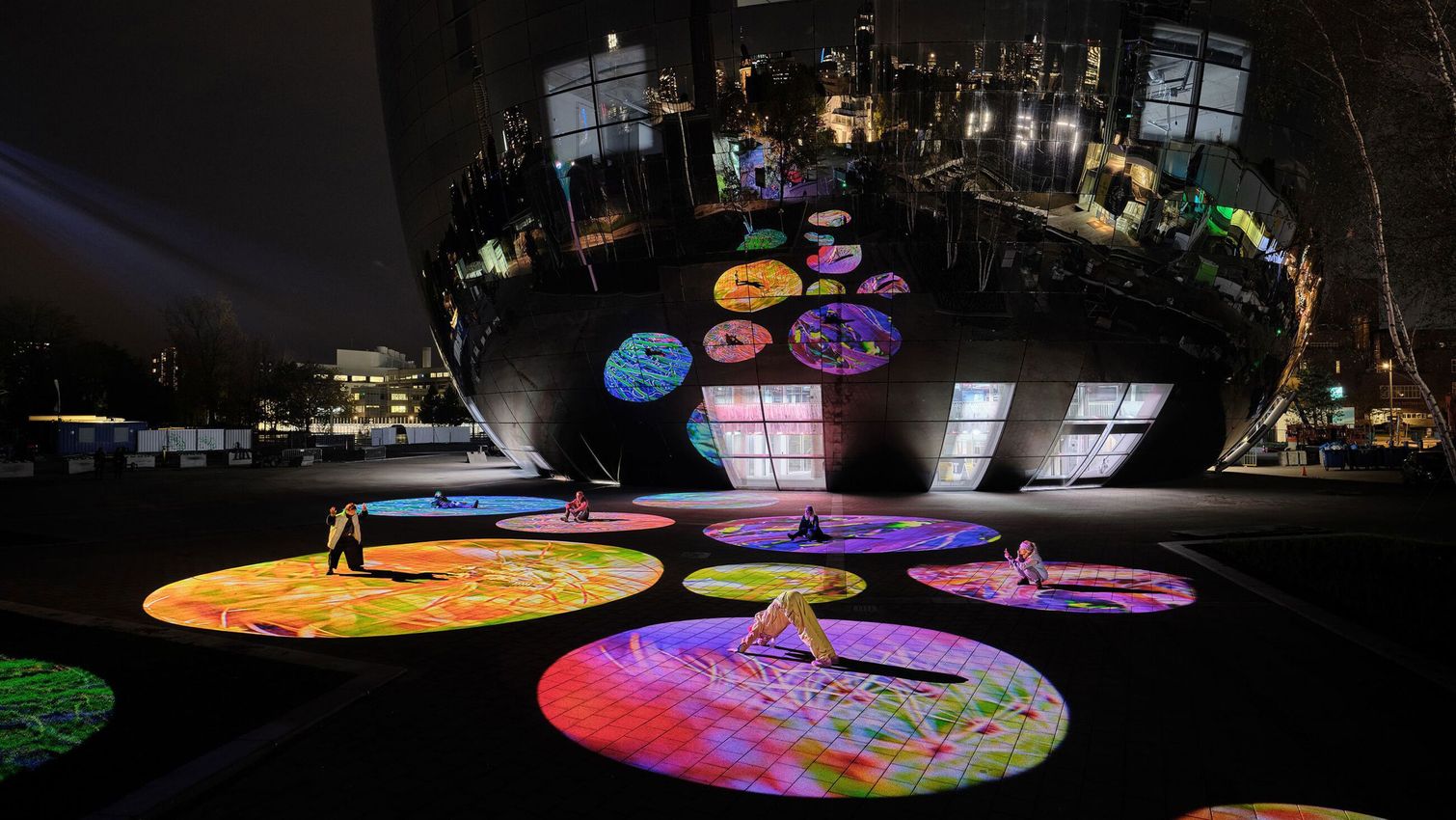
PIPILOTTI RIST
b. 1962, SwitzerlandPipilotti Rist is a video artist known for her bold installations, referencing nature, sensuality, taboo subjects and humour. Her colour-saturated projections, in which she invites viewers to immerse themselves, have been displayed in public spaces and institutions throughout the world.
Early Years
Elisabeth Charlotte Rist was born in Grabs in the Rhine Valley in 1962, the second of five children. Her mother was a teacher and her dad a doctor on construction sites, also a passionate photographer. (She started going by Pipilotti in 1982: it’s a mash-up of her childhood nickname and Astrid Lindgren’s famous character Pippi Longstocking). Rist was initially more interested in music than art: studying commercial art, illustration and photography at the University of Applied Arts in Vienna (1982–1986), she made stages for bands. Between 1986 and 1988 she studied audiovisual communications at the School of Design in Basel.
Pipilotti Rist: Artworks
“My work is about freeing the electronic image from its square and bringing it into the physical realm,” Rist said in 2022. Her witty, expansive installations take spatial video art in new directions, drawing inspiration from feminism, pop culture, fairy tales and her own imagination. Immersive, three-dimensional works invite viewers to take part, rather than simply to watch, asking us to examine what it means to be human in the natural world.
- Ever Is Over All was Rist’s 1997 Venice-Biennale-prizewinning video installation. Two projections appear on adjacent walls: on the right is a field of red flowers; on the left a woman walking along a street next to parked cars. Raising what looks like one of the flowers from the right-hand channel, the woman on the left breaks one of the car windows... the first of many.
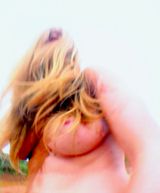
- I Couldn’t Agree With You More (1999) sees Rist’s own face taking centre stage, behind her a shopping centre. As she walks, nude figures appear around her forehead, perhaps the manifestation of her inner thoughts. The video also demonstrates the urban social reality of human interaction: proximity breeds distance.
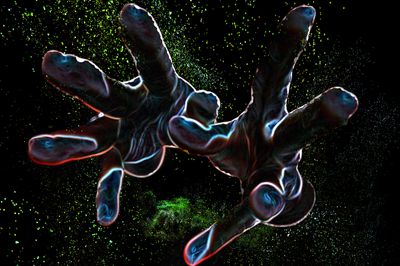
- In 2023, Rist created Hand Me Your Trust, a video work showing disembodied hands floating through space, for Art Basel Hong Kong. The artwork was projected on to the façade of Hong Kong’s M+ museum. “I hope that the images and philosophies presented in Hand Me Your Trust may leap off the façade and extend far beyond in its impact, empowering audiences to recognise the immense power, tenderness and potential contained within their two hands,’ Rist told Ocula at the time.
Pipilotti Rist: Select Public Commissions
- Flying Room, UBS, Buchs (1995)
- Open My Glade (Flatten), Times Square, New York City (2000, 2017)
- A la belle étoile (Under The Sky), Centre Georges Pompidou Centre, Paris (2007)
- Aufgeweckter Rosenscheitel, Nationale Suisse Headquarters, Basel (2014)
- Nordic Hiplights, Ekebergparken, Oslo (2020)
- Hand Me Your Trust, M+ museum, Hong Kog (2023)
- Pixelwald Wisera, Kunsthalle Bremen (2025)
- Waiting Places, Main Square Post Office, City of Trenčín (European Capital of Culture 2026) (2026)
Pipilotti Rist: Select Awards
- Sikkens Prize, Sassenheim (2024)
- Kulturpreis 2024, Kanton Zurich (2024)
- Honorary Royal Academician, Royal Academy of Arts, London (2021)
- Prix Meret Oppenheim, Basel (2014)
- Bazaar Art International Artist of the Year, Hong Kong (2012)
- Joan Miró Prize, Fundació Caixa Girona (2009)
- President of the Jury’s Extraordinary Award, 6th Seville European Film Festival, (2009)
- Zürcher Kunstpreis, Stadt Zürich (2001)
- Premio 2000, 47th Venice Biennale (1997)
Pipilotti Rist: Select Exhibitions
Select Solo Exhibitions
- I’m Not the Girl Who Misses Much, Joslyn Art Museum, Omaha (2026)
- Pipilotti Rist: Gravity, Be My Friend, Accelerator, Stockholm University (2025)
- Pipilotti Rist: Your Palm is My Universe, UCCA Centre for Contemporary Art, Beijing (2025)
- Pipilotti Rist: 4th Floor to Mildness, Portland Art Museum (2025)
- Homo sapiens sapiens, Instituto Inhotim, Brumadinho-Minas Gerais (2024)
- Pipilotti Rist: Electric Idyll, The Fire Station, Doha (2024)
- Prickling Goosebumps and a Humming Horizon, Hauser & Wirth, New York City (2023)
- Pipilotti Rist, Lungenflügel [Collection Presentation], Tate Modern, London (2023)
- Behind Your Eyelid—Pipilotti Rist, Tai Kwun Contemporary, Hong Kong (2022)
- Pipilotti Rist: Big Heartedness, Be My Neighboir, Museum of Contemporary Art, Los Angeles (2021)
- Pipilotti Rist: Your Eye Is My Island, The National Museum of Modern Art, Kyoto (2021) (and touring)
- Pipilotti Rist: Open My Glade, Louisiana Museum of Modern Art, Humlebæk (2019)
- Pipilotti Rist: Videos 1986–1992, Kunsthalle zu Kiel (2018)
- Pipilotti Rist: Pixel Forest, New Museum, New York City (2016)
- Pipilotti Rist: Your Saliva is my Diving Suit in the Ocean of Pain, Kunsthaus Zürich (2016)
- Pipilotti Rist: Gentle Wave in Your Eye Fluid, Guangdong Times Museum, Guangzhou (2013)
- Pipilotti Rist: I Packed the Postcard in My Suitcase, Australian Centre for Contemporary Art, Melbourne (2011)
- Elixir—The Video Organism of Pipilotti Rist, Museum Boijmans Van Beuningen, Rotterdam (2009)
- Stir Heart, Rinse Heart, Mudam Luxembourg—Musée d’Art Moderne Grand-Duc Jean (2006)
- The Cake Is in Flames, Shiseido Foundation‚ Tokyo (2002)
- Pipilotti Rist, Fundação de Serralves, Porto (1999)
- Pipilotti Rist: Sip My Ocean, Museum of Contemporary Art Chicago (1996)
Select Group Exhibitions
- Diffuse Visions, Museo Jumex, Mexico City (2026)
- Re:Vision: The 16th East Wing Biennial, Courtauld Institute of Arts, London (2025)
- Light, Hauser & Wirth, St Moritz (2025)
- The Traumatic Surreal, Henry Moore Institute, Leeds (2024)
- Extreme Tension: Art between Politics and Society: Collection of the Nationalgalerie 1945–2000, Neue Nationalgalerie, Berlin (2023)
- Lenin Was a Mushroom—Moving Images in the 1990s, Museum of Contemporary Art Antwerp (2022)
- All That Was Solid Melts, Auckland Art Gallery Toi o Tāmaki (2021)
- The Pleasure Pavilion: A Series of Installations, Luhring Augustine Bushwick, Brooklyn, New York City (2020)
- Art and Porn, ARoS Aarhus Art Museum (2019)
- Double Lives: Visual Artists Making Music, Museum Moderner Kunst Stiftung Ludwig, Vienna (2018)
- Body Doubles, Lokremise St Gallen (2017)
- Medicine in Art, MOCAK—Museum of Contemporary Art in Kraków (2016)
- La La La Human Steps, Museum Boijmans Van Beuningen, Rotterdam (2015)
- Flowers and Mushrooms, MdM—Museum der Moderne, Salzburg (2013)
- Artists Body, Coreana Museum of Art, Seoul (2010)
- I Love You, Centre Torrente Ballester, Ferrol (2008)
- Colour after Klein, Barbican Art Gallery, London (2005)
- Fifth Women’s Film Festival, Seoul (2003)
- Relationship.., Ormeau Baths Gallery, Belfast (2001)
- Future Present Past, 47th Venice Biennale (1997)
Further Reading
- Pipilotti Rist’s official website
- Artist profile page at Luhring Augustine
- Artist profile page at Hauser & Wirth
- Pipilotti Rist’s Instagram
- 2023 interview in Extra Extra
- 2022 profile from Wallpaper
Pipilotti Rist FAQs
What is Pipilotti Rist’s relationship with nature?
Rist is close to nature and believes that humans exist in nature as animals. She remembers visiting the construction sites on which her dad worked and collecting and rehoming buckets of frogspawn. She also remembers spending time in the mountains. “Nature is raw; raw and resolute,” she has said, noting that the human eye can always see more detail than even the most powerful camera and using the images she creates in her video works to transport viewers to pictures she sees when she closes her eyes.
How does Pipilotti Rist plan her museum installations?
Rist makes a point of using museum space optimally, often inviting viewers to sit or lie down, or taking off their shoes to watch her installations. Details are key, such as not allowing sound to bleed too much between spaces. She also makes the most of the fact that visitors can watch each other as well as the images.
Does Pipilotti Rist connect art to healing and mental health?
Yes, the idea of the healing power of art is an element of Pipilotti Rist’s practice. Her 2022 installation at the National Museum of Qatar, in collaboration with the country’s Ministry of Public Health, Your Brain to Me, My Brain to You, contained 12,000 LED lights encased in resin representing neurons communicating and firing. They were programmed to sync with footage of the Qatari landscape. Speaking in 2022, she said: “I am convinced art can help mental wellbeing; just a moment where you can forget your problems relaxes your brain. Going to a museum is a ritual and can have a calming, comforting effect.”
Ocula




Explore Pipilotti Rist's Exhibitions











Explore and Follow Artists Shaping Contemporary Art
A respected voice in contemporary art discourse.
Focusing on ambitious storytelling and insightful art-world commentary. Ocula Magazine publishes in-depth interviews, critical essays and timely analysis on the artists, exhibitions and ideas driving the global art world.
Learn more about Ocula Magazine
Showcasing the best of the art world.
Ocula partners with galleries from around the world to highlight their artists, artworks and exhibitions. Gallery membership is by application and invitation, with each member vetted by an independent panel.
Learn more about Ocula Membership
Specialises in the sale of major artworks.
Led by a team with deep ties to the world’s leading auction houses, galleries and collectors. Ocula’s advisory team offers bespoke services to high-net-worth clients from around the world who are looking to acquire the best of contemporary and modern art.
Learn more about our team and services