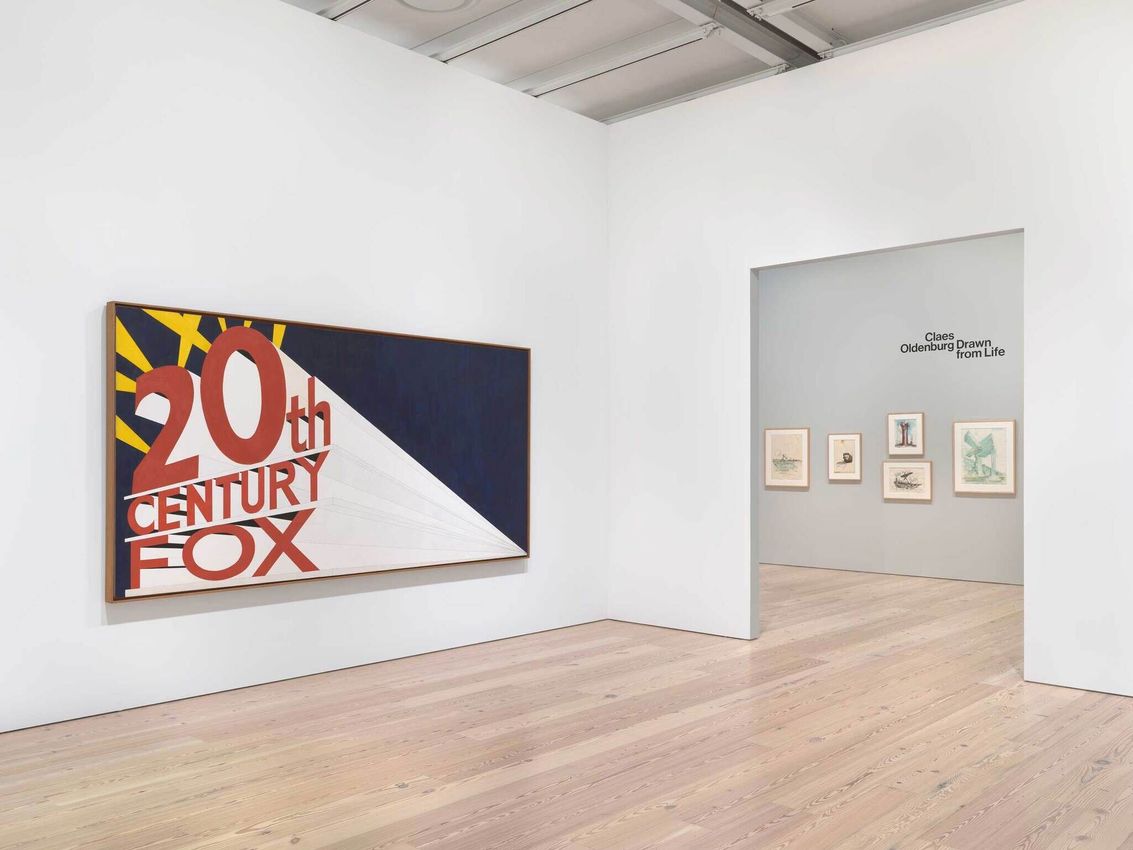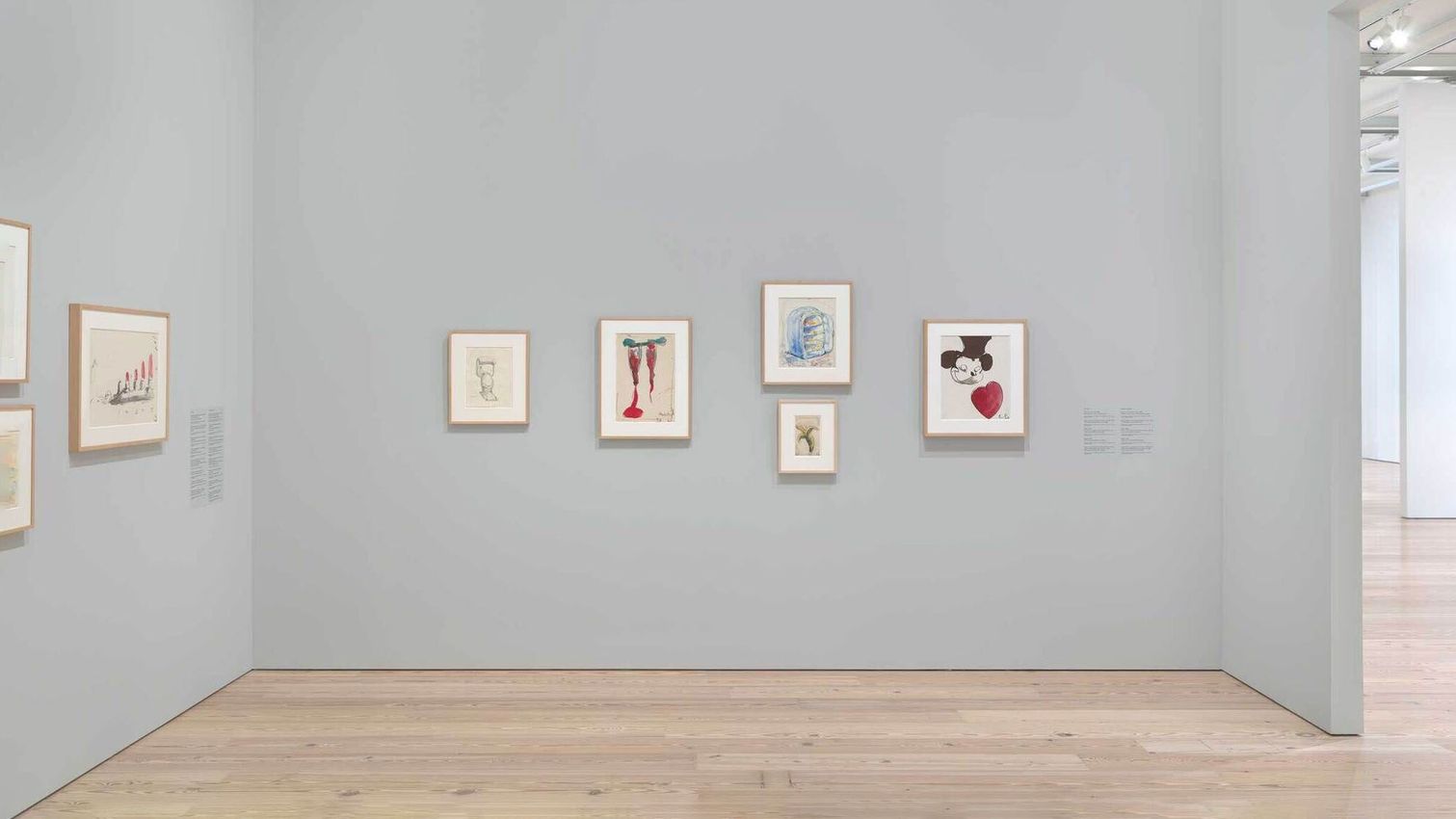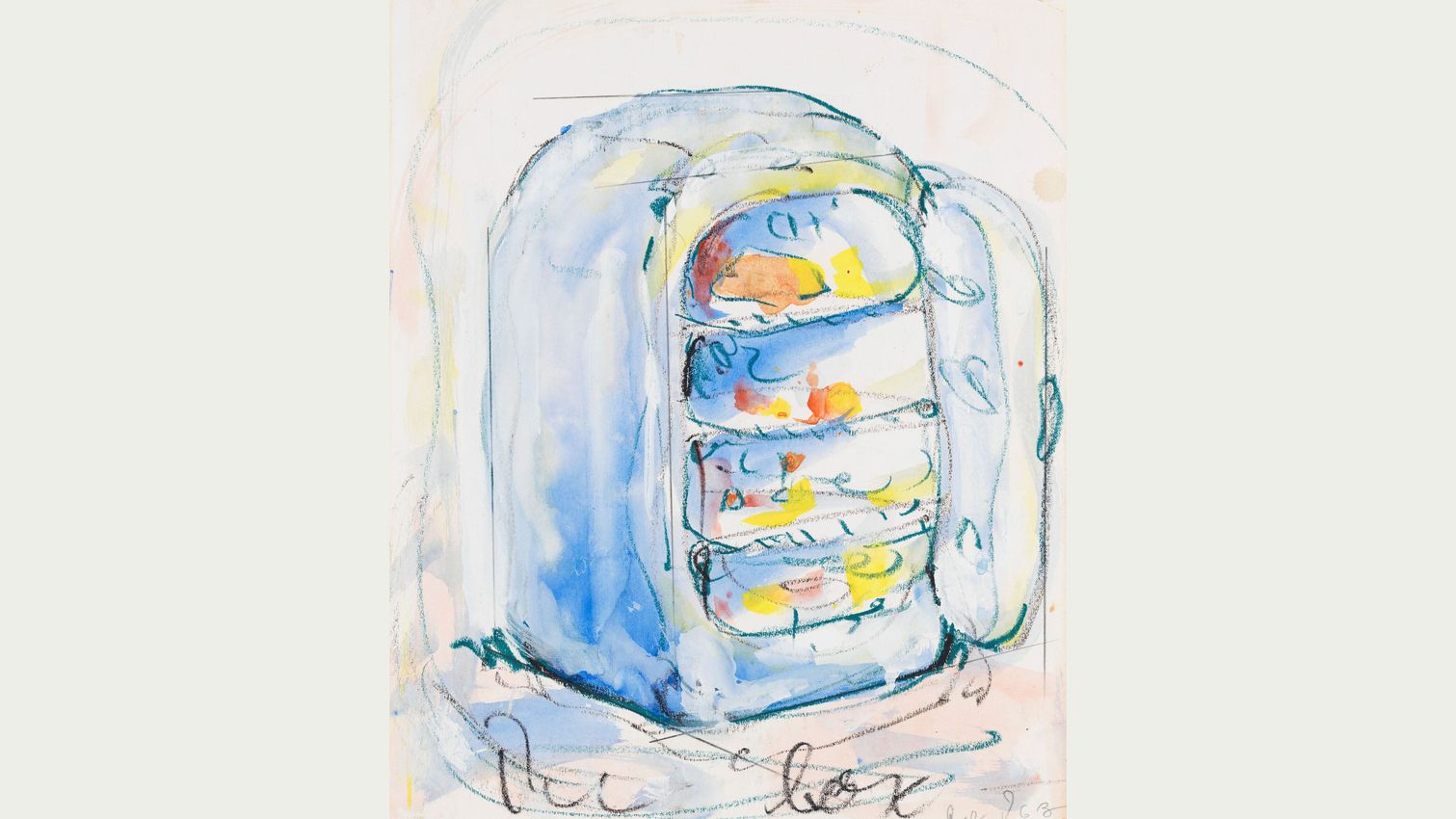
Best known for his sculptures of everyday objects rendered in unexpected textures or dimensions, Claes Oldenburg (1929–2022) once proclaimed, “I am for an art that takes its form from the lines of life itself.” His innovations in sculpture emerged out of his drawing practice, which enabled him to swiftly record and transform the contours of the world around him. Claes Oldenburg: Drawn from Life focuses on the artist’s drawings from the 1960s in which he playfully reimagined the spaces—streets, stores, homes—and objects of daily life. This selection from the Whitney’s extensive collection of Oldenburg’s works on paper attests to his wide range as a draftsman and expanded definition of life drawing.
Oldenburg’s earliest body of work in this exhibition, The Street (1959–60), channels influences from everyday modes of drawing, such as urban graffiti and children’s art, into visceral portrayals of city life. Oldenburg turned to comics and advertising illustration as inspiration for his two subsequent series, The Store (1961–64) and The Home (1963–69), which include exuberant drawings of food, clothing, and household appliances that informed his colorful, cartoonish “soft” sculptures. In 1965 Oldenburg began sketching enlarged versions of his favorite commonplace items—including fire hydrants, baked potatoes, and teddy bears—towering over cityscapes. Although these works were titled Proposed Colossal Monuments (1965–69), they remained fanciful notions until Oldenburg began building large-scale, outdoor sculptures in 1969.
Claes Oldenburg: Drawn from Life is organized by Antonia Pocock, Curatorial Assistant.
A pioneer of American Pop Art, Swedish-born sculptor Claes Oldenburg was a veteran of New York’s art scene, his lighthearted ‘soft’ sculptures and staging performances carved indelibly into the trajectory of art history. Together with his wife and collaborator Coosje van Bruggen, Oldenburg realized over 40 large-scale public projects around the world.
The Whitney Museum of American Art is a landmark cultural institution located in New York‘s vibrant Meatpacking District, at 99 Gansevoort Street. Designed by renowned architect Renzo Piano, the museum’s striking asymmetrical structure integrates cutting-edge architecture with sweeping skyline views and direct access to the High Line, making it an essential destination for anyone interested in American art and culture.

A respected voice in contemporary art discourse.
Focusing on ambitious storytelling and insightful art-world commentary. Ocula Magazine publishes in-depth interviews, critical essays and timely analysis on the artists, exhibitions and ideas driving the global art world.
Learn more about Ocula Magazine
Showcasing the best of the art world.
Ocula partners with galleries from around the world to highlight their artists, artworks and exhibitions. Gallery membership is by application and invitation, with each member vetted by an independent panel.
Learn more about Ocula Membership

Specialises in the sale of major artworks.
Led by a team with deep ties to the world’s leading auction houses, galleries and collectors. Ocula’s advisory team offers bespoke services to high-net-worth clients from around the world who are looking to acquire the best of contemporary and modern art.
Learn more about our team and services