The art world in focus
Subscribe to our newsletter for news and insights on artists, galleries and exhibitions.

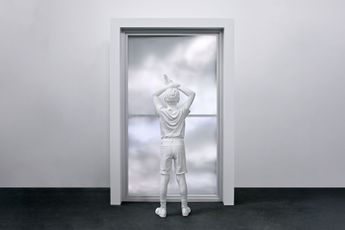
Elmgreen & Dragset: TRANSITION, 508 & 510 West 25th Street, New York City 10001, 6 November 2026–16 January 2027. Courtesy Pace Gallery.
In Washington DC, The White House’s Oval Office has undergone some extravagant changes in recent years, including the addition of copious amounts of golden trim. In New York City, however, a rather less glitzy version of the West Wing workspace was recently unveiled, thanks to Scandinavian artist duo Elmgreen & Dragset.
In a new exhibition at Pace Gallery, the Oval Office, which president Trump recently described as “a symbol of our country and the greatness of our country”, has been reimagined by the pair in rusty Cor-Ten steel, emptied of all personnel, furniture and presidential portraits, and split in half. The show, titled Transition, opened on 6 November, just one day after the president signed an executive order designating his office to be a “national monument”.
Speaking to Ocula, Elmgreen & Dragset noted that, since the mid-20th century, many US presidents have changed the interior of the White House to fit their personal tastes and align with their political ideologies and agendas. Reimagined by the artist duo, their version strips away all decoration, symbols and iconography.
“With its rusty appearance, this material has associations to industry and production, as well as decay. At the same time, it is abstract—the surface constantly transforming in response to the environmental conditions of its location,” the duo explained.
“These elements are something that the far right and the MAGA movement in general seem afraid of. They prefer glorified historic interpretations coloured by nostalgia, simple answers and no complexity, nothing creative and transformable, or any statements open to interpretation.”
The 40-tonne (36-ton) sculpture, also titled Transition (2026), was allowed to rust while being transported from Germany to the US in an open-air truck. At Pace Gallery it forms half of the exhibition, alongside the wall-based The Balcony Series (2026), a set of circular polished steel panels depicting silhouettes of people on royal or presidential balconies. The people have been cut out, meaning that the viewer sees their own reflection in the metal.
Michael Elmgreen and his creative partner, Ingar Dragset, who are Danish and Norwegian respectively, have been working together for more than 30 years. In 1997 they began making architectural installations in an ongoing series titled Powerless Structures, which included the famous construction of a Prada store in the desert outside Marfa, Texas, in 2005.
Transition is the duo’s first installation to address US politics specifically. Despite not being American, they describe the topic as “overwhelmingly present in our lives”.
“Almost everyone, wherever they may be on this planet, is influenced by what is happening in the Oval Office,” the artists said. “It’s kind of funny that we, as Scandinavians, don’t even really know what the office of the Danish prime minister looks like, but we have such a clear image of the Oval Office in Washington DC.”
The executive order signed by the president earlier this month will not, he said, prevent future US leaders from making certain changes to the office, which he has personalised with golden urns, lamps, and wall fixtures. However, Trump told reporters that the room “will not be allowed to be touched by anybody, destroyed, ripped down by stupid people”.
President Trump’s second term in office has been defined by various architectural projects, including the building of a helipad next to the Rose Garden, which borders the Oval Office, and the controversial erection of a ballroom in place of the White House’s East Wing. A 2026 refurbishment of the Lincoln Memorial Reflecting Pool drew widespread attention after liner-peeling and algae issues emerged, provoking the president to claim that the project had been sabotaged by vandals.
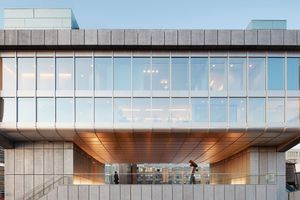
The opening of Transition also coincided with the reveal of another Elmgreen & Dragset work in Washington DC, just minutes from the real Oval Office: Eight (2026), at the Hirshhorn Museum and Sculpture Garden. The 8.5m (28ft) tall empty swimming pool twisted into a figure of eight is, the artists said, a dual symbol of both raw potential and of missed opportunities.
It’s also another topical architectural symbol. However, the duo told Ocula: “We had planned this piece for over four years, long before Trump started fiddling with the reflective pool at the opposite end of The Mall. It’s sometimes striking how reality seems to comment on art more than the other way around.”

A respected voice in contemporary art discourse.
Focusing on ambitious storytelling and insightful art-world commentary. Ocula Magazine publishes in-depth interviews, critical essays and timely analysis on the artists, exhibitions and ideas driving the global art world.
Learn more about Ocula Magazine
Showcasing the best of the art world.
Ocula partners with galleries from around the world to highlight their artists, artworks and exhibitions. Gallery membership is by application and invitation, with each member vetted by an independent panel.
Learn more about Ocula Membership
Specialises in the sale of major artworks.
Led by a team with deep ties to the world’s leading auction houses, galleries and collectors. Ocula’s advisory team offers bespoke services to high-net-worth clients from around the world who are looking to acquire the best of contemporary and modern art.
Learn more about our team and services