The art world in focus
Subscribe to our newsletter for news and insights on artists, galleries and exhibitions.

Ellen Cantor, _Club Vanessa (The London Tape), _1996. Courtesy of the Estate of Ellen Cantor and Electronic Arts Intermix (EAI), New York.
In recent years, video artists publishing in the digital sphere have increasingly found themselves falling foul of censorship policies and social media shadowbans. Now, in a bid to tackle the issue, the digital art nonprofit Rhizome has announced plans to open its internal video-hosting site, allowing both artists and institutions to upload and preserve their works.
Rhizome’s service, known as video.rhizome.org (VRO) and built on the open-source PeerTube platform, is an alternative to mainstream video-hosting platforms, which can flag video art for violating community guidelines. Works featuring nudity, or exploring themes of sexuality or politics, are particularly vulnerable.
“There’s a heightened risk around content removal right now,” Michael Connor, Rhizome’s executive director, told Ocula. “That heightened risk is driven really by how much automation is coming into content moderation.”
One particular case of deplatforming prompted the impending launch of VRO’s pilot programme. In May, Electronic Arts Intermix (EAI), a nonprofit founded in 1971 to preserve and distribute video art, had two videos by Barbara Hammer, Dyketactics (1974) and 1976’s Women I Love, flagged on its Vimeo-hosted educational streaming service. Vimeo later flagged more videos and briefly suspended EAI’s account.
Rebecca Cleman, executive director of EAI, told Ocula that while her organisation has multiple copies of the 5,000 video artworks it cares for, this will not be the case for all contributors to Vimeo. “There are artists that think of Vimeo as a kind of repository, as an archive for their work,” she said. “We’ve heard of artists who have lost access to work because of things like this.”
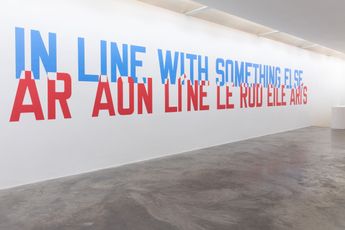
According to Cleman, all the EAI videos flagged by Vimeo were by women artists, while other videos by men—including a Lawrence Weiner work she described as “actual porn”—were not cited.
EAI’s executive director feels that Vimeo once appealed to artists as friendlier, easier to use, and less censorious than other major hosting platforms. However, she believes that changed after Vimeo was acquired in September 2025 by Bending Spoons, an Italian company that also owns productivity apps including Evernote and WeTransfer.
A spokesperson for Vimeo told Ocula that, while there had been layoffs in December 2025, the platform’s community guidelines have not changed since its acquisition.
They added that while guidelines do not allow pornography, sexually explicit content, explicit depictions of sex acts, sexualised nudity, or content primarily intended to cause sexual stimulation, videos that “depict sexuality serving a clear creative, artistic, aesthetic, or narrative purpose, as well as non-sexual nudity” may be allowed.
Rhizome has its roots in digital preservation. The artist Mark Tribe founded the organisation in 1996 after realizing that software and hardware updates threatened works of internet art. Today the organisation’s ArtBase archives more than 2,300 digital artworks.
The VRO platform itself also began in response to censorship concerns, after an online exhibition commissioned by Rhizome and the New Museum, Horny Lil Feminist (2015) by Anne Hirsch, was removed by Vimeo in 2020. “This is an important part of our institutional history,” Connor said. “And it was taken down by the caprices of a third party.”
VRO’s beta testers are expected to be announced in the next week and, in the meantime, artists and arts organisations can join a waitlist via a survey on Rhizome’s website. Use of the platform will likely come at a cost, although Connor hopes to offer financial support where possible.
“The worst-case scenario is to launch it with great fanfare and then not be able to sustain people’s work over the long haul,” the director said. However, for anyone concerned about Rhizome’s longevity, Connor also had some reassuring words: “We’ve been online longer than Google has.”
A respected voice in contemporary art discourse.
Focusing on ambitious storytelling and insightful art-world commentary. Ocula Magazine publishes in-depth interviews, critical essays and timely analysis on the artists, exhibitions and ideas driving the global art world.
Learn more about Ocula Magazine
Showcasing the best of the art world.
Ocula partners with galleries from around the world to highlight their artists, artworks and exhibitions. Gallery membership is by application and invitation, with each member vetted by an independent panel.
Learn more about Ocula Membership
Specialises in the sale of major artworks.
Led by a team with deep ties to the world’s leading auction houses, galleries and collectors. Ocula’s advisory team offers bespoke services to high-net-worth clients from around the world who are looking to acquire the best of contemporary and modern art.
Learn more about our team and services