





Trump Attack ‘Not a Fair Characterisation’, Says Smithsonian Chief

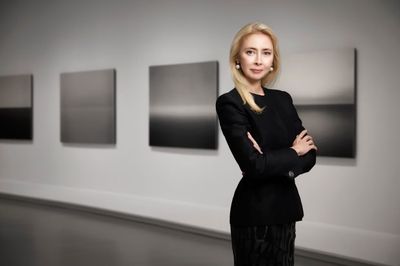
In a leaked internal email, Smithsonian Institution secretary Lonnie B Bunch III (above), told museum staff that the report’s findings were “not a fair characterisation“ of the museum’s work. Photo:Noah Willman Photography.
The head of the Smithsonian has responded to an inflammatory White House report accusing the institution of promoting “anti-white” ideology across its museums by describing the document as an unfair characterisation of its work.
In a leaked internal email, Smithsonian Institution secretary Lonnie B Bunch III, told museum staff that the report’s findings were “not a fair characterisation of the work and totality of the National Museum of American History”.
“At the Smithsonian, our work is driven by scholarship, accuracy, and an uncompromising commitment to tell the fullness of America’s story,” Bunch wrote.
The email was sent to staff earlier this week in anticipation of media attention to the report, and a copy of it was printed in The Washington Post yesterday. A representative for the Smithsonian Institution confirmed its contents to Ocula.
Titled Saving America’s Story, the 4 July report specifically targeted the National Museum of American History (NMAH) and its leadership, accusing them of directing its mission away from historical education and scholarship and toward “an extreme political activism”.
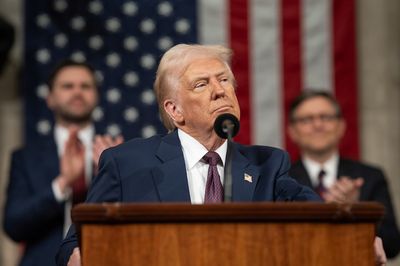
The document was published as part of an ongoing review of the Smithsonian commissioned by President Donald Trump last year. In March 2025, the president issued an executive order directing Vice President JD Vance to “remove improper ideology” from the Smithsonian and forbid spending on programmes that “degrade shared American values, divide Americans based on race”.
The new report stopped short of making recommendations but concluded that the NMAH “has become subject to institutional capture by a radical, activist ideology that is fundamentally opposed to telling the noble, honest story of the great country we know and love”.
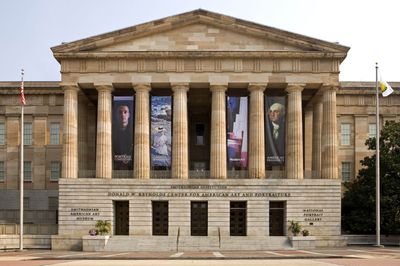
While the report was focused on the NMAH, the Smithsonian American Art Museum (SAAM) also briefly came under fire.
The dossier included a marked-up screenshot of a page accompanying a SAAM exhibition about race and American sculpture. It included suggested reading by scholars including WEB Du Bois and David Roediger, whom the museum explained “studied the many ways whiteness operates as a system of power that normalises and reproduces structures of inequality, exclusion and violence”. The report’s authors classified the excerpt as typical of “the anti-white sentiment across the Smithsonian”.
The largest professional organisation of US history scholars responded to the news on Monday with a statement characterising the White House report as “executive branch overreach”. The Organisation of American Historians emphasised that the Smithsonian Institution is an independent agency, and accused the current administration of trying to “coerce” the museum to shape its presentation of history to serve its political agenda.
“Pretending to call the report a defence of accuracy or a restoration of narrative balance is both disingenuous and dangerous for American democracy,” the organisation’s statement said.
The news from DC is the latest example of museums becoming a political battleground—a trend that extends beyond the United States.
Last month in Italy, a member of the scientific committee of the Uffizi Galleries, Tomaso Montanari, resigned in protest after the country’s culture minister appointed a new board of directors that included a member of far-right prime minister Giorgia Meloni’s government, alongside two other right-wing figures. In his resignation, Montanari called the move a “serious and unacceptable” political incursion that he found “incompatible with the belonging of the cultural heritage to the entire nation”.
Responding at the time, Minister of Culture Alessandro Giuli described his appointees as “impeccable technical figures” and branded Montanari’s move “decidedly disappointing” considering his “intellectual calibre”.
Meanwhile, the populist Reform UK party, which polling data at the time of publication indicates holds a slim voting intention lead over the incumbent Labour party, has adopted a similar rhetoric to the Trump administration.
The party’s manifesto for the elections in Wales earlier this year claimed that “public spaces are presenting divisive views of history”. Its promise to ensure “publicly funded institutions reflect the full breadth of Welsh history and culture rather than narrow or exclusionary narratives” prompted alarm from professionals within the museum and heritage sector who believe museums should operate independently from government influence.





A respected voice in contemporary art discourse.
Focusing on ambitious storytelling and insightful art-world commentary. Ocula Magazine publishes in-depth interviews, critical essays and timely analysis on the artists, exhibitions and ideas driving the global art world.
Learn more about Ocula Magazine
Showcasing the best of the art world.
Ocula partners with galleries from around the world to highlight their artists, artworks and exhibitions. Gallery membership is by application and invitation, with each member vetted by an independent panel.
Learn more about Ocula Membership
Specialises in the sale of major artworks.
Led by a team with deep ties to the world’s leading auction houses, galleries and collectors. Ocula’s advisory team offers bespoke services to high-net-worth clients from around the world who are looking to acquire the best of contemporary and modern art.
Learn more about our team and services