





Professional Standards Body to Investigate Alleged Police Assault of Ghanaian Artist Ibrahim Mahama

Mahama is best known for his politically charged open-air installations. In 2024 he enveloped London’s Barbican Centre in traditional Ghanaian robes. AP Photo/Alberto Pezzali.

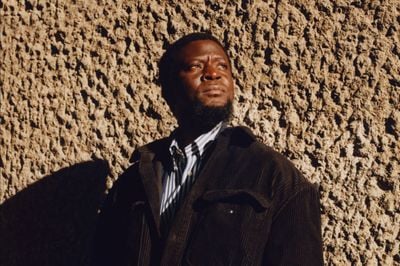
Ghana’s Police Professional Standards Bureau has opened an investigation into the alleged assault of artist Ibrahim Mahama by law enforcement officers in the city of Tamale last weekend.
The organisation, which investigates claims of corruption and misconduct among Ghana’s police force, has said its work will take place alongside the ongoing criminal investigation into the incident.
Mahama, who last year became the first African artist to top the ArtReview power list, has alleged he was the victim of a “brutal” beating at the hands of a special operations unit known as the “Black Maria”.
Speaking at a press conference earlier this week, the artist said that on Saturday, while returning from a mosque alongside members of his family, their Toyota became stuck in traffic. He alleged that officers asked them to move the vehicle and, when they could not, began to argue with his uncle before forcing entry to the car.
The artist claims he was then dragged from the vehicle and taken to a local police station, where officers manhandled and beat him, and attempted to delete footage of the incident from his phone. “They kept inflicting their pain on me,” he told local media.
Ghana Police Service did not respond to Ocula’s request for comment. However, in a statement issued on the day of the alleged assault, the organisation confirmed that regional officers were investigating the incident, but denied Mahama’s claims that the “Black Maria” was involved.
Following his release from the police station, Mahama received treatment in a private hospital in Tamale. He has since described injuries to his teeth, lips and ribs, while images circulating online show him wearing blood-stained clothes.
The artist said the incident has led him to “put his entire life on hold”, including cancelling lectures scheduled to take place this week at the Royal College of Art in London, the University of Cambridge, and the University of Oxford.
Mahama is now considering legal action. “We have to do it, because it’s not for me alone, but for everyone else,” he told local media. “If this could happen to me, someone well-known, what about people on the streets?”
The artist also pointed to past “brutalities” involving the “Black Maria” and called for the special operations unit to be disbanded.
Responding to the artist’s alleged assault, northern regional minister Ali Adolf Mboridiba condemned the actions of those involved. He said: “We cannot tolerate this kind of lawlessness in the region, and anyone found culpable will be dealt with.”
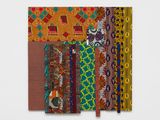
Mahama, who is represented by White Cube, is best known for his politically charged open-air installations, which he creates by stitching jute sacks together into tattered patchworks. The textiles are then draped over architectural structures.
In 2015, at the 56th Venice Biennale, he covered the walls of the Arsenale with these signature works, and 2019 he was selected to participate in Ghana’s first-ever pavilion at the exhibition. Earlier this year he received a diplomatic passport from Ghana’s ministry of foreign affairs, in recognition of his contributions to the country.
The artist is also recognised as the founder of the Tamale-based Savannah Centre for Contemporary Art (SCCA), and for his studio, Red Clay, which is also open to the public.
“It’s all about justice,” he said at a recent press conference. “The reason why I brought Red Clay to Tamale is that I wanted to see some kind of cultural justice.”








A respected voice in contemporary art discourse.
Focusing on ambitious storytelling and insightful art-world commentary. Ocula Magazine publishes in-depth interviews, critical essays and timely analysis on the artists, exhibitions and ideas driving the global art world.
Learn more about Ocula Magazine
Showcasing the best of the art world.
Ocula partners with galleries from around the world to highlight their artists, artworks and exhibitions. Gallery membership is by application and invitation, with each member vetted by an independent panel.
Learn more about Ocula Membership
Specialises in the sale of major artworks.
Led by a team with deep ties to the world’s leading auction houses, galleries and collectors. Ocula’s advisory team offers bespoke services to high-net-worth clients from around the world who are looking to acquire the best of contemporary and modern art.
Learn more about our team and services