






Among World Leaders in Davos, Marina Abramović Creates Space for Reflection
Curator Mirjam Varadinis hopes the artist’s latest project will create a ‘moment of break and pause’ against the backdrop of the World Economic Forum. Save to My OculaIn his address at The World Economic Forum (WEF) in Davos yesterday, U.S. president Donald Trump said: ‘The fact is, no nation or group of nations is in a position to be able to secure Greenland, other than the United States. We’re a great power. Much greater than people even understand.’
The non-governmental organisation’s annual forum has long attracted heads of state, thought leaders, and titans of business and technology. In recent days, however, as the world’s politicians and diplomats scrambled to respond to Trump’s threats to annex Greenland and to impose new trade tariffs on NATO allies, it has become the backdrop for extraordinary discussions on trade war and national sovereignty.
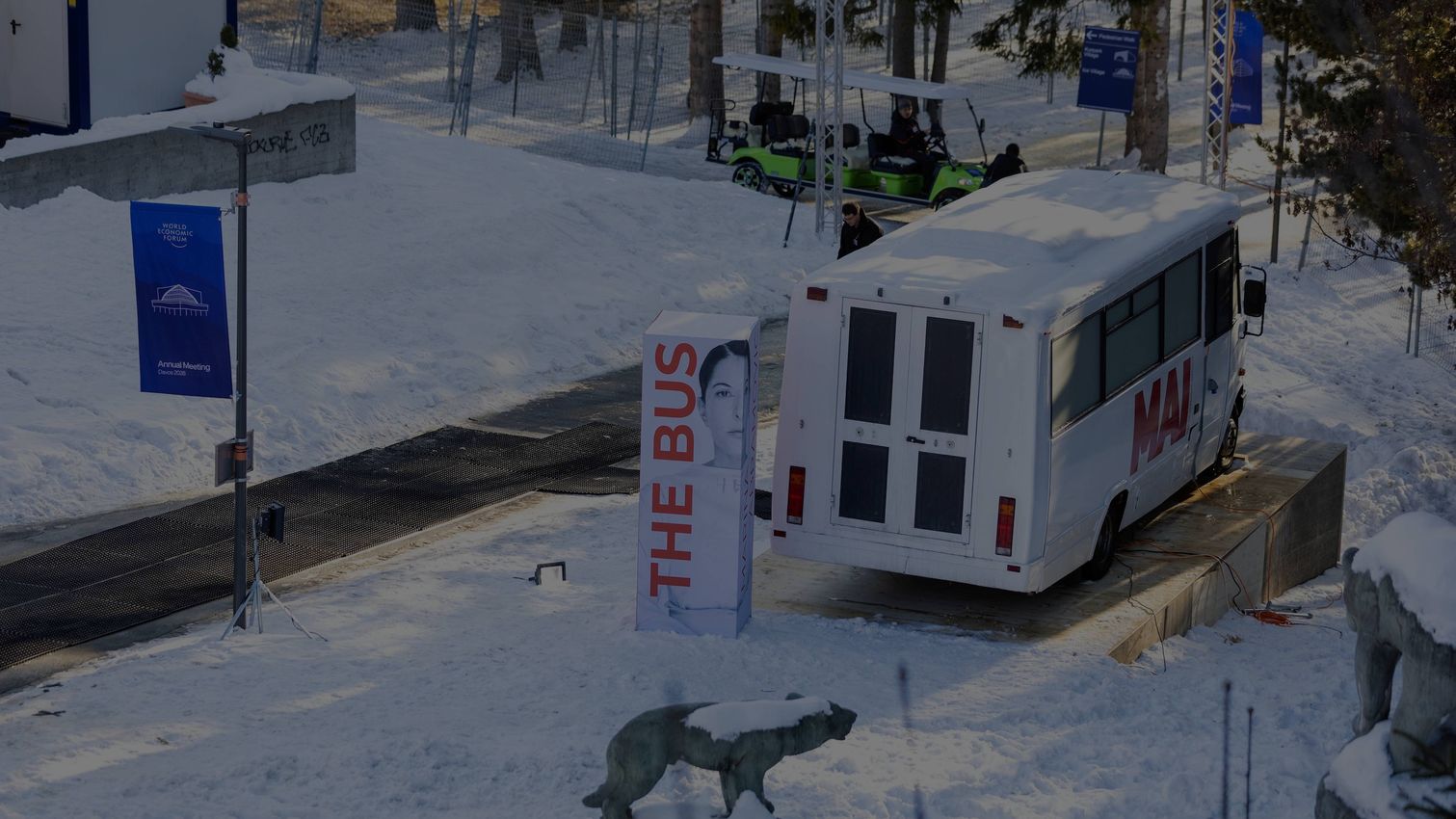
It’s in this setting that performance art veteran Marina Abramović unveiled her latest work, directly outside Davos’ central conference centre. THE BUS (2026), a school bus turned exhibition space on wheels, is part mobile sculpture, part meditation capsule: an experiential project that invites people to step inside, abandon their digital devices, and embark on a reflective inner journey towards unity and change.
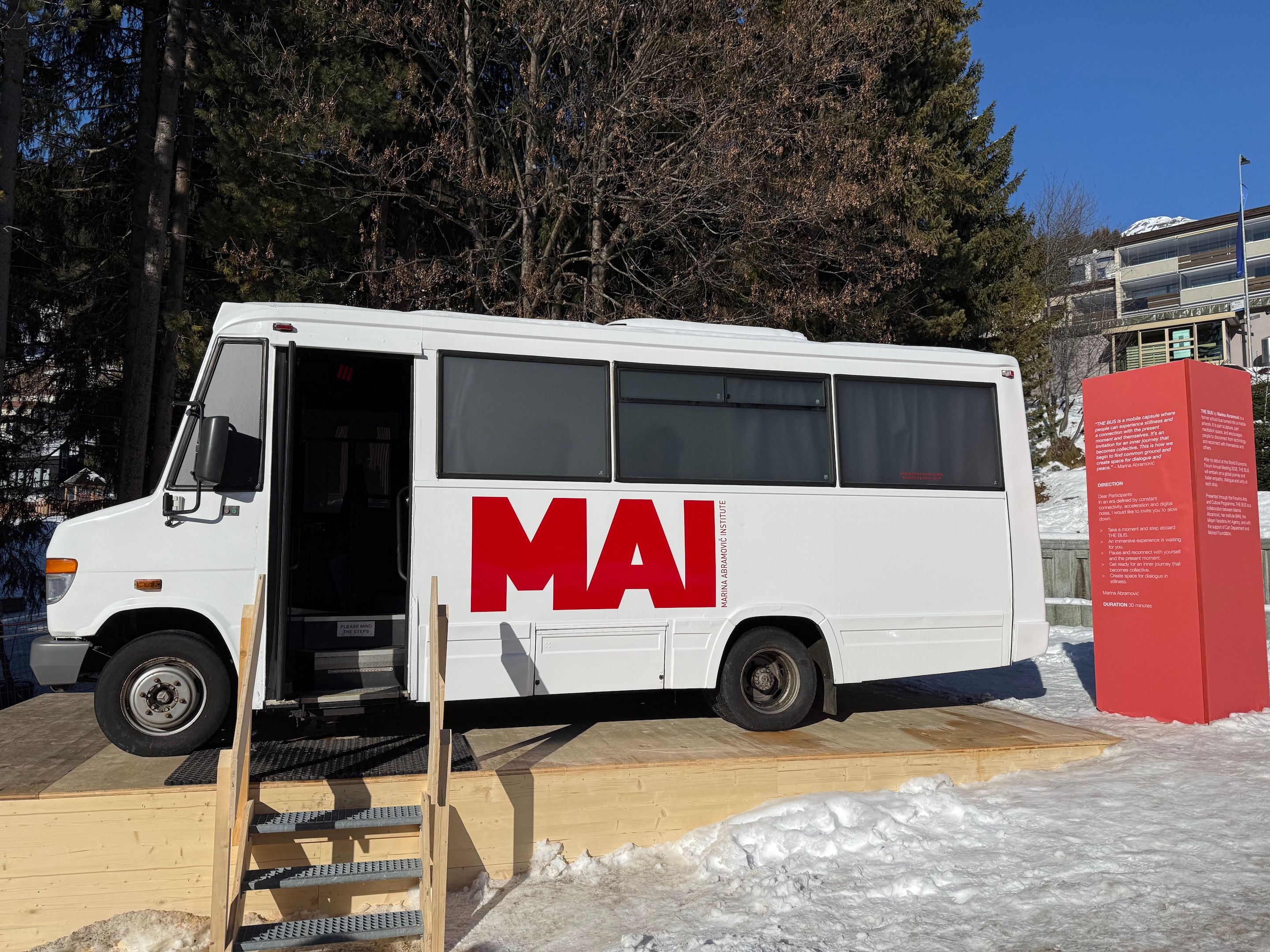
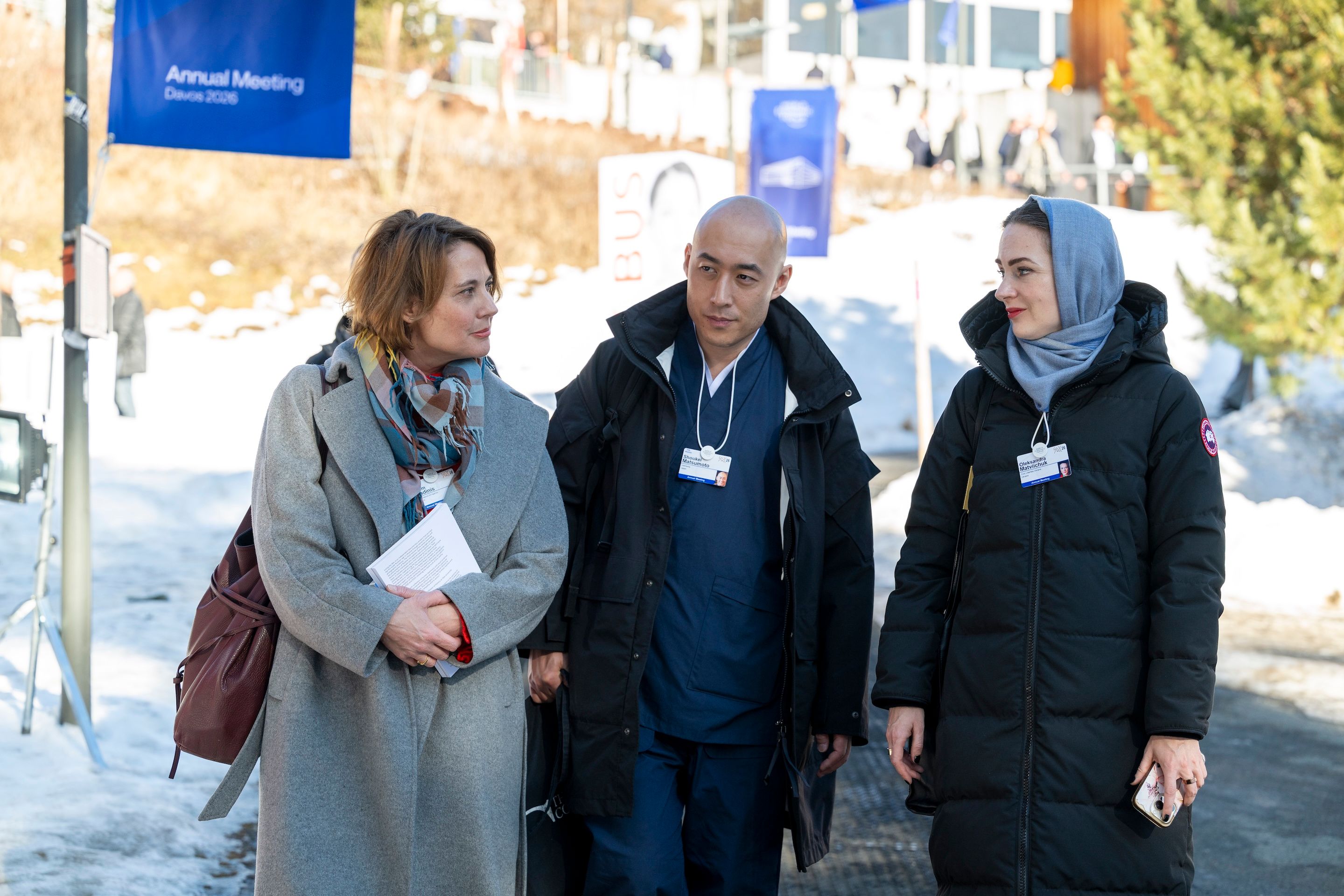
The project’s curator Mirjam Varadinis, who collaborated with Abramović on the work, acknowledges that it has become even more relevant than either of them could have imagined. Speaking to Ocula from Davos, Varadinis explains: ‘I would hope that THE BUS is creating a space for remembering or refining common grounds. Through this collective experience, decision makers can sit together in silence, and that silence can open up a space of reflection, but also of empathy.’
Varadinis is realistic about which world or business leaders may actually find time to participate in Abramović’s work amid their busy schedules, which see them dashing between several hundred of the think tank’s 30-minute sessions. For THE BUS, however, they would only need to clear one slot, with the encounter specifically designed to last precisely half an hour.
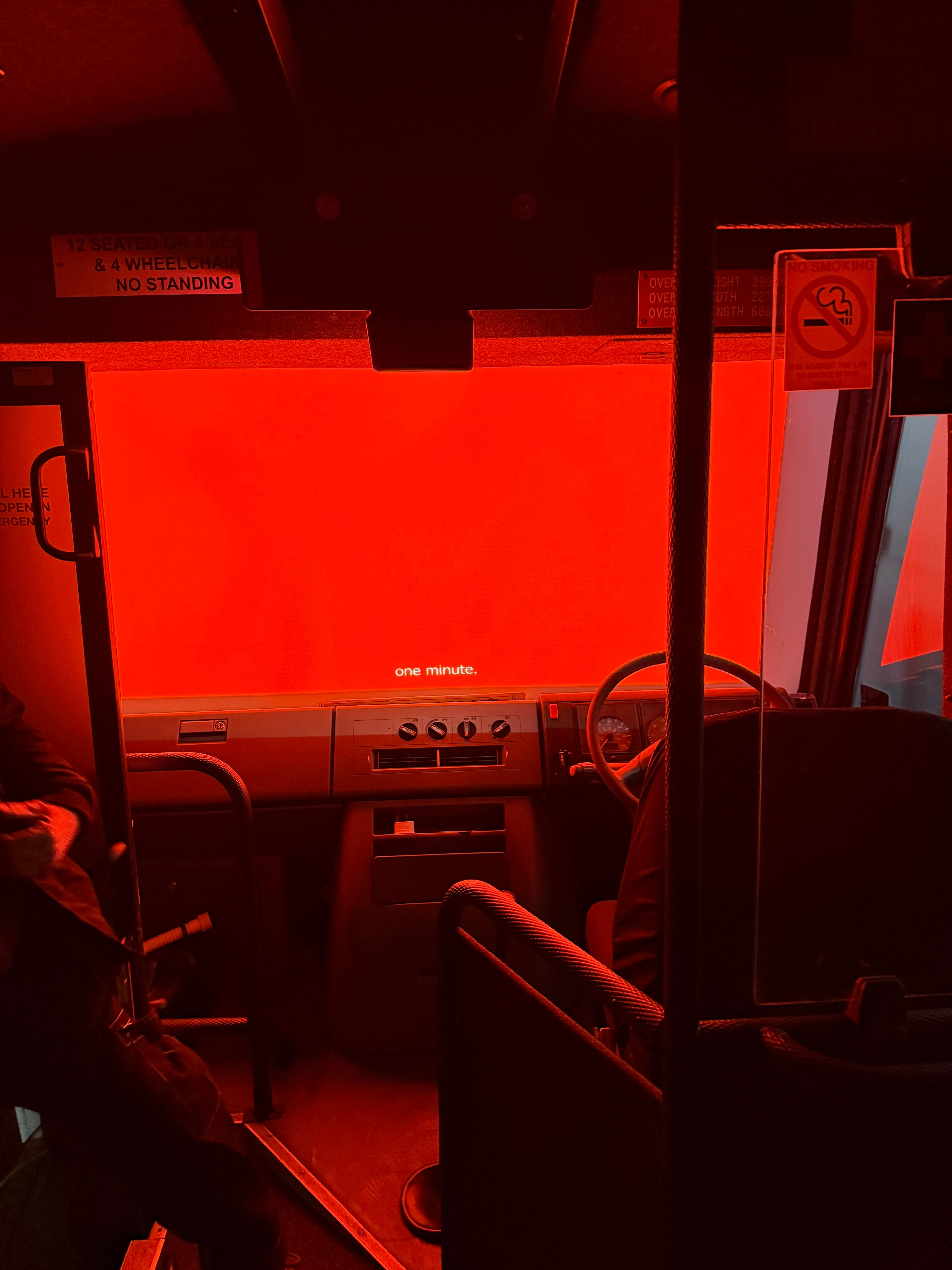
On what happens once participants enter THE BUS and surrender their devices, Varadinis is intentionally vague. She does, however, reveal that the installation contains 12 seats and, in place of a front window, a screen playing an artist-led guided session of the ‘Abramović Method’—a practice of being present in both time and space.
The notion of time has always been central to Abramović’s work, most clearly in her durational performances. With THE BUS, she highlights how our connection to time has been obscured by the fast-paced rhythm of a conflict-ridden era, and asks us to reconnect with its passing. Varadinis says the impact of this process can be seen on the faces of those who experience it.
‘People say they feel a sensation of cleansing, really reconnecting with themselves, with the present moment,’ she says. ‘It has its transformative potential for everybody that is participating. It’s creating this moment of break and pause, here in this very hectic context.’
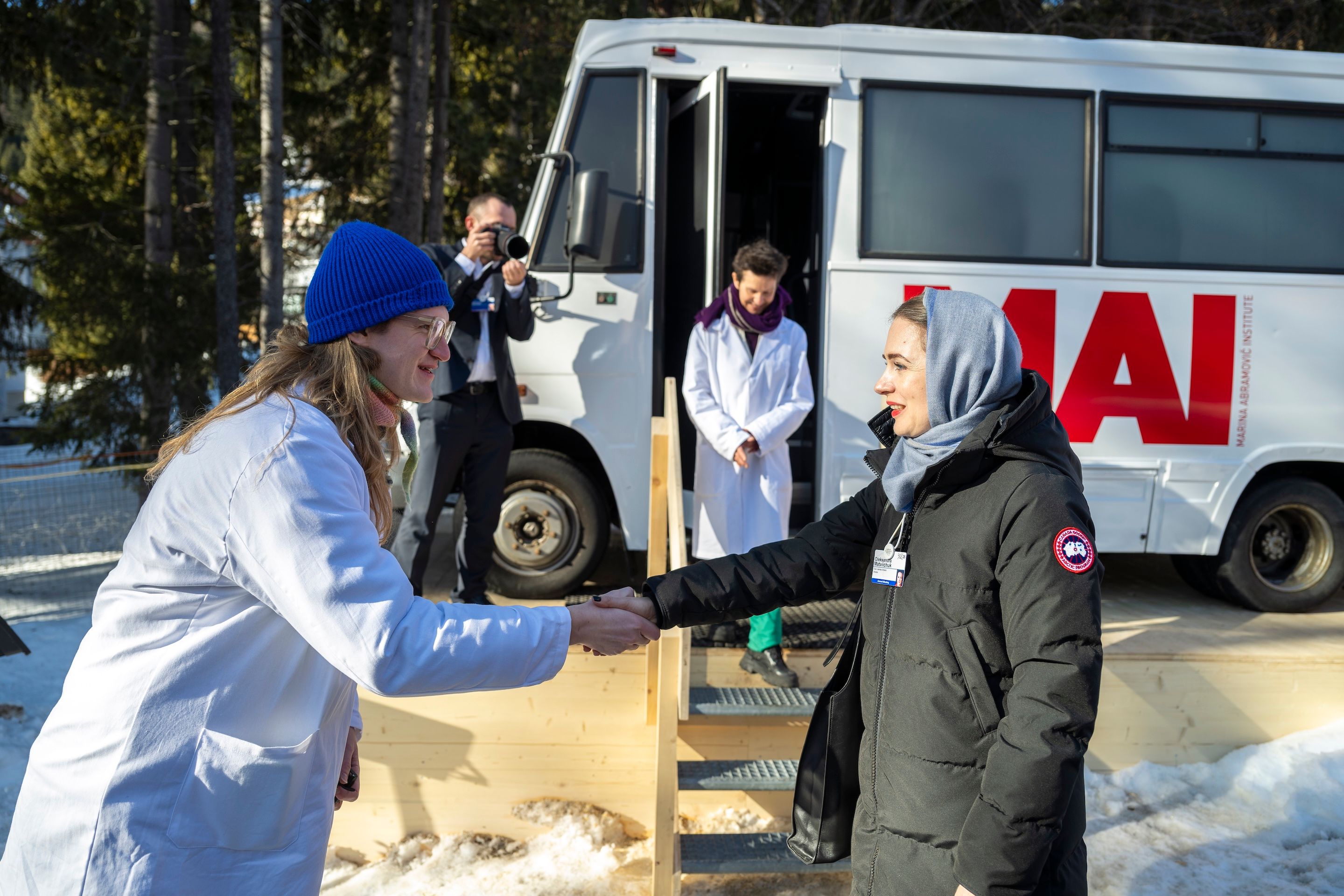
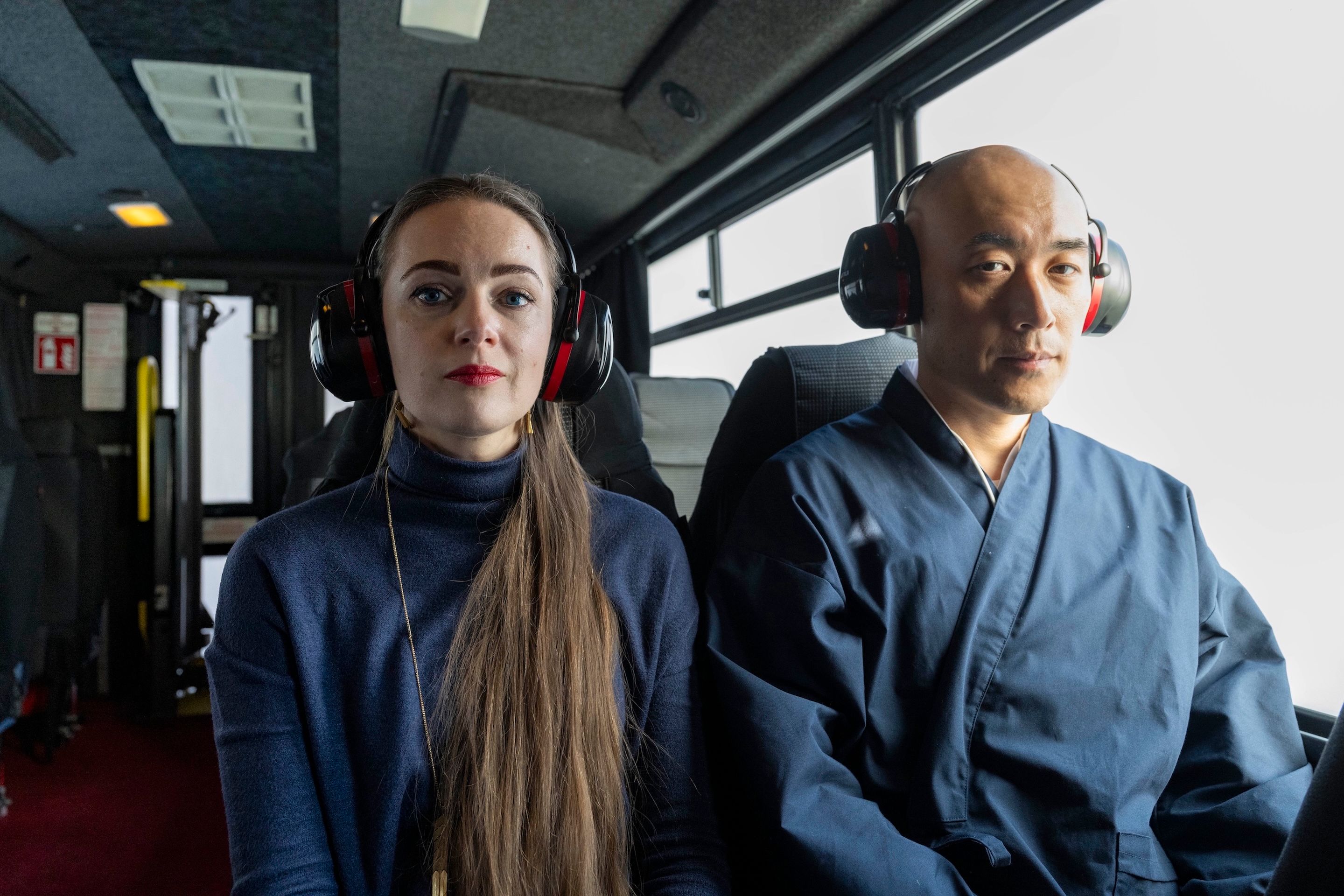
Among the work’s high-profile participants so far are Oleksandra Matviichuk, a Ukrainian human rights defender and head of the Center for Civil Liberties, which was awarded the Nobel Peace Prize in 2022. Her participation came just days after president Trump declared that, having not been awarded the very same prize, he no longer feels obligated to ‘think purely of peace’. In the coming days THE BUS will hit the road to Zurich, where it will be used by researchers exploring non-violent roads to peace, and then to Geneva in a collaboration with the United Nations.
During his address in Switzerland yesterday, the U.S. commander-in-chief confirmed that he will not use force in his plans to annex Greenland, saying that he would instead seek ‘immediate negotiations’ to discuss its acquisition. He has since claimed to have reached ‘the framework of a future deal’ on the nation’s future, although the details of this remain hazy. Clearly, such problems are too big for any one piece of art to solve—but, in such divisive times, is there a chance THE BUS could make an impact?
‘Of course, you can’t expect miracles,’ Varadinis says. ‘But imagine, in a dream scenario, if a few hundred people participate and each of them carries a tiny shift of mindset and with them. The work is really wanting, trying to have an impact on people, and then ultimately, on the world we live in.’ —[O]
Main image: Marina Abramović, THE BUS (2026) at Davos. Photo: © 2026 WEF/Cheeney.










A respected voice in contemporary art discourse.
Focusing on ambitious storytelling and insightful art-world commentary. Ocula Magazine publishes in-depth interviews, critical essays and timely analysis on the artists, exhibitions and ideas driving the global art world.
Learn more about Ocula Magazine
Showcasing the best of the art world.
Ocula partners with galleries from around the world to highlight their artists, artworks and exhibitions. Gallery membership is by application and invitation, with each member vetted by an independent panel.
Learn more about Ocula Membership
Specialises in the sale of major artworks.
Led by a team with deep ties to the world’s leading auction houses, galleries and collectors. Ocula’s advisory team offers bespoke services to high-net-worth clients from around the world who are looking to acquire the best of contemporary and modern art.
Learn more about our team and services