The art world in focus
Subscribe to our newsletter for news and insights on artists, galleries and exhibitions.


On Tuesday, art logistics company Cadogan Tate and recruitment agency Sophie Macpherson Ltd. released the Art Technicians Talent Report 2025, looking to bring more visibility and analysis to an oft-underrepresented sector of the art industry.
The report presents a positive outlook on art handling careers, noting clear progression, stabilising pay structures, and even gender pay parity. It describes art handlers—also called technicians, preparators, or porters—as ‘the hidden infrastructure’ of galleries, museums, auction houses and artist studios, managing ‘safety, movement, and installation’.
However, issues around a lack of employer-funded training, diversity gaps, and frustration around visibility and recognition persist.
For art handlers across the Tate museum network, pay dissatisfaction has become the primary concern. A seven-day strike led by the Public and Commercial Services Union, which represents them and other staff, began on Wednesday.



A member of Tate’s art handling team highlighted to Ocula that wages are ‘consistently lower’ than the sector average, causing staff retention issues, despite art handling being a ‘critical’ role for both collection care and exhibition installation.
A London Art Handling Technician role advertised by Tate in September listed a full-time equivalent of £27,851, below the London Living Wage equivalent at the time. The talent report, however, lists the basic U.K. median salaries at £30–35k. A casual role listed in September held a salary of £17.19/hour, slightly above the report’s median hourly rate of £15–17/hour. Both posts called for art handling experience and technical skills.
Around a third of Cadogan Tate and Sophie Macpherson Ltd.’s survey respondents reported taking on additional work to supplement their income.
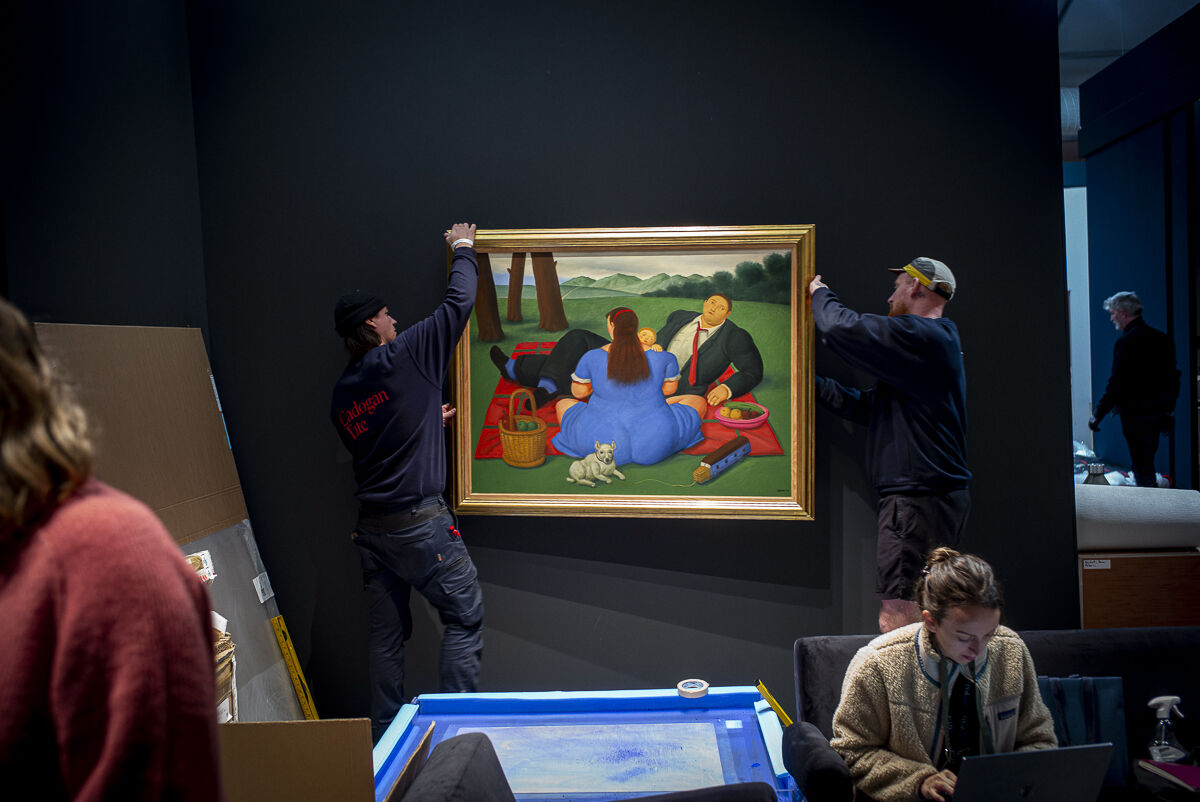
Many art handlers are also artists themselves, with 36 percent of respondents holding a Fine Art degree.
For art handler Michael Henley, steady freelance work has allowed him the flexibility for an active practice, even enjoying a solo exhibition now at London’s Muse Gallery.
But Henley also highlights ‘opportunities and pay’ as major challenges, as galleries manage installation in-house and institutions reduce the frequency of exhibitions.
Lia Nelissen of international art handling company Mtec hopes that more people will ‘recognise just how skilled and multifaceted’ art handling is.
‘It’s not simply moving objects from one place to another.’ she told Ocula. ‘Art handlers are often the last people to touch a piece before it’s displayed to the world, and that responsibility is taken incredibly seriously.’ —[O]




A respected voice in contemporary art discourse.
Focusing on ambitious storytelling and insightful art-world commentary. Ocula Magazine publishes in-depth interviews, critical essays and timely analysis on the artists, exhibitions and ideas driving the global art world.
Learn more about Ocula Magazine
Showcasing the best of the art world.
Ocula partners with galleries from around the world to highlight their artists, artworks and exhibitions. Gallery membership is by application and invitation, with each member vetted by an independent panel.
Learn more about Ocula Membership
Specialises in the sale of major artworks.
Led by a team with deep ties to the world’s leading auction houses, galleries and collectors. Ocula’s advisory team offers bespoke services to high-net-worth clients from around the world who are looking to acquire the best of contemporary and modern art.
Learn more about our team and services