The art world in focus
Subscribe to our newsletter for news and insights on artists, galleries and exhibitions.

The gallerist has been remembered for his “leadership, wisdom, and generosity”. Photo: Valentine Willie, via Instagram
Valentine Willie, the Malaysian gallerist, curator and museum director who helped to shape contemporary art across Southeast Asia from the 1990s onwards, has died in Kuala Lumpur at the age of 71.
Willie’s death was announced yesterday by The KRA Group, the public affairs consultancy where he served as executive director. The organisation said he died peacefully, and would be remembered for his “leadership, wisdom, and generosity”.
Born in Sabah, on the northern tip of Borneo, Willie left for boarding school in Bristol in the south west of England aged 14. He studied law and qualified in the United Kingdom before returning to Malaysia to practise in Sabah for two decades.
While working as a lawyer, he began collecting contemporary art and building relationships with artists across Malaysia and the wider region—connections that gradually came to define his working life.
In 1996, together with former Sotheby’s Hong Kong director Mee-Seen Loong, he founded Valentine Willie Fine Art (VWFA) in the Malaysian capital.
What began as a temporary break from legal practice became a 17-year operation with spaces in Kuala Lumpur, Singapore, Yogyakarta and Manila. The gallery functioned beyond a commercial site, growing into a circulating platform for exhibitions and introductions between artists from different countries.
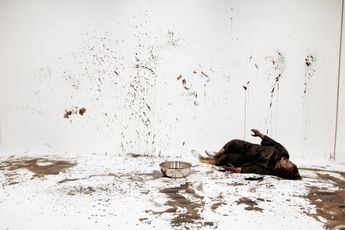
Willie was often on the move, visiting studios, bringing artists to new cities, and putting practitioners in contact with one another without waiting for institutional frameworks to catch up. Artists such as Tang Da Wu and Melati Suryodarmo first appeared before Malaysian audiences through VWFA’s programme, as did a wider generation of Southeast Asian artists working outside national categories.
Speaking in 2015, he explained this consideration of the wider region, saying: “We are not an island. We need to look at our neighbours and understand our neighbours. We need to look at ourselves through other mirrors and perspectives.”
One early example of his curatorial work was Of Migrants and Rubber Trees (1996), presented at the National Art Gallery in Kuala Lumpur. The exhibition focused on migration, labour and colonial extraction in the work of Wong Hoy Cheong, a key figure in Malaysian contemporary art, marking a turn in his practice toward more explicit historical and political engagement.
In 2001, he organised Faith + the City, a landmark exhibition of contemporary Filipino art that travelled from Singapore to Kuala Lumpur, Penang, Bangkok, and Manila. Instead of remaining anchored in a single institution, the presentation was structured as a sequence of relocations, shifting context as it moved between cities.
After the gallery’s closure in 2013, Willie continued to work across exhibitions and institutional projects in Kuala Lumpur and beyond. He served as creative director of Ilham Gallery between 2015–2020, where he oversaw exhibitions and programming that positioned the institution within a wider conversation on modern and contemporary art in Malaysia.
In an Instagram post, the gallery wrote: “Valentine was a force of nature, who through his VWFA galleries, left an indelible impression on the visual arts scenes in Malaysia and Southeast Asia.”
Earlier this year, the VWFA Archive was launched. It brings together exhibition records, correspondence, installation documentation and project material from Kuala Lumpur, Singapore, Yogyakarta and Manila, spanning three decades of practices in which Willie appears throughout as a recurring presence.
A respected voice in contemporary art discourse.
Focusing on ambitious storytelling and insightful art-world commentary. Ocula Magazine publishes in-depth interviews, critical essays and timely analysis on the artists, exhibitions and ideas driving the global art world.
Learn more about Ocula Magazine
Showcasing the best of the art world.
Ocula partners with galleries from around the world to highlight their artists, artworks and exhibitions. Gallery membership is by application and invitation, with each member vetted by an independent panel.
Learn more about Ocula Membership
Specialises in the sale of major artworks.
Led by a team with deep ties to the world’s leading auction houses, galleries and collectors. Ocula’s advisory team offers bespoke services to high-net-worth clients from around the world who are looking to acquire the best of contemporary and modern art.
Learn more about our team and services