The art world in focus
Subscribe to our newsletter for news and insights on artists, galleries and exhibitions.
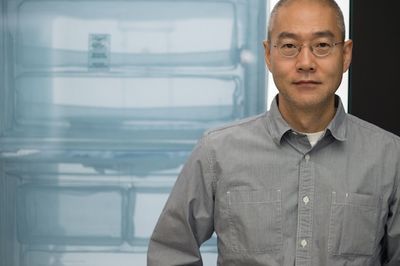
Do Ho Suh. Courtesy the artist.
Do Ho Suh has a lot going on. When we meet in Hong Kong, he has just arrived from Korea, where the National Museum of Modern and Contemporary Art in Seoul has opened his most ambitious fabric installation to date, Home Within Home Within Home Within Home Within Home (2013–14), a 1:1 translucent reconstruction of two of his former homes: his childhood hanok in Seoul, suspended inside a full-scale replica of the three-storey townhouse in Providence, Rhode Island, where he first lived in the United States.
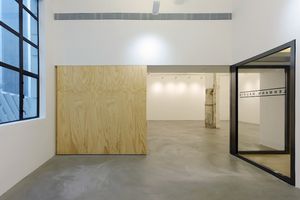
IIf that project turns the museum’s Seoul Box into a nested architecture of memory and history, the exhibition that brings us together is more compact in scale but just as intimate in its attention to lived space. On the morning of our conversation, his solo exhibition Specimen Series (14 November 2013–25 January 2014) opens at Lehmann Maupin’s Hong Kong gallery, timed to coincide with the MMCA installation and extending his long-standing exploration of home, displacement, and how architecture holds memory.

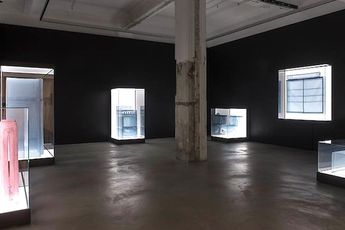
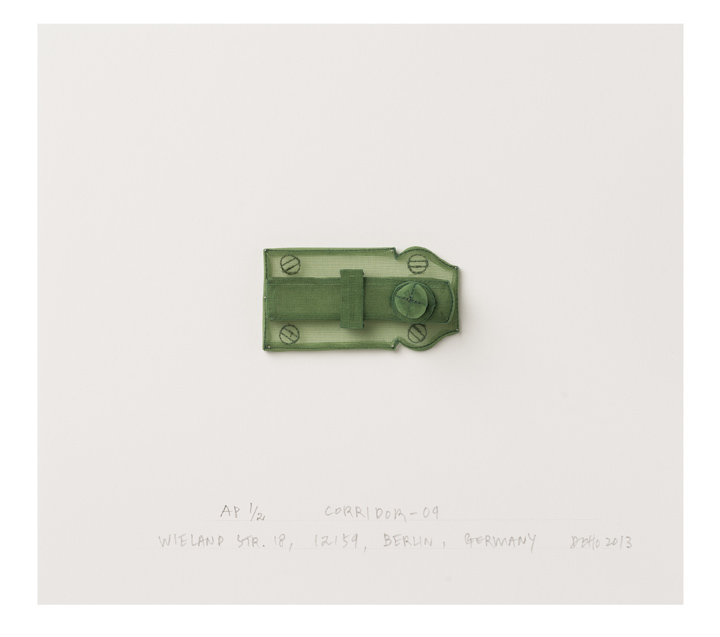
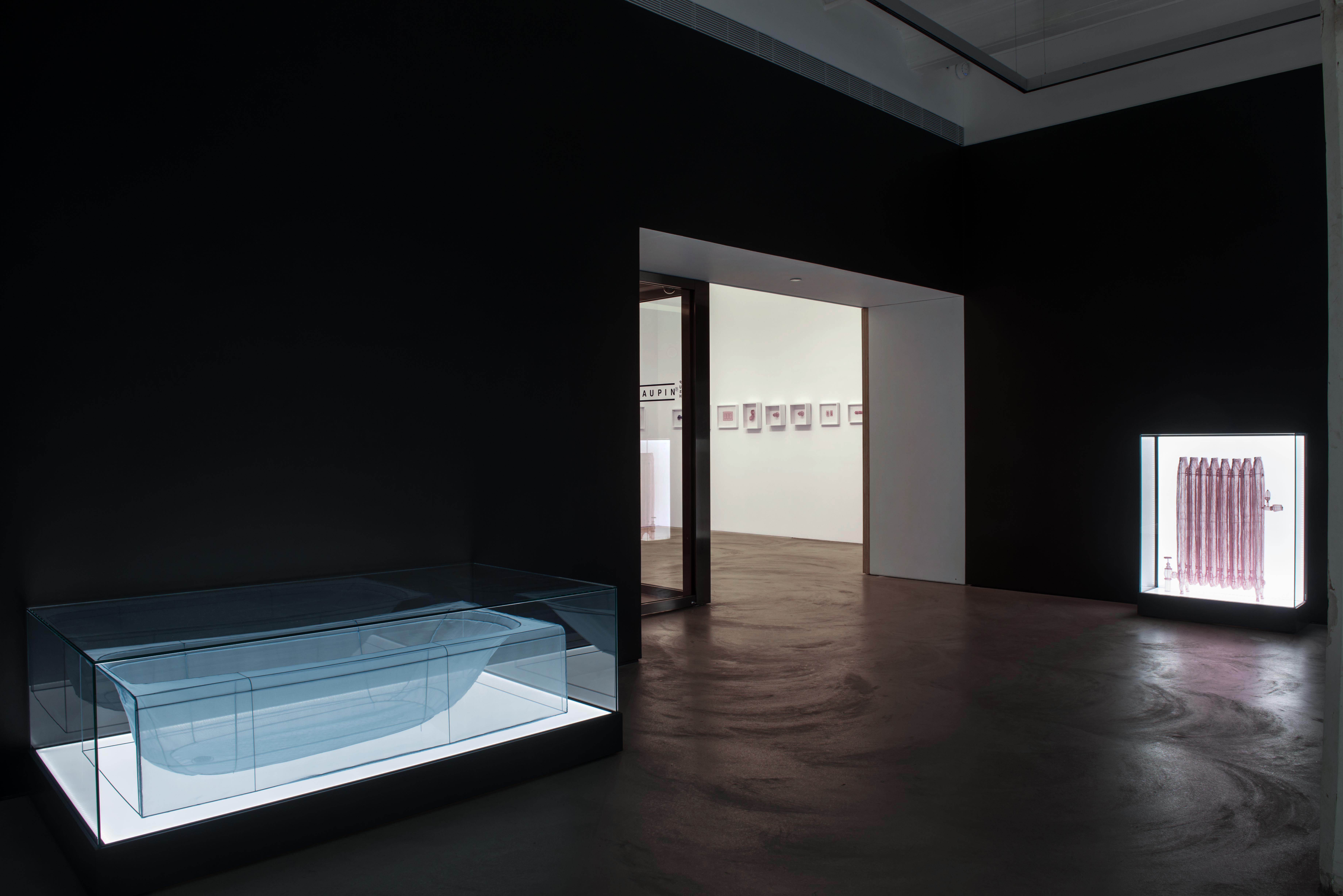
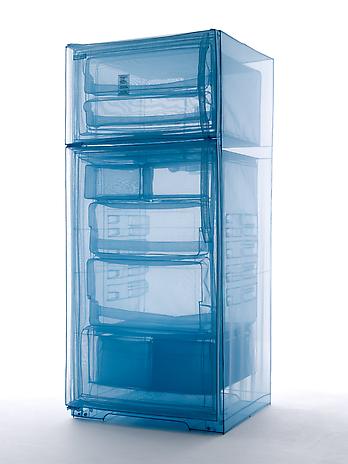
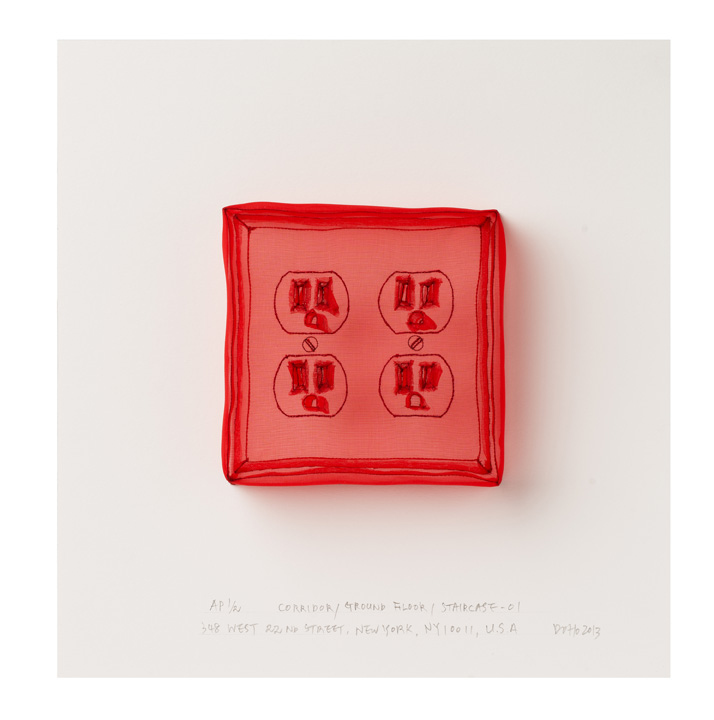
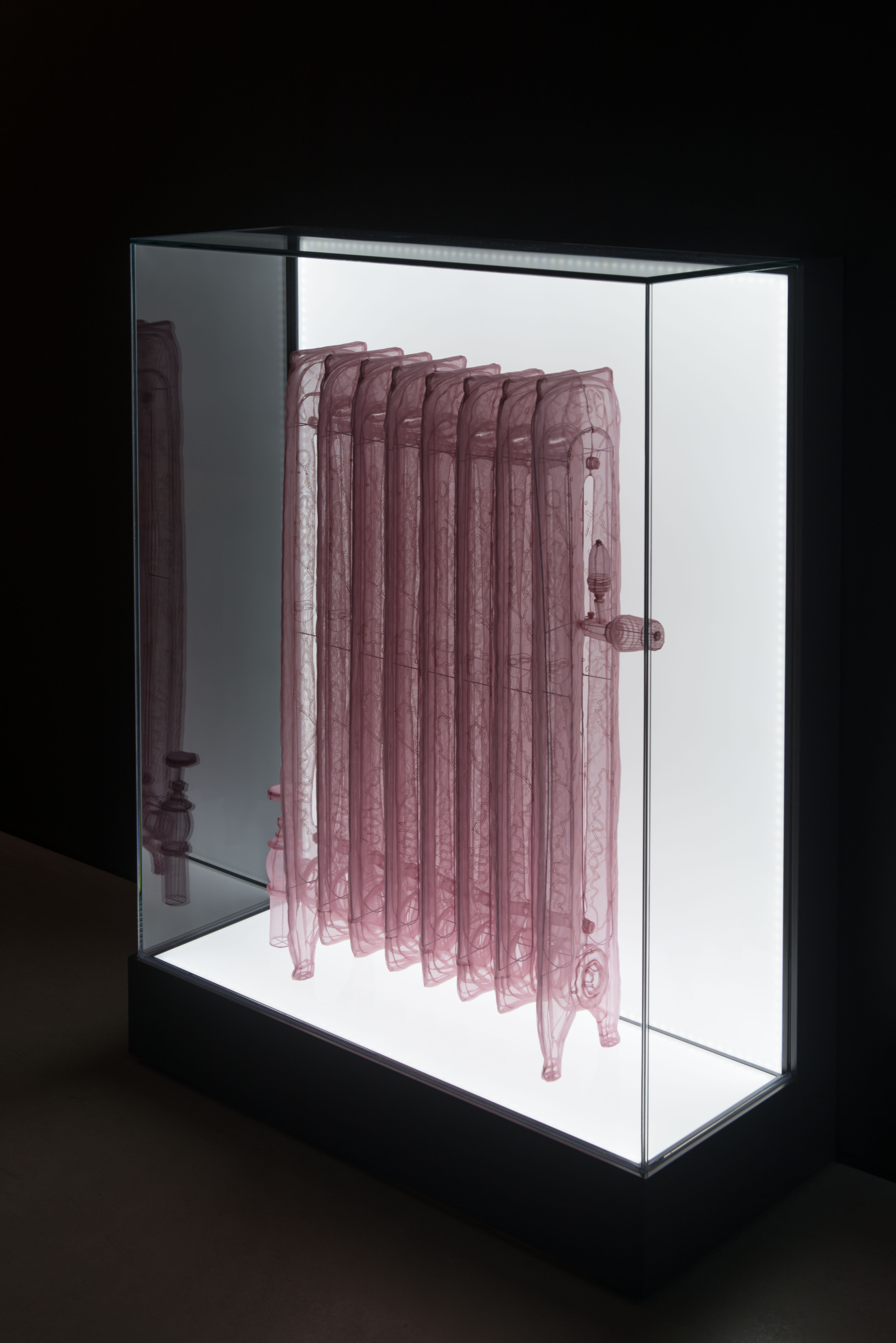
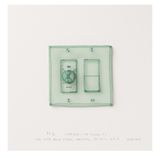
For Specimen Series, Suh has translated the fixtures and fittings of his former apartments—light switches, door chains, radiators, a bathtub, refrigerator, stove and more—into to-scale sculptures in coloured polyester, the diaphanous medium for which he is best known. Installed as if the gallery has been split in two, with dimly lit vitrines on one side and a bright field of small framed works on the other, these objects hover between model and relic, simultaneously fragmenting his larger fabric architectures and crystallising their details. Each item is given a title referencing the home address to which the object relates; ’Specimen Series: 348 West 22nd Street, APT, New York, NY 10011. USA, Corridor/ First Floor 4’, for example, is written below a light switch. There is an acute contrast between the intimacy of the domestic objects shared, and their careful scientific-like cataloguing and presentation. The viewer is both invited to step into Suh’s personal space, and yet kept at arm’s length. The concept of home becomes both a topic for subjective contemplation, and an idea to explore objectively.
DHS: When Hans Ulrich asked me that question I was caught off-guard. It is such a big question. And I don’t think I had one epiphany moment. I think there have been several moments. Moving from painting to sculpture was certainly one of the most important moments, but when I look back over the last couple of decades I think some important moments happened even before this. My work and what it has become can be traced back much earlier. It can be traced back to Korea and to the years before I left Korea for the United States.
DHS: Well I think my interest in looking at how a work can be transported and the issue of site-specificity started in Korea. An interesting thing is that nobody—neither Korean nor American art historians or critics—ever ask me about the work I did before I moved to the US.
DHS: Yes. The seed for my work was planted when in Korea. I had started to make pieces that were transportable. I was thinking already about site-specificity and about context and I was questioning modernism without really knowing it. I was a student of traditional painting, so over that time I didn’t really know what was going on in terms of discourse outside of Korea. My investigation came out of my own necessity, but was aligned with what was going on outside of Korea. The works I was making at the very beginning, before I moved to the US, were questioning the notion of site-specificity.
DHS: My paintings almost literally walked out of the wall. They were almost like freestanding pieces—almost like sculpture, but with images on the surface.
I was observing the form of scroll painting and screen painting in Asian art. The main difference between scroll painting versus canvas painting in the western tradition is that the scroll painting is meant to be transported. You are meant to roll the work and then when you show the painting you unroll it. In comparison, the western painting is meant to be framed and hung on a wall.
What was significant for me when I look back at this period was the realisation that the painting didn’t have to be on the wall, and that it could be moved. This was a significant departure. So I had that epiphany moment when I was in Korea.
Asian traditional painting allows for one picture to work as one piece or as several pieces. You can create one big painting by putting separate pieces together or you can have different paintings. You can fragment the work. I was also interested in this notion.
I made four large bodies of work that could work as one piece, but equally they could be seen as individual works. These works were freestanding paintings, which I suppose were really sculpture. Each facet had images and the images were fragmented. It created a kind of hypertext, and the audience could create their own image from the different fragments. It was impossible to see the entire picture because the work was so big and the painting was not only on one side. You had to walk around the work to experience it.
DHS: Yes that is a very good example. The piece comes down and becomes the floor and the audience is encouraged to walk on the floor. That is actually a very important aspect of my work. It was about challenging the notion of the modern sculpture—but I can talk about that later.
In relation to my work in Korea, the idea was that the sculpture actually stood out from the wall, and the audience’s movement activated it. The relationship between the piece and the audience is important. The audience in painting is meant to have control insofar as the painting should be contemplated from a distance, but in this work, the audience cannot see the entire work. It was about turning the relationship between the audience and artwork upside down.
DHS: Yes, I made another work where I blew up hundreds of balloons in my studio just outside of Seoul. It was a piece for a group exhibition in the centre of Seoul. My idea was to transport the breath of the artist—being the air that was captured in the balloon. These balloons were then put into a much large plastic bag, half of which was painted opaque so there was a play between transparency and opacity.
I hired a truck to transport the balloons. The work was malleable. I had two rooms in which to show the work and it was a large sack of balloons and the piece started from one gallery and followed the wall and moved into the other room. So I occupied two rooms, and again the viewer couldn’t see the work. This work was both about fragmentation, making it impossible to contemplate as a whole, and it was also about transporting space.
And that was probably the last work I did before I moved to the States.
DHS: Yes, exactly. Once I moved, my work started to emphasise the aspect of my displacement. I was also exposed to new materials, new ideas, and new techniques—this was before New York, when I was studying at Rhode Island. I started to absorb different thoughts and theories. So that was nurturing me in order to move forward. My ideas that I had in Korea were probably immature and the study in the US gave the impetus to what came afterwards.
DHS: In the last few years I have made a few paintings. Technically they are almost identical to the drawings that I have made, it’s just that I did them on a canvas. With a canvas you have a certain amount of freedom to make a mess. Paper is like a one-shot deal right? The painting you can get messy. I was trained as a painter and I was surprised at how quickly it came back.
DHS: The reason I went into sculpture was because of the messiness of the painting. The sculpture involves a more structured process, and by nature you have to be more organised. You are dealing with expensive materials and if you, for example, cut the metal incorrectly—well that’s it. In contrast, with a canvas you can scrape off the painting and re-paint. So the approach is so different.
I do like being organised. With painting, there are too many variables.
DHS: Yes. Well my next show at Lehmann Maupin in New York is a drawing show. I may have one big painting in the show. The way I am going to make that painting is going to be the same way I do the drawings.
DHS: I made a series of drawings on paper with an airbrush and the medium was ink and lacquer paint. I am going to do that on the canvas and create a painting, but it will be messier. I was relieved that I am able to experience the possibility of being messy. For the last couple of years I have wanted to do that.
It is funny you mentioned this. Yesterday in Seoul I met up with a friend. He is an architect and a professor. He is older than me. He also had a painting exhibition. He showed me his work yesterday and I had this absolute urge to make paintings. So I think that is a good sign.
DHS: Yes by far that is probably the most complex piece I have ever made—certainly in terms of scale and technicality.
I feel very confident I have pushed the limitation of fabric and the manner of making the work to its ultimate level. I feel I can now make anything. I think if someone wanted me to make St Paul’s Cathedral in London, with enough time and money, I could do it. So I want to explore something else. That doesn’t mean I won’t make the fabric architecture anymore. But possibly I will be more interested in scale.
I am interested in exploring the more intimate process of painting. But hey, I only just started this thinking in the last couple of days!
DHS: No!
DHS: The full title of the work is Home within Home within Home within Home within Home. The title references five homes, but actually there are two homes in the piece. One home is my parent’s home in Korea. It is the smallest one. It is the home I grew up in and when I go to Seoul that is where I stay. And then there is the larger house—the one that encapsulates the smaller home within it—and this larger home is my first American home, which I lived in when I went into the US. Both homes are made of fabric and are on 1:1 scale. The Korean house is suspended in the air and the American house is freestanding and grounded—so you can enter into the house and you can wonder around it.
The other homes referenced in the title include the Museum itself and also the site of the Museum. The site of the Museum is a historical site and it used to be a part of the Palace complex. During the Japanese occupation, the Japanese systematically tried to destroy the Korean kingdom, including the Palace. So part of the history of the complex is that after the original structure was destroyed following the Japanese occupation, they built a modern hospital on the site. But then in the 60s the hospital became a military hospital and next to it was the military intelligence headquarters, which symbolised the dictatorship during the 70s and 80s. These buildings were then turned over for the use of the Museum and during the construction of the Museum when they excavated the ground they found a lot of ruins. They had to change the design of the Museum because of that and they also recreated one of the Palace buildings. So there are many different layers.
DHS: You are right. I think it was very much an attempt to blend the boundaries and then actually help the residents and visitors to understand and question the existence of the boundary and the blurring of that boundary. The work raises questions that include: Is there a boundary? What is a boundary? Where is the boundary?
By inserting the truck into these physical spaces, it throws up a few things.
DHS: Right. The tricky thing is that the lots where the Hotel is parked do not belong to the individuals living next door—the city owns this space, but psychologically the neighbours feel it is their land. So to park the Hotel, we get the permission of the neighbours; but it actually isn’t an official permission that we are required to get from them. We have to negotiate with them. This type of negotiation is a balancing act, because it raises the question of where the boundaries are. Once they accept the Hotel within the boundary, then the boundary and the gap disappears. But what is really interesting is what happens to the residents after the Hotel moves on—because they have not thought about that space before and whether they actually own it or have control over it.
DHS: Anybody. You have to go through a normal reservation process. We created a whole system around this.
DHS: Yes, I was interested in the Hotel in this way. A hotel creates an interesting space. I have spent one third of my life in hotel rooms. It raises a question as to what is public space and what is private space? A hotel is a completely public space, in a way. Think about how many people slept on the same bed. No matter how expensive it is, a hotel room is a shared space that becomes a private space.
The Folly Project is a public art project, but someone pointed out to me the private nature of the Hotel. It was the woman who was the first person to sleep in the Hotel and I had a chance to talk to her at the opening and she said: ‘Yes this is a public art piece, but when I enter it, it becomes private’. There are many Folly Projects, but for an individual involved in this particular Hotel project, it will become very personal—if they sleep there they will probably spend eight hours at least with the work. The other projects you will spend a very short time with—the work therefore becomes very personal.
DHS: I have separated out the various pieces that have appeared in the bigger fabric works, and by separating them out, you start to become more aware of the details within the individual elements of the bigger works. If, for example, you look at the radiator or refrigerator or stove, each item becomes its own architectural structure. It creates a small universe within the bigger piece. It is interesting that the contextualised elements from the bigger installation pieces become works in themselves.
Not directly, but obviously when I was conceiving this exhibition I was able to conceive this idea of placing just the appliances into the space because the square footage of the gallery is quite similar to my apartment in New York, so without me building the walls I can create the intimacy of a small New York apartment. The scale works here. —[O]



A respected voice in contemporary art discourse.
Focusing on ambitious storytelling and insightful art-world commentary. Ocula Magazine publishes in-depth interviews, critical essays and timely analysis on the artists, exhibitions and ideas driving the global art world.
Learn more about Ocula Magazine
Showcasing the best of the art world.
Ocula partners with galleries from around the world to highlight their artists, artworks and exhibitions. Gallery membership is by application and invitation, with each member vetted by an independent panel.
Learn more about Ocula Membership
Specialises in the sale of major artworks.
Led by a team with deep ties to the world’s leading auction houses, galleries and collectors. Ocula’s advisory team offers bespoke services to high-net-worth clients from around the world who are looking to acquire the best of contemporary and modern art.
Learn more about our team and services