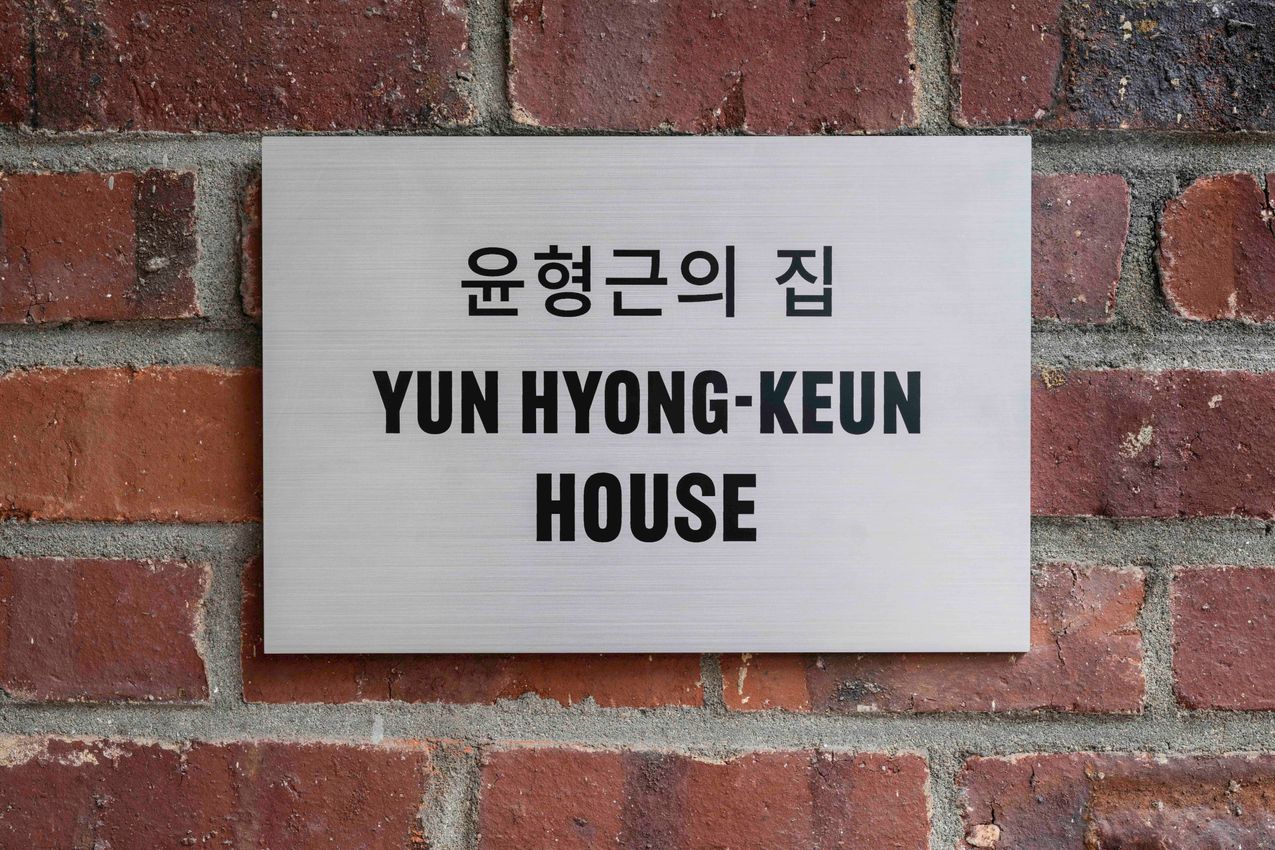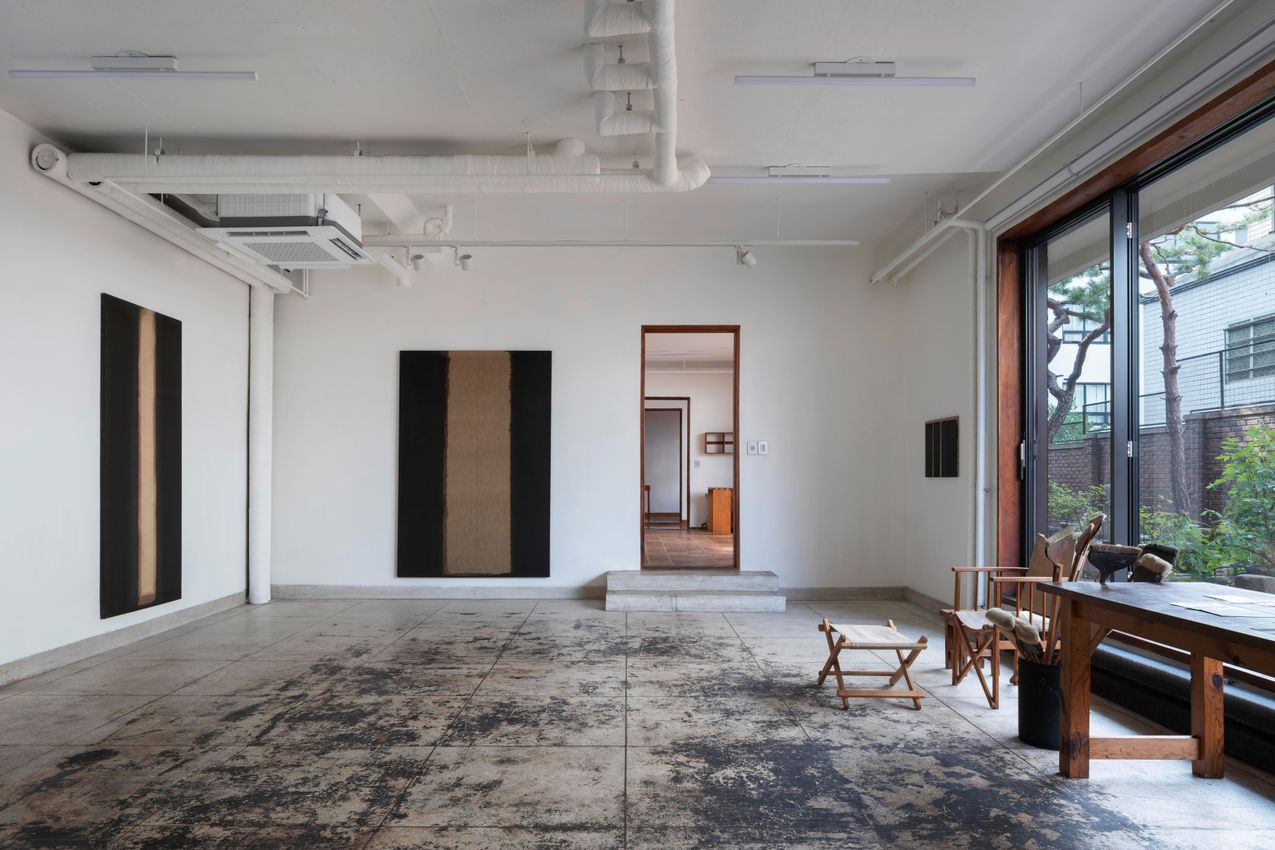
The Estate of Yun Hyong-keun has conserved and restored the house where Yun Hyong-keun (1928–2007), a leading figure of Korean Dansaekhwa, lived and worked. The house is now open to the public as Yun Hyong-keun House, nearly 20 years after the artist’s death. Preserved and restored as closely as possible to its appearance during his lifetime, it offers visitors a unique opportunity to trace Yun’s life and artistic vision through the space itself.
Yun Hyong-keun House stands on a site in Seogyo-dong, Mapo-gu, Seoul, acquired in 1963 by the artist’s father-in-law, Kim Whanki (1913–1974), a pioneer of Korean abstract art, as part of a government housing development. Yun began living here in 1967. In 1983, he demolished the existing house and built a new home that combined living and working spaces, where he lived until his death in 2007. For Yun, the house was both a family home where he shared his everyday life with his family and a studio where he continued his artistic practice, making it an important place in both his life and work.
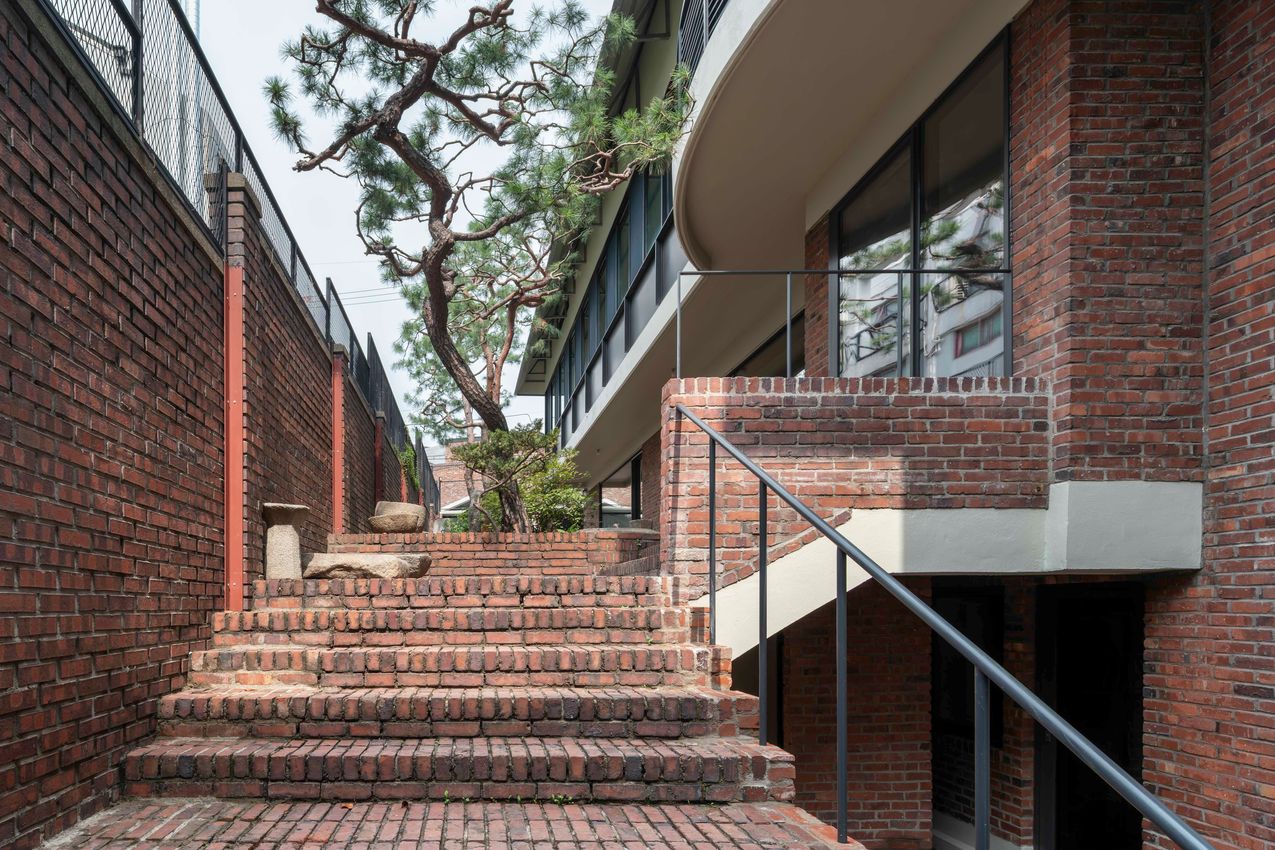
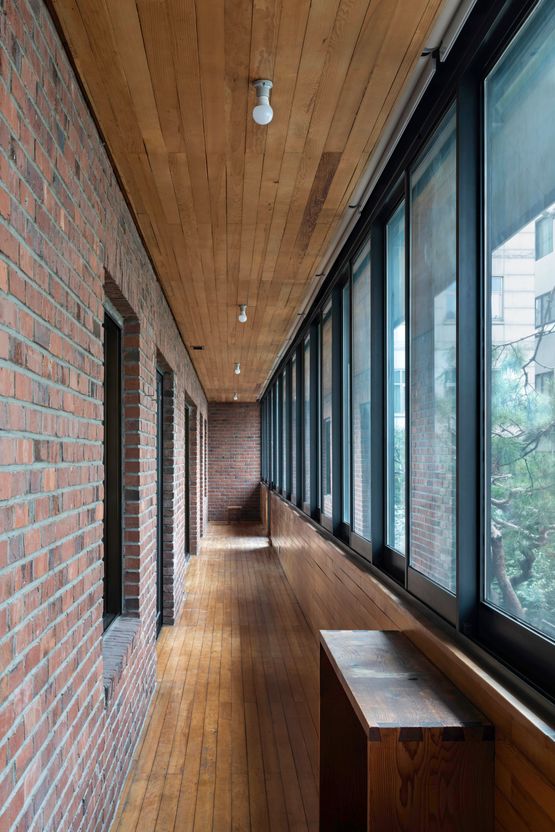
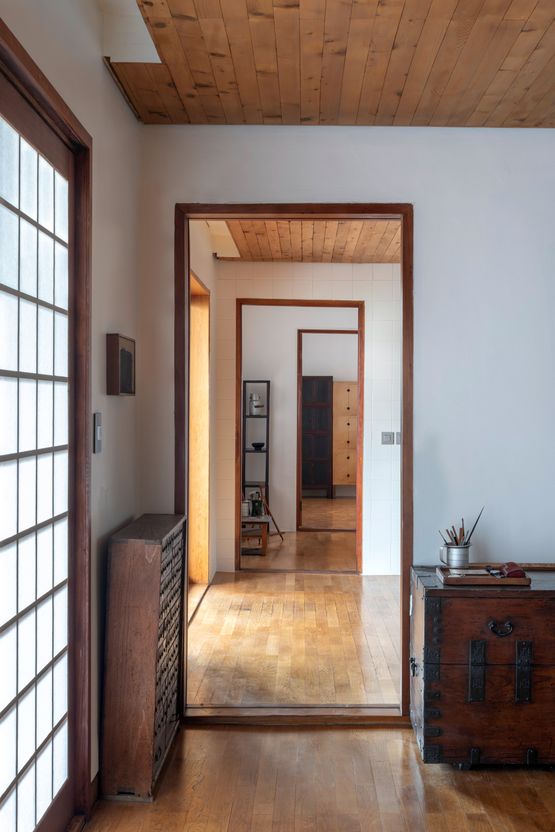
When the new house was built in 1983, Yun entrusted its design to his younger brother, Yun Do-Geun (1935–2021), then a professor in the Department of Architecture at Hongik University. Yun Hyong-keun, however, was actively involved in every aspect of the architecture, from the functions and forms of each space to the selection of materials, allowing his aesthetic sensibility to permeate the entire house. The exterior of the multi-story house, with its terrace, high ceilings, exposed piping, and floor- to-ceiling glass, reflects the aesthetics of Western modernist architecture while harmonising with distinctly Korean elements such as wooden ceilings and traditional latticework on the doors and windows. His discerning eye is evident not only in the house’s long, rectangular form, which is both bold and restrained, but also in the understated yet elegant objects that fill its interior.
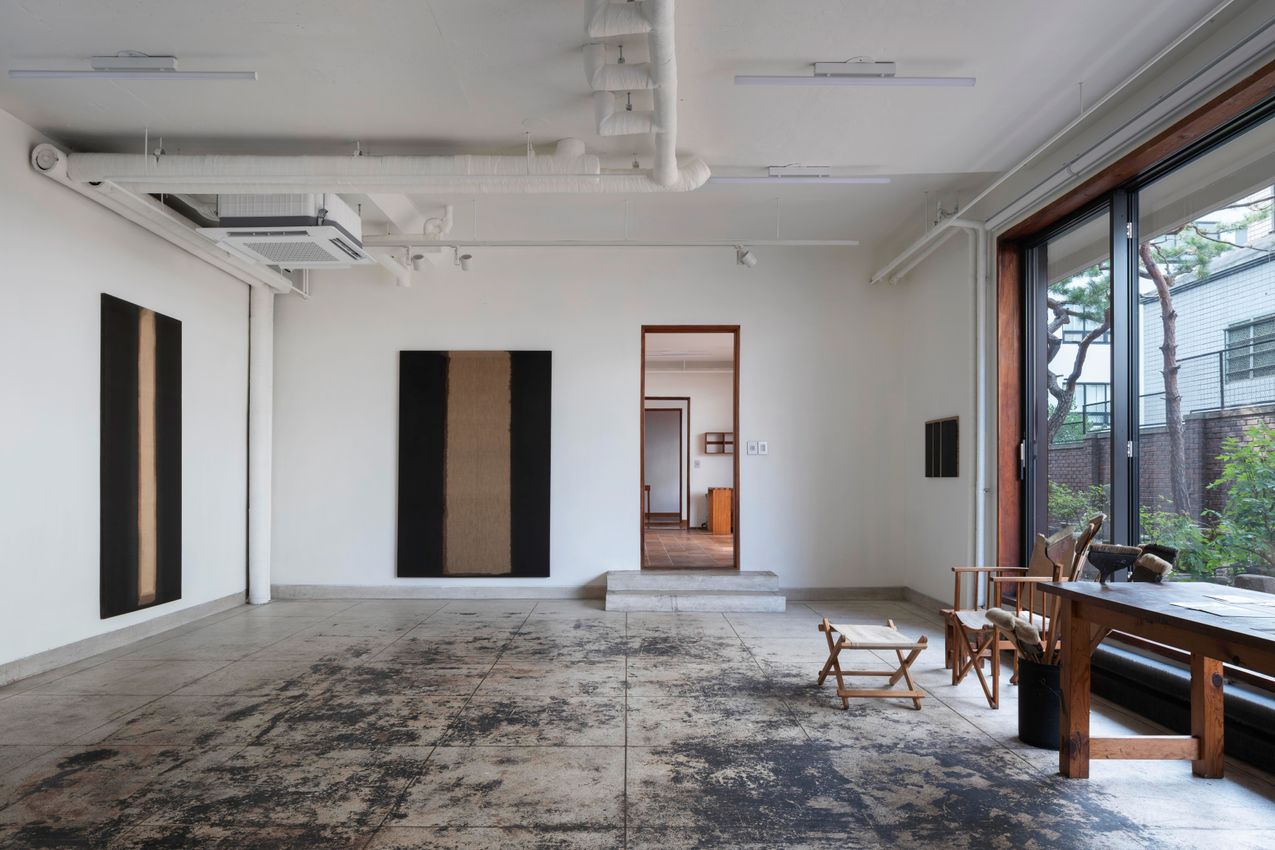
To work under natural light, Yun created his main studio on the first floor, with one entire wall opened up by large windows. The second floor was arranged as a residential space for his family. The exterior walls and surrounding wall were built with bricks in a colour described as “a hue that purifies the colour of earth,” while pine trees and rough-hewn stones were placed throughout the garden, creating a home that lived in harmony with nature. For Yun, who expressed profound reflections on nature and humanity, and on life and art, through restrained colours and compositions, the house itself became another work of art.
In 2026, Yun Hyong-keun House Conservation and Restoration Project focused on preserving the original form and atmosphere of the architecture. The house’s structure and finishes, as well as the placement of furniture and personal objects used by the artist, have been preserved as closely as possible to how they were during his lifetime. On the first floor, the studio, where traces of paint remain on the floor, permanently displays Yun Hyong-keun’s working tools and representative paintings from different periods, offering a vivid view of Yun as an artist and his artistic practice. In the small room adjacent to the studio, the Video Room presents interview with a member of the Yun family and other video materials, offering visitors an intimate glimpse into Yun’s life as a rigorous artist and a loving father and husband. The Archive Room brings together drawings, exhibition materials, artist’s notebooks, correspondence, photographs, and other archival materials, allowing visitors to trace Yun’s life and career chronologically.
The second floor, which served as the family’s living space, preserves the everyday life of Yun Hyong-keun as a person, beyond his identity as an artist. Furniture and ceramic collections retained in their original locations throughout the Living Room, Kitchen, Kim Youngsuk’s Room, and Master Bedroom, along with audio equipment, a calligraphic plaque by Chusa Kim Jeong- hui (1786–1856), and a sculpture by Donald Judd (1928–1994), reveal Yun’s personal tastes and the traces of the relationships that shaped his life. Kim Youngsuk’s Room has been transformed into a space commemorating Yun’s lifelong companion and wife, Kim Youngsuk (1933–2017), using personal belongings preserved in the house. The room features objects from her collection, paintings she made herself, and photographs and correspondence documenting her relationships and exchanges with her father, Kim Whanki, and Kim HyangAn (1916–2004), among others.
Yun Hyong-keun once said that art is merely a trace of life, and that living truthfully is more important than painting. Yun Hyong- keun House functions as a space through which his artistic world can be understood. As visitors walk through the house, they can encounter the world he inhabited, trace the principles by which he lived, and gain a deeper understanding of his view of life and art as inseparable.
To mark the opening of Yun Hyong-keun House, solo exhibitions of Yun Hyong-keun’s work will be presented in Korea and abroad. First, reimagine Yun Hyong-keun will be held at PKM Gallery in Seoul, the gallery representing the Estate of Yun Hyong-keun, from August 26 to October 3, 2026. The exhibition brings together major works spanning the artist’s career, from his early years through his later period.
In addition, the Judd Foundation in New York will present a solo exhibition of Yun Hyong-keun from 8 October 2026 to 9 January 2027. The foundation is a significant site in the history of Yun’s international exchanges, having hosted his solo exhibition in 1993 at the invitation of Donald Judd. Flavin Judd (b. 1968), Artistic Director of the Judd Foundation, brings together six works that were presented in that landmark exhibition, expressing his longstanding respect for Yun and revisiting the artists’ important encounter from a contemporary perspective.


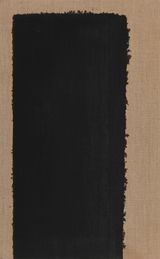
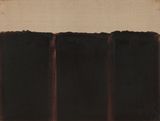
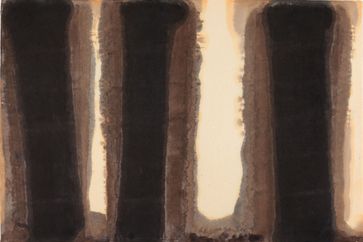
Yun is a leading figure of Dansaekhwa movement in the 70’s-80’s, the movement considered one of contemporary Korean art’s finest achievements which is now receiving renewed attention from the global art world. Yun's paintings with profound resonance are inspired by the Korean traditional ink wash paintings. This becomes the basis for the unique quality of elegance in his work. The consistent ultramarine blue and burnt umber tones of his paintings find their origins in the 70's; a few nonchalant brushstrokes of diluted oil paint onto the canvas let the pigment seep into and bleed through the surface, completing the artist’s signature style.
PKM Gallery was established in 2001 in Seoul by Park Kyung-mee—an art historian and the commissioner of the Korean Pavilion at the 49th Venice Biennale—with a mission to promote Korean art abroad and to foster conversation between Korean and international contemporary art. With previous locations in Hwa-dong and Cheongdam-dong, the gallery moved to its current space in Samcheong-dong—an artistic and cultural hub in the heart of Seoul—in 2015.
19-17, Wausan-ro 21-gil, Mapo-gu, Seoul, 04041 Korea
11:00–12:00 / 13:00–14:00 / 14:30–15:30 / 16:00–17:00
*Tuesday–Saturday
*Maximum 8 visitors per session.
*All sessions include a docent-led tour.

A respected voice in contemporary art discourse.
Focusing on ambitious storytelling and insightful art-world commentary. Ocula Magazine publishes in-depth interviews, critical essays and timely analysis on the artists, exhibitions and ideas driving the global art world.
Learn more about Ocula Magazine
Showcasing the best of the art world.
Ocula partners with galleries from around the world to highlight their artists, artworks and exhibitions. Gallery membership is by application and invitation, with each member vetted by an independent panel.
Learn more about Ocula Membership

Specialises in the sale of major artworks.
Led by a team with deep ties to the world’s leading auction houses, galleries and collectors. Ocula’s advisory team offers bespoke services to high-net-worth clients from around the world who are looking to acquire the best of contemporary and modern art.
Learn more about our team and services