The art world in focus
Subscribe to our newsletter for news and insights on artists, galleries and exhibitions.

Yun Hyong-keun House, 2026 (Living Room, 2F) © Sun Namgoong. Courtesy the Estate of Yun Hyong-keun and PKM Gallery.
When the Seoul home and studio of Yun Hyong-keun (1928–2007), a leading figure of Korea’s Dansaekhwa movement, opened to the public for the first time on 1 September, it became the latest in a string of houses to enter the city’s cultural life through similar preservation and artistic programming projects in recent years.
Within his home, Yun developed his restrained abstractions by laying canvas, hemp cloth or hanji directly on to the studio floor and applying diluted umber and ultramarine with long-handled brushes. The paint-stained floor, brushes and working materials have remained at the Seogyo-dong home, alongside the furnishings and collected objects through which Yun’s domestic and artistic lives converged.
“I remember that he appreciated the consistency of proportion between the exterior of the house and the custom-designed furniture inside,” Yun Seong-ryeol, the artist’s son and representative of his estate, told Ocula.
Among these objects is a work by Donald Judd, which Yun acquired from the American artist’s first Korean solo exhibition at Inkong Gallery in May 1991, and kept in his living room. Judd also encountered Yun’s work during this visit and asked to meet him. Yet when Judd arrived at Yun’s home and studio, he was as equally drawn to the building’s façade and the proportions connecting its architecture, door frames and artist-designed furniture as he was to the paintings there.
A friendship between the two artists led Judd to present six of Yun’s paintings at 101 Spring Street, his New York City home and studio in 1993, followed by an exhibition at Judd’s Chinati Foundation in Marfa, Texas, the next year.
Yun lived at the Seogyo-dong site from 1967 until his death in 2007. The land belonged to his father-in-law and artistic mentor Kim Whanki. In 1983, Yun replaced the original building with a house designed by his younger brother, architect Yun Do-Geun, while remaining closely involved in its spatial organisation and materials.
The two-storey house brought working and family life under one roof, combining a modernist brick exterior and exposed studio ceiling with timber ceilings and wooden lattice doors. A glass wall brought natural light into the ground-floor studio, with the family’s living quarters above.
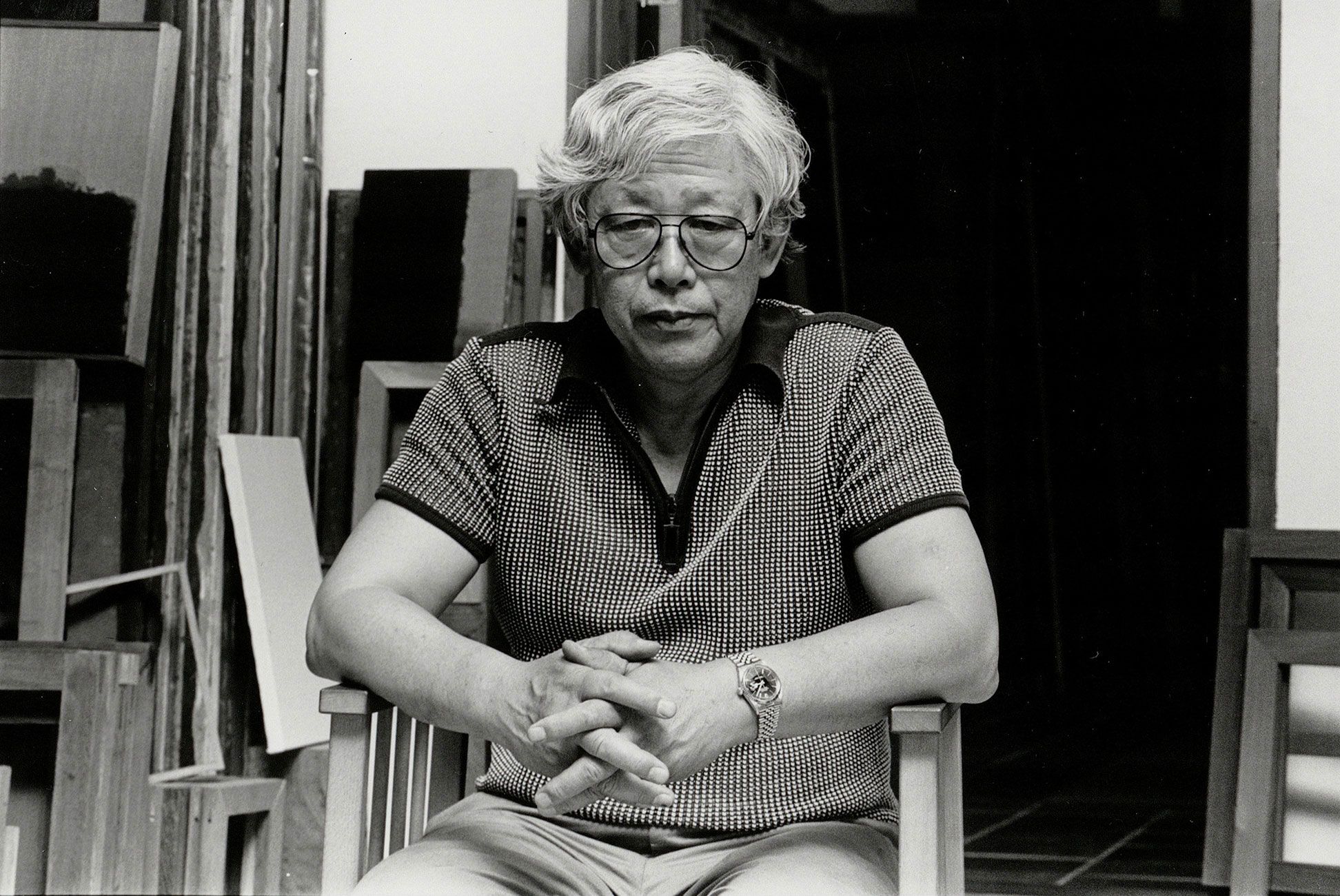
The estate undertook only minimal repairs, retaining the arrangement of furniture and everyday objects as faithfully as possible. The former studio now serves as a permanent exhibition space for Yun’s paintings.
Seoug-ryeol said the idea of preserving the house began during childhood visits to the studios of deceased European artists. “I was deeply impressed and moved by those spaces,” he recalled.
“Those experiences led me to think that, one day, my father’s own spaces should likewise be carefully preserved—not only his studio, but also the home in which he lived.”
Yun Hyong-keun House will receive visitors by reservation until 17 October, before adopting a seasonal spring and autumn schedule from 2027. A concurrent survey, reimagine Yun Hyong-keun, is running at PKM Gallery until 3 October.
The house’s opening follows the transformation of the former home of Kim Tschang-yeul into a public cultural space. The space, which opened on 29 May, includes a special exhibition gallery, an archive room and a recreation of the studio and library of the artist perhaps best known for his paintings of water droplets.
Elsewhere in the city, contemporary art is also bringing House of Woonkyung, the former home of National Assembly speaker Lee Jae-hyung (1914–1992), back into public view. Following projects with Choi Jeong-hwa in 2022 and Lee Wan in 2024, the residence is currently hosting Donghee Kim’s A House, Arrived Again (until 31 October), in which the artist’s idiosyncratic interventions subtly unsettle the familiar structure of the hanok.
A respected voice in contemporary art discourse.
Focusing on ambitious storytelling and insightful art-world commentary. Ocula Magazine publishes in-depth interviews, critical essays and timely analysis on the artists, exhibitions and ideas driving the global art world.
Learn more about Ocula Magazine
Showcasing the best of the art world.
Ocula partners with galleries from around the world to highlight their artists, artworks and exhibitions. Gallery membership is by application and invitation, with each member vetted by an independent panel.
Learn more about Ocula Membership
Specialises in the sale of major artworks.
Led by a team with deep ties to the world’s leading auction houses, galleries and collectors. Ocula’s advisory team offers bespoke services to high-net-worth clients from around the world who are looking to acquire the best of contemporary and modern art.
Learn more about our team and services