The art world in focus
Subscribe to our newsletter for news and insights on artists, galleries and exhibitions.


I once had a conversation with a researcher for a human rights organisation, who told me that his job had changed dramatically around the time of the Arab Spring in 2013. Before that, peacekeepers and NGOs had relied heavily on eyewitness testimony in order to establish the truth about what had happened in the aftermath of a conflict. Then, quite suddenly, everybody on the ground had a phone with a camera, and each skirmish and every bullet was recorded from multiple perspectives. The NGO’s task became to locate, sift, source and verify these images as they streamed incessantly from battlefields and street corners, bombsites and refugee settlements and circulated around the world.
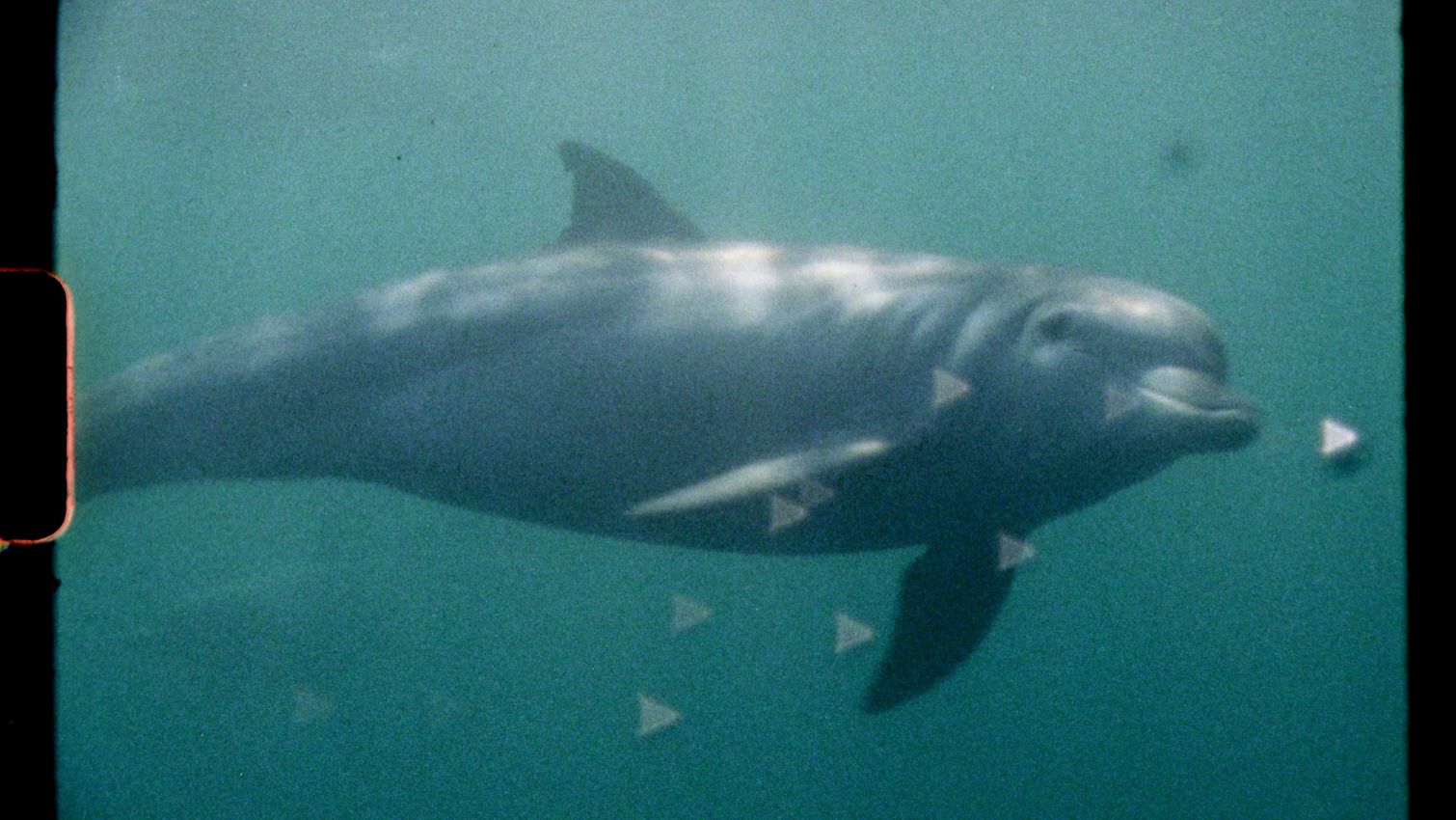
I thought of this conversation when I watched Super Nature, a feature-length nature documentary made on Super 8 cameras by professional and amateur filmmakers across the world, conceived by British director Ed Sayers. The film is described as “a love letter to nature”, and it is equally a love letter to the format. Sayers is also the founder of Straight 8, a foundation seeking to sustain the use of Super 8 film, which was first released by Kodak in 1965 and is increasingly recherché. The auteur’s passion for the medium comes together with his long interest in non-human stories, and it feels personal. In the film, we hear about his mother’s death and glimpse his 13-year-old son assisting him behind the camera.
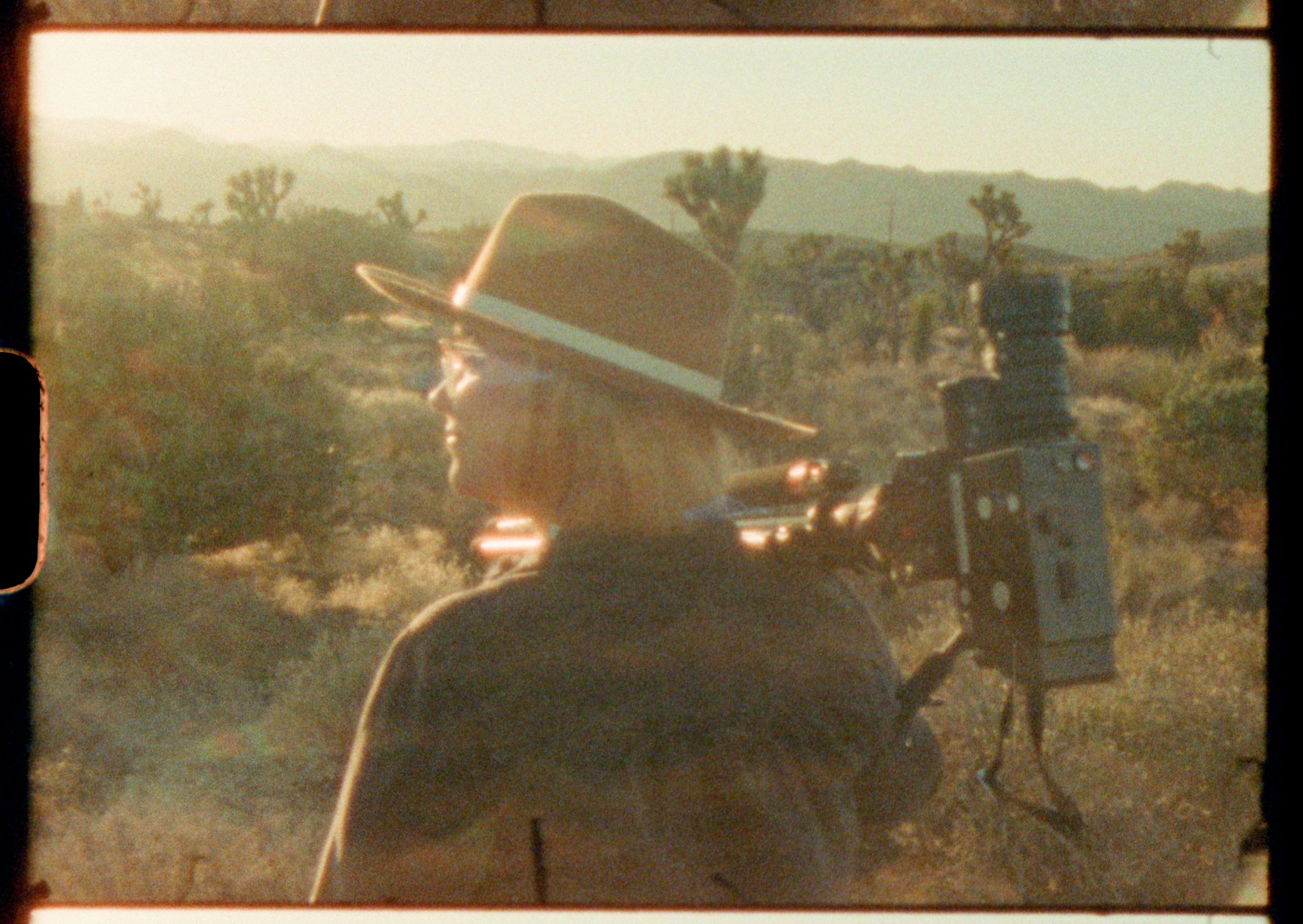
The work as a whole is made in collaboration with around 40 others and across an extraordinary range of situations. National Geographic photographer Ami Vitale is commissioned alongside Holikiari, Dokotone and Kawali, of the Enawene Nawe tribe in Mato Grosso, Brazil. Vitale films bison in the snows of Yellowstone National Park, reflecting in her voiceover on the slaughter of the species during the 19th century as part of the the European settlers’ effort to “starve and subdue” Native American tribes, while Holikiari speaks of the depletion of fish populations in his local river. Karan Suri Talwar films cattle wading neck-deep through water in Assam, India—“Being a city person through and through, this was one of the few experiences I had which grounded me”—while Ollie Birt in Bawley Point, Australia, follows kangaroos playing on suburban lawns—“I began to notice just how weird these animals really are.”
At first sight, all this could not feel further from a war zone. Super 8 footage comes across as nostalgic on the modern screen. You know it when you see it: the squared, tinted, slightly blurred and twitchy pictures of early home movies. Sayers has overlaid sequences of gorgeous images with a gentle, moving soundscape of music from different traditions (largely choral and orchestral works), an original score by Alexandra Hamilton-Ayres, and natural-seeming aural effects of splashes and sighs. Voiceovers speak of connection, beauty and the healing power of the ocean. Flamingos flock and separate in flight; insects sink their spindly legs into the miniature trumpets of buddleia blossom. Whales leap and raindrops patter. There’s even a baby sloth.
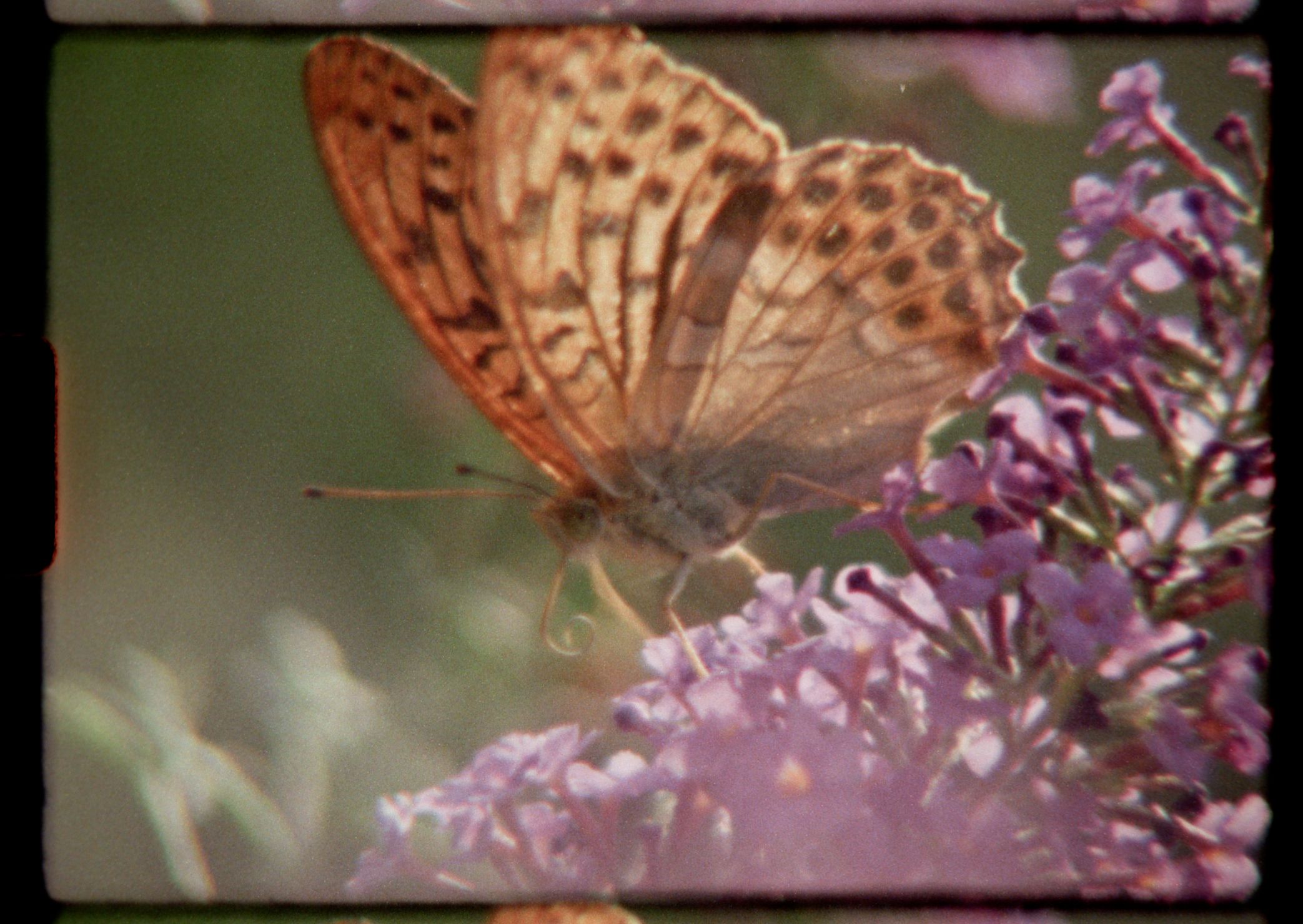
Yet I was reminded of that conversation about humanitarian emergency, because Super Nature—despite or because of its aesthetic opulence—is also a composite picture of a crisis. Sayers’ opening voiceover sets the terms for what we are seeing when we look at all these creaturely images. “It’s strange to think we are floating in a sea of darkness, on this one planet with life. We are part of this huge complex community, but we think of ourselves as separate. Do we even notice the life around us any more? Since our very existence depends on it, maybe it’s time we find another way of looking.”
What he is suggesting here—to look differently as a means of action—is interesting. In the context of climate change, it’s logical and quite normal for ordinary people to feel (and declare) that they can do little but stand and watch as the catastrophe unfolds. The powerlessness of the citizen has itself become a part of the brutal spectacle of violence in Gaza or in ICE detention centres, where the effacement of human autonomy is central to the perpetrators’ performance of domination. At the same time, however, as the humanitarian worker described it to me, the role of the witness has acquired a novel force: not just to stand and watch, but to make seen whatever it is that they see, by getting out the phone and switching on the camera.
“Many artists and writers, I think, are afraid of being sentimental now”
Thinkers including Amitav Ghosh and Donna Haraway have associated the climate emergency with a failure of narrative. They have observed that when environmental stories prioritise white, anglophone, and human experiences, this, in turn, exacerbates the global injustice, extraction, extermination and slow violence, that comprise the catastrophe. In this context, Super Nature suggests a new way to tell this story, from its midst: an approach that is grounded, distributed and situated in the local. Like the NGO, Sayers and his producers Beth Allan and Rebecca Wolff are collating a composite picture of many points of witness.
Its makers had to locate, recruit, brief and equip filmmakers from all over the world, and then to gather in, review, collate and edit their footage of California, Laikipia, Rio Negro, Sindh and Donbas, and to make it come together into a single story, with just a few minutes of images from each contributor. I was surprised by the work’s coherence. Voiceovers in 11 languages share similar stories. They notice changes and losses and speak of their affection for the natural world and a sense of connection that has been strengthened by filming on Super 8. The convergence suggests some degree of controlled narrative, and I would have been interested to hear more of the differences in what the contributors had to say.
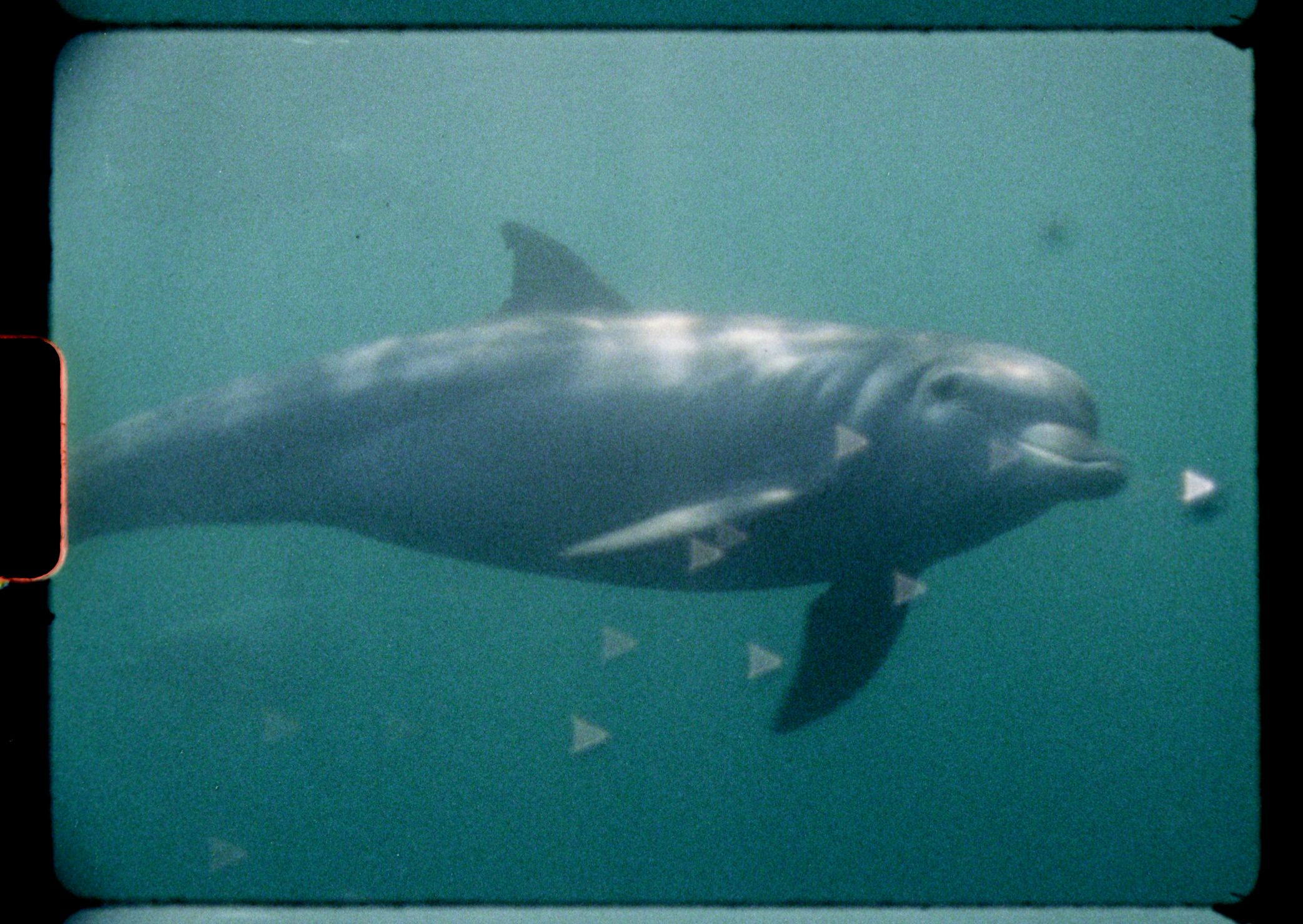
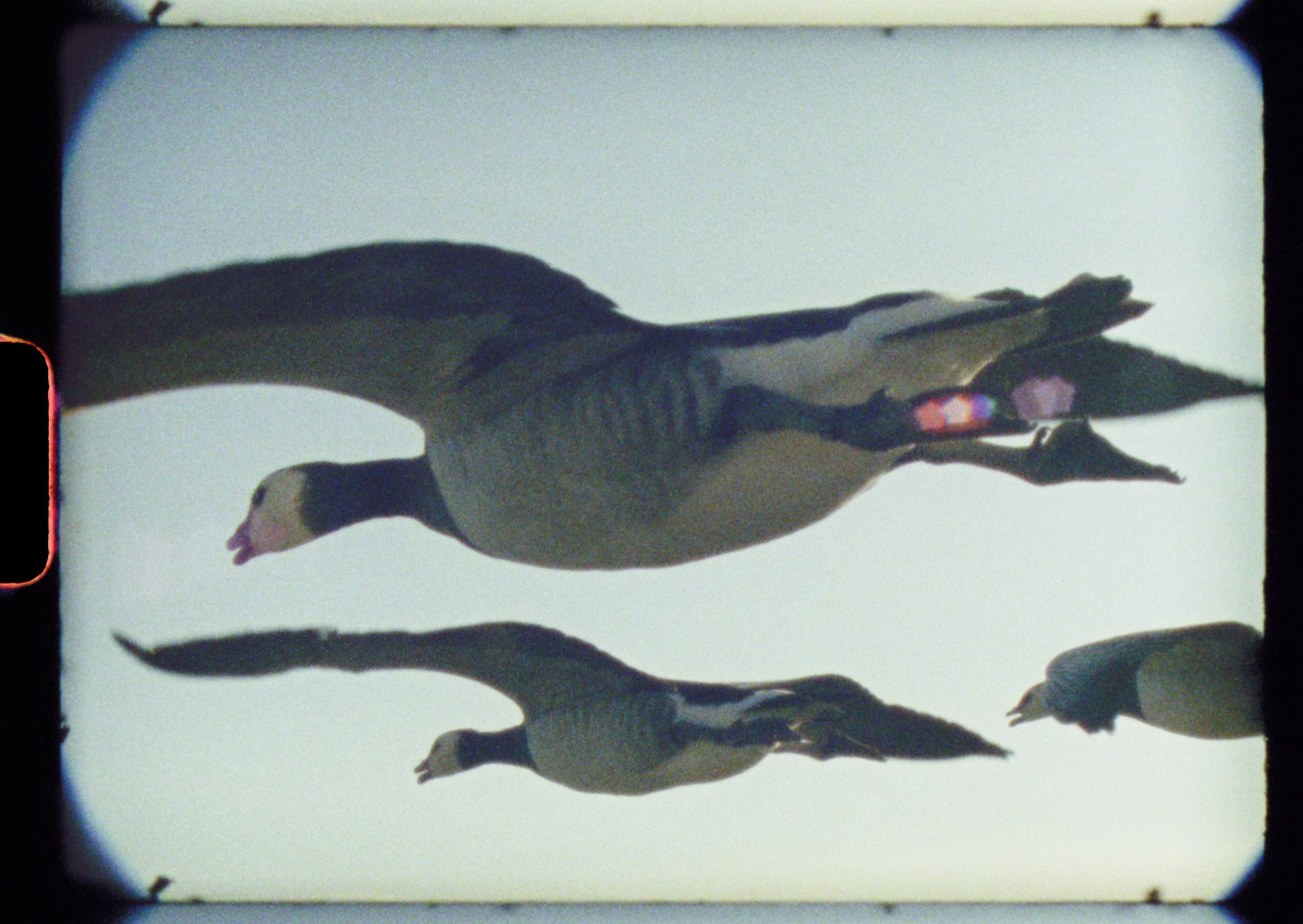
Nonetheless, the extravagant loveliness of Super Nature made me think about our culture’s relationship with sentimentality. The sentimental hasn’t always been considered a pejorative, and perhaps one determining factor of the current crisis is deficit of sentimental feeling toward the world beyond the human. Many artists and writers, I think, are afraid of being sentimental now. “Unsentimental” is used uncritically as a term of praise, especially when relating to works about nature. But if Super Nature is sentimental, it is a vast and impressive kind of sentimentality.
Super Nature’s squarish Super 8 footage is not fitted to the screen but suspended inside the rectangular field of the monitor so that the picture floats in a “sea of darkness”, as Sayers describes our bright planet in space. It’s a lovely device, framing each bug and baby turtle within an image of the vast whole. The most powerful moments in the work lend an uncanny presence to this thing that no individual can see as such. Shoals, flocks and soughing canopies, washing over the viewer, induce a sense of something glimmering, flickering and pulsating, apparently endlessly. Waves crash on a Portuguese beach, engulfing a surfer. Off the coast of England, a seal bends and flips, almost flirtatiously, around Sayers’s underwater camera, trying to entice him to play—or at least to do something other than just stand and watch.—[O]
A respected voice in contemporary art discourse.
Focusing on ambitious storytelling and insightful art-world commentary. Ocula Magazine publishes in-depth interviews, critical essays and timely analysis on the artists, exhibitions and ideas driving the global art world.
Learn more about Ocula Magazine
Showcasing the best of the art world.
Ocula partners with galleries from around the world to highlight their artists, artworks and exhibitions. Gallery membership is by application and invitation, with each member vetted by an independent panel.
Learn more about Ocula Membership
Specialises in the sale of major artworks.
Led by a team with deep ties to the world’s leading auction houses, galleries and collectors. Ocula’s advisory team offers bespoke services to high-net-worth clients from around the world who are looking to acquire the best of contemporary and modern art.
Learn more about our team and services