The art world in focus
Subscribe to our newsletter for news and insights on artists, galleries and exhibitions.


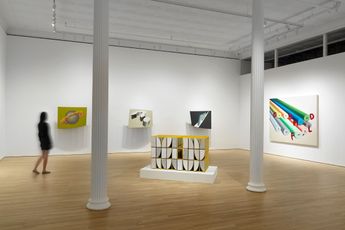
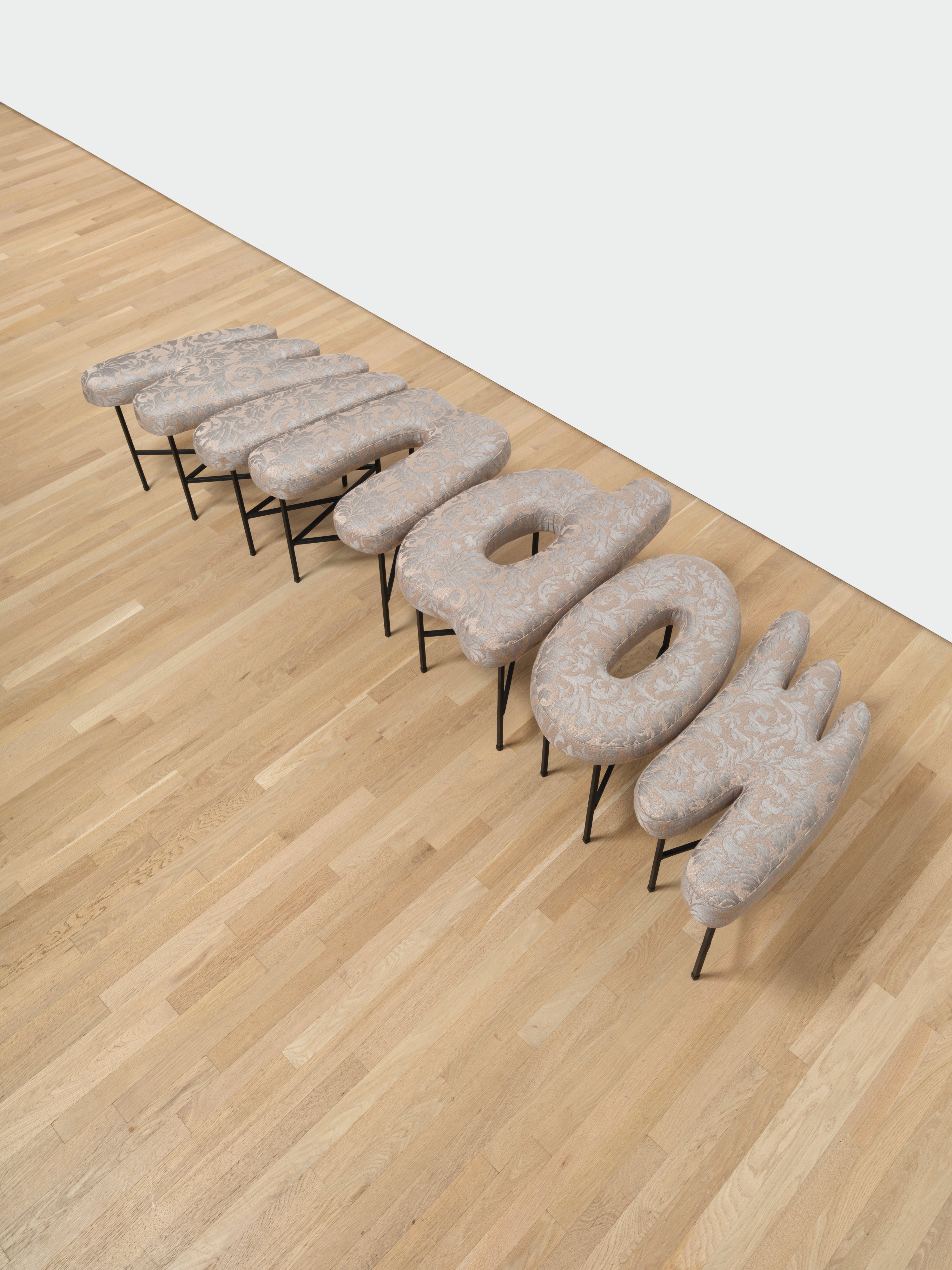
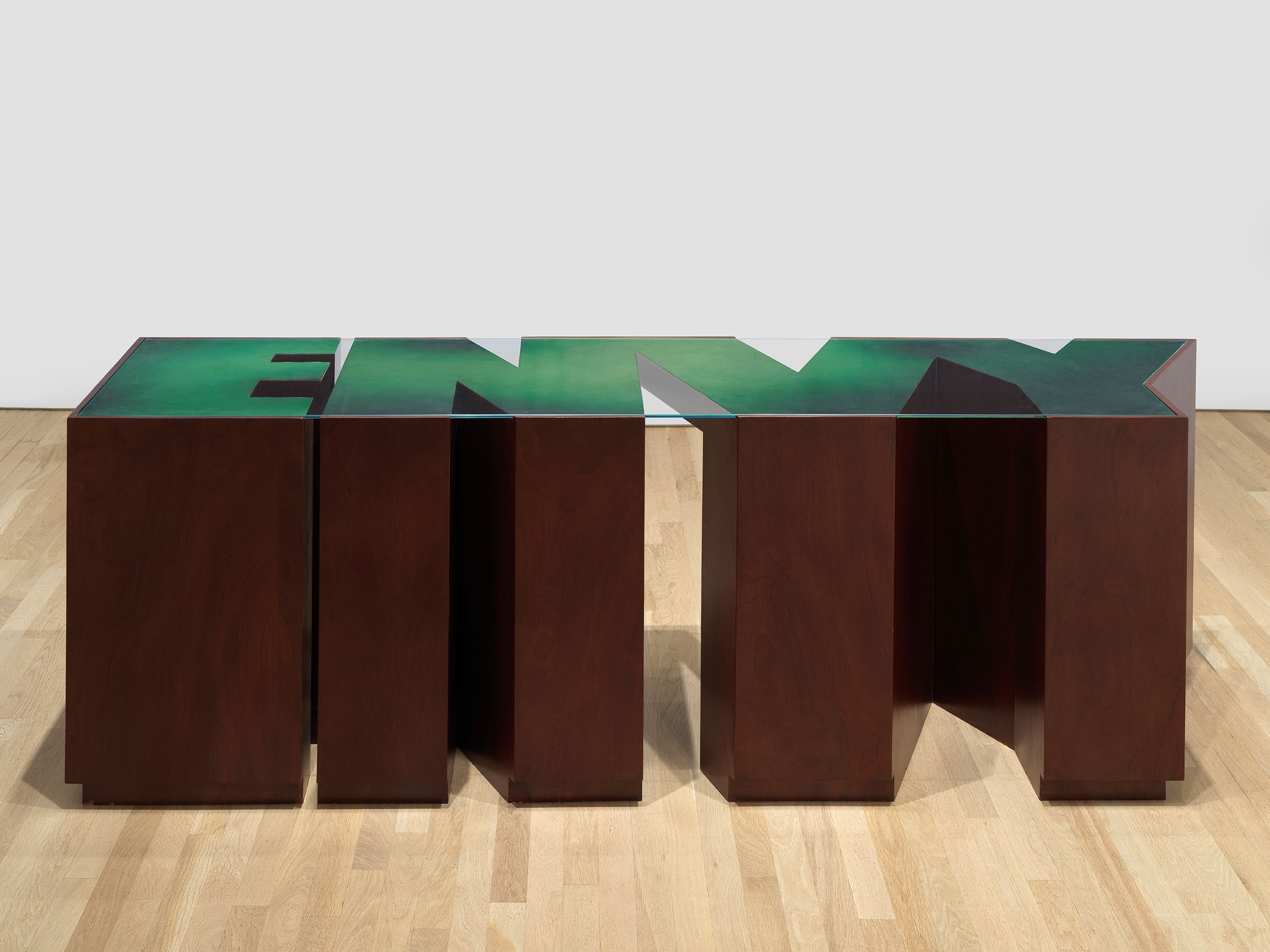
It’s not an easy feat to induce laughter in the dry, serious space of an art gallery, but legendary Pictures Generation artist Nancy Dwyer has managed to do just that for the last half decade. In her exhibition ALWAYS (5 June–1 August 2025), on view at Ortuzar in New York, the bench-like sculpture Window Seat (The Window Always Wins) (1977), positioned right in front of a window that looks out onto White Street, evokes an almost involuntary chuckle. Spelling out w-i-n-d-o-w with cushions formed into a bulbous font and covered with a vaguely iridescent paisley fabric, the work treats me like a homing pigeon; it gives me a message and lets me continue on my way with it. Why does the window always win? Because most art can’t stand up to whatever might be going on outside of it? Suppose so.
Advertising has changed a lot since the 1970s, when Dwyer first started making paintings, sculptures, and installations that treat words as images. This approach was incubated in the deindustrialising rust-belt city of Buffalo, New York, where she met Charlie Clough, Robert Longo, and Cindy Sherman, and co-founded the cooperative artist-run space Hallwalls in 1974. This group migrated to New York and waited patiently—but not too long—until a young art historian and critic named Douglas Crimp accidentally named a movement: the Pictures Generation1. I met Dwyer to speak about the show, what it means to be an artist, and other topics of great importance. Like TikTok.
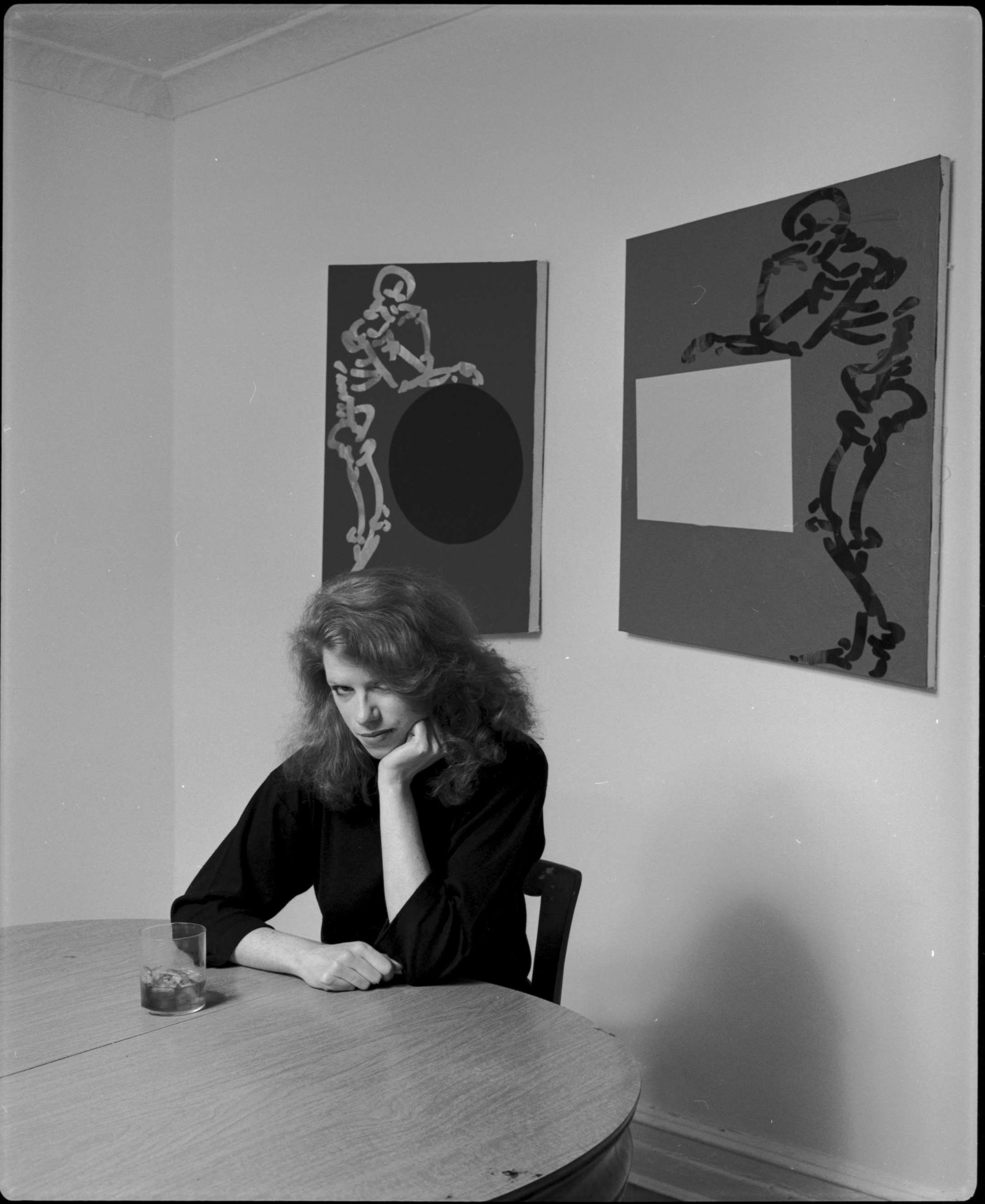
ND: Kind of everything? Art is a constant lesson in holding everything pretty loosely because I don’t know what I think. Anybody who’s a practising creative sets out with ideas that you constantly have to revise. I always say my work knows more than I do. You’ve got to keep yourself open because things change. The attachment to our executive function is kind of a joke. It’s mostly there to give me the feeling of control and security, but it doesn’t actually have the power that I think it does. And that’s like 101 with making art. If you’re open to it, art gives you such a great sense of humour. I once had a therapist who told me that my sense of humour saved my life. It’s not like I woke up one day and said, ‘This is what I’m learning from making art.’ You know what I mean? I’ve been making art since I’ve been alive, and it gave me that orientation toward reality.
ND: The question of how to construct a piece of art that might be funny is a big question, because it isn’t just about a joke. I was thinking about this the other day at like 2am, when I was trying to find some stupid podcast to listen to so I wouldn’t feel so weird. A lot of times I listen to humorous people who have podcasts and I realised I don’t really watch comedy. I love funny people, but the kind of comedy where everyone sits down, ready to laugh, is not usually my taste. I like the idea of something that comes and gets you in a surprising way. It’s hopefully a little bit darker or more poetic than proper comedy. Little by little over the years I’ve become much more conscious of the alchemy of putting that together.
But the Pictures Generation’s sense of irony may have something to do with the intelligentsia’s taste in culture at that time—the Big Chill generation. Personally, growing up in an Irish Catholic family, humour was power. Making someone laugh is power. It’s almost a commodity. I learned to value humour highly because of what irony does, the capacity to hold together in your mind two opposing thoughts that are seemingly at odds. Humour is sort of inclusive of what I valued as a higher intelligence. Basically, it meant ‘smart’ to me.
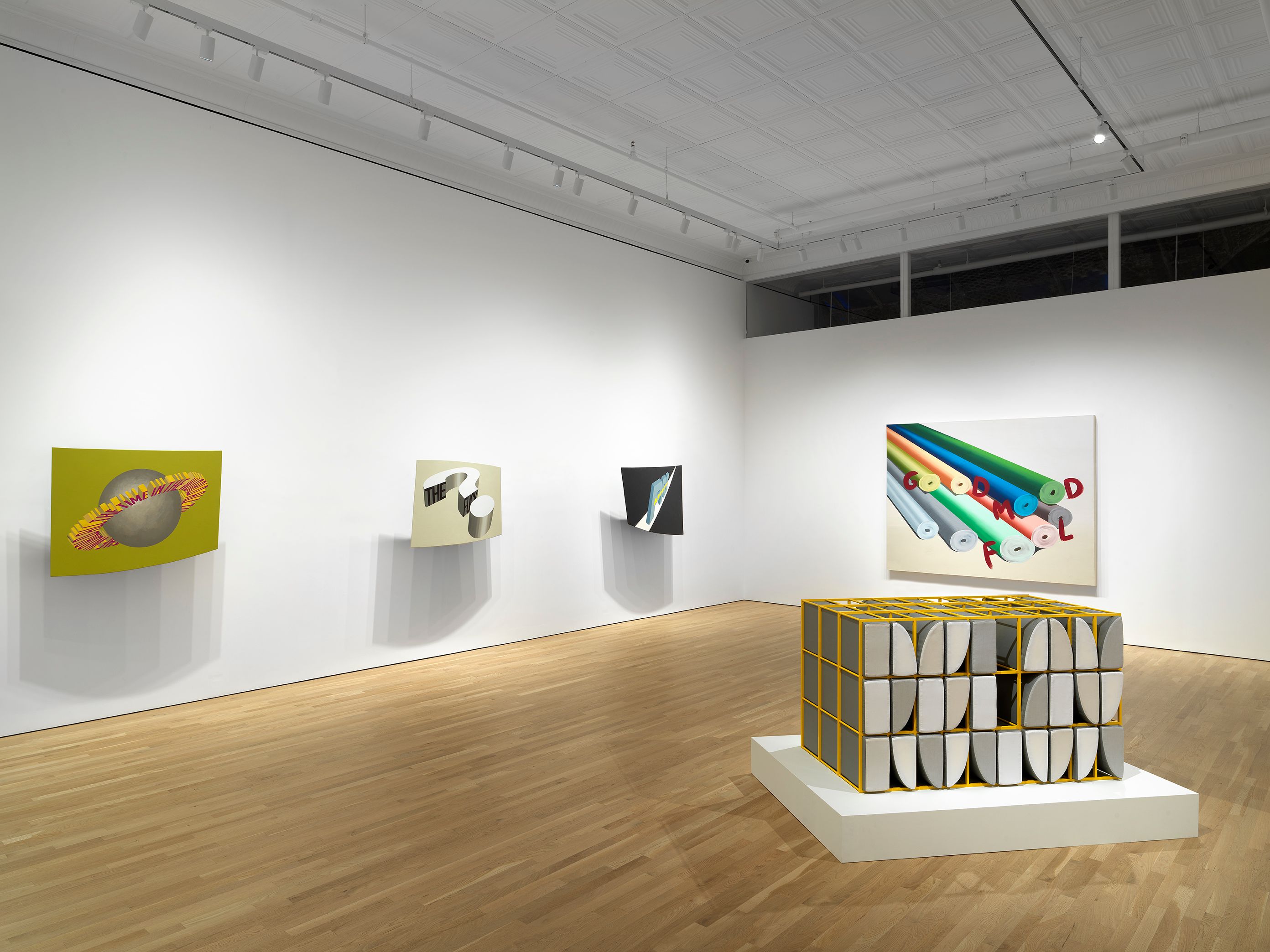

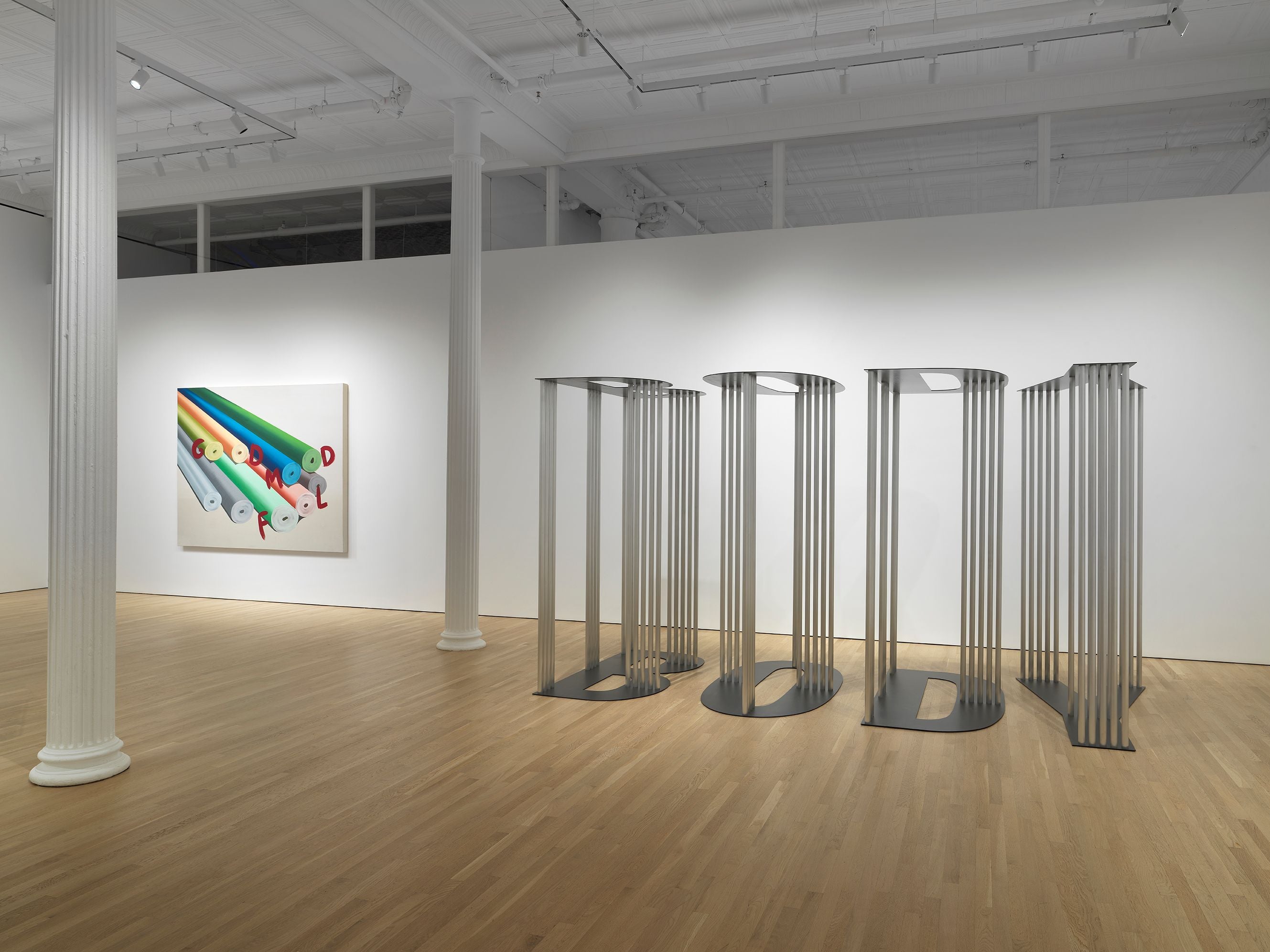
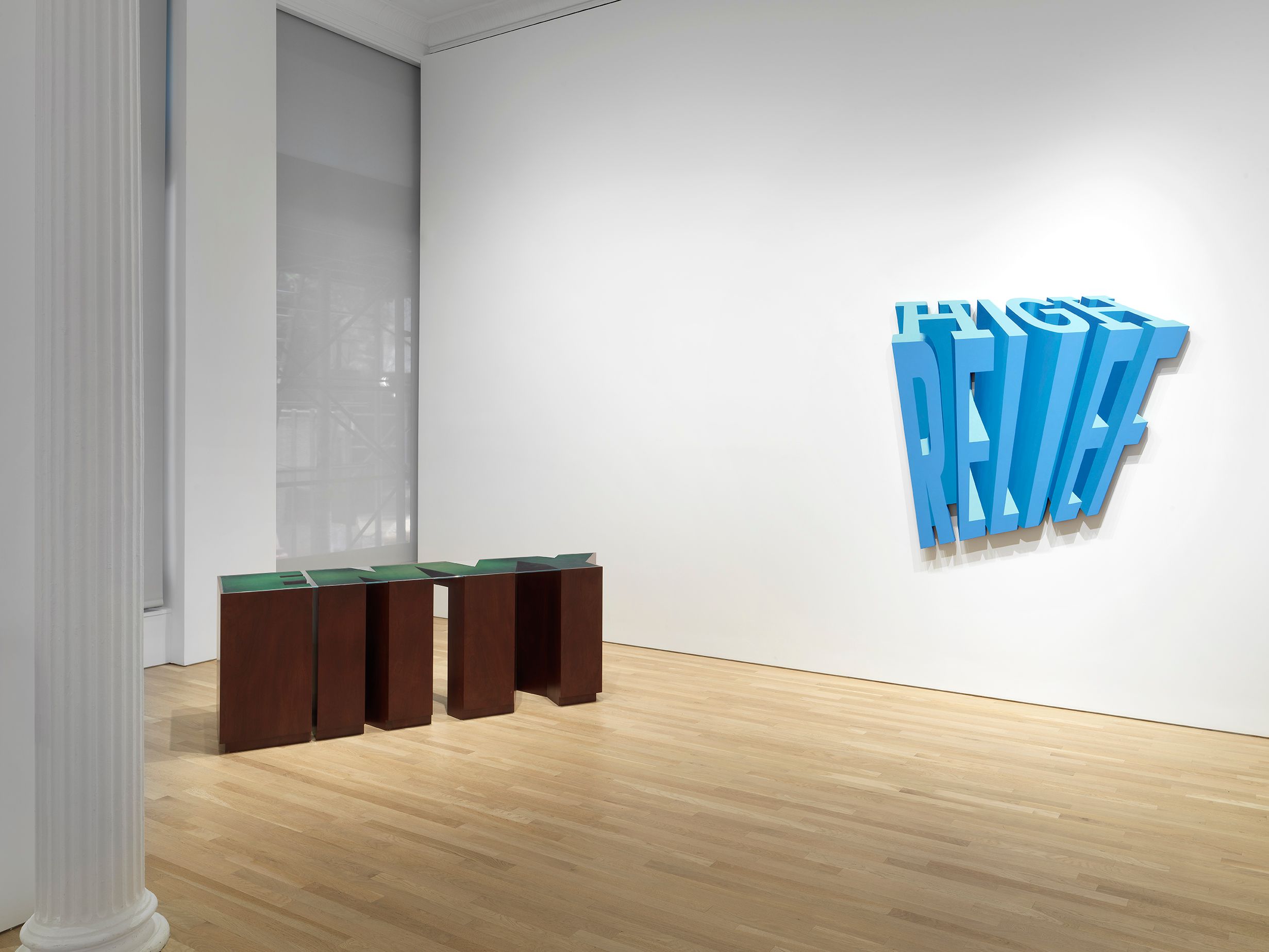
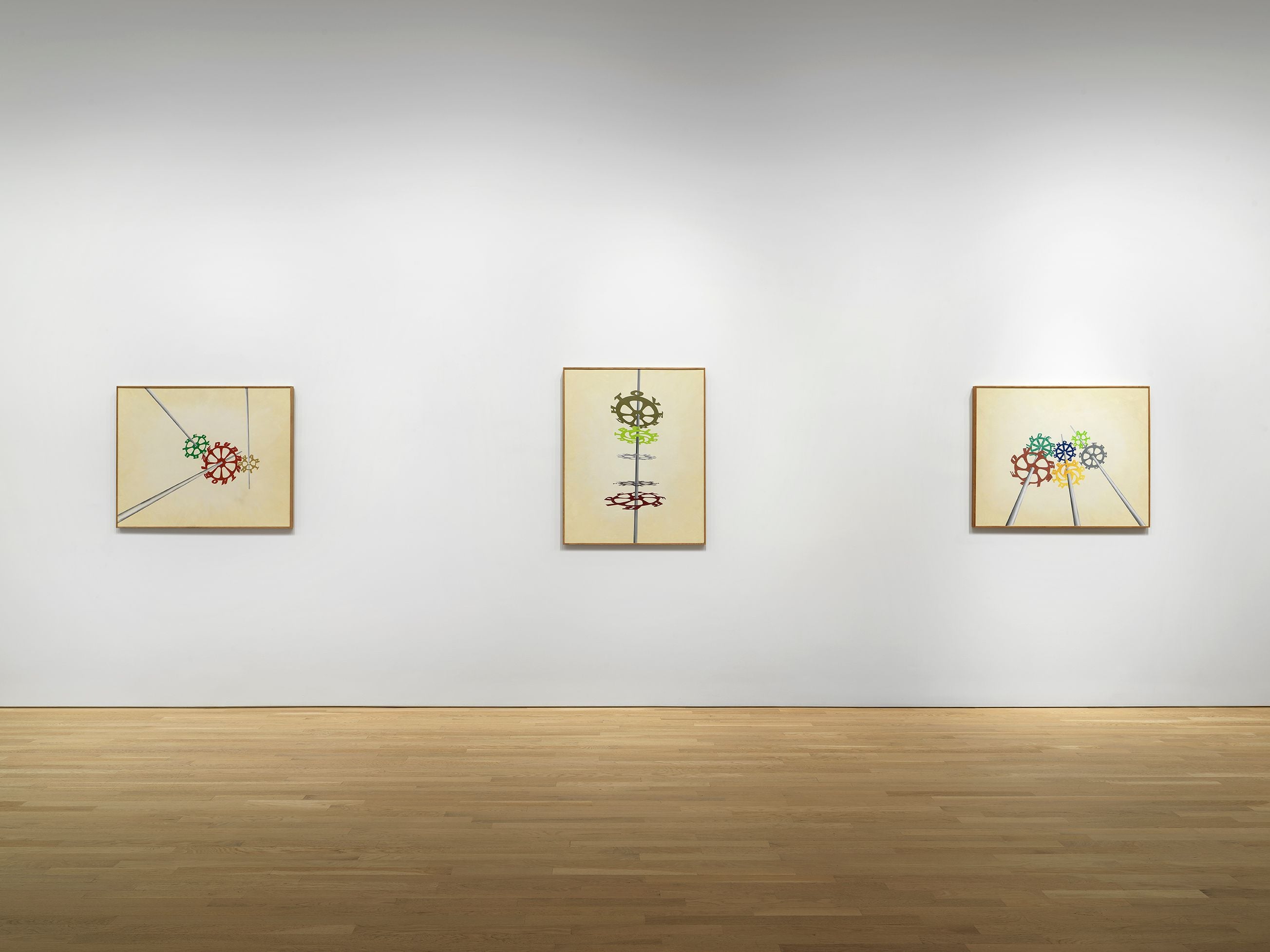
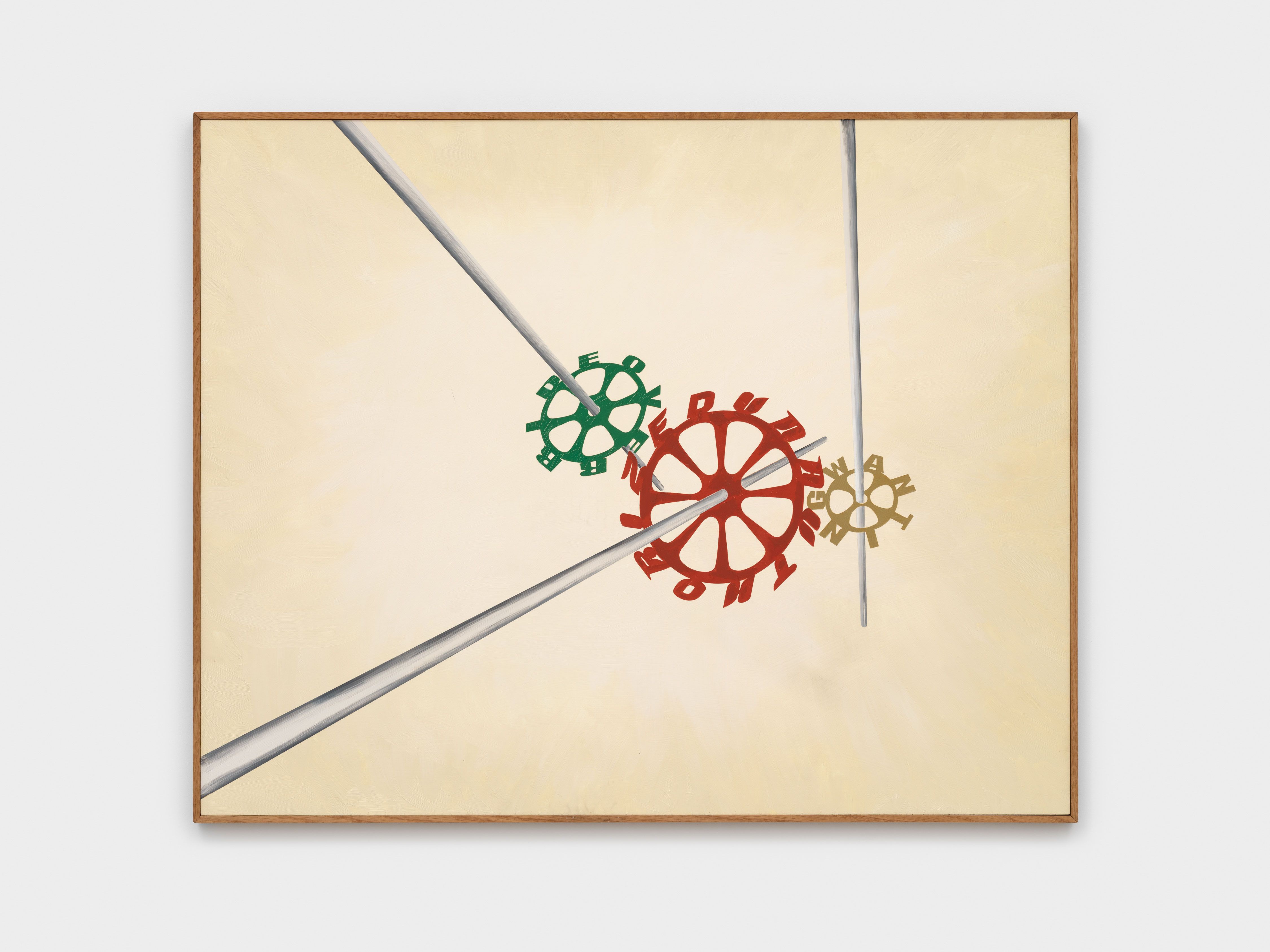
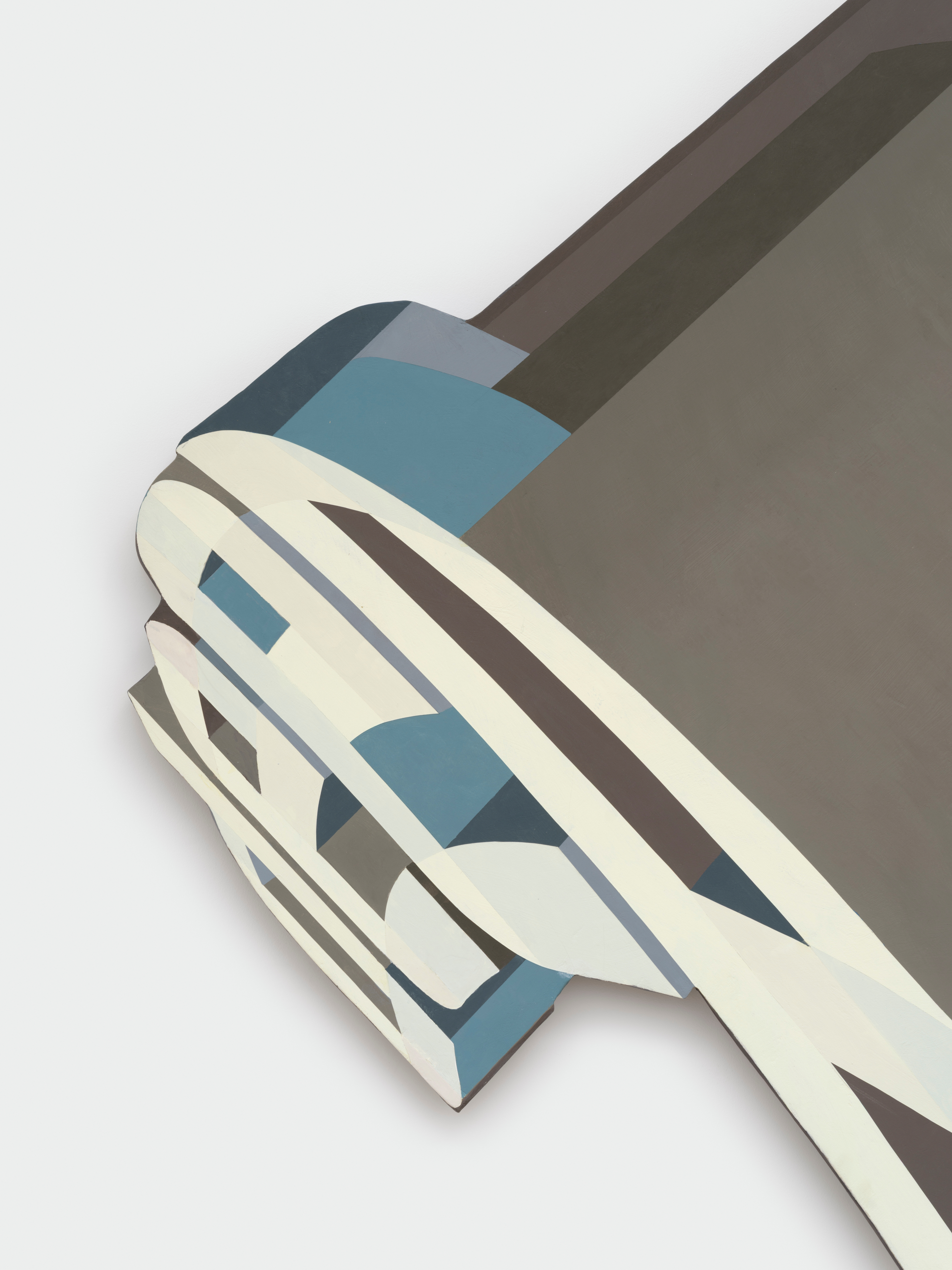
ND: I like the idea of making something that seems very familiar, such that the viewer feels like they’re completely comfortable entering it, right? I want to create this seduction to bring the viewer in and then to not tell them where to go. A lot of that comes from the psychology behind advertising.
Advertising probably is the industry that is most influenced by Surrealism and its foundational ability to create a shift in reality. I think of my viewer like I think of myself: an American who is most comfortable as a privileged yet passive viewer. Like everyone else, advertising caters to me. That’s how we get a country full of people who think that they deserve way more than humans actually deserve. I try to leverage the genius of advertising, its pandering aspect, in the work and then hit you with something that is the opposite of that. I want my work to function like Surrealism would, making you have to resolve it somehow, to make the work make sense.
ND: No. I have to be aware of it, but there’s a part of me that kind of doesn’t care about other people. I hate to say that, but it’s kind of true. I’m terrible at things like gossip because I’m like, who cares? Oh, you mean so-and-so’s an asshole? What are the specifics of that story? I don’t get it and I don’t get TikTok. I enjoy things that I don’t really have to pay attention to very much, like House Hunters or a really dopey soap opera show that just goes on and on and nothing ever happens. I can waft in and out of it. It’s not particularly interesting or good for you, but I am not here to promote ‘healthy’.
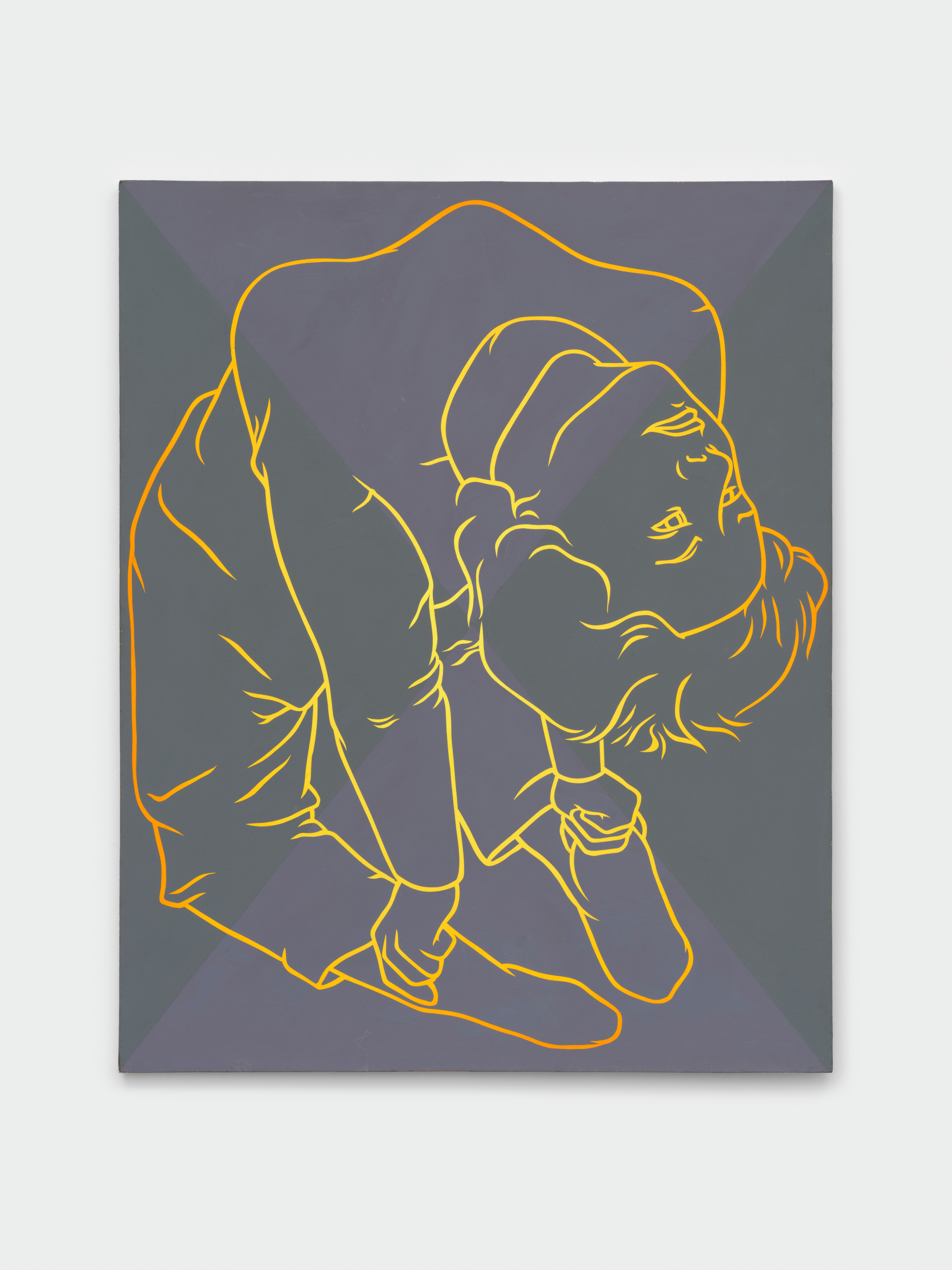

ND: Do you realise how fringe yoga was in 1982?
ND: It wasn’t a big part of pop culture. It was marginal and odd. I used to pick figurative imagery that way. What I loved about that image is that it never seems right side up because her face is upside down. It almost seems like it’s spinning. It’s really hard to see that piece through 1982 eyes.
ND: It’s been so interesting the last few years, with the renewed interest in my work. It’s made me look at older work with completely different eyes. It’s been such a gift for me. It’s hard to revisit your work unless somebody wants you to, because the basic condition of an artist is that you’re forcing unsolicited objects into the world. It’s a pretty pushy thing to be doing. I don’t have any illusions about feeling like I’m some big special human and everyone has to see my work. I do it because it’s the only thing that’s ever really gotten me interested.

ND: My involvement with Hallwalls came out of being a hungry student. Right before Hallwalls, I came to New York to do a studio semester.3 My eyes opened up to this whole world of contemporary art that I wasn’t exposed to at all in my art department in Buffalo. They took us to artists’ studios and I remember Robert Barry presenting his work. At first, I was like Archie Bunker or something. I was like, this is bullshit, he’s just picking out words. I hadn’t been sensitised to it. But it’s a clue when something pisses you off. When I went back to Buffalo to finish school, I was really hungry to continue learning, and I heard about these guys across town—Robert Longo, Cindy Sherman, and Charlie Clough—who were just starting Hallwalls. I just went and introduced myself. I needed community, I needed peers, I needed someone to talk to about all this stuff, and I went and found it. Nothing was going to stop me once I kind of got really turned on by it all. The guys who started Hallwalls, like Robert and Charlie, they understood the power of community way more than I did. They understood that community is about inclusion. I learned that through them.
ND: Yeah, there is this other tradition of artists just being these whiny little siblings who are all trying to get daddy’s attention. It is not very attractive.

ND: Carl Jung and Sigmund Freud are two of the apex influencers of 20th-century culture. Psychoanalysis is about questions of perception and reality and consciousness. A lot of it is kind of quirky and best read as fiction. But it ends up being a huge part of who I am and how I think. I used to know a lot of people who did not examine themselves on that level whatsoever. Now, I question if hardly anybody lives that way. If anything, people are tracking themselves without actually experiencing living.
What I was going to say about TikTok before, is that we’re in an era of the death of the audience. We’re all performers. There’s no audience. My least favourite word in the English language right now is ‘influencer’. It is such a vile word. It just offends everything I can think of—that sort of shameless self-involvement. It’s the opposite of what I value. And who knows what’s really going to influence anything. That’s above my pay grade. I’m just a worker bee.
ND: Amen. More and more, as time passes, it’s almost politically radical to be an artist. You’re using a completely different value system. —[O]
A respected voice in contemporary art discourse.
Focusing on ambitious storytelling and insightful art-world commentary. Ocula Magazine publishes in-depth interviews, critical essays and timely analysis on the artists, exhibitions and ideas driving the global art world.
Learn more about Ocula Magazine
Showcasing the best of the art world.
Ocula partners with galleries from around the world to highlight their artists, artworks and exhibitions. Gallery membership is by application and invitation, with each member vetted by an independent panel.
Learn more about Ocula Membership
Specialises in the sale of major artworks.
Led by a team with deep ties to the world’s leading auction houses, galleries and collectors. Ocula’s advisory team offers bespoke services to high-net-worth clients from around the world who are looking to acquire the best of contemporary and modern art.
Learn more about our team and services