The art world in focus
Subscribe to our newsletter for news and insights on artists, galleries and exhibitions.


Speaking from his Brooklyn studio, Nathaniel Mary Quinn exudes warmth and wit, though apprehension surfaces beneath his ease. His exhibition, ECHOES FROM COPELAND at Gagosian, draws on the literary empathy of Alice Walker and the figural tension of Francis Bacon, and marks a decisive turn. ‘I couldn’t keep on doing what I had been doing. I needed to do something different,’ Quinn shares.
The exhibition’s title references Walker’s searing debut novel, The Third Life of Grange Copeland, which Quinn first encountered while teaching literature to at-risk youth. Published in 1970—more than a decade before Walker won the Pulitzer Prize for The Color Purple—the book traces the lives of Grange Copeland, his wife Mem, their son Brownfield, and daughter Ruth, as they endure cycles of abuse and fragile hope in rural Georgia. The story resonated deeply with Quinn, who recognised in its themes not only the realities faced by many of his students but also echoes of his own upbringing in Chicago, marked by poverty, loss, and abandonment.
Holding degrees in art and psychology from Wabash College and later an MFA from New York University, Quinn was drawn to Walker’s subtle prose. ‘She sketches characters with just enough detail to leave space for empathy and invention,’ he notes—a restraint that informs his own blend of figuration and abstraction.
In earlier work, Quinn meticulously built his compositions section by section, combining fragments of memory, family photos, and magazine clippings into quilt-like painted portraits—faces so viscerally fractured they were often mistaken for collage. Executed in charcoal, gouache, pastel, oil stick, and paint, these unsettling hybrids became a hallmark of his early style, with The New Yorker dubbing them ‘a realist riff on synthetic cubism’.
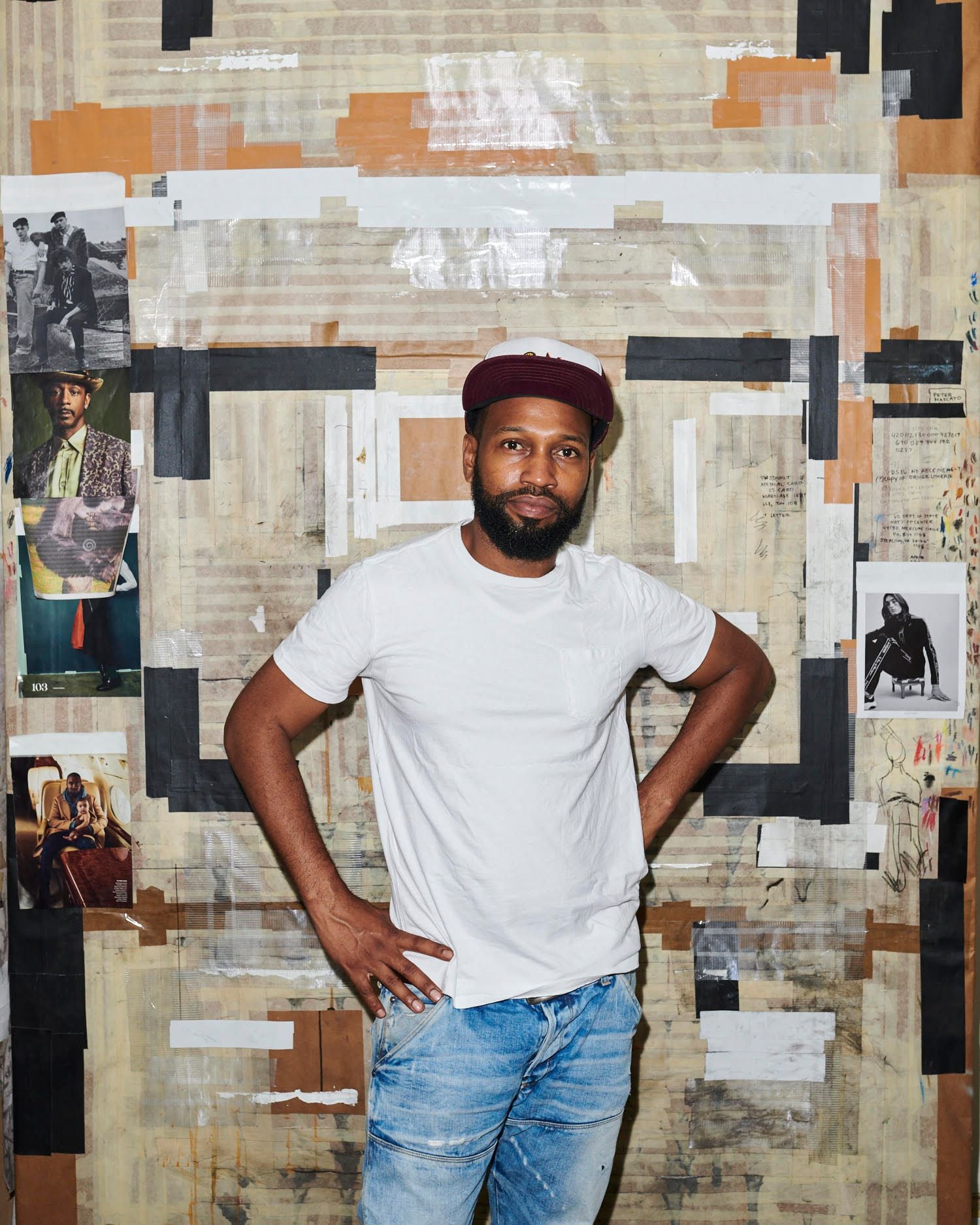
Those meticulously assembled portraits won acclaim, but Quinn has now shifted course. He wields brushes, palette knives, paper towels, and other tools to work dynamically across the entire canvas, a process that enables him to animate Walker’s characters with a broader range of colours and looser, more expressive brushstrokes. This evolution gives him freedom to situate his imagined figures in psychologically charged spaces: spare interiors, decaying urban corners, or open rural expanses—settings that evoke not just what it might mean to inhabit a life, but the psychic turbulence at its core.
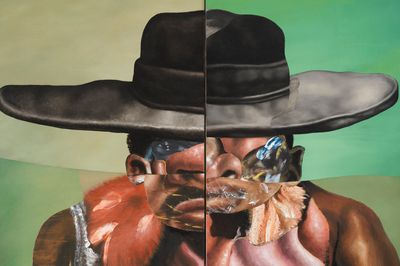
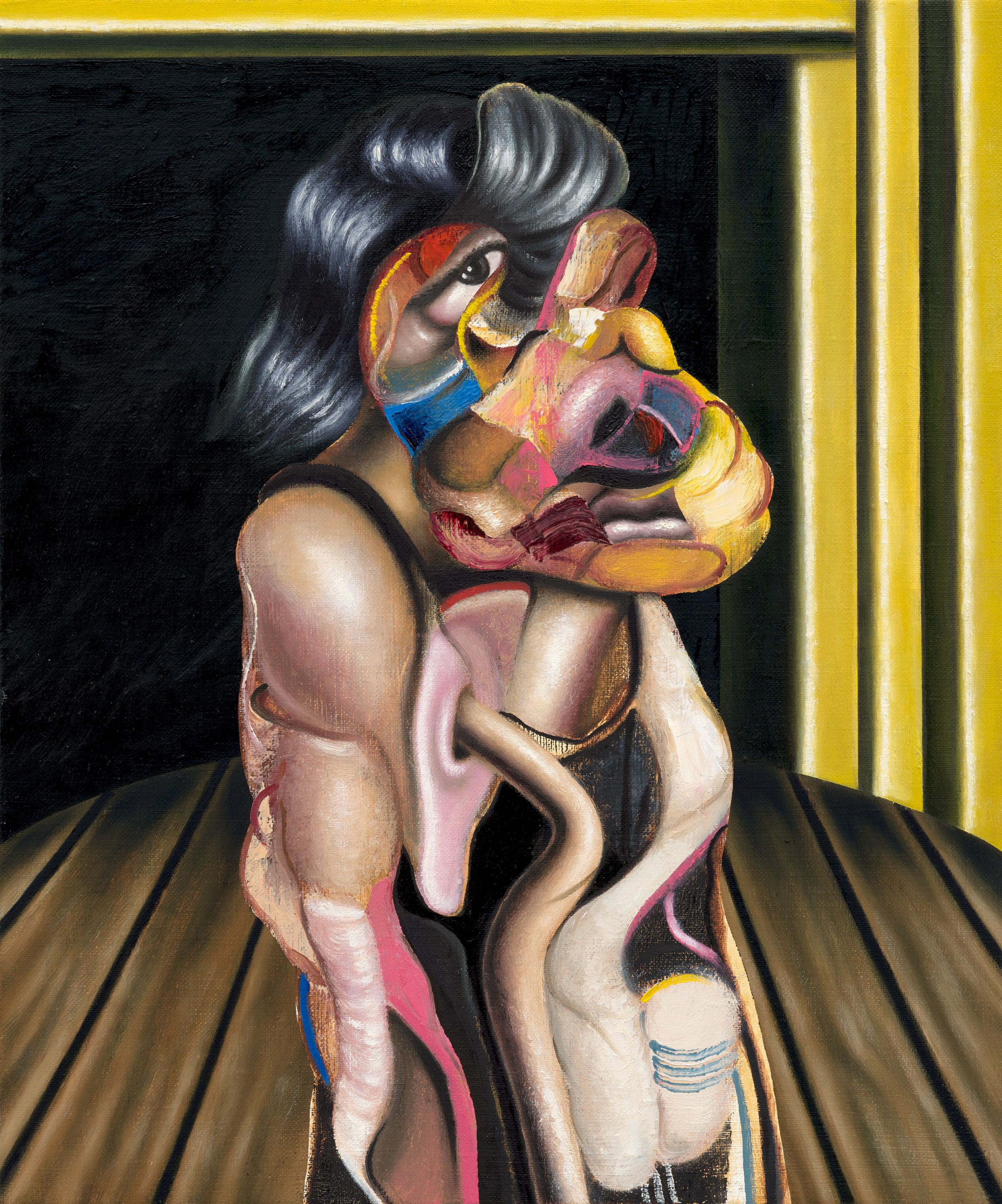
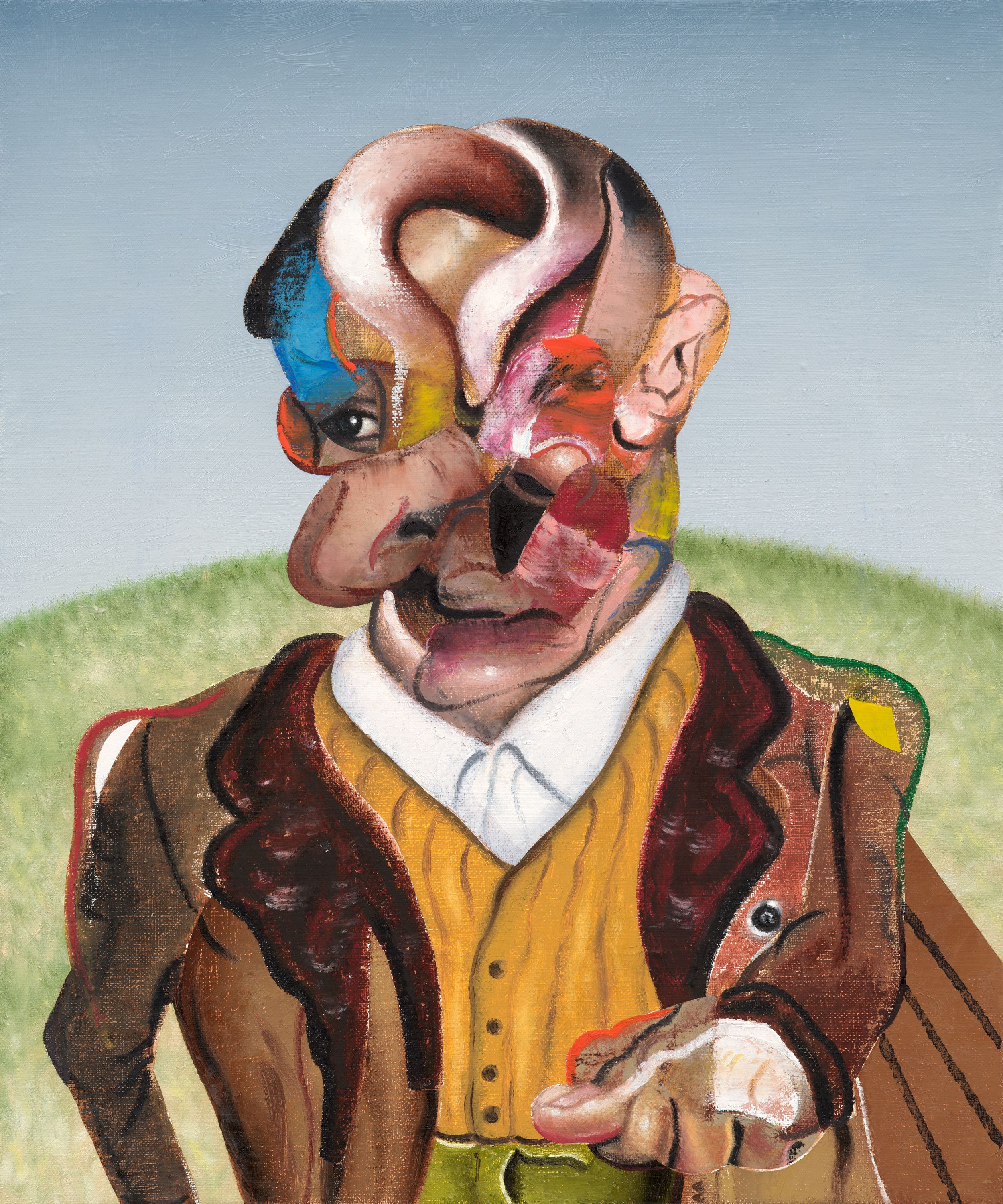
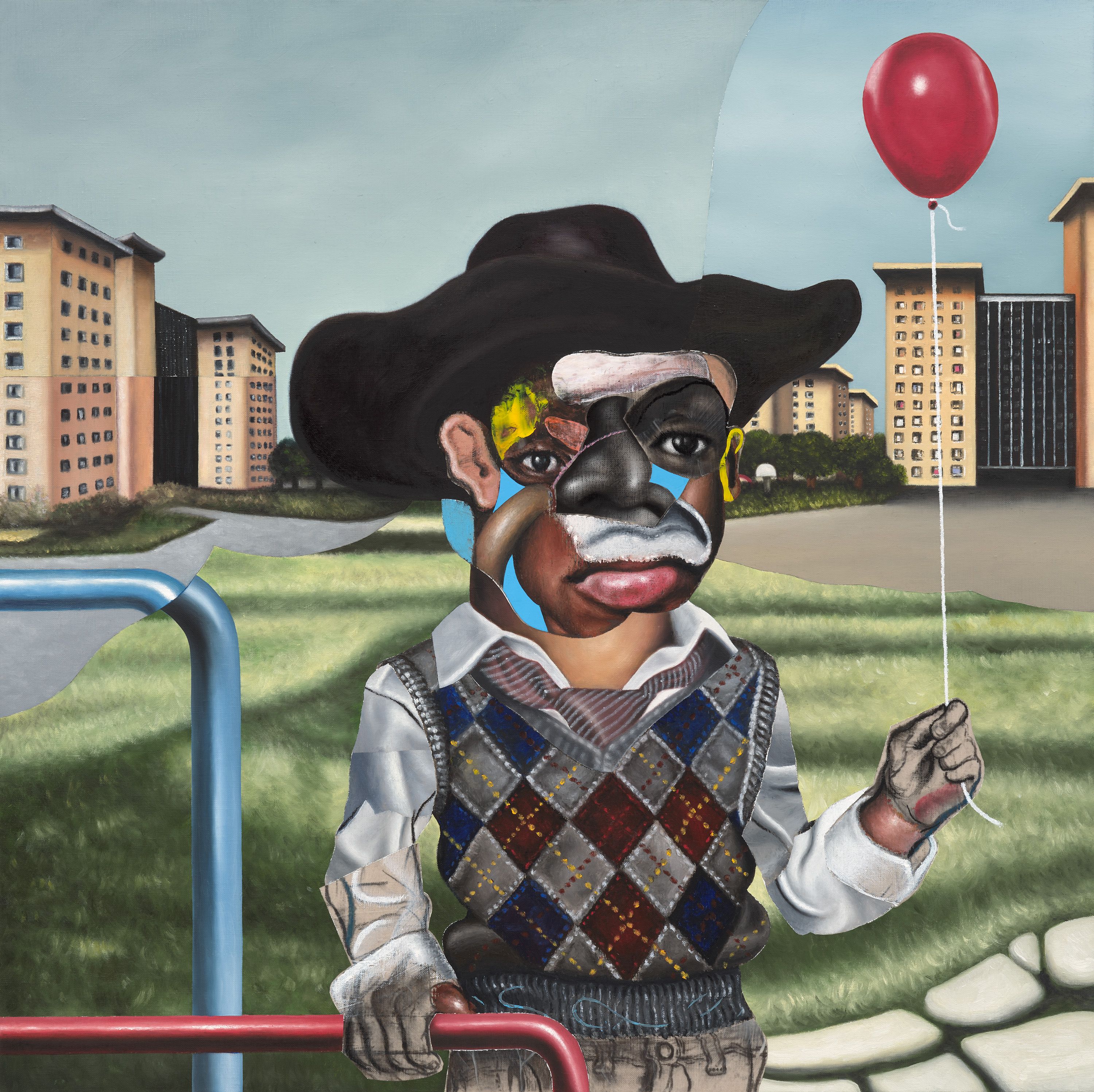
These paintings thrum with the shattered hopes of Walker’s characters. In Paint-Drawing Study for Mem (2025), the wife of Brownfield emerges as a mechanical composite. Gripped by Baconesque anxiety, her fleshy pink limbs dissolve into metallic appendages, her skin mottled by an abusive reality. The harsh contours of Mr. Shipley’s mangled face contrast with his flamboyant suit and the ripple of spray-gunned, pastel-green grass. Paint-Drawing Study for Brownfield’s Daydream (2025) introduces a solitary figure seated in the centre of a room, dressed to the nines in ambition, but hemmed in by swift lines. Grange’s portrait, closer in style to Quinn’s earlier mode, concentrates the atmosphere of turmoil in the protagonist’s gaze.
If Bacon’s existential dread courses through these paintings, it is tempered by Quinn’s conviction—echoing Walker’s wisdom—that beauty and hope endure even amid anguish. People, even in Quinn’s more narrative-driven work, are composites: never wholly grotesque nor purely radiant.
Speaking with Anna Dickie over the phone, Quinn discusses these contrasts and reflects on how fear—and at times adversity—can act as a harbinger of genuine progress.
NMQ: I came across it in the small library while teaching at-risk youth. I already knew of Alice Walker’s writing, so I picked it up, and reading it took my breath away. That must have been in 2005, and it stayed with me. I’m an avid reader and mesmerised by writers who truly know language. Walker’s command of it is extraordinary.
And then the story itself: it deals with cycles of abandonment, separation, violence, and this constant dream of getting away, of freedom and the promise of opportunity somewhere else, of redemption too—the character of Grange tries to give his granddaughter what he couldn’t give his son, Brownfield.
The book illuminated things I was seeing with the young people I taught—how trauma is passed down, how burdens are inherited, how cycles repeat, and how hard they are to break. Though it’s about Black American families in Georgia from the early 1900s through the 1950s, I felt it spoke directly to the human condition.
NMQ: About four or five years ago, I saw a Francis Bacon exhibition at the Royal Academy in London—it was the most powerful show I’ve ever experienced. I was moved to tears. I felt a profound kinship with Bacon through the language of painting. Though our backgrounds couldn’t be more different—him, Irish and grappling with his own demons in London; me, a Black man from Chicago with my own history—the emotional force of his work resonated with me. That show changed my studio practice for good. I realised I needed to do what Bacon did with figuration and abstraction: find a natural synthesis. Nothing forced. That’s when Alice Walker’s novel resurfaced as my foundation.
What I love about Walker is that she doesn’t over-describe her characters. She gives you, the reader, space. She offers just enough for you to build a picture, not so much that she shuts imagination down. That gave me freedom—the freedom to imagine, invent, and move fluidly between figuration and abstraction in a way that felt alive and personal. That freedom became my weapon. It allowed me to weave abstract elements into the figurative space. It’s in that gap where the work really takes shape.
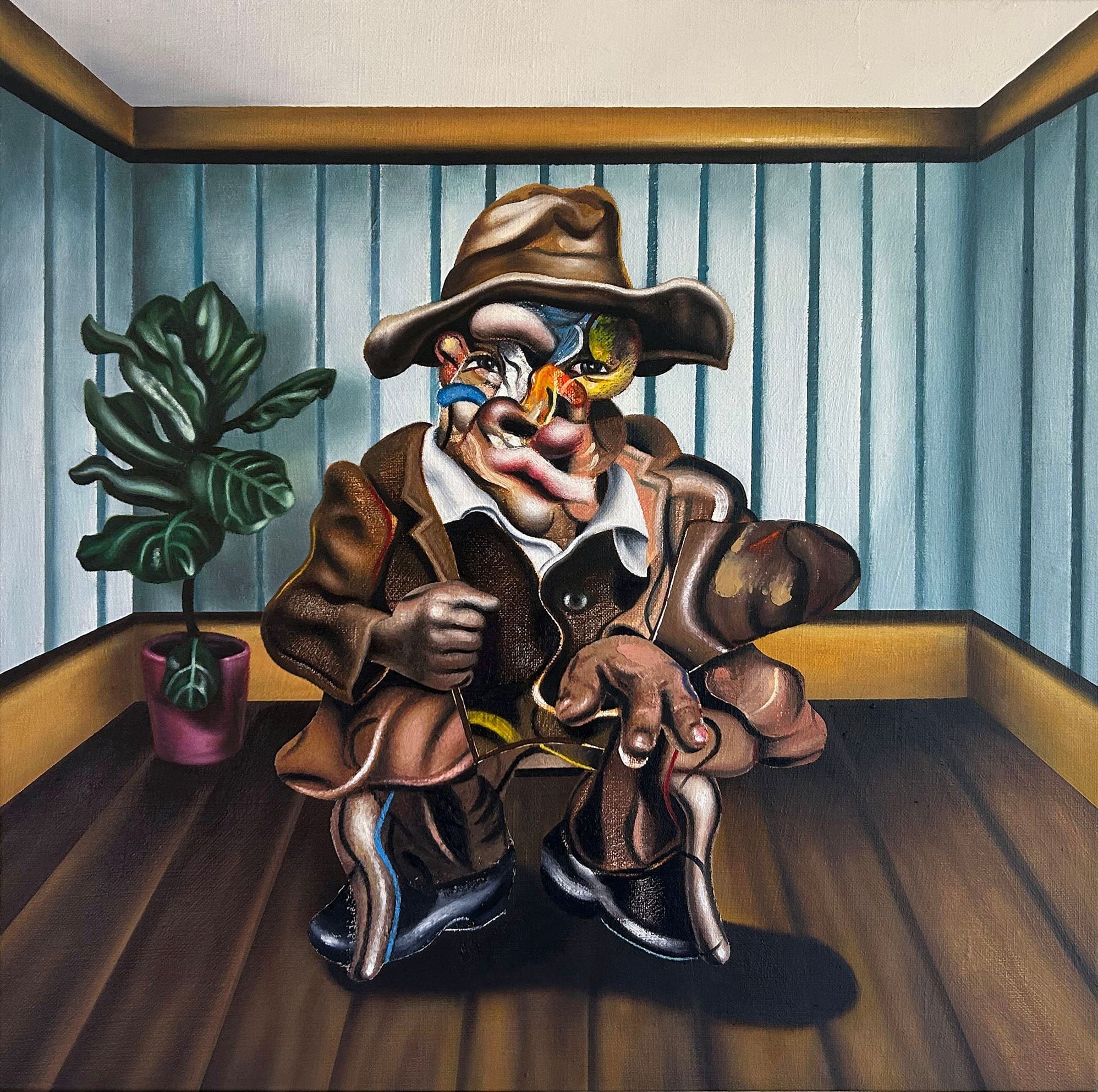
NMQ: In the novel, Brownfield is a young boy living with his mother, Margaret, and father, Grange—a family in hardship. Brownfield daydreams of a different life: driving up to a beautiful home, a family waiting for him, all well dressed, comfortable. His longing inspired that painting. It also connects to my own childhood: that yearning for another reality—the dream of a better life.
NMQ: Empathy runs through everything—it is evoked in the novel, through the characters of the children, especially. Brownfield as a child sees and feels the lack all around him. When you grow up poor, surrounded by glimpses of wealth, you dream even more fiercely. In America, you’re constantly exposed to affluence, which only intensifies desire.
Walker peppers that throughout the novel—children comparing their homes, their conditions, learning early about inequality. The empathy is in recognising yourself in those longings. I want viewers to see those longings as their own.
NMQ: I think human identity lives in that duality. Each of us presents a polished surface to the world, but at home, in private, our lives contain both beauty and grotesque struggle. My aim is to show the inner life, the emotional reality, not just the polished surface. That’s what motivates me: to let both beauty and pain coexist in one image.
NMQ: Yes. What I respect deeply about Bacon is his courage. He showed his suffering, his wounds, with honesty. That vulnerability moves me. Humanity is not about perfection—we fall, we fail, we bleed, and sometimes we recover. That’s the story that interests me.
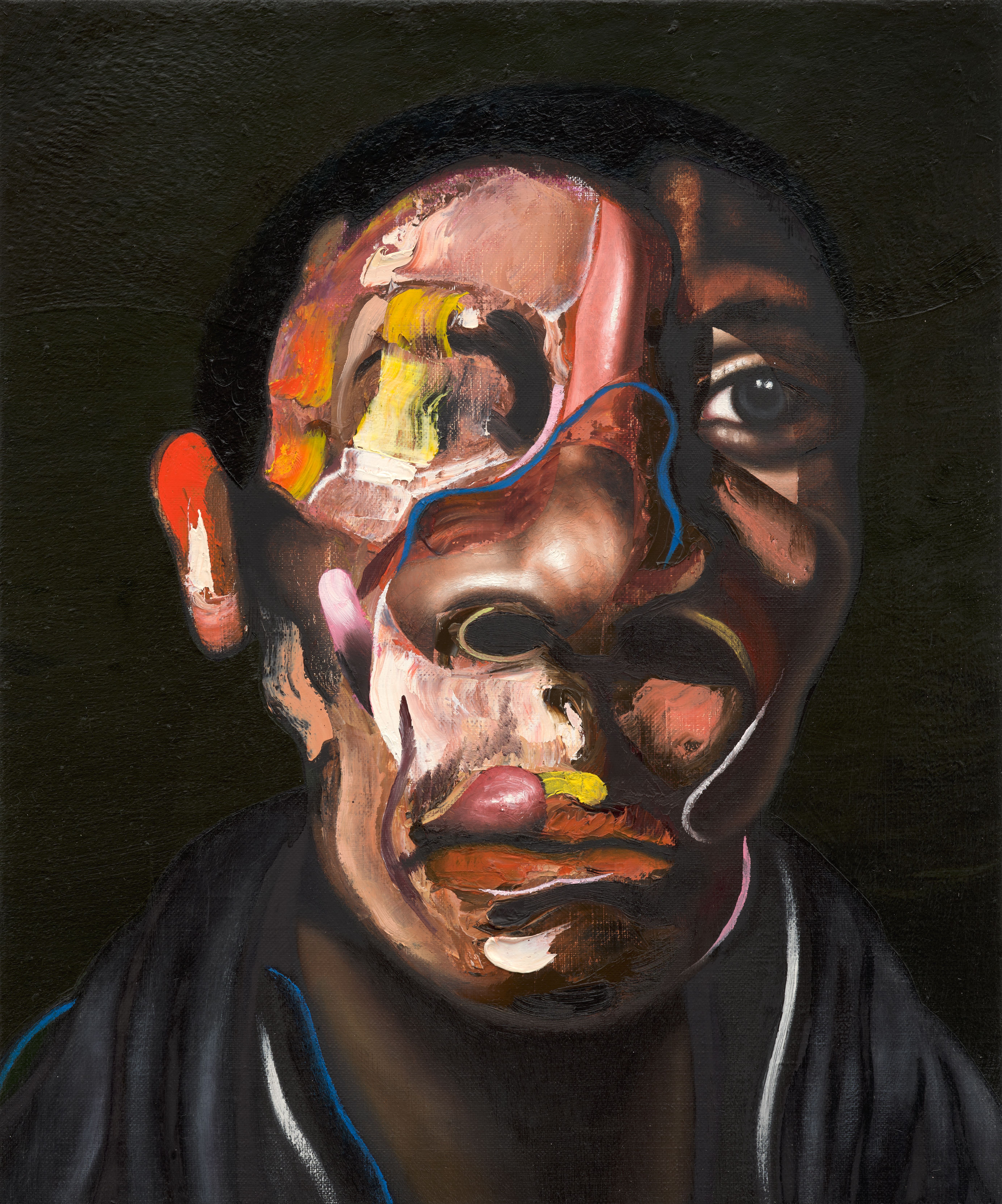
NMQ: Masculinity, like femininity, is a fact of life. It’s not inherently positive or negative. In the novel, Grange and Brownfield repeatedly fail at manhood in the social sense—at the role of providing, protecting, and nurturing family. They stumble, they hurt others, they try to make amends. Their failures are what fascinate me. To me, true masculinity means owning vulnerability—admitting weakness, acknowledging where you fall short. Brownfield can’t accept Mem’s success. Her brightness exposes his own inadequacy, so he sabotages her—that’s weakness, not manhood. Real manhood is being able to face your doubts head-on.
NMQ: Mem is incredible. She’s educated, teaches children, and is presented as pristine when Brownfield first meets her at the Dewdrop Inn. The beginning of their love is beautiful, but eventually she suffers because Brownfield projects his failures onto her.
That’s why in the painting she feels constructed—her body clunky, laborious, mechanical. It reflects not only her burden but also the trauma of the house she inhabits with him. And yet, always, I wanted the painting to still hold beauty—to balance the brutal with the delicate, just as Walker’s prose does.
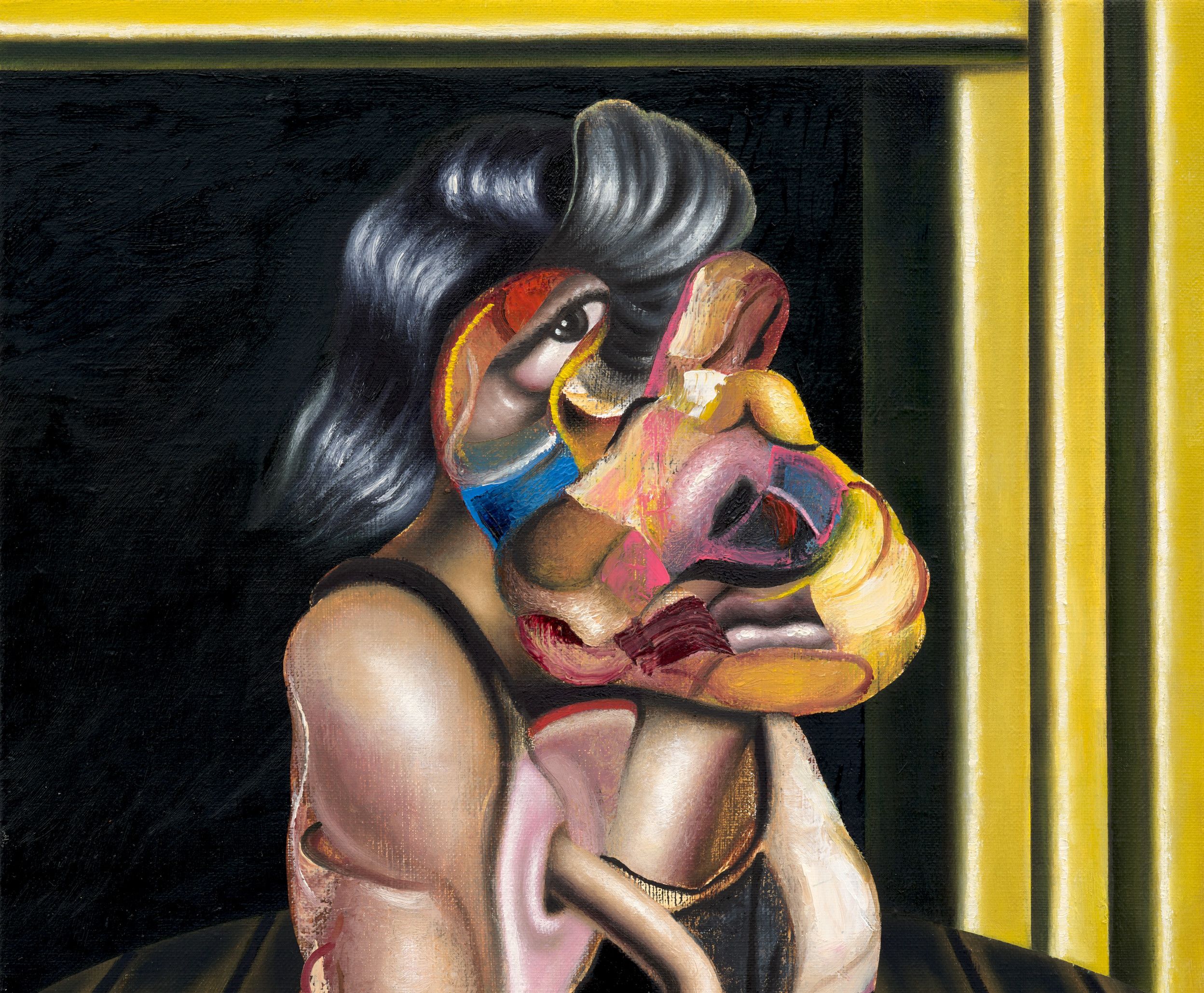
NMQ: Two reasons. First, Francis Bacon—his exhibition included works simply called ‘studies’. That idea stayed with me. Second, re-reading Grange Copeland was, for me, a form of study. Drawing has always been my first love—it grounds me. This exhibition was my chance to fold drawing and painting together, into what I call ‘paint-drawing’. These works still carry line and detail, marks that articulate figures and movement. For me, painting and drawing are inseparable.
NMQ: I want to share that I am terrified about this show. Honestly, I’m scared to death. I keep asking myself: are these paintings good? That’s what drives my nerves. Whatever they’re about, they must be good paintings.
But again, fear means I care. I’ve learned to see it that way. Anxiety means I’m invested. I am nervous because this body of work marks a real departure. I couldn’t keep on doing what I had been doing. I needed to do something different. I’ve stepped away from the sharp, collaged trompe l’oeil constructions that brought me recognition, and I’ve moved toward something freer—lines, gestures, colour, looseness. It’s frightening, but growth always is.
It took nine months—working every single day—of layering, stripping back, building, sometimes scraping down to the linen itself, then starting again. I made temporary tools to navigate the process of making the paintings. It became a sculptural process: adding, subtracting, shaping until the canvas felt alive.
At first it was hard, exhausting, scary. But then I began to feel liberation. It was exhilarating—like breaking out of a kind of bondage. I felt like a new me, walking into the studio reborn.
So yes: I’m scared. I want young artists to hear that. To hear that someone like me, showing at Gagosian, feels scared. And it’s OK to feel fear. To be vulnerable. Alongside that fear is joy—joy in having found freedom, and excitement for what’s to come. —[O]


A respected voice in contemporary art discourse.
Focusing on ambitious storytelling and insightful art-world commentary. Ocula Magazine publishes in-depth interviews, critical essays and timely analysis on the artists, exhibitions and ideas driving the global art world.
Learn more about Ocula Magazine
Showcasing the best of the art world.
Ocula partners with galleries from around the world to highlight their artists, artworks and exhibitions. Gallery membership is by application and invitation, with each member vetted by an independent panel.
Learn more about Ocula Membership
Specialises in the sale of major artworks.
Led by a team with deep ties to the world’s leading auction houses, galleries and collectors. Ocula’s advisory team offers bespoke services to high-net-worth clients from around the world who are looking to acquire the best of contemporary and modern art.
Learn more about our team and services