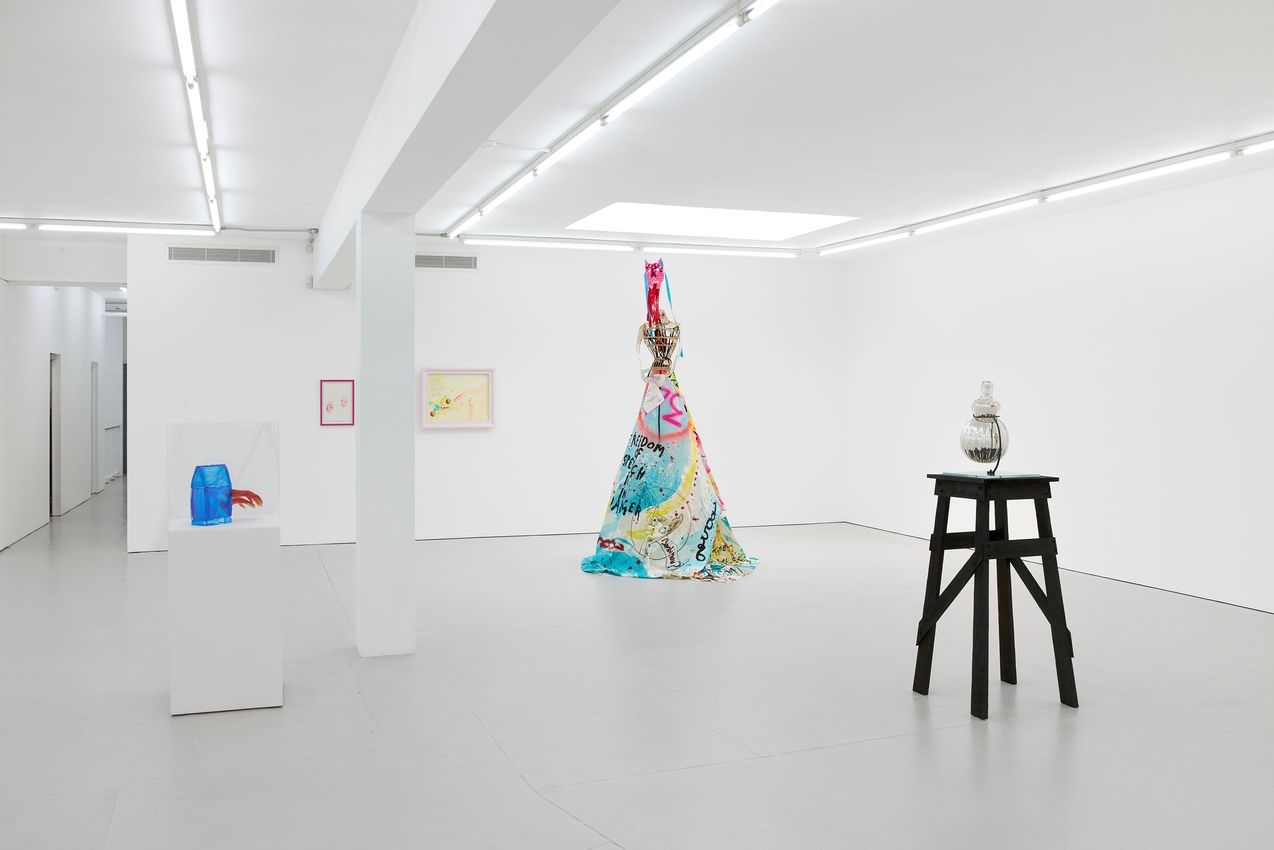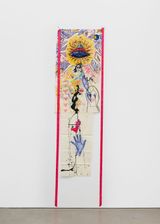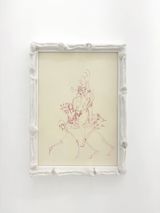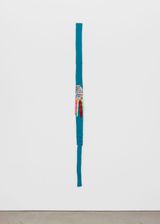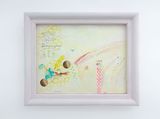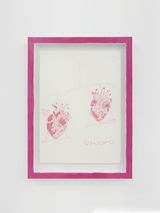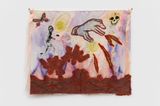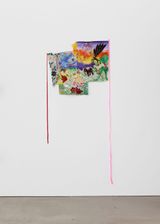




Maureen Paley is pleased to present Leap, the first exhibition of Delaine Le Bas at the gallery.
Her work spans objects, environments, textiles, costumes, and performances, occupying the intersection of the personal and the political, in dialogue with questions about land, movement, gender, and discrimination.
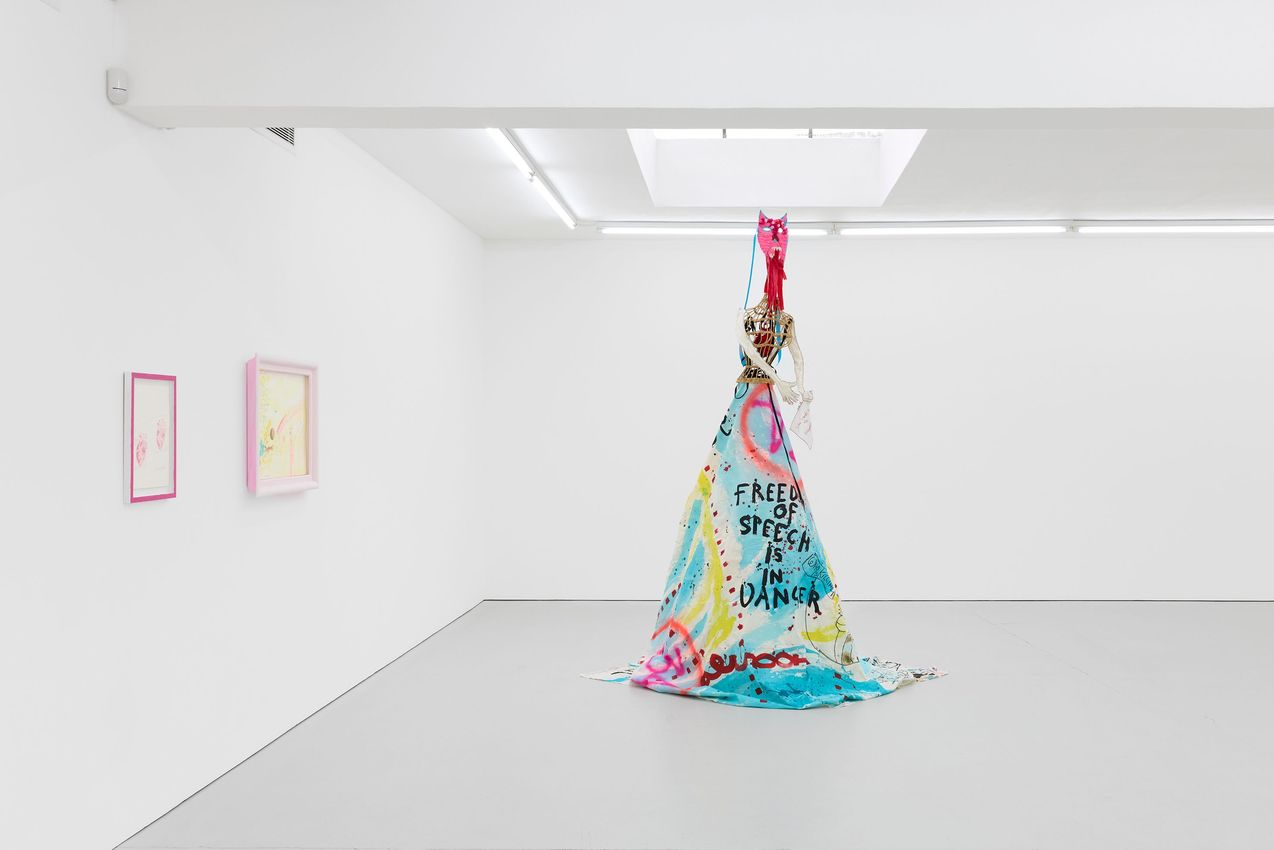
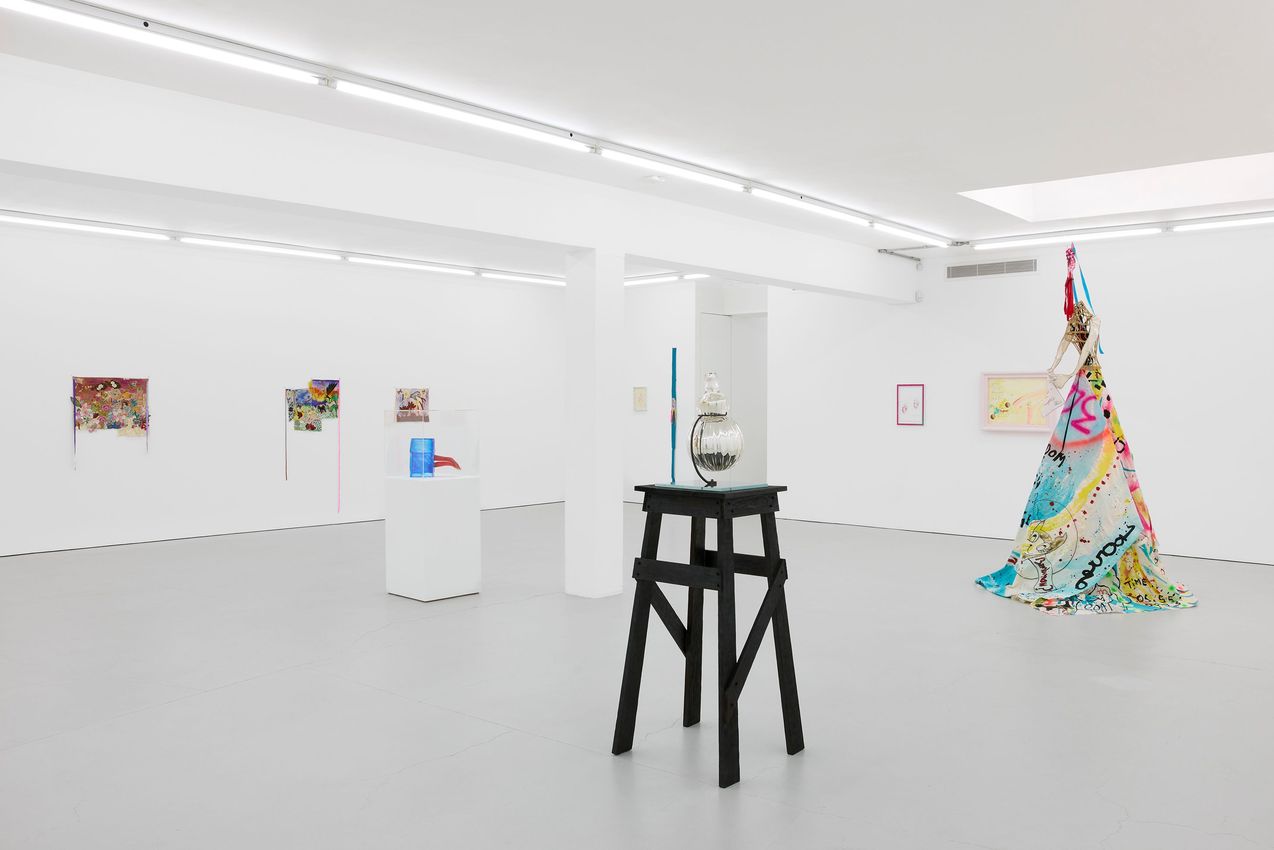
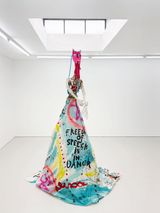
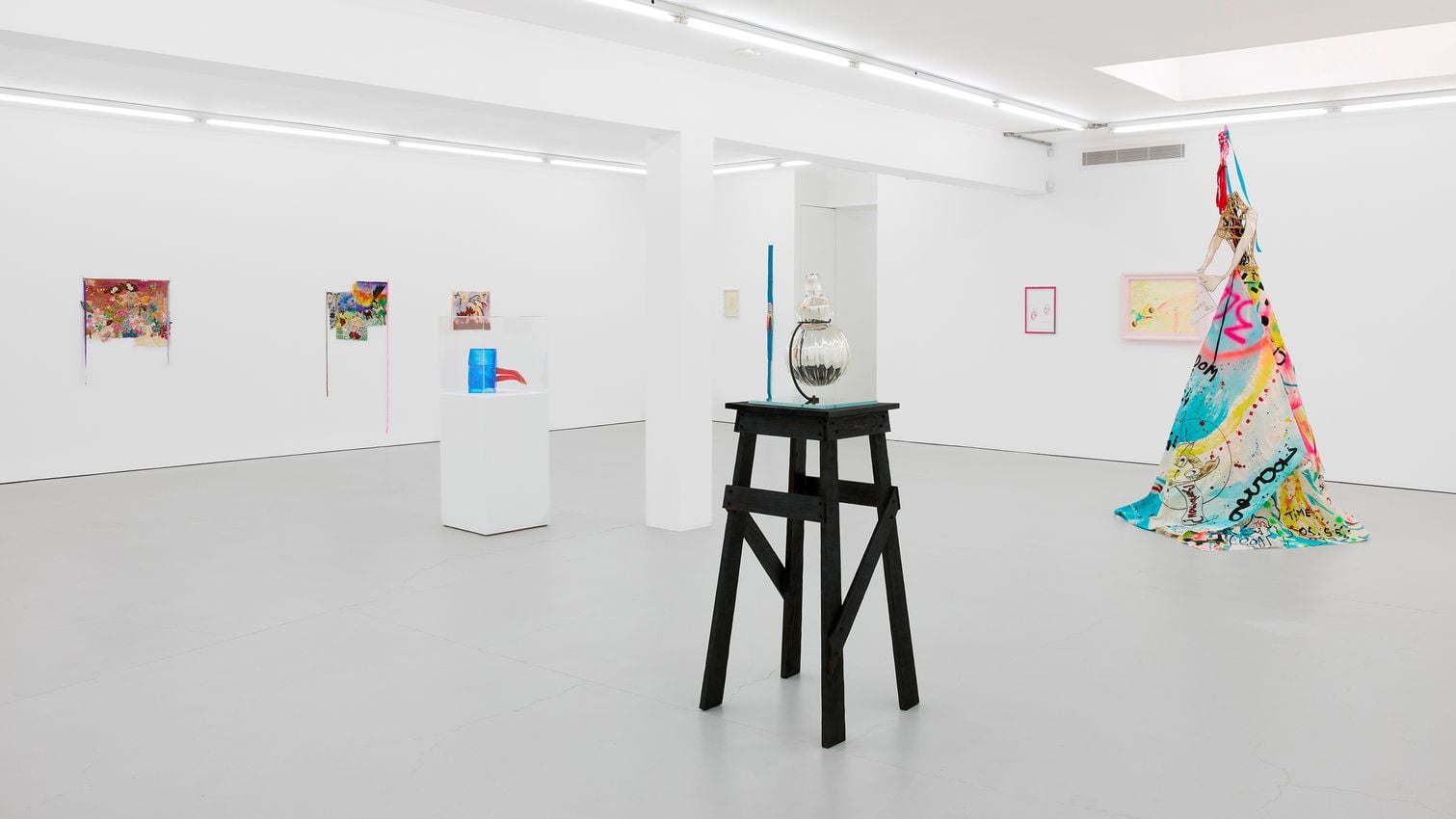
At the centre of the exhibition is The Goddess, a figure Le Bas envisions as a connective thread between her past and current practices, and through which all other works in the show are linked. The sculpture combines newly handmade elements with found objects, incorporating collected textiles, handkerchiefs, and vintage fabrics. As Le Bas writes: “The Goddess is a call to action in the times we now find ourselves, their heart visible through their fragile torso, their skirt graffitied to reflect where we are now.”
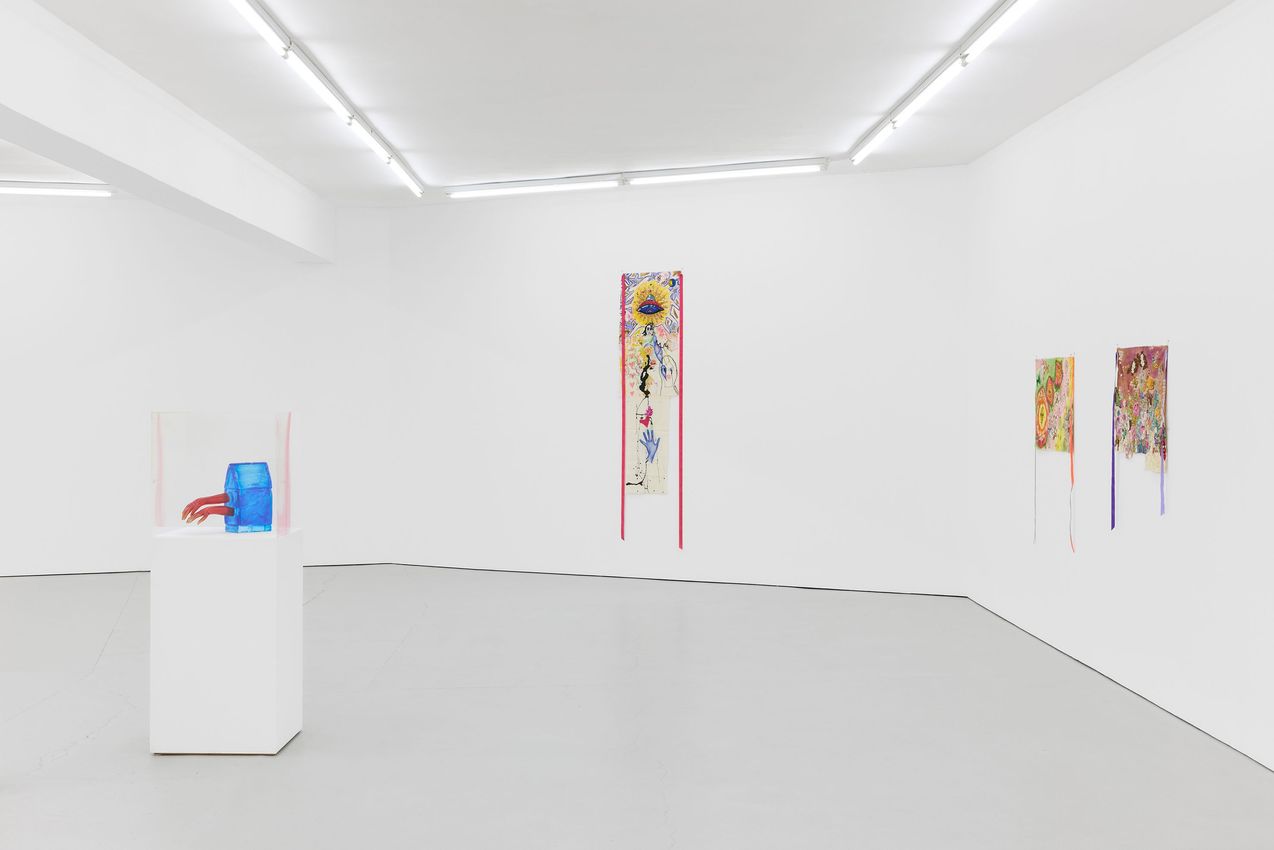
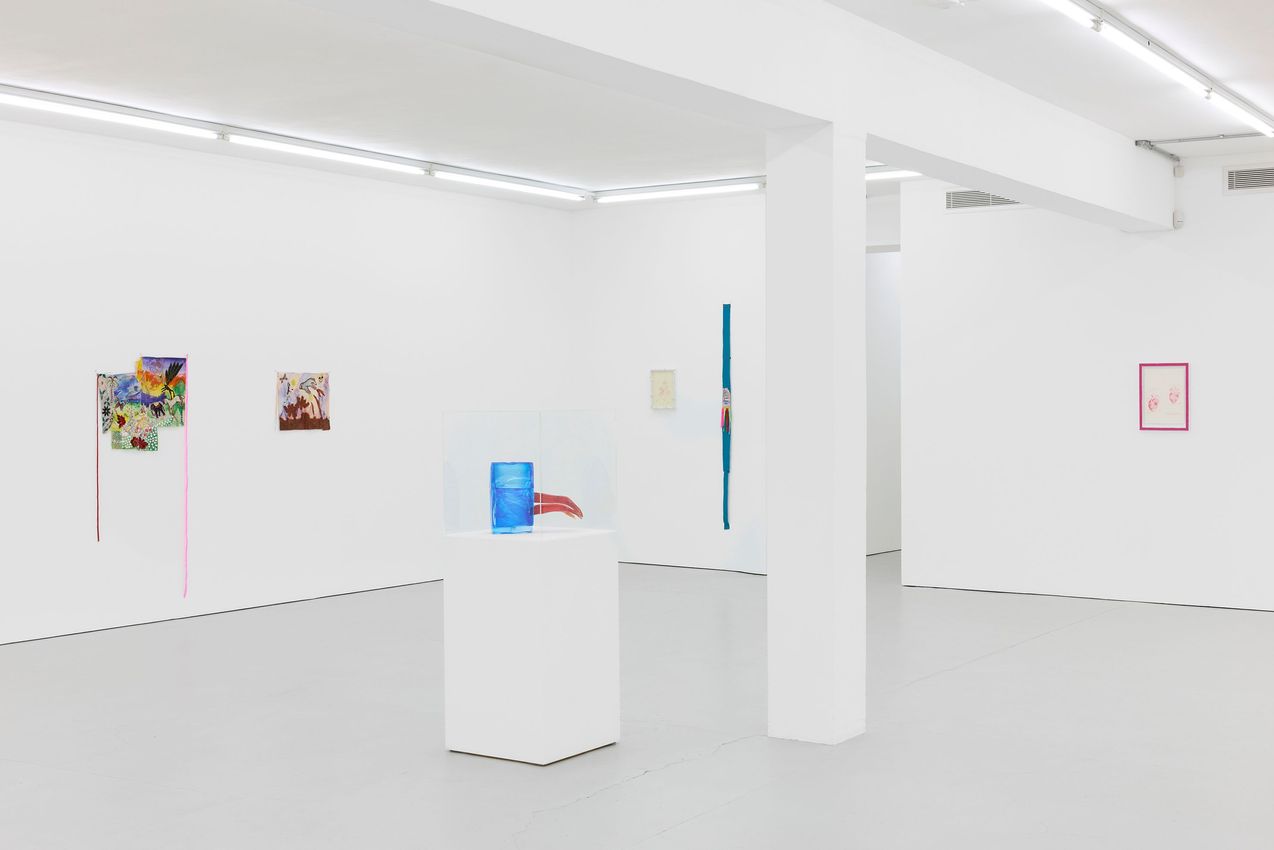
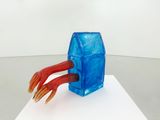
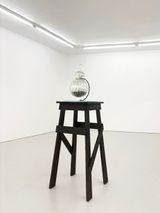
Also on view is a new series of works in Murano glass, made in collaboration with Studio Beregno in Venice.Produced in editions of two, the works retain visible differences between each pair — a quality Le Bas has embraced as integral to her broader inquiry into individuality and reproduction. “The alchemy of the process is full of surprises,” she has noted. Drawing on the iconography of witches and outsider figures, the works, in her words, “conjure my vision and experience of England while existing as a being at the intersection of a society that still views many as the ‘other.’”
The exhibition title, Leap, describes a movement that is at once backward and forward. As Le Bas shifts across scale, media, and modes of presentation, her practice remains grounded in both communal and personal histories.
”This show is a Leap. I’m leaping back, and with my collaborators, we are that Leap of Leopards that are hard to spot sometimes, but when you do see us, you will not forget.”
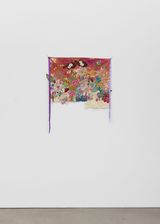
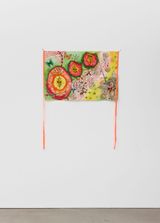
“In her words, Delaine has been ‘kicking around’ Europe with her hangings and constructions for years (including the first Roma Pavilion at the Venice Biennale in 2007), with a recent surge of interest following her expansive yet intimate 2024 Tramway show in Glasgow and subsequent Turner Prize nomination. She is renowned for her performances and installations such as Witch Hunt (touring Europe since 2009, courtesy of Foundation Kai Dikhas in Berlin) which attack and pick at issues of misrepresentations and misapprehensions of identity and culture. Delaine grew up in a Romani family and suffered extensive bullying for her ‘otherness’ as a child. That formed both a carapace and a masking technique, a camouflage of visual, fashion extravagance and elegance that naturally echoed into her artwork. She has also seen herself as the ‘ungrateful guest at the dinner table’, but her exuberant energy has now gathered seemingly unstoppable, joyful momentum. Leap includes both historical and new work, placing them in new situations with works for walls and plinths. The artist’s wish for Leap is to encourage us to identify and confront institutional pacification, to question, to embrace joy, and to ’jump right out of the 21st Century as fast as we can, in order to create an environment in which we can truly run wild’.” – John Marchant, 2026.
Delaine Le Bas (b. 1965, Worthing) lives and works in Worthing, West Sussex, collaborating with her partner Lincoln Cato.
In Spring 2026, the Whitworth Art Gallery, Manchester, presented Un-Fair-Ground, a solo exhibition of Delaine Le Bas. In 2024, she was nominated for the Turner Prize, which was presented at the Tate Britain, London. She was nominated for her exhibition at Succession, Vienna, Incipit Vita Nova. Here Begins The New Life/A New Life Is Beginning (2023). Further solo exhibitions include +Fabricating My Own Myth – Red Threads & Silver Needles, Newcastle Contemporary Art, Newcastle, UK (2025), Delainia: 17071965 Unfolding, Tramway, Glasgow, Scotland (2024); House of Le Bas, Whitechapel Gallery, London, UK (2023); and St Sara Kali George, Worthing Museum and Art Gallery, Worthing, UK (2021).
She was one of sixteen artists who formed ‘Paradise Lost’ at the First Roma Pavilion at the Venice Biennale, 2007.
In 2015, she created the ongoing installation and performance work ‘Romani Embassy’. Her works were shown in Prague Biennale in 2005 & 2007, the Venice Biennale in 2007, 2017, and 2023, the Gwangju Biennale in 2012, Critical Contemplations at Tate Modern in 2017, and the ANTI Athens Biennale in 2018.


Delaine Le Bas works in a transdisciplinary way: she combines visual, performative and literary practices to create an artistic oeuvre that encompasses all areas of life. In her works she deals with many facets, political as well as private and emotional, which involve belonging to the Rom*nja people, their history and rich cultural heritage. On the one hand, she uses ‘classical’ forms and techniques, especially textile techniques such as embroidery and appliqué, which, in conjunction with large-flowered fabrics and fantastic imagery, are immediately associated with clichés and stereotypes. At the same time, Le Bas subverts her own decorative aesthetic by openly exploring her struggles, thus defying stereotypical limitations.


A respected voice in contemporary art discourse.
Focusing on ambitious storytelling and insightful art-world commentary. Ocula Magazine publishes in-depth interviews, critical essays and timely analysis on the artists, exhibitions and ideas driving the global art world.
Learn more about Ocula Magazine
Showcasing the best of the art world.
Ocula partners with galleries from around the world to highlight their artists, artworks and exhibitions. Gallery membership is by application and invitation, with each member vetted by an independent panel.
Learn more about Ocula Membership

Specialises in the sale of major artworks.
Led by a team with deep ties to the world’s leading auction houses, galleries and collectors. Ocula’s advisory team offers bespoke services to high-net-worth clients from around the world who are looking to acquire the best of contemporary and modern art.
Learn more about our team and services