





Did Martin Parr Highlight or Reinforce Class Stereotypes?
The late photographer’s celebrated, saturated, unapologetic examinations of class in the U.K. remind us that neutral observation is rarely possible. Save to My Ocula
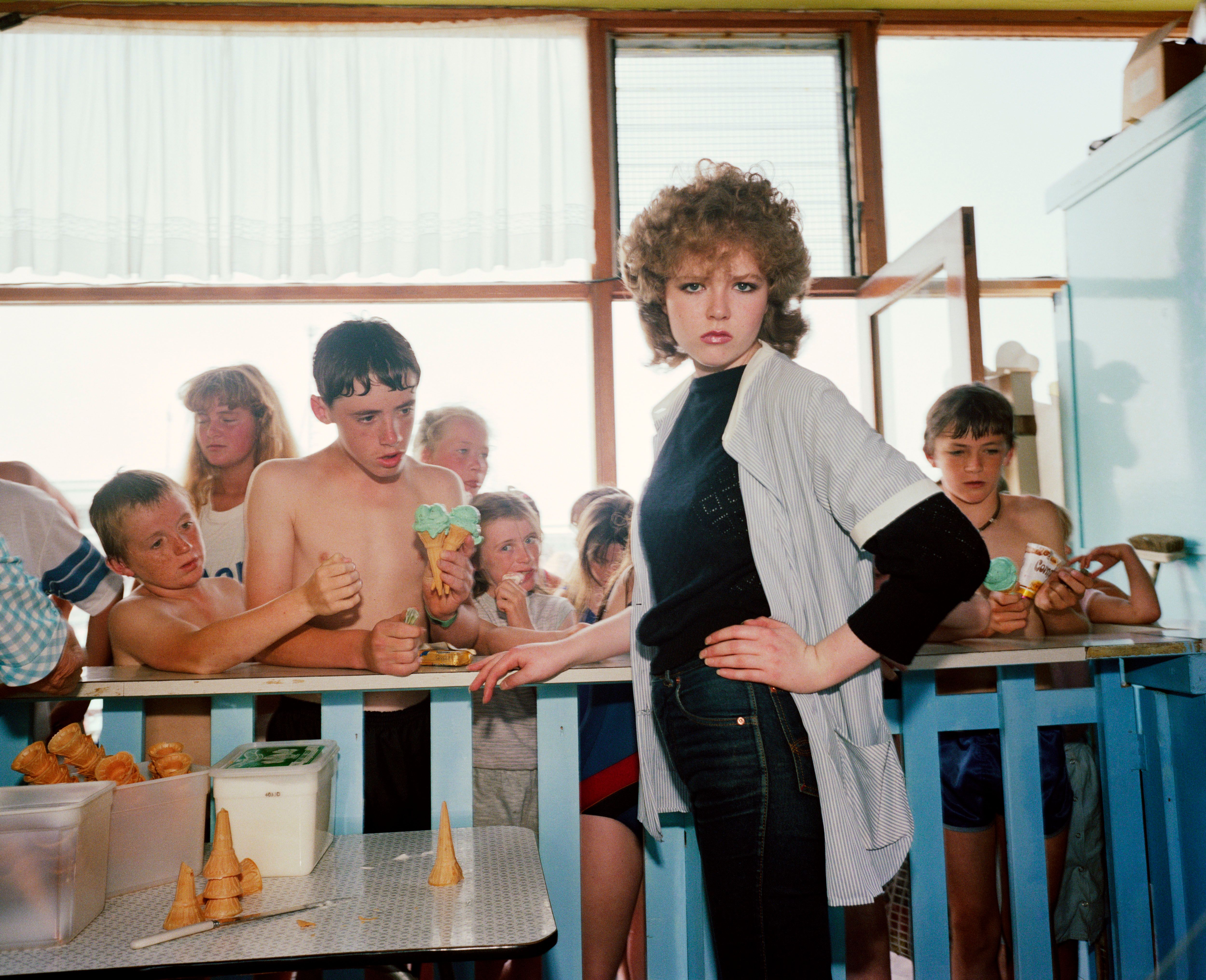
It is the girl in the ice cream parlour that I’ve always liked best. As I read tributes to the British photographer Martin Parr, who died this week aged 73, she keeps flashing into my head. Parr photographed Ice Cream Girl during the mid-1980s, a horde of hungry-looking children behind her, as part of a series of portraits of holidaymakers in the Merseyside resort of New Brighton. She is unfazed by their appetites, and unfazed by those of Parr, and his audiences, too. Looking right down the lens, she almost seems to be asking a question: what exactly is it we want?
The question is a useful one. When The Last Resort was first exhibited at the Serpentine in 1986, it immediately divided opinion, and was notoriously uncomfortable for some. As British critic Anna Coatman put it in an essay published earlier this year, the series ‘catches people at awkward angles, in absurd moments, sunbathing surrounded by rubbish, ice creams melting’. What exactly is it that Parr wanted from these photographs? What might we want to take from them, 40 years on? There is no doubt these are images that scrutinise. Brightly lit, highly saturated, and often seeming to catch their close-cropped subjects off guard, they are consciously invasive in their style. They rarely depict their subjects at their best, nor do they appear to have any intention of doing so. The title of the series, evoking desperation, is a blatant admission of judgement, though at whom, or what, that judgement was directed remains an open question.

In any case, it is little surprise that these images provoked strong reactions when the Serpentine show opened. David Lee wrote in Arts Review that Parr ‘habitually discovered visitors at their worst’, while for Robert Morris, writing in the British Journal of Photography, the images ‘obviously exaggerated the negative aspects of the town’. Further difficulties arise in the snobbish tones of some of those critics themselves, clearly disdainful of the apparently ‘clammy, claustrophobic nightmare world’ (another Morris quote) they saw being depicted. Fairer interventions are more likely to come from those who call that world their own, rejecting suggestions of its nightmarishness, and pointing to Parr’s own seeming strangeness within it. For Coatman, for instance, Parr’s photographs are ‘more uncomfortable than amusing’. Parr’s own southern, middle-class background (he was born in Epsom, Surrey in 1952) clearly inflects contemporary interpretations of his images, and rightly so. This is not a dogged identity-political determinism, but rather the acknowledgement of a complex artist-subject relationship (both distant and intimate, fascinated and repulsed) that is at the crux of—and some might even argue, to the benefit of—the aesthetic for which Parr became notorious.
What is strange, however, reading retrospective accounts of Parr’s work this week, is to see that complex contentiousness largely forgotten. When it is referenced, any discomfort is rapidly diluted in its retelling. Just as often, it is left out entirely, replaced not by nuanced defences of Parr’s practice but by weak summations of it instead. Many of the tributes written to Parr posit him as an eternally sweet old man, simply snapping holiday photographs for the nostalgically minded. In these write-ups, Parr himself is ‘brilliantly human’, or a ‘chronicler of eccentricity’. The photographs themselves are billed as ‘hilarious and heartwarming’, ‘kitschy’, and full of those ‘unvarnished quirks’ the kind that make Britain ‘charming and bizarre’. They are, it is sometimes conceded, amusingly controversial—contentious in some ambiguously old-fashioned kind of way. That doesn’t really matter, though, because now these are ‘iconic portraits’ of the ‘resilience of the North of England’. Insert here any number of other patronisingly sanitising clichés you like.
These tributes seem to posit Parr on the same terms set by I Am Martin Parr (2024), a documentary by Lee Shulman that served as something of a pre-emptive legacy film when it was released earlier this year. In the opening frames, Parr shuffles down a British seafront with his mobility aid, stopping to photograph a bird. It is a grey, placid, seemingly innocuous scene, more Alan Bennett than ‘The Last Resort’. It is an understandably low-stakes and generous portrait of a man at the end of his life, yet we should be wary that such a framing doesn’t threaten to subsume a lifetime of politically provocative work.
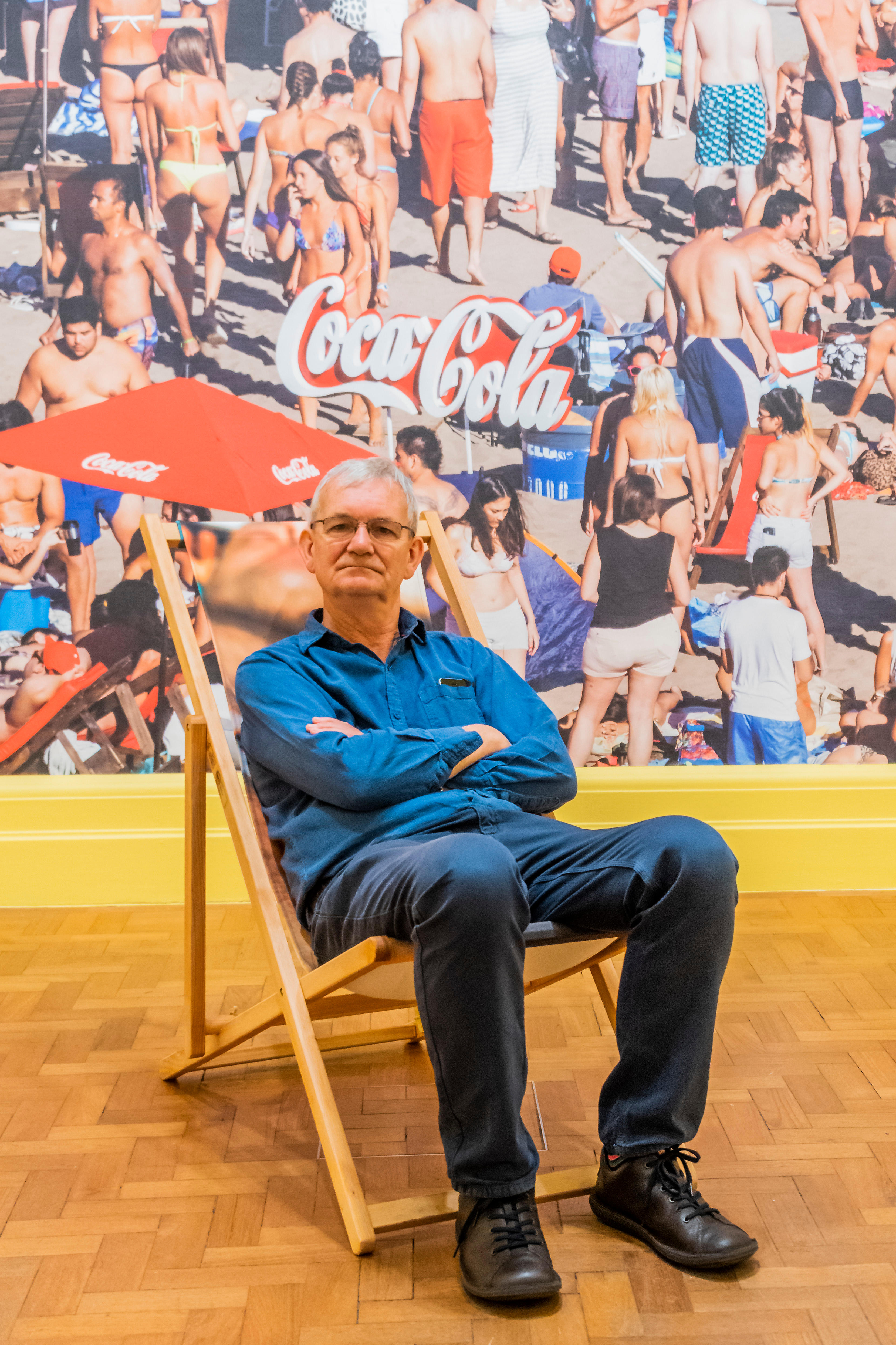
Parr photographed beach resorts as symptomatic of national economic hardship and travelled up and down the country asking people about Englishness just as devolution was gathering pace. In 2019, his Only Human exhibition at the National Portrait Gallery engaged extensively with the meanings of post-Brexit Britain. It should come as little surprise that, particularly later in life, Parr himself admitted that his photos were ‘a social critique […] politically inspired’. In an interview with Dispatch Media just a few weeks ago, he put it even more plainly, admitting, once and for all: ‘Politics is my work.’
Accounts of Parr as a happenstance observer of ‘the human sublime’, particularly when applied to his documentation of the intricacies of the British class system, evacuate all sense of a meaningfully material politics, and further naturalise the specificities that often obsessed him so. They fail to see that it is the particularities of our national politics, rooted in systematic inequalities, that are baked into these images and baked into their reception. No other British artist has staged such national encounters with the weight of classed judgements, nor the complex aesthetics of taste. No other artist has so successfully forced us to see one thing in particular on such an epic scale: the politics of looking itself.
Looking, for one, meaning the weight of appearances, and the unconscious calls each of us make about the people we encounter, based entirely on how we happen to read the way they look. Parr’s gaze was not neutral (much as he might have sometimes pretended it was), and it often risked perpetuating its own flawed dominance. Still, we might at least take from his work a reminder of the impossibility of neutral observation, in a country in which a knotty trap of aesthetics, culture, and value judgements, have been so intensely allied with economic inequalities, so as to render the two almost impossible to untangle.

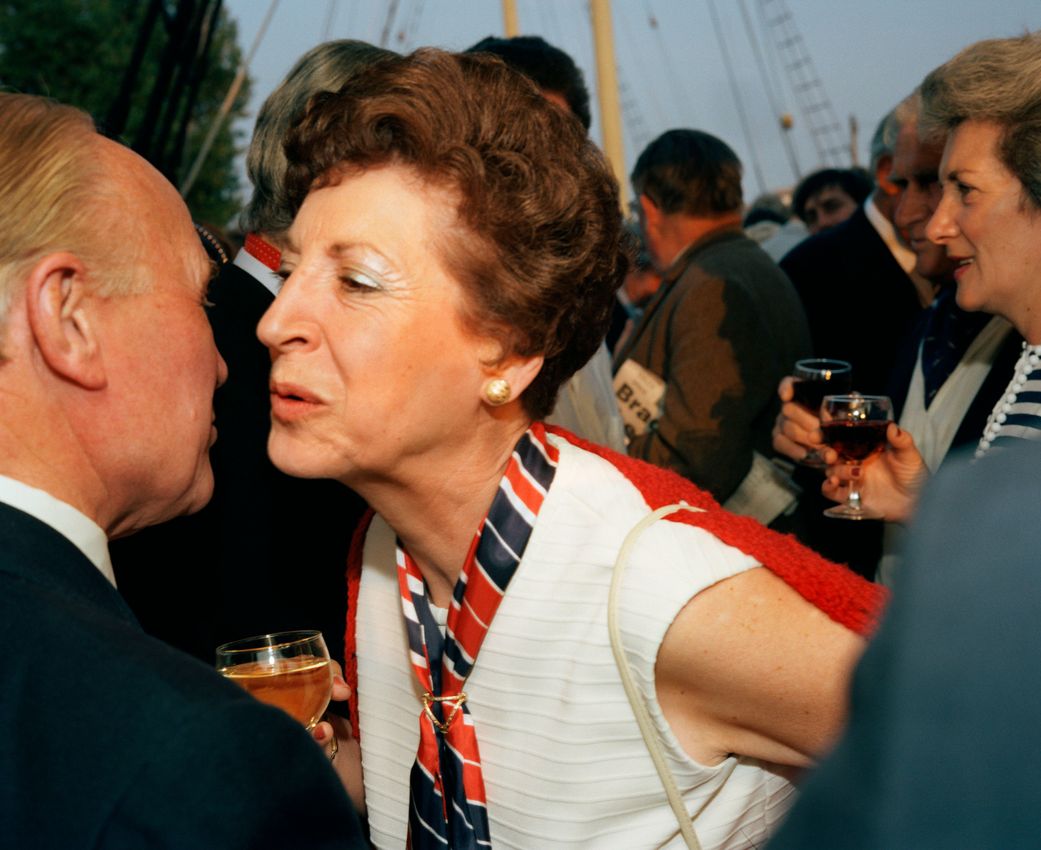
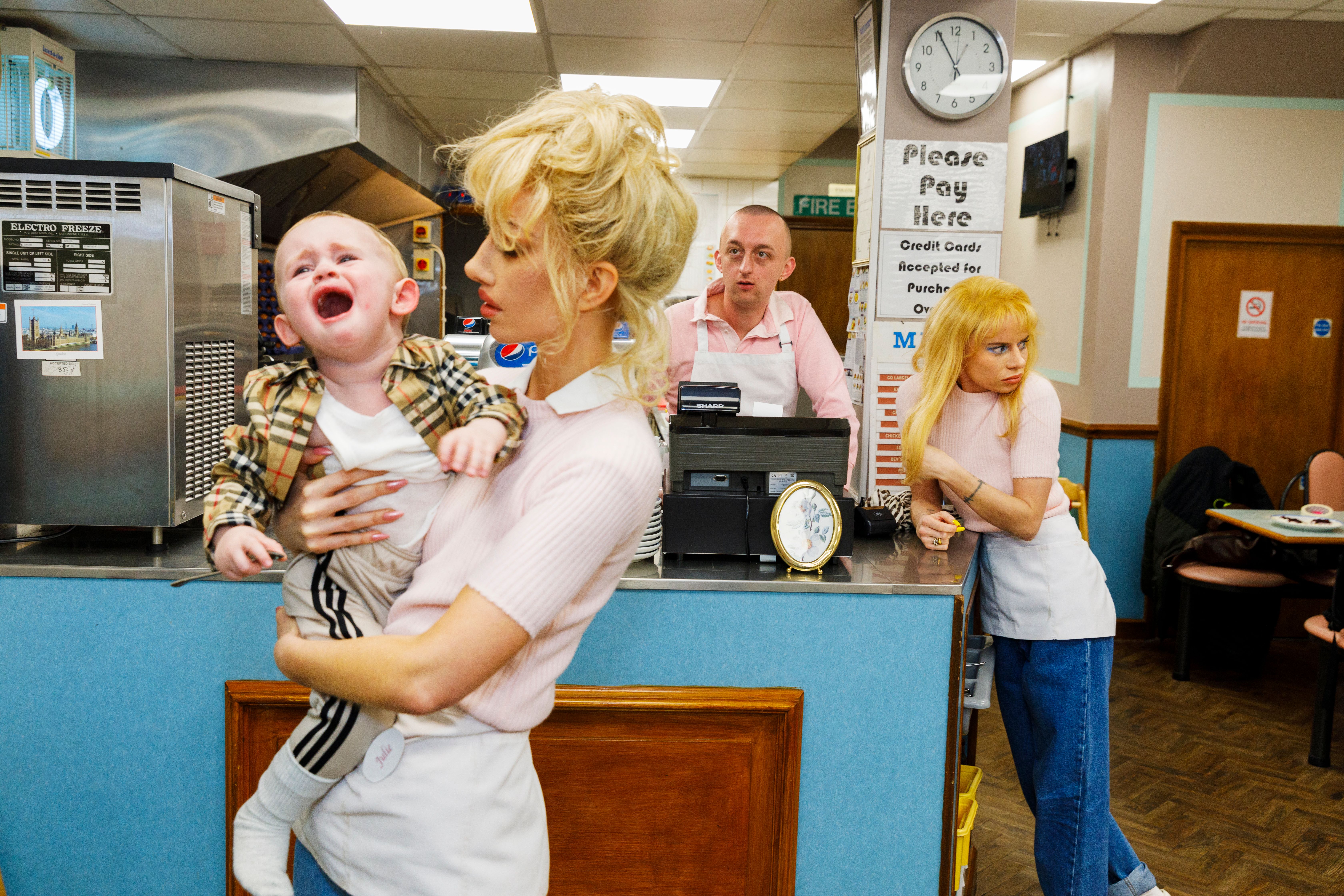
Take Bristol Election Party Aboard the SS Great Britain (part of the 1988 series ‘The Cost of Living’) and any image of Julie Bullard (a character Parr dreamed up with British artist, filmmaker and model Nadia Lee Cohen earlier this year). In the first, a middle-aged woman is make-up free, save from a light opalescent glow on the eyelids, the same shade as the sole pearl that decorates her ear. A navy and red striped tie is neatly wrapped around her neck, and she clutches a small, delicate glass of white wine. The second subject is a younger woman, often wearing a flannel dressing gown, ‘an ode to nineties Essex’ inspired by Cohen’s own babysitter. Her nails are pink acrylic, her face heavily contoured, and her hair big, rollered, and blonde. Place these side-by-side and observe how your average (British) viewer might presume, instinctively, to know something of these women’s lives, and, crucially, of their economic circumstances. The latter reads as firmly working-class, the former much more middle. Yet these judgements are entirely based on bodies, and the make-up, hair, and clothes, that adorn them (all hugely inflected by gender and race, too). They are an imposition, specific to the particular and nefarious boundaries that truly define what it means to be British. Parr understood that this process of recognition and judgement was replicated hundreds of times a day, often in ways that barely consciously register. ‘I think you can still tell the class of someone when they walk into a room,’ as he put it to Dispatch, ‘I certainly can.’


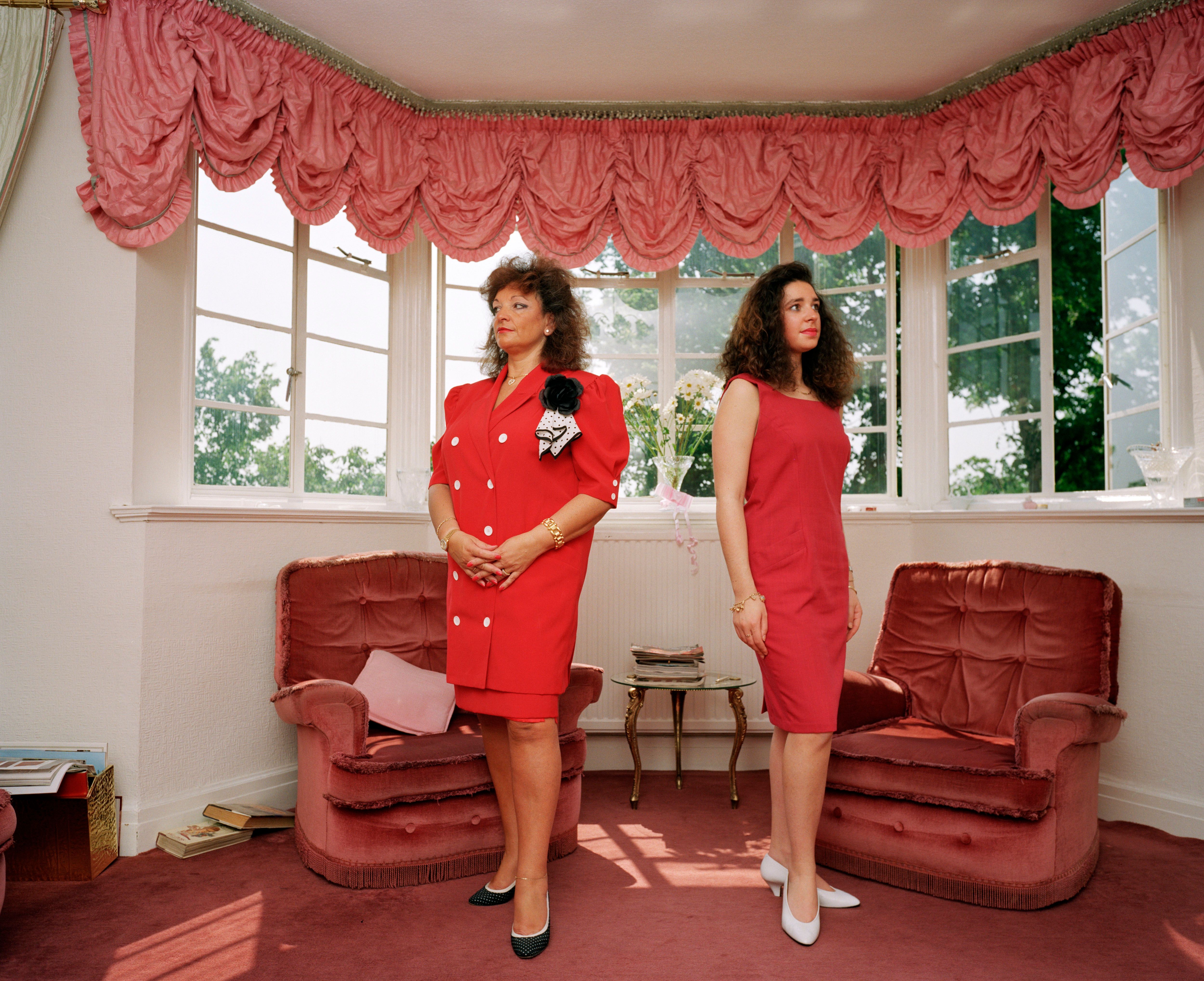
A project such as Parr’s ‘Signs of the Times’ (1992) took that weighty process of cultural signification as its subject, billed on the photographer’s website as: ‘a vintage—and hilarious—look at personal early 90s taste in the British home, exploring the extraordinary range of emotions that lie behind our household decor.’ It offers a sharp look inside the homes of people from across the U.K., from a range of social backgrounds and, by extension, is an invitation to think about commodities, social relations and, above all, ‘taste’ itself. Parr was well aware that, as British critic Nathalie Olah put it in her 2023 book Bad Taste, ‘to have taste was to have class was to have understood the social codes enforced by the protectors of money and opportunity’. To encounter this, and to force his audiences to encounter it too, wasn’t merely to record a funny little oddity of life in Britain, but to peer closely at a nation saturated by a decade of Thatcherite individualism, and on the cusp of the total internalisation of consumer capitalism as spectacle (a phenomenon the internet would only consolidate). You are what you are seen to have. Like them or not, Parr’s captions (‘EACH TO THEIR OWN BUT I THINK THIS IS GOING TO BE ONE OF THE BEST – IF NOT THE BEST – HOUSES ON THE ESTATE’) render it impossible for a viewer not to recognise, and reckon with, the rapid encroachment of particular social relations.
Another of Parr’s consistently political preoccupations was the felt qualities of Englishness itself. The photographer’s own 1999 documentary film Think of England, in which he travelled around the country during the summer of 1998 to ask people about their perceptions of ‘Englishness’, remains a fascinating account of a nation’s own self-perception at the turn of the century. Here, too, of course, self-perception is hardly what matters. When asked how to define Englishness, one self-identifying gentleman at the Henley Regatta tells Parr, ‘No hooliganism! […] Just people having a really nice time.’ In the next shot, another male guest tries repeatedly to expose a woman’s breasts to the camera. Parr’s chosen edit leaves us in no doubt as to his point of view. Think of England, yes, but Parr was far from the kind of passive observer who is content to lie back lazily.
Never naturalising, but rather drawing attention to its own constructedness, so much of Parr’s work demands that the act of looking itself is subject to interrogation. Yet when that interrogation came, feigning total innocence might have occasionally seemed the easiest response. ‘People are just lying there waiting to be photographed,’ Parr once said of his New Brighton subjects. It’s precisely this faux passivity of authorship that now threatens to detract from the actual value of his work. His England is not a quirky old island, captured in happenstance. It is an obsessively recorded nation, wrought by the politics of looking and the photographer’s selective eye, visible in Parr’s photographs, and in the difficult manner in which they themselves have long been received.
I’ve never quite made my mind up about how Martin Parr’s photographs make me feel, though the notion of them as merely amusing beach snaps is surely more than offensive than the images themselves could ever be. Love it or hate it, Parr’s work functions as a reminder: the power structures that constrain our lives are routinely consolidated, not only in the corridors of government, but via something so seemingly minor as a look. Perhaps that’s what draws me to Ice Cream Girl. She compels us to peer closely, in an echo of Parr’s gaze, but she also looks straight back at him. She reminds us of the value in holding that gaze, when we are told there is nothing to see here, or when we might simply prefer to laugh and look away. —[O]
Main image: Martin Parr, New Brighton (detail). From ‘The Last Resort’ (1983–1985). © Martin Parr. Courtesy Magnum Photos.





A respected voice in contemporary art discourse.
Focusing on ambitious storytelling and insightful art-world commentary. Ocula Magazine publishes in-depth interviews, critical essays and timely analysis on the artists, exhibitions and ideas driving the global art world.
Learn more about Ocula Magazine
Showcasing the best of the art world.
Ocula partners with galleries from around the world to highlight their artists, artworks and exhibitions. Gallery membership is by application and invitation, with each member vetted by an independent panel.
Learn more about Ocula Membership
Specialises in the sale of major artworks.
Led by a team with deep ties to the world’s leading auction houses, galleries and collectors. Ocula’s advisory team offers bespoke services to high-net-worth clients from around the world who are looking to acquire the best of contemporary and modern art.
Learn more about our team and services