






Living with Lee Miller
© Lee Miller Archives, England 2024. All rights reserved. leemiller.co.uk

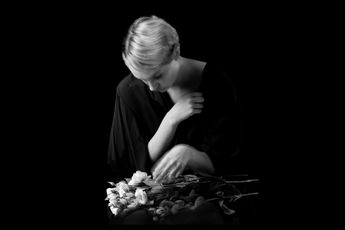
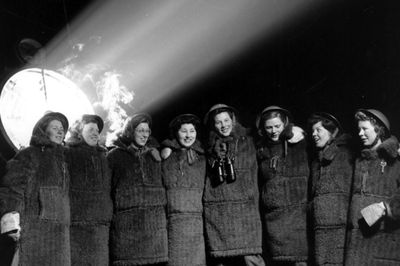
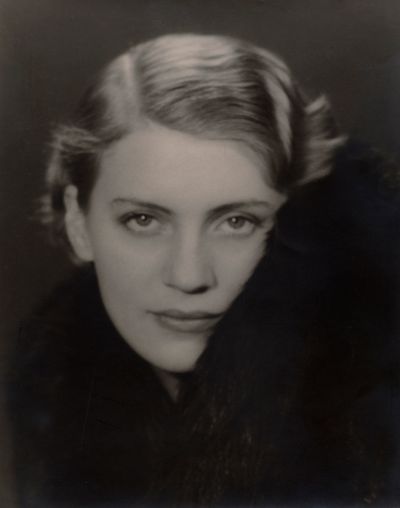
Lee Miller was infinitely adventurous. It’s what drove the 21-year-old aspiring artist to board a ship from New York to Paris in 1929 to persuade the notoriously guarded Man Ray to take her on as a photography student. It’s what got her accepted into the male-dominated Surrealist movement, capturing their attention with her cool wit and elegance. It’s what pushed her to the sharp end of WWII action as a Vogue correspondent, her dispatches from Saint-Malo and Buchenwald transforming its glossy fashion pages into essential wartime reading.
Her charisma served her through later life, when she took up cooking to combat her PTSD, hosting dinner parties in which she served sesame chicken to Joan Miró and Christmas pudding to Pablo Picasso.
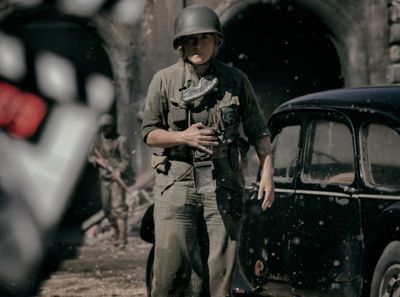
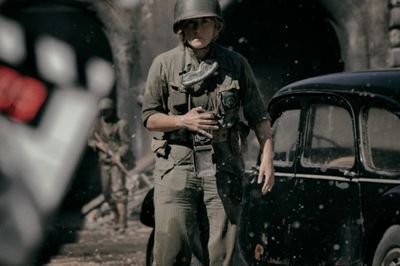
Miller’s years on the frontline are now being commemorated in Lee (2024), a biopic starring Kate Winslet and adapted from the 1985 biography The Lives of Lee Miller, written by her son, Antony Penrose.
In addition the Tate Modern has announced a major retrospective of Miller’s work—presenting around 250 prints showcasing her participation in Surrealism, fashion and war photography (2 October 2025–15 February 2026). The show is a timely recognition for an artist who contributed to the Surrealist movement, which celebrates its centenary this year.
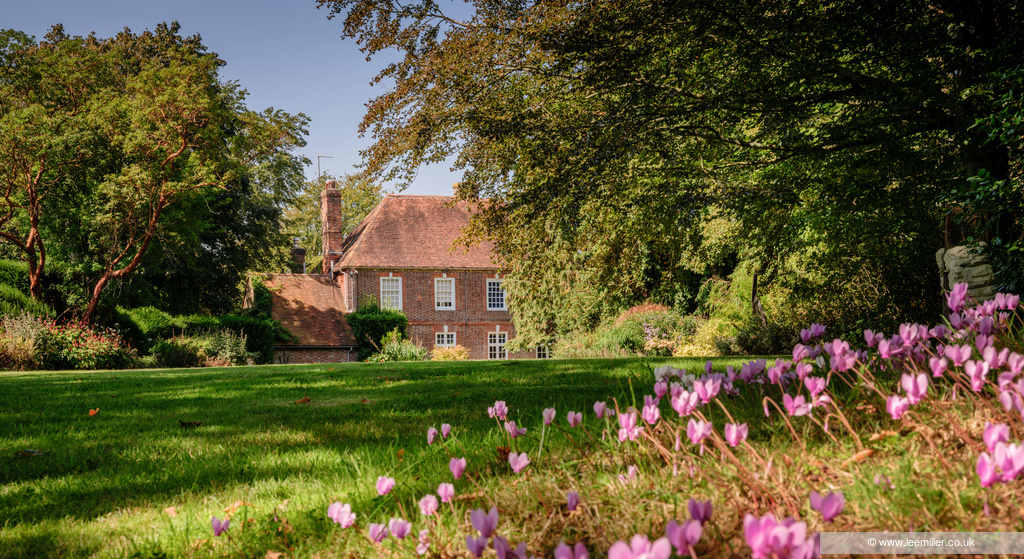
I met with Penrose at Farleys House & Gallery, the Georgian farmhouse in East Sussex which Lee bought in 1949 with her husband, the artist and art historian Roland Penrose, who that same year co-founded London‘s Institute of Contemporary Art with Herbert Read. It is here that Penrose spent his youth, privy to glorious weekends featuring Surrealist invasions by artists including Eileen Agar, Leonora Carrington, and Max Ernst. Picasso stayed at Farleys twice, while Miller and Penrose made reciprocal visits to his villa in Mougins.
‘I thought my upbringing was quite unremarkable,’ Penrose says. ‘Until I would recount my summer holidays to very bewildered classmates.’
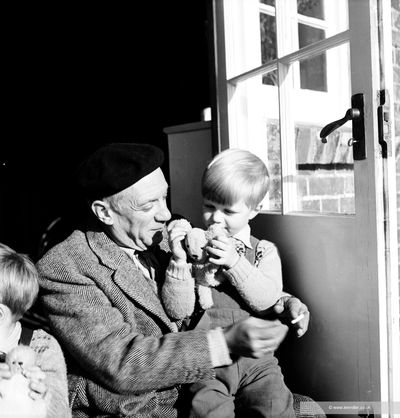
One anecdote of a playdate at Farleys saw a young Penrose explaining to a shocked friend that Picasso’s portrait of his mother was not a like-for-like representation.
‘I liked Picasso very much,’ Penrose recalls. ‘He had a Mediterranean sense of hugging, which was unusual for me as a British child. He was very playful and his house was full of pets. I remember he had a goat that lived outside his bedroom door, which I was always very envious of, as Lee never allowed me to have farm animals in the house.’
This house rule was likely enforced on account of the treasure trove of paintings, sculptures and knick-knacks collected by Penrose and Miller. In the kitchen, a Picasso tile is cemented above the Aga, while across the hall in the butter-yellow dining room—a pigment borrowed from the front cover of a 1950 edition of Farmers Weekly—hang paintings by Penrose and his Surrealist friends, bookended by the former’s chimney-breast mural. Turning along the cornflower-blue hallways, you’ll spot Man Ray’s metronome, Object of Destruction (1932), sitting beside a thumb-sized Alexander Calder hang-man sculpture made from a champagne wire cage, among other curiosities.
Eventually, you come to the room which Penrose designed as a means of ‘self-defence’ to house Miller’s growing collection of cookbooks (around 2,000 apparently) when she turned her hand to cheffing in later life. Today it’s a library of dogeared catalogues raisonnés, exhibition catalogues, and literature illustrated by Miller’s lens.
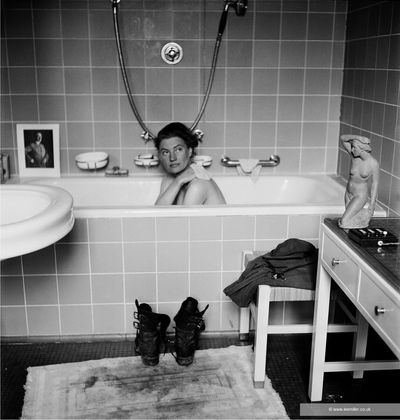
It is here that hangs the extraordinary photograph of Miller taking a bath in Adolf Hitler’s tub, shot by photographer David Scherman. The two journalists—Miller working for Vogue, Scherman for LIFE—had turned up to the Führer’s abandoned apartment in Munich on the morning of 30 April 1945, the same day that Hitler and his new wife, Eva Braun, took their own lives in a Berlin bunker. The black and white image became a famous visual metaphor for the end of the war; Lee’s muddy boots stamped out on the bathmat while a propagandist photograph of Hitler looks on. It’s a beautifully contrived snub to the horrors of war and to the man responsible for them.
‘Lee was beautiful and charming, which helped her secure the scoop,’ said Penrose. ‘She always had a store of booze or saucisson to share with you. They found it helpful to drop a few bottles of cognac at the feet of the opposition.’
In fact, a silver platter that Lee took from Hitler’s house that day—monogrammed with his initials and a swastika—later became the centrepiece of dinner parties at Farleys.
This thread of irreverence runs through Miller’s writings for Vogue, where she worked as a journalist for 20 years.
In Vogue‘s July 1953 issue, Miller contributed an article titled ‘Working Guests’, giving advice on how to keep guests occupied:
‘There is scarcely a thing, in or out of sight, from the wood-pile to the attic water tank, from the chair coverings to the brined pork and the contents of the deep freeze, without the signature of a working guest.’
This story, written about in Penrose’s book, was backed up with pictures of Alfred Barr, director of New York’s Museum of Modern Art, feeding the pigs; the American artist Saul Steinberg wielding the garden hose; and the fashion journalist Ernestine Carter injecting an antique chair with woodwork poison.
Personal letters penned to her parents in Poughkeepsie, her brother in Egypt, or lovers wherever they may be, were coloured with a dry descriptive wit that one imagines lit up dinner parties at Le Cyrano in Montmartre—the Parisian restaurant turned Surrealist lair.
A letter to her parents, written in early December of 1935, amusingly read:
‘Please answer this—if I should by accident or the design of god or man produce an infant could I park it in America?—for several years—as it’s a hell of a place here for small babies—besides it would bore me stiff—for the first five years—anyway the event isn’t likely.’
When she did fall pregnant with Antony in 1947, her maternal instincts prevailed, yet her sense of humour didn’t wane.
‘So far no resentment or anguish or mind-changing or panic,’ Miller wrote to Penrose. ‘Let me know how you feel about being a parent—sure you want it? And why? There is only one thing—my work room is not going to become a nursery. How about your studio?’
This steely defiance against the prejudices faced by women in a post-war society—which still expected them to adopt the stereotypical roles of muse, home-maker, subservient wife—won admiration from her Vogue editors, fellow Surrealists, and a new generation of female photographers, journalists, and free-spirits who were inspired by her adventures. —[O]
Main image: © Lee Miller Archives, England 2024. All rights reserved. leemiller.co.uk



A respected voice in contemporary art discourse.
Focusing on ambitious storytelling and insightful art-world commentary. Ocula Magazine publishes in-depth interviews, critical essays and timely analysis on the artists, exhibitions and ideas driving the global art world.
Learn more about Ocula Magazine
Showcasing the best of the art world.
Ocula partners with galleries from around the world to highlight their artists, artworks and exhibitions. Gallery membership is by application and invitation, with each member vetted by an independent panel.
Learn more about Ocula Membership
Specialises in the sale of major artworks.
Led by a team with deep ties to the world’s leading auction houses, galleries and collectors. Ocula’s advisory team offers bespoke services to high-net-worth clients from around the world who are looking to acquire the best of contemporary and modern art.
Learn more about our team and services