

The art world in focus
Subscribe to our newsletter for news and insights on artists, galleries and exhibitions.
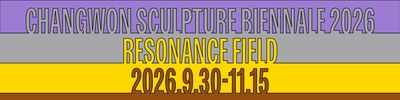
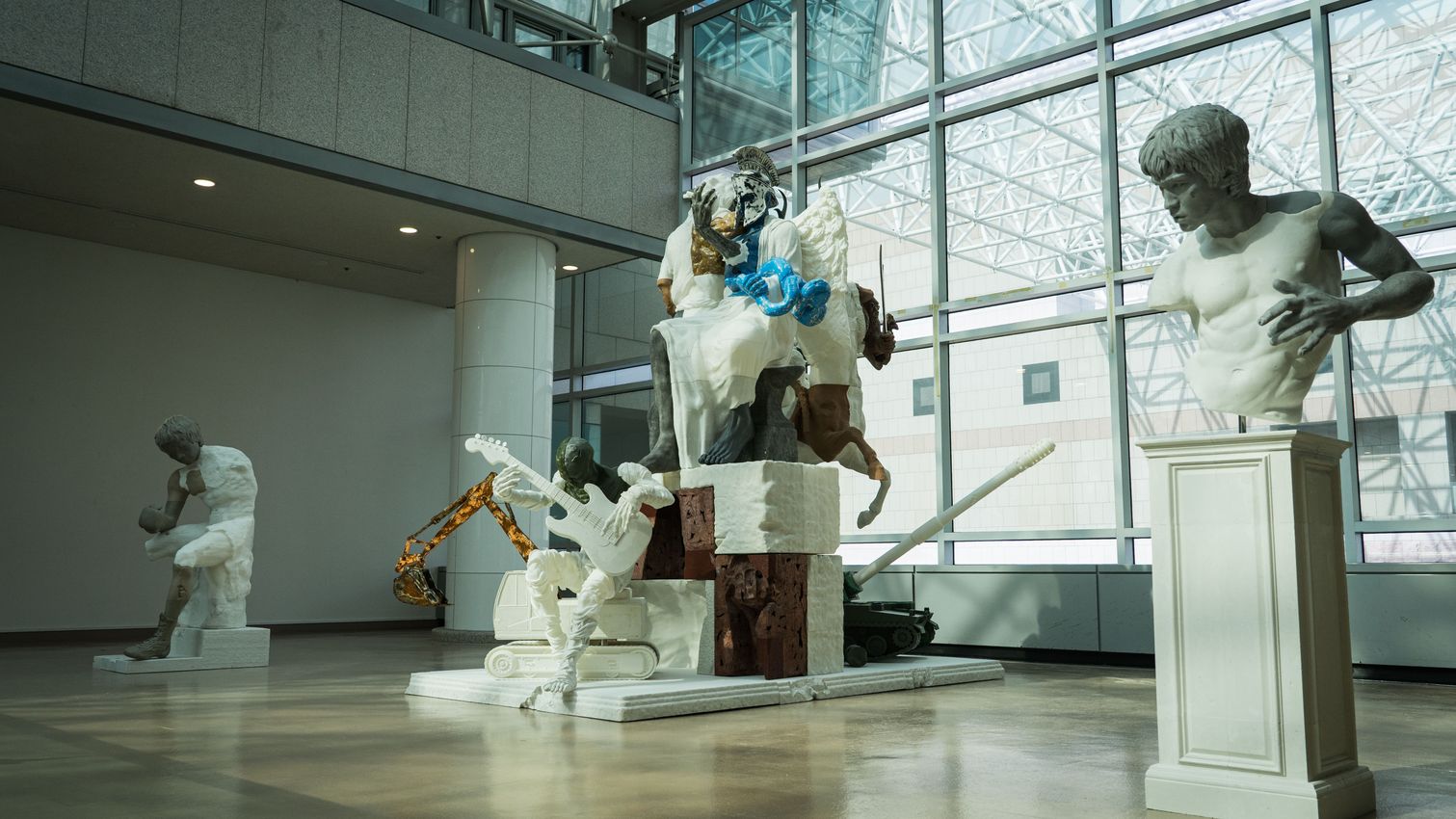
Held in an industrial city on Korea’s southern coast, the Changwon Sculpture Biennale grew out of the 2010 Moonshin International Sculpture Symposium, held to mark the merger of industrial Changwon, the port city of Masan and the naval city of Jinhae. Its first edition under the biennale name followed in 2012.
Now in its eighth edition, it brings together approximately 200 works by 74 teams involving 81 artists, including Kimsooja, Aernout Mik and Pedro Reyes. This autumn, the biennale takes place across four venues: Seongsan Art Hall, the House of Changwon, Changwon History and Folklore Museum, former railway station Jinhae Station Area, and Masan Fish Market, a working fish market in the heart of the city.
The overarching theme, Resonance Field (Gongmyeongjang), draws on sociologist Hartmut Rosa’s theory of resonance to ask how sculpture might open relationships between people and their surroundings. Here, ‘resonance’ involves responding to something beyond ourselves and remaining open to being changed by it. The “field” gives this proposition a spatial dimension: the placement of works, visitors’ movements and the histories of each site help to create the conditions for an encounter, whose outcome cannot be prescribed.
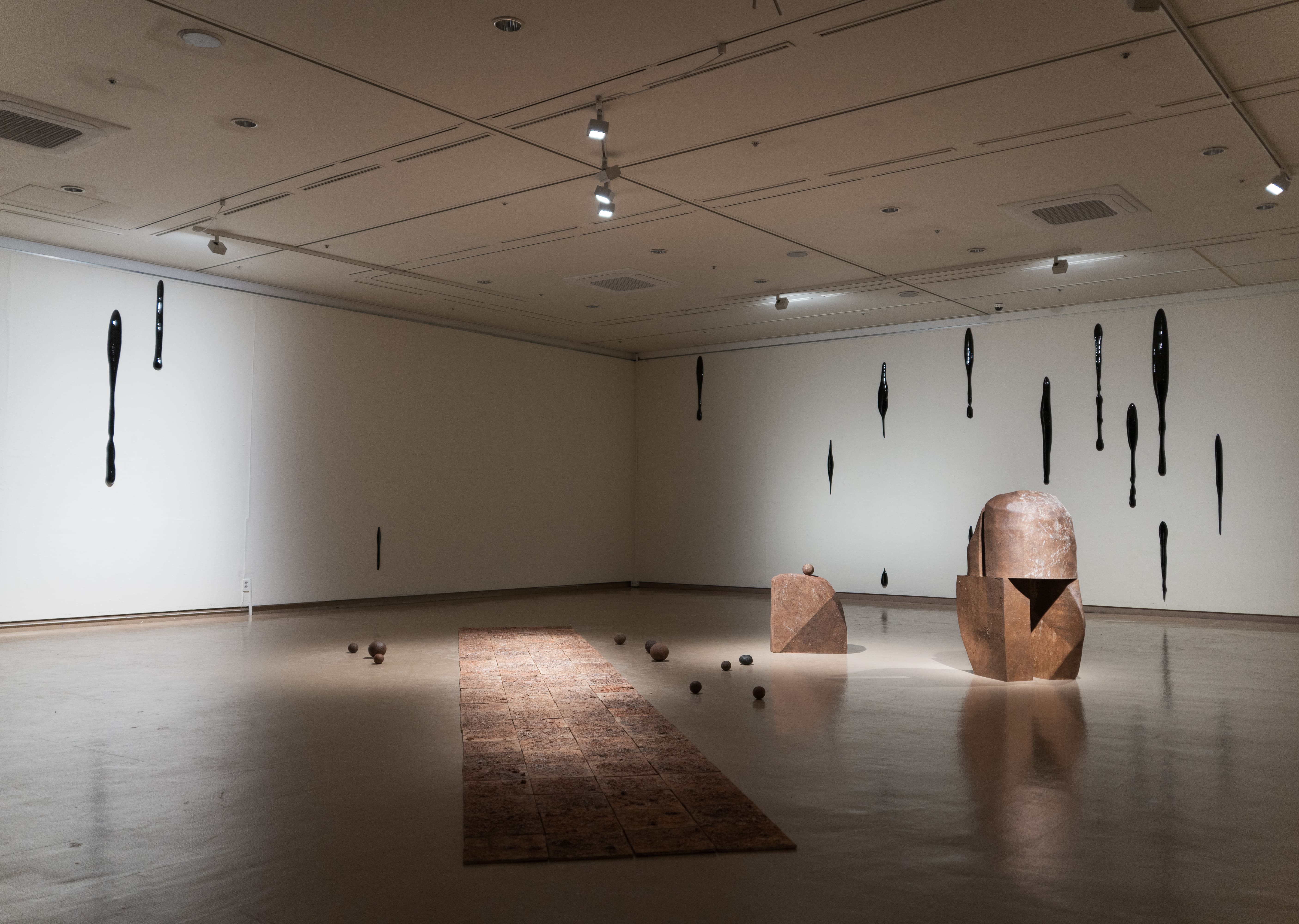
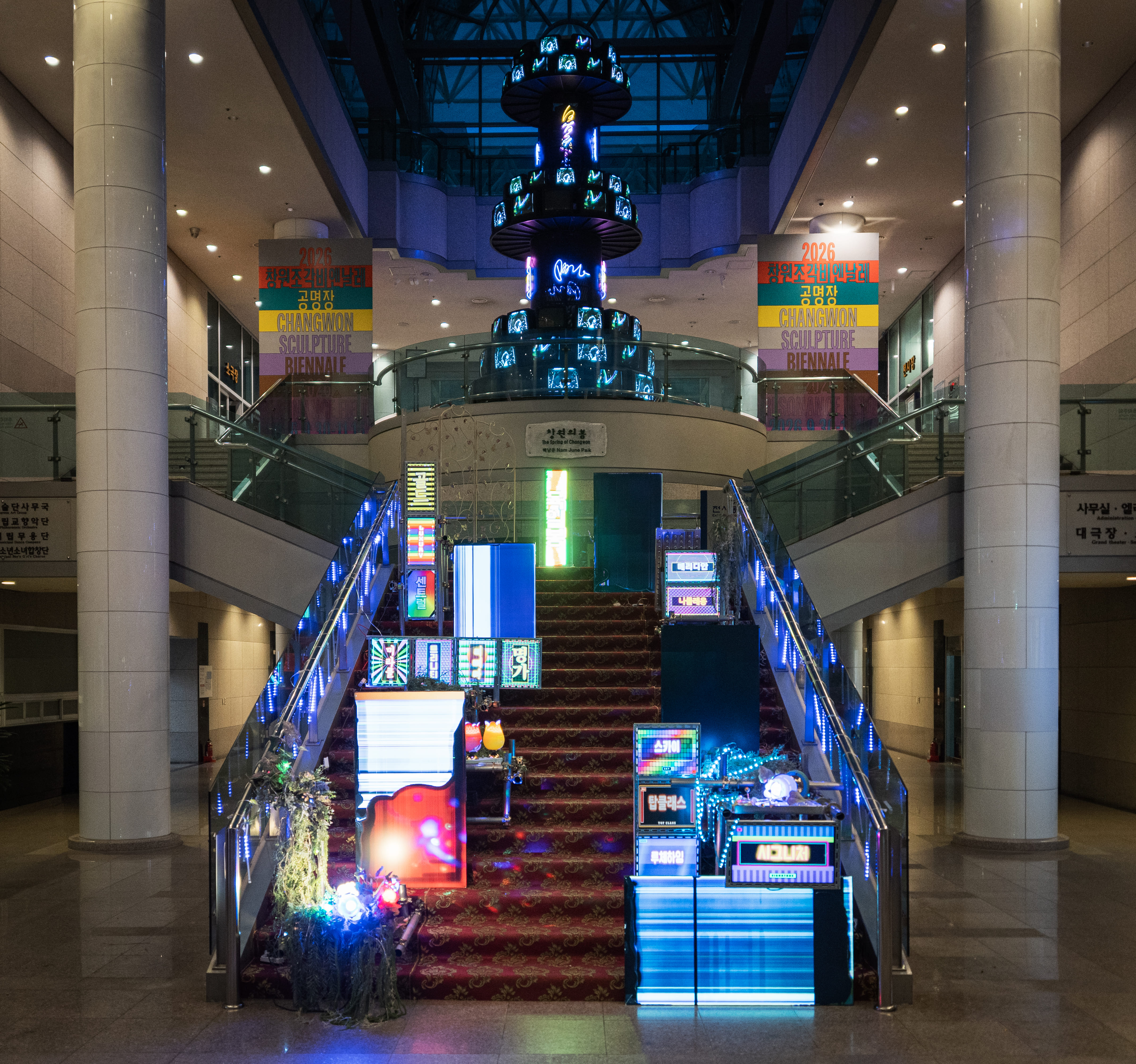
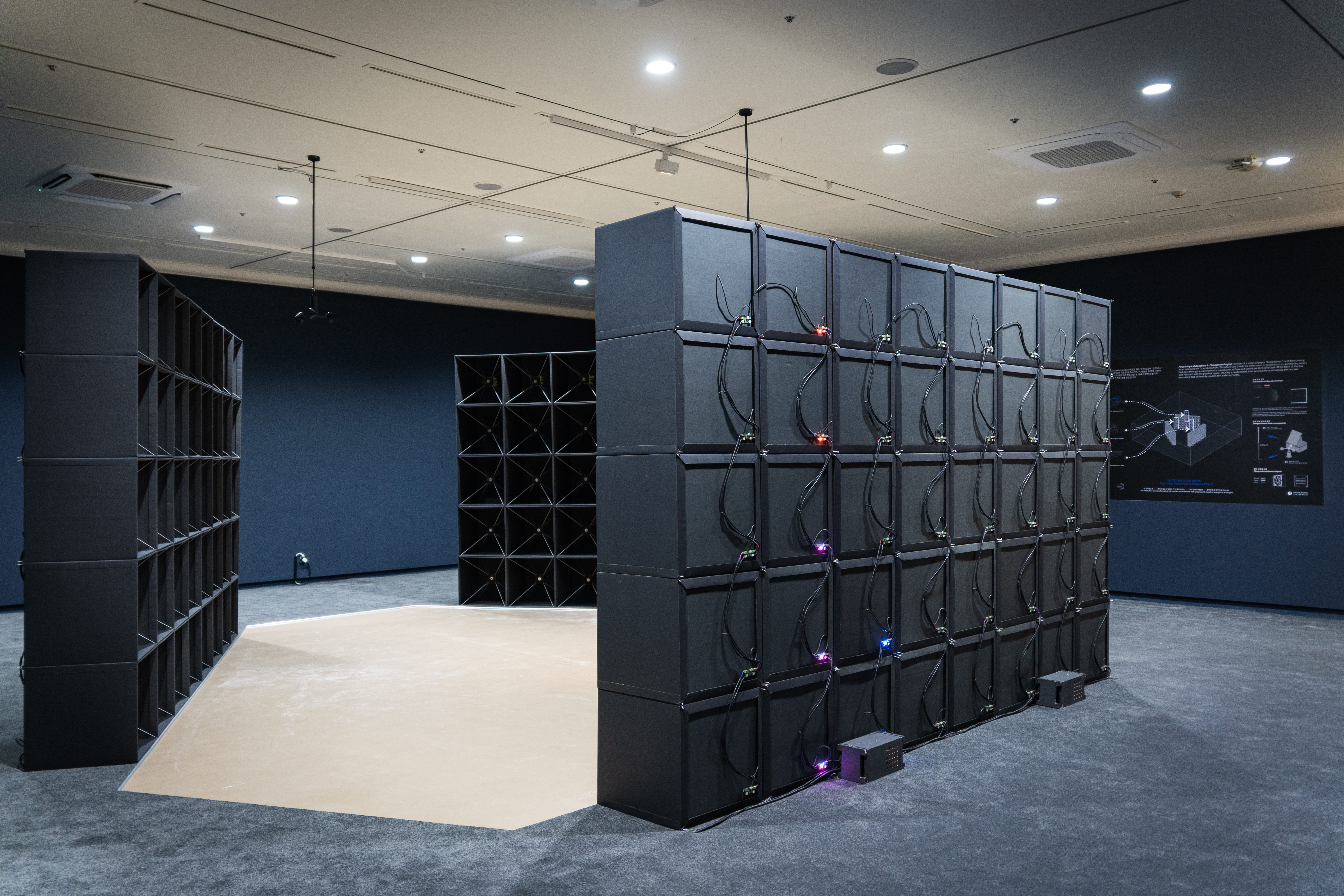
Two special exhibitions develop this framework. Sculpture Before Sculpture, compiled by co-artistic director Hyejung Cho, considers sculptural practices embedded in everyday life before sculpture became a distinct artistic genre. Changwon Sculpture Atlas, assembled by co-artistic director Jiang Jun, uses a digital map and archive to connect this year’s works with existing public sculptures and historical monuments across the city.
In the courtyard of the centuries-old House of Changwon, the polished stone surface of Shanghai-born artist Ding Yi’s Constellation Stele (2026) reflects the sky. On the sculpture, engravings of Yi’s signature cross motifs mingle with geometric patterns drawn from East Asia’s 28 lunar mansions. Visitors gazing down at the work might find their reflections, too, among the markings. Looking down, we find ourselves looking up.
Jiang, the first international co-artistic director of the biennale, invited Ding to create Constellation Stele in the historic courtyard. The work draws on the Cheonsang Yeolcha Bunyajido, a celestial chart carved in Korea in 1395, preserving an East Asian way of mapping the heavens, centuries before Western astronomical charts reached Korea. “Our conversations began with the stars,” Jiang tells Ocula, of his collaboration with Ding.
Cho’s route into the exhibition emerged through conversations in taxis. Visiting Changwon almost weekly, she asked drivers where they considered home. “I’m Masan born and bred,” some replied; others claimed Jinhae. Their answers suggested how strongly local identities endure within the merged city.
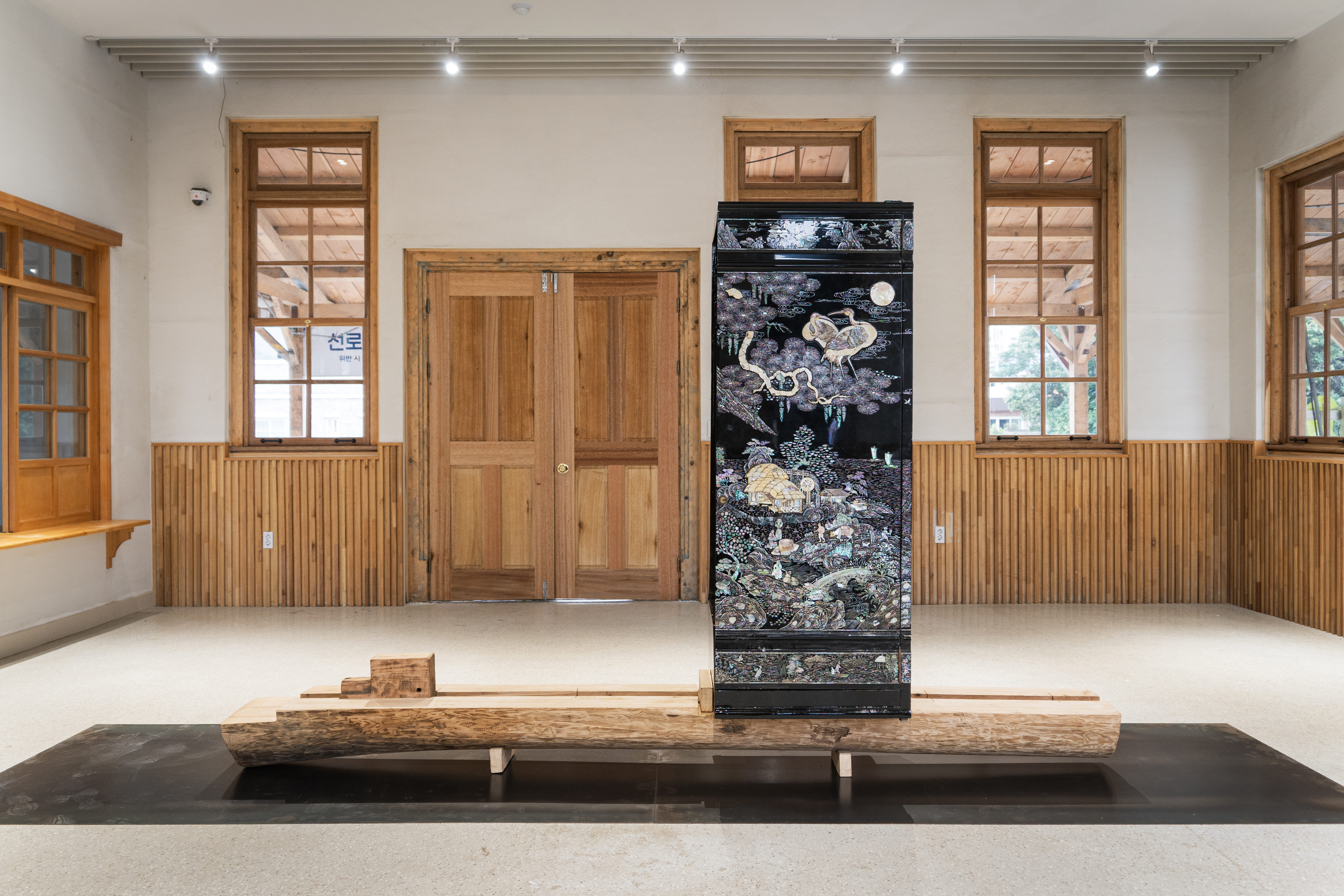
This relationship to shifting forms of identity has led Cho’s curatorial approach, informed also by her research into pungnyu, an ancient Korean concept often associated with cultivated enjoyment of music and landscape. As she explains, “What I want to draw from pungnyu is not a cultural identity, but an attitude towards difference.” She points to an inscription by the ninth-century scholar Choe Chiwon, who once lived in what is now Masan, describing pungnyu as embracing Confucian, Buddhist and Daoist thought. For Cho, this openness to different traditions offers a model for the exhibition. She identifies one expression of that attitude in Shim Moonseup’s work Re-present (2026) at Jinhae Station, where a piece of timber in the shape of a boat supports a cupboard adorned with mother-of-pearl inlay and black lacquer. The sculpture brings the sea into a century-old railway building, drawing together the city’s maritime and engineering histories. “The time of the sea meets the time of the railway,” says Cho. “Yet these different histories do not resolve into a single narrative.”
Within the biennale, Cho’s exhibition, Sculpture Before Sculpture, features 12 artists who have worked with four particular actions: carving, hollowing, binding and stacking. Her thinking draws on objects embedded in everyday life—village guardian posts, bird-topped poles, Buddhist images and stone lanterns—as references for reconsidering what constitutes sculpture. Guardian posts, or jangseung, are carved wooden or stone figures that protect villages and communities. As Cho says: “To protect a community is also to define its boundaries.”
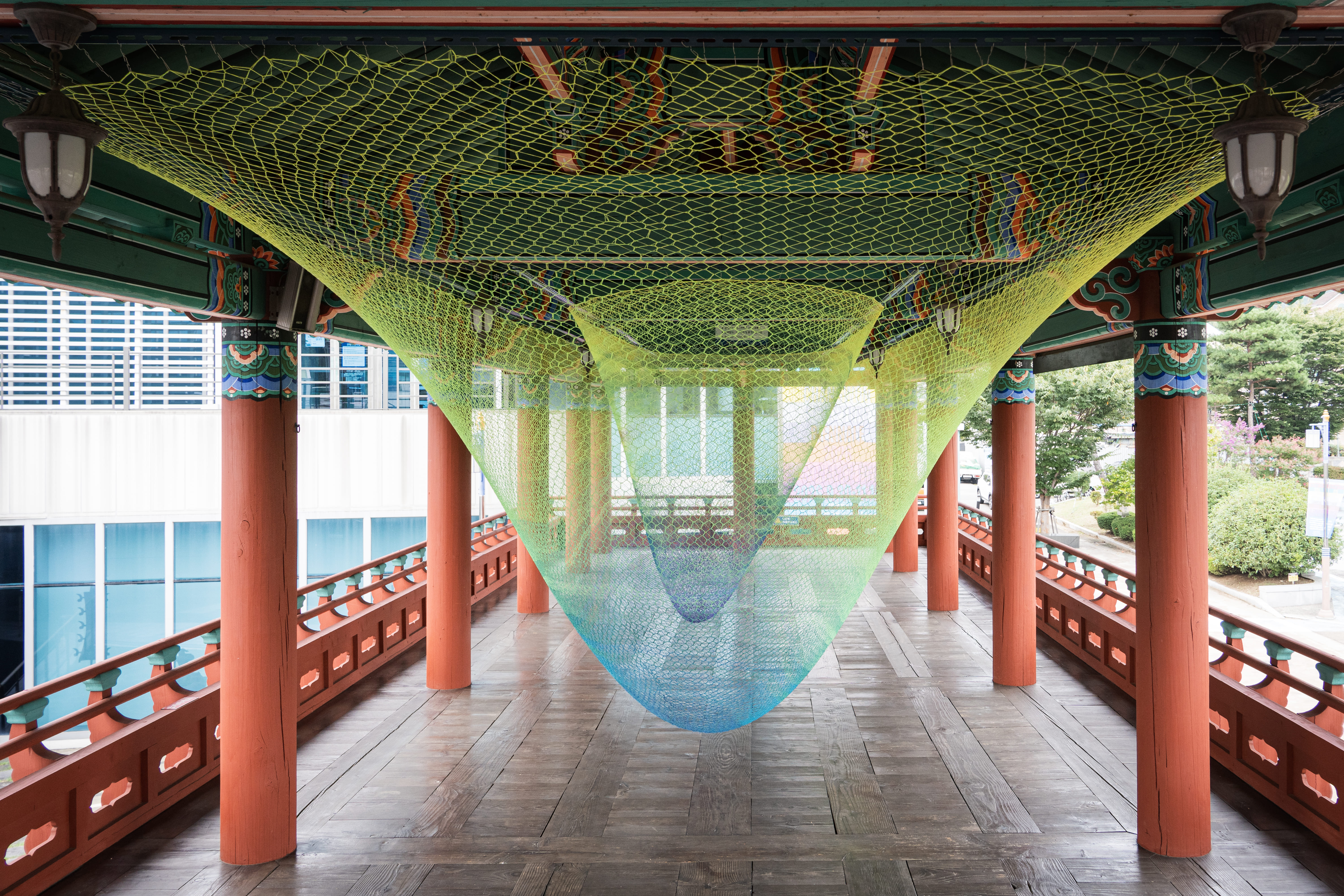
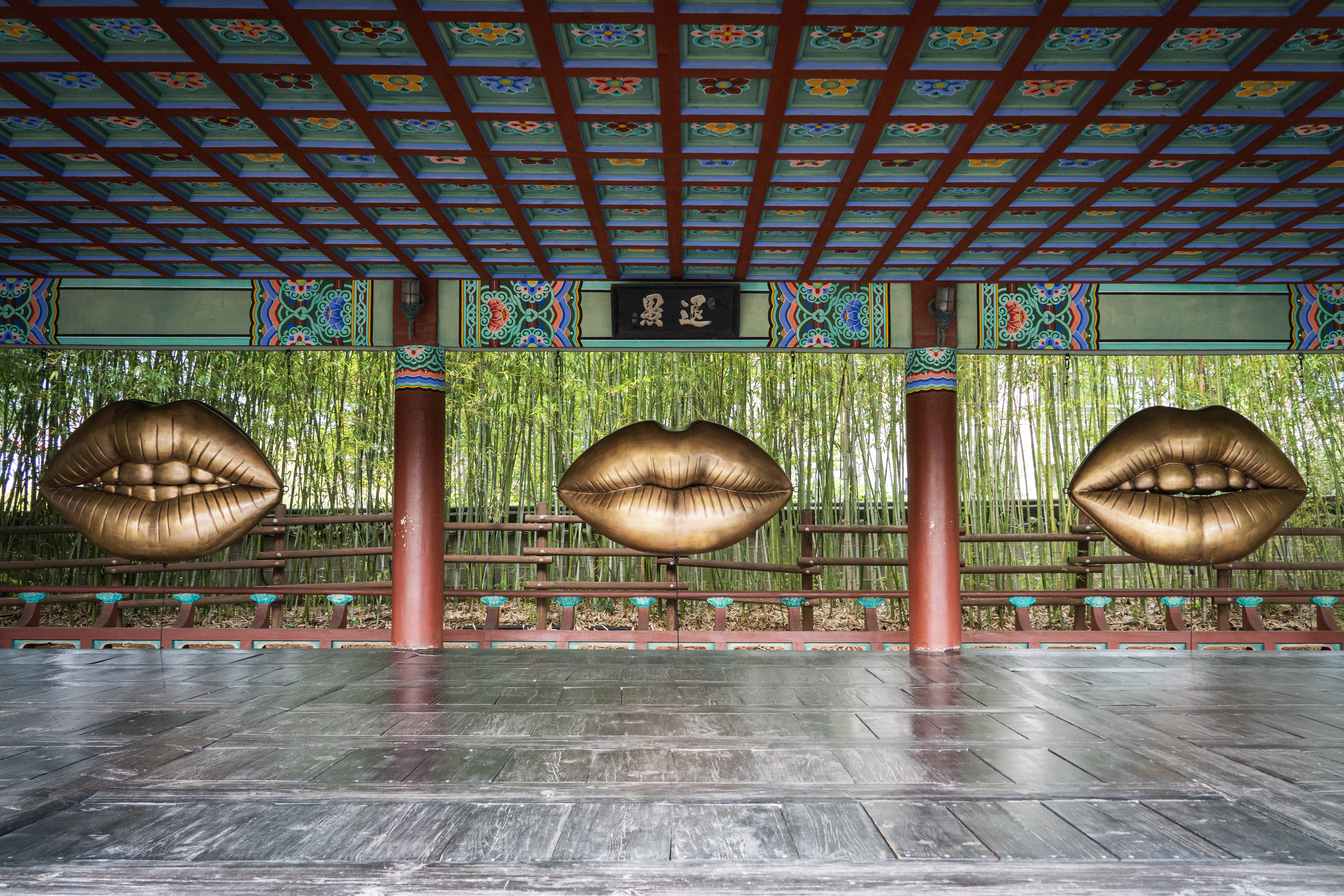
The venues and the sculptures they display are also represented in a digital map developed by Jiang alongside Shanghai-based Atlas Mapping Collective. The Changwon Sculpture Atlas extends these encounters across the city via the internet, with the digital map and archive connecting this year’s works to both public sculptures left by earlier editions and local historical monuments. “The digital atlas is itself a core curatorial device running through the entire biennale,” Jiang explains. “Artists’ practices and local historical memories are placed alongside one another, without a hierarchy between them.”
“The biennale explores sculpture’s capacity to induce slower modes of perception”
Sculpture, in Cho’s account, also makes room for what she calls “delay”: the suspension of immediate judgement, so that something beyond our own selves can intervene. This process can begin with the making itself. “The grain of stone may not reveal itself until the stone is broken; a knot in wood redirects the blade; shrinkage and air pockets, in casting, disrupt the artist’s plan,” she explains. In an age when immediacy, rapidity and certainty dominate everyday life, the biennale explores sculpture’s capacity to induce slower modes of perception—and mediate relationships between human beings and material.
For Cho, Changwon’s industrial history gives sculpture’s weight and resistance a particular urgency. To speak here about materials and bodily time, she says, “is a way of questioning the speed we ourselves have produced, precisely in a city where that speed has taken physical form”. Changwon has been built around the movement of goods, people and ideas, in a constant flow. The biennale approaches this history by understanding sculpture not as a singular artistic genre, but as a field of interactions. In this way, it’s not static, but something also in continual motion.
In May 2027, the Changwon Cultural Foundation will launch an open call for both domestic and international artistic directors, formally beginning preparations for the 2028 edition.—[O]
A respected voice in contemporary art discourse.
Focusing on ambitious storytelling and insightful art-world commentary. Ocula Magazine publishes in-depth interviews, critical essays and timely analysis on the artists, exhibitions and ideas driving the global art world.
Learn more about Ocula Magazine
Showcasing the best of the art world.
Ocula partners with galleries from around the world to highlight their artists, artworks and exhibitions. Gallery membership is by application and invitation, with each member vetted by an independent panel.
Learn more about Ocula Membership
Specialises in the sale of major artworks.
Led by a team with deep ties to the world’s leading auction houses, galleries and collectors. Ocula’s advisory team offers bespoke services to high-net-worth clients from around the world who are looking to acquire the best of contemporary and modern art.
Learn more about our team and services