






On the Ground During Art Season in Korea, a Country in Flux
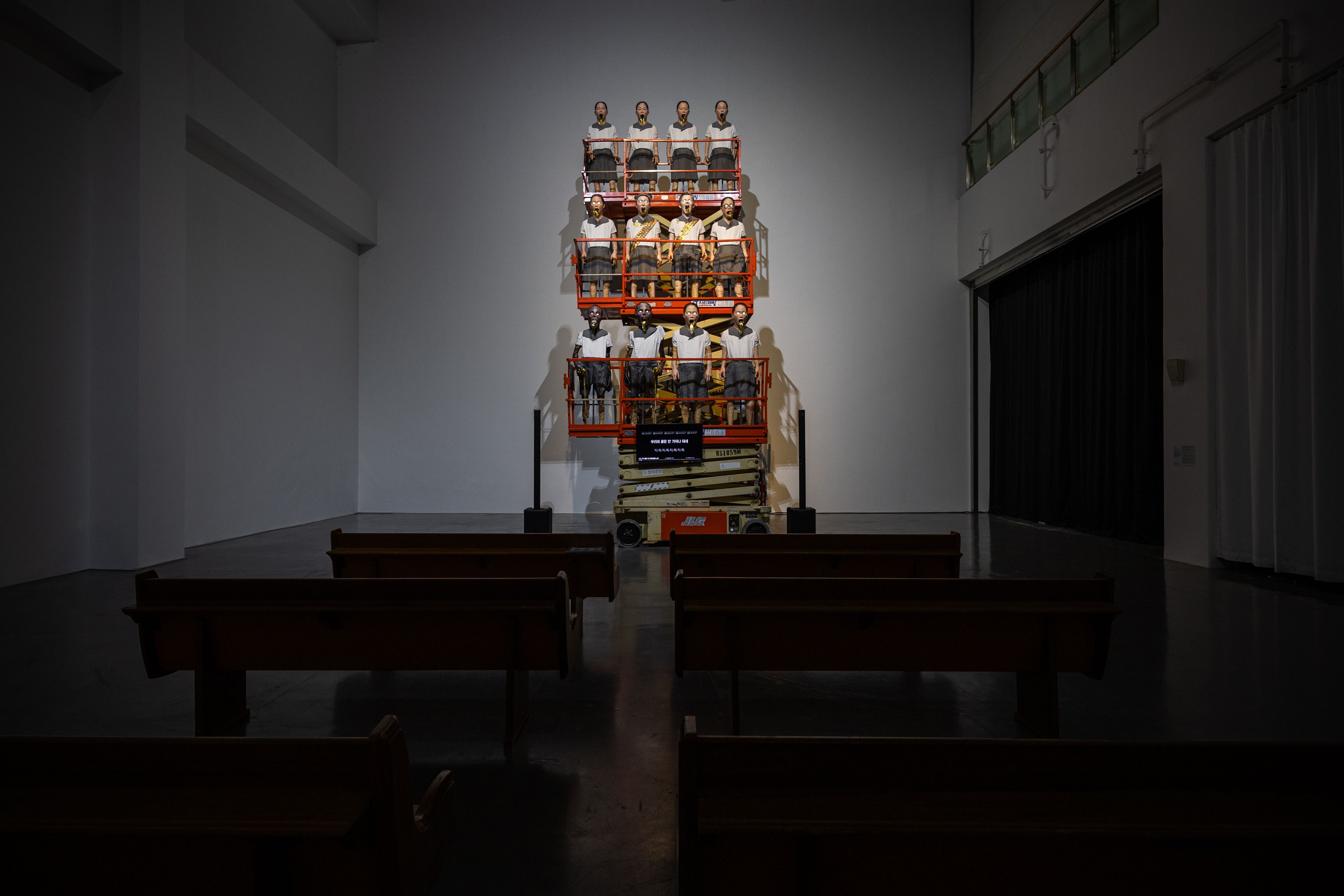
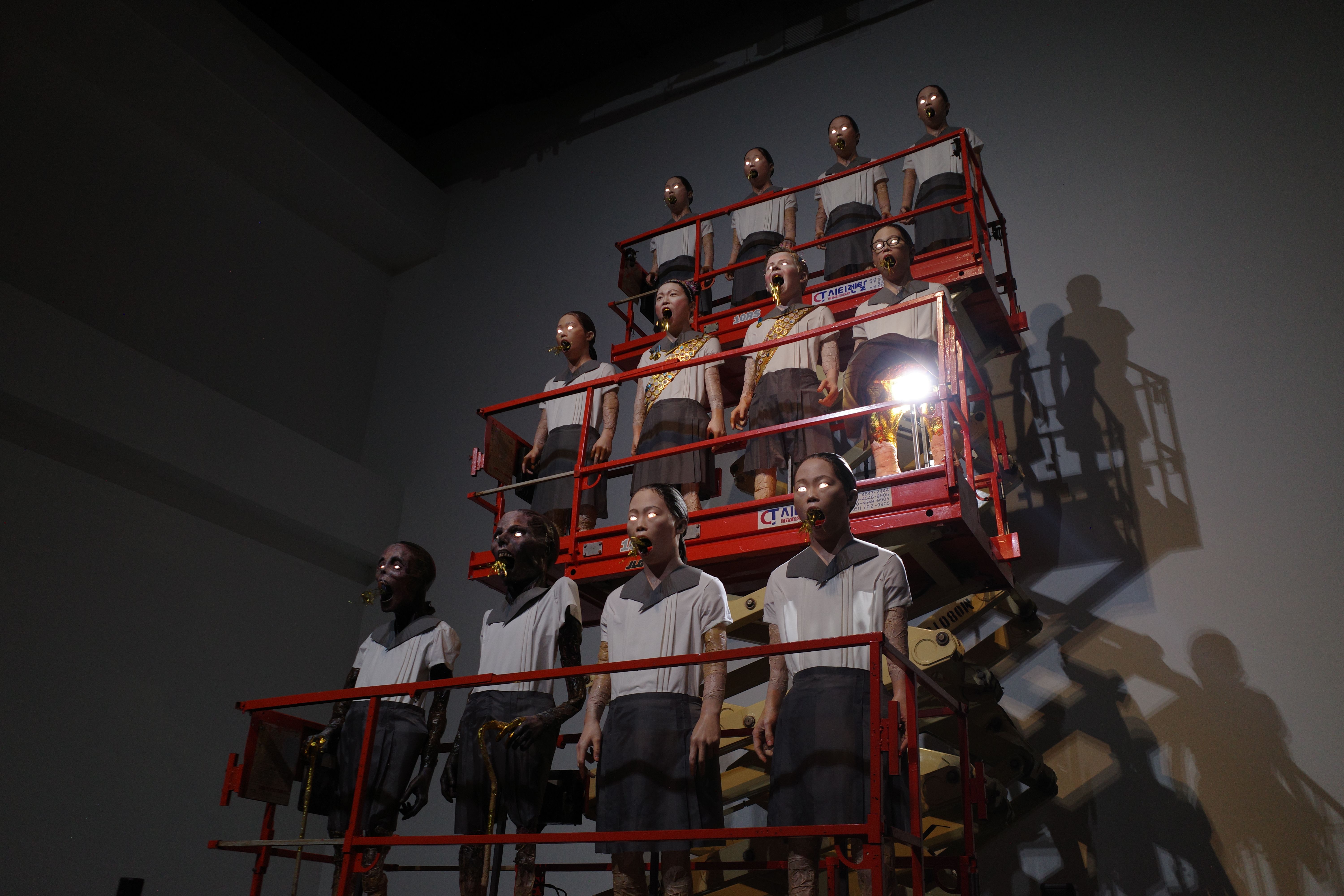
Art month in South Korea is busy: the Busan Biennale, Frieze Seoul, Kiaf, and the Gwangju Biennale. Ocula’s Zian Chen reports on satirical mannequins, classroom subversion, and the politics of biennales themselves. Save to My OculaIn Sungsil Ryu’s Ten Thousand Dreams (2026), currently on show at the Busan Biennale, 12 mannequins, 10 of them dressed as school pupils, two as elderly men, stand in lines on a red industrial scissor lift. Light flashes from their eyes and gold tassels flutter from their mouths as they sing a song of Korea’s economic growth, then count a rising birth rate among the nation’s dreams. But as the songs continue, a different picture begins to emerge. They go on to tell two other stories of people struggling under the pressure of impossible assignments: a skeleton who must keep chasing ambition at the age of 95, and a girl who has to complete a task left unfinished for five centuries. The message is clear: children must become the nation’s future wealth; elders must keep dreaming. In their mouths, ten thousand dreams sound more like ten thousand assignments.
Born in Seoul in 1993—the year in which Kim Young-sam became South Korea’s first civilian president in more than three decades—Ryu grew up as the Korean government made segyehwa, or globalisation, a national ambition. Since the late 2010s, she has made her name through satirising the effects of such ambition: one work features a livestreamer who turns nuclear anxiety into views; another, a manic travel entrepreneur. Ten Thousand Dreams is a piece of more profound scale, a portrait of generations of Koreans who have been promised that their success will secure the country’s future, then told to keep running after they’ve achieved it.
It was one of the most talked-about works during a month of art events held across the Korean peninsula, from the Busan and Gwangju biennales to the international fair Frieze Seoul and its homegrown counterpart, Kiaf. Art month fell at an interesting moment of transition for the country. Just over a year after Yoon Suk Yeol was removed from office following his failed attempt to declare martial law, the new government announced a record arts budget even as Seoul’s art market cooled. Frieze and Kiaf’s renewed partnership through to 2031 suggested confidence in the market’s longer future. In practice, Frieze felt less feverish and more transactional, while the record number of Korean galleries made it harder to distinguish it from the long-running Kiaf downstairs (both fairs took place in the Coex convention centre).
Each evening brought another neighbourhood’s gallery night, with late openings, drinks and performances. By the time I arrived in Gwangju and saw the theme of the biennale, “You Must Change Your Life”, written at the entrance, I would have settled for somewhere to sit.
Ryu’s installation sets the tone for the Busan Biennale, which is political in theme: Dissident Chorus explored the role of communication in resistance movements. The idea of pushing back against authority is newly charged in Korea, following Yoon Suk Yeol’s attempted martial law, which would have been the first time the country had been under army control since 1980. His power-grab was overturned within hours following mass pro-democracy demonstrations. The exhibition contextualises those recent struggles in the turbulent history of Korea’s democracy: martial law was declared periodically through the middle of the 20th century, as the country recovered from the Korean war; it was the Gwangju uprising, a student-led pro-democracy protest in 1980 that saw protestors shot and beaten by police, which finally led to the arrival of democracy.
Busan’s Dissident Chorus repurposes the former Nam High School for one of its venues, introducing the theme of state-mandated discipline. It made me think that the biennale itself felt like a school play still in rehearsal at times: noisy, uneven and occasionally exhilarating. Here, the empty classrooms feel particularly conspicuous in a country with one of the world’s lowest birth rates, a result of the extremely competitive education and work environments paired with a patriarchal culture that requires women to manage caring responsibilities.
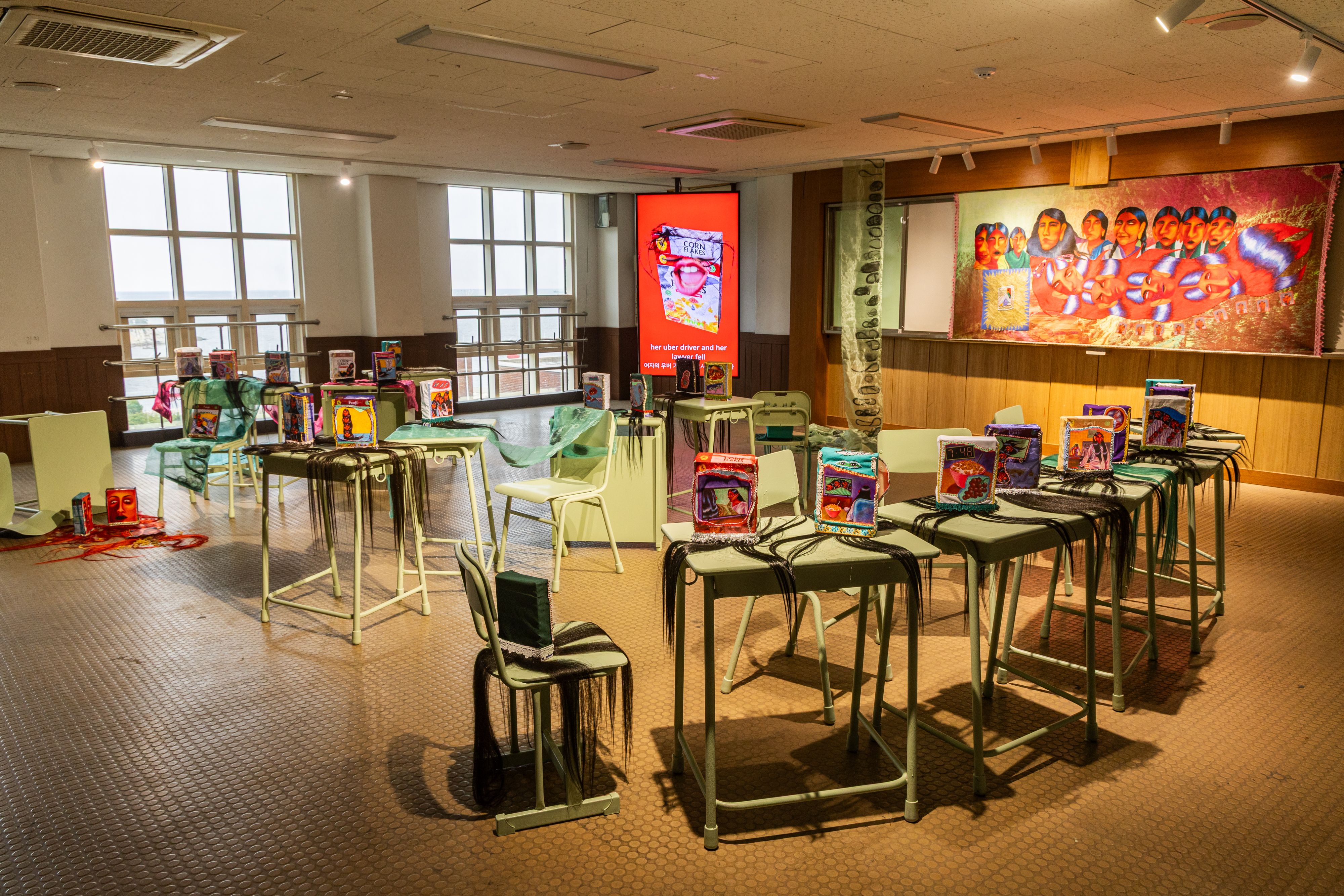
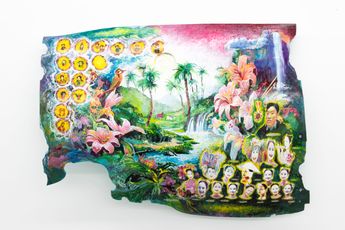
Yet the biennale makes something else of that absence. Artists have turned desks into shrines and archives, filling a school built around obedience with queer rituals and ways of learning together. Pakistani artist Fatima Kaleem Khan, whose paintings also appeared elsewhere in the biennale, at the Busan Museum of Contemporary Art, presents Spilt Milk (2026). Boxes of cornflakes made by Fauji, Pakistan’s military-owned conglomerate, which influences the country’s school curriculum, became symbols of the pupils’ heads, each one carefully embroidered with a portrait and fake hair. The materials are homespun; the satire of state-mandated discipline it contained is razor-sharp.
“The biennale itself felt like a school play still in rehearsal at times: noisy, uneven and occasionally exhilarating”
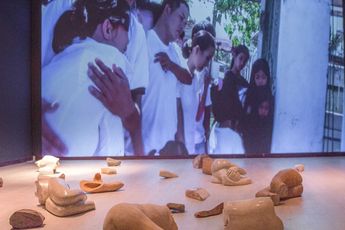
Filipina-Australian artist Bhenji Ra’s 31-channel film installation Learning to Dance in Flames (2026) occupies several classrooms. In the films, Indigenous, transgender and queer people become teachers in alternative ways of living. Trans women discuss armed self-defence; in an adjacent room, footage plays of Manila’s Trans Fight Club training. A school built to teach obedience has become, rather satisfyingly, a school for survival.
Where Busan’s biennale is still relatively regional, in Gwangju, a city in which the Biennale was founded to commemorate the 1980 uprising, the institution faced a test of its commitment to resistance. This year’s edition began with what its president described as its best-attended press conference to date, a distinction owed at least partly to controversy surrounding the Taiwan Pavilion, whose name the Gwangju Biennale Foundation had replaced with the participating museum’s initials, thereby removing the word “Taiwan”, drawing accusations of censorship amid China’s interest in the island.
The Biennale apologised, following internal pressure from artistic director Ho Tzu Nyen and his curatorial team. Yet in that crowded room, he started his press-conference speech with what struck me as a notably private account of change. Having completed a touring survey of his career in 2024, the celebrated Singaporean artist found himself depleted. Then, during an otherwise unremarkable commute, he encountered the closing line of Rainer Maria Rilke’s Archaic Torso of Apollo (1908): “You must change your life.” The sentence restored his sense of possibility. Its force, Ho suggested, lay in its openness: it demands change without prescribing what one should become.
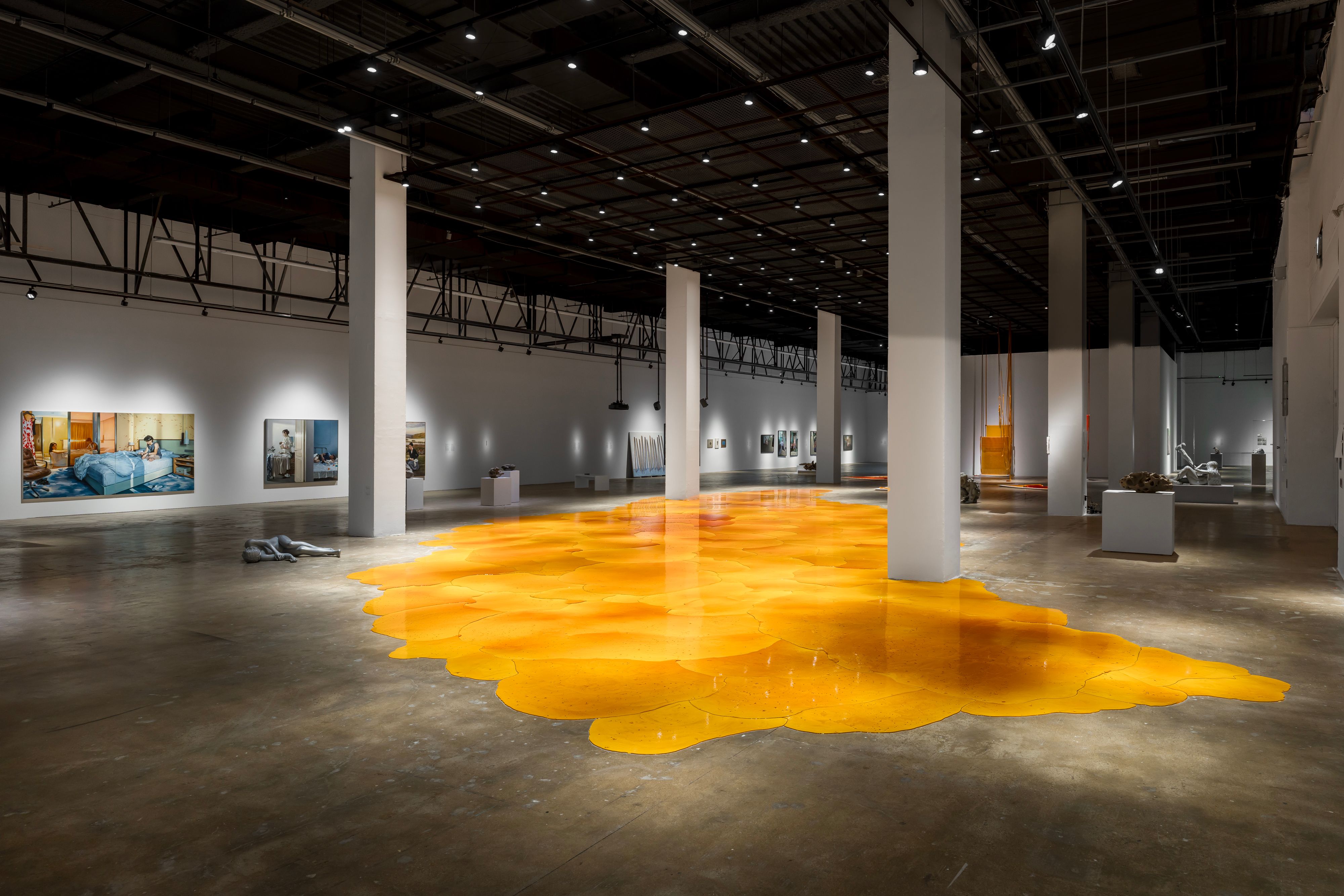
Ho took Rilke’s injunction as a response to a midlife crisis of sorts; it became the biennale’s guiding question. Seeking “the intensity of attention”, the team has used the biennale’s purpose-built hall rather than sprawling across the city. They themed five galleries as different sites of change: Molecules and Me, Bodies and Bonds, Landscapes and Learning, Cosmos and Change, and Air and Articulations.
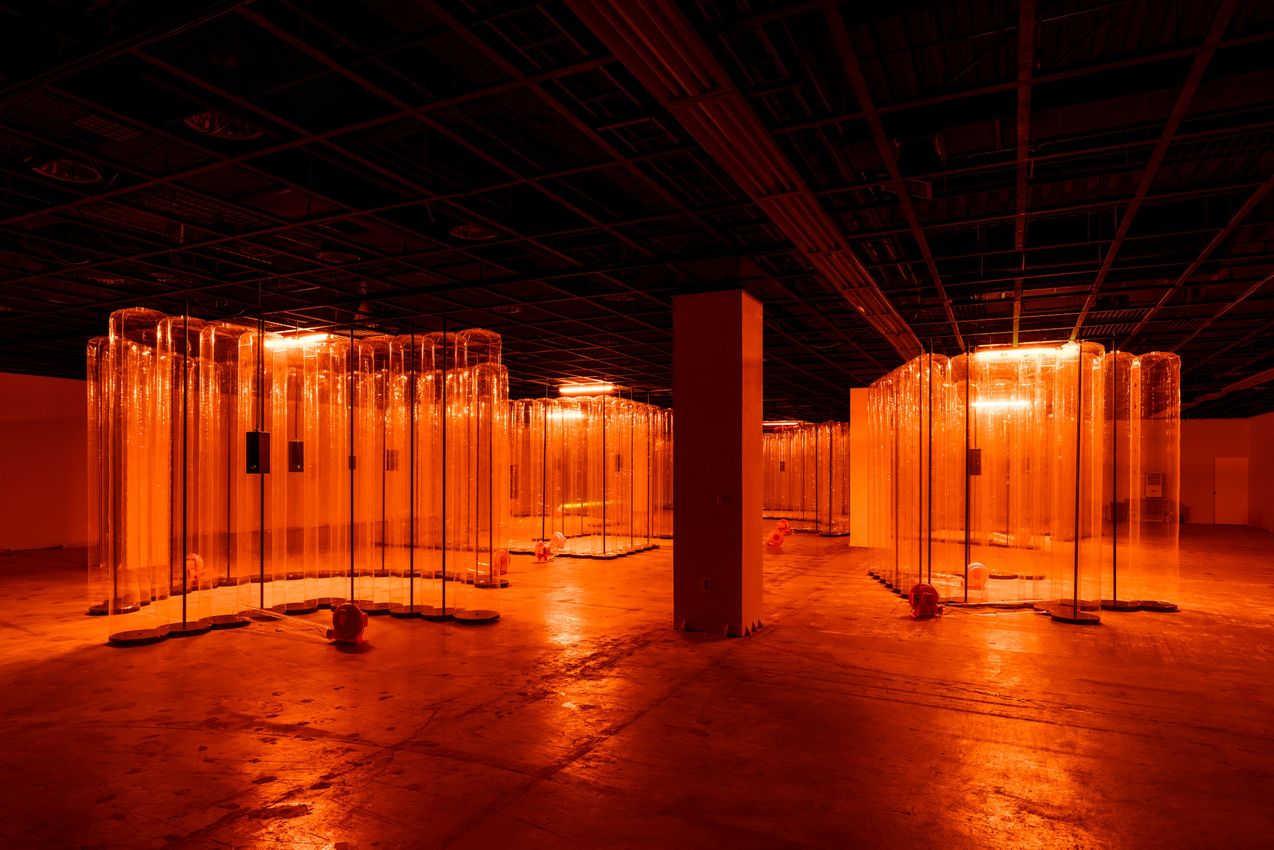
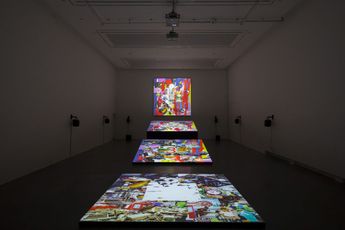
In the opening chapter, Molecules and Me, volcanic rocks from Jeju, the country’s largest island, introduce ideas around pressure, eruption and solidification. At the centre of the room, occupying much of the floor, is Goldin+Senneby’s photogenic Resin Pond (2026), which comprises two tonnes of amber pine resin that have been poured on to the floor to create a room-sized pool. Rooted in Jakob Senneby’s experience of multiple sclerosis, the piece takes a secretion from a tree (part of the tree’s system for healing its own wounds) and casts it as a metaphor for an autoimmune condition in which the body’s defences turn back on themselves. Dotted around the pool, Jean Barth’s human and mechanoid avatars appear to fracture, melt and re-form, drawing on the artist’s experience of gender transition. Filipino artist Kiri Dalena’s portraits of activists wearing plaster masks, taken at protests against martial law in the Philippines during the 1970s, are described in the accompanying text as “volcanic individuals”.
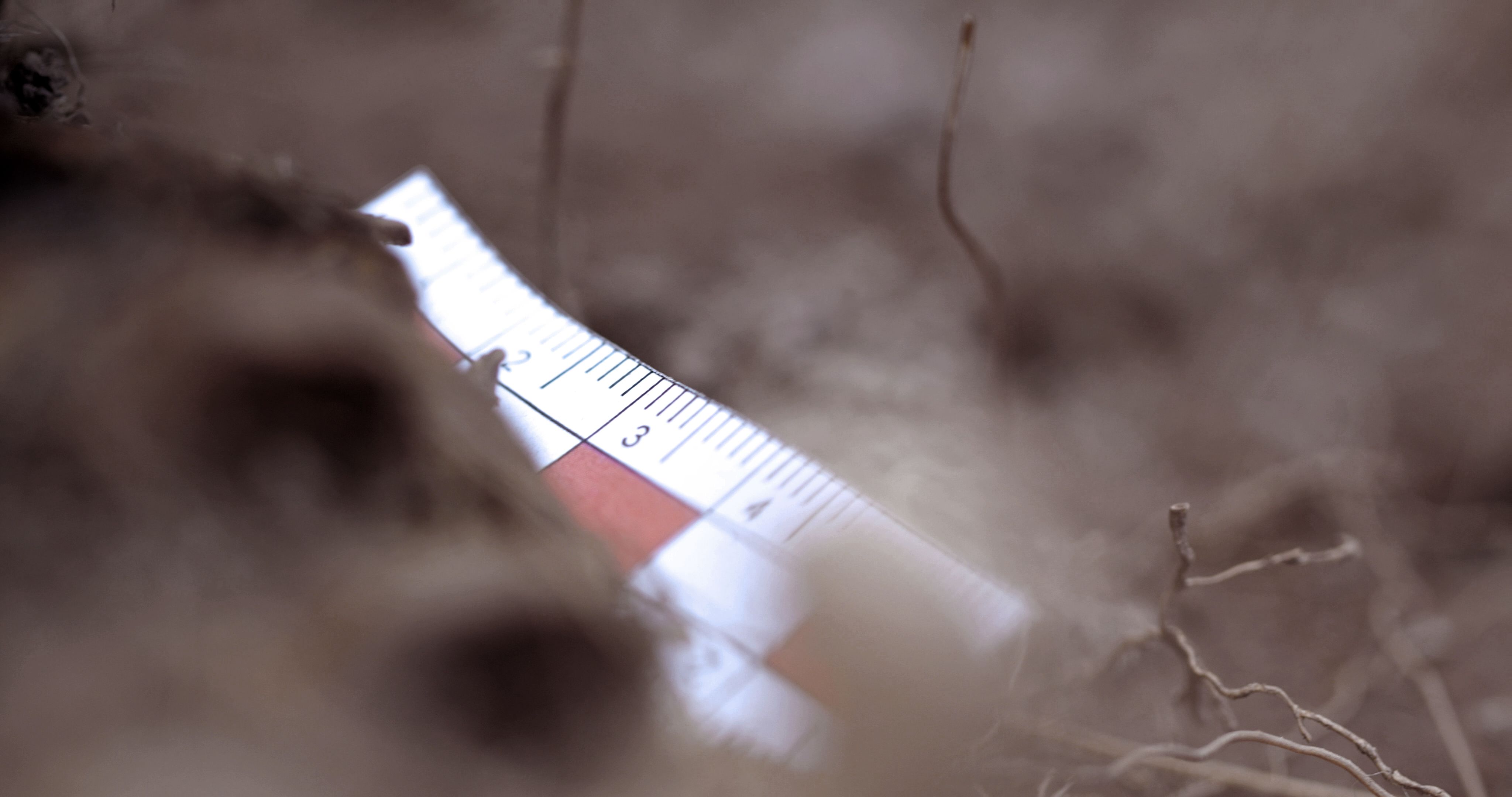
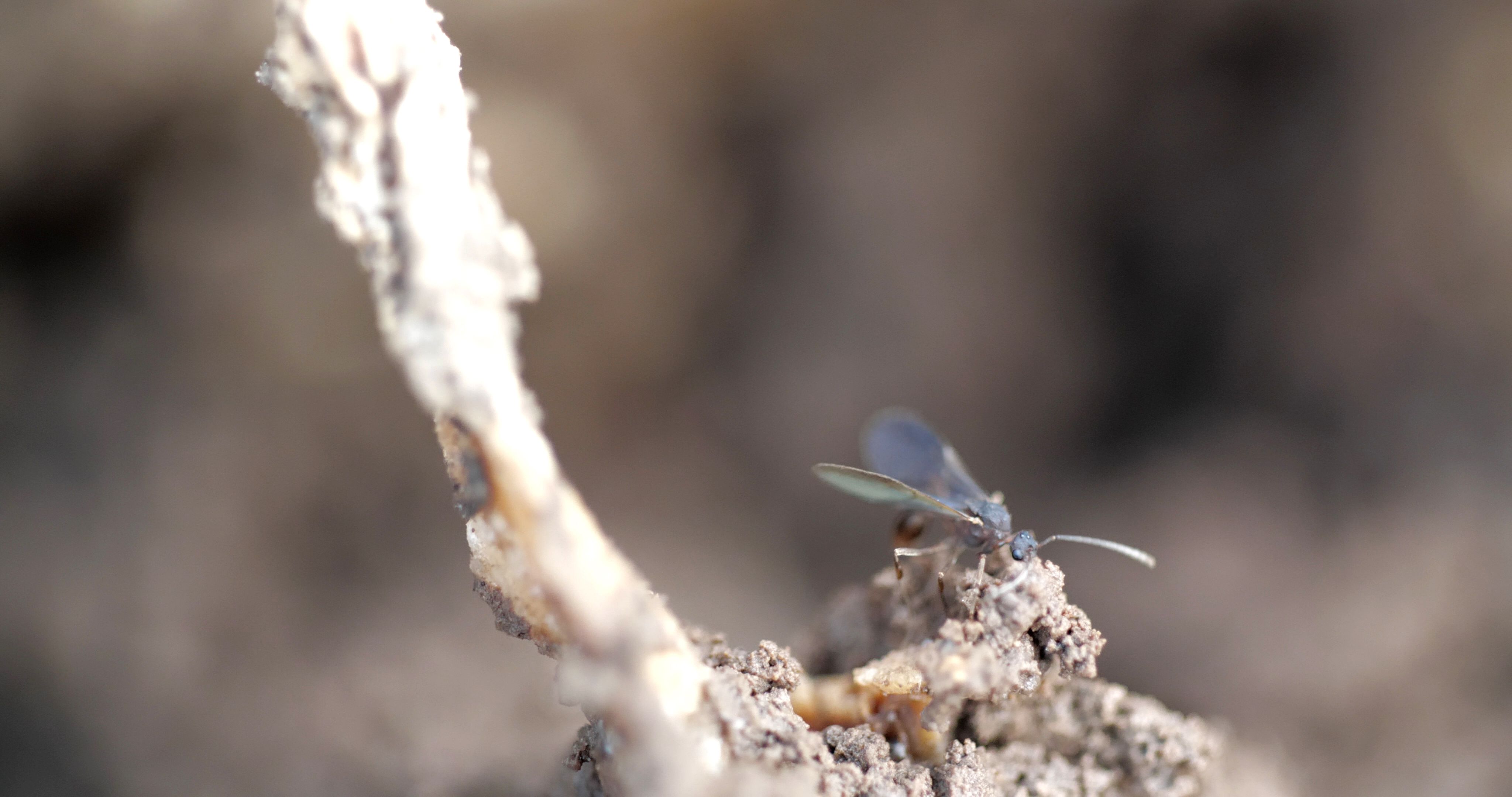
Maya Watanabe’s film Liminal (2019) takes a more granular focus: grit, fibres, the edge of a tooth. For an hour, the camera drifts across a Peruvian mass grave where victims of the internal conflict which raged from 1980–2000 were buried. It pans until the terrain resolves, unmistakably and horribly, into bones, teeth and clothing. The matter is revealed as the residue of the work of forced disappearance: until identified, the remains hover between the missing and the officially dead. Seen in Gwangju, where families mourned the dead of the 1980 uprising while waiting years for official recognition, the distinction felt particularly acute. The passage from lava to resin cast to grave raises the question not only of how matter changes, but who is allowed to pass from anonymity into recognition, and on whose timetable.
Sunik Kim focuses on South Korean history in The Light in the Factory (2026), a 496-hour sound installation. He cuts and stretches minjung kayo, protest songs from the 1980s, into dense, abrasive noise, punctuated by fragments of a banned 1978 musical drama of a similar name (a cassette of which sits in Christian Nyampeta’s library elsewhere in the exhibition). Kim’s accompanying pamphlet, Threading Zero, offers perhaps the biennale’s bleakest account of art and politics: he proposes that the things that help resistance spread can also make it easier to co-opt. The shared sound that let protest songs circulate anonymously under repression later made them easy to reproduce and sell.
In Gwangju, he argues, where the biennale was founded on fiercely political grounds, “The Anti-Biennale was subsumed into the Biennale just as the Biennale subsumed the Rebellion through art.” He follows this logic into South Korea’s state-backed electronics boom and Samsung’s suppression of unions, recounting the struggle over a union-organiser’s funeral before turning to the vast art collection of the company’s late chairman. His verdict on art’s capacity to resolve such contradictions is bleaker still: “Art relieves us of the pressure to change life.”
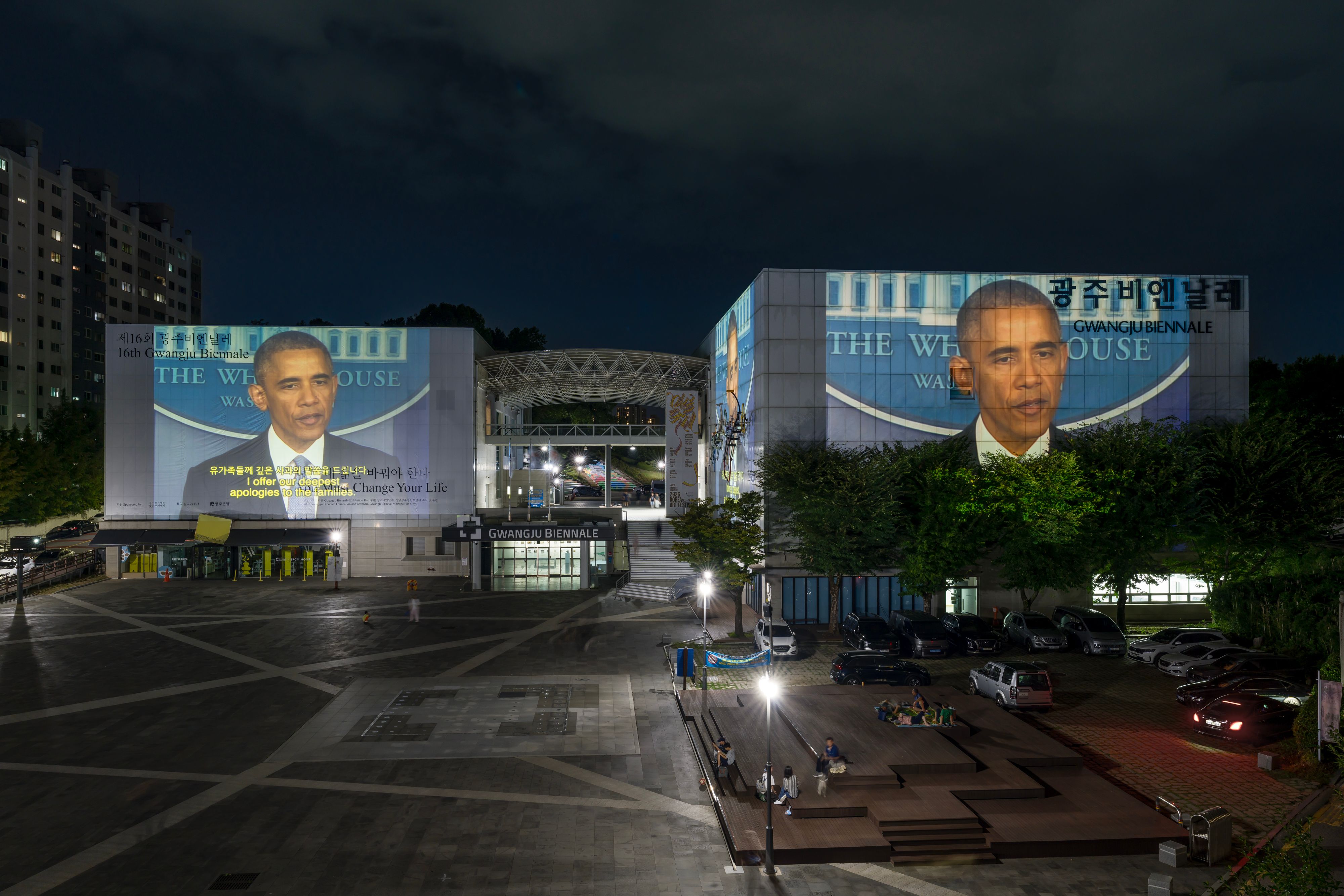
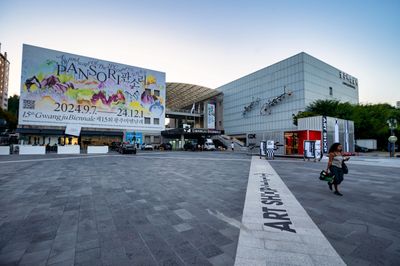
The sounds of Kim’s broadcast can be heard over James T. Hong’s film installation Apologies (2012–), an archive of official apologies by various heads of state projected across the façade of the building that houses the biennale’s main exhibition. Resting in the plaza on opening night, I watched visitors stop to watch South Korea’s first civilian president Kim Young-sam’s landmark 1993 statement on Gwangju as it appeared on the projection. “Let us not forget, but forgive boldly and reconcile anew,” urged the former opposition activist, himself a victim of military repression. Emblazoned across the façade, he appeared in a different light: a president asking others to forgive before the full extent of the violence inflicted was known. That turn from acknowledgement to closure recalled the city government’s apology over the Taiwan Pavilion naming dispute, followed at the press conference by an appeal to leave politics aside.
“The biennale proved less willing to answer the dissent directed at it now”
There is a sure hand behind the curation—the question is whether it makes for a good biennale. Its curators reshape our attention as we encounter the works and move through the building, but do less to reimagine the institution itself. At its most ambitious, a biennial is a public experiment in which artists shape political debate, thinkers work through art, and a city’s residents can challenge the stories told about their home.
I also question the exhibition’s reading of Rilke. Archaic Torso of Apollo does not end merely with an open invitation to improve oneself. Read that way, its command slips into the language of self-improvement. Collective crises are relabelled as personal, solvable by individual action: sharpen your attention, build resilience, change yourself. Rilke’s command, instead, is delivered through a reversal of the gaze. Although the sculpture has no head, its body still sees the viewer: “There is no place that does not see you.” Confronted by that intensity, the observer becomes the observed and is obliged to answer it.
In Gwangju, that returning gaze came less from the artworks than from the people living in the city. Citizens and 24 regional arts organisations challenged the foundation’s removal of the name “Taiwan Pavilion”. “Erase the name and face, then say everything else is free,” they said, demanding the name’s restoration, an account of the decision and an apology. The exhibition attends closely to Gwangju’s history of dissent; the biennale proved less willing to answer the dissent directed at it now.
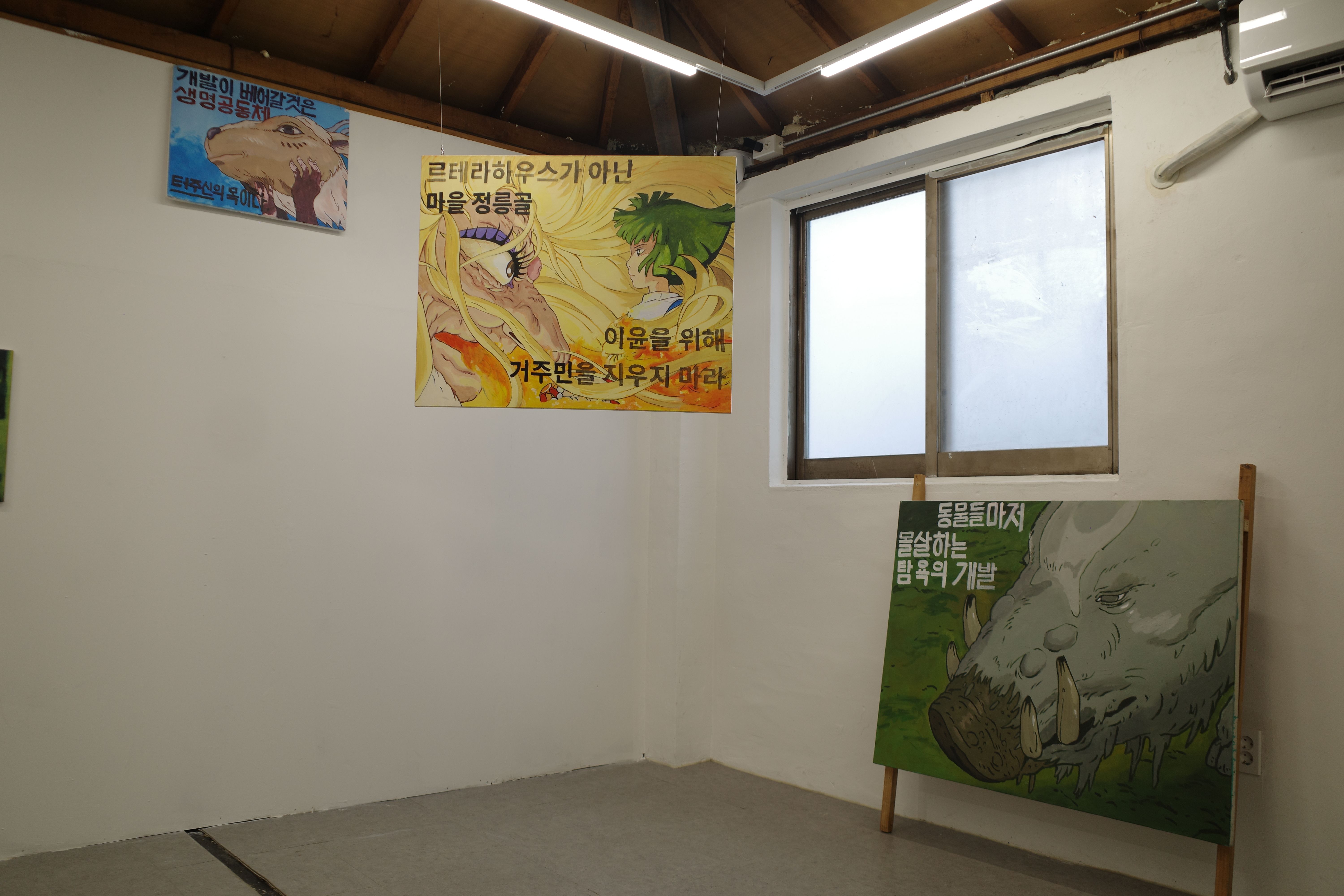
Returning to Seoul, exhausted, I received no conveniently timed summons from Rilke. The industrial district of Euljiro, quieter after the fair, supplied a more practical tonic. At Night Shift’s inaugural exhibition, Non System, the wall normally reserved for a curatorial statement presented a survey of 70 artists across Greater Seoul. It asked not only how art gets made but how its makers manage to eat. Among Noh Yeju’s contributions were paintings that put characters from Studio Ghibli animator Hayao Miyazaki into instruments of dissent. Two works were priced at KRW 50,000 each—less than £30, enough to eat for a day, and a wry answer to the wall’s question of how artists make a living.
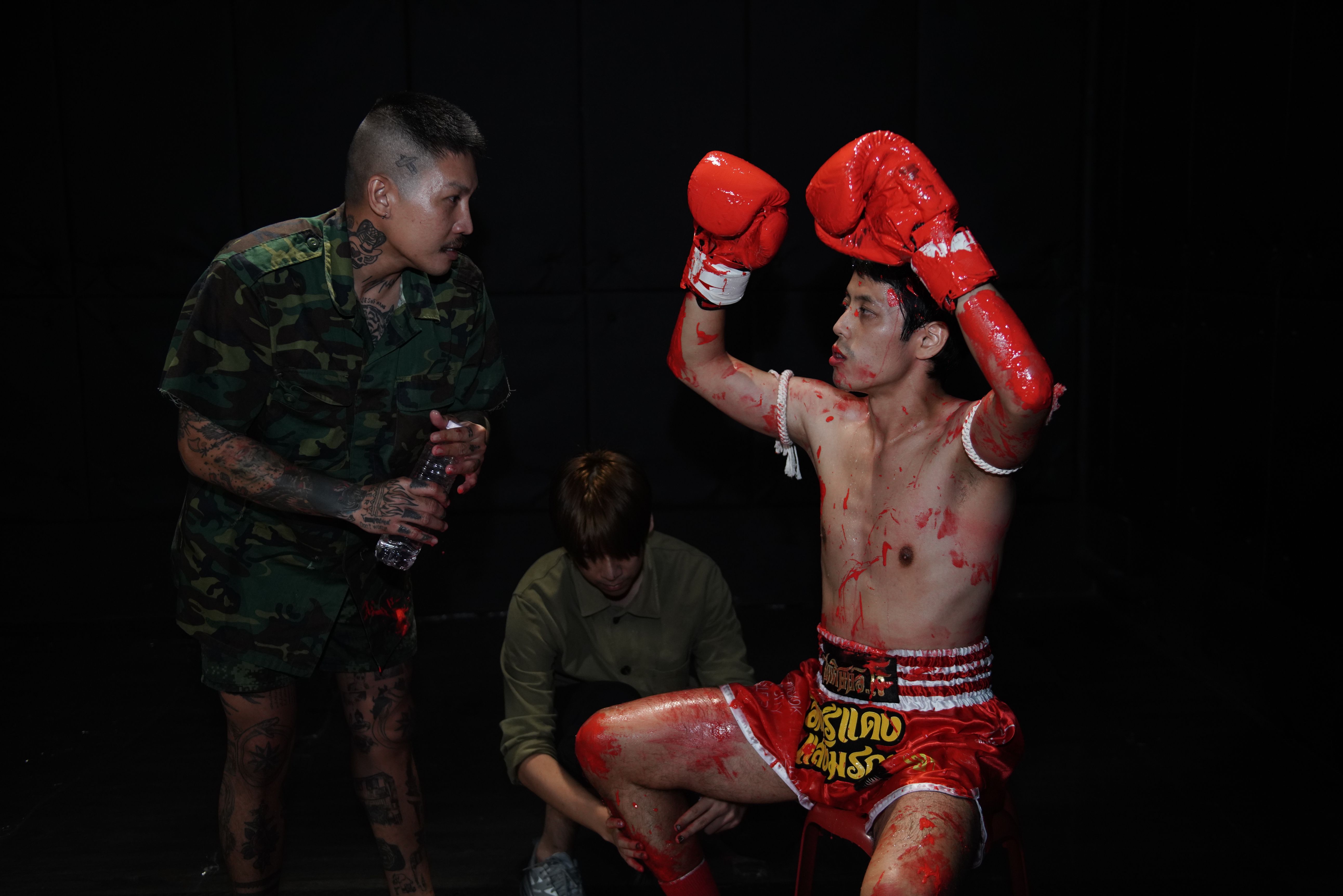
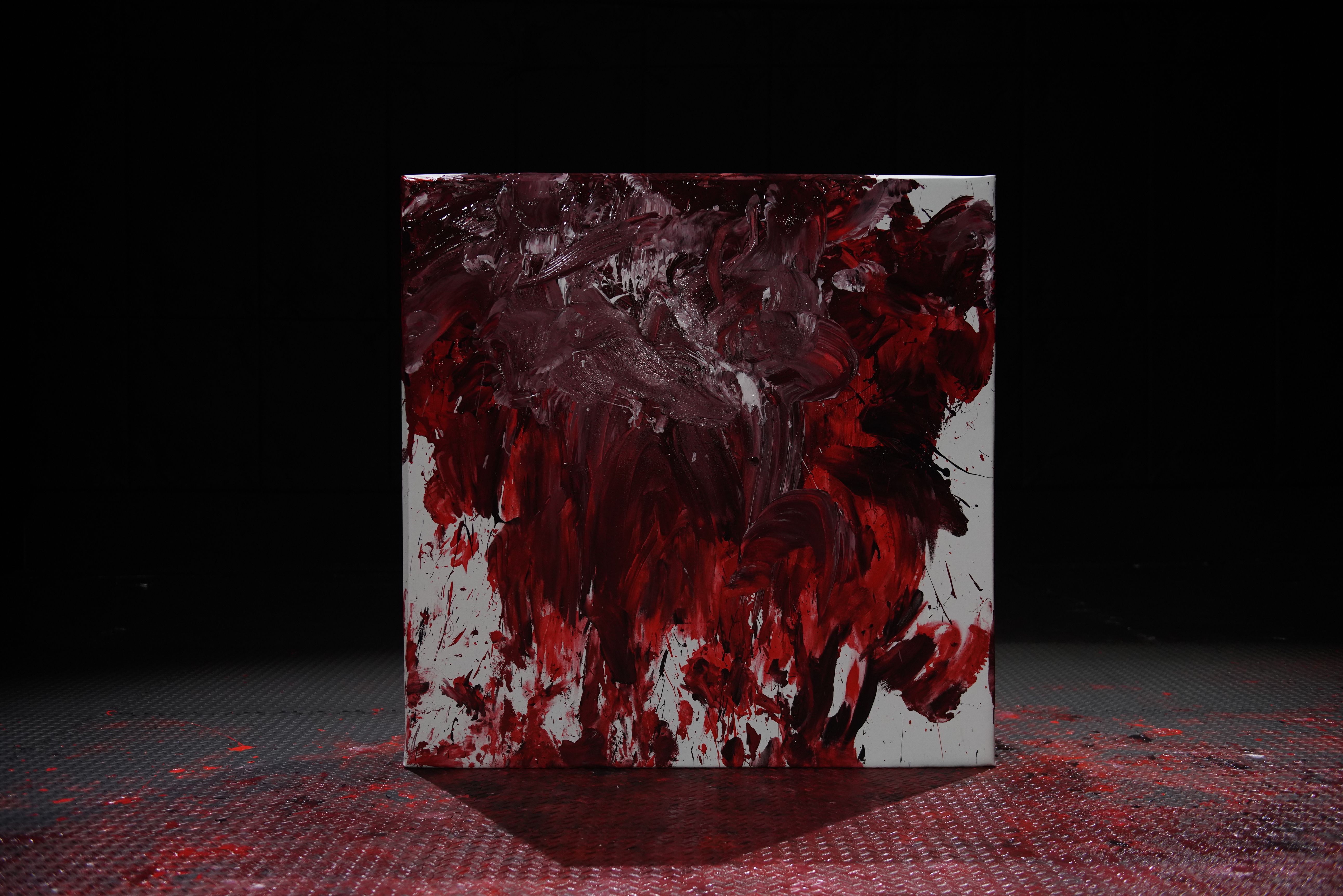
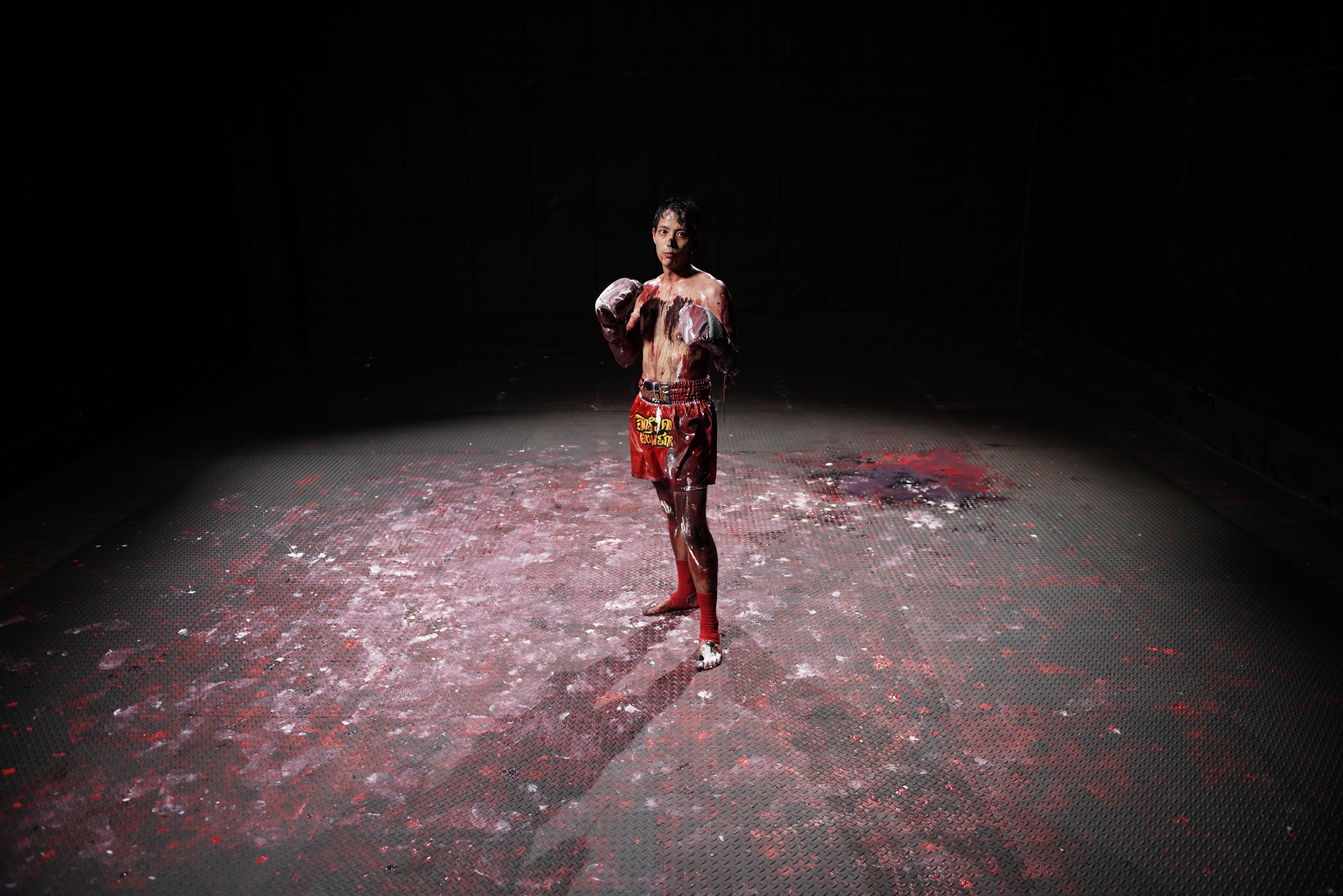
The epiphany, or change, I had been waiting for, arrived at Art Spectrum, held by the Hoam Museum of Art, while watching Thai artist Chulayarnnon Siriphol’s multi-channel installation Red Eagle Sangmorakot: No More Hero in His Story (2025). Siriphol underwent three months of Muay Thai boxing training and used his experiences to make a filmed performance piece where he paints and boxes. Alongside it, interviews with coaches and promoters reveal the network that trains the fighters and promises them a future. One trainer describes hardening the boys’ bodies as an act of love: without such discipline, they might be cast out or turn to drugs. Seen within Art Spectrum, the work made me think of the institutions that train, select and promote artists, too. The comparison was imperfect but clarifying. Siriphol enters the training regime as its model pupil, then uses his battered body to disclose its terms. By then I knew what I wanted from this extended art week: not another good pupil of the system, but an artist prepared to learn its discipline well enough to betray it.
Only then did I understand why the image that first greeted me in Busan had stayed with me. At the climax of Ryu’s Ten Thousand Dreams, a blinding light begins to shine from between one of the schoolgirls’ legs. Earlier, the chorus had counted a rising birth rate among the nation’s dreams. Until now, the pupils had appeared to follow every instruction, but the glow gives the girl a new presence and a power. The body expected to secure the future refuses to be looked at on those terms. I thought again of Rilke’s torso, whose body returns the viewer’s gaze and asks that the viewer change. The nation had asked its children to dream of its future. For a moment, Ryu’s schoolgirl seemed to follow her instructions. Then, suddenly, she is the one blazing a light back at the viewer, asking whose body we are expecting to power the forward momentum, and demanding to be seen.—[O]
Busan Biennale (until 1 November); Gwangju Biennale (until 15 November)
Main image: Jacqueline Kiyomi Gork, 16th Gwangju Biennale (2026). © Gwangju Biennale Foundation. Photo: Jeon Byung Cheol.











A respected voice in contemporary art discourse.
Focusing on ambitious storytelling and insightful art-world commentary. Ocula Magazine publishes in-depth interviews, critical essays and timely analysis on the artists, exhibitions and ideas driving the global art world.
Learn more about Ocula Magazine
Showcasing the best of the art world.
Ocula partners with galleries from around the world to highlight their artists, artworks and exhibitions. Gallery membership is by application and invitation, with each member vetted by an independent panel.
Learn more about Ocula Membership
Specialises in the sale of major artworks.
Led by a team with deep ties to the world’s leading auction houses, galleries and collectors. Ocula’s advisory team offers bespoke services to high-net-worth clients from around the world who are looking to acquire the best of contemporary and modern art.
Learn more about our team and services