





Lingering in Gentle Sorrow: Abbas Zahedi at the Chelsea Sorting Office
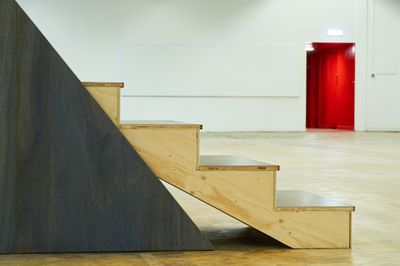
Exhibition view: Abbas Zahedi, Ouranophobia SW3, organised by General Release at Chelsea Sorting Office, London (5 December 2020–17 January 2021). Courtesy Chelsea Sorting Office. Photo: Alexander Edwards.
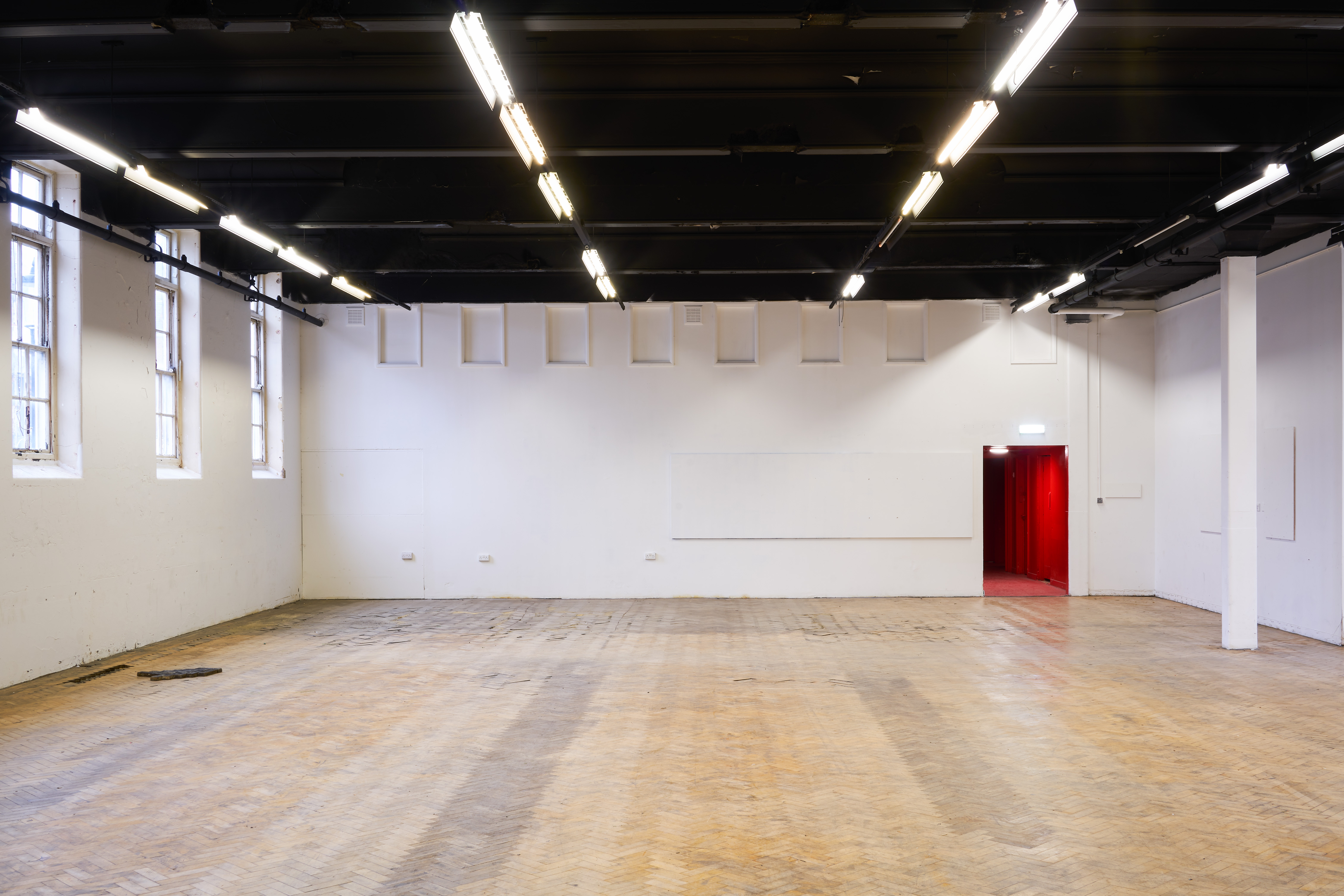
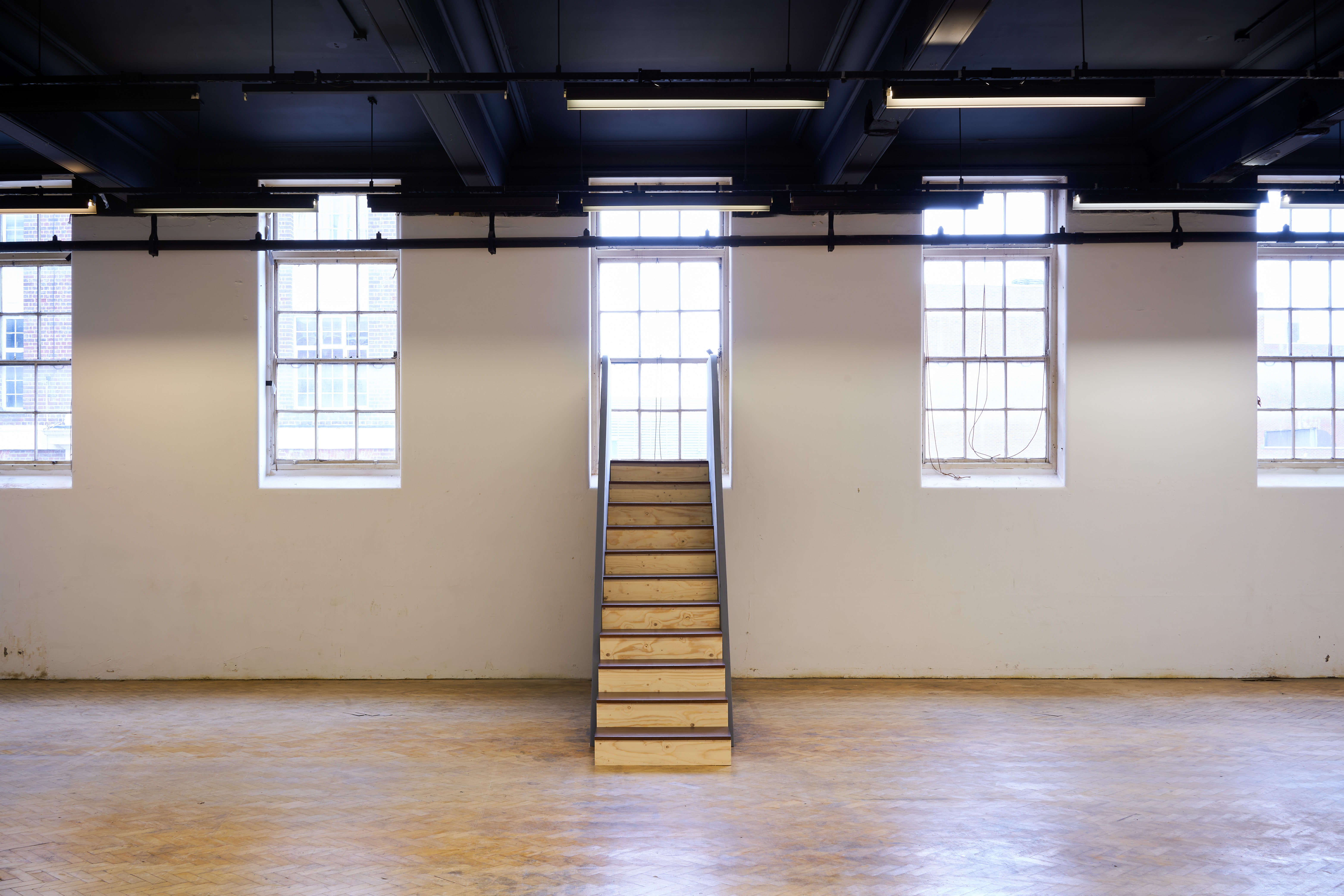
A vast hall-like room generously lit from a bank of large windows running along its length is empty, save for the subtle interventions that play with the architectural logic of a building built for administrative efficiency.
A wooden minbar-like staircase is the most obvious. It invites you to climb to the level of the windows, which otherwise do not offer a view outside. A smaller bank of windows that abuts the ceiling of the far wall have been blocked out. This was perhaps from where, panopticon-like, administrators would have kept an eye on the workers toiling below.

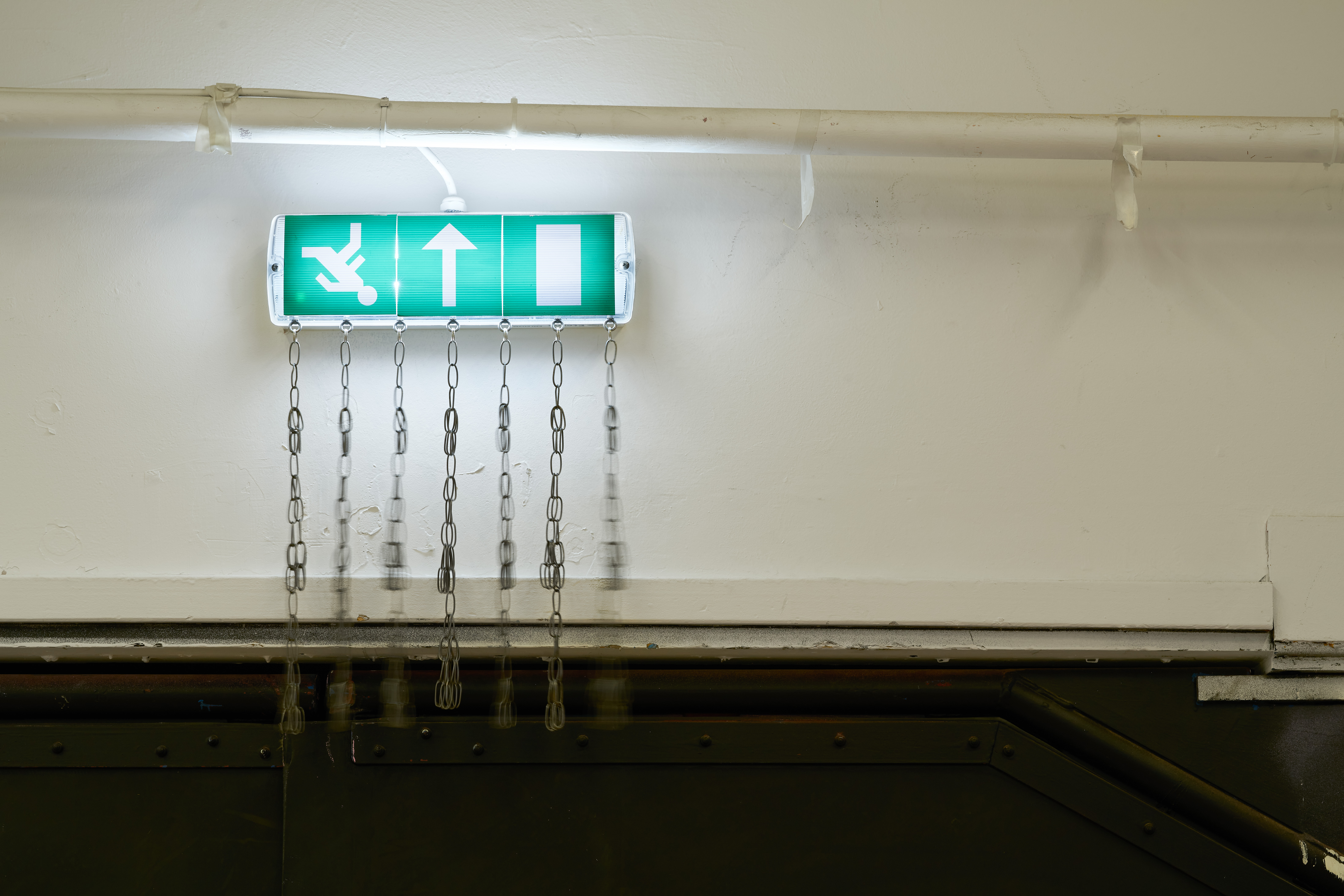
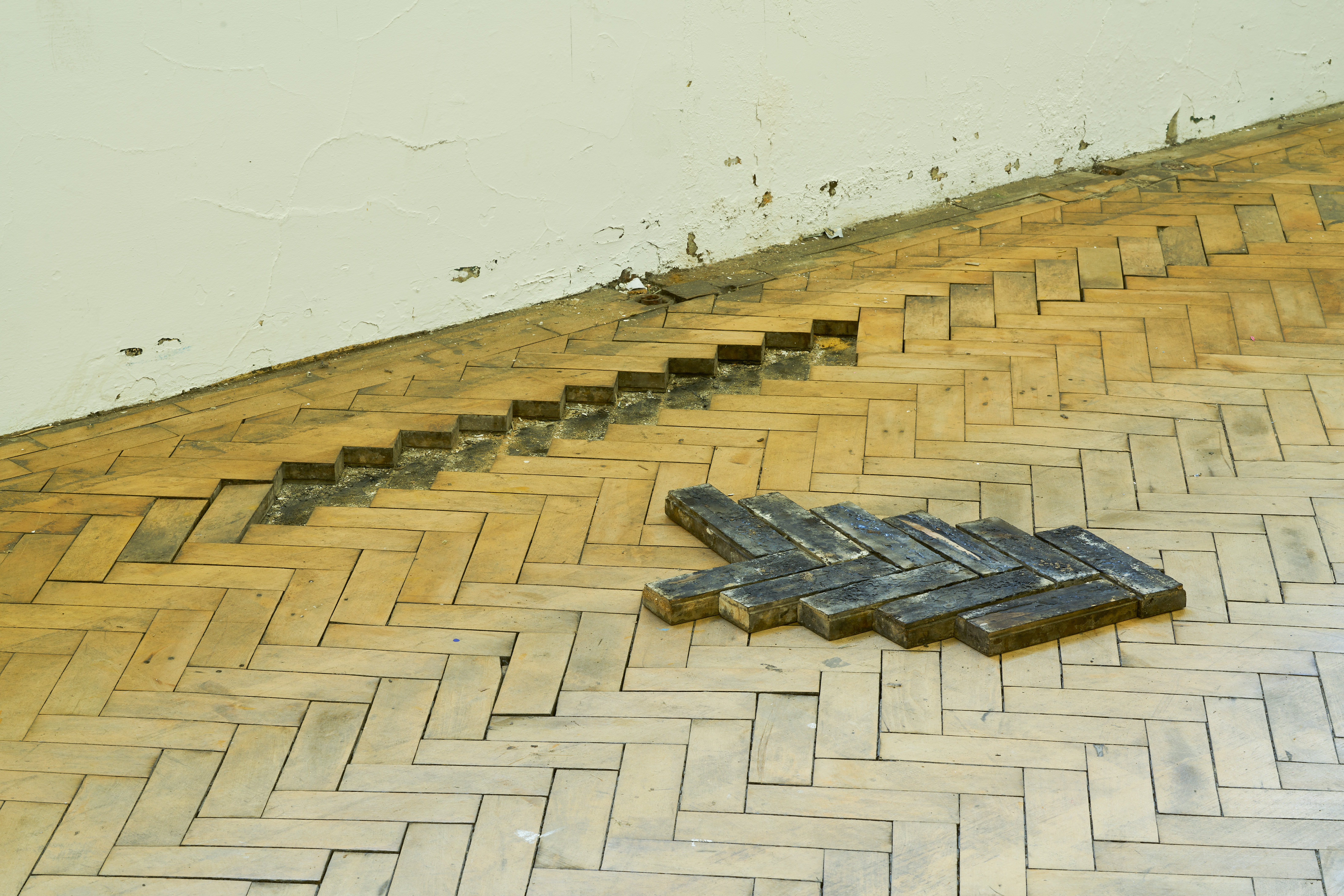
I am drawn across the room by sound and a bright red passageway. An arrow made out of tiles removed from the parquet flooring acts as a subtle wayfinder, recalling markers that show the faithful the direction to Mecca. The vibrating sounds, which seem to emanate from the walls, are rhythmic but not melodic. They create an immersive field.
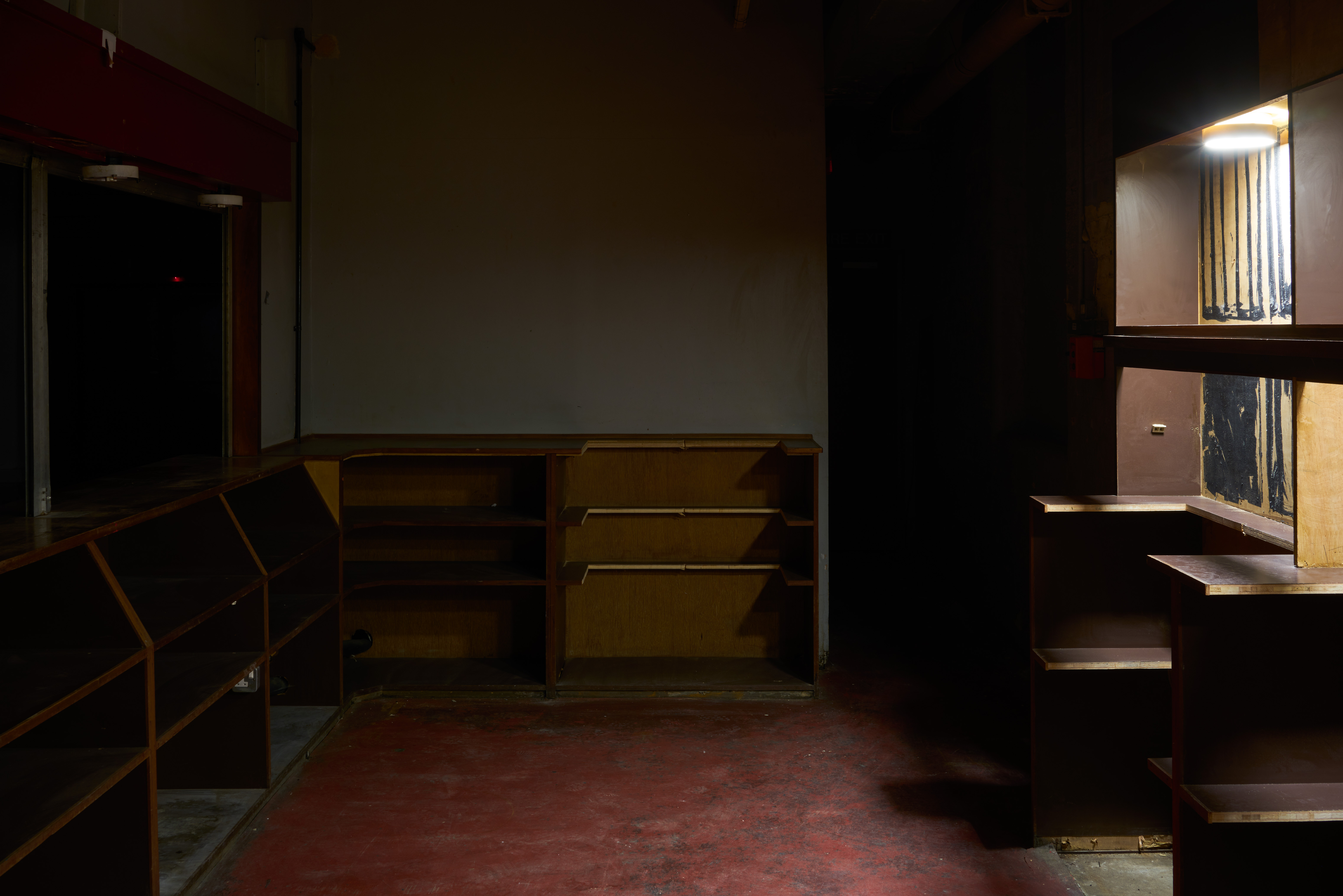
The small corridor and stairway that descends into the basement is a hallucinogenic red. The basement itself is dark. Weak slivers of white light reveal a forest of pillars in a large room flanked by the remains of a bar.
This bar is also the source of one of two soundscapes in the exhibition that we feel as much as hear. The sounds shift from the mechanical vibrations heard on the ground floor to samplings of human voices in prayer or lamentation.
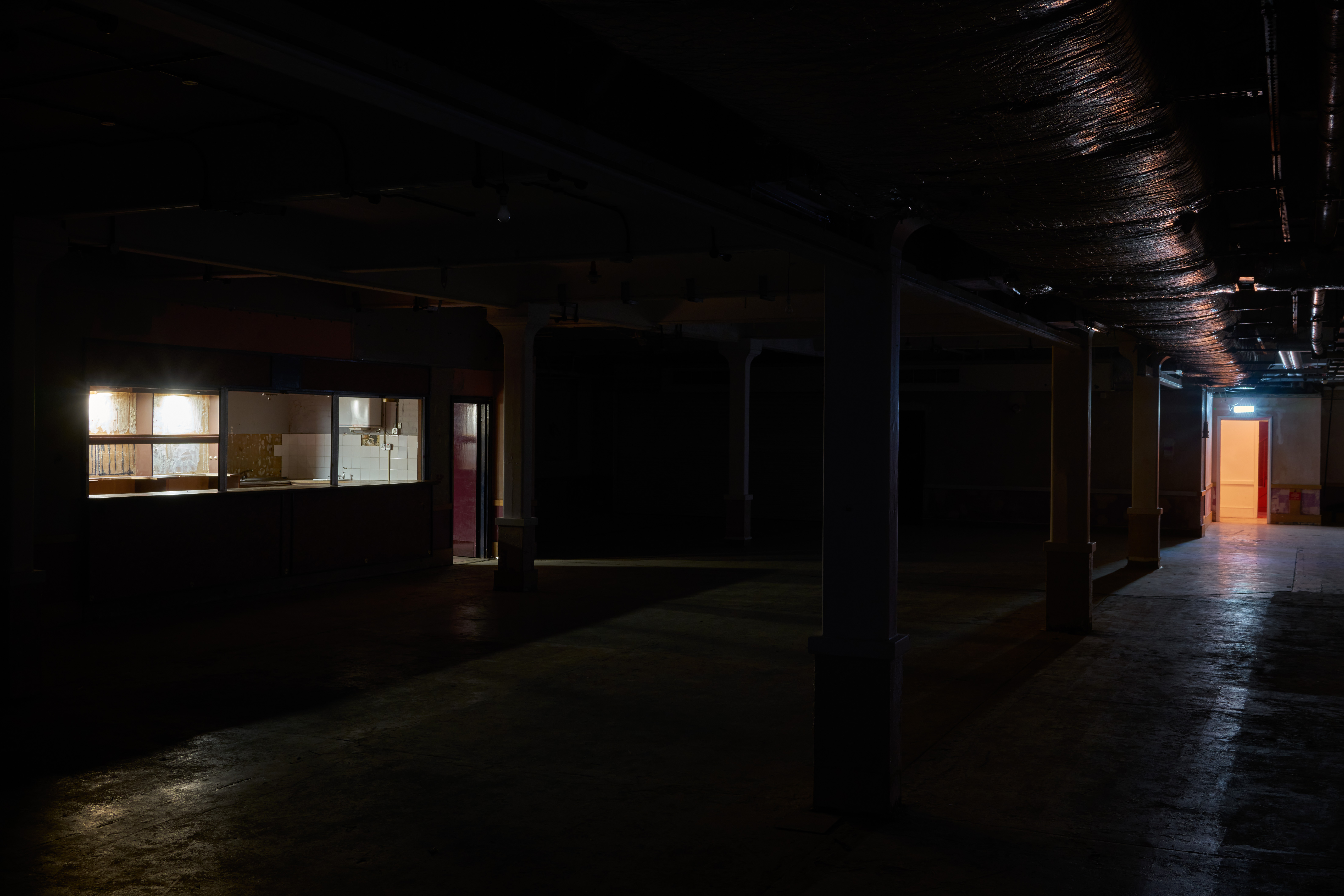
Squint and one can reimagine this once social space for postal workers’ congregations. With the mechanical sounds in the background, we could be in a nightclub; with the prayers or lamentations we are transported to those mosques in Córdoba or Sicily that were temples or churches once.
“Visiting Zahedi’s show is like being enveloped in the warmth of a gently sorrowful song...
As I retrace my steps back out, I notice new things, including streaks of differently coloured parquet tiles. Are these an intervention or werethey always there?
That Zahedi had access to the building from April 2020 to make this show, whose title Ouranophobia means fear of heaven or the sky, is not surprising. It takes time to do so little to reveal so much.
Through objects, light, sound, and architectural interventions the artist opens a series of thresholds between light and dark, viewer and viewed, inside and out, Self and Other, zahir (external or manifest), and batin (interior or hidden), art and belief. There is plenty to unpack.

I scan a QR code on my way out. It links to a generous interview with the artist where he lays out myriad references—biographical, historical, sociological, and philosophical. The sorting office used to be a timberyard. It is across the road from the hospital where Zahedi’s brother had a heart transplant.
The shelves from the basement bar have been repurposed to form the steps in the minbar. The remixed prayer playing in the basement is sampled from the Iranian, New York-based duo Saint Abdullah. The sound comes from transducers embedded into the fabric of the building.
We learn of Zahedi’s Iranian heritage. His reflections on being a Muslim man in post-9/11 Britain, and on being a working-class one in the context of the Grenfell tragedy, where 72 people from mostly immigrant and working-class families perished in a fire that spread due to refurbishments that did not meet fire regulations in one of the richest boroughs in London. The minbar, we discover, points not to Mecca, but to Buckingham Palace.
I finish reading the interview on the train back home, and on reaching my stop, feel the immediate urge to go back. Visiting Zahedi’s show is like being enveloped in the warmth of a gently sorrowful song (think Reshma, Pathanay Khan, Big Thief, or The National). You are not sure of the lyrics but listening feels necessary. There is the compulsion to hit repeat; to linger and share in that sorrow some more.—[O]
Main image: Exhibition view: Abbas Zahedi, Ouranophobia SW3, organised by General Release at Chelsea Sorting Office, London (5 December 2020–17 January 2021). Courtesy Chelsea Sorting Office. Photo: Alexander Edwards.


A respected voice in contemporary art discourse.
Focusing on ambitious storytelling and insightful art-world commentary. Ocula Magazine publishes in-depth interviews, critical essays and timely analysis on the artists, exhibitions and ideas driving the global art world.
Learn more about Ocula Magazine
Showcasing the best of the art world.
Ocula partners with galleries from around the world to highlight their artists, artworks and exhibitions. Gallery membership is by application and invitation, with each member vetted by an independent panel.
Learn more about Ocula Membership
Specialises in the sale of major artworks.
Led by a team with deep ties to the world’s leading auction houses, galleries and collectors. Ocula’s advisory team offers bespoke services to high-net-worth clients from around the world who are looking to acquire the best of contemporary and modern art.
Learn more about our team and services