






ANNIE LEIBOVITZ
b. 1949, United StatesAnnie Leibovitz stands among the most influential voices in contemporary art and photography, recognised internationally for her singular portraiture that captures the intimacy and grandeur of culture’s most notable figures. As the first woman to receive a solo show at the National Portrait Gallery in Washington, D.C. and named a Living Legend by the United States Library of Congress, her five-decade career has shaped how art, celebrity, and society intertwine.
Early Years
Anna-Lou Leibovitz was born in Waterbury, Connecticut. Raised in a large family by a U.S. Air Force lieutenant colonel and a modern dance instructor, she experienced frequent relocations, which exposed her to diverse cultures from a young age. She began taking photographs in the Philippines, where her father was stationed during the Vietnam War. Initially enrolling at the San Francisco Art Institute to study painting, she soon shifted focus to photography—deeply inspired by artists such as Robert Frank and Henri Cartier-Bresson and later influenced by Richard Avedon and Irving Penn. Leibovitz currently lives and works in New York.
Annie Leibovitz Artworks
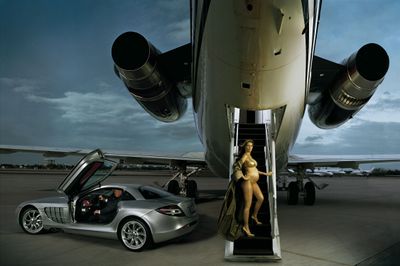
Leibovitz’s artistry is defined by dramatic, meticulously orchestrated photographic portraits that merge the worlds of contemporary art and popular culture. Her work is distinguished by its evocative use of lighting, staging, and the psychological openness of subjects, often celebrities, musicians, artists, and public figures.
Beginning her work in a more muted tone, Leibovitz’s photos have evolved to become more colourful and dramatic. She uses the camera to capture opulent colour, careful staging, and dramatic natural and artificial light. This shift in her work can be seen in the contrast between the harmonious tones of Meryl Streep, New York City (1981) and the official portrait of the Obama family shot in 2009, which is more meticulously staged and lit.
Many of Leibovitz’s portraits hint at elements of story or make tongue-in-cheek historical references. For example, her photographs of Angelina Jolie for the January 2007 and November 2015 issues of Vogue make references to classical sculpture and mythology. Leibovitz considers herself an avid historical researcher and intentionally imbues her work not only with pop-cultural significance, but also with layers of historical and narrative meaning.
Rolling Stone and the Iconic Years
Leibovitz began her professional career at Rolling Stone in 1970 while still a student. By 1973, she was chief photographer, creating 142 covers and shaping the magazine’s distinctive visual identity. Her poignant, intimate, and often narrative-driven portraits included the historic image of John Lennon and Yoko Ono which became one of the most celebrated cover images of all time.
Taken just hours before Lennon was fatally shot outside of his New York residence on 8 December in 1980, the portrait is a bird’s eye polaroid of a naked Lennon curled around a fully clothed Ono. The photograph embodies the typical intimacy of Leibovitz’s celebrity portraiture, capturing a vulnerable and private moment between Lennon and Ono. In the words of Lennon, the photo ‘captured our relationship exactly.’
Expanding the Lens: Vanity Fair, Vogue, & Beyond
In 1983, Leibovitz joined Vanity Fair, broadening her stylistic range with more colourful and staged settings that pushed the boundaries of portrait photography. By the late 1990s, she was a regular contributor to both Vanity Fair and Vogue. Noteworthy works include her 1991 portrait of a pregnant, nude Demi Moore for Vanity Fair, which sparked widespread discussion and set a new visual standard for celebrity portraiture.
Leibovitz’s portraits are known for their narrative elements and historical allusions. For example, her photographs of Angelina Jolie for Vogue reference both classical sculpture and mythology, revealing her dedication to research and contextual depth.
Seminal Series and Projects
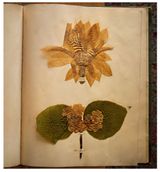
Her major projects include Women (1999), a series created in collaboration with Susan Sontag that explores diverse representations of female identity. Pilgrimage (2011) marked a departure from portraiture, focusing on evocative sites and objects connected to cultural history and personal significance. Many images from this series are held by the Smithsonian American Art Museum.
Leibovitz’s more recent works continue to explore psychological nuance and cultural dialogue, with her practice spanning both print and digital technologies.
Select Public Commissions
- UBS Women: High-profile portrait series of notable women commissioned by UBS
- Official portrait of Queen Elizabeth II
Select Awards and Accolades
- Commandeur des Arts et des Lettres, France, 2006
- International Center of Photography Lifetime Achievement Award, 2009
- American Society of Magazine Editors’ Creative Excellence Award, 2009
- Royal Photographic Society’s Centenary Medal and HonFRPS, 2009
- Los Angeles MOCA Award for Distinguished Women in the Arts, 2012
- Wexner Prize, 2012
- Prince of Asturias Award for Communication, 2013
- San Francisco Museum of Modern Art Contemporary Vision Award, 2015
- National Museum of Women in the Arts Award for Excellence in the Visual Arts, 2018
- Designated Living Legend, Library of Congress
Exhibitions
Annie Leibovitz has been the subject of many prominent institutional and gallery exhibitions.
Solo Exhibitions
- 2025 — Annie Leibovitz / Work, Mint Museum Uptown, Charlotte
- 2023 — Stream of Consciousness, Hauser & Wirth, New York
- 2012 — Pilgrimage, Smithsonian American Art Museum, Washington, D.C.
- 2006 — A Photographer’s Life, 1990–2005, Brooklyn Museum, New York (travelled internationally)
- 1999 — Annie Leibovitz: Women, Corcoran Gallery of Art, Washington, D.C.
- 1991 — Photographs: Annie Leibovitz 1970–1990, National Portrait Gallery, Washington, D.C.
Group Exhibitions
- Stedelijk Museum, Amsterdam
- Maison Européenne de la Photographie, Paris
- Hermitage Museum, St. Petersburg
- Pushkin Museum of Fine Arts, Moscow
Annie Leibovitz FAQs
Where can I see Annie Leibovitz’s artworks?
Annie Leibovitz’s photographs can be viewed in the permanent collections of the Museum of Modern Art (MoMA), New York; Art Institute of Chicago; Los Angeles County Museum of Art; Smithsonian American Art Museum, Washington, D.C.; and the National Portrait Gallery, London. The major exhibition Annie Leibovitz / Work runs at the Mint Museum Uptown, Charlotte, from April to August 2025.
What is distinctive about Annie Leibovitz’s art?
Her artwork is defined by its dramatic lighting, elaborate staging, and compelling intimacy, bringing out unexpected facets of her subjects. Leibovitz’s portraits merge the worlds of fine art and contemporary popular culture, pushing the boundaries of what portraiture can express.
What are Annie Leibovitz’s most famous series or books?
Some of her most influential series and publications include Photographs 1970–1990, Women (1999), A Photographer’s Life 1990–2005, Pilgrimage (2011), and the new Women volume (Phaidon, 2025), as well as collections of her portraits from Rolling Stone, Vanity Fair, and Vogue.
How did Annie Leibovitz start her career as an artist?
Leibovitz began her artistic career at the San Francisco Art Institute and soon joined Rolling Stone magazine in 1970. She was promoted to chief photographer within three years. Her early and iconic assignments—including the John Lennon and Yoko Ono portrait—established her reputation and visibility worldwide.
Are there any interesting facts about Annie Leibovitz?
Annie Leibovitz was the first woman to have a solo show at the National Portrait Gallery, Washington, D.C. She has photographed world leaders (including Queen Elizabeth II), artists, and public figures, and was made a Living Legend by the Library of Congress. Her image of John Lennon and Yoko Ono has been consistently ranked as one of the greatest magazine covers of all time.
Ocula | 2025







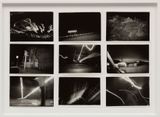
Explore Annie Leibovitz's Exhibitions


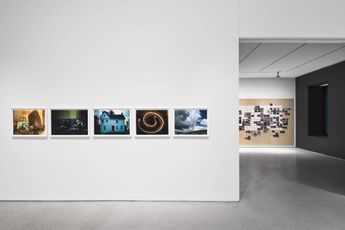
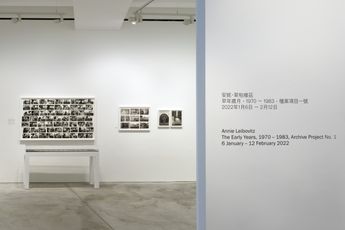



Explore and Follow Artists Shaping Contemporary Art
A respected voice in contemporary art discourse.
Focusing on ambitious storytelling and insightful art-world commentary. Ocula Magazine publishes in-depth interviews, critical essays and timely analysis on the artists, exhibitions and ideas driving the global art world.
Learn more about Ocula Magazine
Showcasing the best of the art world.
Ocula partners with galleries from around the world to highlight their artists, artworks and exhibitions. Gallery membership is by application and invitation, with each member vetted by an independent panel.
Learn more about Ocula Membership
Specialises in the sale of major artworks.
Led by a team with deep ties to the world’s leading auction houses, galleries and collectors. Ocula’s advisory team offers bespoke services to high-net-worth clients from around the world who are looking to acquire the best of contemporary and modern art.
Learn more about our team and services