






Drawn to Life: Becoming ‘Less Bad’ with Karl Haendel
From his studio in Los Angeles, Karl Haendel spoke with Ocula about the evolution of his work as surveyed in his latest show at the Frederick R. Weisman Museum and how he views drawing as an index of personal growth. Save to My Ocula
Since the 2000s, Karl Haendel has sharpened and blunted many thousands of pencils through his assiduous practice of redrawing images from photographs or other printed matter. His hyperrealist drawings—sometimes also made in ink—constitute a vast body of work that is frequently incisively critical, laugh-out-loud funny, enigmatic, touching, and disarmingly confessional.
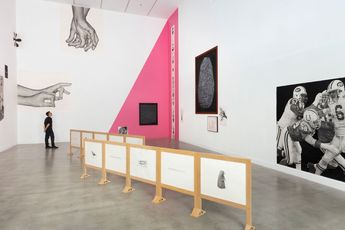
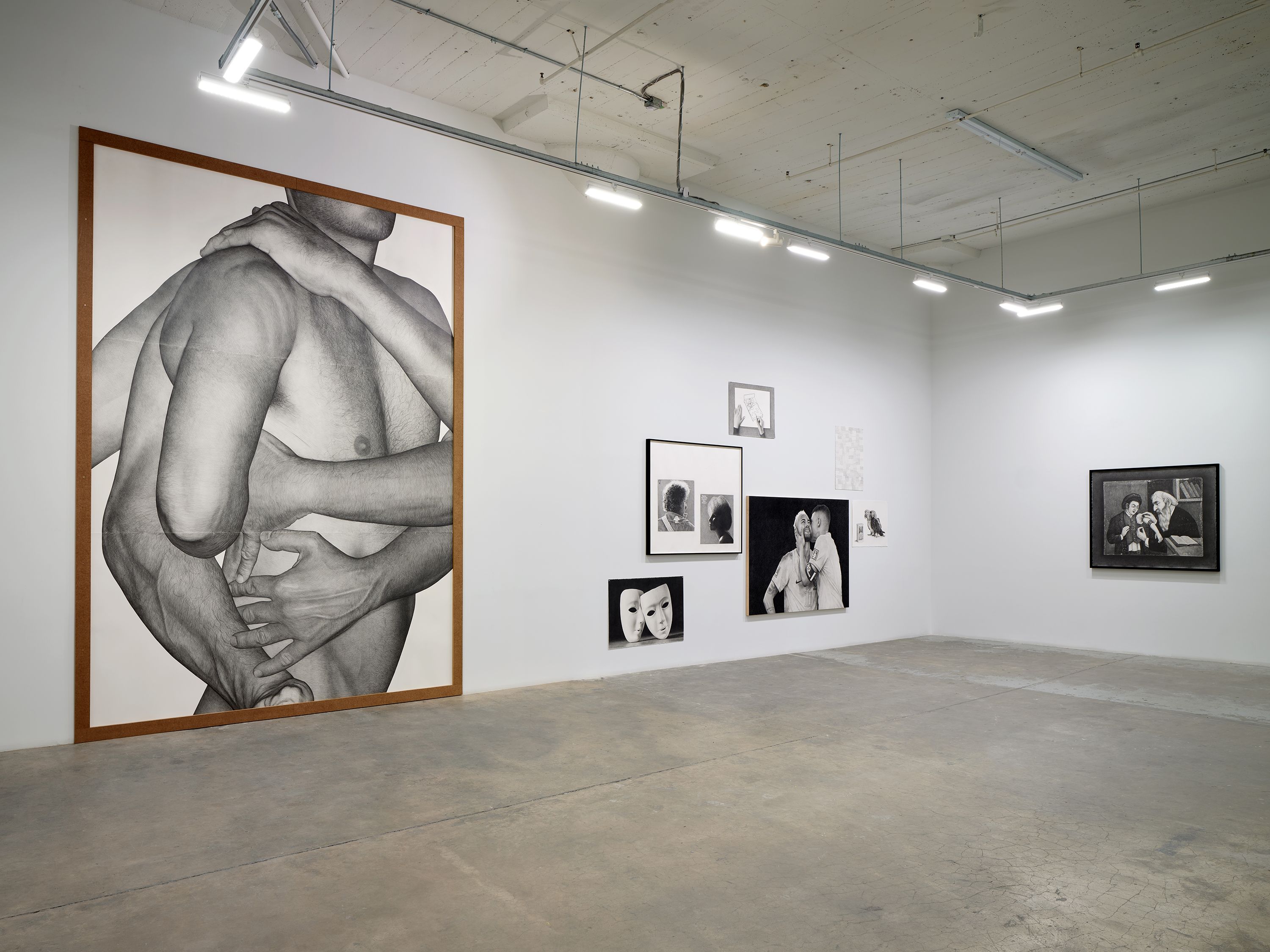
A 25-year survey of Haendel’s art opened in May at the Frederick R. Weisman Museum of Art at Pepperdine University, Malibu, California, having travelled from the Kimball Art Center, Park City, Utah. Titled Less Bad, the show frequently touches on themes of masculinity, race, class, and identity, continuing an investigation by Haendel that has only become more pertinent in the past few years.

JG: How did you arrive at the title of your current show?
KH: I’m seriously committed to my work, but I don’t take myself too seriously. Since this is a museum show with work selected from the entirety of my career, I joked to the curators that it’s the ‘less bad’ work, which became a working title that stuck. And then, yes, there is something about growing up in a patriarchal culture, and trying to be a less bad person or less bad man. I’d like to think that the masculinity evinced in the work is maybe less bad than our fathers’ generation, less bad than toxic or traditional masculinity.
JG: What does ‘less bad’ masculinity look like, and how does it manifest in this show?
KH: Well, take the drawing Three Days Ago I Cried (2023), for example. With that work I was thinking about how patriarchy teaches boys to deny their vulnerability. Repression like this has repercussions: depression, self-hatred, and a lot of anger, which leads to violence towards children, other men, and, most of all, against women. In that work I set out to reflect on some small moments in my life that I hope evidence a human who is caring, empathetic, and connected to others. I suppose those are some of the qualities I’m thinking about as ‘less bad’, in contrast to an antiquated masculinity based on domination and control. I know reading that drawing feels a bit cringey, and it makes me uncomfortable too, but we’ve all grown up under a system that tells us that talking about our feelings isn’t appropriate.


JG: This acknowledgement of your own fallibility has been in the work for a long time. But it seems to me that in the past few years it’s become more important.
KH: Yeah, it’s been there since the beginning. I was primed for it with my education: cultural studies at Brown, a student of Mary Kelly for my MFA, the Whitney Independent Study Program (ISP). The ISP is not exactly a bastion of white, straight, male subjectivity! So my work always had some level of critique of inequity. When I was younger the critique was from an outside perspective, as if I was above or apart from the problem. But in the past decade that changed, and I realised that my privilege meant that I shouldn’t be pointing fingers at anybody but myself. When I was 23 and bell hooks came to speak at the ISP, I was like, ‘Yes! Racism is bad, patriarchy is bad!’ But rereading hooks more recently, I’m like, ‘Oh. I’m the patriarchy! I’m the racist!’ I have to focus on the only thing that I can change, which is myself.
JG: Is your work a tool for changing yourself, or a document of that change?
KH: I don’t think it’s a tool for my own personal change, because I work on that change in other spaces. But my drawings probably do show evidence of change. Like the drawn cartoon essay in my show, which I made when Tony Lewis asked me to contribute an essay to a book published by the Hirshhorn [Museum] about his collage poems based on Calvin and Hobbes comics. In my piece you see the 20th century’s most iconic cartoon characters—Charlie Brown, Blondie, Dick Tracy, Li’l Abner, Cathy, Dilbert—simultaneously come to the realisation that they are all white, which is a big surprise to them by the way. They start to consider how their ignorance and privilege is detrimental to so many. This is not an essay I could have drawn 20 years ago—I didn’t yet understand the pernicious and pervasive nature of racism.
JG: It strikes me that there is something heroic in your work—its often-grand scale, its impressive commitment, your honesty and transparency—which is undermined, or counterbalanced, by your self-effacement.
KH: I’m not comfortable with the term ‘heroic’. I think humans are capable of extraordinary things, extraordinary intellectual feats, feats of love and feats of empathy and feats of dedication. That doesn’t make them heroes. That just makes them humans. If people are going to take the time to come to a show of mine, I want to give them a lot. Dedication, honesty, effort. Just trying to be a generous human being. My work is often big and enveloping—you could say ‘impressive’, if you want to use that term—but I don’t treat it like it’s rarefied or precious. I just staple or pin it directly to the wall, rather than frame it behind Plexi, which creates distance and is implicitly hierarchical. I think art should be approachable, not precious.

JG: I think of the piece in this show, Richard Nixon’s Childhood Home Annotated by My Daughter (2017), which is part of a larger series where she doodles over your drawings.
KH: If I were overly precious and didn’t let her touch them, we wouldn’t get those drawings. Those collaborations happen because I don’t consider my work heroic.
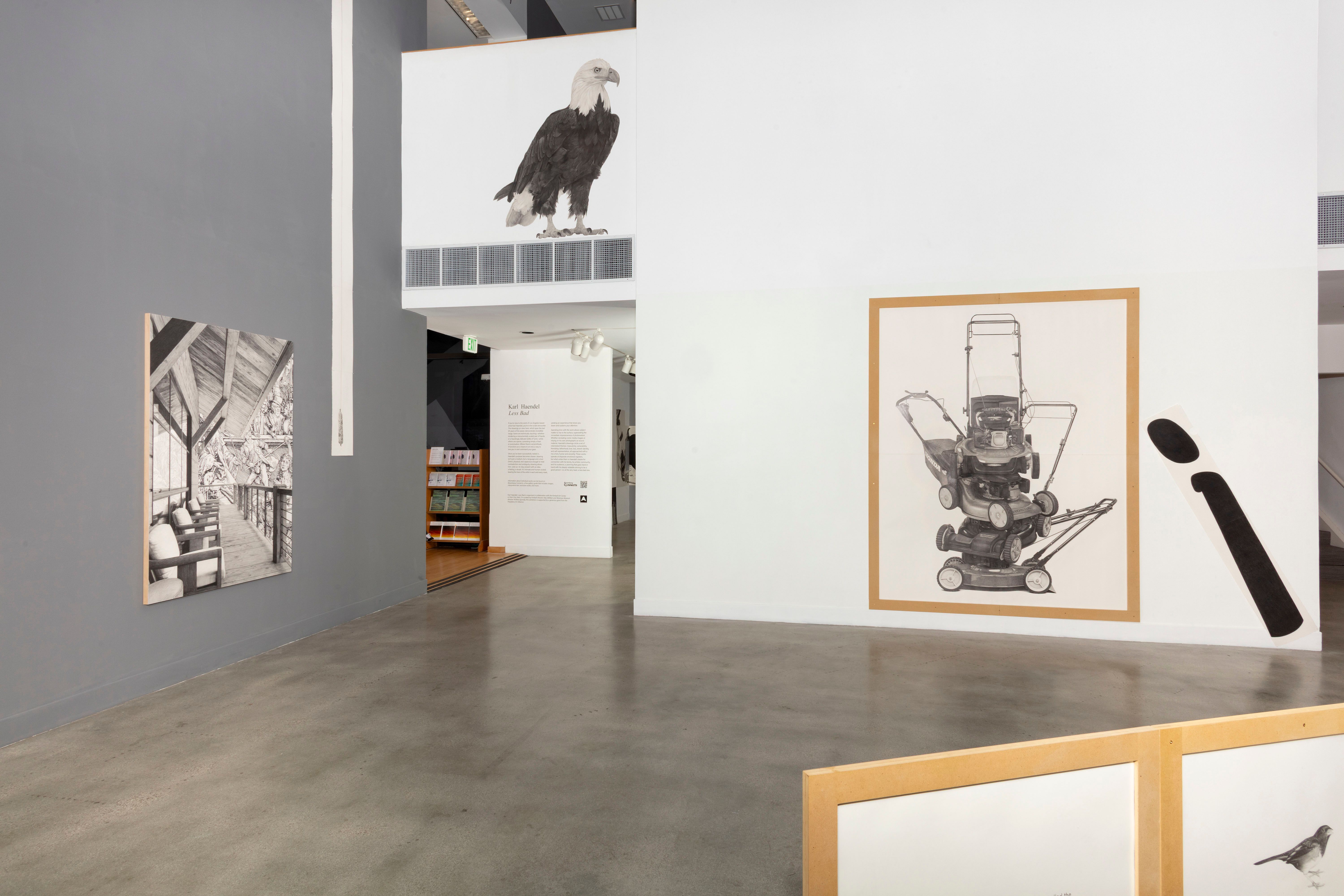
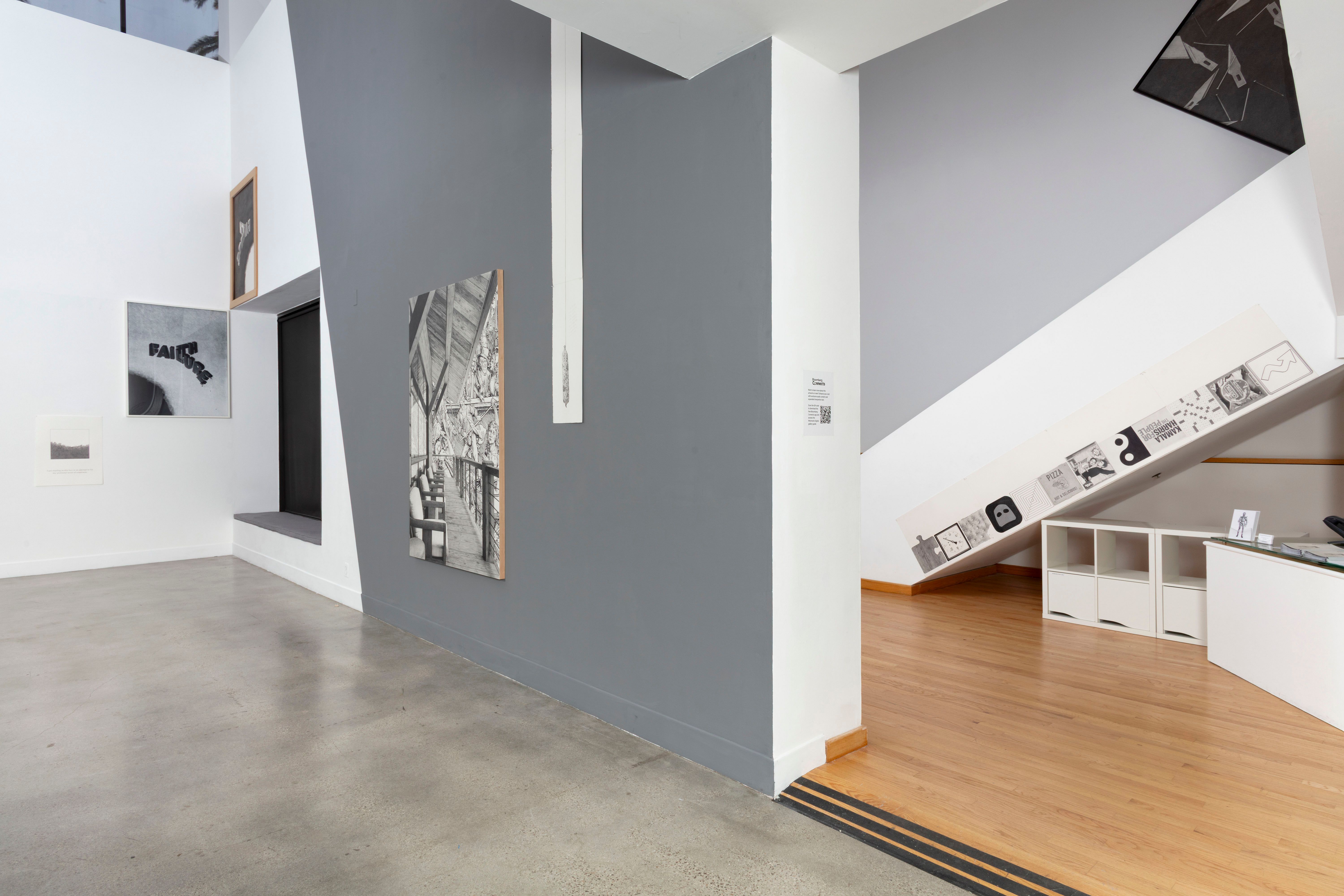
JG: Whenever I see an installation of your work where pieces are hung salon-style or in an experimental way, as at the Weisman Museum, I’ve felt that the whole is greater than the sum of its parts.
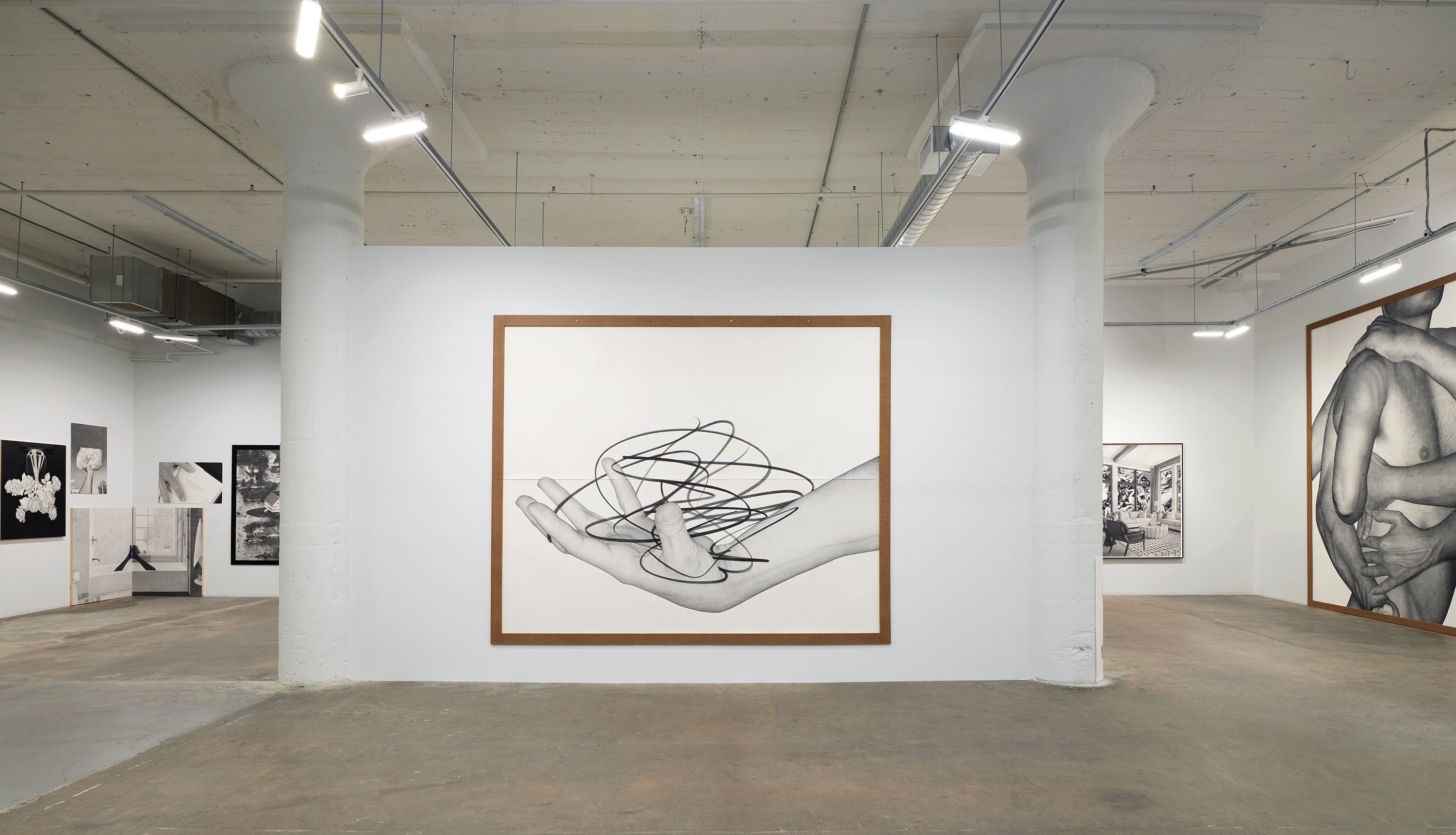
KH: Often my favourite art is installation or performance, work that prioritises the physical over the optical. Using the entire space forces the viewer to engage their entire body, not just their eyes, and I think this helps awaken the mind. More of your synapses are firing. And I hope it makes for a less interchangeable experience. I’ve walked through Chelsea and I don’t even recall what show I saw and where, because the spaces and exhibitions all look the same: painted rectangles evenly spaced on perfect walls at eye level. I try to make something particular—a unique experience for the viewer. And installing like this is playful, joyful. So I’ll make some clever visual moves, like an exclamation point that’s tipped over in the corner. It makes me smile. I hope it makes others smile.


JG: How many of your subjects are drawn from photos you take and how many are appropriated images?
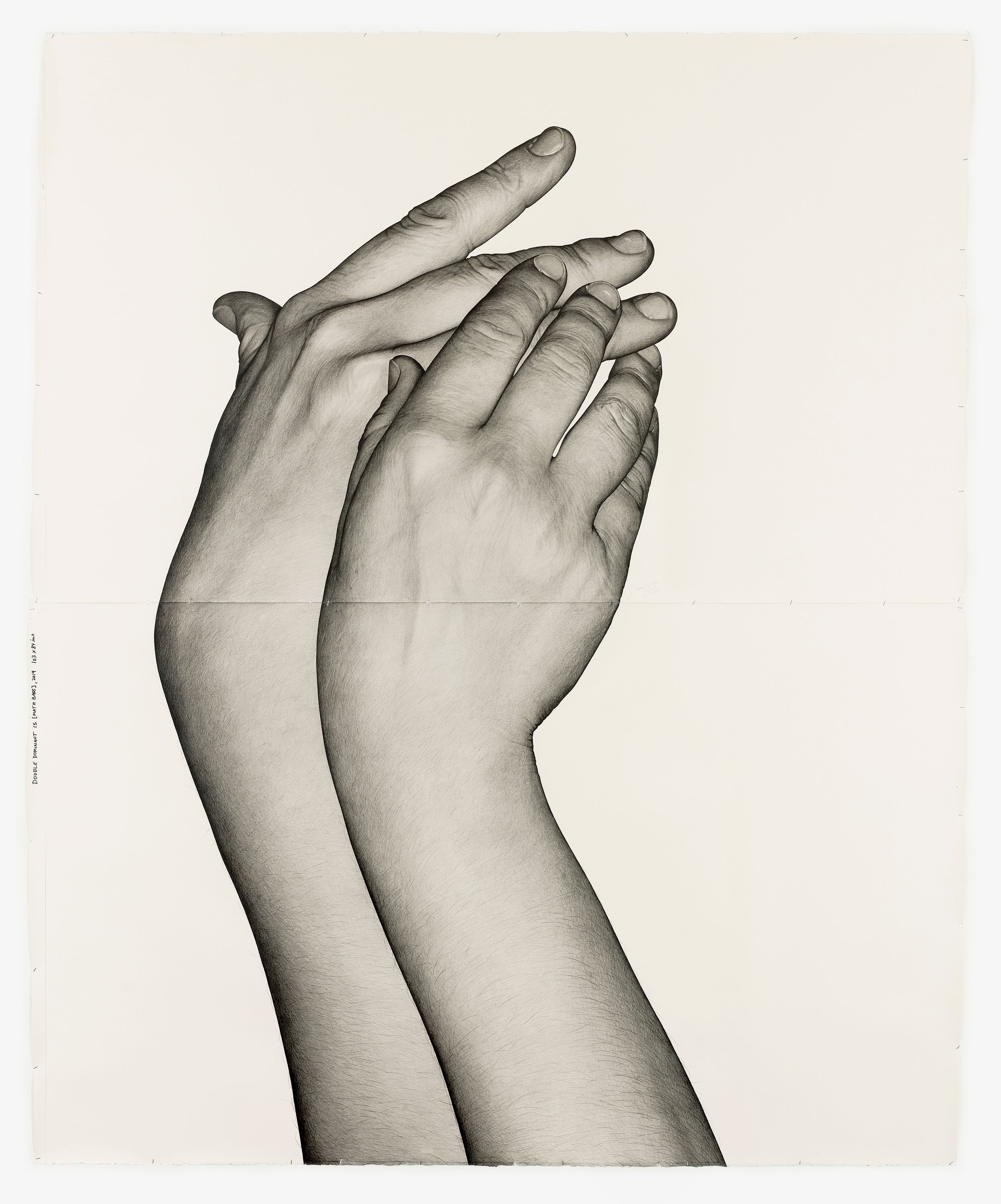
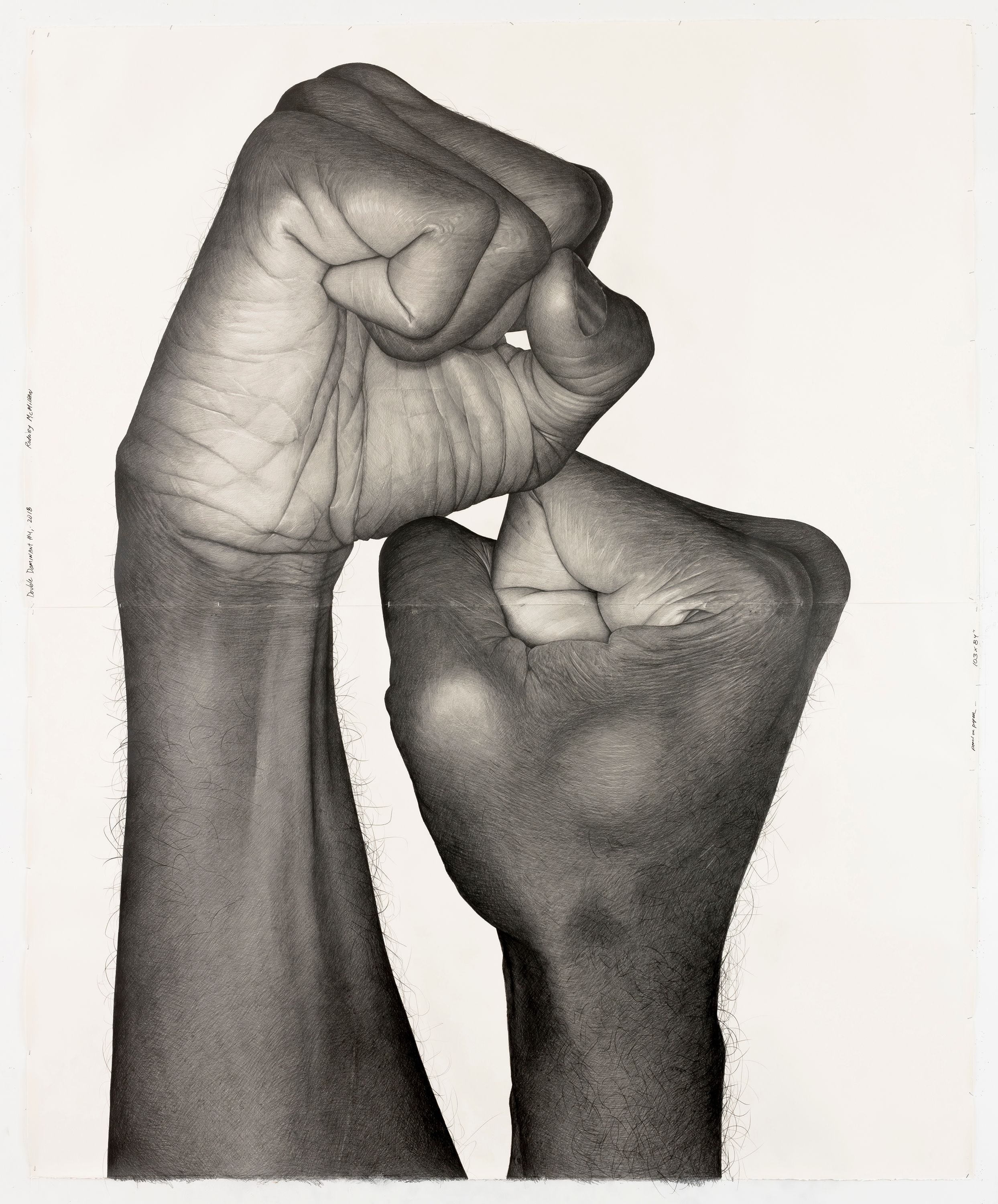
KH: I think people imagine a lot more are appropriated than they really are, because my drawings have a dispassionate look to them. But they often start from photos that I take. I don’t care where the source image comes from; I just want to get to the final work as efficiently as possible. If I can find something in a book or online and it works for me, I will use it, sometimes paying for the image if the ethics of the situation call for it. But often what I want doesn’t exist, so I take my own photos. Like the drawings of the hands of L.A. artists in my community [‘Double Dominant’, 2018–2020], or the drawings of girls riding rodeo, where I rented a telephoto lens and I went to a women’s rodeo and asked if I could take pictures.
JG: So maybe it’s not accurate to call you an appropriation artist?
KH: Images are language, and a language needs to be iterative to be understood. All artists are appropriation artists, and have been from the first cave painting. Just because I went to the rodeo and took my own source pictures for the drawings doesn’t mean that they’re original, because the image of a horseback rider is part of human culture. I didn’t make it up. If you set up an easel and paint a landscape from life, you’re not an appropriation artist? Where did you come up with the idea to do that? You can’t make an original landscape. You can’t make an original portrait. I just don’t see a difference between original and copy. It’s all just images and doesn’t concern me. Let’s just read the image. What is it? Why is it? What does it tell us about ourselves and our time?

![Karl Haendel, Faith-Failure (After Florian Maier-Aichen After Mungo Thompson) Mirrored [ghost version] (2005). C-print. 133.68 x 102.87 x 5.08 cm (framed).](https://files.ocula.com/rf/a8/a86f94f7-57d8-47e4-afcb-d97d81a855ef/haendel689faithfailuremirroredghostversionsnap.jpg)
JG: So why drawing? What happens when you transpose an image into pencil or ink?
KH: It’s about effort and care. It says, ‘let’s pause and look at this, because the artist took their time with it.’ It imbues the thing with more material richness than it had in its previous iteration, especially if it was digital.
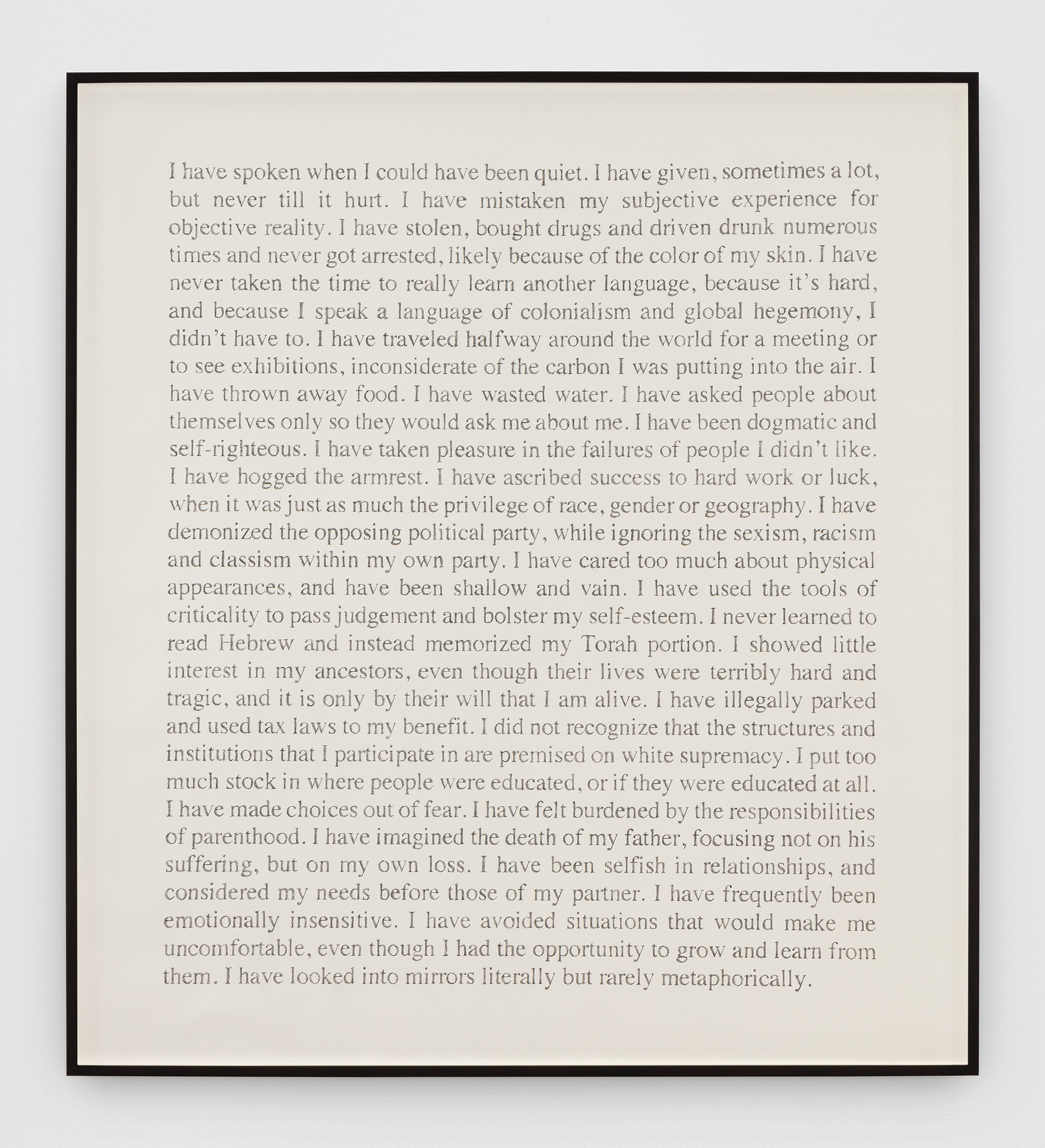
JG: Most people will probably assume that the words in your drawings are your own—as with the scribbled handwriting in I want to love you but I just can’t right now. (2022), or the serif type in I have spoken when I could have been quiet #3 (2021). But there’s also a lot in the work that might make us doubt its sincerity: the obvious contrivance of certain subjects, and the editing of your images. Should we trust your work?
KH: I’m not cynical or into ironic distance. If someone is kind enough to come to my show, I’m going to be honest with them. I wrote those texts and they are my thoughts. But I didn’t invent the English language! The way you phrase the question tells me you are still hung up on a concept of fidelity to an imagined original, and if one strays too much, there’s something insincere about that. I think that’s a false distinction. I can think of quite a few painters who paint from life who are insincere. Sincerity is about vulnerability, openness, willingness to be hurt or wrong, admitting one’s failures. With those text drawings I am trying to have an honest and open connection to the viewer.


JG: Is there a tension here between sincerity and performativity?
KH: All art is performative! Once you’re in public, once you’re not alone, you’re into the realm of performance. But that doesn’t mean it’s necessarily dishonest or insincere. I want to minimise the difference between my public and private face.
JG: Tell me why you reference other artists in your work, as with the piece in this show for Tony Lewis, or Faith/Failure (After Florian Maier-Aichen After Mungo Thompson) (2004)?
KH: My community of artists is really important to me. Perhaps the thing I like most about being an artist is that I get to be friends with all these other weirdos. I have always felt different. I often feel alone and unloved. I treat that feeling by keeping company with other artists, and I don’t mean people who consciously seek to push conventions or boundaries, I mean fundamentally strange people who would love to fit in but they can’t. That’s me. —[O]
Karl Haendel: Less Bad is on view at the Frederick R. Weisman Museum of Art at Pepperdine University, Malibu, California, from 17 May through 27 July 2025.
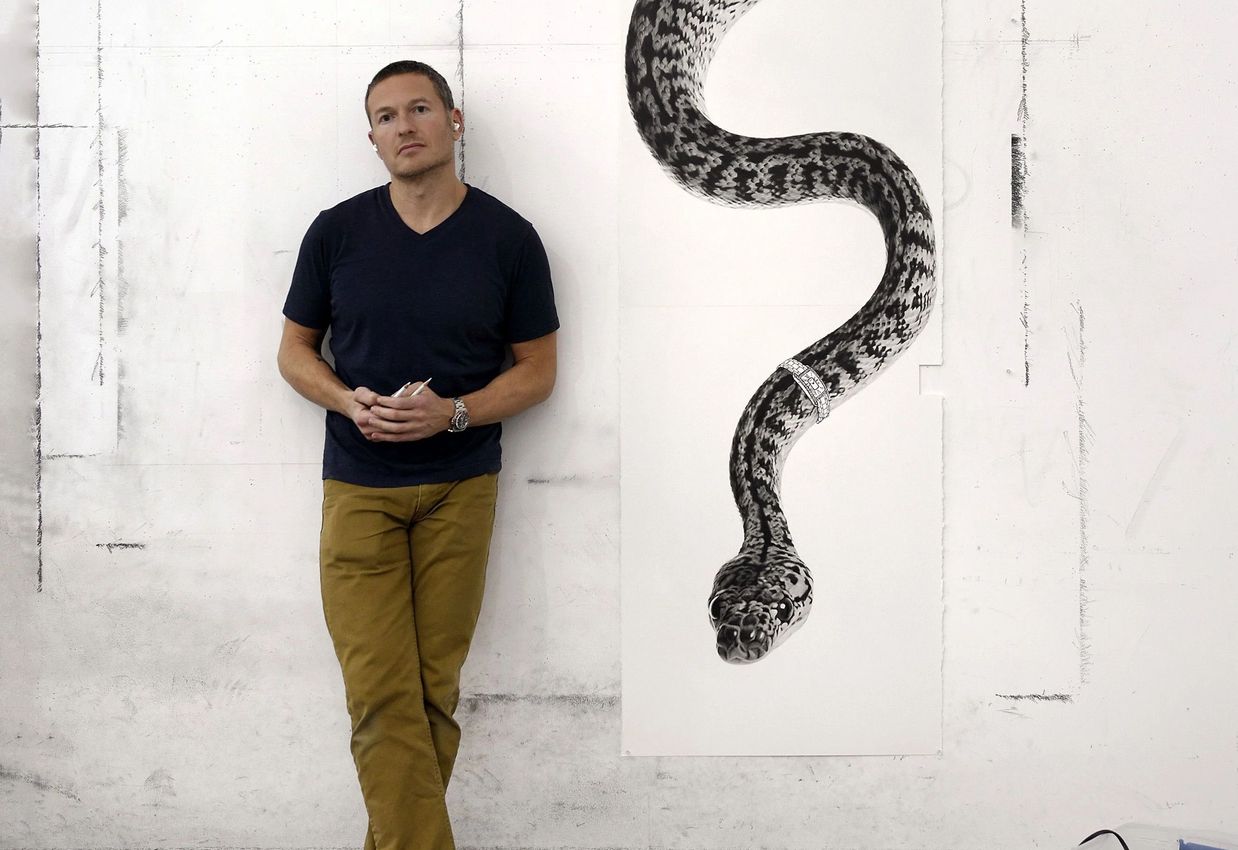
Main image: Karl Haendel, Double Dominant 23 (Kaari Upson) (2019) (detail). Pencil on paper. 261.62 x 213.36 cm. Courtesy the artist and Vielmetter, Los Angeles. Photo: Robert Wedemeyer.




A respected voice in contemporary art discourse.
Focusing on ambitious storytelling and insightful art-world commentary. Ocula Magazine publishes in-depth interviews, critical essays and timely analysis on the artists, exhibitions and ideas driving the global art world.
Learn more about Ocula Magazine
Showcasing the best of the art world.
Ocula partners with galleries from around the world to highlight their artists, artworks and exhibitions. Gallery membership is by application and invitation, with each member vetted by an independent panel.
Learn more about Ocula Membership
Specialises in the sale of major artworks.
Led by a team with deep ties to the world’s leading auction houses, galleries and collectors. Ocula’s advisory team offers bespoke services to high-net-worth clients from around the world who are looking to acquire the best of contemporary and modern art.
Learn more about our team and services