





KARL HAENDEL
b. 1976, United StatesKarl Haendel is an American contemporary artist recognised for large-scale, hyperrealistic pencil drawings that critique and reframe contemporary life. Known for appropriating, reworking, and recontextualising imagery and language from media, popular culture, and personal experience, Haendel’s meticulously crafted works question identity, representation, and the power of images. His art has been shown at major institutions including the Whitney Museum of American Art, MOCA Los Angeles, and the Museum of Modern Art, and he is acknowledged for expanding the vocabulary of conceptual drawing.
Early Years
Haendel was born in New York City in 1976 and grew up in New York, surrounded by artists within his family. He earned a BA in Art Semiotics and Art History from Brown University in 1998, then attended the Whitney Museum Independent Study Program and the Skowhegan School of Painting and Sculpture in 1999 and 2000, respectively. Haendel received his MFA from UCLA in 2003, where his mentors included John Baldessari, Mary Kelly, and Paul McCarthy. He is currently based in Los Angeles.
Karl Haendel Artworks
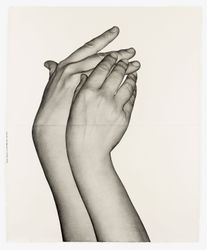
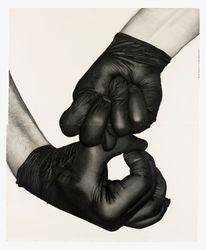
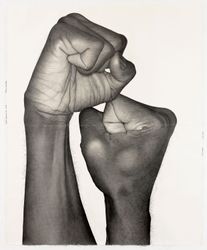
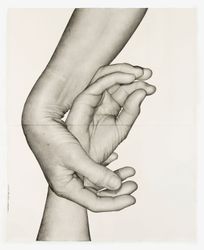
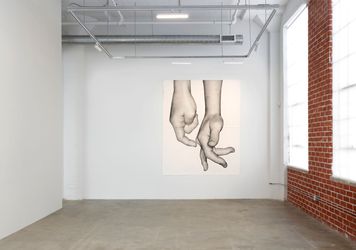
Haendel is best known for his monumental, labor-intensive graphite and ink drawings—often derived from appropriated photographic sources—that probe the mechanics of meaning, memory, and cultural power. Whether displayed as solo works or immersive installations, his pieces use scale, context, and juxtaposition to stimulate critical reflection on personal, political, and collective experience.
Appropriation and Photorealism
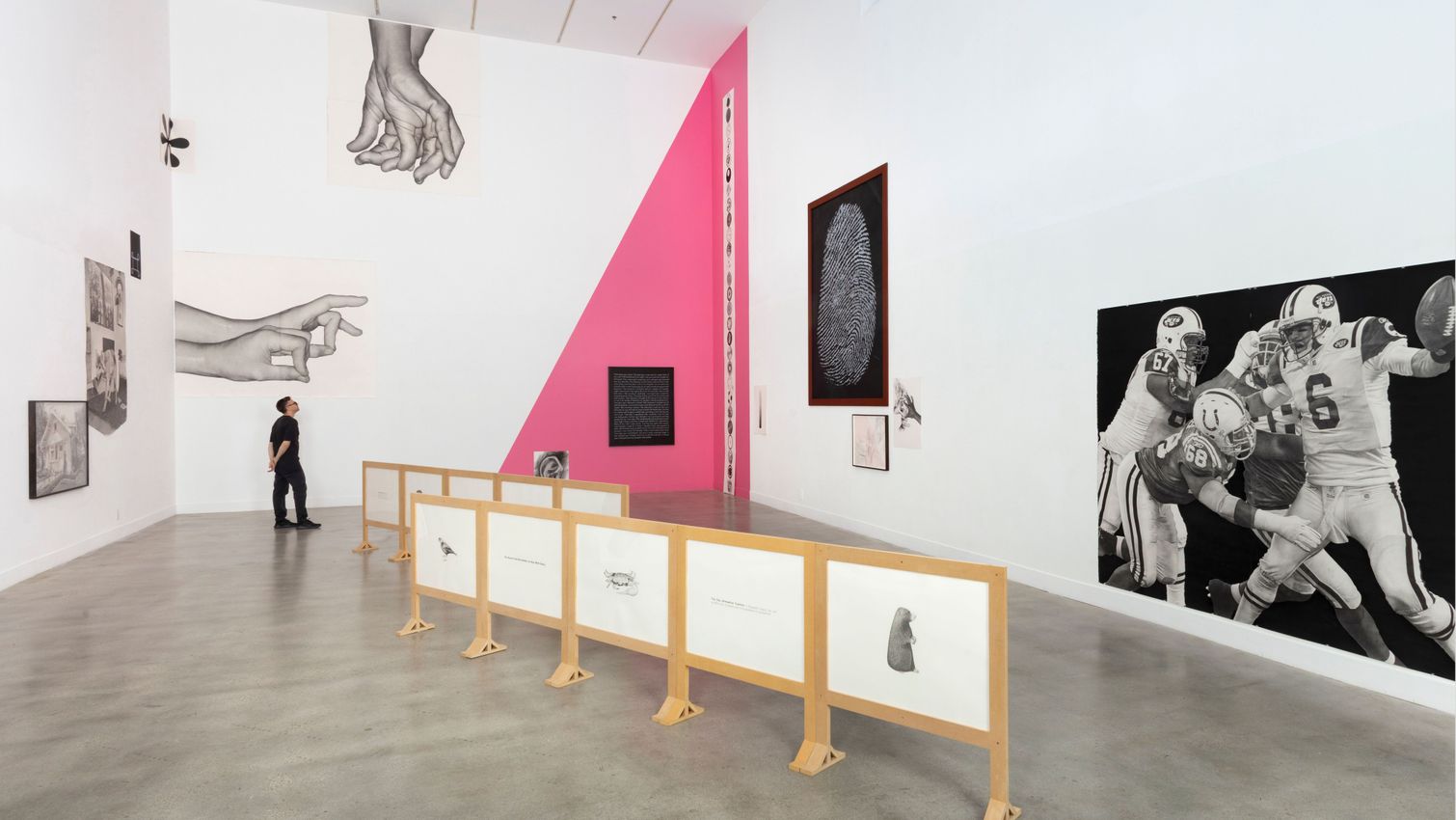
Haendel’s signature style involves sourcing images from the internet, magazines, and personal archives, enlarging and tracing them in black-and-white, photorealistic pencil on paper. By removing images from their original context and reassembling them into new visual taxonomies, Haendel challenges viewers to reconsider the meanings and value assigned to familiar signs and social codes.
Major Installation Projects and Thematic Series
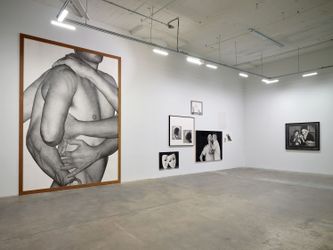
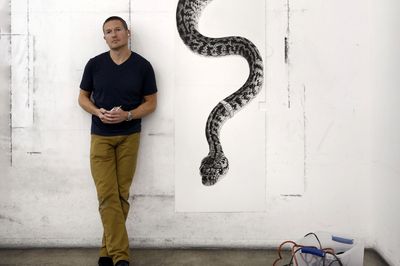
Notable series and installations include hyperrealistic renderings of ‘everyday’ objects—frozen food labels, medieval knights, animals accessorised in luxury goods—as well as thematic groupings on subjects like masculinity, religion, and politics. His installation methods—mounting drawings at varying heights and scales, filling walls with clusters of images—encourage viewers to physically and mentally navigate between works, allowing ‘repetition and differences to come forward’ and ‘providing gaps, bits of silence between noise’.
Emotional and Social Critique
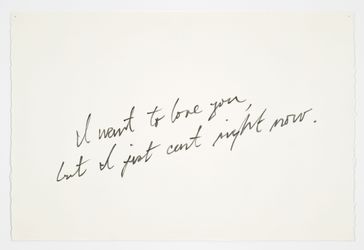
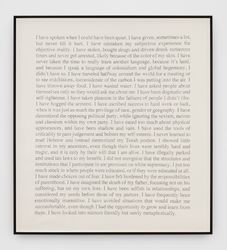
Haendel’s drawings increasingly pair visual and textual sources to confront themes of identity, masculinity, vulnerability, and Jewishness with technical precision and dry humour. Recent exhibitions like Less Bad at the Frederick R. Weisman Museum (2025) and Kimball Art Center (2024) focus on intimacy, friendship, and loss, with confessional language and close-up images inviting empathy and self-awareness.
Public Commissions and Murals
Haendel’s public artworks include the striking ‘Scribble’ mural series in New York and Los Angeles, billboards, and the 2023 entrance artwork for LA Metro’s Wilshire/Fairfax station, engaging the language of street art and universal mark-making. His installations at Lever House, New York (2009), and other commissions have further expanded his reach into architecture and public space.
Select Public Commissions
- Entry artwork for Metro Art LA, Wilshire/Fairfax Station, Los Angeles Metro Rail (2023)4
- Scribble murals for Art Production Fund, New York (2009)
- Lever House, New York, Cracked Glass and Power Cords installation (2009
Select Awards and Accolades
- Pollock Krasner Foundation Grant (2015)
- Chinati Foundation Artist in Residence (2011)
- Penny McCall Foundation Award (2004)
Exhibitions
Karl Haendel has been the subject of both solo and group exhibitions at significant institutions. Below is a selection of important exhibitions.
Solo Exhibitions
- Less Bad, Frederick R. Weisman Museum, Pepperdine University, Los Angeles (2025)
- Less Bad, Kimball Art Center, Park City (2024)
- Love and Capital, Lora Reynolds Gallery, Austin (2024)
- Praise New York, Mitchell-Innes & Nash, New York (2022)
- Praise Berlin, Wentrup Gallery, Berlin (2022)
- Daily Act of Sustained Empathy, Vielmetter Los Angeles (2023)
- Mazel Tov Group, Henry Art Gallery, Seattle (2019)
- Doppelgänger, Wentrup Gallery, Berlin (2018)
- Unwinding Unboxing, Unbending Uncocking, Wentrup Gallery, Berlin (2016)
- Solo exhibition, Museum of Contemporary Art, Los Angeles (2005)
Group Exhibitions
- Whitney Biennial, Whitney Museum of American Art, New York (2014)
- 100 Drawings from Now, The Drawing Center, New York (2020)
- Copines-Copains-Berlin, Wentrup Gallery, Berlin (2019)
- Game On!, Philbrook Museum of Art, Tulsa (2017)
- Manifest Intention: Drawing in All Its Forms, Castello di Rivoli, Turin (2014)
- 12th Biennale de Lyon, Lyon (2013)
- California Biennials, Orange County Museum of Art (2004, 2008)
- Prospect II, New Orleans (2011)
- Uncertain States of America, Astrup Fearnley Museum, Oslo; Serpentine Gallery, London; Bard College (2005–2006)
Haendel’s works are held in major collections, including the Museum of Contemporary Art (Los Angeles), The Museum of Modern Art (New York), The Solomon R. Guggenheim Museum (New York), and The Whitney Museum of American Art (New York)
Karl Haendel FAQs
Where can I see Karl Haendel’s art?
Karl Haendel’s artworks are held at the Museum of Contemporary Art (Los Angeles), The Museum of Modern Art (New York), The Guggenheim Museum (New York), the Whitney Museum of American Art (New York), and are frequently exhibited at galleries including Vielmetter Los Angeles, Mitchell-Innes & Nash (New York), and Wentrup Gallery (Berlin).
What is Karl Haendel best known for?
Haendel is best known for monumental, photo-realist pencil drawings and installations that appropriate found images and text, inviting reflection on identity, labor, and the politics of representation.
What are Karl Haendel’s major influences and techniques?
He draws on the conceptual strategies of appropriation and installation, photorealistic draftsmanship, and the language of conceptual art, often hand-rendering found or personal images at dramatic scale to challenge traditional hierarchies and cultural narratives.
What awards has Karl Haendel received?
Notable recognitions include the Pollock Krasner Foundation Grant, Chinati Foundation Residency, and Penny McCall Foundation Award.
Has Karl Haendel worked on public art commissions?
Yes, major projects include public murals in Los Angeles and New York, the Wilshire/Fairfax station artwork for LA Metro, and commissions for Lever House and Art Production Fund.
Are there any interesting facts about Karl Haendel?
Haendel engages with themes of vulnerability, ethics, and masculinity, frequently using his own experience as subject. He was mentored by prominent artists at UCLA and describes his practice as a ‘physical system to reconsider accepted imagery’. His name is pronounced “CARL HEN-dle”.
Ocula | 2025
Representative Artworks
View story
View story
View story
View story
View story
View story
View story
View story

Explore and Follow Artists Shaping Contemporary Art
A respected voice in contemporary art discourse.
Focusing on ambitious storytelling and insightful art-world commentary. Ocula Magazine publishes in-depth interviews, critical essays and timely analysis on the artists, exhibitions and ideas driving the global art world.
Learn more about Ocula Magazine
Showcasing the best of the art world.
Ocula partners with galleries from around the world to highlight their artists, artworks and exhibitions. Gallery membership is by application and invitation, with each member vetted by an independent panel.
Learn more about Ocula Membership
Specialises in the sale of major artworks.
Led by a team with deep ties to the world’s leading auction houses, galleries and collectors. Ocula’s advisory team offers bespoke services to high-net-worth clients from around the world who are looking to acquire the best of contemporary and modern art.
Learn more about our team and services