





The art world in focus
Subscribe to our newsletter for news and insights on artists, galleries and exhibitions.
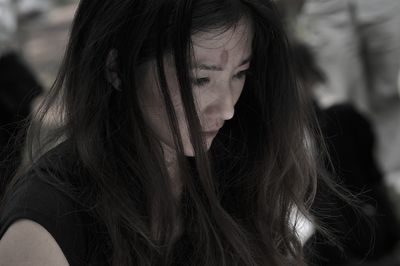
Christine Ay Tjoe. Image courtesy White Cube.
Earlier this year artist Christine Ay Tjoe was the subject of a solo exhibition at White Cube in Bermondsey in London (13 July–11 September 2016). Recognised in South East Asia as a leading female artist of her generation, it marked the first time the prominent international gallery has shown an Indonesian artist.
The exhibition followed on from her major retrospective at SongEun ArtSpace, Seoul in 2015, as well as participation in group shows at National Taiwan Museum of Fine Arts, Taichung; Singapore Art Museum (2012); Fondazione Claudio Buziol, Venice and Saatchi Gallery, London (2011); Shanghai Contemporary (2010); National Gallery, Jakarta (2009); Johnson Museum of Art, Cornell University, New York (2005) and the Beijing International Art Biennale, China National Museum of Fine Art (2003).
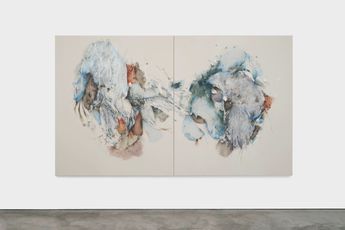
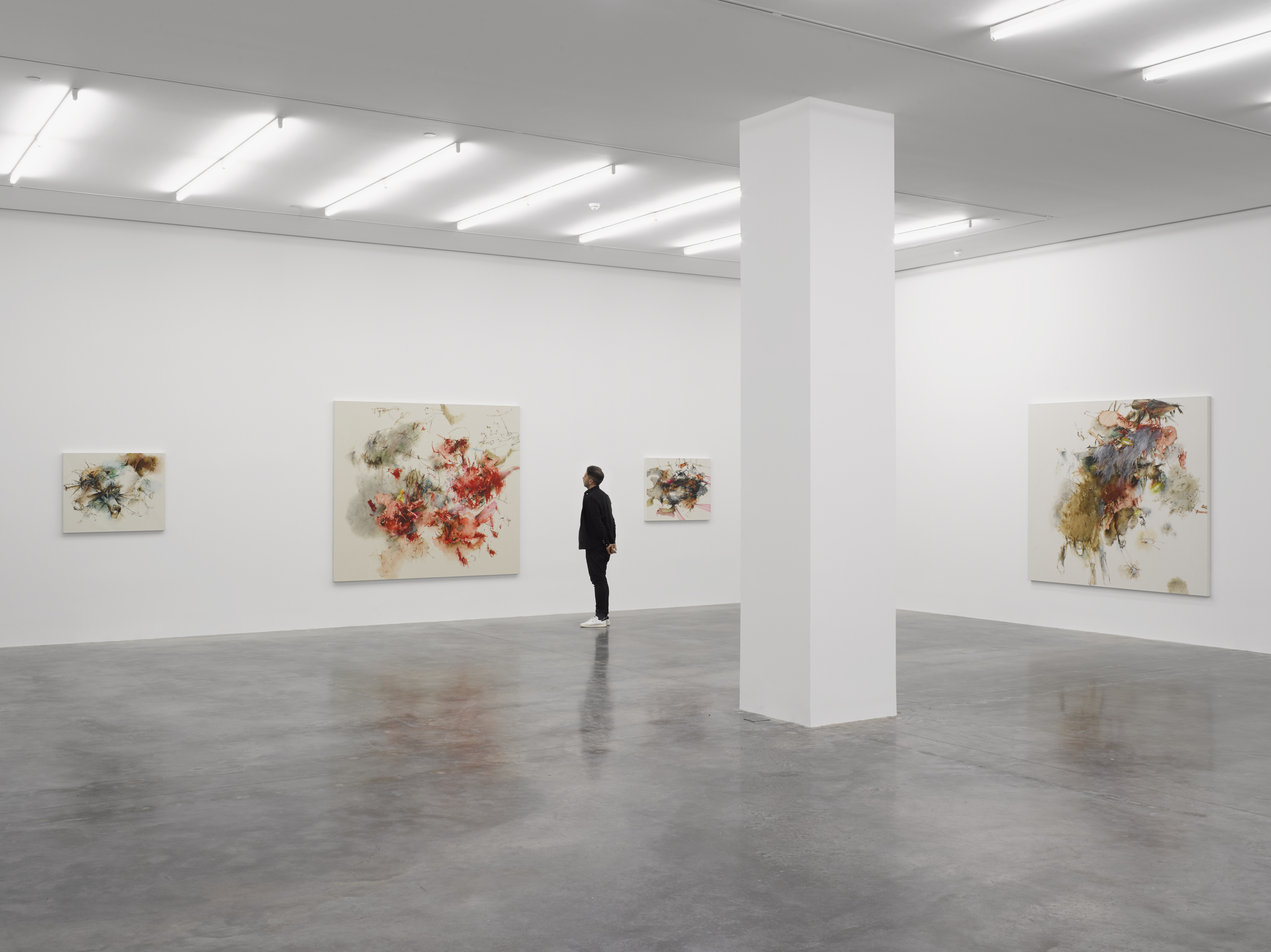
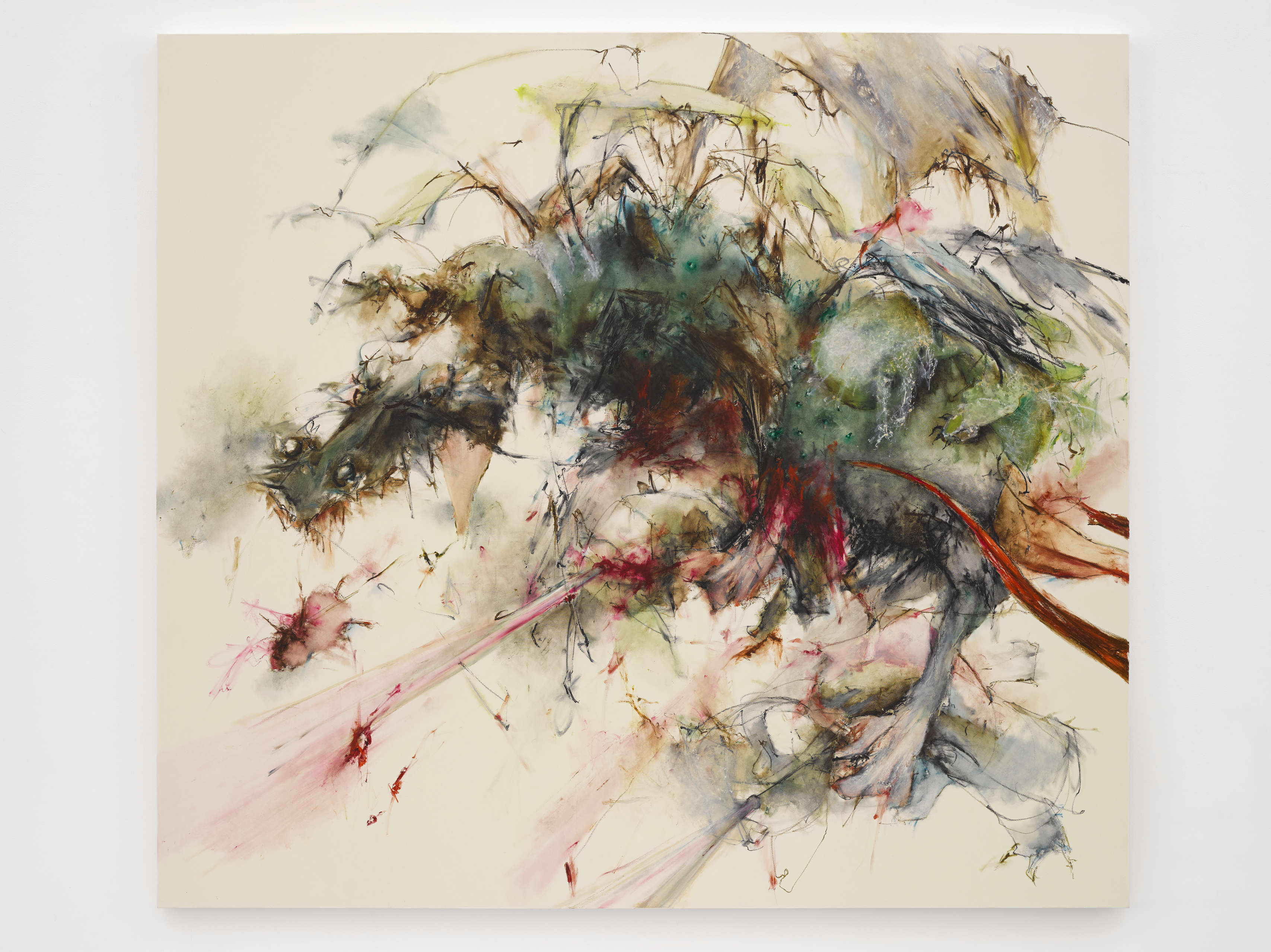
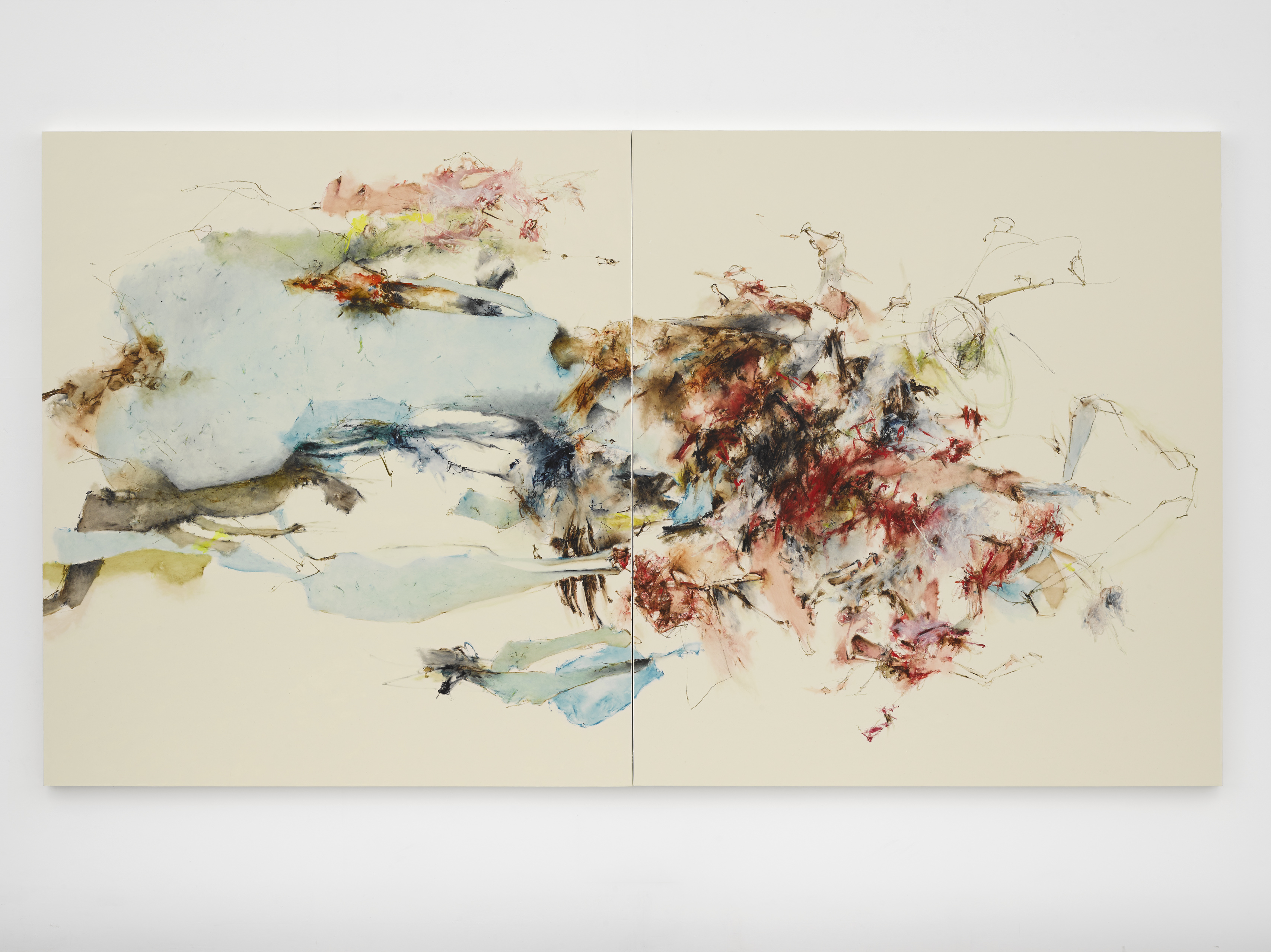
Part of the gallery’s ongoing ‘Inside the White Cube’ series, Ay Tjoe showed ten paintings, including two large-scale diptychs, all new works and part of several series. The works reflect a process that sees oil bar applied both heavily in visceral swathes of colour—blood red and earth browns are prominent—and lightly in gentle diluted washes. The works are also characterised by the use of line; wavy, straight, delicate or forceful, reflecting Ay Tjoe’s interest in drawing, her history as a graphic artist and her experimentation with dry point etching.
As much as each work’s structure is created by what is built up on the canvas, they are equally the result of what is erased or diluted, or otherwise not applied at all. Often emanating out from the centre of the canvas there is a sense, in the application of thick paint and the scratching of lines, of a frenzied and emotional confrontation with life, but equally there are moments of stillness and an opportunity to be philosophical in the dilution of paint or in its total absence.
Drawing has become a very important part of my artistic process. To me, painting on a canvas is also like drawing, as well as graphic with dry point technique. I use oil bar as my media and use it the same way as I use pencil, crayon or needle when doing dry point.
I felt restricted after a while, when working with the printing machine and paper. As my artistic practice evolved, I needed to work in a larger format and with more space. So I moved to canvas and oil to explore further my relationship with lines and colours. I get a great sense of satisfaction when I am pushing steel needles on the flat surface of a bronze plate to produce a lot of lines, and I wanted to continue using this technique with a different medium to achieve a different kind of result and attempt a different kind of challenge.
Until this day I only carry with me his spirit as an artist: to be courageous, bold and proud standing on my own feet.
The master Indonesian artist Sudjojono, who often stated with passion and deep understanding that honesty in an artist is very important; it brings one close to the Creator.
Often times I already have a visualisation in my mind of my first initial lines using my oil bars. Sometimes I start with no visuals in mind, with just an idea and in this case, the first initial line will often need a lot more work to achieve what I want on the canvas.
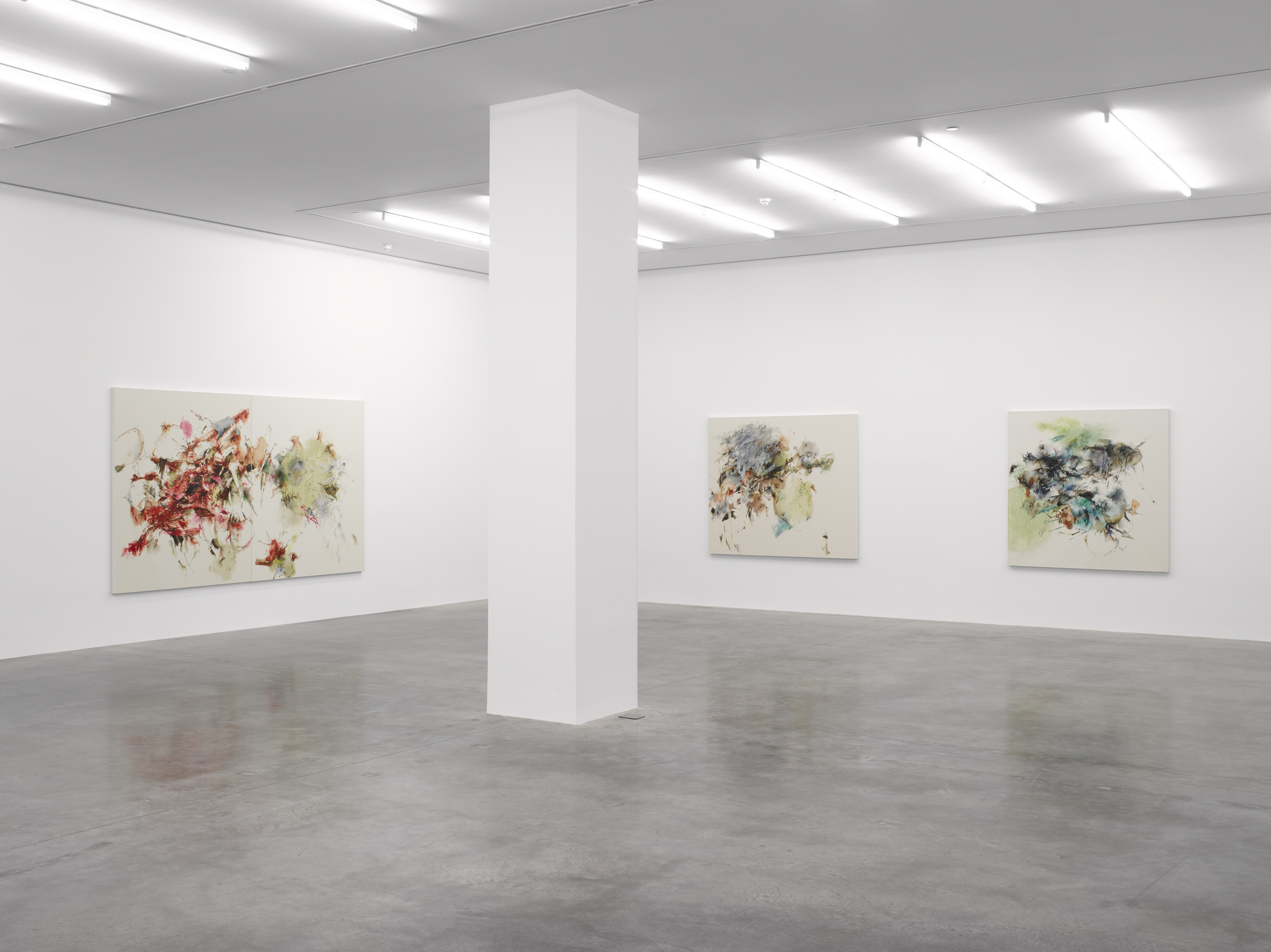
Strong, soft, thin or fragile lines which I converse with will speak a lot louder and feel more alive when placed inside an empty room.
In this particular series I have used a lot of figurative characters which often resemble animals or creatures in order to reveal the potential of the inner evil within the human being, often characterised by greed. The images of such animals sit on the very ruin of mankind.
Yes.
Abstract work gives a lot of room for interpretation, and in this theme, I wanted to achieve the freedom in communication between the works and the audience. Abstraction allows for a larger and wider reference that may belong to each person experiencing the work.
Working in art or as a painter has given me the opportunity and tools to bring forth any idea I may have. Often I would think of an ideal, or the ideally changing and through this I can move forward and further. I also imagine a set of staircases which are calling me to climb and to reach a very special destination.
Yes.
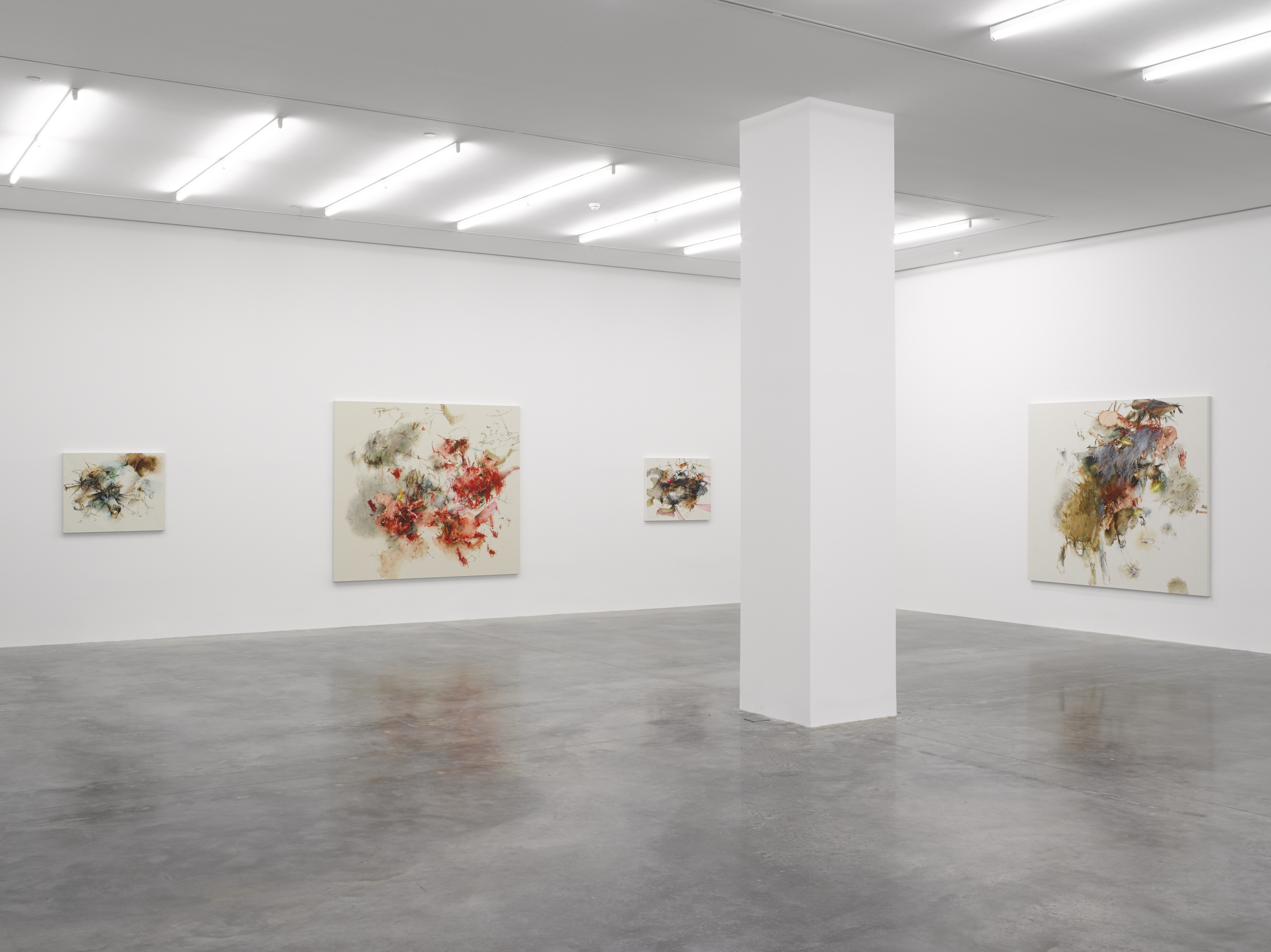
I believe my work needs to be able to reach every kind of society. Especially the group of people who have the power over others in a huge scale. In this urban life, we still want to prioritise the ideal quality of human and the better quality of human, not worsen it.
I am only obsessed with the strong interaction which develops from the painting to the audience. So that in the process, some parts of the work will stay in their minds and emotions, and they will carry it with them, as a trigger to initiate new experiences within them.
I am very disciplined in making sure that I can work anywhere I am, with any kind of space, visualising in my mind that any wall can be removed. Because it is very important for me to have my freedom in practice. —[O]
A respected voice in contemporary art discourse.
Focusing on ambitious storytelling and insightful art-world commentary. Ocula Magazine publishes in-depth interviews, critical essays and timely analysis on the artists, exhibitions and ideas driving the global art world.
Learn more about Ocula Magazine
Showcasing the best of the art world.
Ocula partners with galleries from around the world to highlight their artists, artworks and exhibitions. Gallery membership is by application and invitation, with each member vetted by an independent panel.
Learn more about Ocula Membership
Specialises in the sale of major artworks.
Led by a team with deep ties to the world’s leading auction houses, galleries and collectors. Ocula’s advisory team offers bespoke services to high-net-worth clients from around the world who are looking to acquire the best of contemporary and modern art.
Learn more about our team and services


