The art world in focus
Subscribe to our newsletter for news and insights on artists, galleries and exhibitions.

Exhibition view: The Myth of Normal. Chronic Contradictions, Salzburger Kunstverein (9 May–30 June 2024). Courtesy Salzburger Kunstverein. Photo: kunst-dokumentation.
The Myth of Normal—a collaborative exhibition between Salzburger Kunstverein and Kunstverein Hannover—showcased artistic expressions that dismantle and interrogate conventional narratives surrounding health, disability, and wellbeing. Curated by Mirela Baciak and Christoph Platz-Gallus (with Carlota Gómez and Temitayo Olalekan), the exhibitions brought together over 20 artists, including Jeamin Cha, Benoît Piéron, and Berenice Olmedo, who, whether differently-abled or not, share a commitment both to amplifying the voices of those marginalised by dominant societal norms and to highlighting artistic perspectives that challenge prevailing structures.
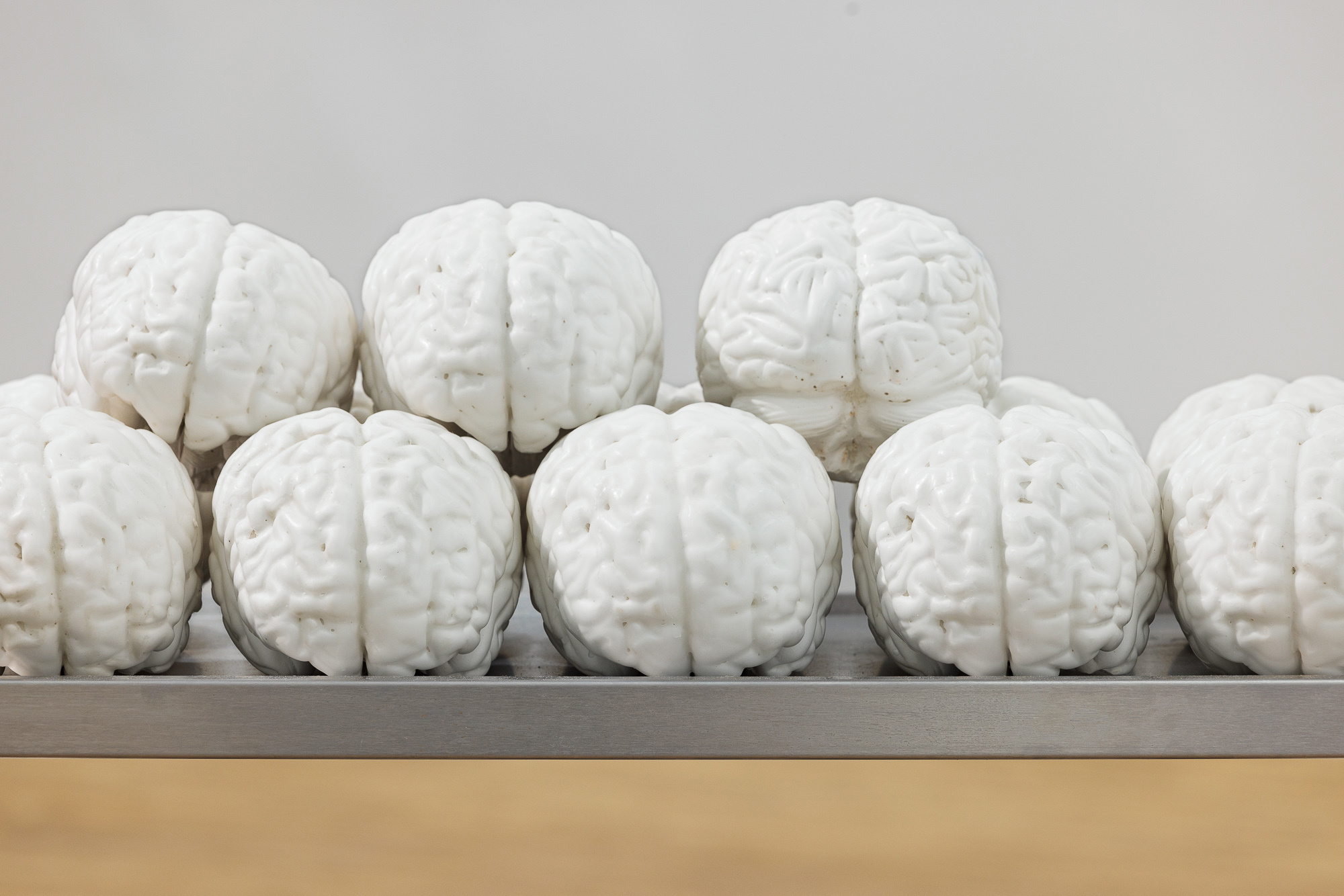
At Salzburger Kunstverein, The Myth of Normal. Chronic Contradictions greeted visitors with Itamar Gov‘s Olympia CER.810 (2023): 33 identical plaster and wax brains displayed on a metal surgical table, reminiscent of medical and culinary equipment. The work’s title references the automaton in E.T.A. Hoffmann’s The Sandman (1816), which imitates free will despite not possessing it. The translucent white brains evoke artificiality and mass production, transforming this vital organ for thought and identity into a mere commodity.
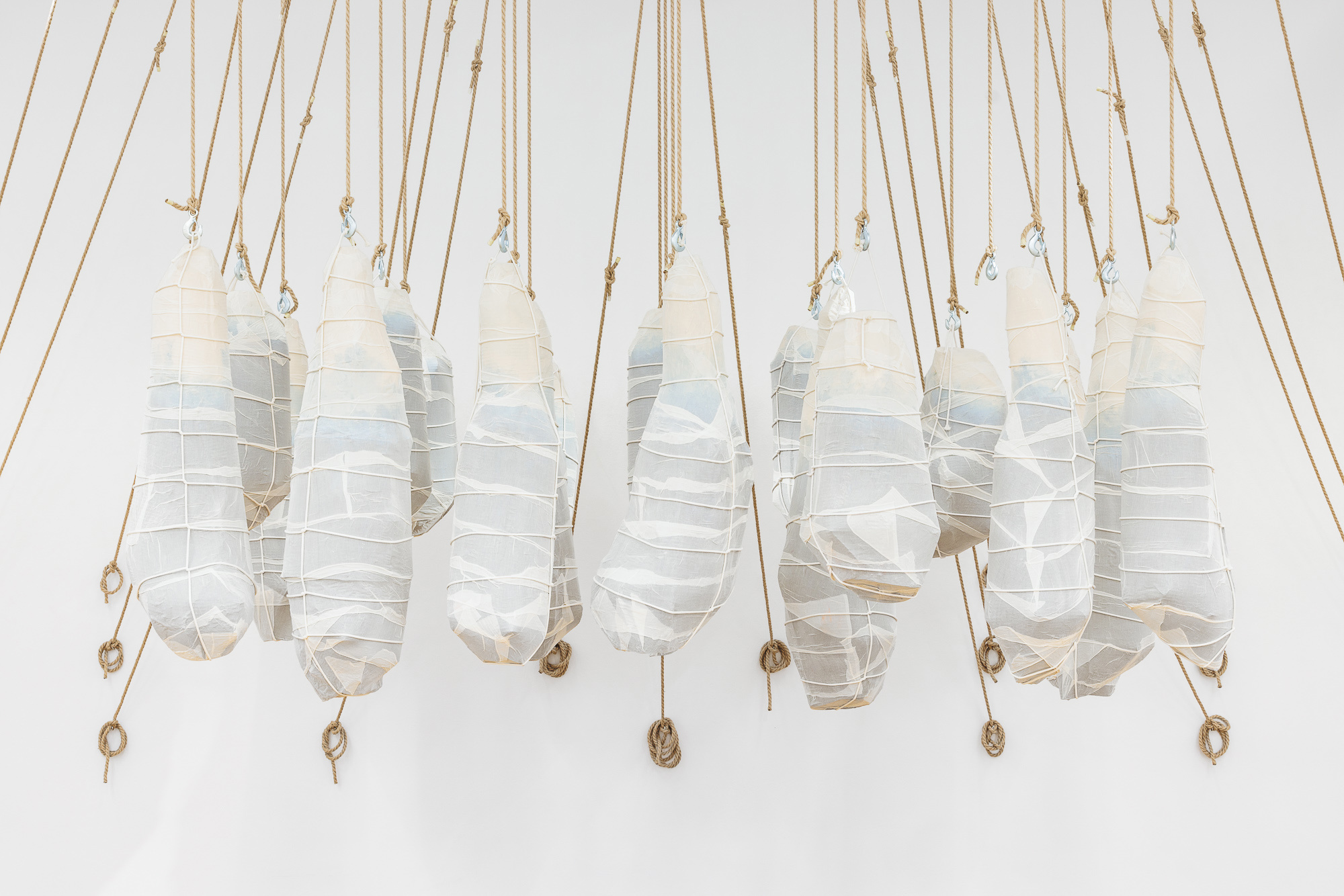
Adjacent to this installation was Gov’s The Nursery (2023), featuring 20 large, irregularly shaped bags hung from the ceiling. Crafted from wood, papier-mâché, muslin, acrylic, and jute, these bags resemble joints of meat, mummified corpses, or alien cocoons, suggesting a state of transformation. The ambiguity of these suspended ‘bodies’ creates a sense of unease, leaving viewers with that unsettling feeling of knowing something is amiss without being able to pinpoint it, much less correct it.
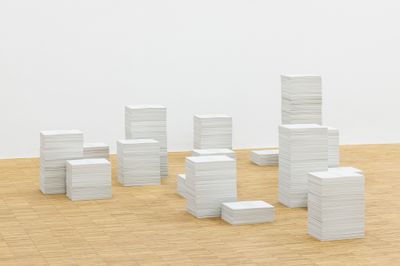
Cat Chong’s When Health Becomes Available (2024) stationed printouts of 15 poems throughout the venue. Arranged on the floor like piles of bureaucratic documents, these poems—in English and German—could be read in any order. Chong uses fragmented language rather than full stanzas and standard lexicon, rejecting traditional writing rules that often feel limiting or detached from real-life experiences. (One poem reads, ‘and like anyone who suffers. we look everywhere. inside this / aged place of our demolished hands. the hardest part of / “health” is how to begin.’)
The poems are not just read; they are also seen and felt as physical objects. Placed on the floor in stacks of paper, they resemble medical documents like prescriptions or forms, highlighting the physical and emotional weight of dealing with healthcare bureaucracy. Viewers were also invited to take these printouts, altering the sculptural element of the installation while also effectively modifying the authoritative standing of bureaucratic operations, recognising lived realities beyond the institutional space.
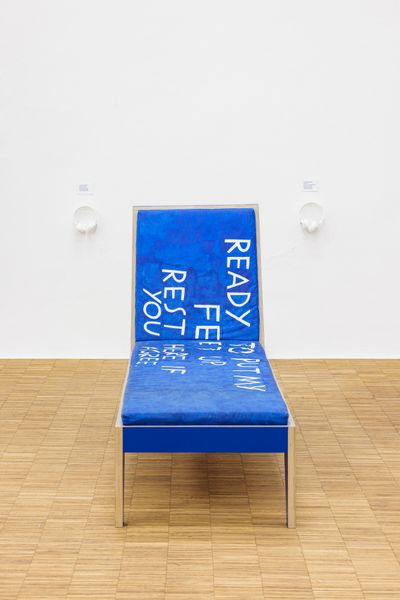
Finnegan Shannon’s installation of chaise lounge chairs, Do You Want Us Here or Not (2021) beckons visitors with the message: ‘READY TO PUT MY FEET UP. REST HERE IF YOU AGREE.’ The chairs serve not just as artworks but as places to rest and pause while also emphasising different approaches to leisure. To ‘put one’s feet up’ in this context does not imply laziness or inaction but rather a necessary pause from routine, allowing the mind and body to synchronise. This intuitive break reflects the somatic experiences of the body and mind, representing a consensual interaction between the institution and its audience.
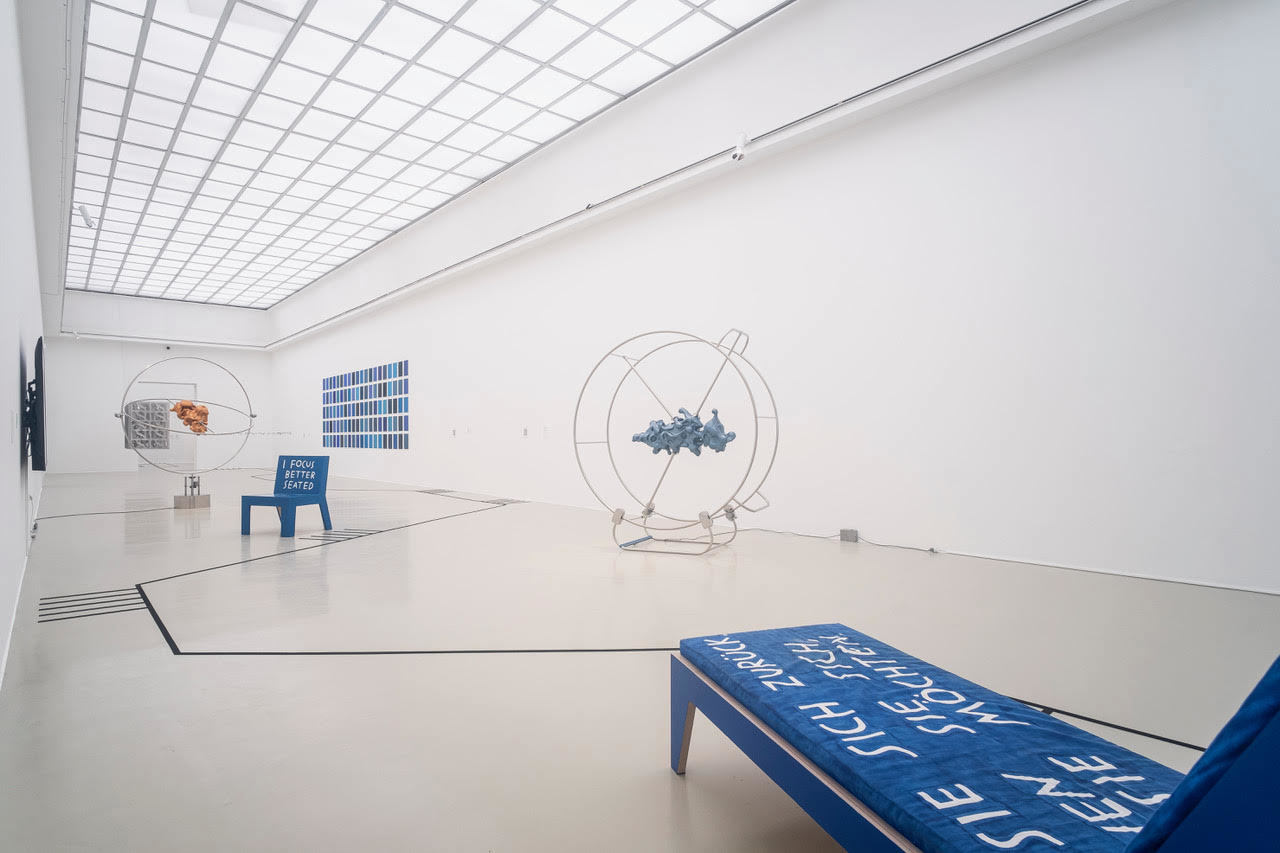
At Kunstverein Hannover, The Myth of Normal. Of Competing and Conceding deepened the exhibition’s line of inquiry through tangible institutional interventions, not all of which were artistic initiatives. The museum stationed video introductions conducted in sign language at the entrances in a nod to broadening its accessibility. From there, Peter Schloss’ work This Way (2024) functioned as a navigational system, guiding visitors through the galleries. Tactile materials installed on walls and floors allowed differently-abled individuals to navigate the space by touch or with a walker, ensuring that all audiences could fully engage with the exhibition.
![Marcos Lutyens, Passage of Neglect (2024) [centre], Emilie L. Gossiaux, Finger Through Palm (2020), Doggirl, They Called Me](https://files.ocula.com/anzax/Content/Features/2024/unnamed-3.jpg)
Also dealing with ways forward, Marcos Lutyens’ installation Passage of Neglect (2024)—a large hanging centrepiece resembling a passageway—comprises two quilts offering visual interpretations of the left and right hemispheres of the brain, which are traditionally associated with analytical and creative functions, respectively. Monochromatic angles dominate one, while the other boasts colourful patterns. Each fabric emits distinct smells to evoke memories, illustrating a connection between physical perception and personal identity.
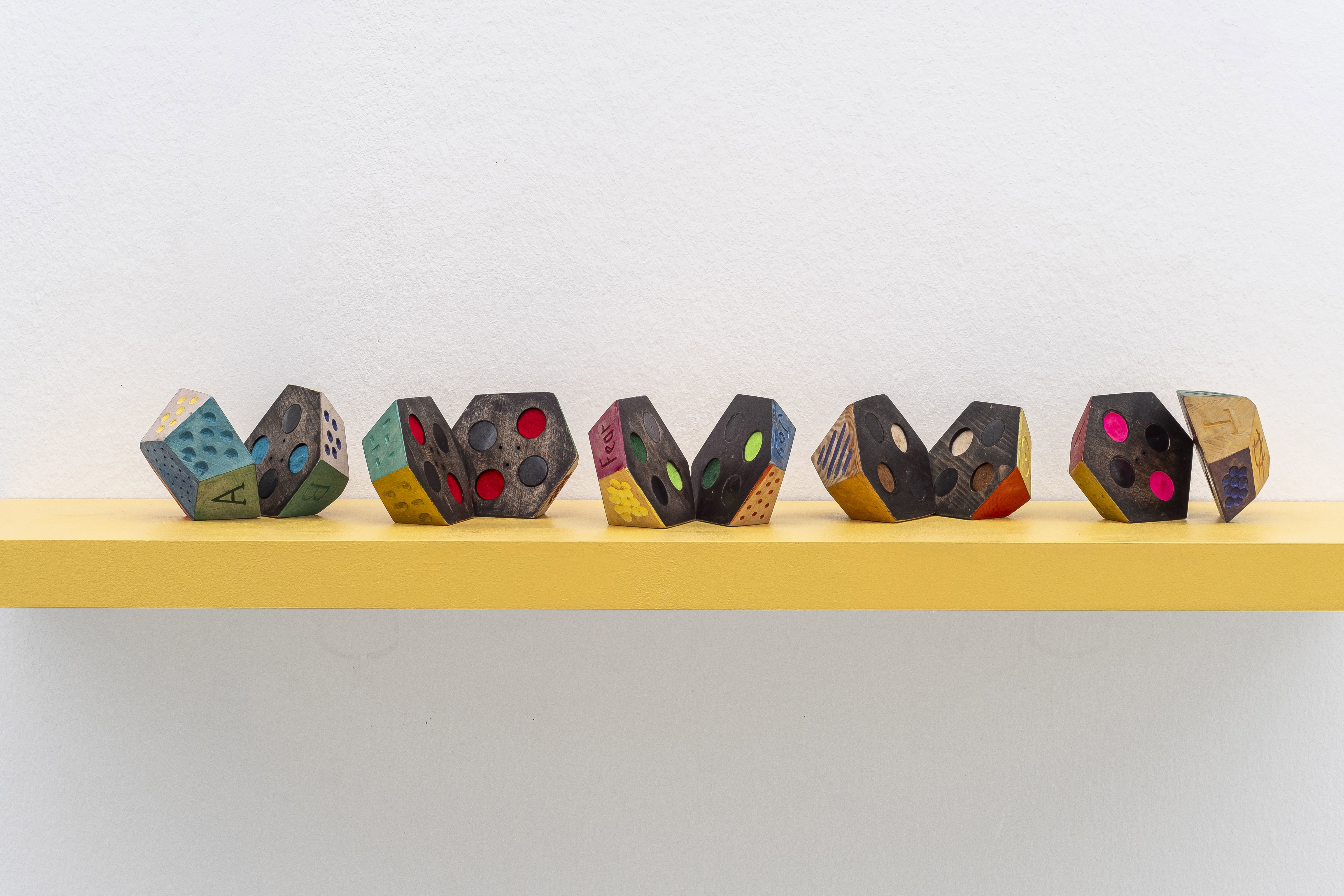
Adjacent to this installation, Lutyens’ Olfactory Haptic Forms: Sea, Campfire, Cut Grass, Grandma’s Cake, Bubblegum (2022) features wooden modules shaped like geometric blocks that can be opened and rearranged to experience selected fragrances. These works emphasise senses, like touch and smell, often overlooked within exhibition spaces, underscoring the importance of sensory perceptions and their relationship to our subconscious experiences.
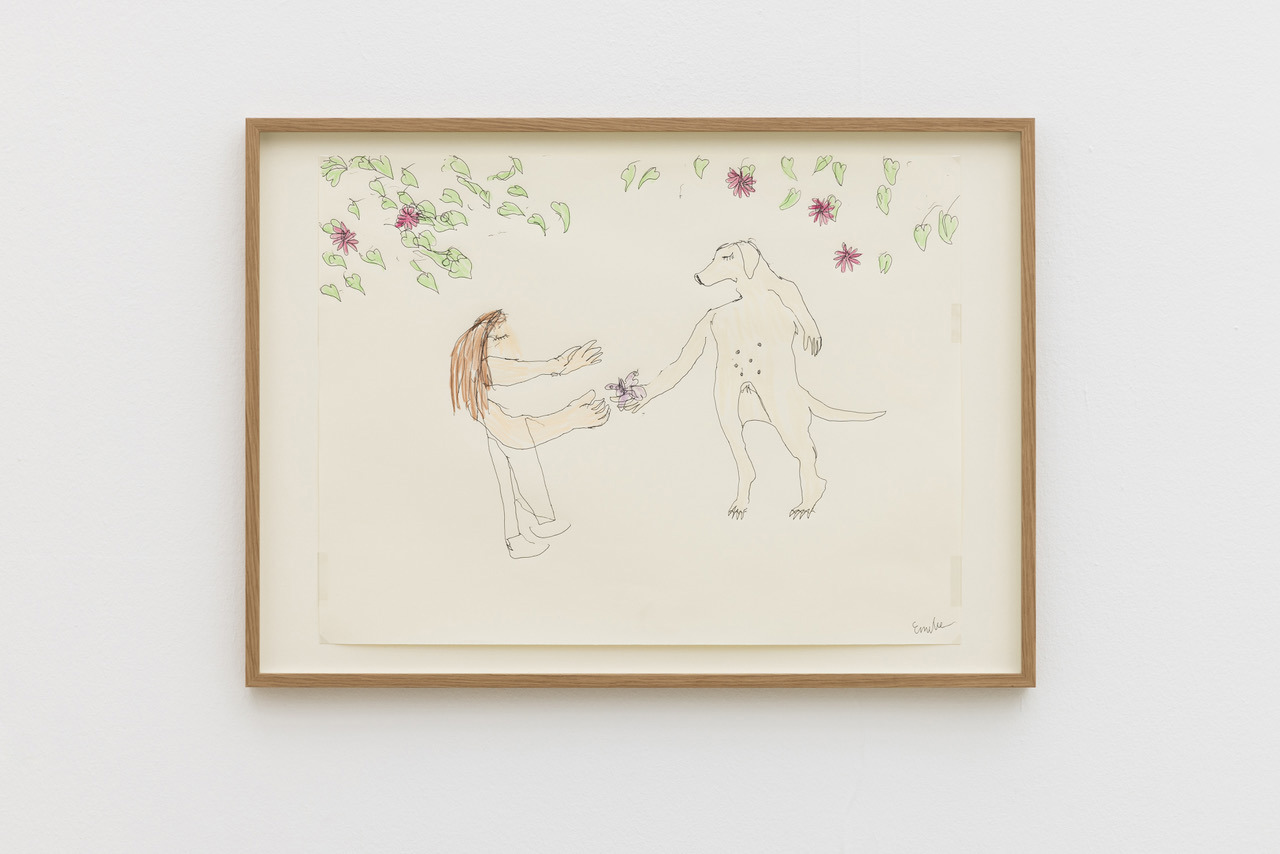
In the same room, Emilie L. Gossiaux’s drawings, sculptures, and ceramics explored her profound connection with the guide dog she started living with after an accident left her blind. In pieces like Doggirl (2023), Gossiaux delves into themes of trust, interdependence, and joy with her non-human companion, reclaiming the titular slur as a source of empowerment. She challenges the medicalisation of specific conditions that can lead to viewing natural variations in human physiology and psychology as disorders, resulting in unnecessary treatments and stigma.
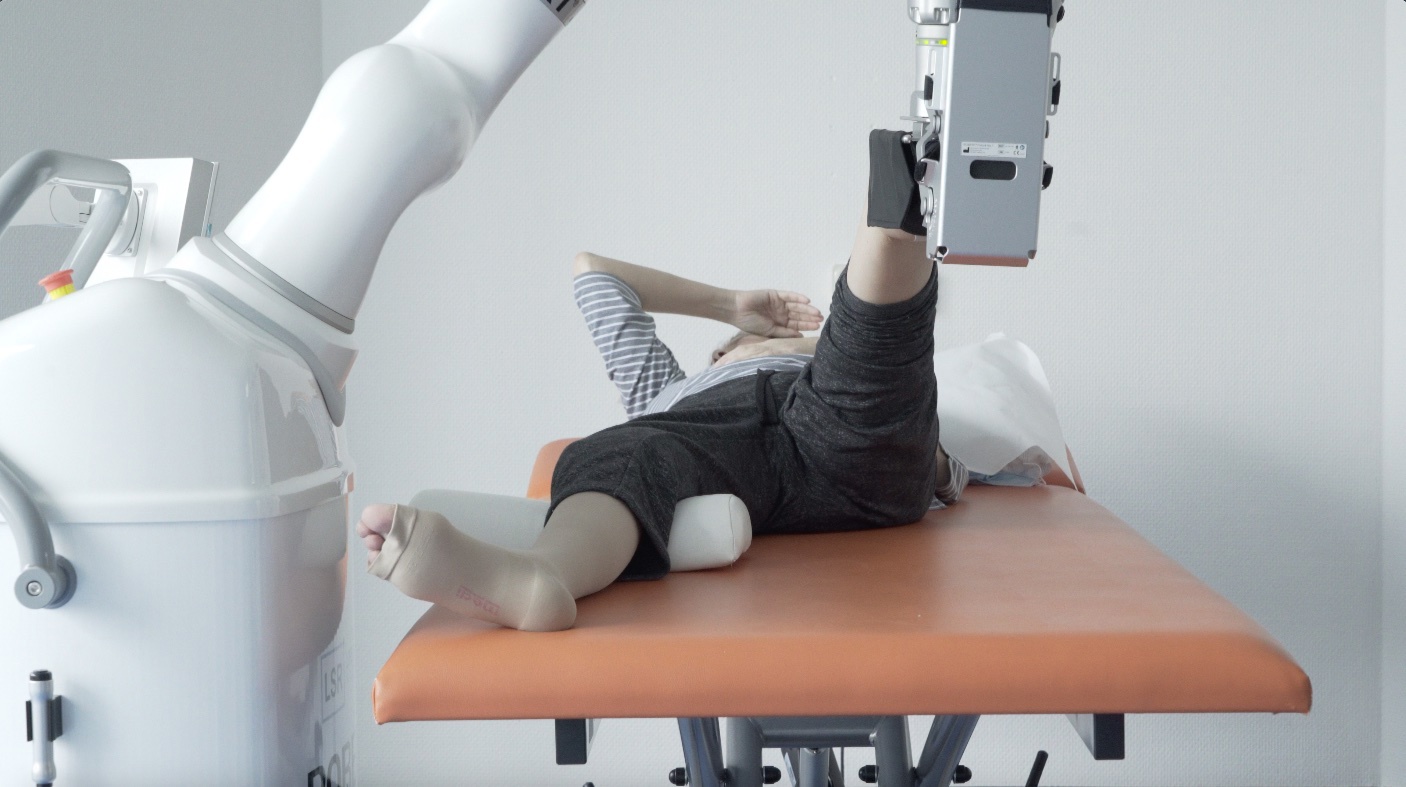
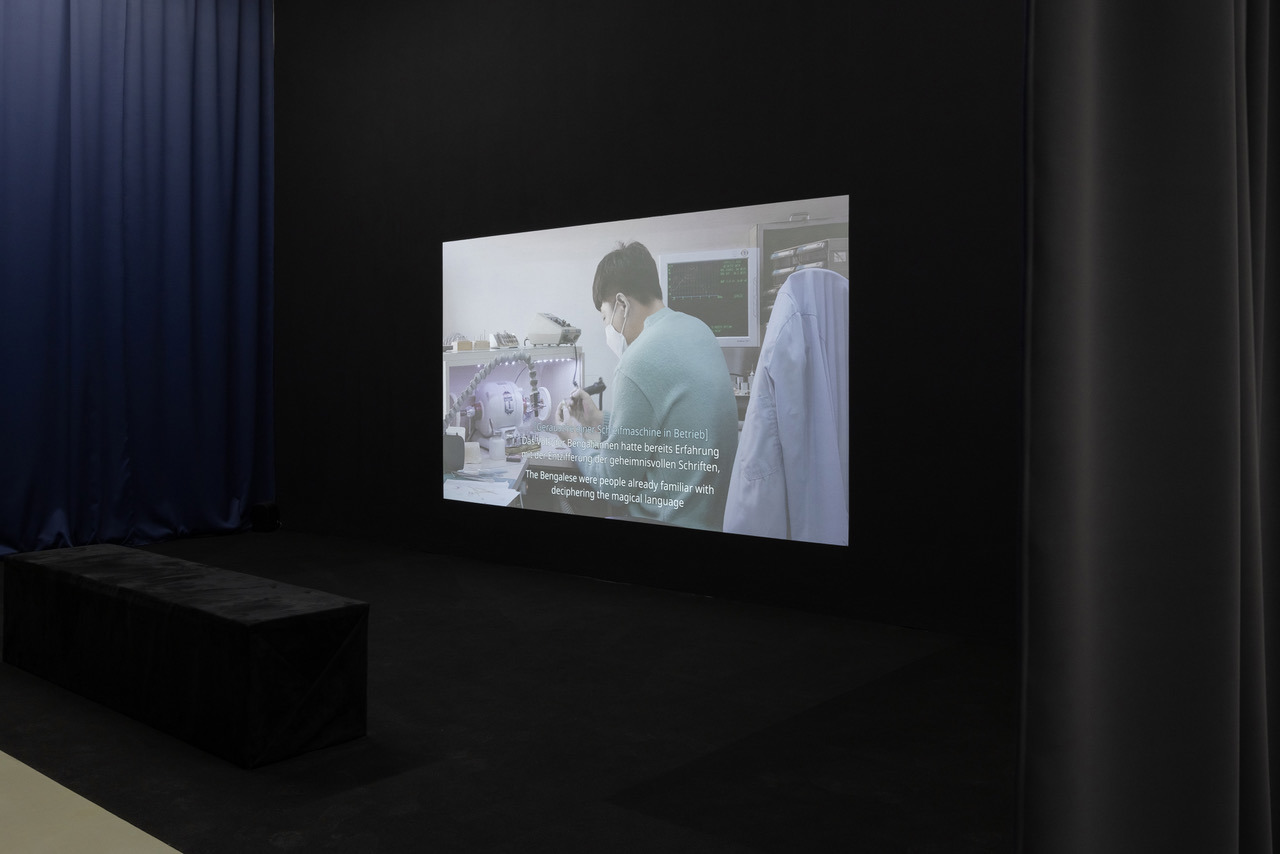
Imogen Stidworthy’s three-channel film If I Knew What Giving Up Looks Like (2024) reflects on the period in 2021 that the artist spent at the Lippoldsberg Clinic and Rehabilitation Centre, where she engaged with both staff and patients recovering from heart attacks and strokes.
“We must acknowledge that health is a collective concern, not just an individual one.
The film portrays patients at various stages of their rehabilitation, capturing their relationships with therapists and their narratives of learning and adaptation while documenting robotic aids and other medical equipment. Stidworthy employs cinematic techniques—slow transitions, intimate voice-overs, blurred visuals, and layered imagery—to evoke fragmented perceptions, inviting viewers to experience patients’ rehabilitation empathetically.
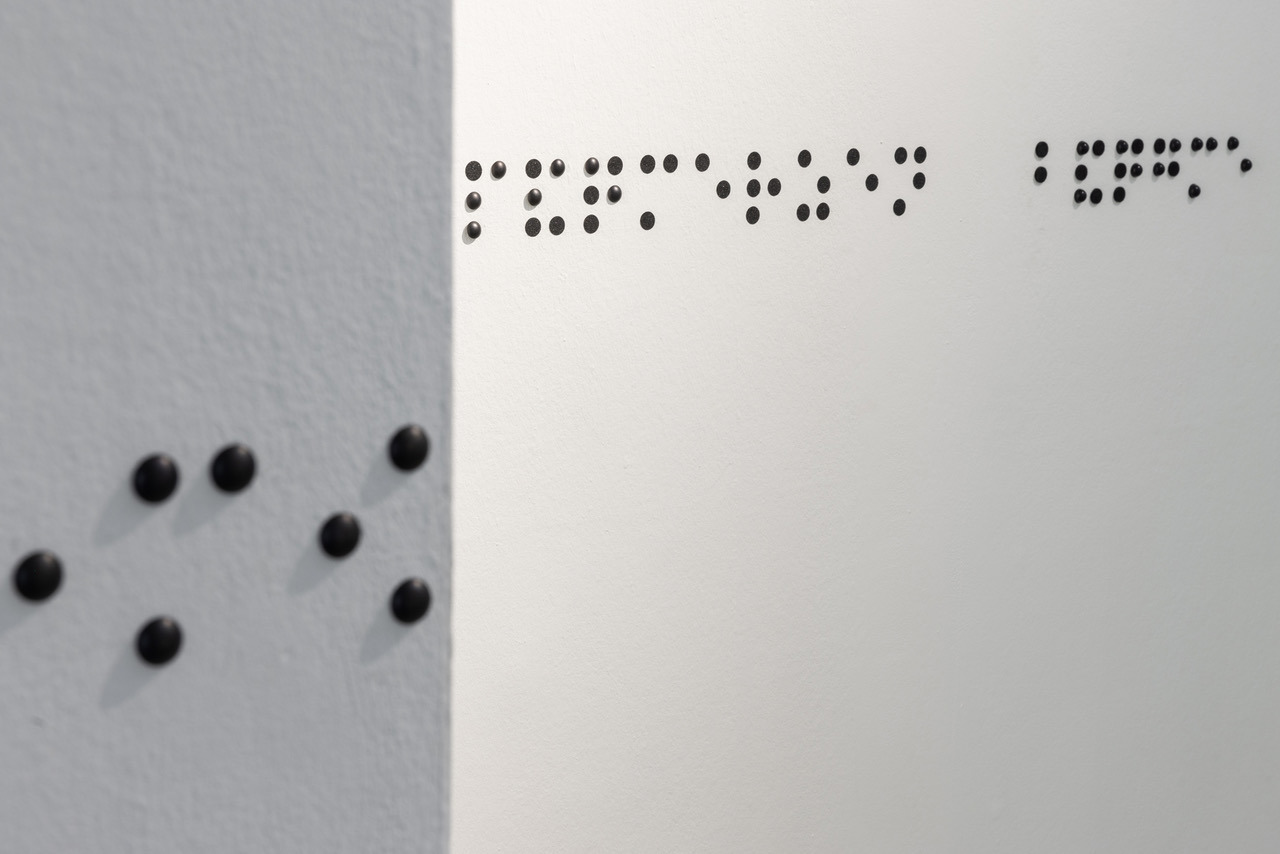
At the very end of the exhibition, Schloss’ tactile, braille-based installation, How To Do Things With Words (2024), encapsulates a powerful central message: those who cannot read braille may miss out entirely on the exhibition’s concluding work. The wall-mounted phrase translates as privilegiert engagieren (privileged engagement). The myth of ‘normal’ is, after all, ultimately one of privilege. It ensures specific individuals or groups have access to opportunities, resources, or the means to participate in activities that others do not, allowing these social, economic, or political advantages to occlude those whose lived experiences diverge.
By reclaiming these diverse realities beyond conventional health norms, the artists in this two-part exhibition reject the myths, stigmas, and cultural attitudes that shape dominant perceptions to highlight the interconnectedness of our existence instead. Amidst contemporary trends in care and self-healing practices such as health management apps, intermittent fasting, and diet drugs, dissatisfaction with imposed normalcy prompts the question: Can these individual realities be woven into communal frameworks?
“Communality demands more than tolerance, which is often limited to the obligation to act ethically within the bounds of political correctness
The artworks in The Myth of Normal suggest that, while personal narratives are crucial for healing and fostering empathy, community support is also vital. Despite the idea of ‘the norm’ permeating education, employment practices, politics, and social interactions, Baciak and Platz-Gallus’ focus on health and healing reinforces the necessity of community-based approaches, highlighting the importance of social connections and mutual support. We must acknowledge that health is a collective concern, not just an individual one.
Communality demands more than tolerance, often limited to the obligation to act ethically within the bounds of political correctness—arguably a normative illusion in itself. Instead, true communality calls for a genuine commitment to opening procedures, protocols, and systems to enable as many as possible to participate differently, making things accessible in diverse yet equally valid ways. From an institutional and curatorial perspective, The Myth of Normal makes a compelling contribution to this discourse by not simply providing a space for the inclusion of individual viewpoints, but also fostering a sense of solidarity among these diverse lived realities. —[O]



A respected voice in contemporary art discourse.
Focusing on ambitious storytelling and insightful art-world commentary. Ocula Magazine publishes in-depth interviews, critical essays and timely analysis on the artists, exhibitions and ideas driving the global art world.
Learn more about Ocula Magazine
Showcasing the best of the art world.
Ocula partners with galleries from around the world to highlight their artists, artworks and exhibitions. Gallery membership is by application and invitation, with each member vetted by an independent panel.
Learn more about Ocula Membership
Specialises in the sale of major artworks.
Led by a team with deep ties to the world’s leading auction houses, galleries and collectors. Ocula’s advisory team offers bespoke services to high-net-worth clients from around the world who are looking to acquire the best of contemporary and modern art.
Learn more about our team and services