






Santiago Gómez Opens up the Heavenly World of Mexico’s Casa Wabi
Located along a pitted dirt track on Oaxaca’s wild Pacific coastline is Casa Wabi, the artist residency established by Bosco Sodi. Ocula catches up with its latest resident, Santiago Gómez. Save to My OculaLocated along a pitted dirt track on Oaxaca’s wild Pacific coastline is Casa Wabi, the artist residency established by Bosco Sodi. Ocula catches up with its latest resident, Santiago Gómez.
‘I was heartbroken and nature became my mirror,’ Santiago Gómez tells me. ‘It was a beautiful escape from reality.’
The Colombian artist is reminiscing about his recent residency at Casa Wabi Puerto Escondido, the serene headquarters of Fundación Casa Wabi. Established by the Mexican artist Bosco Sodi in 2014, the four-week programme encourages its participants—with former residents including the likes of Francisco Muñoz, Gala Porras-Kim, Timo Nasseri, and Luis Úrculo—to draw inspiration from the surrounding rugged landscapes, while collaborating with the communities that call it home.
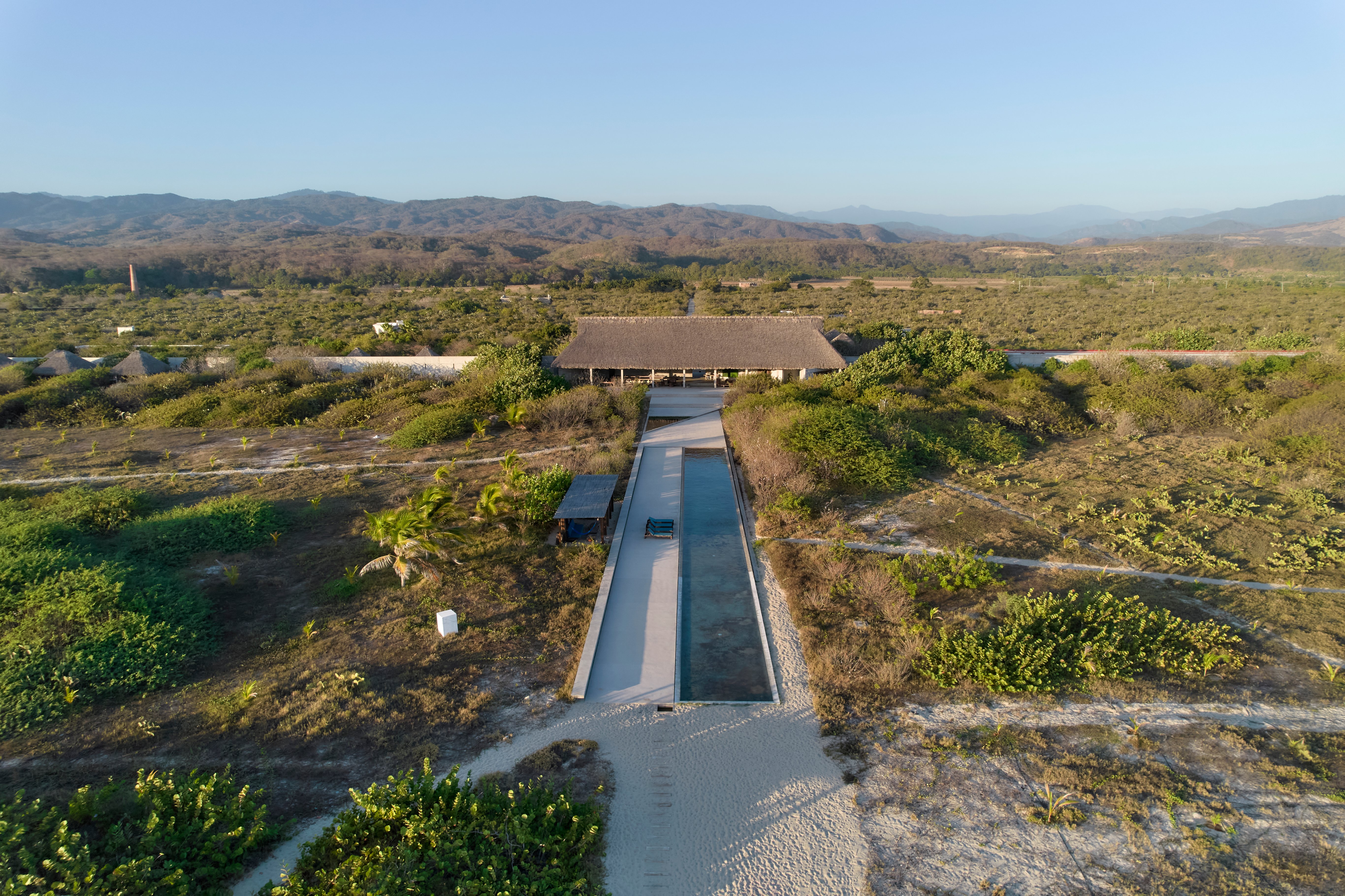
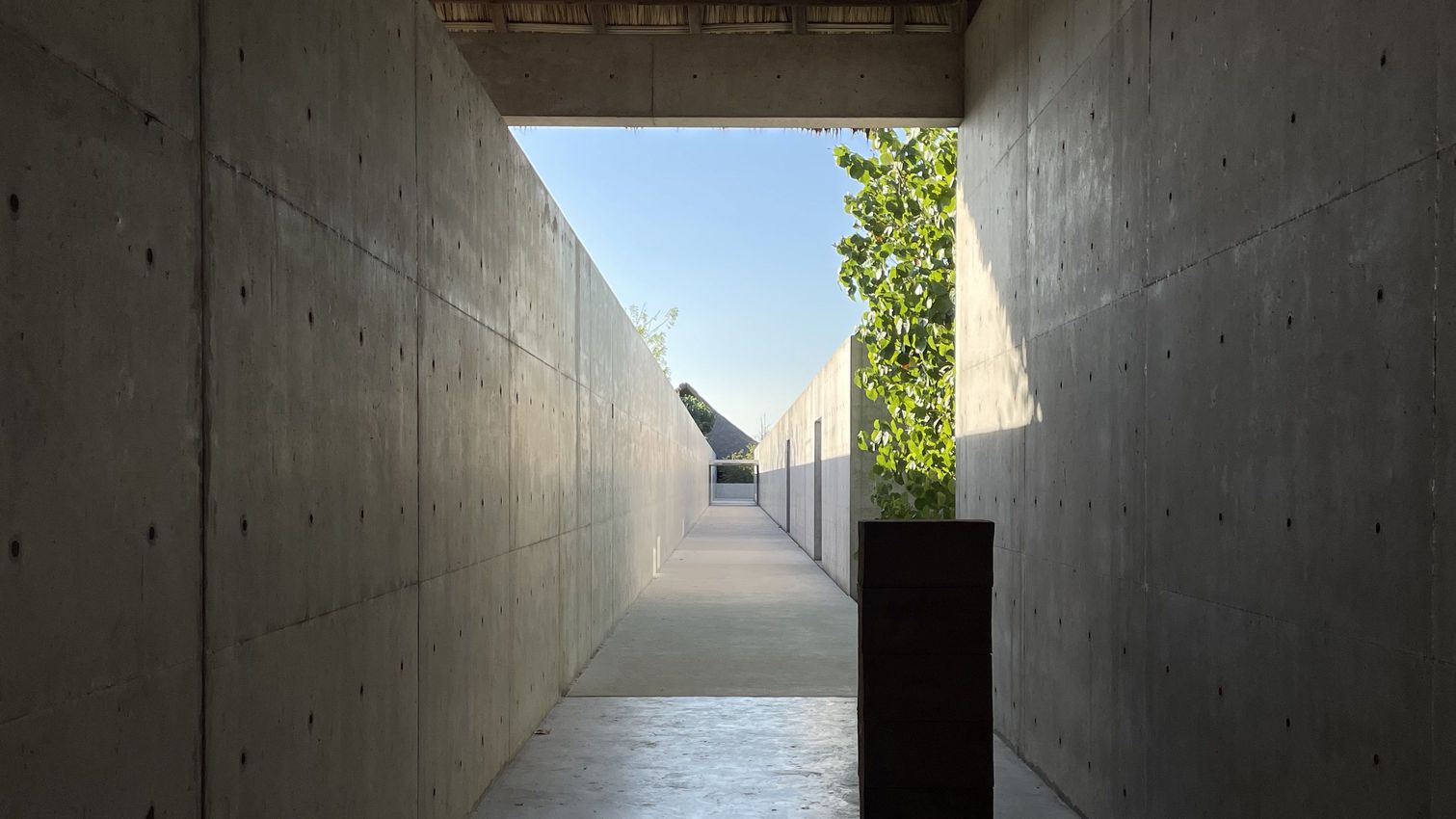
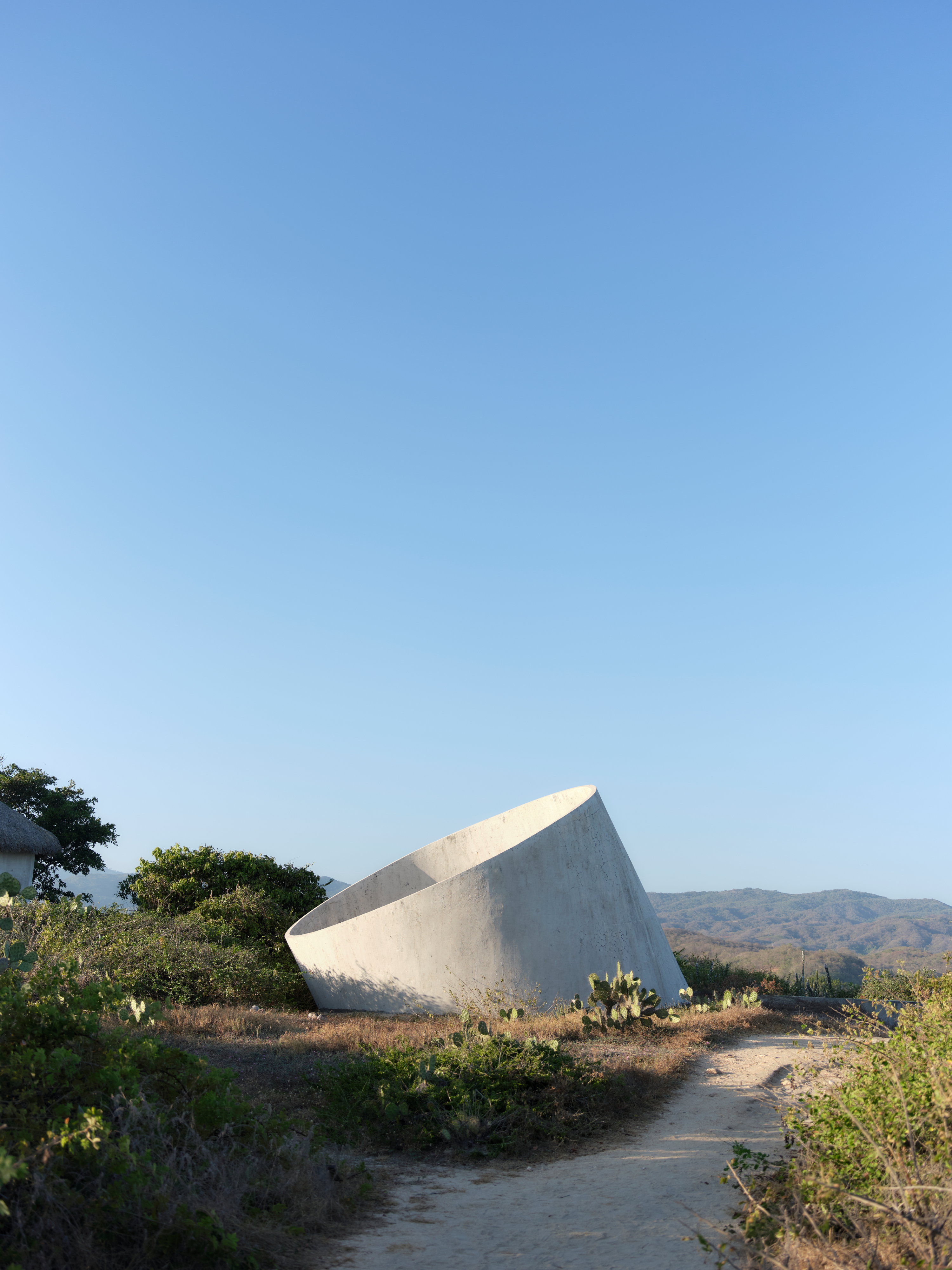
Designed by Japanese architect Tadao Ando in adherence with the aesthetic principles of wabi-sabi, the compound is structured around a single, silky grey concrete wall that—standing three and a half metres tall and running just over 300 metres, east to west—separates the foundation’s public programmes on the north side from Sodi’s private living quarters on the south. The enclave comprises an 8,000-square-foot exhibition space, a large studio for Sodi and Casa Wabi’s resident artists, six bungalows, a sculpture garden—complete with works by Sodi, Huma Bhabha, and Izumi Kato, among others—and two swimming pools carved into a terrace that overlooks the ocean. Gómez tells me that Casa Wabi has an aura of the comedy series The White Lotus (2021–ongoing), but without the drama. ‘You’re really with yourself and the openness. There’s no survival mode necessary.’
Days began with a swim at 7am—a time which Gómez was quick to assure me would be considered a lie in for any self-respecting Colombian. ‘Don’t even get me started on Mexico City,’ Gómez laughs. It is at his studio in the capital’s Doctores neighbourhood—home to Arena México and lucha libre (freestyle wrestling)—that we are speaking today.
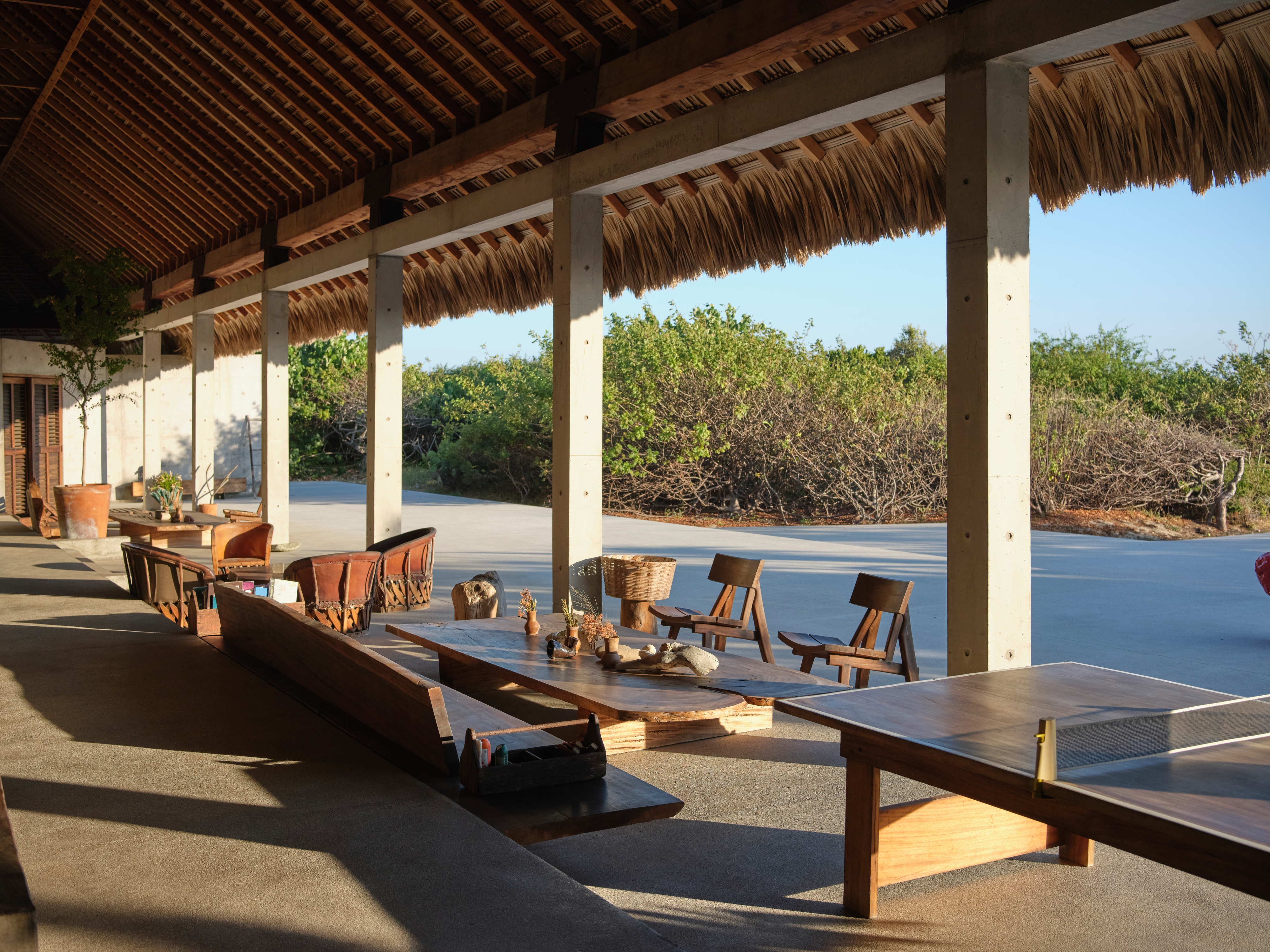
At Casa Wabi, breakfast was laid out on the terrace each morning, as were lunch and dinner, featuring delicacies such as hibiscus-flower tacos and pumpkin-flower quesadillas, prepared by Sodi’s kitchen staff. And it was with the culinary team that Gómez decided to collaborate on his community project: a book of homemade remedies for basic illnesses using local botanicals (Males y Remedios de la Costa de Oaxaca, 2024).
Buddying up with fellow resident and friend Fernando Polidura, Gómez assembled step-by-step remedies derived from ingredients found in the gardens and personal kitchens of the five chefs. These were published alongside illustrated anecdotes about the healing powers of local botanicals offered up by students from Universidad Autónoma Benito Juárez de Oaxaca.
One remedy promises relief from cólicos menstruales (menstrual cramps). ‘Place a cup of water on high heat,’ it reads. ‘When it begins to boil, add two to three sprigs of oregano, peppermint, or avocado leaf. Leave to brew for five to ten minutes, and consume two to three cups a day.’ Another recipe, which purports to relieve energy slumps, suggests soaking bread in pharmacy alcohol without letting it fall apart, then placing it on your stomach where you can feel a pulse.
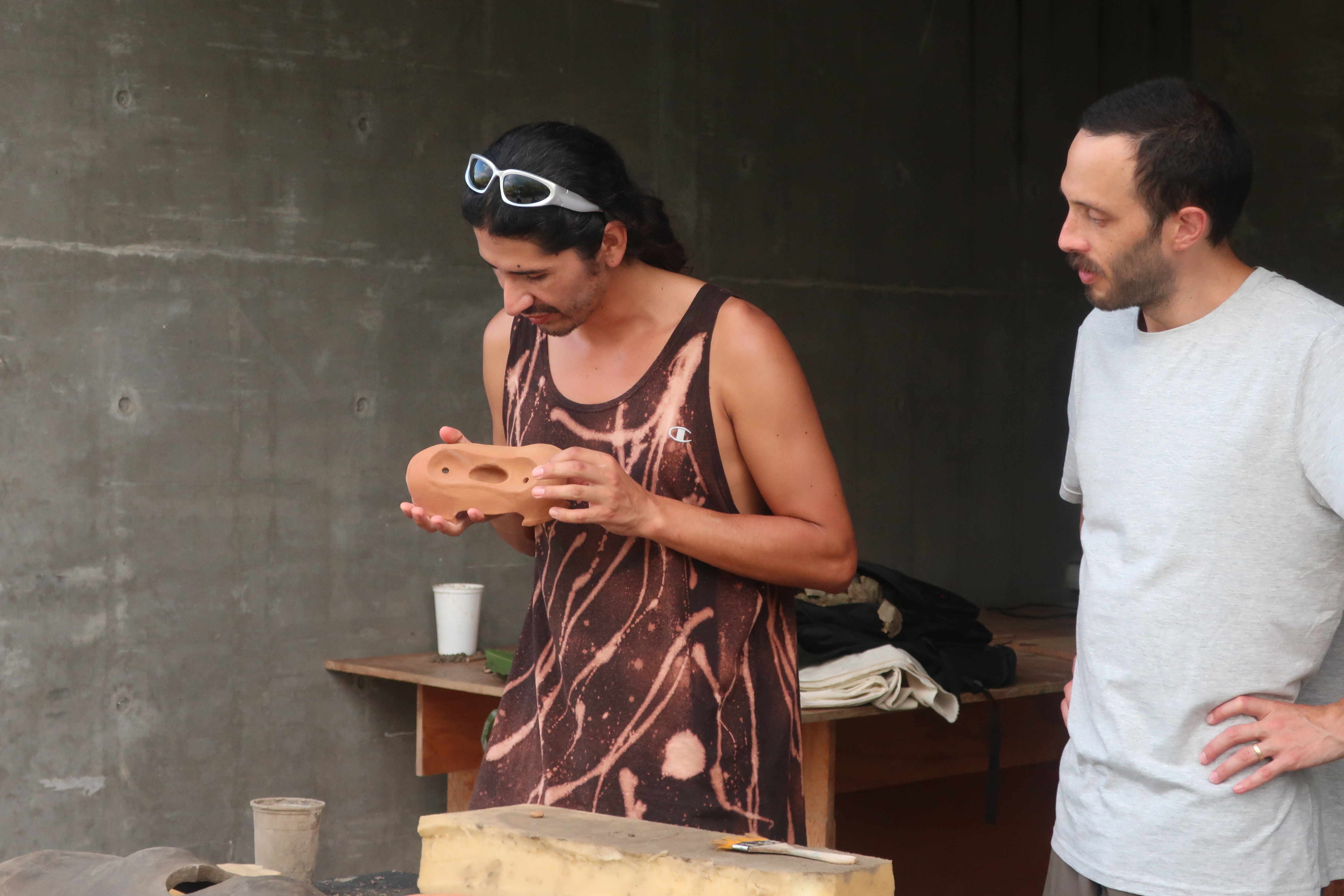
Asked to donate one work to Casa Wabi’s archive on completing the residency, Polidura left bottles of ‘Little Poison’, a concoction extracted from the poisonous tropical shrub Cascabela thevetia (yellow oleander). Its effects, one would imagine, are a little more explicit than that of the ‘Drink Me’ potion in Lewis Carroll’s Alice’s Adventures in Wonderland (1865).
Two pillars of the Japanese concept of wabi-sabi—the imperfection of nature and the quality of ephemerality—have also been cornerstones of Gómez’s practice since he arrived in Mexico as a student in 2017. Undergirding the Casa Wabi residency, such qualities naturally attracted the artist to the programme.

In 2020, Gómez found himself in a parking lot around the back of Mercado de Carnes de San Juan Pantitlán—a vast, dusty meat market housed in a former cigarette warehouse near the city’s international airport. Activity starts at around two in the morning, as lorry-loads of cattle and pigs arrive ready to be butchered and flogged. Cow tails hang next to the carcasses they were once attached to; while the eyes, spines, and tongues of their pen-mates are laid out on plastic tables, ready to fill the orders of the capital’s 10,000-strong taqueros.
While other shoppers were scouring this back-alley market for tuétano (bone marrow)—a popular taco filling in Mexico—or nutrient-rich, bone-meal fertiliser, Gómez was buying animal bones and loading up the boot of his car with an art project in mind.
‘Ten years ago, my father, a retired sports coach in Bogotá, developed osteoarthritis, causing his bones to weaken,’ Gómez tells me. ‘It prompted him to think existentially about life, the pathway to heaven, and who qualifies.’
‘I’m interested in hype culture: how objects can capture our desires, and how those desires drive capitalism.’
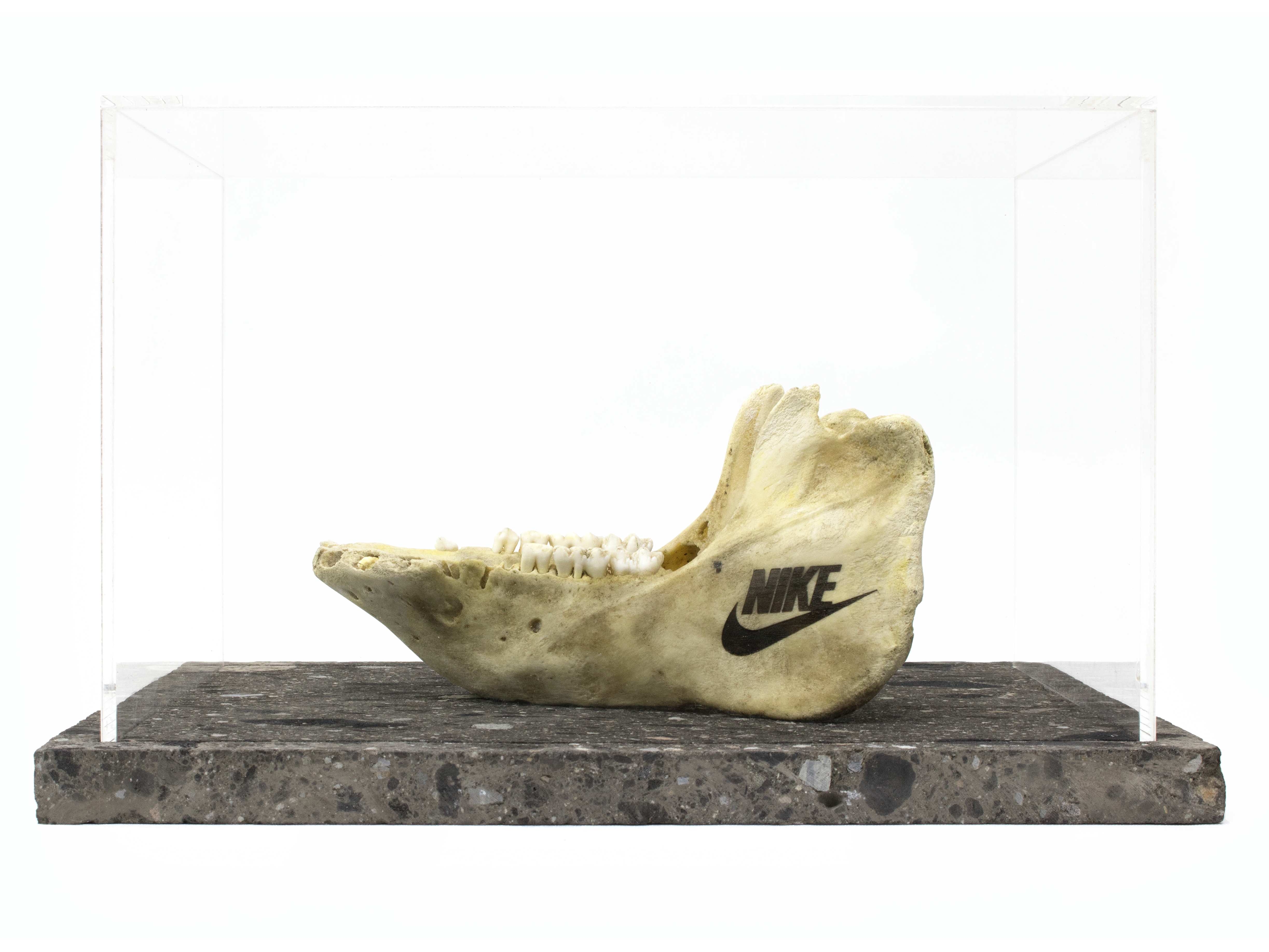
Gómez began drawing spider diagrams to map the connections between the biographical (his father’s illness), the global (how the clothes his father wore constituted his identity) and the mythological (how a brand such as Nike—named after the Greek Goddess of Victory—has materialised success through the products it sells). How can this signifier of strength mark your body, he wondered, and what happens when that strength begins to fade?
The result was a series of sculptures for which Gómez laser-embossed pig jaws and cow femurs with the globally recognised tick. Works such as NIKE BONE. JAW (ABLOH) (2020)—stamped with the collaborative logo between Nike and the late fashion designer Virgil Abloh—morph a jawbone into a commemorative football boot. While others, such as INALAMBRICA (2020)—a bone brandished with the Wi-Fi icon—tap into the connectivity our bodies so readily have come to depend on. Each sculpture is presented within a transparent acrylic box—in lieu of a cardboard shoebox—and sits upon a block made of volcanic stone, presented as if an artefact from an archaeological dig.
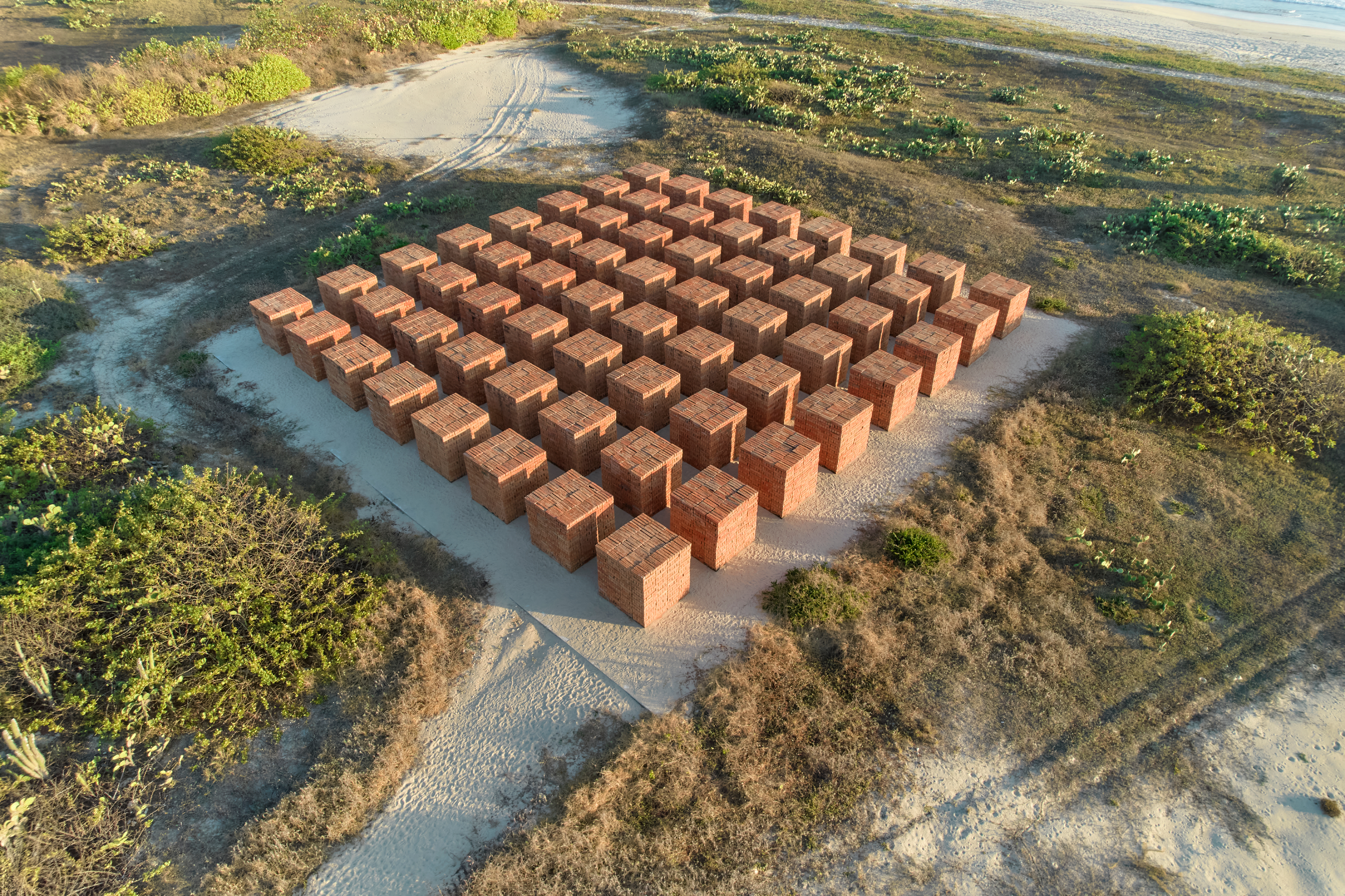
This ephemerality—straddling the commercial and archeological, the human and the organic—carries echoes of Sodi’s own work, specifically his beachfront installation Los Atlanetes (2019), located amongst the cacti and low-lying bushes between Casa Wabi and the sea that stretches before it.
The mammoth land art piece comprises 1,600 handmade clay bricks organised into 64 stacks around two metres high and arranged in a symmetrical, eight-by-eight chessboard formation. To make the bricks, Sodi and his team at Casa Wabi extracted raw earth from the surrounding environment, mixed it with water and sand to form clay, before firing each shaped and signed brick in a traditional Oaxacan kiln on the premises. It took two years to complete the work but, as the Oaxacan coastal elements inevitably take their toll, Los Atlantes will be stripped of its carefully curated identity—its Jenga-like structure, its Sodi branding—corroded to become an organic form again; its strength as a site of encounter and community, however, very much still intact. —[O]
Main image: Casa Wabi, Oaxaca. Photo: Annabel Downes.




A respected voice in contemporary art discourse.
Focusing on ambitious storytelling and insightful art-world commentary. Ocula Magazine publishes in-depth interviews, critical essays and timely analysis on the artists, exhibitions and ideas driving the global art world.
Learn more about Ocula Magazine
Showcasing the best of the art world.
Ocula partners with galleries from around the world to highlight their artists, artworks and exhibitions. Gallery membership is by application and invitation, with each member vetted by an independent panel.
Learn more about Ocula Membership
Specialises in the sale of major artworks.
Led by a team with deep ties to the world’s leading auction houses, galleries and collectors. Ocula’s advisory team offers bespoke services to high-net-worth clients from around the world who are looking to acquire the best of contemporary and modern art.
Learn more about our team and services