





Taoyuan International Art Award Maps Fabricated Realities and Displacement
The Taoyuan International Art Award has announced Thai artist group Chulayarnnon Siriphol, Kasamaponn Saengsuratham, Arjin Thongyuukong, and Krongpong Langkhapin as its 2025 winners for a work with the probing social eye shared by many of the finalists.**** Save to My Ocula
Organised by the Taoyuan Museum of Fine Arts (TMoFA), the biennial programme aims to create art engagement without borders. This year’s open call drew 1,161 artists from 83 countries, competing for 11 finalist positions—a testament to its growing international influence.
This year’s award exhibition, curated under Acting Director Chang Chih-Min, will see the Grand Award-winning work showcased alongside installations by 10 additional finalists delving into complex themes of authenticity, collective memory, and community displacement.
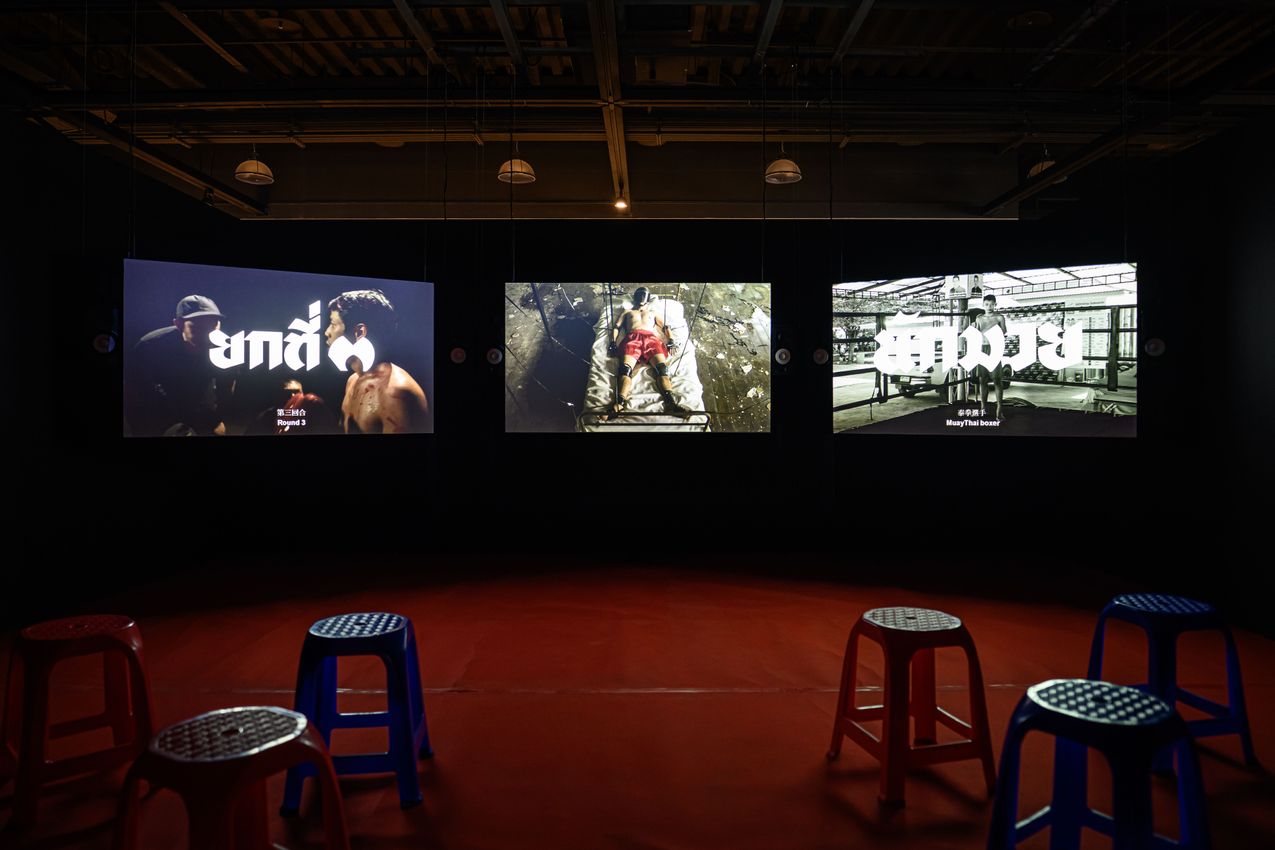
Grand Award winners Chulayarnnon Siriphol, Kasamaponn Saengsuratham, Arjin Thongyuukong, and Krongpong Langkhapin took the prize of NTD 600,000 with a three-channel video installation entitled Red Eagle Sangmorakot: No More Hero In His Story (2025).
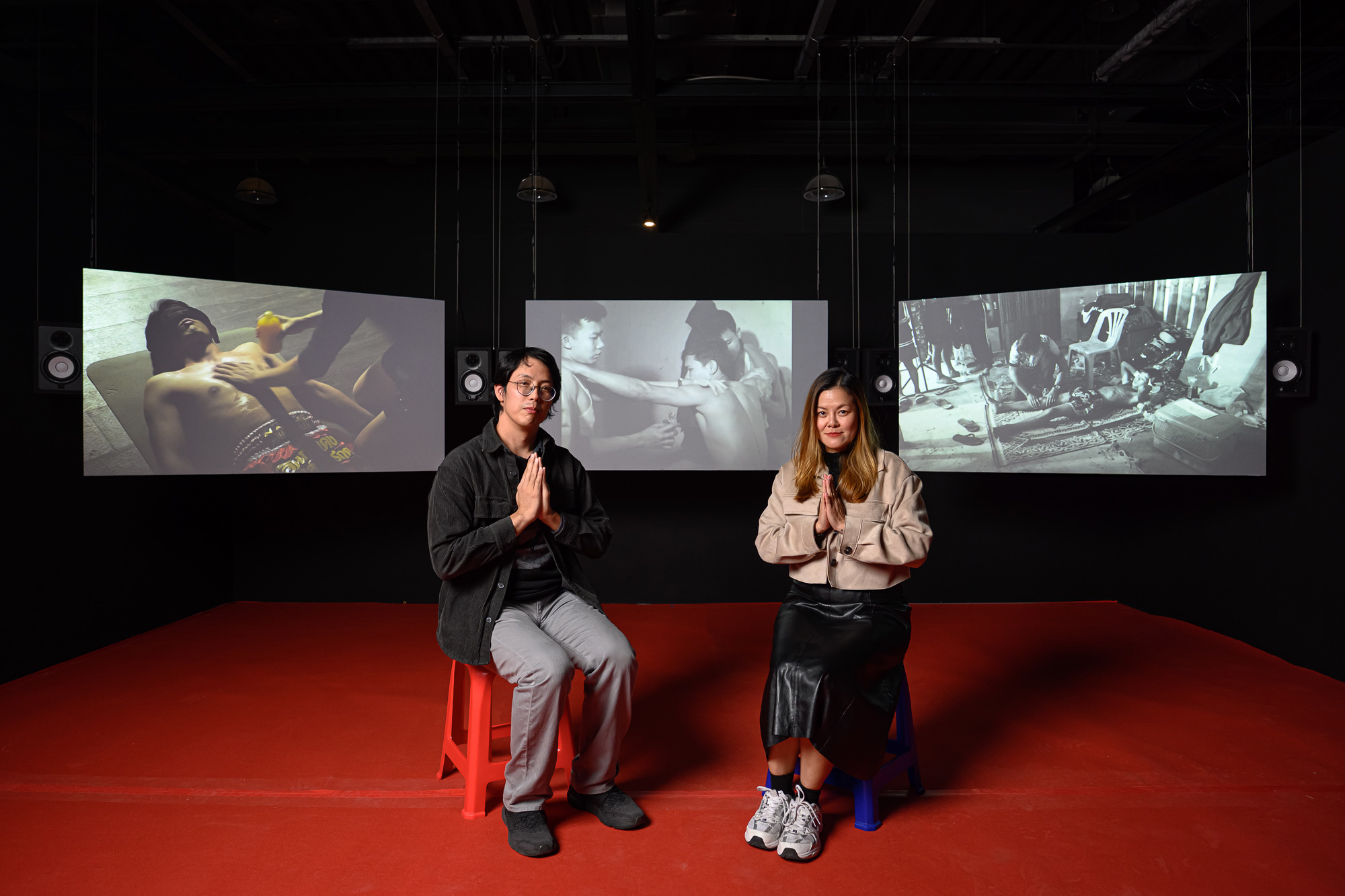
Unfolding in the sequence of a Muay Thai competition, the video weaves the narrative of teenage athletes’ experiences under harsh training conditions with anti-communist cinema rhetoric and an absurd competition—a boxer with paint-covered gloves battles a stretched blank canvas, which becomes crimson chaos by the end. Through an anthropological lens, the work critically examines the power dynamics of social class, nationalism, heroism, and the exploitation of bodies in Muay Thai and beyond.
A joint effort between the artists, a curator, and the Muay Thai enthusiast collective Jean Sit Ahjarn Jo, Red Eagle Sangmorakot exemplifies a notable collaborative tendency to the exhibition.
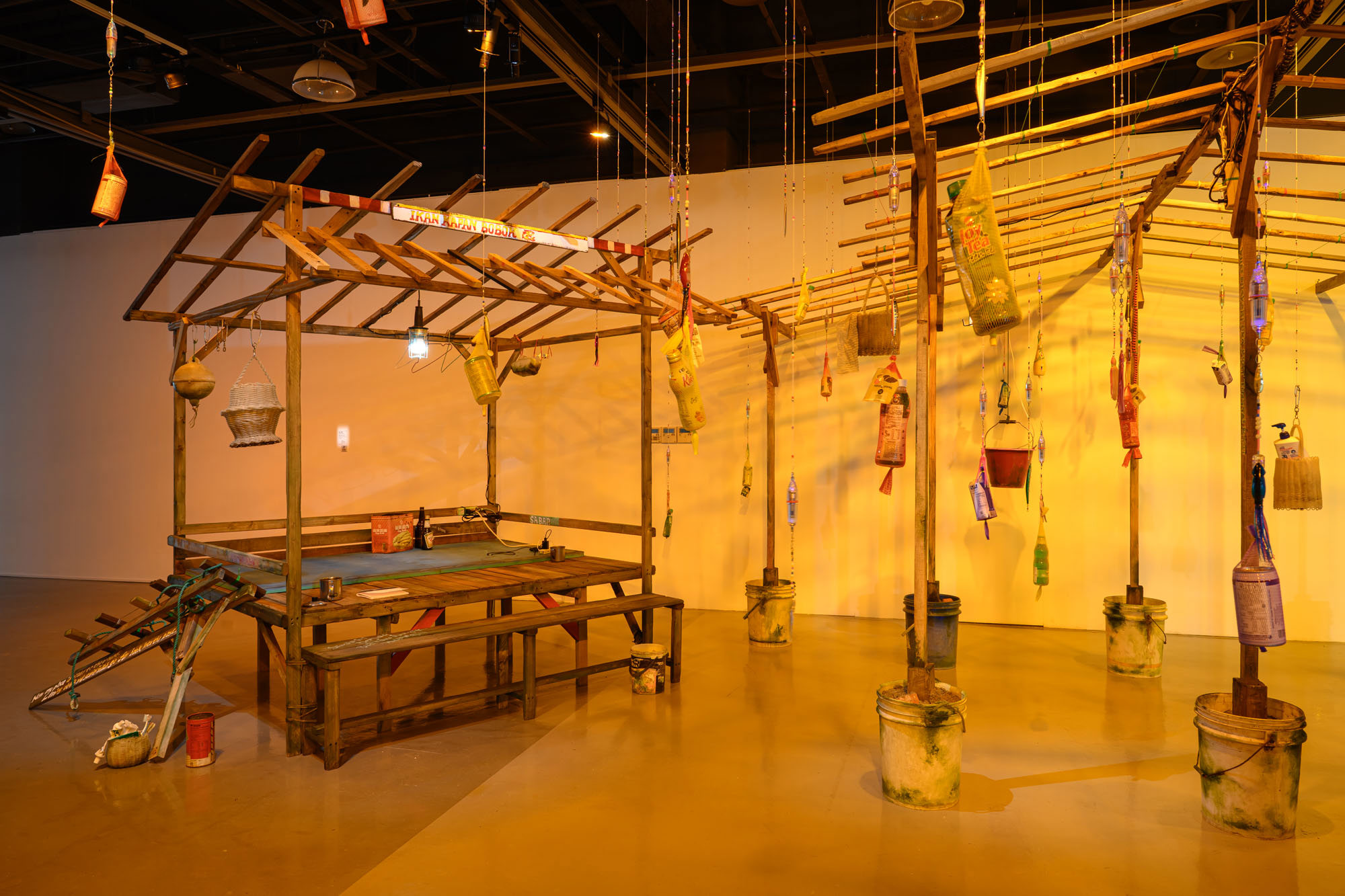
The Sojourn Award was given to Taiwanese artist duo Working Hard (Kuo Po Yu and She Wen Ying), who will receive a NTD 350,000 mobility grant for a visitation abroad to inspire new artistic creations and international exchange. Their work, Sleep in Fish (Ikan Kapan Bobok) (2024), alludes to the sleep-deprived working condition of Indonesian migrant workers in Taiwan. Inspired by makeshift shelters built by migrant fishermen, the large-scale installation features suspended drink bottles, buckets, and other commodities piercing through an ineffective canopy structure, powerfully representing the precarious existence of displaced communities.
According to Jury chairman Reuben Keehan, many artists were ‘working in groups or engaging with non-artists—sometimes professionals from fields such as anthropology, and sometimes local communities.’
‘This commitment to ongoing dialogue and relationship-building is particularly compelling,’ said Keehan.
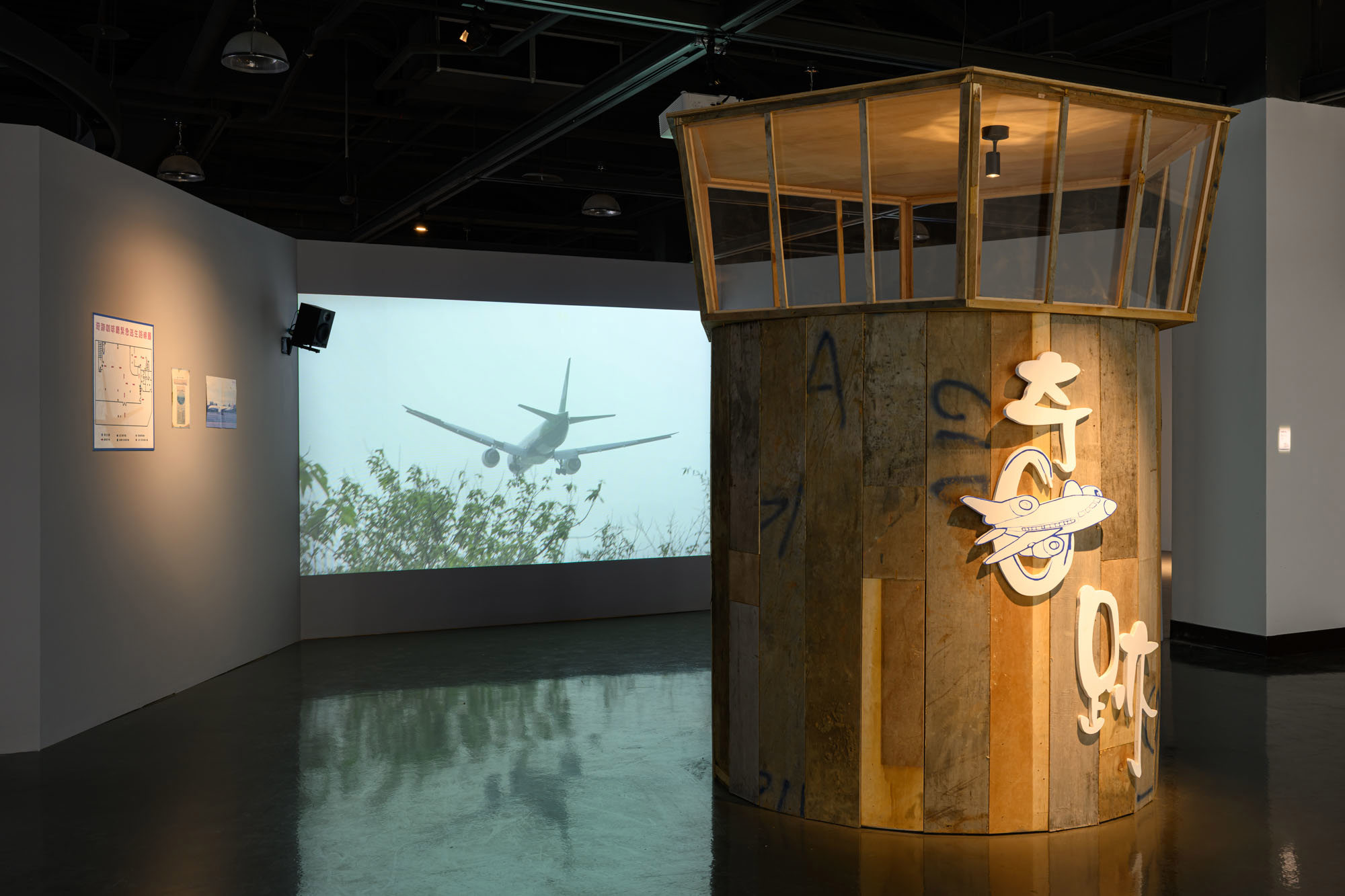
Other community-focused works include Urge Miracle to Stay (2025) by Taiwanese artists Lin Yan Xiang and Wang Cheng Hsiang. Part of their ‘Delayed Takeoff From Taoyuan’ project (2022–ongoing), this multimedia work documents the demolished ‘Miracle Café Airfield’ near Taoyuan Airport, challenging erasure-driven urban development through archival materials, video, and restored airplane wreckage.
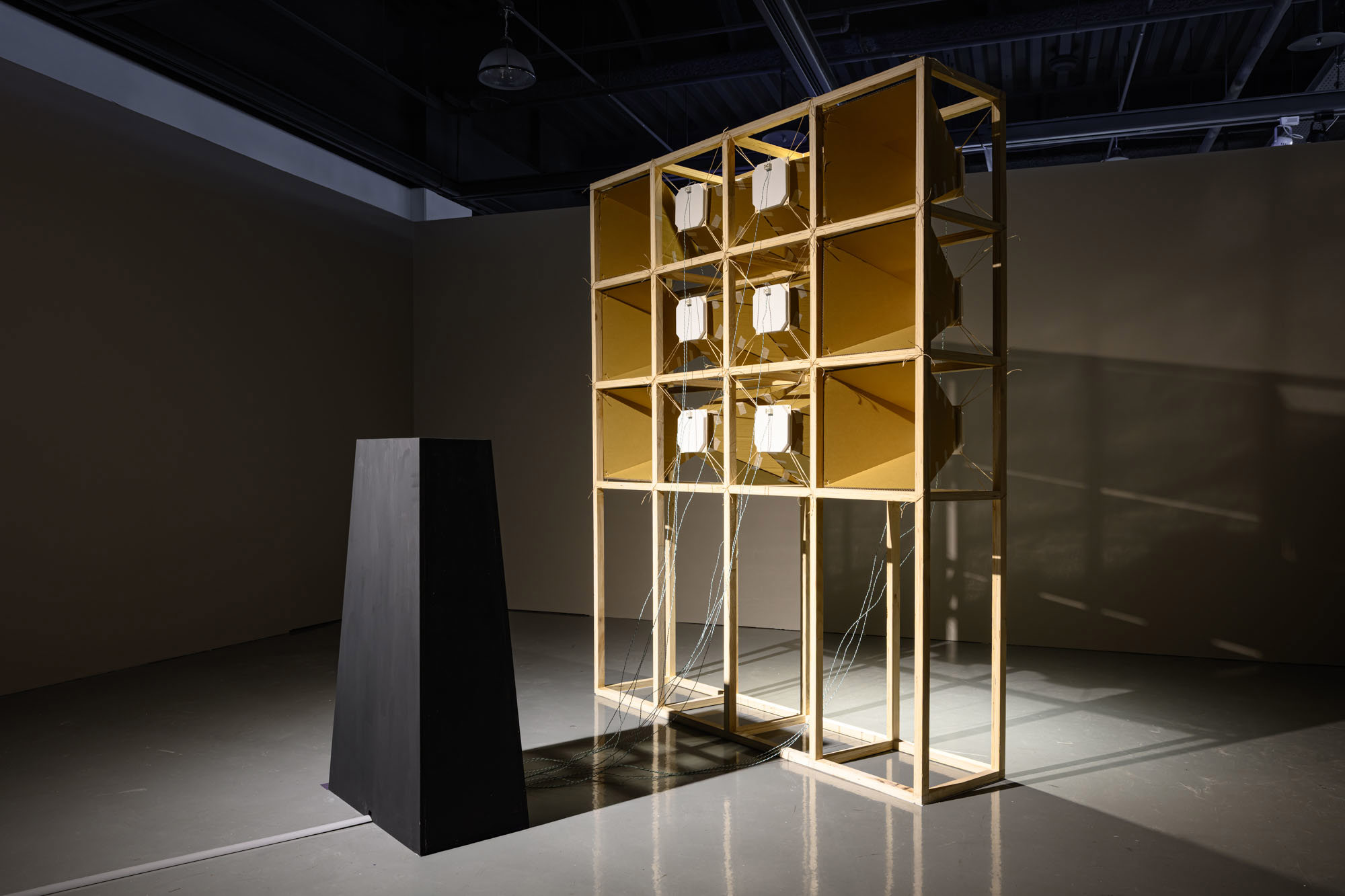
This concern with preserving vanishing landscapes extends to sound in California-based artists Jorge Bachmann and Kevin Corcoran’s Refrained Invocations (Encodings) (2024-25), explores soundscapes from disused military landscapes in California. Influenced by Taiwanese radio during Cold War, they feature encoded text recitations over AI-generated music trained on historical Taiwanese songs, connecting military history with cultural memory.
Works by Erdem Taşdelen, Lee Tek Khean, and the artist duo Reynout Dekimpe & Robbe Maes interrogate the nature of truth in a time of rising illiberal regimes and information overload, while exploring the possibilities of fabricating both absurd and believable alternate realities.
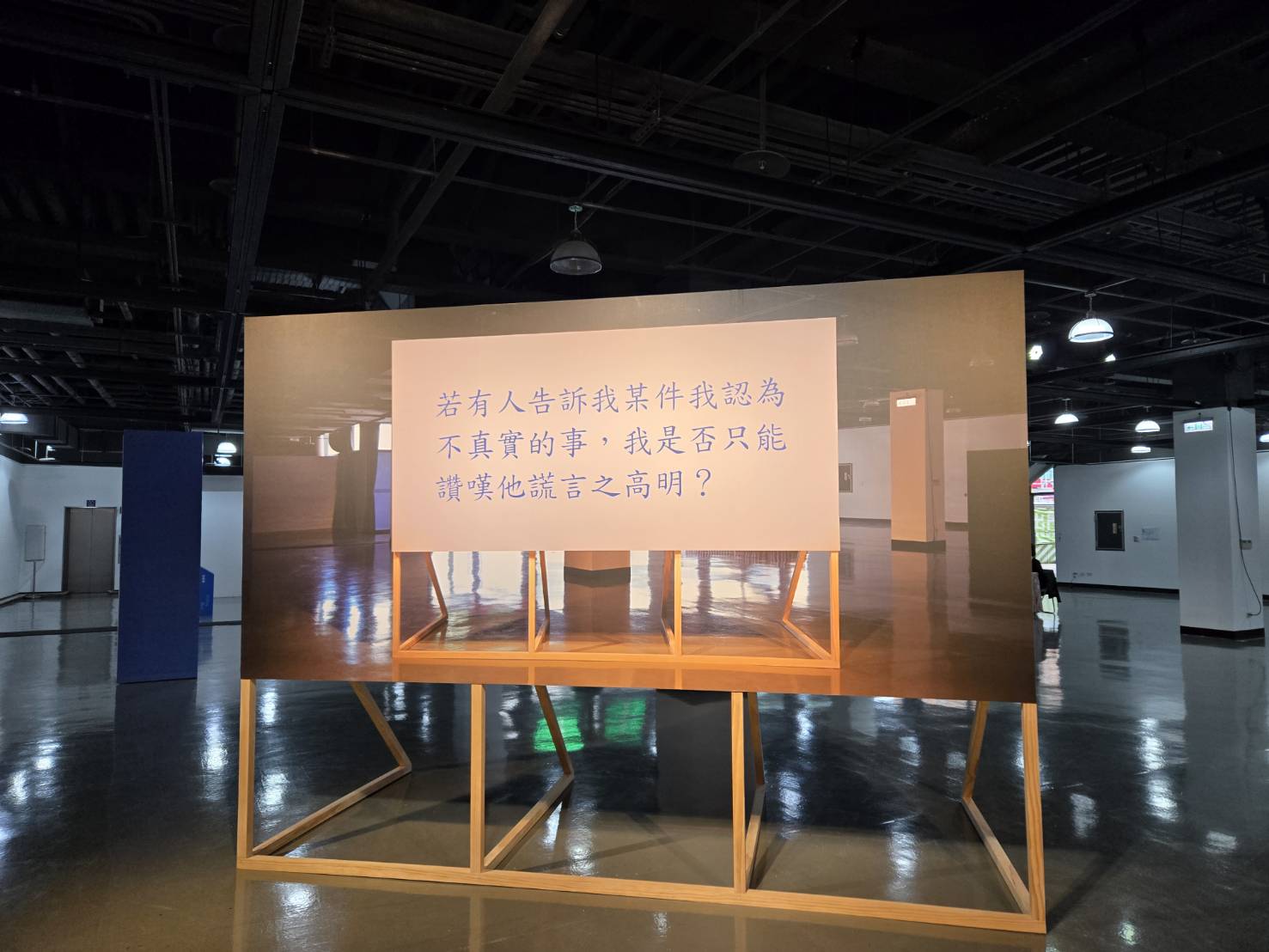
Turkish-Canadian artist Erdem Taşdelen’s Demagogues: 7 (2025) establishes a provocative tone with its site-specific installation featuring an uncanny photograph that captures the work itself sitting inside the exhibition hall. Digitally inserted into the work is text repurposed from a 1958 quote from theatre critic Kenneth Tynan in traditional Chinese: if a man tells me something I believe to be untruth, am I forbidden to do more than congratulate him on the brilliance of his lying?
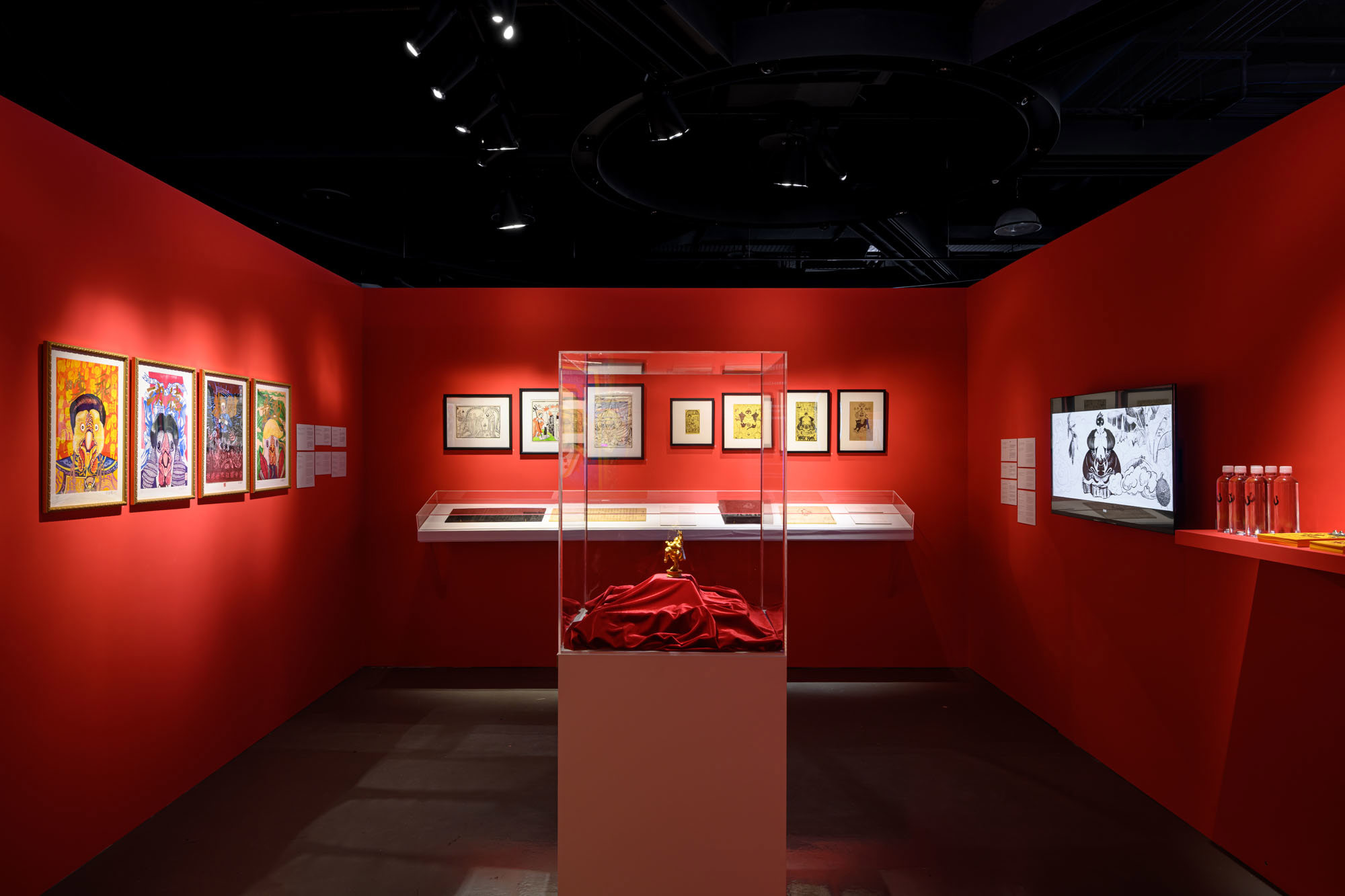
Questioning of authenticity finds resonance in Malaysian artist Lee Tek Khean’s Gai Gaau (2024), a project consisting of fake documentary work and provocative short videos that construct a fictional religion called ‘Chickenism’, complete with artificially aged paintings and fabricated artefacts. Lee’s work effectively satirises the short-video era’s capacity to make the irrational seem credible, while his parallel exploration of ‘short-video generation’ examines how brief, decontextualised content shapes electoral discourse across Asia.
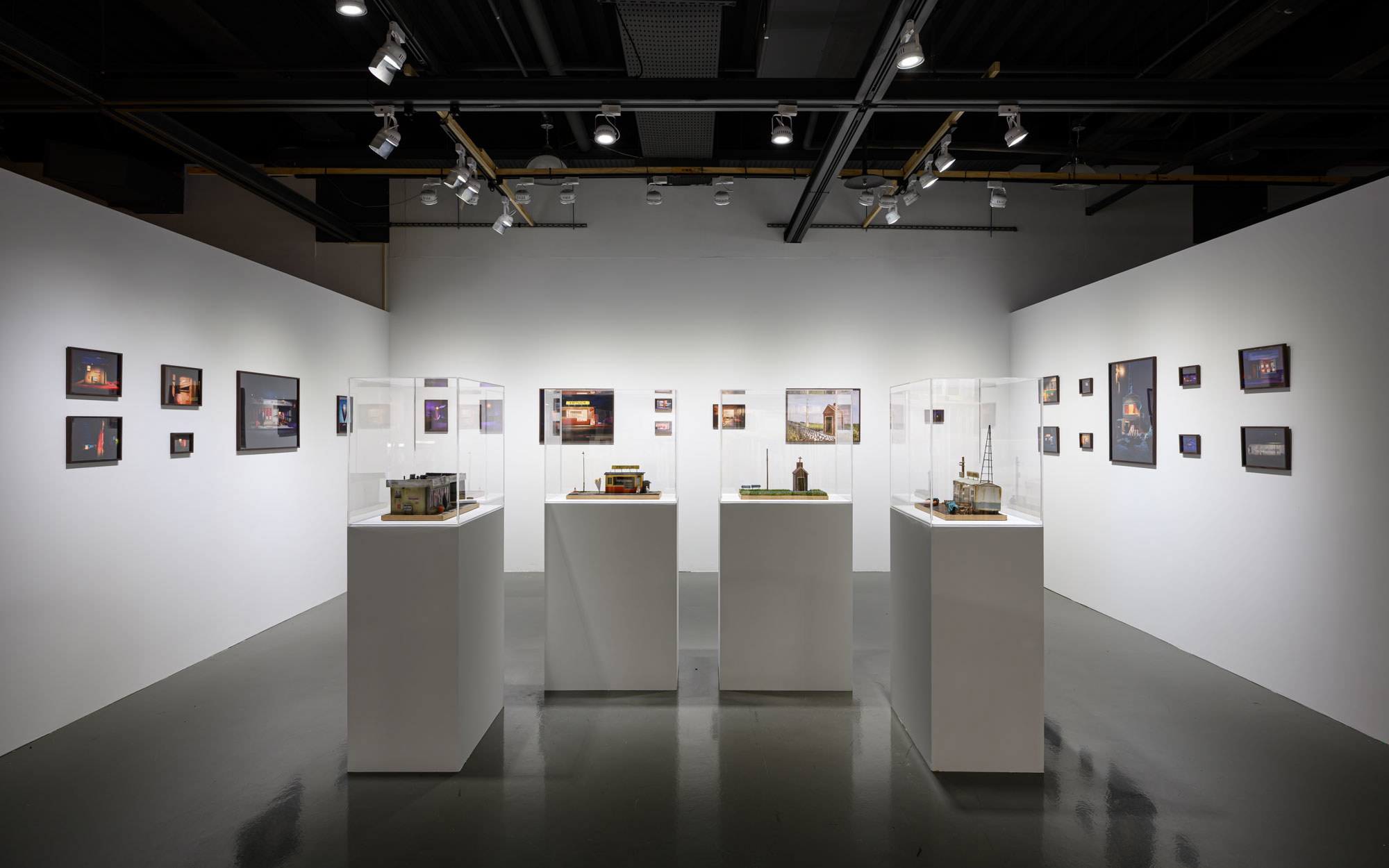
Belgian artists Reynout Dekimpe & Robbe Maes’ Welcome to “Fieldkapelle” (2024) consists of a series of meticulously crafted miniatures and theatrical photographs of an imaginary Belgian village. Creating an intersection between memory and invention, the scene triggers a nostalgic response to a place that never existed.
The credibility of algorithm-driven democracy is radically challenged in Goh Uozumi’s interactive installation Social Choice and Its Enemies - v2 (2024). Five screens installed in the exhibition hall invite visitors to access an online voting system, selecting from AI-generated candidates. In the background, a programmed robotic hand is seen repeatedly voting via a smartphone, undermining the legitimacy of the system.
The exhibition’s engagement with borders and identity appears in several works, including Tsai Yu Ting’s See you next time (2024), a three-part narrative spanning Taipei Island, Thailand, and the Golden Triangle that contemplates the relationship between nationalism and spirituality through a gradually disappearing dwelling.
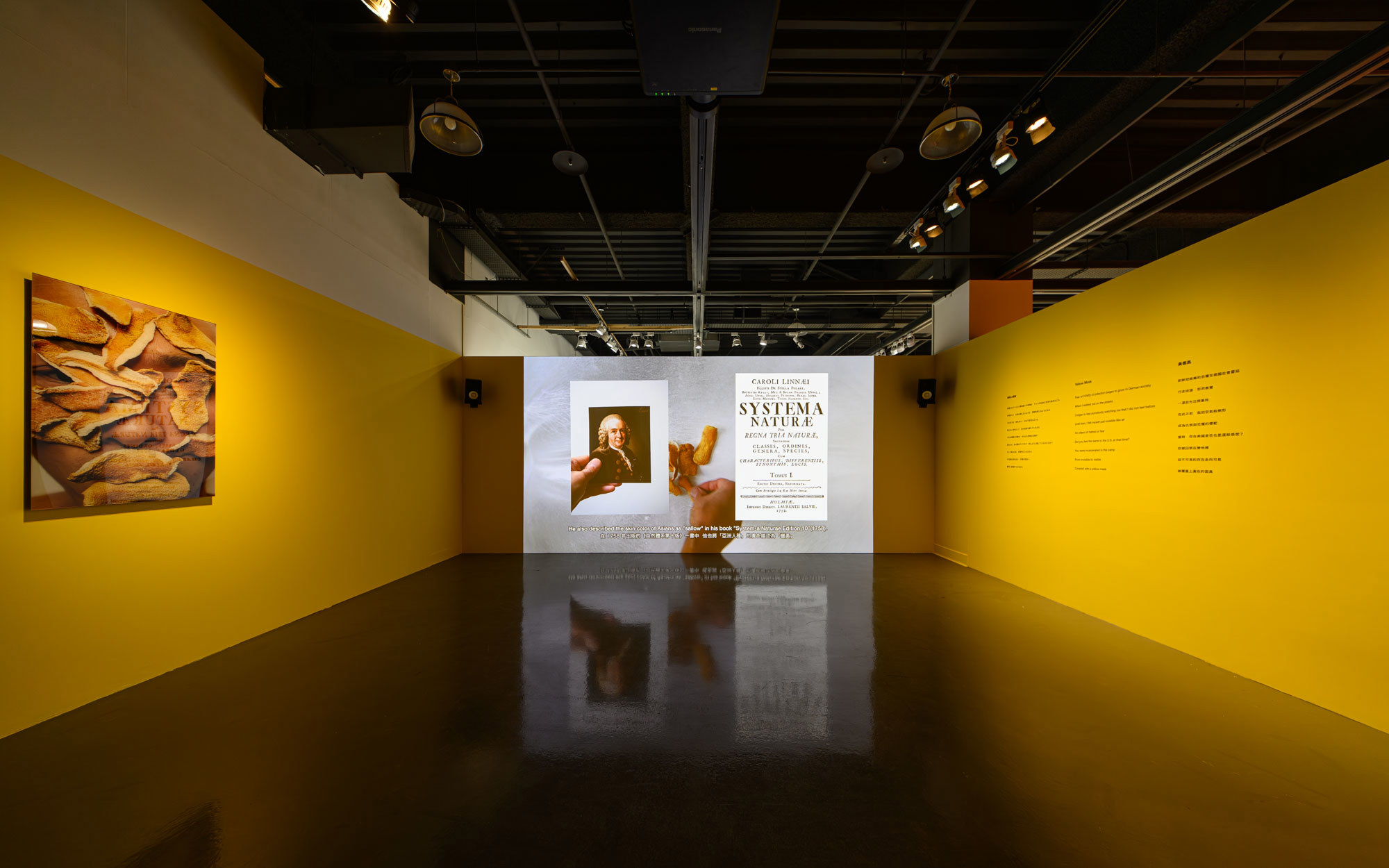
Japanese-born, Berlin-based artist Aisuke Kondo’s YELLOW PEEL (2023) is a research-based, performative video inspired by the artist’s experiences of xenophobia during the COVID-19 pandemic. Kondo investigates the 18th-century European construction of the ‘Yellow Race’ concept and the subsequent ‘Yellow Peril’ theory through narration and superimposed photographs, while in the background he gradually builds, destructs, and rebuilds a yellow ‘skin’ consisting of dried tangerine peels, creating a layered visual metaphor of identity and racial construction.
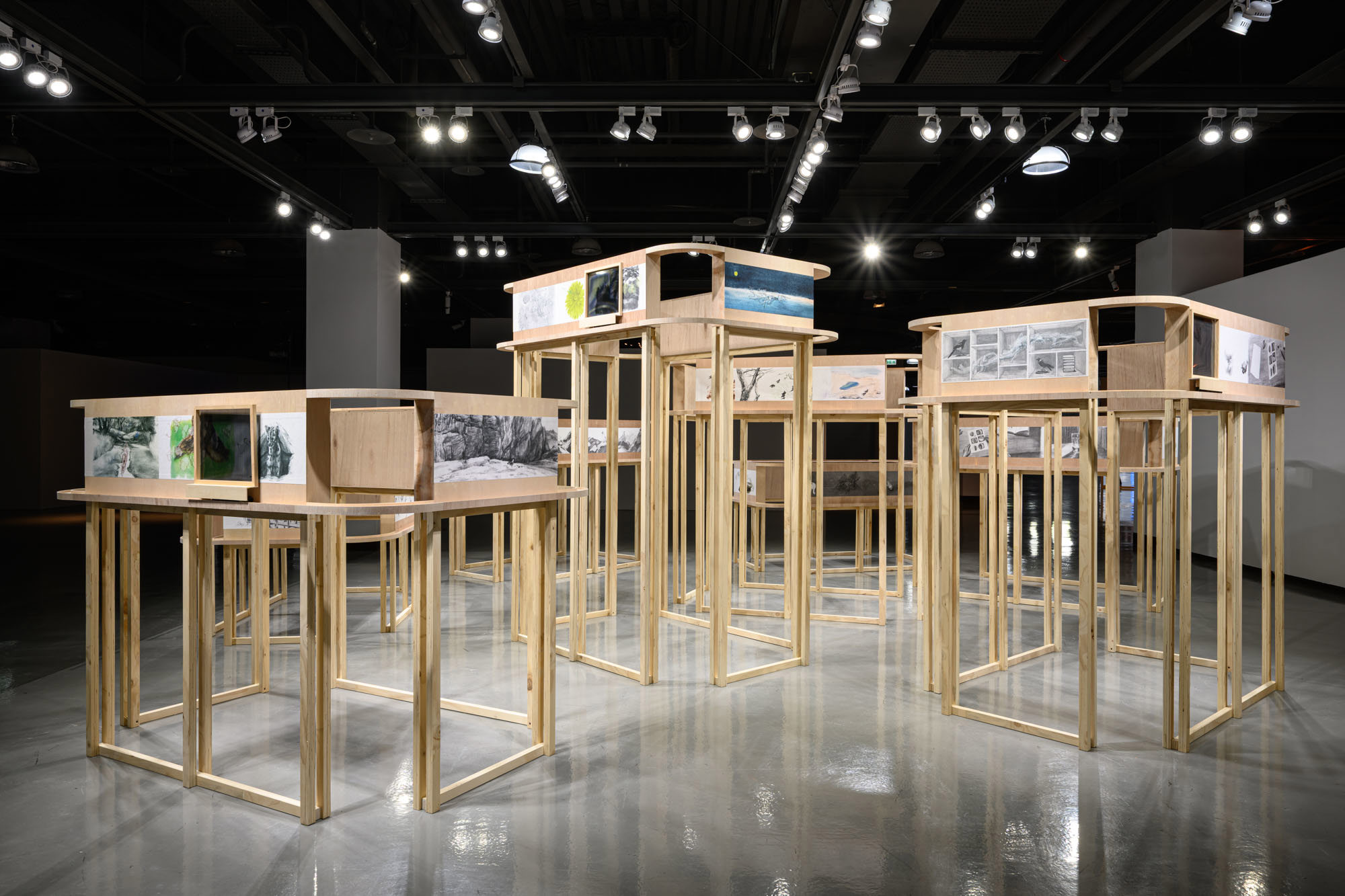
‘The (TMoFA) museum is committed to discovering and nurturing both local and international emerging artists, reinforcing its distinct role in the art world,’ said Chang Chih-Min. As the museum anticipates its permanent home in Qingpu (with an expected completion in 2027), this biennial award continues to offer a platform for artists to engage with critical contemporary issues, ‘providing audiences with a glimpse into globalised art.’
The 2025 Taoyuan International Art Award Exhibition runs until 18 May at Taoyuan Arts Center. —[O]
The Grand Award of the Taoyuan International Art Award was granted to Chulayarnnon Siriphol, Kasamaponn Saengsuratham, Arjin Thongyuukong, Krongpong Langkhapin, for their Red Eagle Sangmorakot: No More Hero In His Story.
The Sojourn Award was presented to “Working Hard” (She Wen Ying, Kuo Po Yu), Sleep in Fish (Ikan Kapan Bobok).
Honorable Mention was awarded to the following artists/collectives:
“couch” (Hiroki Miyazaki and Reiko Asao), A fable of a fable <Wildcat>
Kevin Corcoran and Jorge Bachmann, Refrained Invocations (Encodings)
Lee Tek Khean, Gai Gaau
The Selected Award winners include:
“Delayed Takeoff From Taoyuan” (Lin Yan Xiang, Wang Cheng Hsiang), Urge Miracle to Stay
Tsai Yu Ting, See you next time
Aisuke Kondo, YELLOW PEEL
Erdem Taşdelen, Demagogues: 7
Goh Uozumi, Social Choice and Its Enemies - ver.2
Robbe Maes, Reynout Dekimpe, Welcome to Fieldkapelle
Main image: Chulayarnnon Siriphol, Kasamaponn Saengsuratham, Arjin Thongyuukong, and Krongpong Langkhapin, Red Eagle Sangmorakot: No More Hero In His Story (2025). Three-channel video installation. Exhibition view: Group Exhibition, 2025 Taoyuan International Art Award, Taoyuan Arts Center, Taoyuan (26 March–18 May 2025). Courtesy Taoyuan Museum of Fine Arts.





A respected voice in contemporary art discourse.
Focusing on ambitious storytelling and insightful art-world commentary. Ocula Magazine publishes in-depth interviews, critical essays and timely analysis on the artists, exhibitions and ideas driving the global art world.
Learn more about Ocula Magazine
Showcasing the best of the art world.
Ocula partners with galleries from around the world to highlight their artists, artworks and exhibitions. Gallery membership is by application and invitation, with each member vetted by an independent panel.
Learn more about Ocula Membership
Specialises in the sale of major artworks.
Led by a team with deep ties to the world’s leading auction houses, galleries and collectors. Ocula’s advisory team offers bespoke services to high-net-worth clients from around the world who are looking to acquire the best of contemporary and modern art.
Learn more about our team and services