The art world in focus
Subscribe to our newsletter for news and insights on artists, galleries and exhibitions.


Álvaro Urbano’s inaugural exhibition at New York’s Marian Goodman Gallery is a quiet ode to the art of having sex with strangers outdoors.
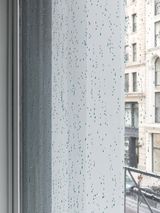
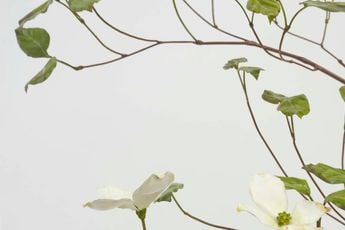
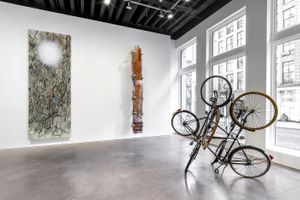
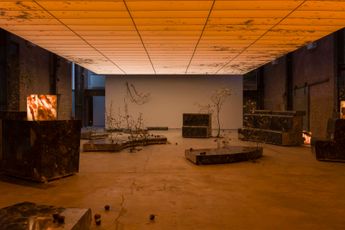
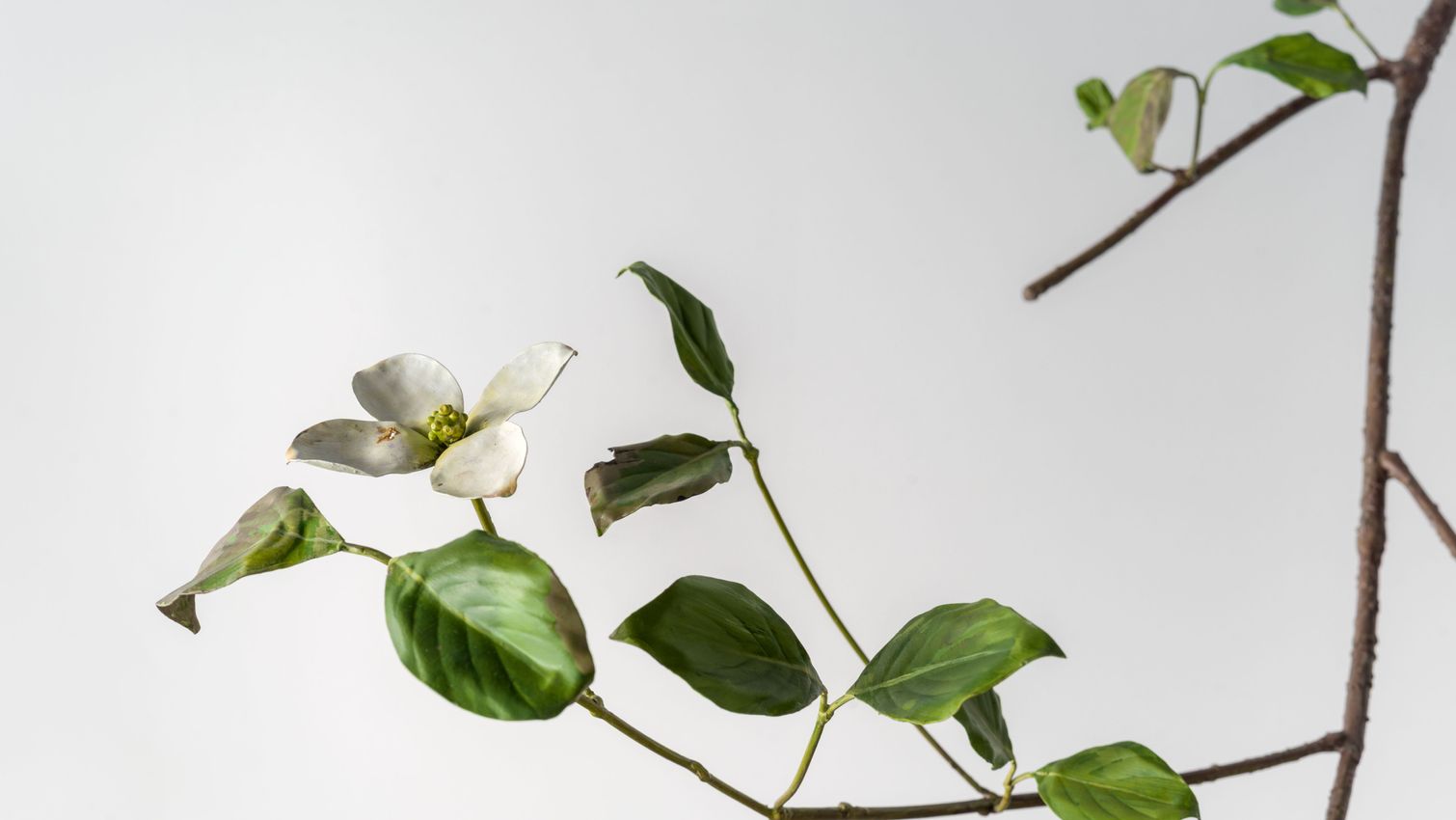
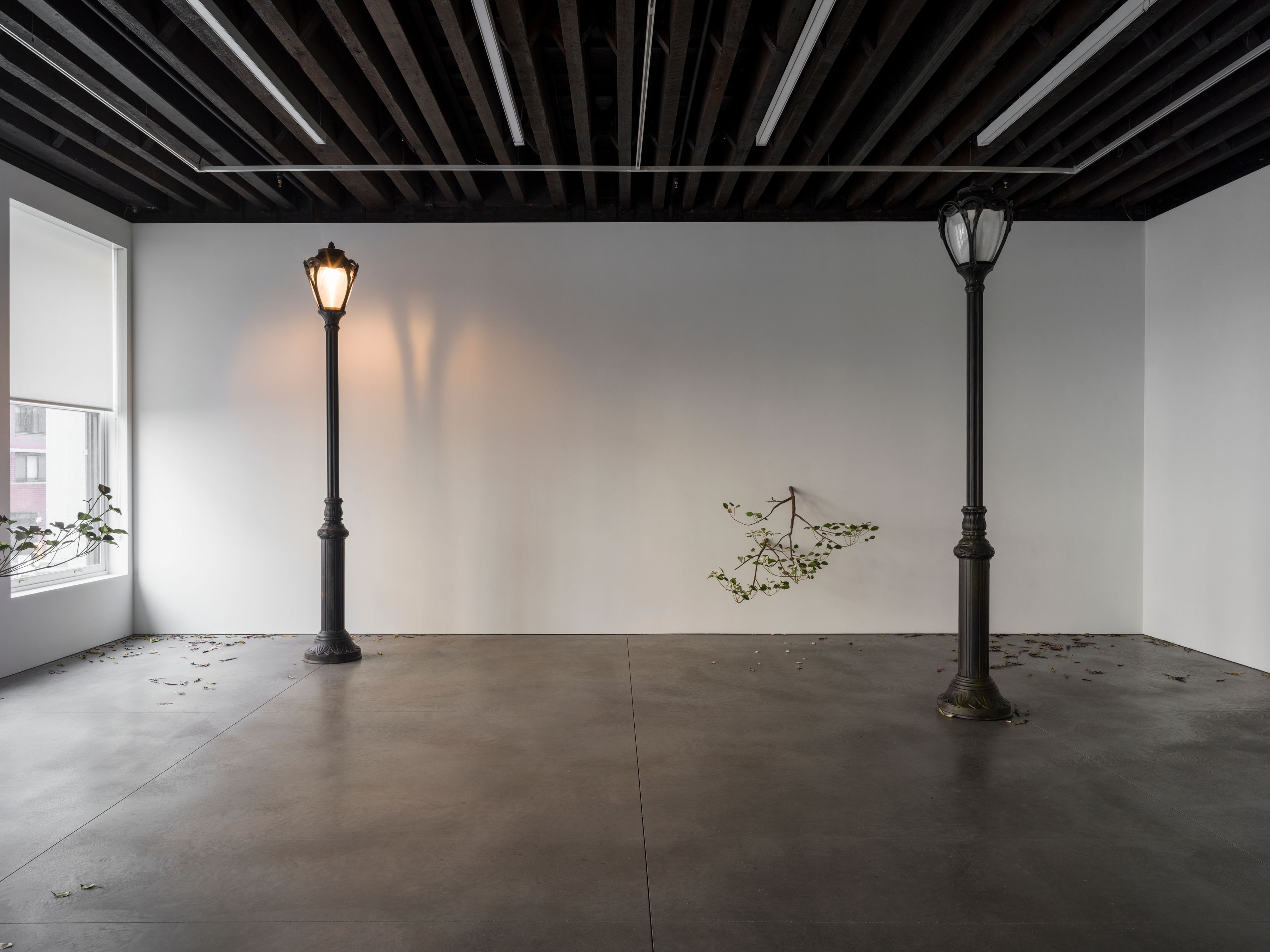
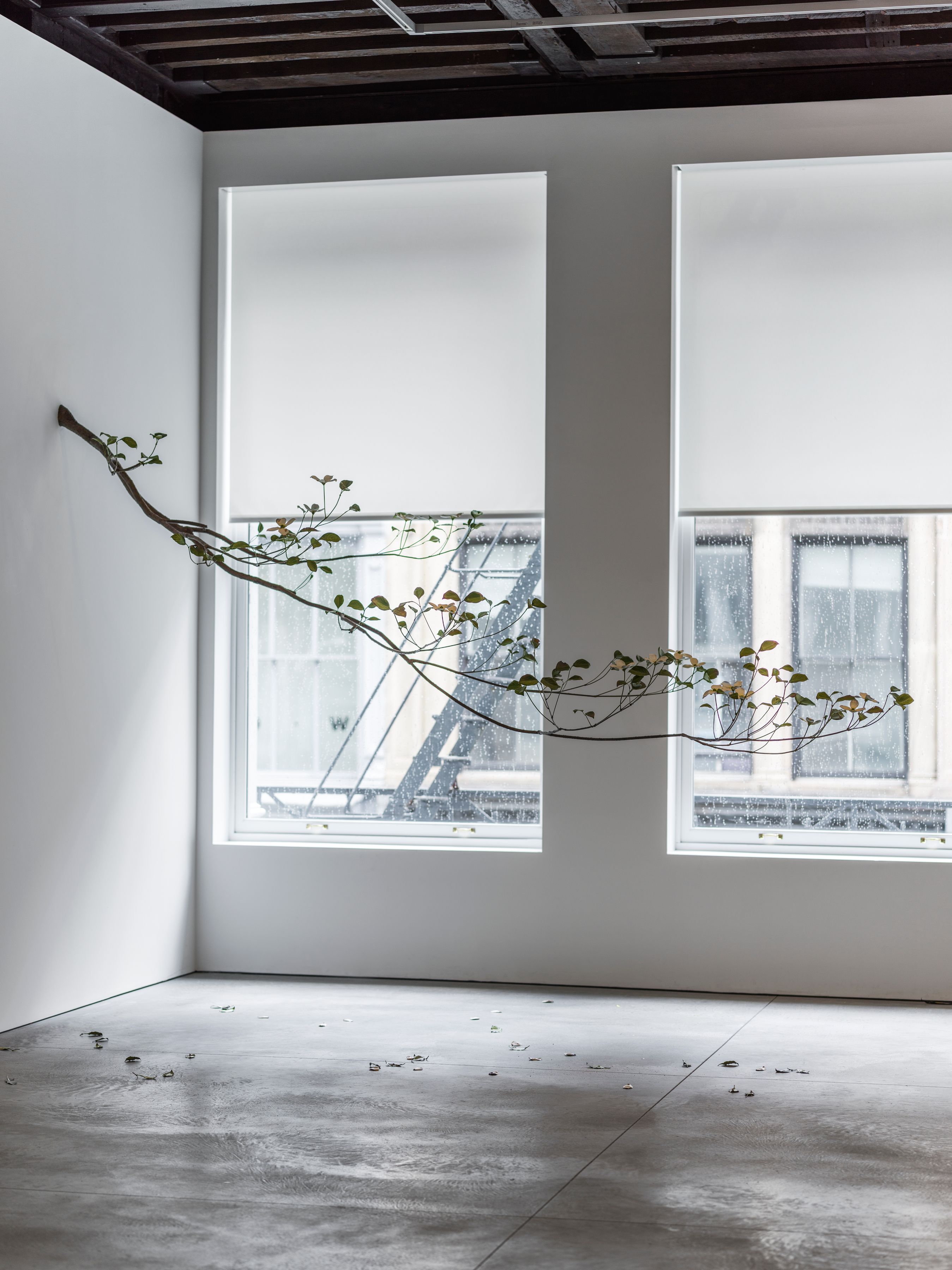
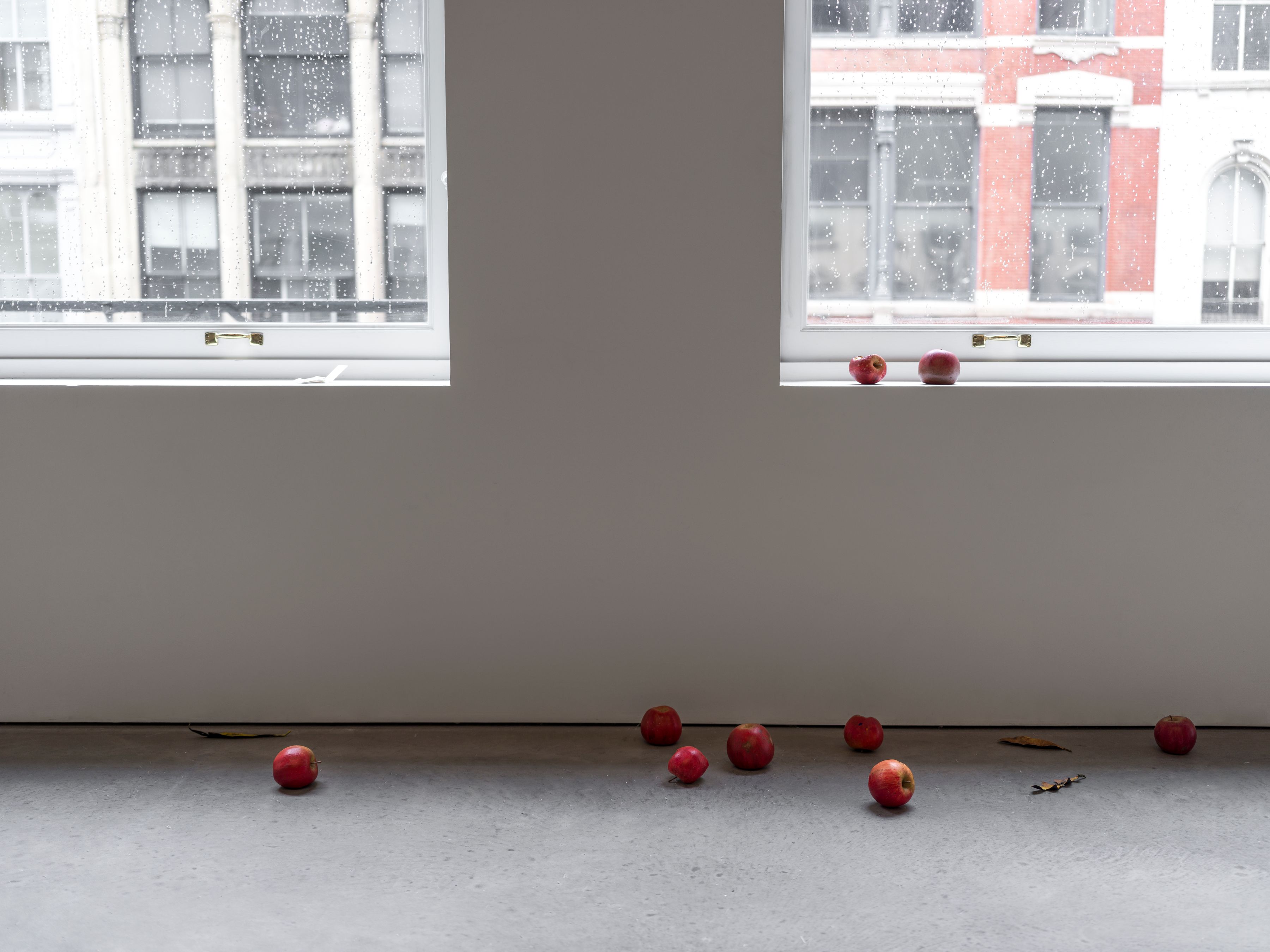
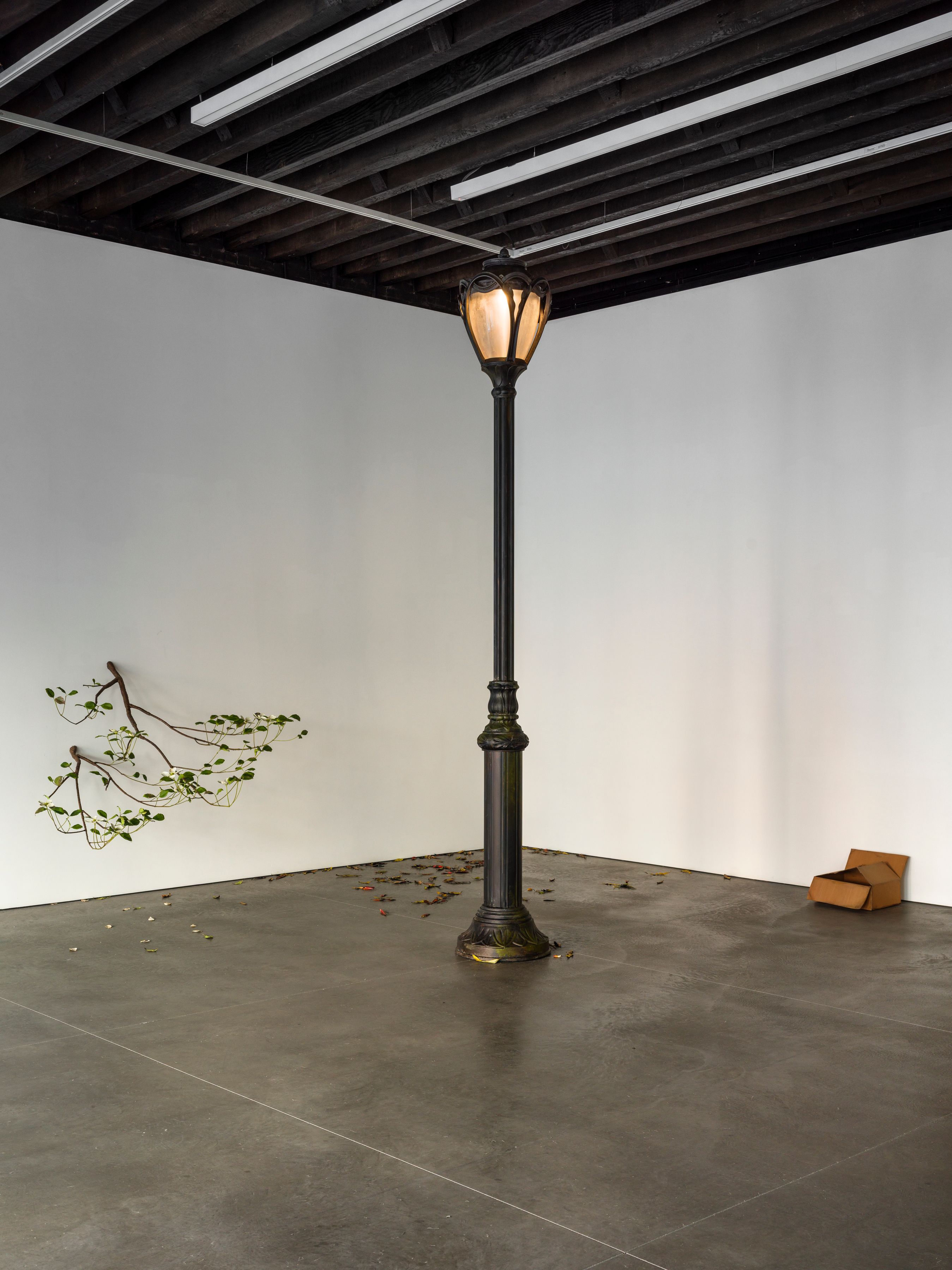
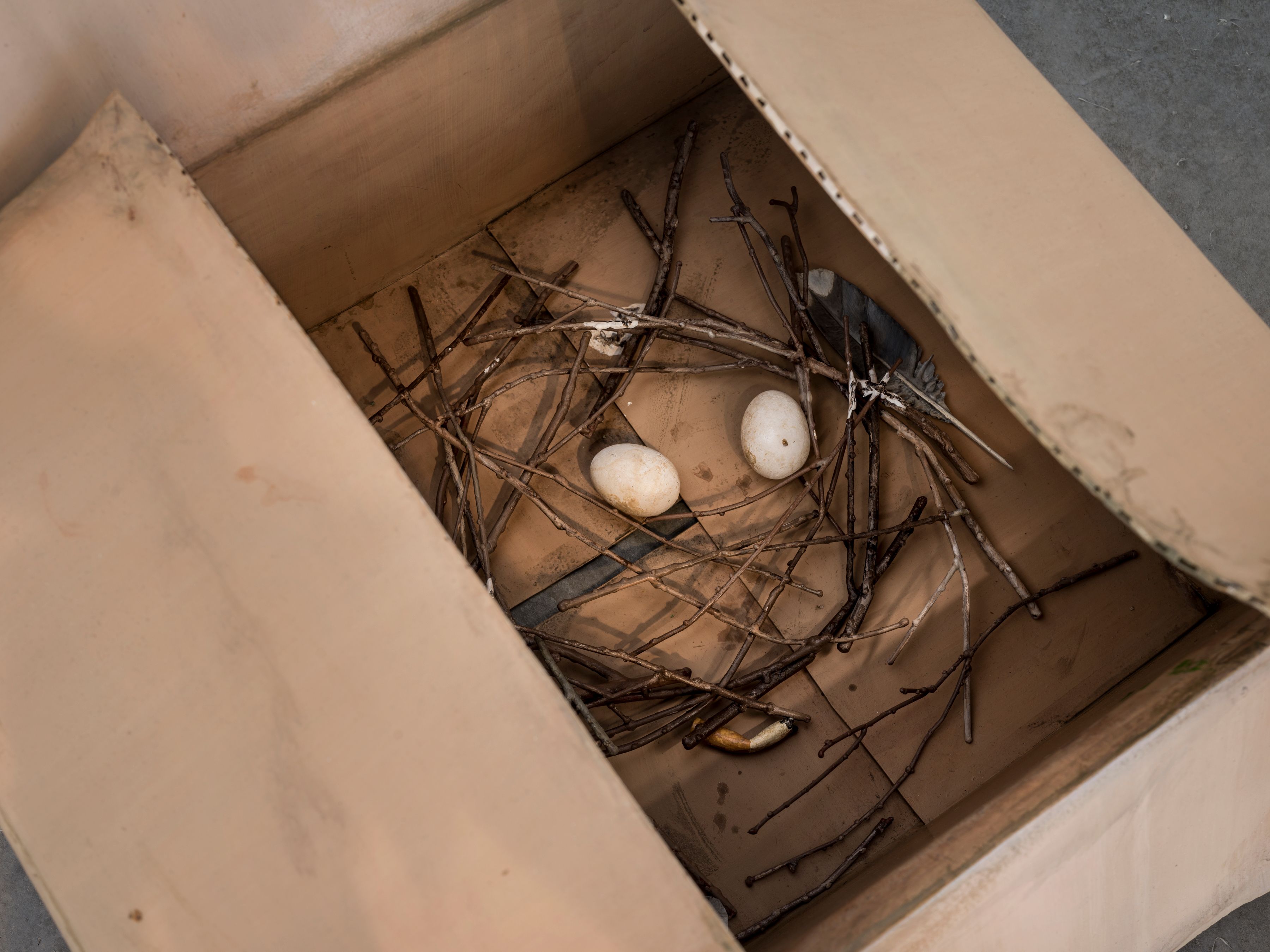
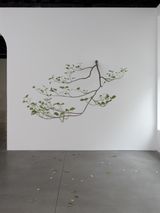
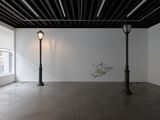
Based on Central Park’s wooded longtime cruising spot the Ramble, Prelude features extraordinarily lifelike painted metal sculptures of dogwood branches, Prelude (Dogwood) (2025), which extend seamlessly from the gallery walls and scatter their leaves, He would always leave a window open, even at night (2025), on the floor below. Two life-sized lampposts, Prelude (2025), act as stand-ins for momentary lovers, eyeing each other with tentative flashes and a sustained glow, while a condom wrapper and a matchbook with a phone number scrawled on it hint at tristes from the not-too-distant past.
The work comes on the heels of Urbano’s recent SculptureCenter exhibition, TABLEAU VIVANT, which interpolated the work of legendary queer artist Scott Burton, building ‘a speculative bridge’ between Burton’s now-deinstalled public work Atrium Furnishment (1986) and the untamed landscape of the Ramble.
On the occasion of Prelude, we invited writer Leo Herrera—whose new book (analog) Cruising: a manual offers a step-by-step guide to IRL cruising etiquette—to give us a lowdown on the Ramble, one of New York City’s most enduring and determined erogenous zones.
I had never cruised the Ramble in Central Park before. The weight of its history felt so heavy, its place in the Queer imagination was so huge, I was afraid it would only disappoint me. It was the backdrop of my favourite Gay novels of the 1970s, Al Pacino asking ‘hips or lips?’ in William Friedkin’s Cruising, the heartbreak in Angels in America. It could not possibly live up to my expectations. What if decades of AIDS stigma and sex shame, surveillance, police brutality, and GPS apps had diminished it?
The Ramble is a woodland in the heart of the park. When Central Park was manmade in the 1850s, the designers aimed to mimic the wild gardens of the idyllic Picturesque paintings of the era. A walk through the Ramble at golden hour still looks like that. Over time, it set the stage for a more shadowy use. In the 1920s it was already referred to as ‘the fruited plain’ because of the crowd that came to visit it regularly. By the 1950s, it was said that the area attracted too many so-called ‘anti-social individuals’.
Robert Moses, the notorious urban planner who destroyed much of the city, proposed bulldozing the Ramble for a sports field. The plan, dripping in homophobia, failed. The cruising area persisted.
One hundred years later, a friend texted me: ‘Girl, you need to go to the Ramble ASAP. Literally every type of guy ever, so many hotties. Buffet.’ Several friends told me that since Covid lockdowns, the Ramble had flourished again, having been the only place Queer men could gather.
I finally decided to go. I had a bad case of the birthday blues and was in no mood to celebrate. But it was the kind of show-stopping August day that New York gifts to those who can’t escape the heatwaves to beach towns or European vacations. So at around 7 p.m., I packed my cruising kit—lube, poppers, a lighter, mints, my ID and enough cash to get a taxi home—and took a taxi uptown. I figured that even if it was a bust, at least I’d get a walk in nature.
It took me a while to find the spot. The Ramble is huge—36 acres. On a stunning day like this, Central Park is the beating heart of the island. The Ramble entrance was packed with families and birdwatchers. Cruising here would require finesse, patience, and discretion. I walked deep into the shadows, away from the baby strollers. While the birdwatchers kept their eyes to the sky, I kept mine on the ground.
First, I saw the tell-tale yellow of a North American Rush poppers bottle. You can spot a cruising area by its detritus. Condom wrappers are less common in the post-PrEP era, but tissues were strewn on the ground like gardenias. A little bodega bag filled with trash, politely reclined against a tree, an old white sports sock sticking out of it.
Then, guys. All walking alone. Some sat on benches, fidgeting with their phones, looking up when someone passed. Others walked in circles, pretending to admire the foliage. They each had ‘the look’ on their face that is so common in cruising. A comical combination of fake surprise (‘Oh, what’s this place?’) and a tender, sort of sexy, performative masculinity that says, ‘Don’t fuck with me but please fuck me’.
I saw him sitting on the bench. A neat moustache, white tank top, gym shorts, and lightly feathered hair. If it weren’t for the anachronistic AirPods nestled in his ears, he could have stepped out of a porn from 1975. I walked by him three times, locking eyes. After the third, I stood about twelve feet away and waited. He got up and followed me behind a giant rock. As we kissed, I opened my eyes, struck by his youth and beauty. How lovely that the boys were learning to cruise again. And how improbable it was that we should both still be here.
The sun set, the light hit a psychedelic blue tone, men had paired up or gathered into tiny, curious groups. Soft moans, choking sounds, and whispers of ‘fuck’ and ‘thank you.’ The trickling water. Far away, but close enough to keep us quiet, the laughter of oblivious straight people.
As we devoured one another’s faces, I heard the jingle of a collar. ‘Jeez, get a room, you two.’ A woman with a cool haircut and a giant dog had snuck up near us. She smirked, a little guilty, knowing where she was. All three of us chuckled with mild embarrassment. I led him further into the bushes near the stream. The mosquitos got very lucky too.
I fought the urge to ask him for his number. I knew the moment needed to live only here. Sometimes perfection requires goodbye. And how wonderful a gift this had been—discovering that the Ramble’s history was not its weakness, but instead the core of its power. —[O]




A respected voice in contemporary art discourse.
Focusing on ambitious storytelling and insightful art-world commentary. Ocula Magazine publishes in-depth interviews, critical essays and timely analysis on the artists, exhibitions and ideas driving the global art world.
Learn more about Ocula Magazine
Showcasing the best of the art world.
Ocula partners with galleries from around the world to highlight their artists, artworks and exhibitions. Gallery membership is by application and invitation, with each member vetted by an independent panel.
Learn more about Ocula Membership
Specialises in the sale of major artworks.
Led by a team with deep ties to the world’s leading auction houses, galleries and collectors. Ocula’s advisory team offers bespoke services to high-net-worth clients from around the world who are looking to acquire the best of contemporary and modern art.
Learn more about our team and services