





Rencontres d’Arles Puts America Under Special Scrutiny
Long known as one of the world’s preeminent photography events, this year’s edition of Rencontres d’Arles put an interrogative spotlight on the U.S. through the work of image‑makers like Nan Goldin and Kwame Brathwaite. Save to My OculaBeneath the Provençal sun and amid the Roman ruins and 19th-century ateliers, the message is unmistakable at this year’s Rencontres d’Arles: American photography is having a distinct moment.
From Nan Goldin’s emotional return to Kwame Brathwaite’s Black is Beautiful at Mougins, via exhibitions of Diana Markosian, Keisha Scarville, Carol Newhouse, Todd Hido, and a major survey of Louis Stettner, the 2025 edition of the festival (7 July–5 October) gives unprecedented space to U.S. photographers.
Perhaps it’s just a case of two titans of the form meeting. As Michael Benson, co-founder of Photo London, puts it: ‘As the two superpowers of world photography, there has always been a rich interchange of images between France and America.’
Meanwhile Audrey Bazin, artistic director of the Louis Roederer Foundation, which supports the influential Rencontres d’Arles Discovery Prize, suggested American artists have always looked to France for professional development.
‘France is a welcoming country, more inclined to showcase what is being done abroad than to promote its own artists.’

Ben Goulder, an independent publisher and Book Market curator at the 2025 edition of Photo London, theorised that America is ‘lodged in the world’s head’.
‘There is without doubt a strong showing for American work this year, especially work that leans toward telling stories,’ he said. ‘It’s both magnetic and grotesque. It’s perhaps not surprising that it takes centre stage in contemporary art.’
And with Markosian, an artist in her early 30s, given equal billing to Goldin, Stettner, and Hido, there’s also a bit of baton-passing at play.
‘What is shifting now is perhaps less about place and more about generation,’ Goulder said. ‘We’re ageing into a new old guard.’
Not everyone agrees. Brandei Estes, former head of photographs at Sotheby’s auction house in London and now a noted art advisor, felt the festival should return to a time when unheard-of artists were plucked from obscurity to assume headline roles.
‘When I first came to Arles in the mid-2000s, it was a place of total discovery,’ she said. ‘Many gallerists came hoping to meet new, fresh talent to represent. But with the arrival of LUMA Arles and the gentrification of Arles in the past decade, bigger and established names are now de rigueur. Often shows are ones that have been seen before around the world.’
A Goldin Return
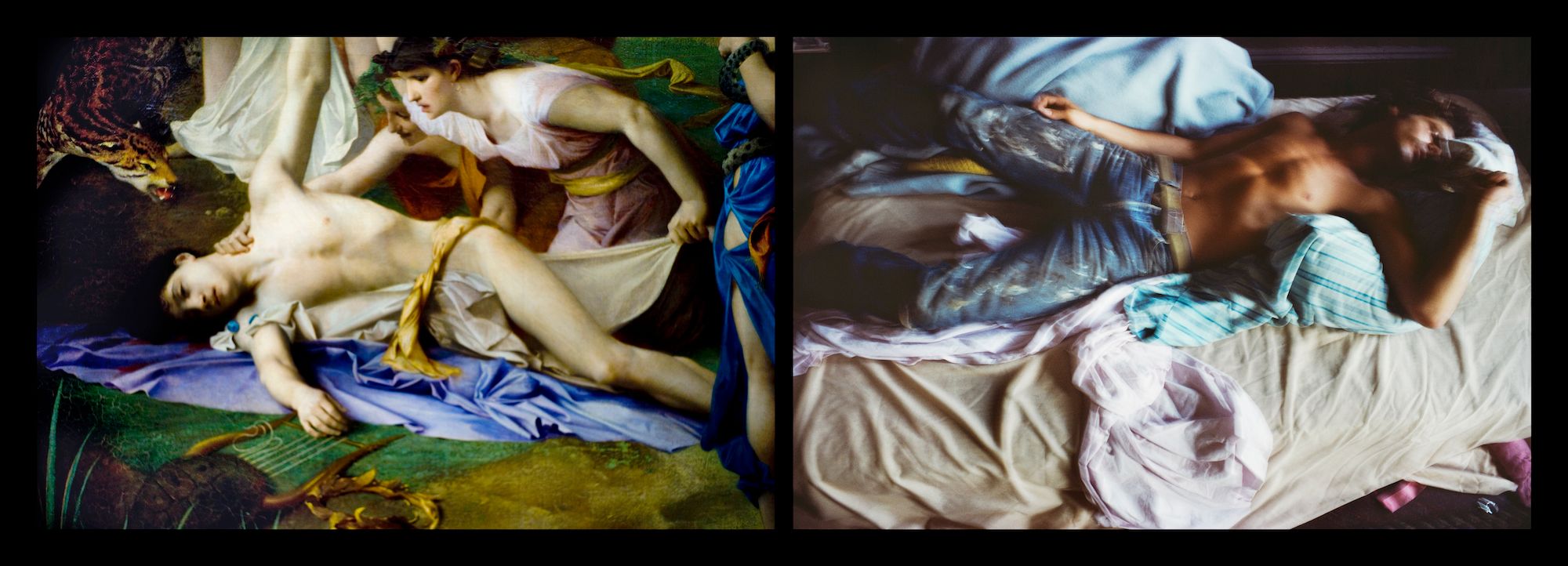
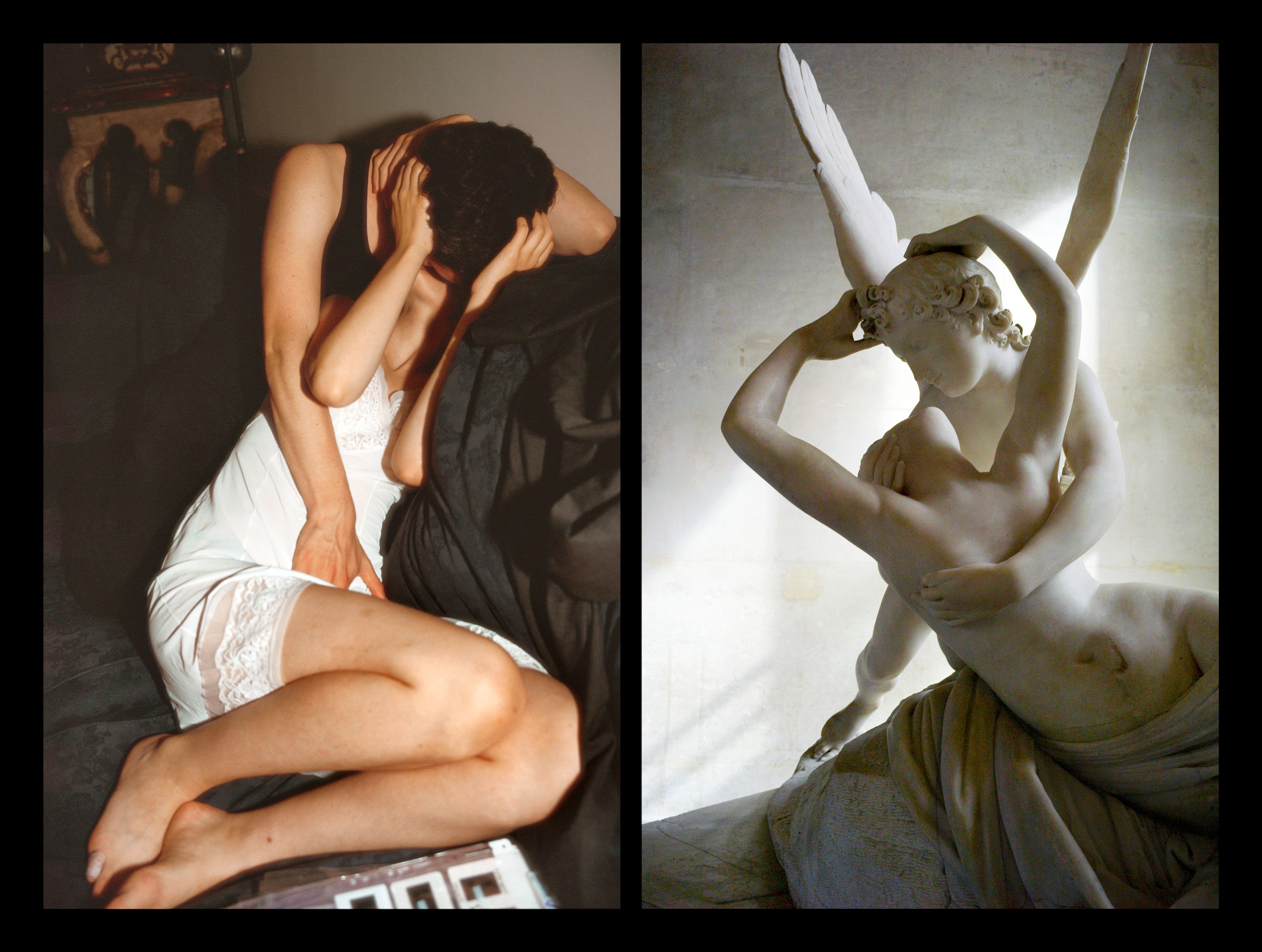
Nowhere can this shift be seen more than in the return of Nan Goldin, who first showed The Ballad of Sexual Dependency in Arles in 1987 to a mixed reception. This year, she returns as laureate of the 2025 Kering Women In Motion Award, with her latest body of work ‘Stendhal Syndrome’ (2024) anchoring the festival’s programme.
Accepting the award, Goldin told a packed audience at the Roman-era Théâtre Antique about the difficulties of coming up in a time of sexist male gatekeepers. ‘We’ve proved them wrong. In fact, women have an empathy and compassion and sensitivity that shows in their work. Men have it too sometimes. But it’s native to women I believe.’
For Simon Bainbridge, former editorial director of Magnum Photos and now a noted independent publisher, Goldin’s reappearance is symbolic. ‘Goldin has long served as a lodestar for a certain kind of photographer—often the first indication that there was more beyond the mainstream,’ he said. ‘To me, that makes her the Grande Dame.’
The leading Dutch photographer Sophie Ebrard also observes a marked change in perspective. ‘I see more women represented now,’ she told Ocula. ‘It’s not just a trend. It’s an active representation of both genders. And that is great to see for me. It was definitely not like that a few years back.’
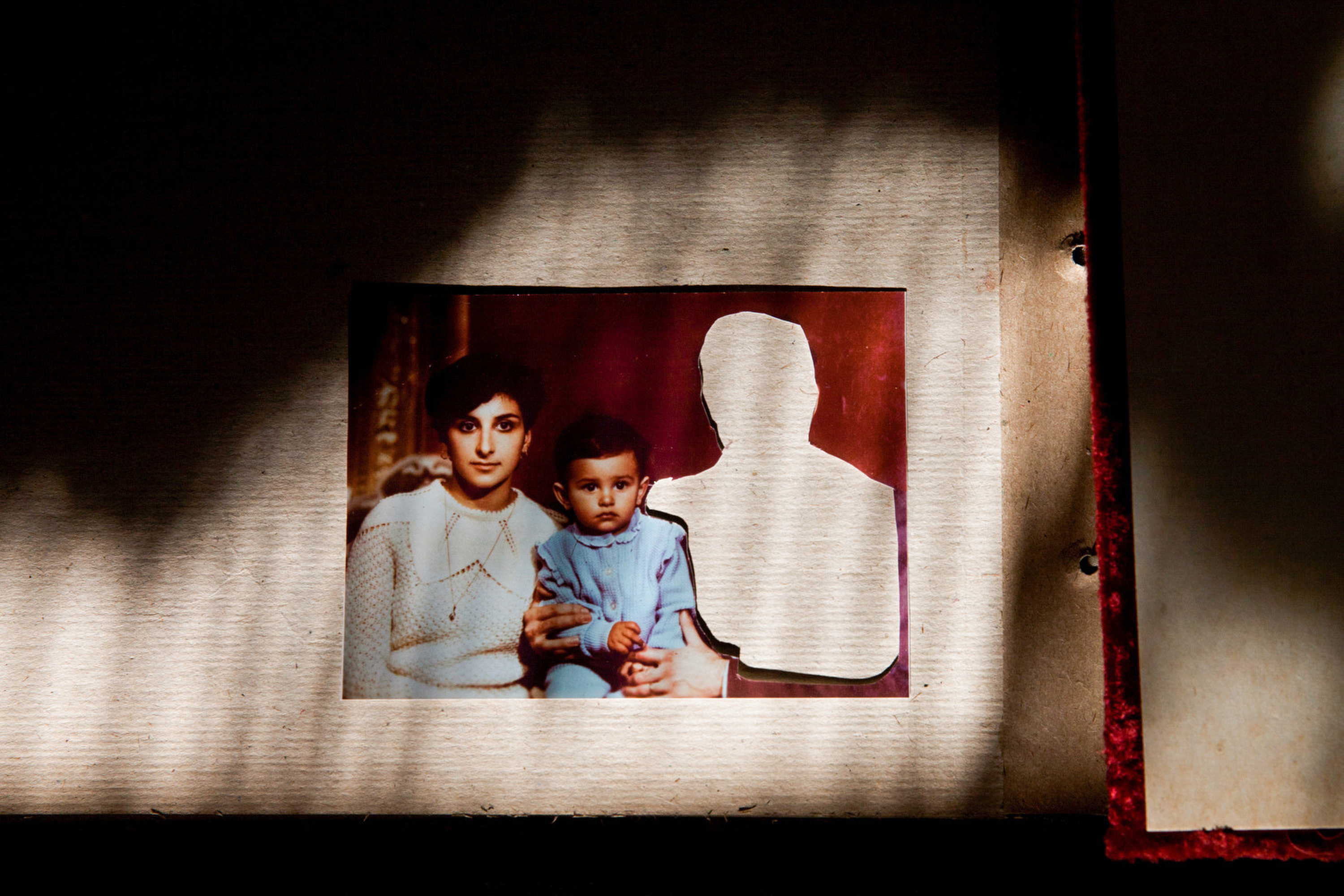
Other headline shows include Diana Markosian’s Father, which uses photography, poetry and film to reconstruct her family’s migration story from post-Soviet Russia. Keisha Scarville’s Alma meanwhile turns the mourning process into a visual poem through her mother’s clothing and personal effects.

But this edition of Arles is not a showcase of American dominance, photography specialists note. It is instead a meditation on the country’s internal divisions and fractures.
‘These American photographers are here, in part, to bring a critical point of view upon their own country,’ Bainbridge said. ‘Their work isn’t triumphalist—it’s intersectional, introspective, and often deeply political.’
A similar lens is used on the retrospective of Louis Stettner, titled The World of Louis Stettner (1922–2016). The Brooklyn-born, Paris-based photographer moved between American street photography and European humanist traditions, leaving behind a body of work that remains deeply attuned to the mundane poetics of everyday life.
‘Stettner’s images convey a deep sensitivity to social realities,’ Bainbridge said. ‘[This exhibition] proves there’s still room for rediscovery in classic street photography.’
But, beyond the headline exhibitions, questions of market visibility and commercialism are never far from the sunny surface in Arles.

From Arles to Eternity
Karlijn Bozon, co-founder of Amsterdam’s Homecoming Gallery, said Arles is a ‘key stepping board’ for artists looking to enter the ecosystem of institutions, galleries and fairs.
‘Just like in music or other forms of art, you can see waves of certain types of work flow from the festival. Arles is part of the collective memory of the photography community.’
At Lee Ufan Arles, the exhibition Something Moves by Caroline Corbasson, whose interlacing of film, photography, drawing, and sculpture created during a residency at the space last winter, positions her as one of the key emerging voices from the Parisian contemporary art scene.
Sophie Ebrard said an Arles showing puts artists in a heavyweight class. ‘If you have been exhibited in Arles, you’ve made it. It’s a stamp of approval and a point of entry to museums and institutions. It gives permission to collectors to invest in the photographer without much risk.’
Estes offered a more tempered view: ‘It’s still a great meeting place, but it was once only for the industry. Now collectors come to Arles. This has happened alongside the rapid gentrification of bars, hotels, restaurants. It feels like the city has lost its grit and the surprise element of artists and work.’
For Goulder, Arles’ photobook ecosystem is a more accurate indicator of future value. ‘For me, the best new voices are found in books and zines, before they’re pinned to a white wall,’ he said. ‘I would head to the Arles book fair first. That’s where you find the real, agenda-free discovery.’
His pick from this year? ‘Eloïse Labarbe-Lafon,’ he said. ‘No one else is making quite what she is. I’d be surprised if bigger things didn’t follow.’
Amid this fluid and experimental landscape, which artists are most likely to gain long-term institutional or market traction?
‘Diana Markosian is still young, and hardly a secret,’ said Bainbridge. ‘But I think she is one of the leading photographers of her generation. Her stock will only continue to rise.’
Bainbridge also points to Agnès Geoffray, whose ghostly reconstructions of France’s reformatories for girls ‘deserve a wider audience outside of France’. And among the emerging generation, his pick from the Discovery Award section is Julie Joubert.
‘These are not market darlings in the traditional sense—but they are institutional bets: artists whose work blends form and theme with nuance and longevity,’ he said.

A Global View
Michael Benson emphasised that this year is not typical—and Arles is increasingly moving its focus from Europe and America.
‘The festival has always played an important role in showcasing the vibrancy in important new territories such as Latin America and Iran,’ he said, adding that this year maintains an interesting focus on Australia and Brazil.
The title of this year’s edition—Disobedient Images—points to photography’s unique ability to voice defiance. Whether in Goldin’s confrontation, Scarville’s mourning, Stettner’s empathy, or Markosian’s excavation of memory, American artists at Arles 2025 are not staging a victory parade. They are probing the conditions of their own country and complicating its image abroad.
As Christoph Wiesner, artistic director of Rencontres d’Arles, wrote in introduction to the festival: ‘Photography is envisioned as an instrument of resistance, testimony, and social transformation.’
Arles, enduringly, is where that resistance takes form. In the books, the streets, the white cubes, and the conversations, America may be front and centre—but it is being shown, shaped, and scrutinised like never before. —[O]
Rencontres de la photographie d’Arles runs from 7 July through 5 October 2025.
Editor’s note: This article was updated on 14 July 2025. Louis Stettner’s birthplace was erroneously stated as the Bronx, instead of Brooklyn.
Main image: Louis Stettner, Nancy Playing with a Glass, Nancy, the Beat Generation series, New York (1958) (detail). Courtesy Louis Stettner Estate.


A respected voice in contemporary art discourse.
Focusing on ambitious storytelling and insightful art-world commentary. Ocula Magazine publishes in-depth interviews, critical essays and timely analysis on the artists, exhibitions and ideas driving the global art world.
Learn more about Ocula Magazine
Showcasing the best of the art world.
Ocula partners with galleries from around the world to highlight their artists, artworks and exhibitions. Gallery membership is by application and invitation, with each member vetted by an independent panel.
Learn more about Ocula Membership
Specialises in the sale of major artworks.
Led by a team with deep ties to the world’s leading auction houses, galleries and collectors. Ocula’s advisory team offers bespoke services to high-net-worth clients from around the world who are looking to acquire the best of contemporary and modern art.
Learn more about our team and services