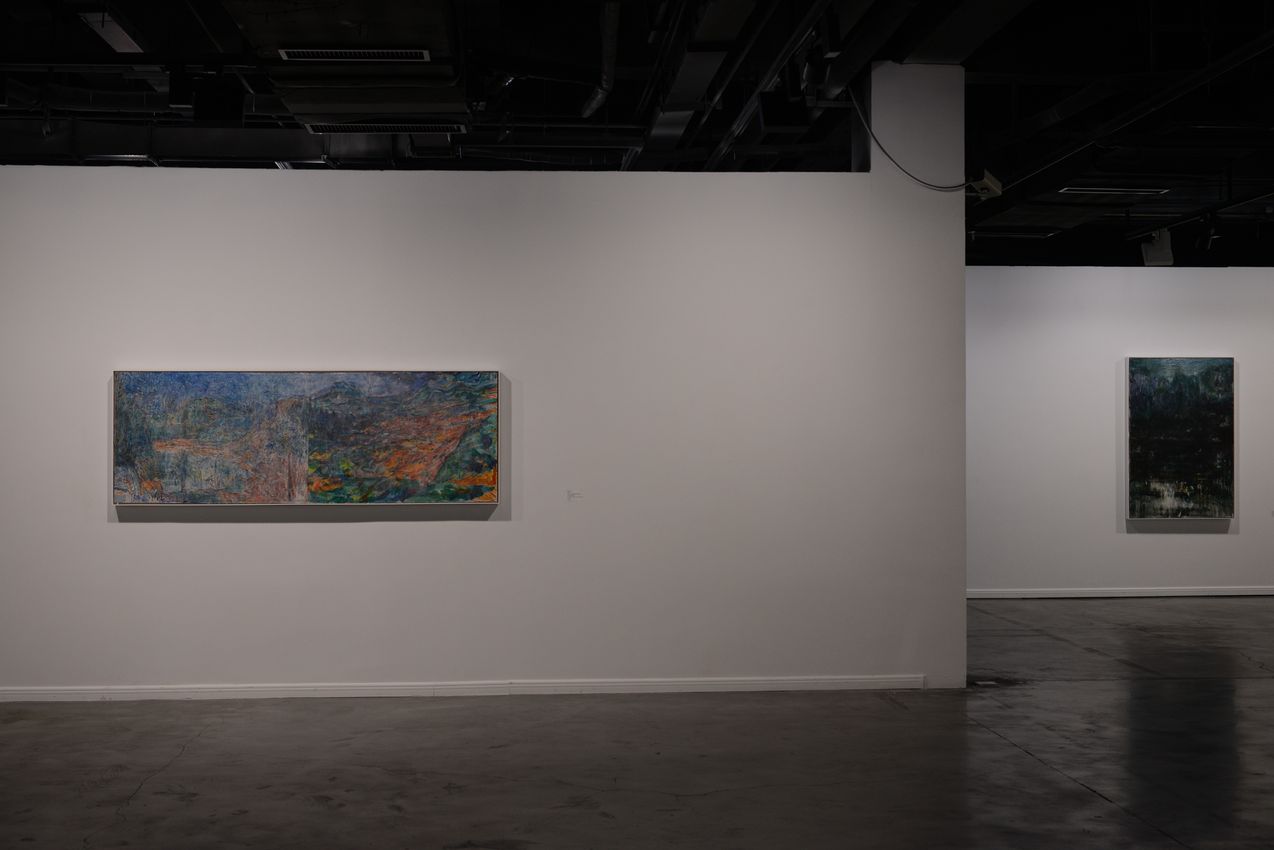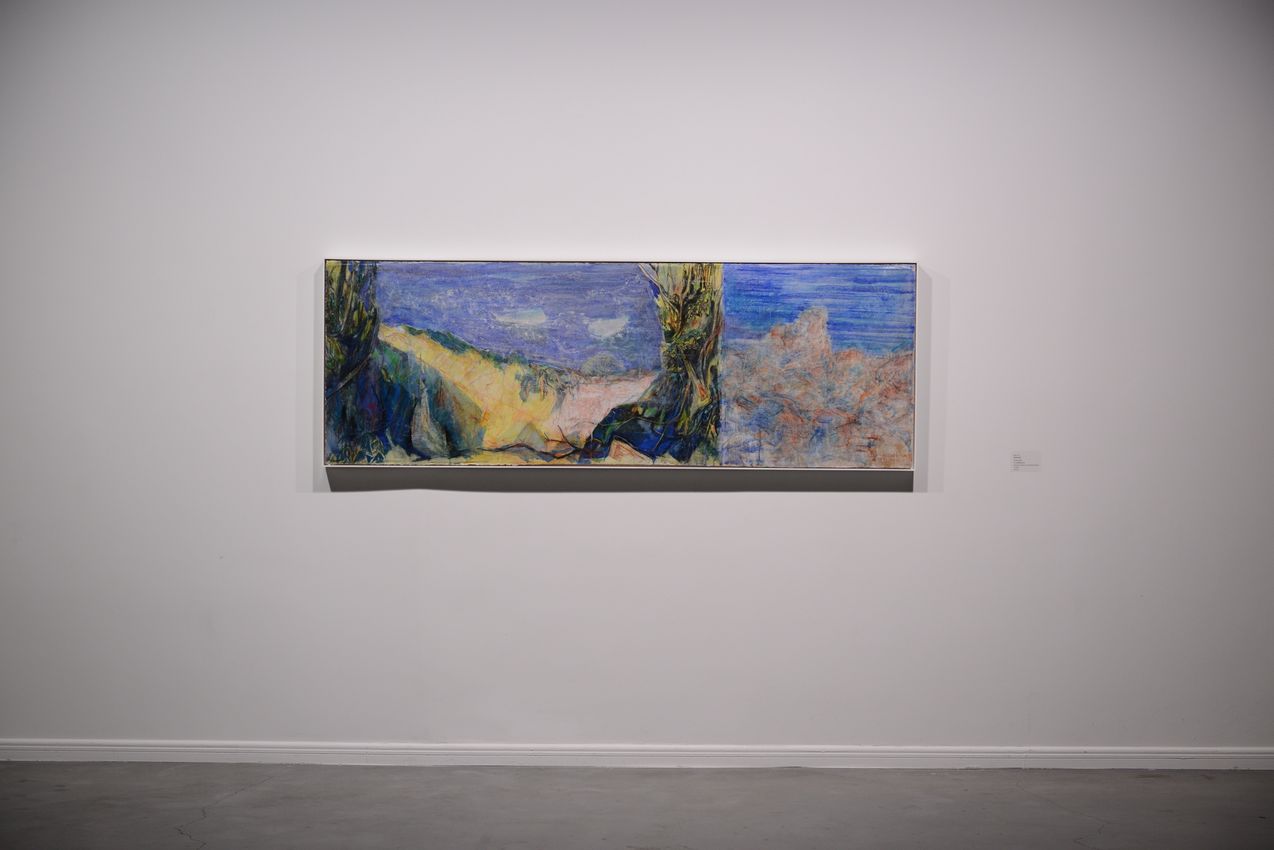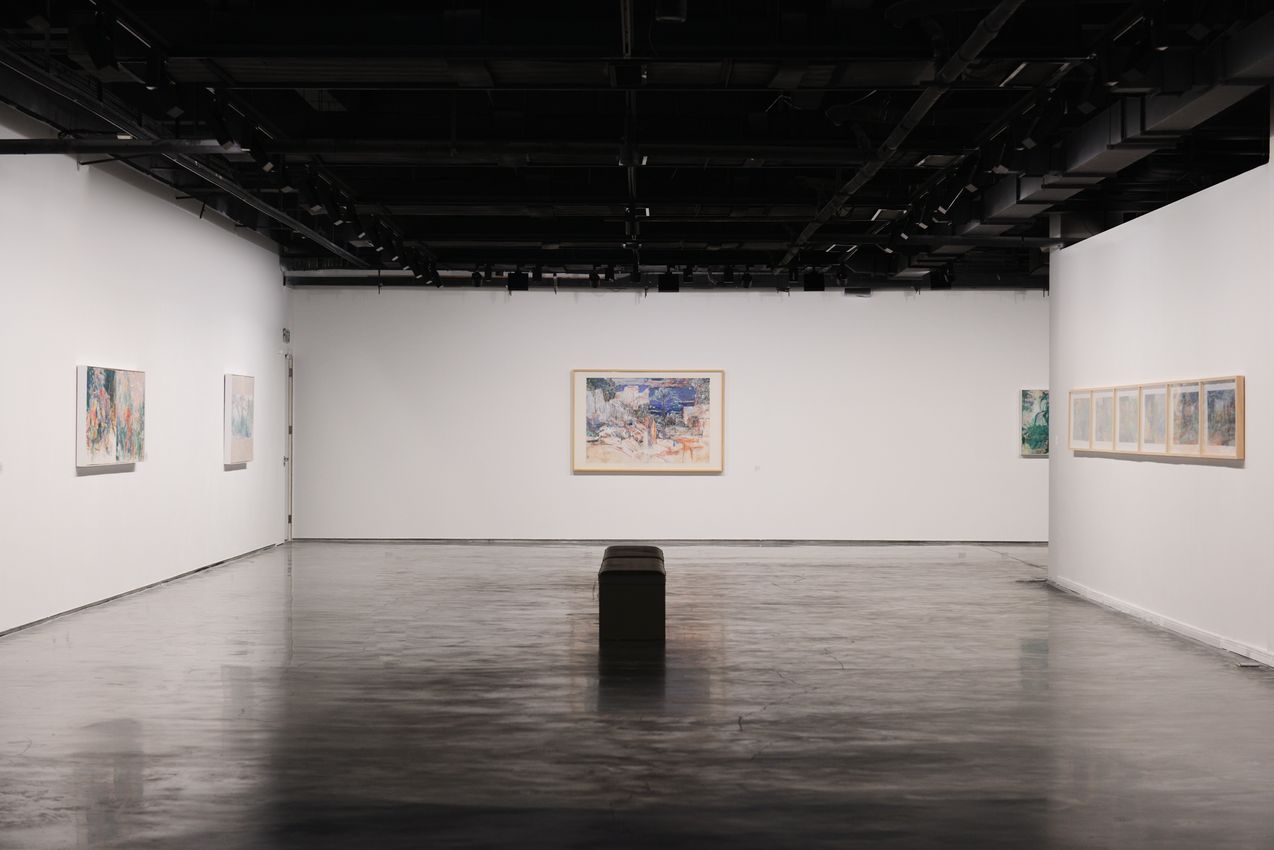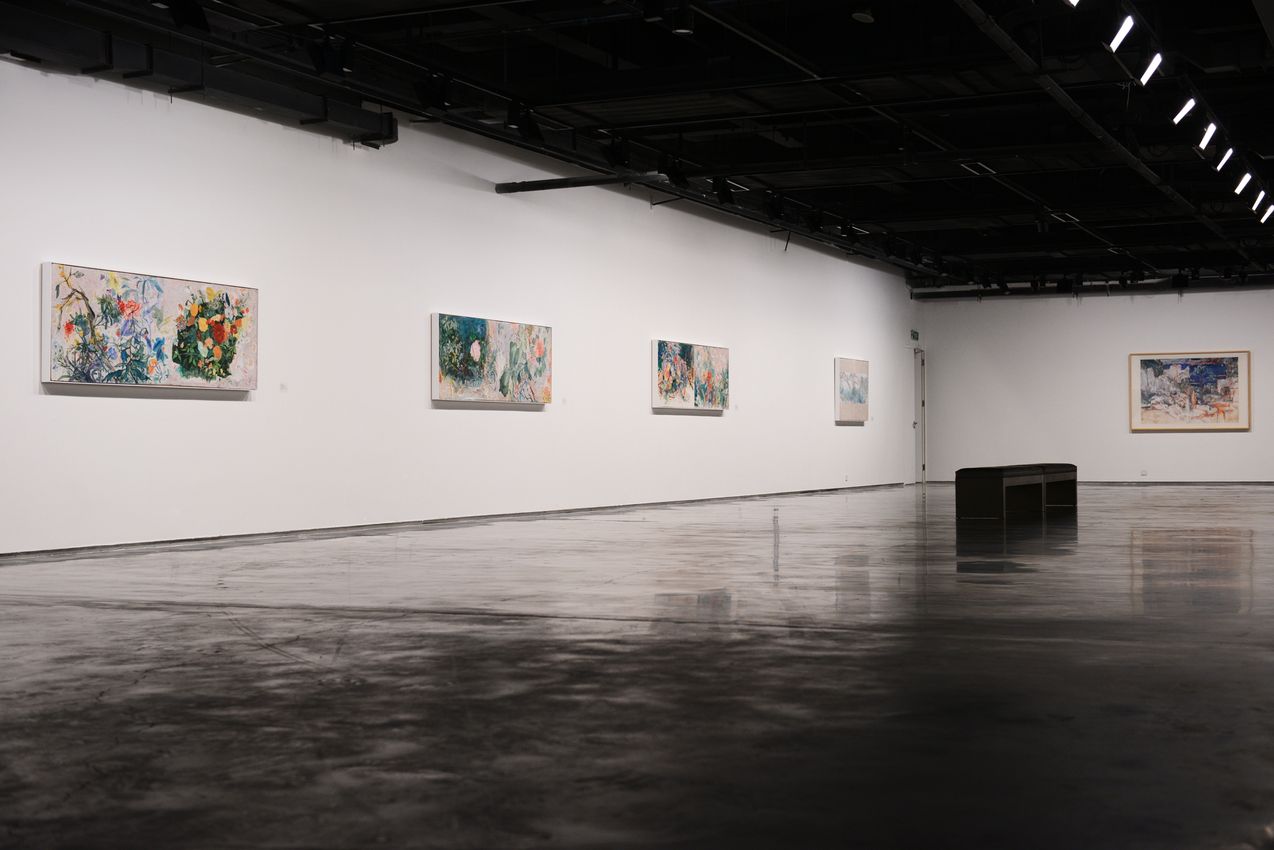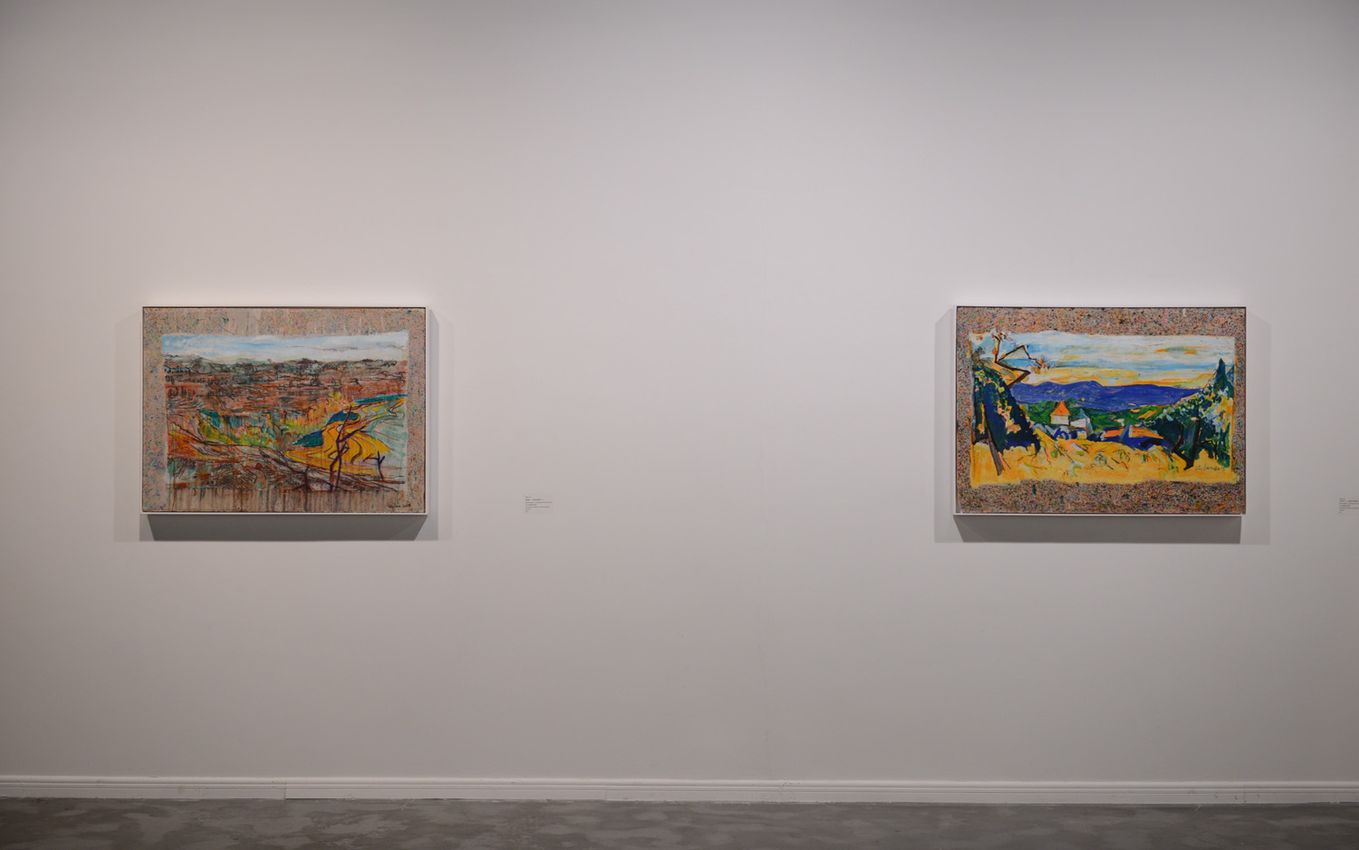
Qi Lan has studied traditional Chinese painting since a very young age, and his extensive reading has brought him a good knowledge on arts and philosophy of both China and the West. Before he started painting with mixed media on canvas, he has already been a well-known art critic on contemporary art and Chinese and western ancient painting. He believes that the best way to engage in art is to do experimental painting, which shows his ingrained rebellion in breaking art stereotypes and making art adventures.
Qi Lan has gone through the identity changes from an artist to a journalist, to a critic, and then back to an artist again. Many of his works are related to his readings. Through reading extracts of selected works, he draws inspirations in communicating and even arguing with the classical painters and works in art history in order to construct his specific painting languages.
Qi Lan’s artistic creation is an action of painting under oppression, and a practice of both intricate thinking and visual experimentation. The traditions that he chooses to accept or reject, is the source and material of his creation. He dialogues with the classics in a way of making queries and innovations instead of following them faithfully. He pursues the integrated artistic expression of painting, which demands not only great patience, but also the subtle artistic intuition at his disposal. His painting process is like setting up dominoes and pushing it over again and again, producing countless variables and moving on with interrupts and meanders. Qi Lan is both an artist and a critic. He criticises and challenges not only the outside world but also the numerous anchor points in his knowledge, experiences and thoughts. His art is exactly the externalized visual representation of those anchor points.
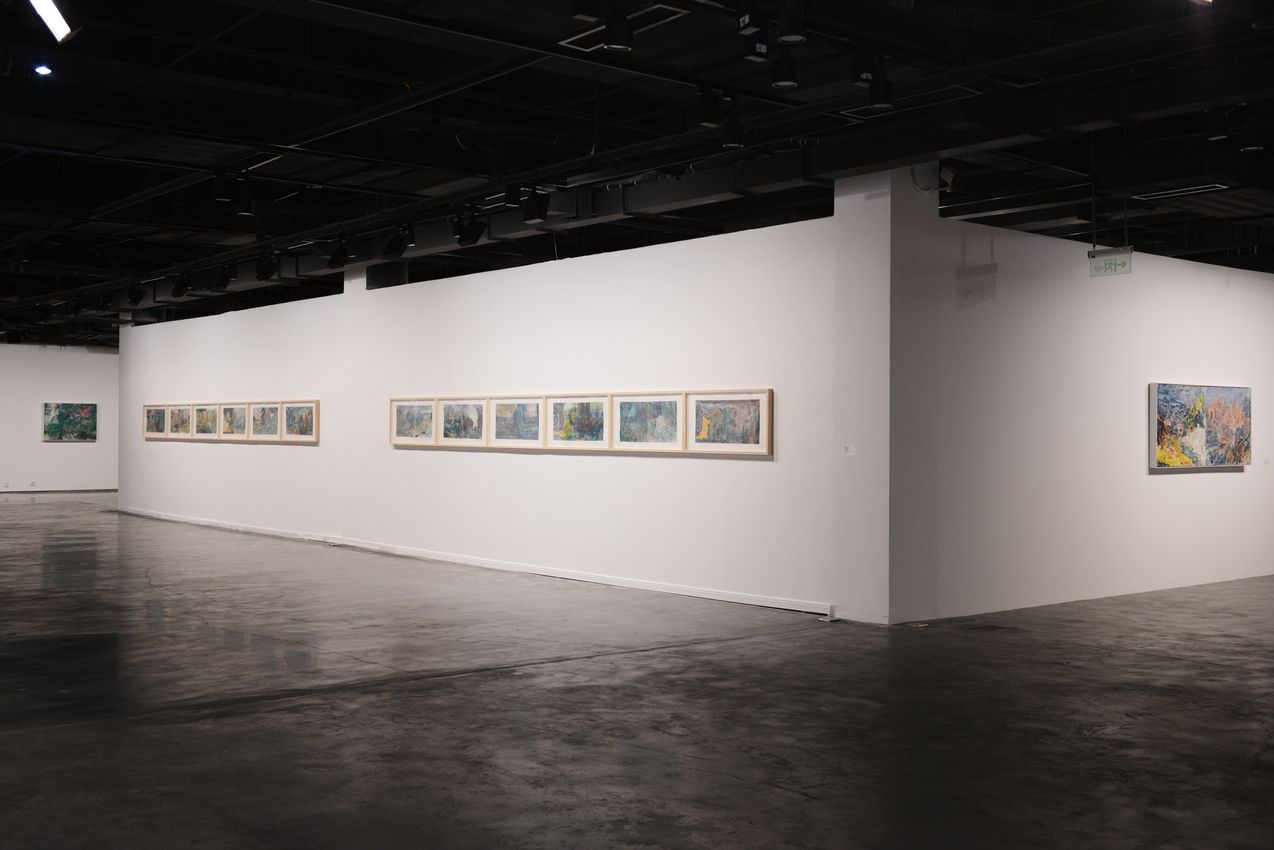
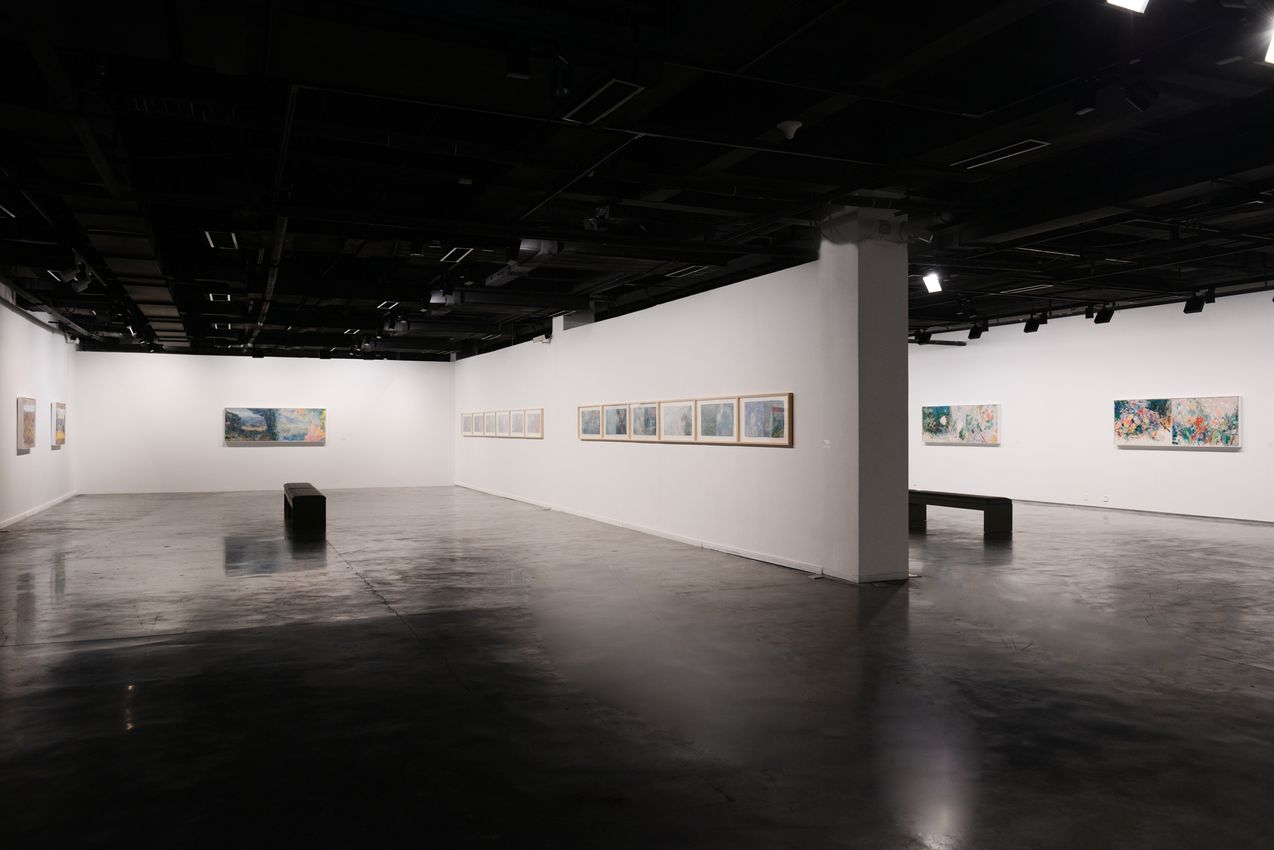
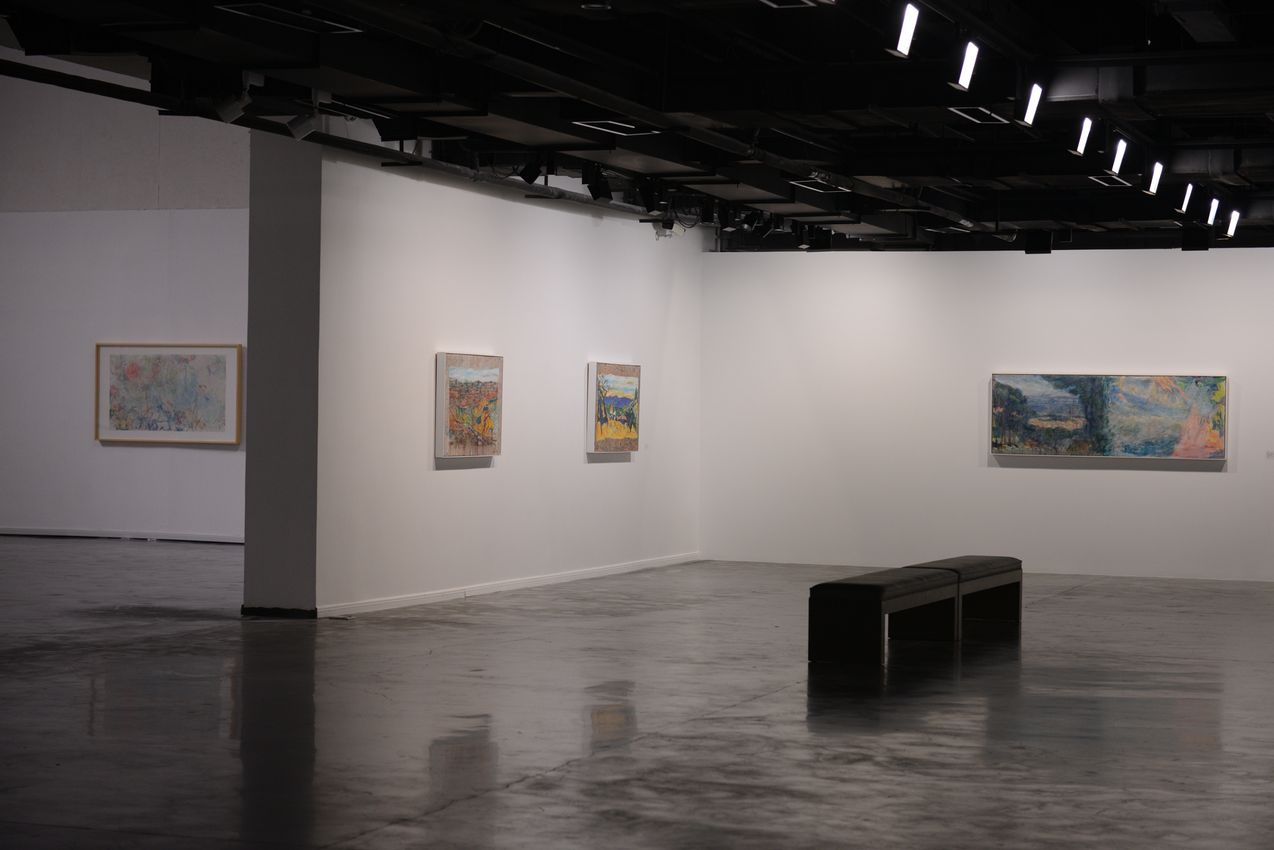
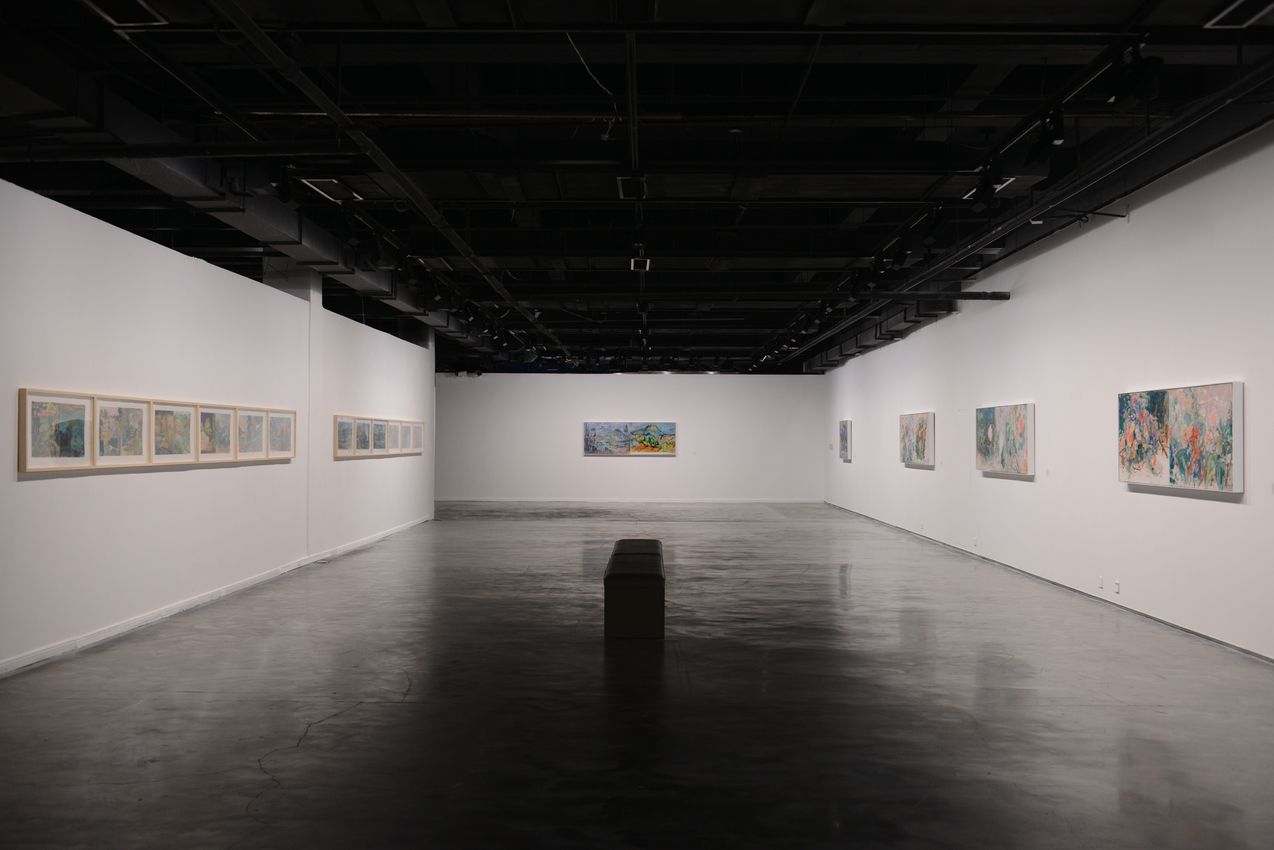
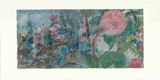
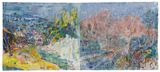
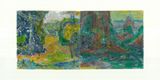
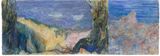
Colours and density are extremely significant in the change of Qi Lan’s new works. They reveal how an object, a figure and a space are multi-dimensionally constructed and how they are penetrated, extruded, dispelled and then finally complete the meeting and parting with other objects, figures and spaces. Many of these paintings,as they have been washed and soaked by plaster water, have mottled backgrounds. The whitish grey strokes splash and flow on paintings, and converge with the colourful acrylic, oil painting sticks and pastels,making waves of brilliant colours surging upward. The vanishing instants are given tangible forms as the expanding and overlaying brushworks try to transcend the exhaustion of time with short and strong rhythm. Qi Lan is obsessed with expressing the vast nihility beyond images. He seeks languages greater than image itself. The layers of space he pushes through is in effect an intricate and flowing spiritual world.
Qi Lan is deeply convinced that inner visual sense is an eternal variable, and he rejects any stylized and formalised painting languages. He keeps progressing on the route of the unfinished present, repudiating the past and seizing the present simultaneously. Vice versa, the past is reused to develop the ideas about the present. Every scene and instant under his brushes connects the past and the future closely.
Qi Lan was born in Anyue County, Sichuan Province in 1973. In 1996, he graduated with a Bachelor’s Degree in the major of Chinese Traditional Painting from the Academy of Fine Arts at Southwest Normal University. In 2001, he graduated from the Department of Chinese Traditional Painting at Nanjing University of Arts, with a Master’s degree in Fine Arts. In 2007, he began to study with Professor Wang Mengqi as a PhD candidate in Fine Arts. Currently he is living and working in Shanghai as an editor of Art China. His important exhibitions in recent years include: He Gong and My Friends, A Thousand Plateaus Art Space, Chengdu, China (2014) / Bye, Mr. Dong Qichang - Qi Lan Solo Exhibition, A Thousand Plateaus Art Space, Chengdu, China (2013) / The 8th International Ink Art Biennale of Shenzhen, Guan Shan Yue Art Museum, Shenzhen China (2013) / 2013 Autumn Art Works Exhibition, A Thousand Plateaus Art Space, Chengdu, China (2013) / Uninhibited Scenery, A Thousand Plateaus Art Space, Chengdu, China (2011).
Qi Lan was born in Anyue County, Sichuan Province in 1973. In 1996, he graduated with a Bachelor’s Degree in the major of Chinese Traditional Painting from the Academy of Fine Arts at Southwest Normal University. In 2001, he graduated from the Department of Chinese Traditional Painting at Nanjing Arts Institute, with a Master of Arts Degree. In 2007, PH. D. Candidate of Professor Wang Mengqi in Fine Arts. Currently he is living and working in Shanghai as an editor of Art China.
A Thousand Plateaus Art Space was founded in 2007 in Chengdu, China. It is a professional gallery committed to present and promote China’s contemporary art. Equipped with exhibition hall for artworks and collection and screening room for video data, it is mainly on researching, presenting and promoting outstanding works and experimental projects of China’s contemporary art and culture, actively carries out domestic and international cooperation projects.

A respected voice in contemporary art discourse.
Focusing on ambitious storytelling and insightful art-world commentary. Ocula Magazine publishes in-depth interviews, critical essays and timely analysis on the artists, exhibitions and ideas driving the global art world.
Learn more about Ocula Magazine
Showcasing the best of the art world.
Ocula partners with galleries from around the world to highlight their artists, artworks and exhibitions. Gallery membership is by application and invitation, with each member vetted by an independent panel.
Learn more about Ocula Membership

Specialises in the sale of major artworks.
Led by a team with deep ties to the world’s leading auction houses, galleries and collectors. Ocula’s advisory team offers bespoke services to high-net-worth clients from around the world who are looking to acquire the best of contemporary and modern art.
Learn more about our team and services