Press Release

From Addis to Kampala: A Sensory Geography\, Fiker Solomon’s first solo exhibition, is a meditation on nature, place, and transformation. It all began with the artist’s personal journey of relocating from her hometown, Addis Ababa, Ethiopia, to her current chosen home in Kampala, Uganda. While this movement was, on the surface, a change of location, it was felt more deeply as an internal shift that inspired the works in this exhibition.

Moving away from her close-knit family home and living alone for the first time, Fiker encountered an unexpected kind of freedom. She discovered the time and space to experiment, to turn inward, and to move at her own rhythm. What emerged was a new sense of happiness and joy, born from slowing down, retreating into herself, and learning to create her life on her own terms.

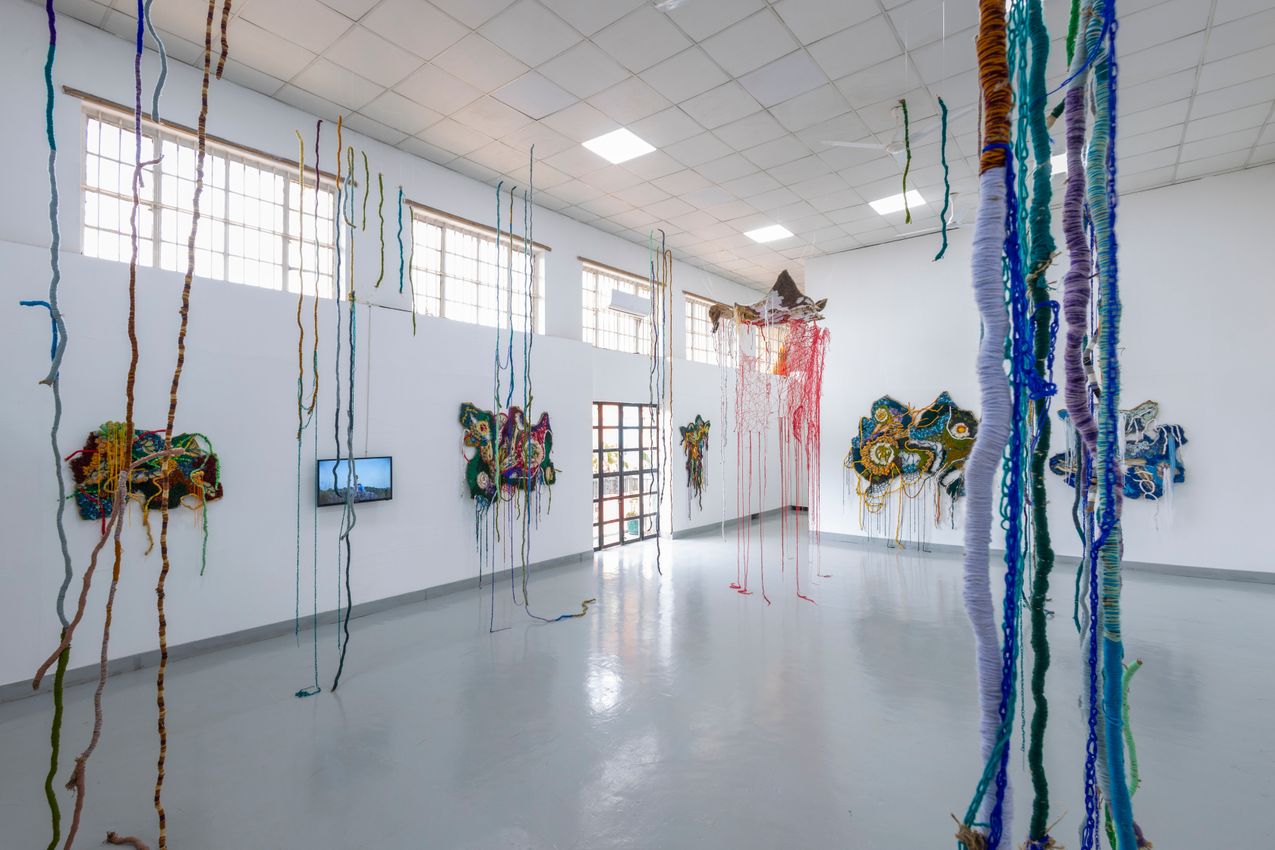
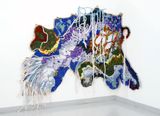
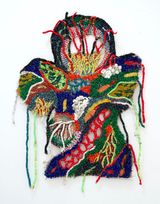
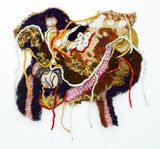
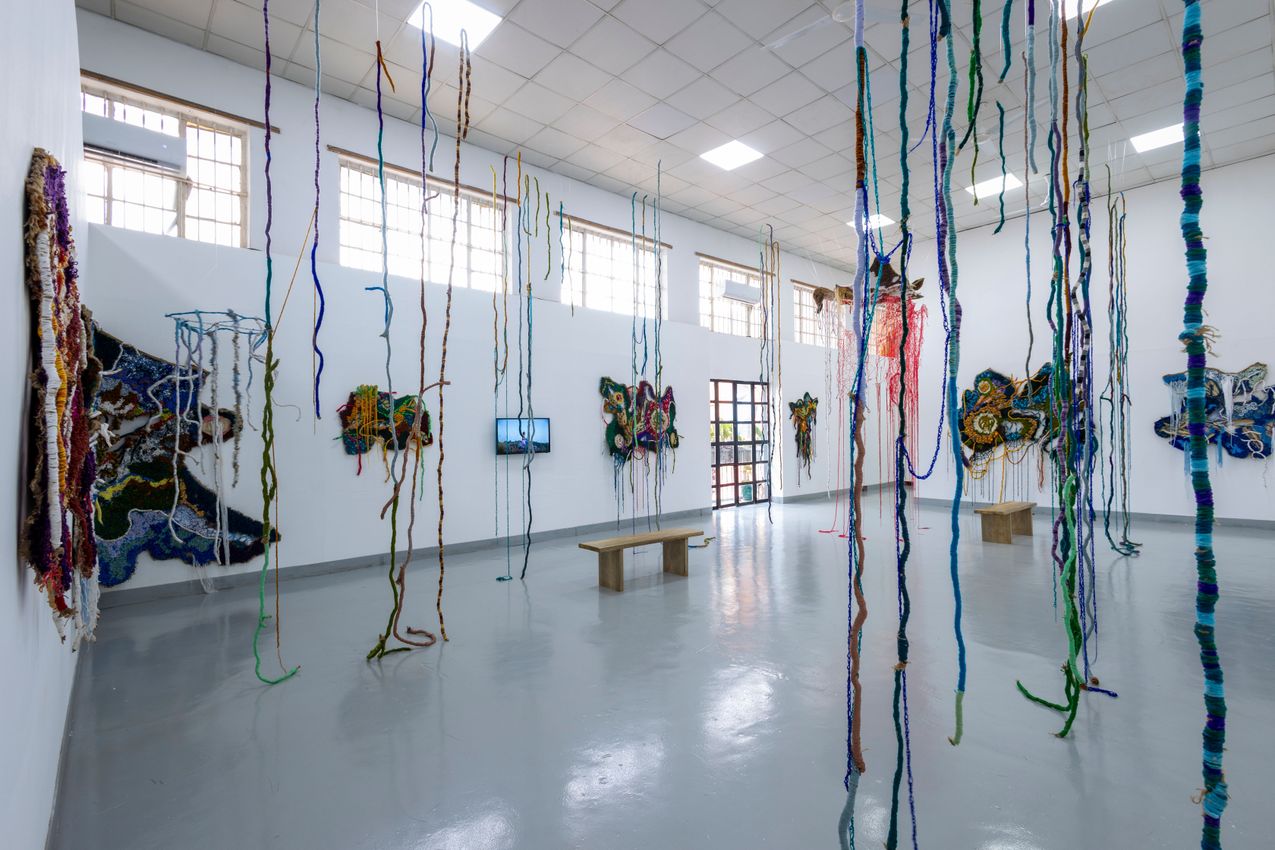
She traces her passage not through borders or routes but through shifts in colour, texture, material, and, above all, through personal evolution. In this process, nature becomes both muse and metaphor: a living archive of cycles, care, and renewal, as well as a language through which she processes her experiences. Making - the cutting, punching, stitching, crocheting and weaving together of her tapestries and installations - becomes a way of remembering and re-imagining this journey.

Through her free-motion techniques, she invites to slow down, reconnect with the earth’s quiet language, and witness how growth and healing might emerge through the veins of leaves, the twists of roots, and the flow of water. Her immersive textile works echo the rhythms of renewal and the cyclical nature of life, revealing the deep interconnectedness between ecological and emotional systems.

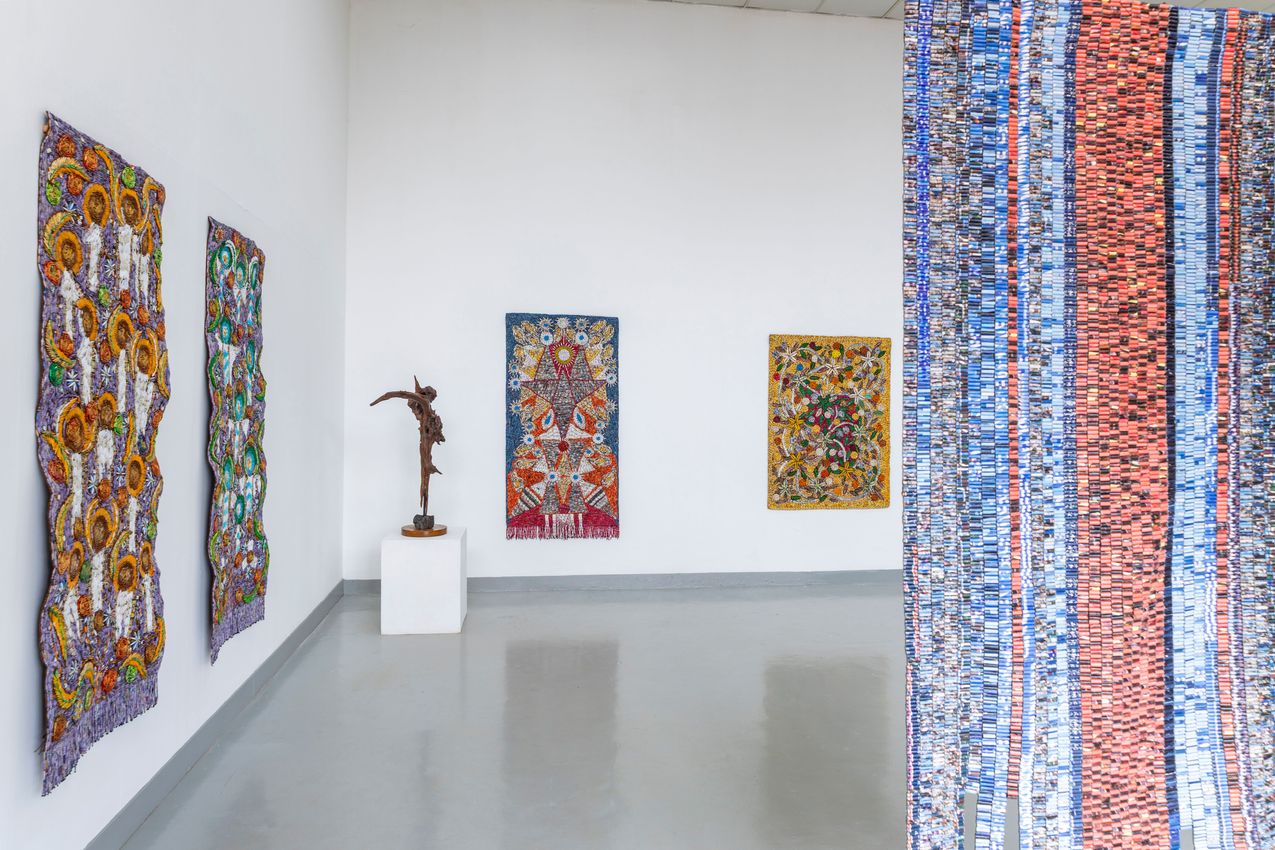
Fiker works with materials like yarns, sisal, palm leaves, raffia, natural bathing sponges (ekyangwe in Luganda) and jute sacks, each chosen for its texture and symbolic resonance. Among these, the jute sack holds a central place. In Ethiopia, jute, commonly used for packaging coffee, one of the country’s most important export crops, is often treated as something purely functional and easily discarded. In her work, the jute sack becomes a symbol of people or communities whose essential contributions are often overlooked. By reclaiming and elevating this humble material, she highlights its strength and complexity, offering a metaphor for renewal and transformation in both the material and social contexts.

“Materials are central to my practice: jute sacks embody strength and endurance; yarns carry warmth and nostalgia; palm leaves, banana fiber, and sisal narrate growth, decay, and renewal; while the Ugandan bathing sponge (ekyangwe) introduces intimacy and a sense of home.” - Fiker Solomon

It is through her intimate, material process that Fiker’s practice expands into a broader meditation on how we come to know and think about a place. Her work can be read as a sensory geography, where one engages with a place not through maps or coordinates but through an embodied, multisensory awareness shaped by cultural, social, and personal conditions. This form of engagement produces a different kind of knowledge, and Fiker’s work gives this knowledge material form. It does not attempt to depict a specific place; instead, it carries the imprint of her lived and felt experiences and invites us to feel our own way into them.

By prioritizing fluid, felt, and intuitive ways of knowing over abstract, fixed, or cartographic definitions that dictate how environments should be studied and represented, Fiker’s work gently points us toward another mode of understanding - one that is relational, embodied, and subtly decolonial.

Curated by Lara Buchmann.

Read More

Installation Views

About the Artist

Fiker Solomon explores freedom and growth—nature’s most profound gifts—through vibrant abstract tapestries. Her practice blends traditional techniques with experimental methods refined during her residency at Afriart Gallery’s Silhouette Projects. This pivotal experience allowed her to embrace creative independence and develop her signature approach: free motion, stitching, and punching.

View Artist Profile

Also Exhibiting at Afriart Gallery

About the Gallery

Founded in 2002 and located in Kampala, Afriart Gallery (AAG) is one of the leading international contemporary art galleries representing artists who live and work on the African continent. Our mission is to connect African artists to the global art market and audience, creating a fair and supportive environment where creativity thrives, and powerful ideas find their voice.

View Gallery Profile
Address
110-112 Seventh Street
Industrial Area
Kampala
Uganda
Opening Hours
Monday – Saturday
10am – 6pm
(1)
Kampala 110-112 Seventh Street, Industrial Area
Afriart Gallery
110-112 Seventh Street, Industrial Area, Kampala, Uganda

Opening hours
Monday – Saturday
10am – 6pm
The art world in focus