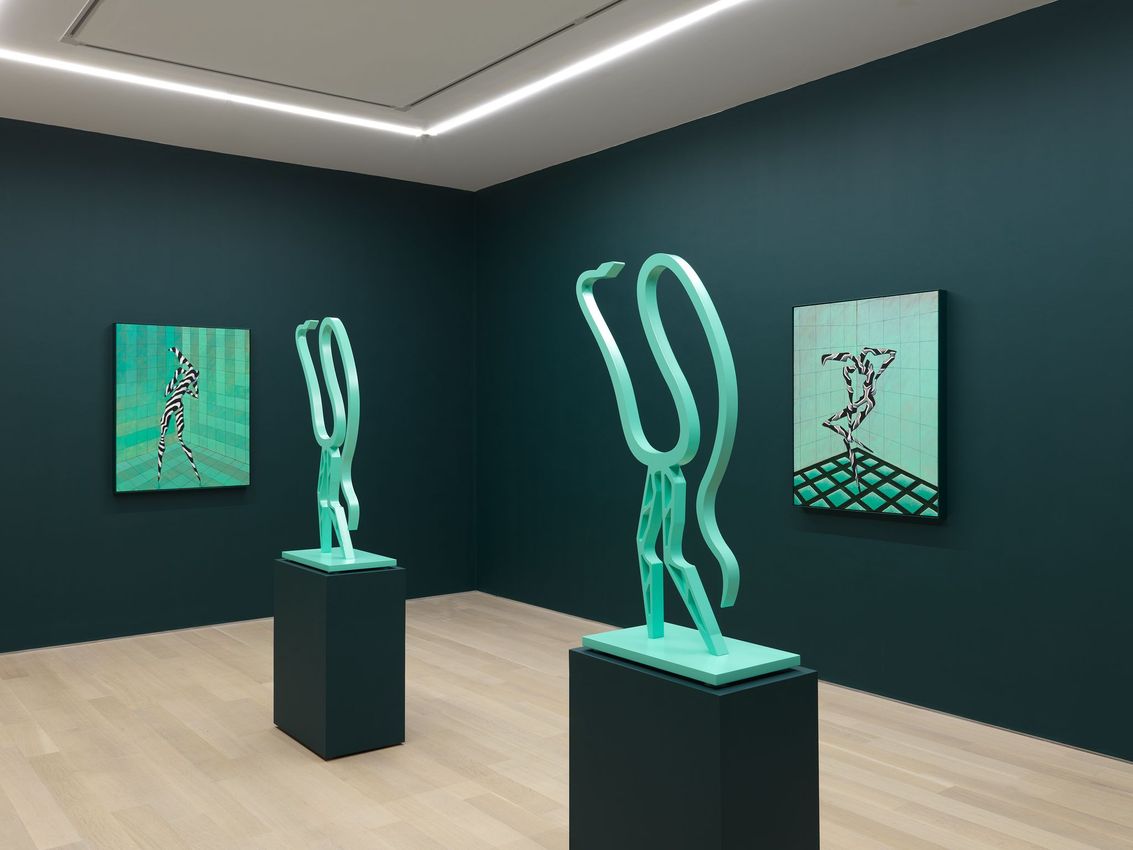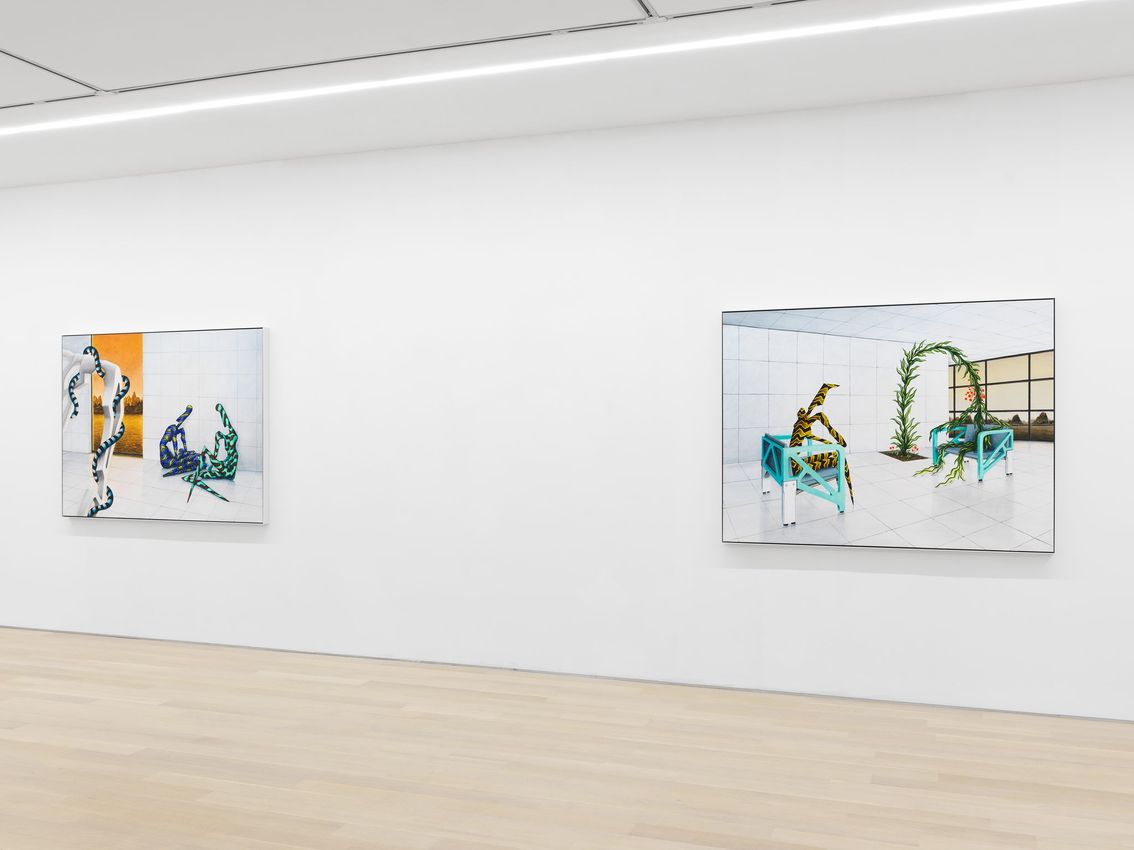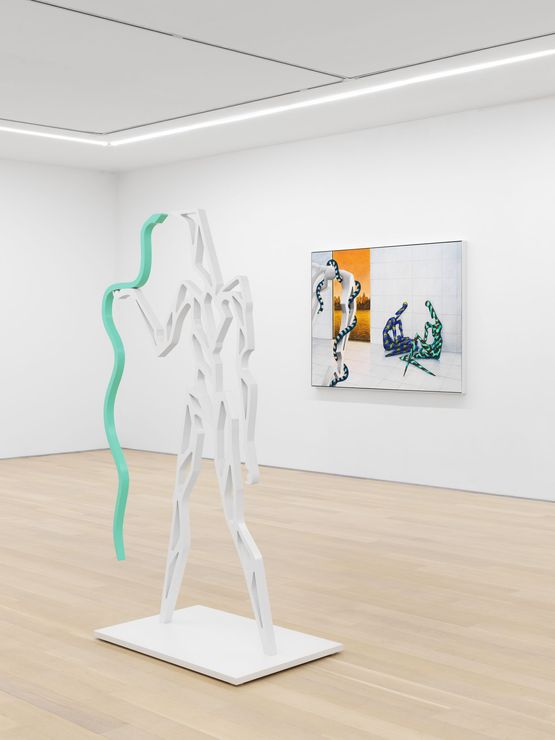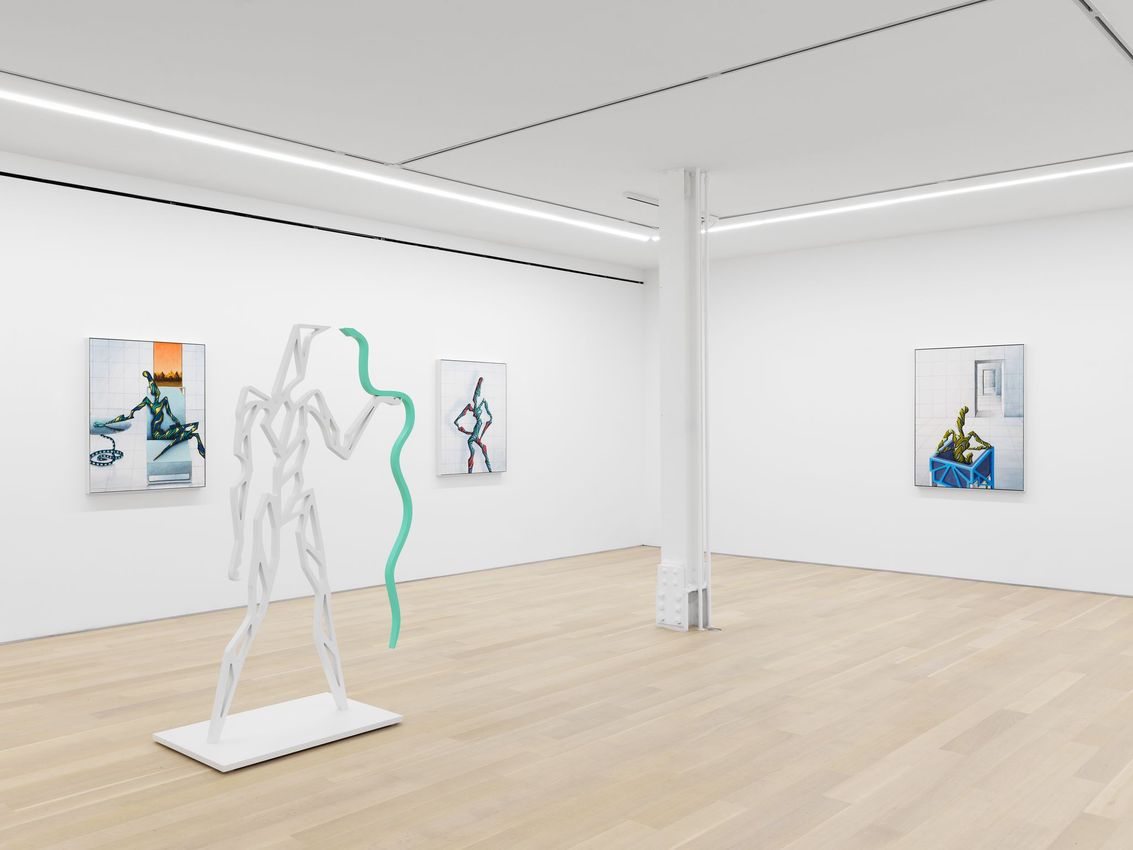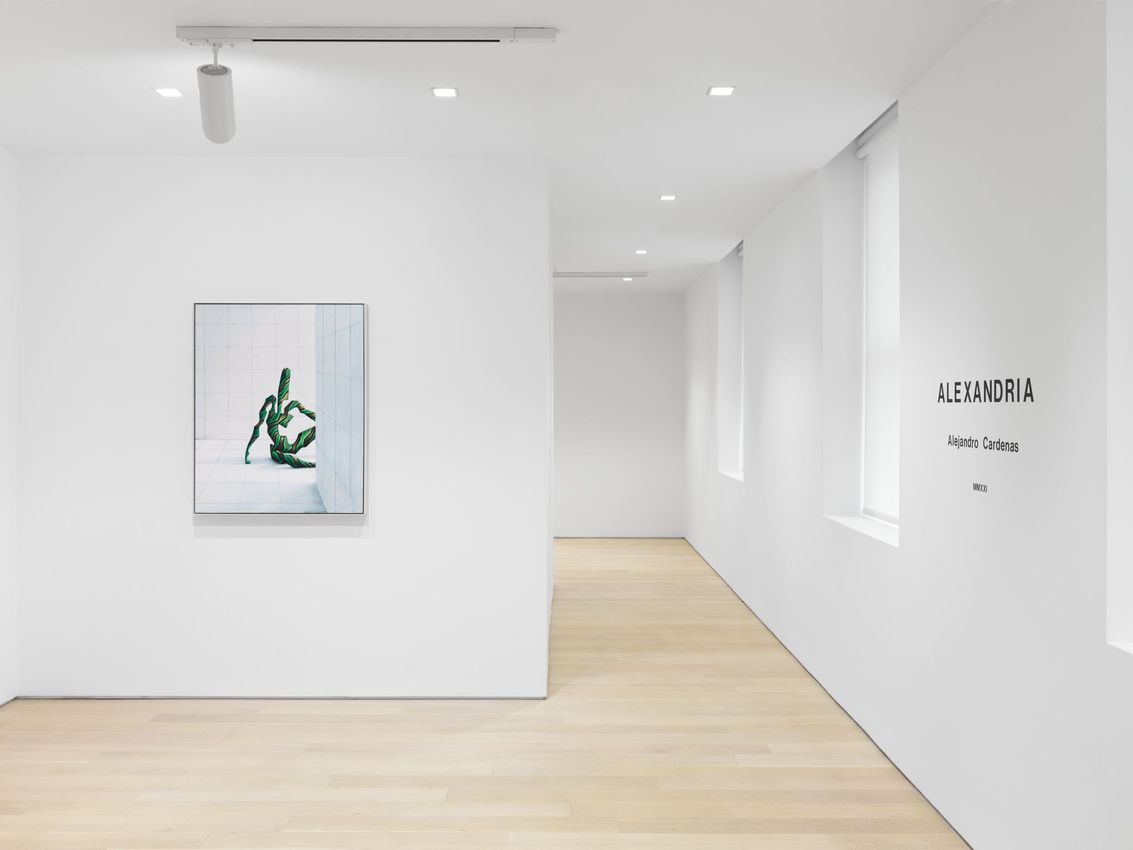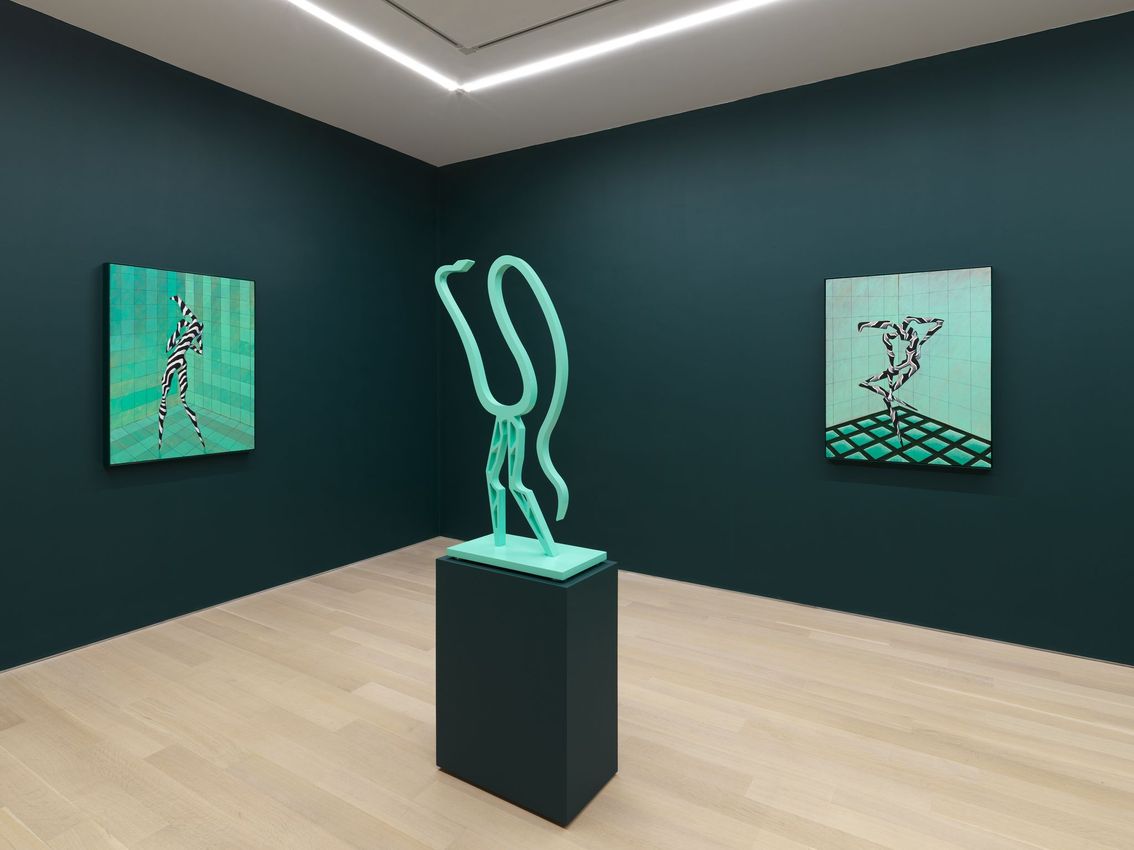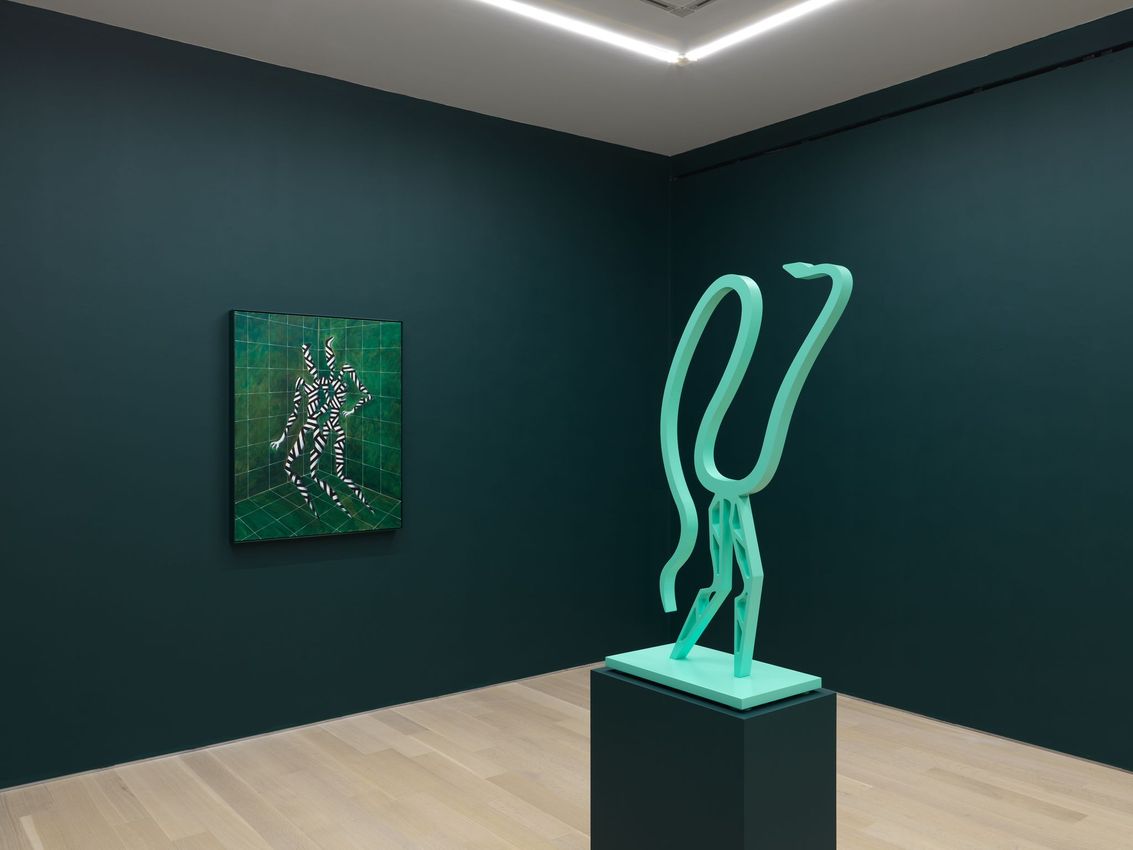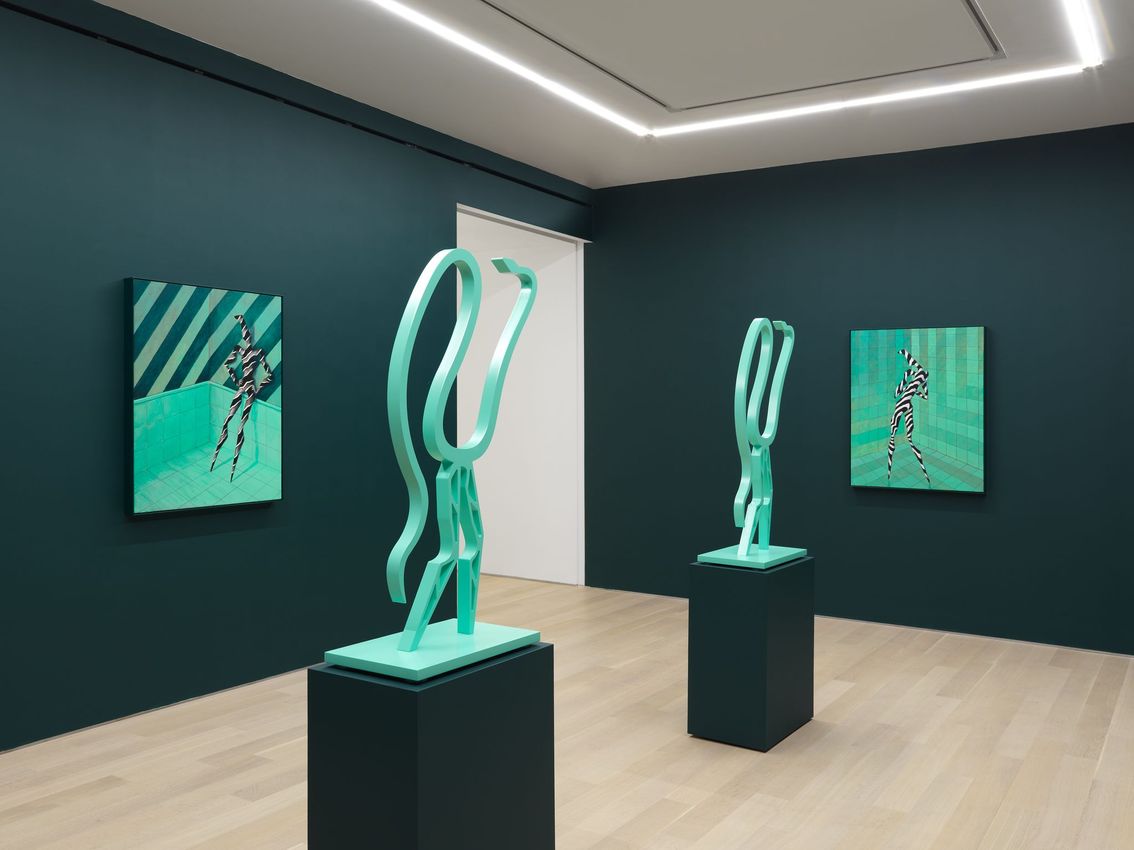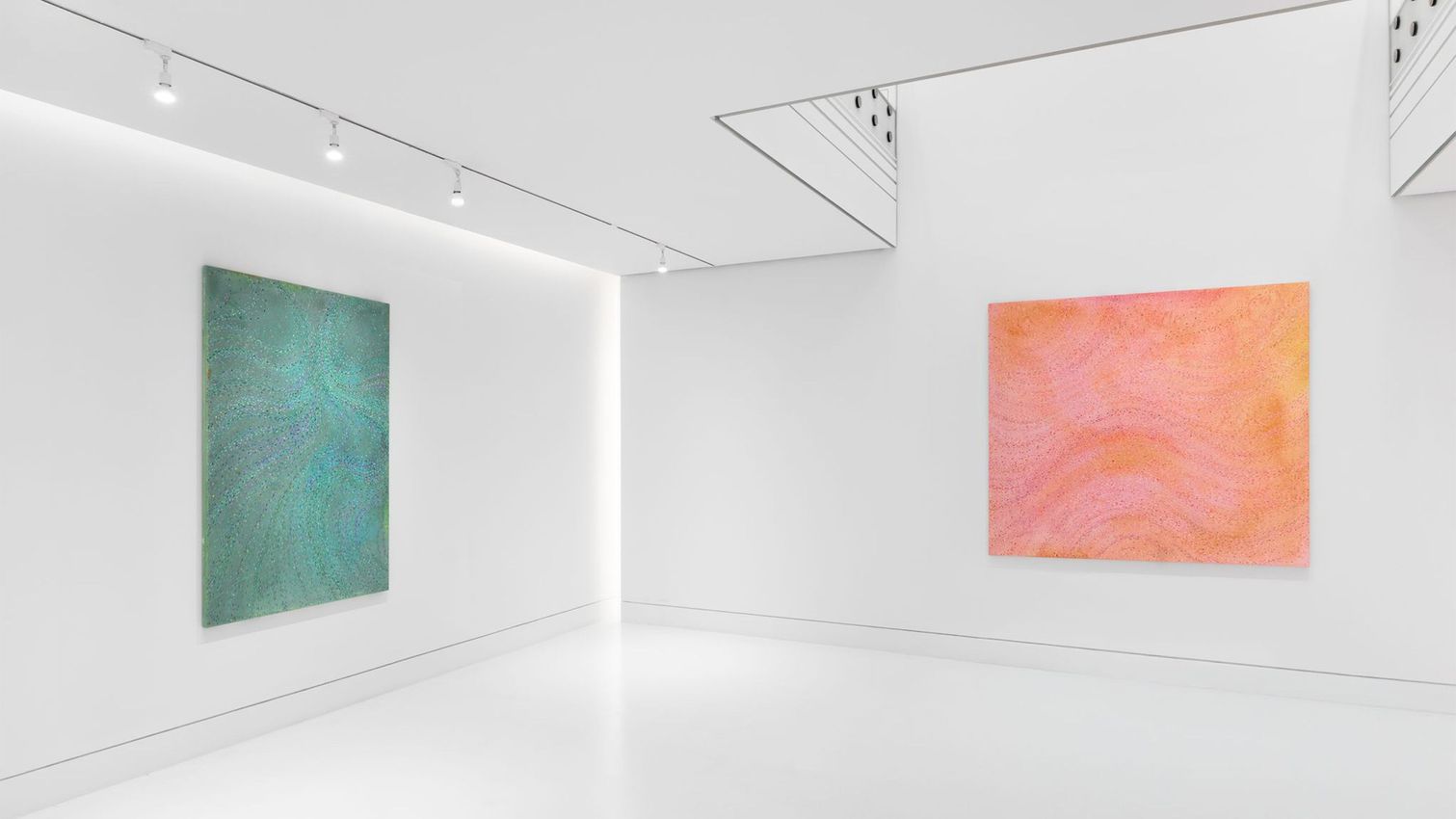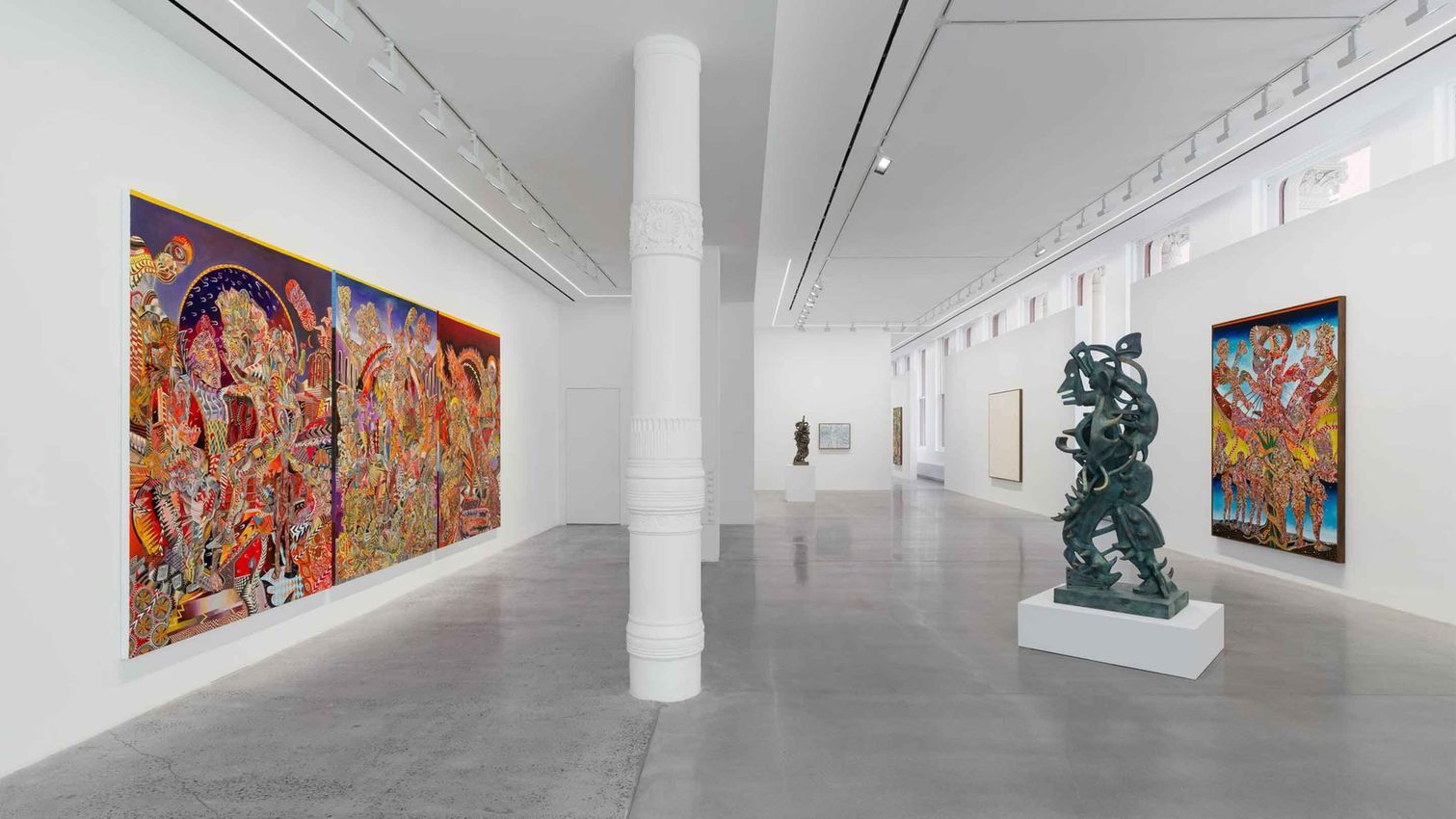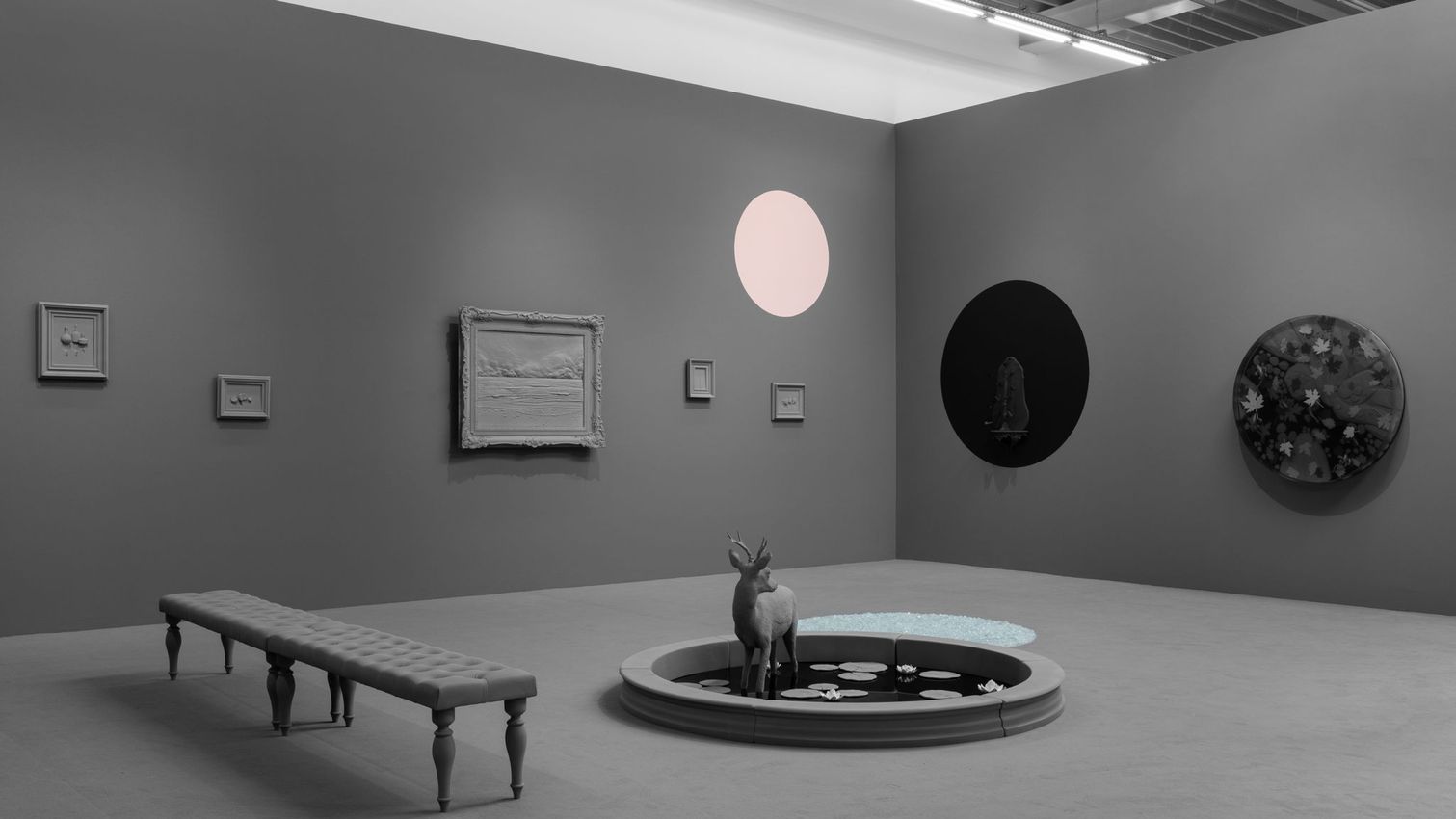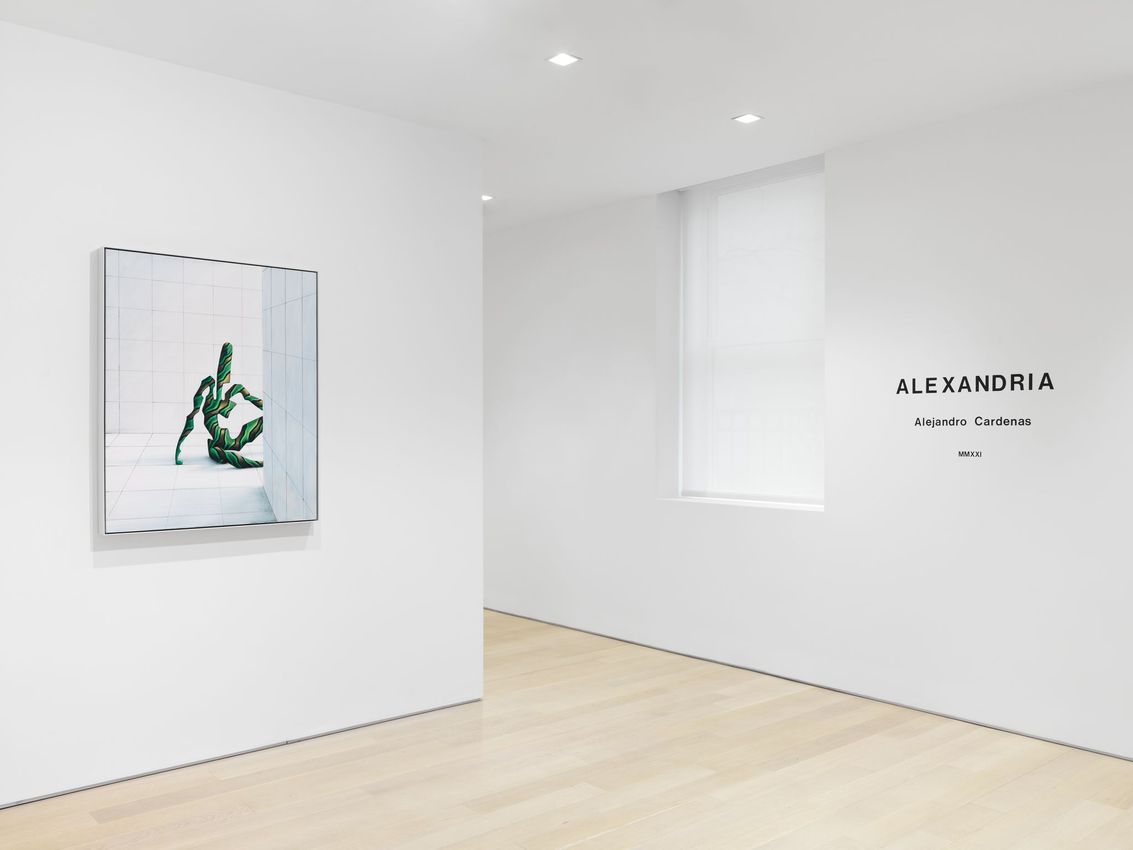
Cardenas began painting in February 2019 in response to a spiritual awakening in Los Angeles, where the artist is based. Cardenas’s latest series of paintings and sculptures will be on view in ALEXANDRIA, Cardenas’s second exhibition in New York City as well as his first presentation at the gallery. The title of the exhibition, ALEXANDRIA, is a tongue-in-cheek reference to the artist himself, but also to the Egyptian city—the intellectual and cultural centre of the ancient Mediterranean world for much of the Hellenistic age and known to be a place where scholarship of the East and the West was studied on an equal footing with the goal of creating a unified source of knowledge. Cardenas’s new body of work, which comes at a time of profound global unrest that has resulted from rampant climate change, the ongoing health and economic crises, and social injustice, came forth as a way to reflect on the present moment.
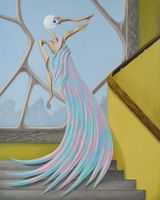
Executed during the Los Angeles’ dual crises of the Covid-19 pandemic and the wildfires, the new paintings and sculptures produced by Cardenas provide a vision of a post-human world wherein the relationship between human-forms and the environment is one of unity and coexistence. Guided by his own imagination and inspired by a wide variety of influences ranging from Surrealism, to Sci-Fi, to magical realism, Cardenas immersed himself in the creation of surreal post-human scenes of polished gridded interiors populated by eerie angular figures. In his unique approach to figuration, Cardenas’s signature humanoids of narrow wire-frame silhouettes wrapped in colourful patterns of zigzagging lines, lie, sit, or stand relaxedly in minimal architectural environments. Unlike us, these faceless humanoids appear to lack all sensory organs, yet they are not deprived of their sensorial ability. Instead, they convey emotion through body language, resulting in a wide variety of suggested emotional expression. The vigorous living forms contained within these interior spaces contrasts to the decaying outdoor world seen through the large windows in some of the paintings, where the streaming sunlight takes on an orange glow—similar to the colour that the sky took outside Cardenas’s studio during the wildfires.
The subject matter of the grid, a reference to Superstudio’s, iconic Ill Monumento Continuo, utilised in the late 1960s by the group of radical architects from Florence to address the homogenising effect of globalisation, is consistent throughout the exhibition. In the paintings on view here, Cardenas uses the grid as the only defining element of the architectural space inhabited by his figures. Just like Superstudio’s anonymous megastructure, it is a post-architectural space, a non-space that has been stripped away of any vestige of history and design, with the exception of a few prototypes of iconic chairs, designed by the artist. As Cardenas explained of his idea for the show, ‘It is about the present moment and the choices we have to make in order to exist as a culture in a world we are destroying and which we have to start fixing. I feel that our survival as a species depends on an agreement among all of us, a kind of unification of ideas, a non-space wherein everything this is possible. The grid, to me, is representative of that possibility.’ The other recurrent element that unites the paintings and the sculptures is the sinuous silhouette of a snake, which is portrayed full-bodied in the two aquamarine lacquered aluminium sculptures, and also appears in some of the paintings, albeit in fragments and with black and blue cross-banding. Inspired in Nehebkau, the primordial snake god of ancient Egyptian mythology originally considered an evil spirit and later a benevolent god associated with the afterlife, the snake here symbolises the often-conflicting impulses at the core of the human experience and throughout history. Taken as a whole, the exhibition explores the power of storytelling and of art as transmutation of experience.
Rosario Güiraldes, Assistant Curator at The Drawing Center. Courtesy Almine Rech.
Alejandro Cardenas (b. 1977, Santiago, Chile) completed his BFA at the Cooper Union School of Art in 2000. Before becoming a full-time studio painter, Cardenas had a successful career as a multimedia artist, working in illustration, graphic design, and videography. For over a decade he served as the lead textile designer and art director for the influential fashion label Proenza Schouler. He was also a founding member of Lansing-Dreiden, a New York-based transdisciplinary art collective that produced musical albums, a literary journal, and artworks. Reviews of his art and design projects have appeared in The New York Times, Vogue, and Another Magazine. Cardenas currently lives and works in Los Angeles.


Almine Rech opened its doors on April 1st, 1997 in the 13th arrondissement in Paris. The gallery was founded on an axis of California Minimal, Perceptual art and Conceptual art, representing artists such as James Turrell, John McCracken and Joseph Kosuth.

A respected voice in contemporary art discourse.
Focusing on ambitious storytelling and insightful art-world commentary. Ocula Magazine publishes in-depth interviews, critical essays and timely analysis on the artists, exhibitions and ideas driving the global art world.
Learn more about Ocula Magazine
Showcasing the best of the art world.
Ocula partners with galleries from around the world to highlight their artists, artworks and exhibitions. Gallery membership is by application and invitation, with each member vetted by an independent panel.
Learn more about Ocula Membership

Specialises in the sale of major artworks.
Led by a team with deep ties to the world’s leading auction houses, galleries and collectors. Ocula’s advisory team offers bespoke services to high-net-worth clients from around the world who are looking to acquire the best of contemporary and modern art.
Learn more about our team and services