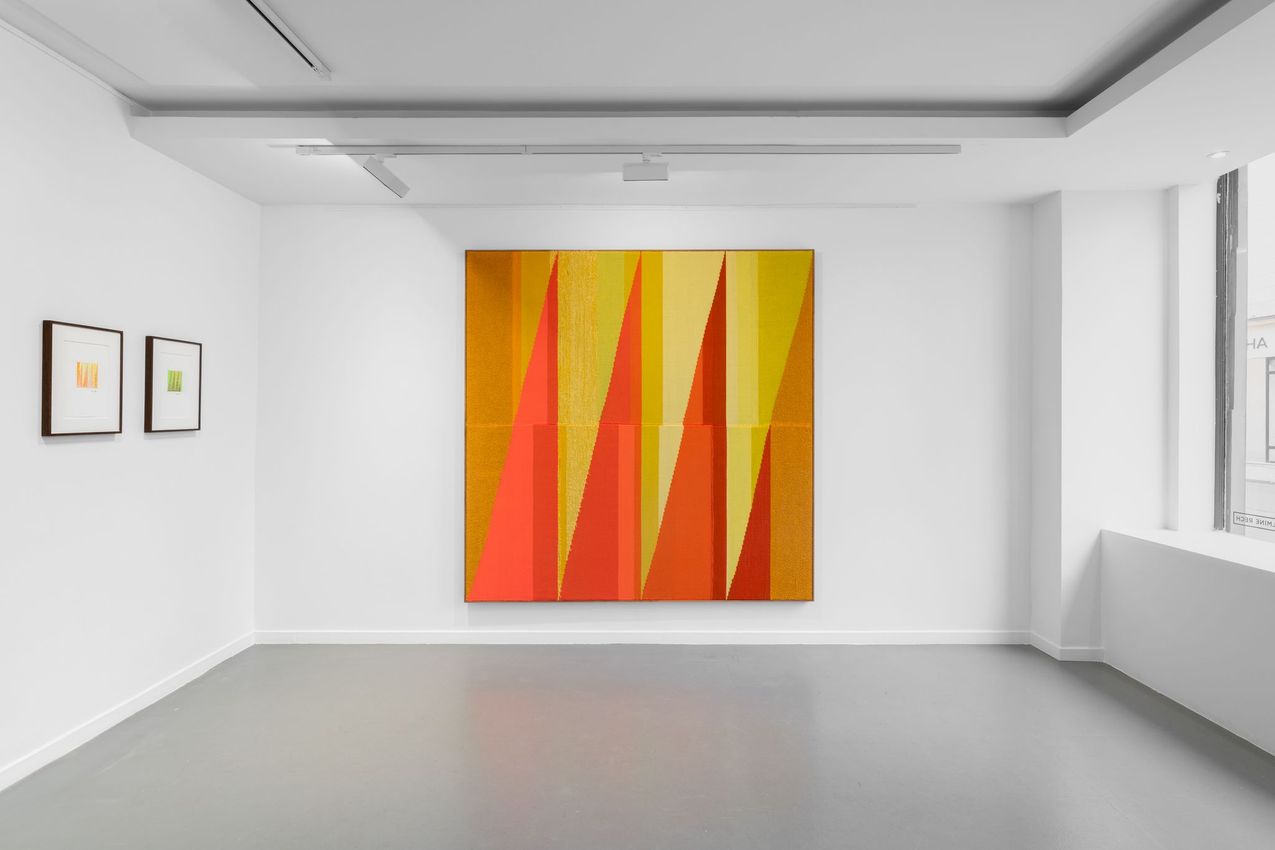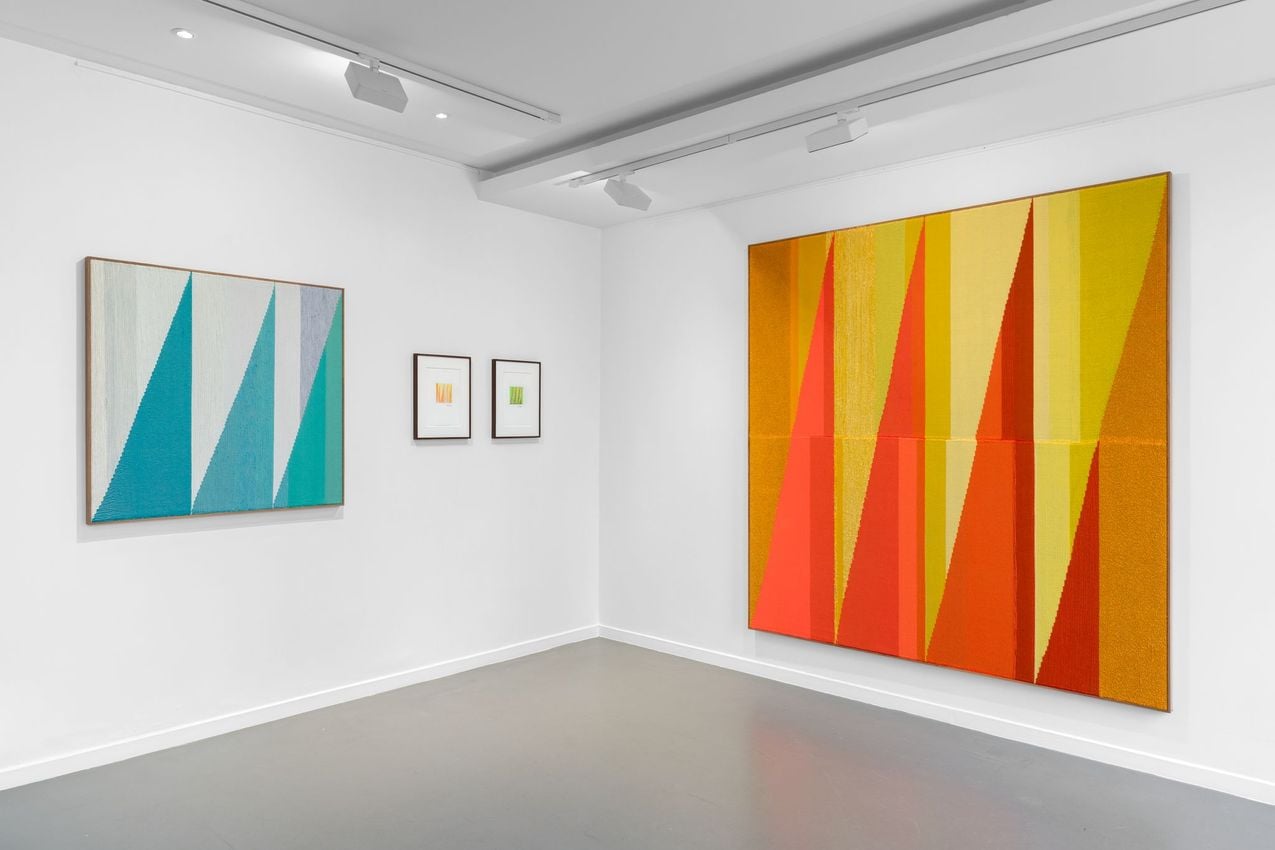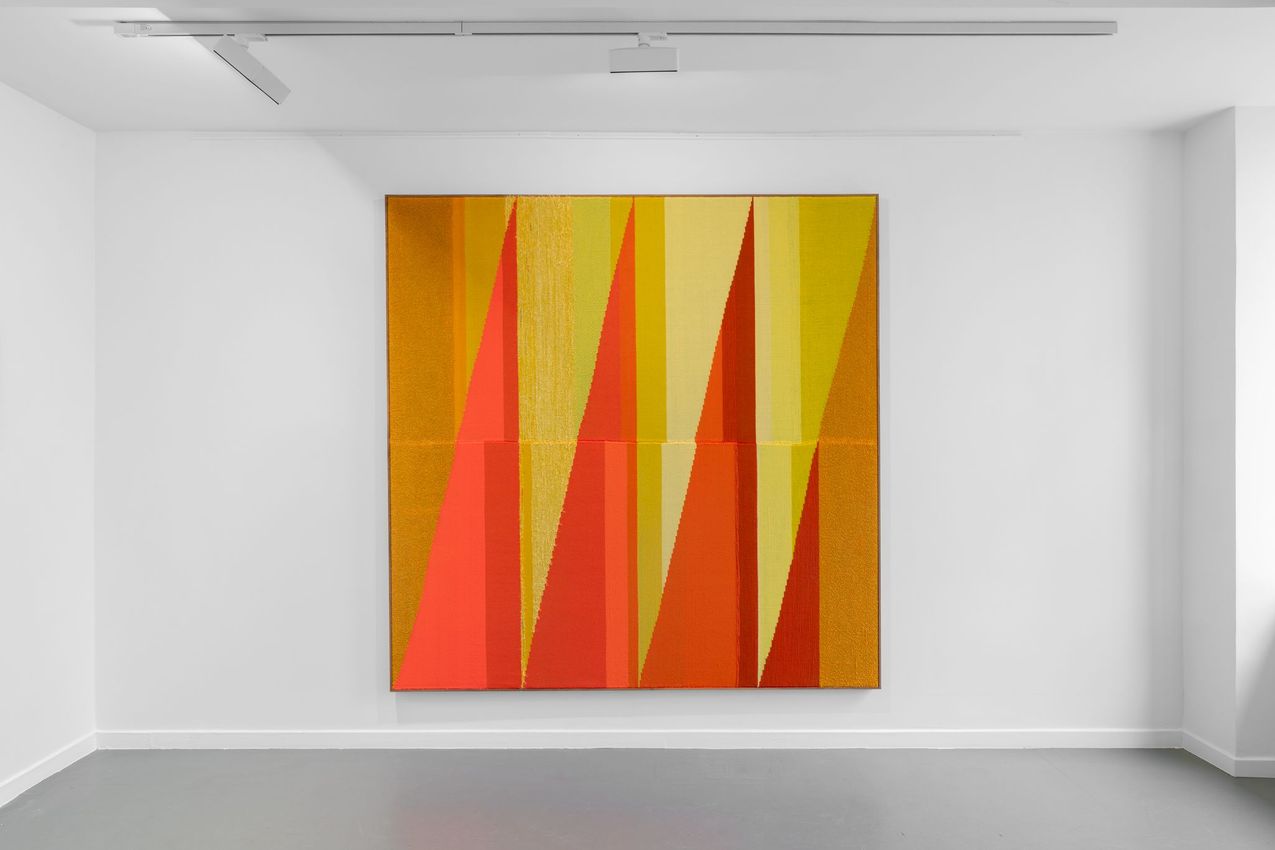




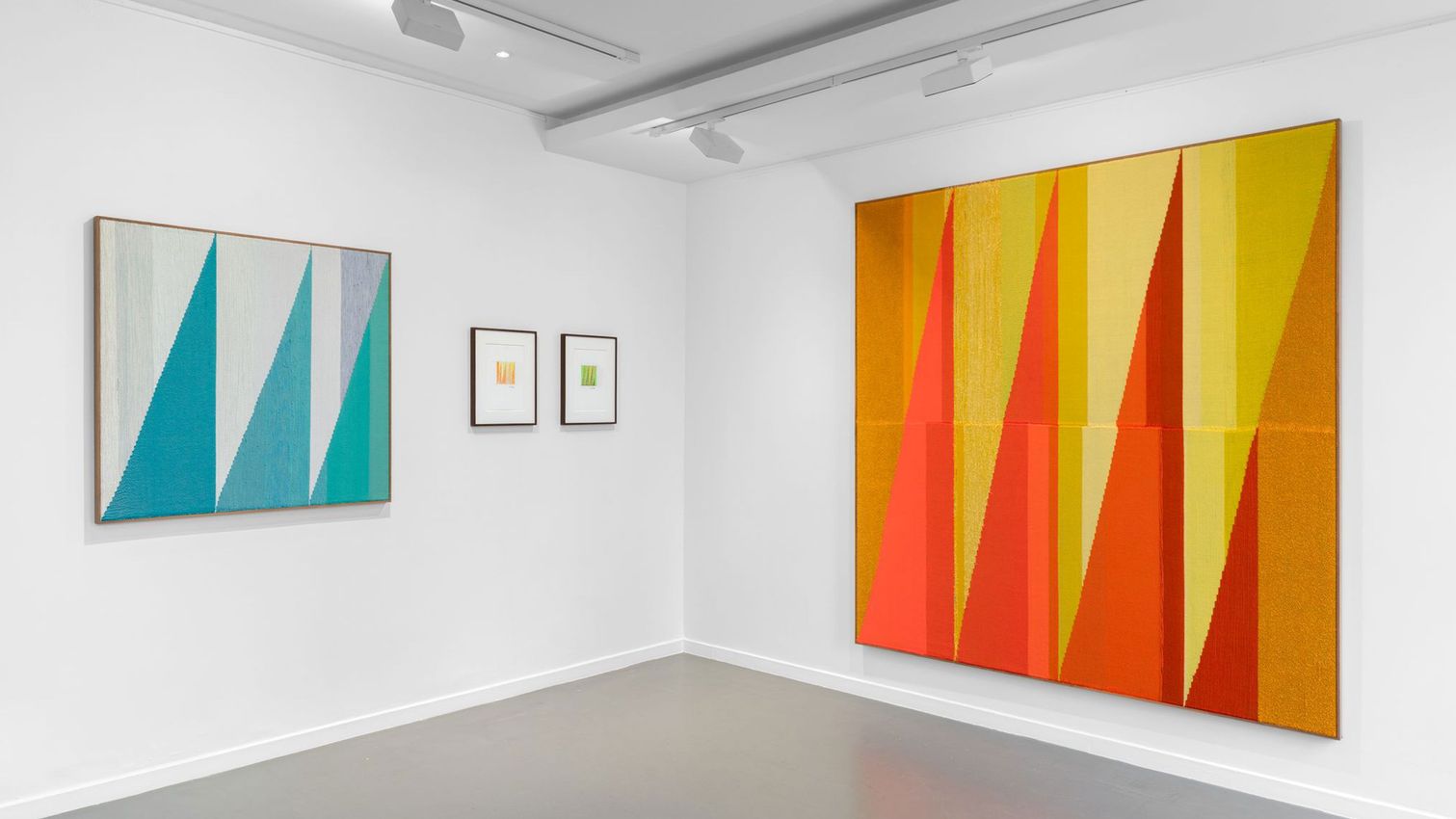
Almine Rech is pleased to announce two solo exhibitions by artist Brent Wadden, on view from October 18 to November 29, 2025 at Almine Rech Paris, Turenne (Front Space) and from November 7 to January 10, 2026 at Almine Rech Brussels.
To weave: to cross one thread with another, to bind fragments into form, to create tension, pattern, structure. It is one of humanity’s oldest gestures — domestic, ritual, artisanal. In Brent Wadden’s hands, weaving is not only a method but a process, an artistic language. It binds past to present, solitude to community, work to trance, matter to memory.
This autumn, Almine Rech will present two exhibitions of Wadden’s work: an intimate presentation of three pieces in Paris, and a larger constellation in Brussels under the title ‘Best Before’. Together, these exhibitions map a return — a weaving towards one’s origins.
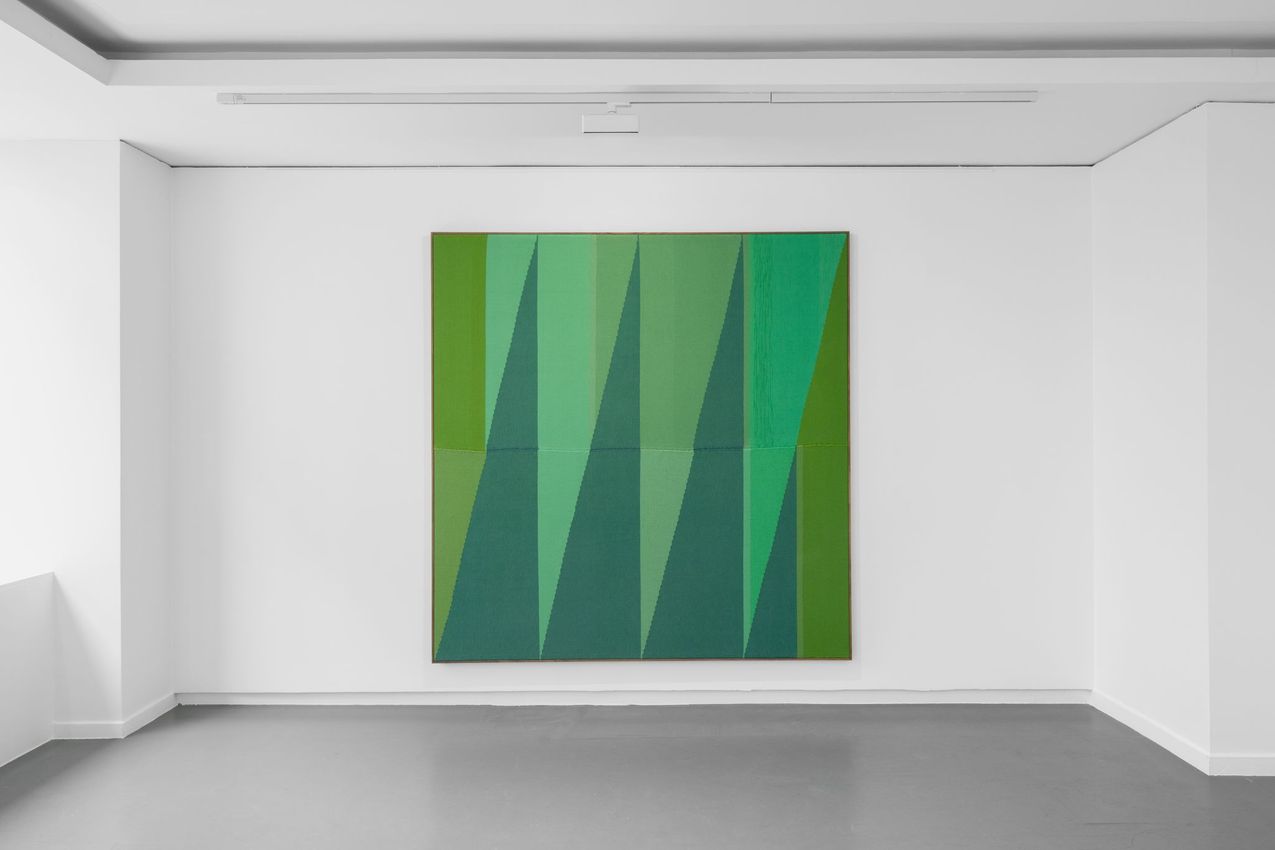
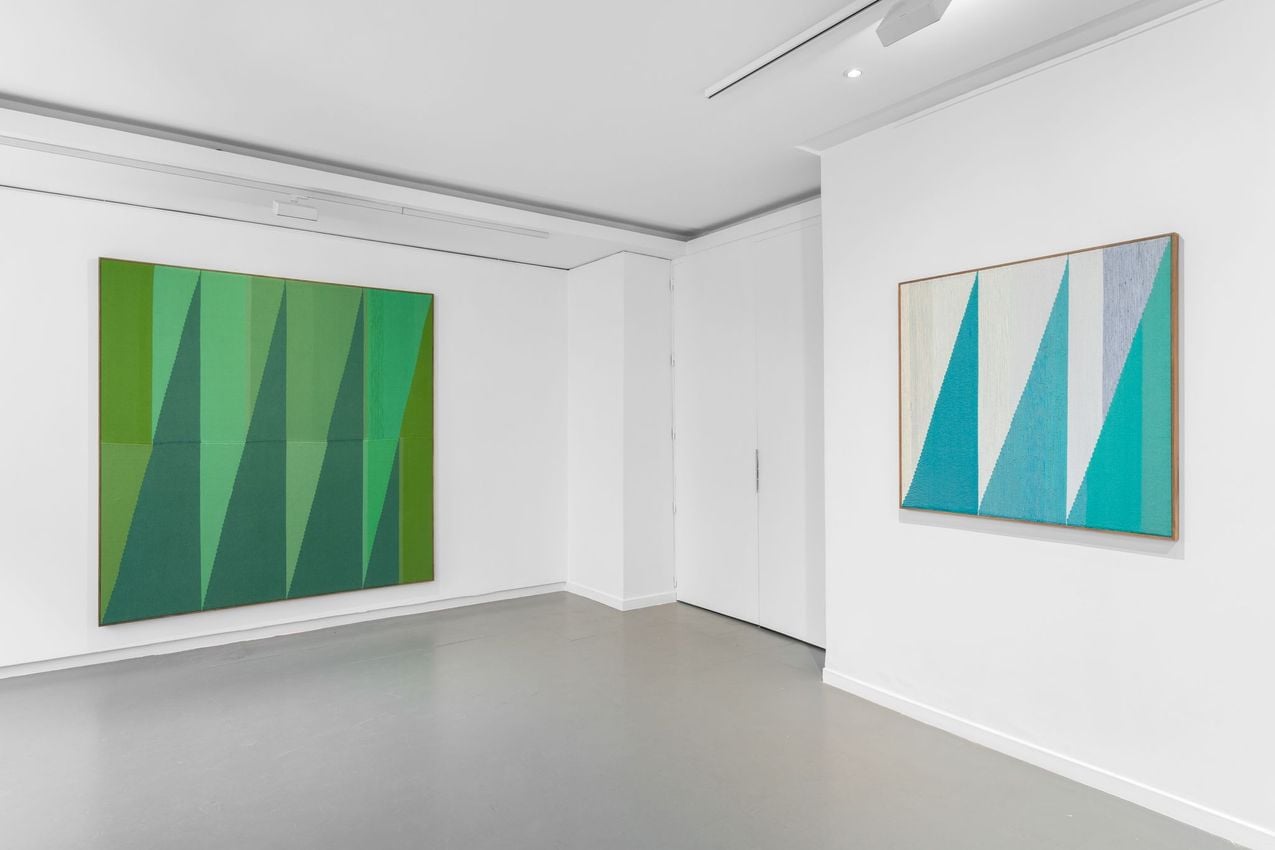
Wadden’s practice unsettles categories. His handwoven textiles, stretched onto canvas, move between painting and craft, between the studio and the loom. The grid of warp and weft becomes a place where color and line accumulate, where small irregularities grow into structures of their own. Each work contains both order and disruption, precision and accident, repetition and deviation.
For Wadden, weaving is not only the making of cloth but the production of form — a way to push material to its limit, to discover meaning in imperfection, to let process speak as powerfully as image.
Each of Wadden’s new works is constructed from three panels. Each panel, in turn, is divided into six sections. A rigorous structure, a pared-down palette, a concentration of motif. By exhausting its limits, form becomes force. By exhausting material, a deeper necessity is revealed.
The act of weaving is daily, mechanical, repetitive — and therefore transformative. Wadden weaves alone. He builds his own frames. He shifts color gradually, knot by knot, until rhythm becomes trance. The gesture is at once humble and radical: an endless repetition echoing the punk ethos of his youth, a strict DIY ethic carried forward into art. Nothing outsourced. Nothing wasted.
Born in 1979 in Nova Scotia, Canada, Wadden comes from a working-class background. His father and uncle were fishermen, bound to the cycles of the sea. He grew up watching them repeat gestures, day after day — hauling, knotting, mending, repairing. Skills passed down, inherited through repetition. For Wadden, the loom becomes a parallel stage: the choreography of labor translated to canvas.
Each summer, he returns to Nova Scotia — a ritual, almost a pilgrimage, to the land where his identity was first woven. Last summer, a wrong turn on a coastal road led him to an unknown beach, untouched and paradisiacal. This accidental discovery opened onto an image both real and imagined: the vision of his native land as he had always carried it within himself, both origin and horizon. It is no coincidence that the Paris exhibition bears the title ‘Main-à-Dieu’ — the name of the nearby fishing village — as if to anchor this return to origins already in the very name of the show.
For Wadden, weaving is not only structure but survival. He speaks of exhausting the material — using fabric until nothing remains unused, nothing is thrown away. No titles for the works; the gesture is enough. In Brussels, the exhibition ‘Best Before’ invokes the expiry dates stamped on the tins found in his father’s fishing cabin, as well as a punk album cherished in youth. Both references signal impermanence, but also persistence: what survives, what remains.
As a teenager, Wadden worked as a janitor in office buildings. From 5 to 7 pm, he emptied bins, swept floors, and witnessed how quickly people discarded things of use. “Every time something was thrown away, I felt I had to save it — or use it.” That compulsion remains. Wadden’s practice is one of salvage, an insistence upon on what others discard. In this, he is close to the folk traditions of his native Nova Scotia: makers who work only with what is on hand, transmuting necessity into craft.
Weaving, for Wadden, is more than a technique. It is a way of inhabiting matter. A way of refusing waste. A way of binding one’s own history — childhood, punk youth, working-class origins — into the patient fabric of art.
To weave is to return. To return is to repeat. And in repetition, transformation occurs.
— Boris Bergmann, writer.


Brent Wadden’s work references both the historical and social constructs of craft and modernism through dialogues between weaving and various modes of modernist art making. Working within the vein of assemblage, Wadden makes paintings by piecing together his hand woven weavings to create large scale, hard-edge geometric abstractions. In contrast to traditional painting, the composition is decided during the final stages of preparation and the use of light and dark create a positive/negative space which shifts between foreground to background.


Almine Rech opened its doors on April 1st, 1997 in the 13th arrondissement in Paris. The gallery was founded on an axis of California Minimal, Perceptual art and Conceptual art, representing artists such as James Turrell, John McCracken and Joseph Kosuth.

A respected voice in contemporary art discourse.
Focusing on ambitious storytelling and insightful art-world commentary. Ocula Magazine publishes in-depth interviews, critical essays and timely analysis on the artists, exhibitions and ideas driving the global art world.
Learn more about Ocula Magazine
Showcasing the best of the art world.
Ocula partners with galleries from around the world to highlight their artists, artworks and exhibitions. Gallery membership is by application and invitation, with each member vetted by an independent panel.
Learn more about Ocula Membership

Specialises in the sale of major artworks.
Led by a team with deep ties to the world’s leading auction houses, galleries and collectors. Ocula’s advisory team offers bespoke services to high-net-worth clients from around the world who are looking to acquire the best of contemporary and modern art.
Learn more about our team and services